Archive for the ‘Themed Collections’ Category

Chemistry in Climate Change

Here we present a collection of research papers, review articles, and themed collections published by the Royal Society of Chemistry, designed to answer a variety of questions related to the causes and impacts of climate change. From atmospheric chemistry to geochemical cycling and analytical techniques, this collection contains the latest research at the cutting edge.
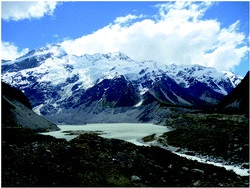
“In the lead up to the UN climate change conference in Paris in late 2015, it is timely to consider the importance of chemistry in climate science,” comments Susan Solomon, advisory board member of Environ. Sci.: Processes Impacts, “This collection showcases the essential contributions of chemical science to understanding climate change.  As the world weighs mitigation and adaptation options, chemists will be part of the search for solutions.”

“The chemical sciences play a pivotal role in a sustainable and prosperous future” says Dominic Tildesley, President of the Royal Society of Chemistry “whether it’s developing new antibiotics to combat infection, converting waste to energy, or developing efficient solar energy cells, chemists are designing and applying tomorrow’s technologies.”

You can read all of these articles for free until 20 December 2014!  We truly hope you enjoy this collection.

Learn more about our work to support the chemical sciences community working on solutions in climate change, energy, food, health and water.

Nina Notman meets some of the atmospheric chemists fitting the pieces of the climate change jigsaw together – find out more in Education in Chemistry.

Relevant Themed Issues:

Analytical Methods themed collection on Emerging analytical methods for global energy and climate issues.

ChemSocRev themed issued on Atmospheric chemistry.

ChemComm web collection on CO2 separation, capture and reuse.

Photochemical & Photobiological Sciences collection on the Environmental effects of ozone depletion and its interactions with climate change: 2014 Assessment.

Faraday Discussions on Tropospheric Aerosol – Formation, Transformation and Impacts.


Reviews and Perspectives:
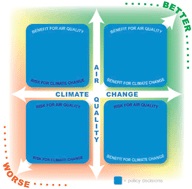
Global air quality and climate
Arlene M. Fiore, Vaishali Naik, Dominick V. Spracklen, Allison Steiner, Nadine Unger, Michael Prather, Dan Bergmann, Philip J. Cameron-Smith, Irene Cionni, William J. Collins, Stig Dalsøren, Veronika Eyring, Gerd A. Folberth, Paul Ginoux, Larry W. Horowitz, Béatrice Josse, Jean-François Lamarque, Ian A. MacKenzie, Tatsuya Nagashima, Fiona M. O’Connor, Mattia Righi, Steven T. Rumbold, Drew T. Shindell, Ragnhild B. Skeie, Kengo Sudo, Sophie Szopa, Toshihiko Takemura and Guang Zeng  
Chem. Soc. Rev., 2012,41, 6663-6683
DOI: 10.1039/C2CS35095E, Critical Review
From themed collection Atmospheric chemistry

Air quality and climate – synergies and trade-offs
Erika von Schneidemesser and Paul S. Monks
Environ. Sci.: Processes Impacts, 2013,15, 1315-1325
DOI: 10.1039/C3EM00178D, Frontier
From themed collection Environmental Science: Processes & Impacts: 2013 Review Articles

Chemical signals of past climate and environment from polar ice cores and firn air
Eric W. Wolff  
Chem. Soc. Rev., 2012,41, 6247-6258
DOI: 10.1039/C2CS35227C, Tutorial Review
From themed collection Atmospheric chemistry

Climate change and adaptational impacts in coastal systems: the case of sea defences
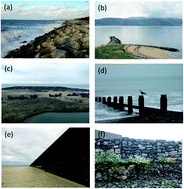
Louise B. Firth, Nova Mieszkowska, Richard C. Thompson and Stephen J. Hawkins
Environ. Sci.: Processes Impacts, 2013,15, 1665-1670
DOI: 10.1039/C3EM00313B, Frontier
From themed collection Environmental Science: Processes & Impacts: 2013 Review Articles

Particles, air quality, policy and health
Mathew R. Heal, Prashant Kumar and Roy M. Harrison  
Chem. Soc. Rev., 2012,41, 6606-6630
DOI: 10.1039/C2CS35076A, Critical Review
From themed collection Atmospheric chemistry

Impact of a possible future global hydrogen economy on Arctic stratospheric ozone loss
Bärbel Vogel, Thomas Feck, Jens-Uwe Grooß and Martin Riese
Energy Environ. Sci., 2012,5, 6445-6452
DOI: 10.1039/C2EE03181G, Minireview

Productivity of aquatic primary producers under global climate change
Donat-P. Häder, Virginia E. Villafañe and E. Walter Helbling
Photochem. Photobiol. Sci., 2014,13, 1370-1392
DOI: 10.1039/C3PP50418B, Perspective

Ice nucleation by particles immersed in supercooled cloud droplets
B. J. Murray, D. O’Sullivan, J. D. Atkinson and M. E. Webb  
Chem. Soc. Rev., 2012,41, 6519-6554
DOI: 10.1039/C2CS35200A, Critical Review
From themed collection Atmospheric chemistry Open Access

Ocean-atmosphere trace gas exchange
Lucy J. Carpenter, Stephen D. Archer and Rachael Beale  
Chem. Soc. Rev., 2012,41, 6473-6506
DOI: 10.1039/C2CS35121H, Critical Review
From themed collection Atmospheric chemistry

The influence of glacial meltwater on alpine aquatic ecosystems: a review
Krista E. H. Slemmons, Jasmine E. Saros and Kevin Simon
Environ. Sci.: Processes Impacts, 2013,15, 1794-1806
DOI: 10.1039/C3EM00243H, Critical Review

Multiphase chemistry of atmospheric amines
Chong Qiu and Renyi Zhang
Phys. Chem. Chem. Phys., 2013,15, 5738-5752
DOI: 10.1039/C3CP43446J, Perspective


Original research articles:

Exploring the potential influence of climate change and particulate organic carbon scenarios on the fate of neutral organic contaminants in the Arctic environment
James M. Armitage and Frank Wania
Environ. Sci.: Processes Impacts, 2013,15, 2263-2272
DOI: 10.1039/C3EM00315A, Paper
From themed collection Open access articles from Environmental Science: Processes & Impacts

A reproducible method for the extraction, identification and quantification of the Arctic sea ice proxy IP25 from marine sediments
Simon T. Belt, Thomas A. Brown, Alba Navarro Rodriguez, Patricia Cabedo Sanz, Andrew Tonkin and Rebecca Ingle
Anal. Methods, 2012,4, 705-713
DOI: 10.1039/C2AY05728J, Paper

CO2 concentration and pH alters subsurface microbial ecology at reservoir temperature and pressure
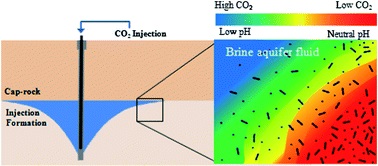
Djuna M. Gulliver, Gregory V. Lowry and Kelvin B. Gregory
RSC Adv., 2014,4, 17443-17453
DOI: 10.1039/C4RA02139H, Paper

Changes in metal mobility associated with bark beetle-induced tree mortality
Kristin M. Mikkelson, Lindsay A. Bearup, Alexis K. Navarre-Sitchler, John E. McCray and Jonathan O. Sharp
Environ. Sci.: Processes Impacts, 2014,16, 1318-1327
DOI: 10.1039/C3EM00632H, Paper
From themed collection 2014 Emerging Investigators

Determination of spatial and temporal variability of pH and dissolved oxygen concentrations in a seasonally hypoxic semi-enclosed marine basin using continuous monitoring
Timothy Sullivan, Ciara Byrne, Luke Harman, John Davenport, Rob McAllen and Fiona Regan
Anal. Methods, 2014,6, 5489-5497
DOI: 10.1039/C3AY42162G, Paper
From themed collection Emerging analytical methods for global energy and climate issues
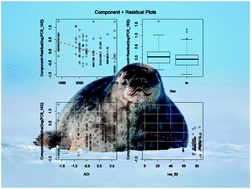
Temporal trends of selected POPs and the potential influence of climate variability in a Greenland ringed seal population
Frank Rigét, Katrin Vorkamp, Keith A. Hobson, Derek C. G. Muir and Rune Dietz
Environ. Sci.: Processes Impacts, 2013,15, 1706-1716
DOI: 10.1039/C3EM00189J, Paper

Heterogeneous and multiphase formation pathways of gypsum in the atmosphere
Qingxin Ma, Hong He, Yongchun Liu, Chang Liu and Vicki H. Grassian
Phys. Chem. Chem. Phys., 2013,15, 19196-19204
DOI: 10.1039/C3CP53424C, Paper

Volatile organic compounds in Arctic snow: concentrations and implications for atmospheric processes
Gregor Kos, Visahini Kanthasami, Nafissa Adechina and Parisa A. Ariya
Environ. Sci.: Processes Impacts, 2014, Advance Article
DOI: 10.1039/C4EM00410H, Paper

A simplified coulometric method for multi-sample measurements of total dissolved inorganic carbon concentration in marine waters
Natchanon Amornthammarong, Peter B. Ortner, James Hendee and Ryan Woosley
Analyst, 2014,139, 5263-5270
DOI: 10.1039/C4AN01049C, Paper

Full-color CO2 gas sensing by an inverse opal photonic hydrogel
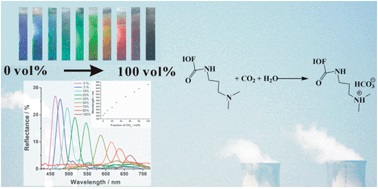
Wei Hong, Yuan Chen, Xue Feng, Yang Yan, Xiaobin Hu, Binyuan Zhao, Fan Zhang, Di Zhang, Zhou Xu and Yijian Lai  
Chem. Commun., 2013,49, 8229-8231
DOI: 10.1039/C3CC44825H, Communication

Analysis of secondary organic aerosols in air using extractive electrospray ionization mass spectrometry (EESI-MS)
Lambert A. Doezema, Teresa Longin, William Cody, Véronique Perraud, Matthew L. Dawson, Michael J. Ezell, John Greaves, Kathleen R. Johnson and Barbara J. Finlayson-Pitts
RSC Adv., 2012,2, 2930-2938
DOI: 10.1039/C2RA00961G, Paper

The use of climatologies and Bayesian models to link observations to outcomes; an example from the Torres Strait
Scott Bainbridge and Ray Berkelmans
Environ. Sci.: Processes Impacts, 2014,16, 1041-1049
DOI: 10.1039/C3EM00675A, Paper

Gas–particle partitioning of atmospheric aerosols: interplay of physical state, non-ideal mixingand morphology
Manabu Shiraiwa, Andreas Zuend, Allan K. Bertram and John H. Seinfeld
Phys. Chem. Chem. Phys., 2013,15, 11441-11453
DOI: 10.1039/C3CP51595H, Paper

Organic matrix effects on the formation of light-absorbing compounds from α-dicarbonyls in aqueous salt solution
Greg T. Drozd and V. Faye McNeill
Environ. Sci.: Processes Impacts, 2014,16, 741-747
DOI: 10.1039/C3EM00579H, Paper
From themed collection Aquatic photochemistry

Three years (2008–2010) of measurements of atmospheric concentrations of organochlorine pesticides (OCPs) at Station Nord, North-East Greenland
Rossana Bossi, Carsten Ambelas Skjøthb and Henrik Skovac
Environ. Sci.: Processes Impacts, 2013,15, 2213-2219
DOI: 10.1039/C3EM00304C, Paper

Optical classification of algae species with a glass lab-on-a-chip
Allison Schaap, Thomas Rohrlack and Yves Bellouard
Lab Chip, 2012,12, 1527-1532
DOI: 10.1039/C2LC21091F, Paper
Responses of Fraxinus excelsior L. seedlings to ambient ozone exposure in urban and mountain areas based on physiological characteristics and antioxidant activity
Petya Parvanova, Nikolina Tzvetkova, Svetla Bratanova-Doncheva, Nesho Chipev, Radka Fikova and Evgeni Donev
Environ. Sci.: Processes Impacts, 2013,15, 1452-1458
DOI: 10.1039/C3EM30614C, Paper

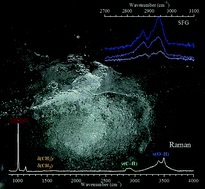
Raman microspectroscopy and vibrational sum frequency generation spectroscopy as probes of the bulk and surface compositions of size-resolved sea spray aerosol particles
Andrew P. Ault, Defeng Zhao, Carlena J. Ebben, Michael J. Tauber, Franz M. Geiger, Kimberly A. Prather and Vicki H. Grassian
Phys. Chem. Chem. Phys., 2013,15, 6206-6214
DOI: 10.1039/C3CP43899F, Paper

Modelling phosphorus loading and algal blooms in a Nordic agricultural catchment-lake system under changing land-use and climate
Raoul-Marie Couture, Koji Tominaga, Jostein Starrfelt, S. Jannicke Moe, Øyvind Kaste and Richard F. Wright
Environ. Sci.: Processes Impacts, 2014,16, 1588-1599
DOI: 10.1039/C3EM00630A, Paper
From themed collection Environmental Science: Processes & Impacts 2014 HOT Articles

Organic aerosols and inorganic species from post-harvest agricultural-waste burning emissions over northern India: impact on mass absorption efficiency of elemental carbon
Prashant Rajput, M. M. Sarin, Deepti Sharma and Darshan Singh
Environ. Sci.: Processes Impacts, 2014,16, 2371-2379
DOI: 10.1039/C4EM00307A, Paper

Theoretical investigation of vibrational relaxation of highly excited O3 in collisions with HO2
Lei Zhang, Pingya Luo, Ke Guo, Rong Zeng, Pedro J. S. B. Caridade and António J. C. Varandas
RSC Adv., 2014,4, 9866-9874
DOI: 10.1039/C3RA45634J, Paper

Determining the unique refractive index properties of solid polystyrene aerosol using broadband Mie scattering from optically trapped beads
Stephanie H. Jones, Martin D. King and Andrew D. Ward
Phys. Chem. Chem. Phys., 2013,15, 20735-20741
DOI: 10.1039/C3CP53498G, Paper

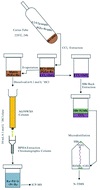
A method for determination of PGE–Re concentrations and Os isotopic compositions in environmental materials
Peipei Zhao, Jie Li, Lifeng Zhong, Shengling Sun and Jifeng Xu
Anal. Methods, 2014,6, 5537-5545
DOI: 10.1039/C3AY42064G
From themed collection Emerging analytical methods for global energy and climate issues

A compact comprehensive two-dimensional gas chromatography (GC×GC) approach for the analysis of biogenic VOCs
Samuel J. Edwards, Alastair C. Lewis, Stephen J. Andrews, Richard T. Lidster, Jacqueline F. Hamilton and Christopher N. Rhodes
Anal. Methods, 2013,5, 141-150
DOI: 10.1039/C2AY25710F

Brown carbon formation from ketoaldehydes of biogenic monoterpenes
Tran B. Nguyen, Alexander Laskin, Julia Laskin and Sergey A. Nizkorodov
Faraday Discuss., 2013,165, 473-494
DOI: 10.1039/C3FD00036B, Paper
From themed collection Tropospheric Aerosol – Formation, Transformation and Impacts

Carbon footprint of geopolymeric mortar: study of the contribution of the alkaline activating solution and assessment of an alternative route
A. Mellado, C. Catalán, N. Bouzón, M. V. Borrachero, J. M. Monzó and J. Payá
RSC Adv., 2014,4, 23846-23852
DOI: 10.1039/C4RA03375B, Paper
Energy demand and emissions of the non-energy sector
Vassilis Daioglou, Andre P. C. Faaij, Deger Saygin, Martin K. Patel, Birka Wicke and Detlef P. van Vuuren
Energy Environ. Sci., 2014,7, 482-498
DOI: 10.1039/C3EE42667J, Analysis

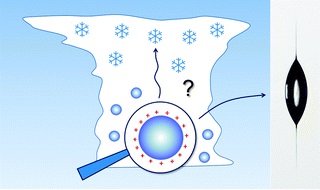
On the role of surface charges for homogeneous freezing of supercooled water microdroplets
Daniel Rzesanke, Jens Nadolny, Denis Duft, René Müller, Alexei Kiselev and Thomas Leisner
Phys. Chem. Chem. Phys., 2012,14, 9359-9363
DOI: 10.1039/C2CP23653B, Paper
From themed collection Structure and reactivity of small particles: from clusters to aerosols

Digg This
Reddit This
Stumble Now!
Share on Facebook
Bookmark this on Delicious
Share on LinkedIn
Bookmark this on Technorati
Post on Twitter
Google Buzz (aka. Google Reader)

Concerns over chemical treatment of reclaimed fracking fluid

The study analysed water samples from shale gas wells in Marcellus (Pennsylvania), Eagle Ford (Texas), and Barnett (New Mexico) © Michael J Mullen Scranton Times-Tribune/AP/Press Association Images

Estimates suggest that in the next 50 years, over one trillion gallons of water will be used in shale gas extraction but research from scientists in the US suggests that environmentally detrimental compounds are being created when this fluid is recycled.

Shale gas is found in rock formations kilometres underground. Hydraulic fracturing, also known as fracking, facilitates the release of this energy dense fuel in a cost-effective and timely manner. Water, sand and a combination of other additives are pumped into the ground at high pressure, breaking the shale formations apart, allowing the gas to migrate to the surface where it can be collected.

To read the full article, please visit Chemistry World.

Organic compounds in produced waters from shale gas wells
Samuel J. Maguire-Boyle and Andrew R. Barron
Environ. Sci.: Processes Impacts, 2014, Advance Article
DOI: 10.1039/C4EM00376D, Paper

Digg This
Reddit This
Stumble Now!
Share on Facebook
Bookmark this on Delicious
Share on LinkedIn
Bookmark this on Technorati
Post on Twitter
Google Buzz (aka. Google Reader)

Geoscience Themed Issue

We are delighted to announce the publication of Issue 9, Volume 16 of Environmental Science Processes & Impacts, which is a themed issue dedicated to Geoscience, guest edited by Yu-ping Chin from The Ohio State University.

Geology, and especially the field of geochemistry, has become inextricably linked to the environmental sciences, and has evolved over the past few decades to view earth in a much more holistic fashion. The papers in this themed collection reflect the diversity of research problems that face earth scientists studying environmentally relevant processes today. They range from the nano- to macro-scale and tackle problems that face organic and inorganic geochemists alike.

This collection features  a HOT Critical Review on the structural characterization of dissolved organic matter, by researchers from the USA, which received particularly high scored during peer review.

Click here to view the full geoscience themed issue – we hope you enjoy the collection

Digg This
Reddit This
Stumble Now!
Share on Facebook
Bookmark this on Delicious
Share on LinkedIn
Bookmark this on Technorati
Post on Twitter
Google Buzz (aka. Google Reader)

Macronutrient Cycles Themed Issue

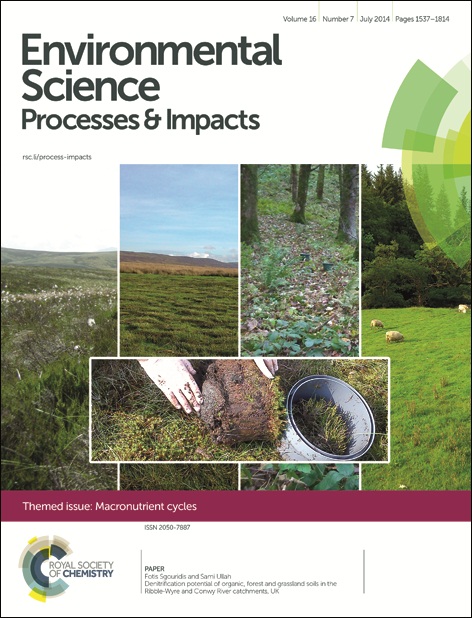
Macronutrient Cycles Guest edited by the directorate of the NERC Macronutrient Cycles Programme, Professor Paul Whitehead (Director) and Dr Jill Crossman (Assistant Director), this themed issue focuses upon the key macronutrient cycles linking nitrogen, phosphorus and carbon. Disturbance of the interactions, or cycles, of these macronutrients has had significant environmental and economic implications including soil nutrient enrichment, eutrophication of surface waters, reduced air quality, and loss of drinking water quality. These issues pose a threat not just to biodiversity, but also to public water supplies and public health.

Within this themed issue are four HOT research papers, which received particularly high scores during peer review – click on the links to download the articles:

1. Carly Stevens and colleagues describe a nitrogen footprint tool for the UK, demonstrating that the UK footprint is smaller than that found in the USA but higher than that for the Netherlands and Germany.

2. Researchers from Lancaster University investigate cattle in-stream activity in order to further our understanding of cattle contribution to sediment load.

3. Researchers from Norway and Canada model phosphorus loading and algal blooms in an agricultural catchment-lake system under changing land-use and climate.

4. Our fourth HOT article  focuses on phosphorus transport and assessment using a semi-distributed catchment model.

Click here to view the full macronutrient cycles themed issue – we hope you enjoy the collection

Digg This
Reddit This
Stumble Now!
Share on Facebook
Bookmark this on Delicious
Share on LinkedIn
Bookmark this on Technorati
Post on Twitter
Google Buzz (aka. Google Reader)

2014 Emerging Investigators Issue

Emerging Investigators Guest Editors David Cwiertny, Juana Maria Delgado-Saborit and Hee-Deung Park introduce the third edition of our emerging investigators issue.

Celebrating the best and brightest amongst early career environmental scientists around the world, this collection of reviews and papers demonstrates the talent, innovation and creative ideas that new researchers can bring.  Read the profiles of the contributors to find out more about our young scientists, including their research objectives, inspirations and what environmental challenges they believe the future holds.

We have made the following HOT articles free* to access for a limited time only! We hope you enjoy reading this collection as much as we did.

Critical Reviews:

B. D. Shoener, I. M. Bradley, R. D. Cusick and J. S. Guest
DOI: 10.1039/C3EM00711A

Critical Review of electrochemical advanced oxidation processes for water treatment application

Brian P. Chaplin
DOI: 10.1039/C3EM00679D


impacts of UV protections on bacterial survival

HOT Paper:

Association of nuisance filamentous algae Cladophora spp. with E. coli and Salmonella in public beach waters: impacts of UV protection on bacterial survival

Aubrey Beckinghausen, Alexia Martinez, David Blersch and Berat Z. Haznedaroglu
DOI: 10.1039/C3EM00659J

For the full collection, visit our 2014 Emerging Investigators Themed Issue platform.

*Access is free through a registered RSC account – click here to register

Digg This
Reddit This
Stumble Now!
Share on Facebook
Bookmark this on Delicious
Share on LinkedIn
Bookmark this on Technorati
Post on Twitter
Google Buzz (aka. Google Reader)

Aquatic Photochemistry Themed Issue

The field of aquatic photochemistry is diverse and strong, therefore our Editorial Board member, Kristopher McNeill presents a themed issue covering a range of topics and sub-disciplines within environmental science, representing current aquatic photochemical research.

Kristopher found the process of guest editing the aquatic photochemistry themed issue rewarding. ‘From the very start, I had an enthusiastic response to my call for papers and, when looking at the collection in its final form, I was extremely happy with the quality and breadth of the science that it reflected’ he says.

‘I was especially happy with the contributions of the young investigators; from whom I am sure we will be seeing a lot more in the future.’ Kristopher selected 2 critical reviews and a paper by young investigators who contributed to this collection and for a limited time only, these articles are free* to access. Click the following links to download the full articles.

Critical Reviews:

Photo-transformation of pharmaceutically active compounds in the aqueous environment: a review
Shuwen Yan and Weihua Song
DOI: 10.1039/C3EM00502J

The role of indirect photochemical degradation in the environmental fate of pesticides: a review
Christina K. Remucal
DOI: 10.1039/C3EM00549F

Paper:

Photometric hydroxyl radical scavenging analysis of standard natural organic matter isolates
J. E. Donham, E. J. Rosenfeldt and K. R. Wigginton
DOI: 10.1039/C3EM00663H

Kristopher’s research paper on photochemically produced hydroxyl radical in artic surface water was included in this collection. We would like to thank him for guest editing this exciting issue; his paper will be free* to access until Friday 20th June 2014.

Evidence for dissolved organic matter as the primary source and sink of photochemically produced hydroxyl radical in arctic surface waters
Sarah E. Page, J. Robert Logan, Rose M. Cory and Kristopher McNeill
DOI: 10.1039/C3EM00596H

*Access is free until 20.06.14 through a registered RSC account – click here to register

Digg This
Reddit This
Stumble Now!
Share on Facebook
Bookmark this on Delicious
Share on LinkedIn
Bookmark this on Technorati
Post on Twitter
Google Buzz (aka. Google Reader)

Passive Sampling Themed Issue

Philipp Mayer, Frank Wania and Charles S. Wong introduce an Environmental Science: Processes & Impacts themed issue on passive sampling.

This themed collection showcases some of the latest developments in passive sampling research – which has now progressed well beyond measuring aqueous concentrations of legacy contaminants. The contributions in this collection contain a wide range of different passive sampling approaches which were applied to water, air, soil vapours, sediments and even fish tissue. Improved sampler designs and materials are being developed and tested, contributing to the increasing popularity of passive sampling. The apparent simplicity of passive sampling is at the core of its true potential and betrays a wealth of opportunity for future research and monitoring.

To celebrate this collection, the following articles are free* to access – for a limited time only!

Passive sampling systems for ambient air mercury measurements

A review of passive sampling systems for ambient air mercury measurements
Jiaoyan Huang, Seth N. Lyman, Jelena Stamenkovic Hartman and Mae Sexauer Gustin
DOI: 10.1039/C3EM00501A

Application of passive sampling methods for measurement of Hg concentrations and deposition is useful for understanding source and trends.

Evaluation of DGTEvaluation of DGT as a long-term water quality monitoring tool in natural waters; uranium as a case study
Geraldine S. C. Turner, Graham A. Mills, Michael J. Bowes, Jonathan L. Burnett, Sean Amos and Gary R. Fones
DOI: 10.1039/C3EM00574G

DGT can be used as a long-term water quality environmental monitoring tool.

Low density polyethylene passive samplers

Field calibration of low density polyethylene passive samplers for gaseous POPs
Mohammed A. Khairy and Rainer Lohmann
DOI: 10.1039/C3EM00493G

A field calibration study of low density polyethylene for measuring atmospheric concentrations of persistent organic pollutants was performed in East Providence (RI) USA.

*Access is free until 13.06.14 through a registered RSC account – click here to register

Digg This
Reddit This
Stumble Now!
Share on Facebook
Bookmark this on Delicious
Share on LinkedIn
Bookmark this on Technorati
Post on Twitter
Google Buzz (aka. Google Reader)

Real time sampling of welding fumes

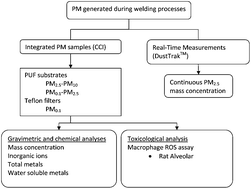
Sampling from realistic scenarios often poses a problem, however Chang et al. have sampled fume particles from real time welding in order to gain more detailed information on the occupational hazards posed to welders. 

One of the key mechanisms responsible for the cardiopulmonary effects welders may experience is oxidative stress.  It was hypothesised that nanoparticles, resulting from the combustion during welding, would carry the greatest ROS (Reactive Oxygen Species) burden for cells.

welding, nanoparticles, occupational healthBy sampling the air as welding was taking place and fractionating it into coarse (2.5–10 µm), fine (0.1–2.5 µm) and nano (<0.1 µm) the group were able to analyse for water-soluble metals, total elemental analysis (49 metals) and ROS using a bio-assay (rat alveolar macrophages).

By comparing the sampling results to the activities being carried out at the time, crucial information was gleaned as to how individual activities uniquely contributed to particulate exposure.  In addition it was confirmed that the nano-sized particles had the highest ROS activity level, suggesting that mass dose may not be the most informative measure of the toxicity associated with these activities.

Anyone interested in air sampling, occupational health and exposure studies and designing experiments to incorporate real-life, real-time scenarios would find this HOT article of interest. It’s in Issue 1 and free to access for the next four weeks* and you can download it here: 

Physicochemical and toxicological characteristics of welding fume derived particles generated from real time welding processes
Cali Chang, Philip Demokritou, Martin Shaferc and David Christiani
DOI: 10.1039/c2em30505d

 *Free access to individuals is provided through an RSC Publishing personal account. Registration is quick, free and simple

Published on behalf of Sian Evans, Environmental Science: Processes and Impacts web science writer. Sian is a PhD student based in Bath, United Kingdom

Digg This
Reddit This
Stumble Now!
Share on Facebook
Bookmark this on Delicious
Share on LinkedIn
Bookmark this on Technorati
Post on Twitter
Google Buzz (aka. Google Reader)

HOT article: zinc versus zinc oxide nanoparticle toxicity

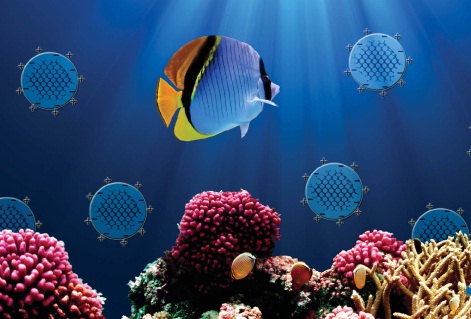
Zn and ZnO nanoparticles are used in plenty of consumer products, including disinfectants, so compiling information on their toxicity and impact in different environments is crucial to ensure safe usage.

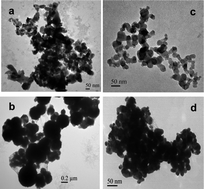
Zikri Arslan at Jackson State University led a team of USA-based researchers to investigate the toxicity of Zn and ZnO nanoparticles in marine aquatic systems. Their study of brine shrimp larvae in sea water published in Issue 1 shows accumulation of the nanoparticles inside the guts and an inability of the shrimp to remove the accumulations.

The shrimp don’t appear to suffer any ill effects over 24 hours, but 96 hours after exposure their mortality rate escalated with the increasing accumulation of nanoparticles. This toxicity is associated with a triggering of oxidative stress.

The team showed that Zn nanoparticles are more toxic to shrimp than zinc oxide nanoparticles in the same conditions and this could be because zinc nanoparticles release more Zn2+ ions. Size is also a factor, with smaller nanoparticles being more toxic than larger ones.

For the detail, have a read of the whole article in Issue 1. Issue 1 is a themed issue on anthropogenic nanoparticles in the environment, which is free to access!*

Comparative evaluation of impact of Zn and ZnO nanoparticles on brine shrimp (Artemia salina) larvae: effects of particle size and solubility on toxicity
Mehmet Ates, James Daniels, Zikri Arslan, Ibrahim O. Farah and Hilsamar Félix Rivera
DOI: 10.1039/C2EM30540B

*Free access to individuals is provided through an RSC Publishing personal account. Registration is quick, free and simple

Digg This
Reddit This
Stumble Now!
Share on Facebook
Bookmark this on Delicious
Share on LinkedIn
Bookmark this on Technorati
Post on Twitter
Google Buzz (aka. Google Reader)

JEM Emerging Investigators 2012

Our latest issue is dedicated to Emerging Investigators – highlighting the research of the best and brightest young minds in environmental science and engineering. This is the third year we have produced an issue dedicated to new researchers to the field, and we are delighted that 2010 Emerging Investigators David Cwiertny and Tamar Kohn guest edited this issue with us.

David Cwiertny and Tamar Kohn discuss the unique nature of the young environmental science field in their editorial and the challenges facing new researchers, from marketing work to funding agencies to communicating science to the public.

The issue contains plenty of HOT research, including fluvial transport of arsenic, groundwater contamination at an ex-uranium mine, Cr VI formation during chlorination of drinking water, interactions of organic matter and gold nanoparticles, effect of water treatment on antibiotic resistance and improving the measurement accuracy for water-soluble composition of PM2.5.

View the rest of the issue here

Digg This
Reddit This
Stumble Now!
Share on Facebook
Bookmark this on Delicious
Share on LinkedIn
Bookmark this on Technorati
Post on Twitter
Google Buzz (aka. Google Reader)