

Emerging Investigator Series: Carsten Prasse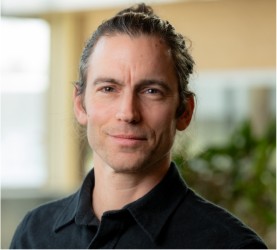
Carsten Prasse is an associate professor in the Department of Environmental Health and Engineering at Johns Hopkins University in Baltimore, Maryland. He is currently the UPS Foundation Visiting Associate Professor at Stanford University, where he is spending a one-year sabbatical. His research in environmental chemistry focuses on the fate of contaminants and their implications for environmental and human health. His group develops new approaches to detect toxic chemicals in complex mixtures and investigates the leaching of chemical additives from plastics, the environmental forensics of PFAS, and aromatic disinfection byproducts in drinking water. Carsten received bachelor’s and master’s degrees in environmental science from the University of Bayreuth, Germany, and a PhD in environmental chemistry from the University of Koblenz-Landau. He completed postdoctoral research at the German Federal Institute of Hydrology and the University of California, Berkeley, before joining the faculty at Johns Hopkins in 2018.
Read Carsten’s Emerging Investigator Series article “Release and phototransformation of benzophenone additives from polystyrene plastics exposed to sunlight” and learn more about him in the interview below:
Your recent Emerging Investigator Series paper focuses on the photo-fate of benzophenone chemical additives in polystyrene. You’ve published 5 papers in our RSC family of Environmental Science journals and we thank you for your support! How has your research evolved from your earliest work to this most recent article at the start of your research career?
When I began my research career, I was primarily interested in the environmental occurrence of anthropogenic chemicals, particularly pharmaceuticals. The first part of my PhD focused on developing an analytical method to detect antiviral drugs used to treat hepatitis, HIV/AIDS, and other viral infections in wastewater, surface water, and drinking water. I showed that these compounds occur in wastewater and are not always completely removed during treatment, allowing them to enter the aquatic environment.
Several of the antiviral drugs were effectively removed during wastewater treatment, which prompted me to ask what happened to them during the process, including whether they were transformed into other compounds. At about the same time, my PhD lab acquired a liquid chromatography–high-resolution mass spectrometry instrument, which enabled me to investigate those transformation products.
That early work helped shape the questions I pursue today as a tenured professor. I remain interested in what happens to chemicals after they enter the environment or a treatment system, but my research has broadened to include a wider range of contaminants and processes. The research in the Emerging Investigator paper on benzophenone additives in polystyrene was actually done when I was still an Assistant Professor indeed in the “emerging” stage of my career. Here we examined how light can influence the fate of chemicals associated with plastics. Across these projects, a consistent goal has been to understand not just which chemicals are present, but how they change and what those changes may mean for environmental and human health.
Dr. Prasse, you completed a foundational education in chemistry in Germany. It must have been a big change to move to UC Berkeley and then Johns Hopkins. What would you like to share about this experience?
Moving to California to join David Sedlak’s lab at UC Berkeley was both exciting and daunting. I had never lived outside Germany, so it meant adjusting to a new country, a new academic environment, and a different way of life all at once. But it also was a tremendous opportunity to learn from new colleagues and to encounter different perspectives on research.
My move to Johns Hopkins was another important transition: from postdoctoral researcher to faculty member, with the opportunity to build a research group of my own. Each move brought challenges, but also broadened my perspective and helped shape the scientist and mentor I am today.
In your Emerging Investigators paper, you used high resolution mass spectrometry to elucidate the identity of transformation products. Nontargeted analysis continues to be a frontier for innovation and discovery. How was your learning curve in this area?
The learning curve has been steep, and it is still ongoing. High-resolution mass spectrometry offers powerful ways to investigate complex mixtures, but it also raises important questions about what we can and cannot conclude from the data. Interpreting those results takes analytical expertise, careful reasoning, and a clear understanding of the limitations of the analytical methods.
I have also learned a great deal from my students and postdoctoral researchers. I have been fortunate to work with an exceptional group of people who have pushed our research forward and brought new ideas to the lab. It has been a lot of fun thinking through these challenges together and exploring what high-resolution mass spectrometry can reveal.
What aspect of your work are you most excited about at the moment?
I’m especially excited about our efforts to prioritize organic contaminants in complex environmental samples. As analytical methods become more sensitive, we can detect an ever-growing number of chemicals. But for many of them, we know very little about their potential toxicity. That knowledge gap is particularly important for transformation products formed in the environment or during technical treatment processes.
I see real promise in chemico approaches, which assess the potential effects of chemicals by examining their interactions with biological molecules such as proteins and DNA. My lab has helped pioneer reactivity-directed analysis as a way to investigate the covalent binding of contaminants to biomolecules. I’m excited to build on that work and explore how in chemico methods can contribute to chemical hazard and risk assessment.
In your opinion, what are the most important questions to be asked/answered in this field of research?
We are exposed to hundreds, perhaps thousands, of anthropogenic chemicals through the food we eat, the air we breathe, the water we drink, and the materials we use every day. Modern society relies heavily on chemicals, and I don’t think it is realistic to imagine that we will simply eliminate them. But we should be able to do a much better job of identifying and reducing our reliance on chemicals that pose unacceptable risks.
One important question is how we can make environmental fate and toxicity assessment a more integral part of the way chemicals are developed, used, and managed. We also need better tools for assessing the many compounds we currently know little about which includes transformation products and chemicals present as part of complex mixtures. Improving our ability to identify which chemicals warrant closer attention is essential if we want research and regulation to focus on the greatest risks.
What do you find most challenging about your research?
Over the past year or two, I have been thinking a great deal about how to communicate our science more effectively. Environmental chemistry often involves complex methods and detailed results, yet its implications extend well beyond our immediate research community. We need to explain clearly what we have found, what remains uncertain, and why the work matters, whether we are speaking with fellow scientists, policymakers, or the public.
That is not always easy, especially when the science is nuanced. But communicating uncertainty clearly, without losing sight of the larger picture, is an important part of doing useful research.
At which upcoming conferences or events may our readers meet you?
I plan to attend the ACS Spring 2027 meeting. I’m also the co-chair of the Gordon Research Conference on Disinfection, Byproducts, and Health, which will be held at Mount Holyoke in August 2027. The conference chair, Ning Dai of the University at Buffalo, and I have put together an exciting program. I would be delighted to meet readers interested in the chemical and microbiological aspects of water disinfection there.
How do you spend your spare time?
I spend most of my spare time with my two sons (2 and 4 year old). They are the love of my life and it’s been incredible seeing them grow. I also run a lot (often together with the kids in a running stroller) and like to spend time with my friends.
Which profession would you choose if you were not a scientist?
That’s not an easy question to answer. My grandparents always thought I would become a carpenter, as I loved helping my dad with jobs around the house. My dad was incredibly handy. After high school, I spent ten months working in elderly care, which I thoroughly enjoyed, so if I had not become a scientist, the health sector would probably have been my most likely path.
Can you share one piece of career-related advice or wisdom with other early career scientists?
Believe in yourself. I know that is easier said than done, and it is something I have struggled with, and sometimes still do. Academia can be demanding, and it is easy to compare your progress with other people’s or to focus on the things you have not yet achieved. Try to remember the strengths and perspective you bring to your work, and don’t let moments of self-doubt convince you that you don’t belong. Seek out mentors and colleagues who support you, stay curious, and give yourself room to learn as you go.


