Archive for the ‘News’ Category

Dalton Transactions: at the heart of the inorganic community

Posted on behalf of Jamie Humphrey, Editor

Our number one priority at Dalton Transactions is to ensure that the journal continues to support our community by providing excellent services for authors and by publishing only the best inorganic chemistry research. We strive to develop and innovate to make sure that the journal continues to serve the international inorganic community. This is very much at the heart of everything we do.
The truly international nature of the journal is represented not only in our authorship (we published articles from 70 countries in 2012), but also through the Editorial Board membership, including our team of Associate Editors – about half of the papers submitted to the journal are handled by this team, with the rest handled by the team of Editors based in Cambridge. Our Associate Editors span the globe, with editorial offices in the USA, UK, Germany, China and Japan. The Royal Society of Chemistry has also been developing its international staff presence in recent years and we now have editorial staff based in Japan, China and the USA, in addition to Royal Society of Chemistry offices in India, Africa and, more recently, Brazil.

In today’s information age, where we can sometimes feel overwhelmed with the amount of information that is available, access to reliable trustworthy knowledge has never been more important. At Dalton Transactions, our fair and impartial peer-review means the content we publish is always of the highest possible quality. Ensuring your research gets the right audience is also key. We have therefore introduced initiatives to lead to greater discoverability for articles published in the journal, and to develop additional measures of an article’s impact.

Dalton Transactions is part of a pilot programme between the Royal Society of Chemistry and Kudos, which aims to provide tools and services to help researchers maximise the usage and impact of their articles. The need for Kudos arises from developments in global academic and research policies that see evolving measures of ‘impact’ used to assess excellence. Kudos aims to provide a service to help researchers and their institutions measure, monitor and maximize the usage of and citations to their articles. The Royal Society of Chemistry also recently introduced a new system for monitoring article-level metrics in Dalton Transactions. The service collates online “mentions” of scholarly articles from social media, newspapers, blogs and other sources into a report that appears online with the article to showcase its uptake, visibility and societal impact. Article-level metrics represents a shift from measuring the impact of a journal to the impact of an article.

Supporting the community is at the heart of Dalton Transactions and is also at the core of the Royal Society of Chemistry, the world’s leading chemistry community. One way in which we supported chemists across the globe is through the funding of the International Year of Chemistry legacy grants. In 2012, over 60 of our member groups received grants each of £1000 to arrange events and activities to promote the chemical sciences. These had an international nature, and ranged from workshops for migrant children in Beijing and a science fair on water chemistry in southern India to supporting chemistry education in tsunami-affected areas in Sri Lanka. Learn more about these grants via www.rsc.org/scienceandtechnology/funding/iyclegacygrants.asp

Dalton Transactions continues to publish research from all areas of inorganic, organometallic and bioinorganic chemistry. Our Themed Issues bring together the best articles in topical research areas or highlight emerging subjects. Table 1 gives full details of the Themed Issues published in 2013.

Table 1 Dalton Transactions Themed Issues published in 2013


Theme Guest Editor(s)  
Coordination Programming: Science of Molecular Superstructures towards Chemical Devices Hiroshi Nishihara (Tsukuba University, Japan) and Hiroki Oshio (University of Tokyo, Japan)  
 
Molecular Precursors for Precision Synthesis of Nanomaterials Christophe Copéret and Maksym Kovalenko, ETH, Switzerland  
 
Vanadium in Inorganic Chemistry Debbie Crans, Colorado State University, USA and Craig McLauchlan, Illinois State University, USA  
 
Advances in Metal-Catalysed Polymerisation and Related Transformations Philip Mountford, University of Oxford, UK  
 
N-Heterocyclic Carbenes Catherine Cazin, St. Andrew’s University, UK  
 
Chemistry and Applications of Metal Complexes Maria Amélia Santos, University of Lisbon, Portugal  
 
Mechanistic Organometallic Chemistry Robert Crabtree, Yale University, USA  
 
Bioinorganic Chemistry Emma Raven, Leicester University, UK  
 
Boranes and Borohydrides Simon Aldridge, University of Oxford, UK  

Themed Issues planned for 2014 include Carboranes (Guest Editors: Professor Guo-Xin Jin, Fudan University, China and Professor Zuowei Xie, The Chinese University of Hong Kong, Hong Kong), Inorganic Chemistry for Renewable Energy Conversion and Storage (Guest Editor, Professor Lars Kloo, KTH, Sweden), Layered Inorganic Solids (Guest Editors: Professor Russell Morris, University of St. Andrews, UK, Dr Jiri Cejka, J. Heyrovsky Institute of Physical Chemistry, Hungary, Dr Petr Nachtigall, Charles University, Czech Republic, Dr Wieslaw Roth, Jagiellonian University of Krakow, Poland), New Talent: Europe (Guest Editors, Professor Dr Matthias Tamm, Technische Universität Braunschweig, Germany and Dr Marc D. Walter, Technische Universität Braunschweig, Germany), Organometallic and Coordination Derivatives of Nanocarbons (Guest Editors, Professor Andrei Khlobystov, University of Nottingham, UK and Professor Andreas Hirsch, University Erlangen-Nuremberg, Germany), New Expeditions in Polar Organometallic Chemistry (Guest Editor, Professor Eva Hevia, University of Strathclyde, UK), Spectroscopy of Inorganic Excited States (Guest Editor, Dr Julia Weinstein, University of Sheffield, UK) and Synergy between Experiment and Theory (Guest Editor, Professor Eric Clot, University of Montpellier, France).

2014 will be a busy year for inorganic chemistry conferences, and I hope that you will look out for me or Deputy Editor Fiona McKenzie – we would love to meet up with you! Two such meetings are the Dalton Discussions, which will take place in the UK. We are proud to publish the presented papers in Dalton Transactions. The titles of the 2014 meetings are ‘Advancing the Chemistry of the f-elements: Dalton Discussion 14’ (28–30 July 2014 Edinburgh, UK) and ‘Metal ions in medical imaging: optical, radiopharmaceutical and MRI contrast: Dalton Discussion 15’ (8–10 September 2014, York, UK). Another important inorganic meeting organised by the Royal Society of Chemistry in 2014 is the 13th ISACS meeting (Challenges in Inorganic and Materials Chemistry (ISACS13)) which will take place in Dublin, Ireland, 1–4 July 2014. To discover which conferences the Editorial Team will be attending in 2014, follow us on twitter (@DaltonTrans and @humphreyj).

We were pleased to support a number of international conferences in 2013 through sponsorship – you may even have attended one of our sponsored lectures. We give support to younger members of the community via poster prizes, and in 2013 we awarded 22 poster prizes, celebrating the achievements of members of our community in the early years of their academic careers. If you are organising a conference in 2014 and you would like us to sponsor a poster prize, please let us know.

With a thriving worldwide network, and a not-for-profit ethos, the Royal Society of Chemistry is the best place to publish work that advances excellence in the chemical sciences. Publish with Dalton Transactions and you’ll be supporting the wider scientific community and future generations of chemists and chemical scientists.

Have a fantastic 2014!

Download the PDF here

Digg This
Reddit This
Stumble Now!
Share on Facebook
Bookmark this on Delicious
Share on LinkedIn
Bookmark this on Technorati
Post on Twitter
Google Buzz (aka. Google Reader)

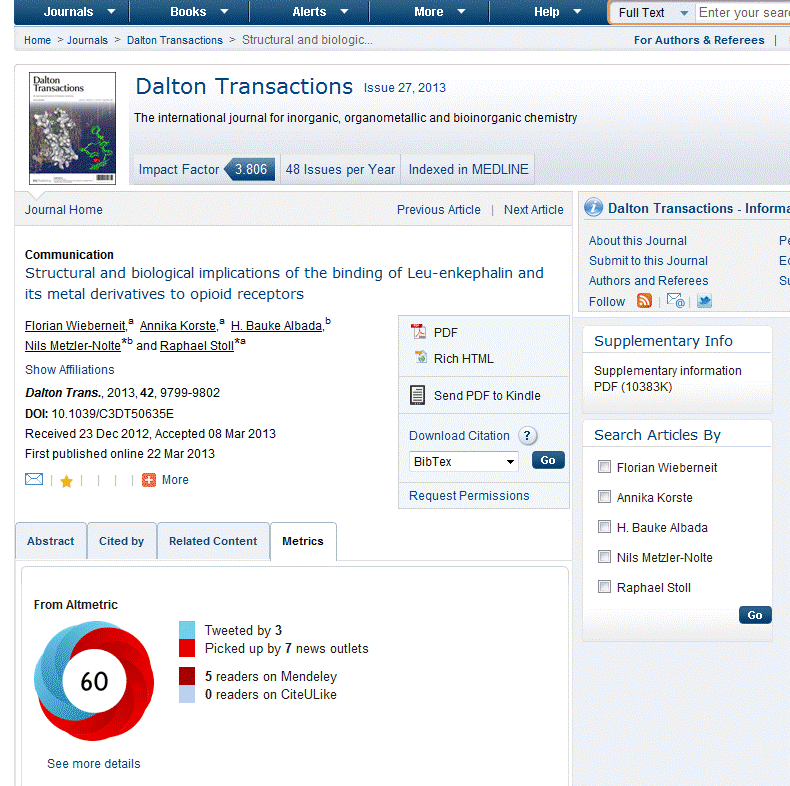
Dalton Transactions now features Altmetrics

We are pleased to announce the inclusion of Altmetrics on Dalton Transactions.

With a constantly changing publishing landscape and changes to the way people use scientific literature, altmetrics is a measure that can monitor the level of conversation and interest in a particular piece of research at the article level. Thus altmetrics provides an additional modern metric for our authors to measure the impact of their work, rather than rely solely on citations and impact factor.

To view the altmetrics on Dalton Transactions articles, use the Metrics tab as pictured below on the article landing page.

Altmetrics on Dalton Transactions

A press release from Altmetrics is available on our website.

What do you think? We are interested to hear your feedback on this new development and how you are utilising these new types of metrics. Please leave your comments below.

Digg This
Reddit This
Stumble Now!
Share on Facebook
Bookmark this on Delicious
Share on LinkedIn
Bookmark this on Technorati
Post on Twitter
Google Buzz (aka. Google Reader)

Why Some Silylenes Split Hydrogen and Others Don’t

Posted on behalf of Ian Mallov, web writer for Dalton Transactions

We often invoke the analogy of using building blocks when we talk about constructing large, complex molecules.  Adding small building blocks often allows for finer control in design, and diatomic hydrogen is the most used small building block.

To add hydrogen to other molecules, hydrogen molecules themselves are split into a proton and hydride; these are then transferred to the target molecule.  Recently, main group compounds involving frustrated Lewis pairs have been used in both steps instead of transition metal catalysts.  There are also a few main group molecules where hydrogen is split at a single atomic site.  Silylenes – the silicon analogue of carbenes, and the subject of this paper, with two bonds, a pair of electrons, and an empty p-orbital, are one type of these select few. This paper mentions the argument that non-transition metal catalysts may be “greener,” but a thorough life-cycle analysis of extraction, reaction and disposal would be necessary to indicate this. 

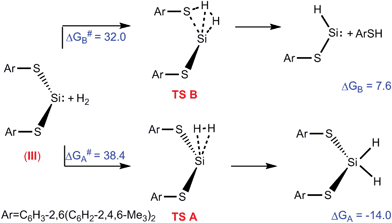
Authors, Kuriakose and Vanka use Density Functional Theory to explore the question of why some silylenes split hydrogen and some don’t.  Specifically, they want to test the hypothesis that whether or not hydrogen is split at the silicon centre depends on if an adjacent atom “interferes,” leading to undesired products.  They create a profile of the energies of reaction (with hydrogen gas) of three distinct types of silylene: a boryl amido silylene (I), a silyl amido silylene (II) and a dithiolate silylene (III).  I and II have activated hydrogen, while III hasn’t been observed to do so. 


The free energy profiles for the reaction of silylene, III, with hydrogen  

After optimizing geometry they model the HOMO and LUMO of the silylenes, since donation of electrons from the HOMO and acceptance of electrons into the LUMO are necessary for hydrogen activation.  In the case of I and II, the LUMO is localized on the silicon atom, while in III, it is not. Correspondingly, the reaction pathway of splitting hydrogen is energetically favoured for I and II, and disfavoured for III.  They also examine effects of other features, such as the angle of the two substituents. 

Have a read of the full article now:

New insights into small molecule activation by acyclic silylenes: a computational investigation
Nishamol Kuriakose and Kumar Vanka
Dalton Transactions, DOI: 10.1039/c3dt52817k


Ian Mallov is currently a Ph.D. student in Professor Doug Stephan’s group at the University of Toronto. His research is focused on synthesizing new Lewis-acidic compounds active in Frustrated Lewis Pair chemistry. He grew up in Truro, Nova Scotia and graduated from Dalhousie University and the University of Ottawa, and worked in chemical analysis in industry for three years before returning to grad school.


Digg This
Reddit This
Stumble Now!
Share on Facebook
Bookmark this on Delicious
Share on LinkedIn
Bookmark this on Technorati
Post on Twitter
Google Buzz (aka. Google Reader)

It’s Getting Easier to be Green

Posted on behalf of Liana Allen, web writer for Dalton Transactions

As more information becomes known about the negative impacts that humans are having on the Earth’s environment, increasing focus is being put on ways of decreasing these effects in all aspects of our lives. For the chemical industry, there are already several key areas which have been identified as needing particular attention with respect to decreasing our effect on the environment. In the last decade, this challenge has become so important that it is now recognized as a field in its own right, referred to as ‘Green Chemistry’. Some of the overall themes of green chemistry are: decrease of the amount of waste by-products generated by a reaction (i.e. avoiding poor atom economy reagents), reduction of reagents which pose safety hazards (i.e. explosives and known toxic compounds), and ‘cleaner’ solvent choices (i.e. avoiding chlorinated solvents, or volatile solvents whose vapours pose an environmental problem).1

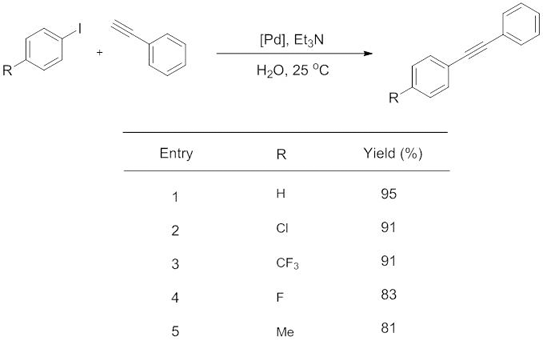
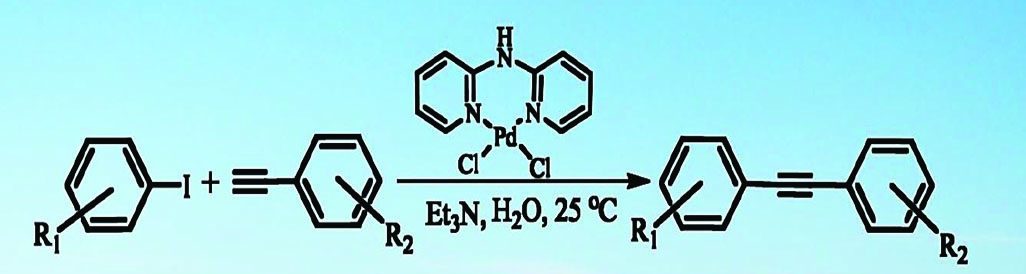
One of the most important reactions used in chemical industry is formation of carbon-carbon bonds.2 The methodology most commonly used to form such bonds is a group of reactions called palladium-catalysed cross-couplings. One of this set of vital reactions is called the Sonogashira coupling. This reaction is used to couple terminal alkynes with aryl or vinyl halides to form di-substituted alkynes, and requires a copper co-catalyst (in addition to a palladium catalyst), heating conditions, and a solvent such as DMF.

In their recent Dalton Transactions article, Wang and colleagues take significant steps towards applying the principles of green chemistry to the Sonogashira reaction by optimizing new conditions where; (a) a copper co-catalyst is not required, thus increasing the atom efficiency of the reaction, (b) the reaction can be run at room temperature, eradicating the energy cost normally required for heating and (c) the solvent is readily available and environmentally benign water.

To read more, see:

Copper-free Sonogashira Cross-Coupling Reaction Promoted by Palladium complexes of Nitrogen-containing Chelating Ligand in Neat Water at Room Temperature
Hong Zhong, Jinyun Wang, Liuyi Li and Ruiha Wang, Dalton Trans. 2013, DOI:10.1039/C3DT52970C

References
1 Constable, D. J. C. et al., Green Chem., 2007, 9, 411.
2 Carey, J. S. et al., Org. Biomol. Chem., 2006, 4, 2337.

Liana AllenDr C. Liana Allen is currently a post-doctoral research associate in the group of Professor Scott Miller at Yale University, where she works on controlling the enantio- or regioselectivity of reactions using small peptide catalysts. Liana received her Ph.D. in organic chemistry at Bath University with Professor Jonathan Williams, where she worked on developing novel, efficient syntheses of amide bonds.

Digg This
Reddit This
Stumble Now!
Share on Facebook
Bookmark this on Delicious
Share on LinkedIn
Bookmark this on Technorati
Post on Twitter
Google Buzz (aka. Google Reader)

Reversible Carbon Dioxide Capture into Platinum-Hydroxo Bonds

Posted on behalf of Stuart Bartlett, web writer for Dalton Transactions

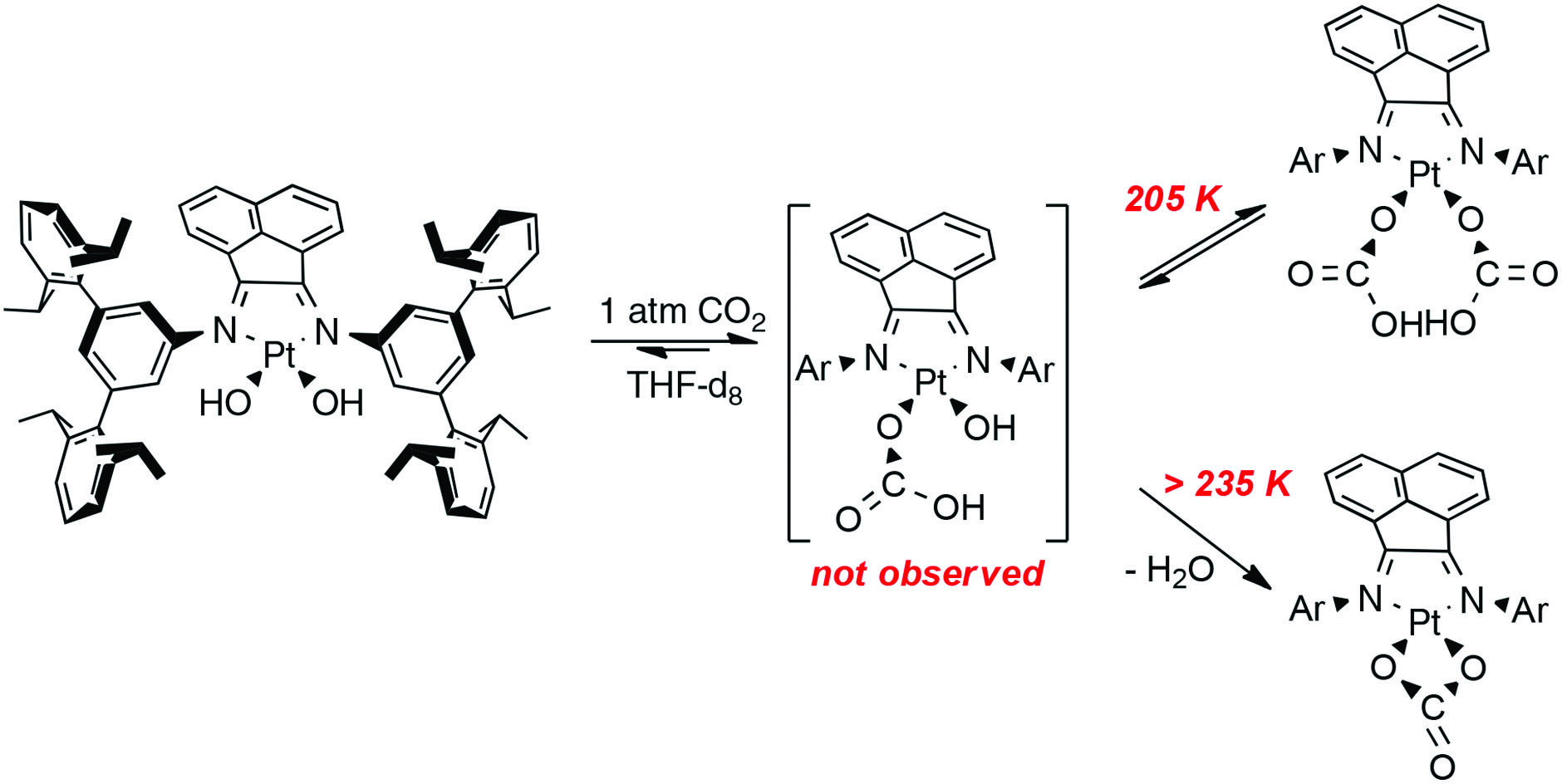
The capture of inert gases, such as CO2, is a fundamental process across biology and transition metal chemistry. There are many advantages to CO2 fixation; one important example is to reduce greenhouse gas emissions from waste streams. The Piers group in Calgary have found that platinum(II) complexes with sterically imposing diimine ligands can undergo CO2 insertion reversibly into a Pt-OH bond to give new carbonate ligands.

These complexes are easily synthesised from a platinum precursor, trans-[Pt(SMe2)2Cl(R)] {R = Me, Ph} , in the presence of a diimine ligand followed by chloride abstraction using Ag2O/H2O to give [Pt(NN)(OH)(R)] {NN = Diimine-(3,5-bis-(2,6-diisopropylphenyl)benzene)}. Also, by using a dichloride precursor, the dihydroxo species can also be obtained. This dihydroxo species was found to react immediately with 1 atm CO2 to yield [(NN)Pt(CO32)] nearly quantitatively. At a lower temperature of 205 K, NMR studies showed the presence of a [(NN)Pt(CO3H)2] complex, which reverted back to [(NN)Pt(CO32)] when warmed up. This process is thought to occur via de-insertion of CO2, to give the initial Pt-OH bond, followed by H2O elimination back to [(NN)Pt(CO32)].

Analysis of the mixed hydroxo-alkyl species, [Pt(NN)(OH)(R)], showed ~50% insertion of CO2 into the Pt-OH bond at room temperature, increasing to 100% at 260 K. Using NMR analysis, this was observed to be a fully reversible process upon heating back to room temperature, giving the initial [Pt(NN)(OH)(R)] complex. Alkane elimination (R-H) was not observed in any circumstances, whereas CO2 elimination as seen as the more favoured route. Also at the lower temperatures, where the CO2 is retained, the alkane elimination barrier is thought to be too high.

This research displays how important transition metal chemistry can be in reactions of chemically inert species, such as CO2, at normal temperatures. This reversible capture points to many important areas, such as biological reactions of enzymes, possible pathways to develop new synthons in organic chemistry and industrial applications for reversible CO2 capture.

Reversible insertion of carbon dioxide into Pt(II)–hydroxo bonds

Find out more from the article:

Reversible insertion of carbon dioxide into Pt(II)–hydroxo bonds
Tracy L. Lohr, Warren E. Piers and Masood Parvez
Dalton Trans., 2013, 42, 14742-14748
DOI: 10.1039/C3DT51701B


Stuart BartlettStuart Bartlett is currently doing a 1 year postdoc position with David Cole-Hamilton at the University of St Andrews, focusing on the conversion of renewable oils towards fine chemical production using metathesis. He obtained his PhD from the University of Southampton investigating the mechanism of ethene oligomerisation catalysis using NMR and X-ray Absortion Spectroscopy.

Digg This
Reddit This
Stumble Now!
Share on Facebook
Bookmark this on Delicious
Share on LinkedIn
Bookmark this on Technorati
Post on Twitter
Google Buzz (aka. Google Reader)

Not Just Another Gold-Gold Love Story

Posted on behalf of Ian Mallov, web writer for Dalton Transactions

One of chemistry’s small, fascinating deviations from scientific expectation is the tendency of a few types of metal atoms to attract instead of repel each other when they are formally positively charged. This tendency is known for several of the lower late transition metals, including mercury, platinum and palladium. But the attraction is strongest in that most innately alluring of metals, gold, and the concept has its own Latinized term: aurophilicity.

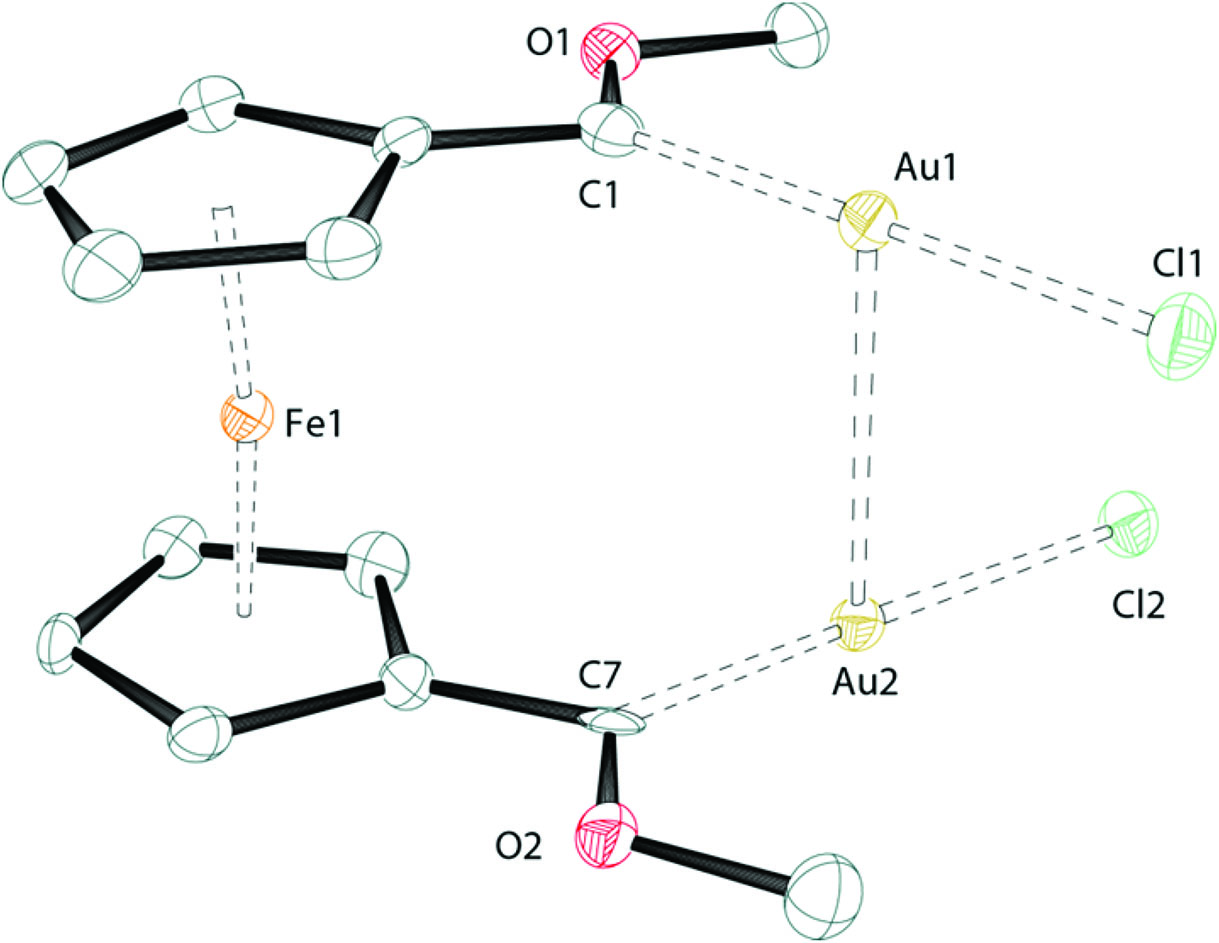
Fernández and co-workers report unique examples of these interactions between positively-charged gold atoms. Gold(I) complexes bound to carbene ligands are a class of compounds of which there are many known and useful variants. Though expensive, they’ve been used with considerable success to catalyze transformations of organic molecules. In their paper, these chemists use Fischer-type carbenes, excellent at accepting electron density from the metal to which they bind, but rarely used in gold chemistry.

X-ray diffraction studies of their synthesized (via transmetallation from tungsten(0) analogues) gold compounds in the solid state, together with theoretical studies by Density Functional Theory computations affirm the attractions between gold atoms of adjacent molecules. They also prepared a ferrocene-bridged dinuclear gold complex, utilizing the ferrocene bridge as a rigid, “semi-support” for the gold atoms (picture two flexible branches at opposite ends of a solid trunk) and the solid-state and calculated structures show the gold atoms, well out on these “branches,” bending toward one another and at a distance even closer than the gold atoms in the “unsupported” complexes.

There is even an explanation offered: using Second-Order Perturbation Theory computations, it appears that electron density is donated from a doubly-occupied d-orbital of one gold atom into an empty p-orbital of the adjacent atom, and the energies associated with this interaction are indeed significant.

Fischer-type gold(I) carbene complexes stabilized by aurophilic interactions

Find out more from the paper:

Fischer-type gold(I) carbene complexes stabilized by aurophilic interactions
Daniela I. Bezuidenhout, Belinda van der Westhuizen, Amos J. Rosenthal, Michael Wörle, David C. Liles and Israel Fernández
Dalton Trans., 2014, Advance Article
DOI: 10.1039/C3DT52961D


Ian MallovIan Mallov is currently a Ph.D. student in Professor Doug Stephan’s group at the University of Toronto. His research is focused on synthesizing new Lewis-acidic compounds active in Frustrated Lewis Pair chemistry. He grew up in Truro, Nova Scotia and graduated from Dalhousie University and the University of Ottawa, and worked in chemical analysis in industry for three years before returning to grad school.

Digg This
Reddit This
Stumble Now!
Share on Facebook
Bookmark this on Delicious
Share on LinkedIn
Bookmark this on Technorati
Post on Twitter
Google Buzz (aka. Google Reader)

Increased Silica Sphere Surface Area Aids Protein Separation

Posted on behalf of Liana Allen, web writer for Dalton Transactions

Protein purification is an essential step in the study and characterisation of naturally occurring molecules and the understanding of their functions in different biological processes. Before an in-depth study can be achieved, the protein of interest needs to be separated not only from the non-protein constituents of the tissue or cell culture, but also from any other proteins present. The latter is usually the most difficult aspect of the separation process.

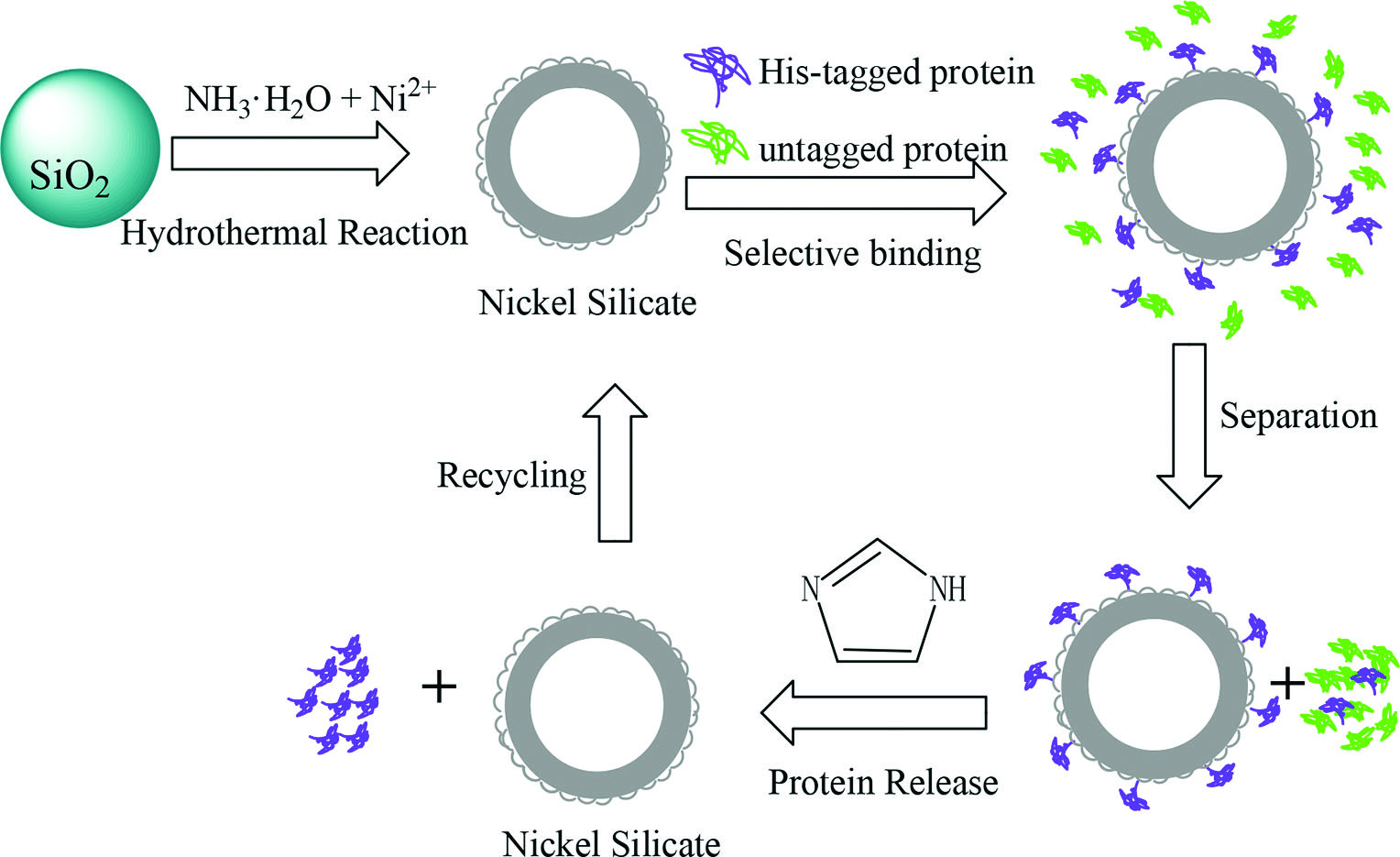
Protein tagging is a common way of separating target proteins from other biological materials. In an example of this tagging method, target proteins are deliberately expressed with histidine (His) residues, which have a high affinity for binding to metal ions. This technique is popular due to its easy adaptation to any protein tagging system, however it also has limitations including long operation times and the necessity for pretreatment of the organic matter. Recently, this separation procedure has been improved by immobilising the metal ions on solid supports such as silica nano-spheres, though low surface area and low surface metal ion density have thus far limited practical application of this.

In this paper, the authors report an efficient synthesis of nickel functionalised silica nano-spheres and demonstrate their superior performance in the affinity purification of His-tagged proteins. By first chemically affixing nickel ions to the surface of silica nano-spheres, then removing the silica cores, hollow spheres are created, with greater surface area and higher Ni2+ surface density than the current nano-particle materials used for protein separation. The authours demonstrate that His-tagged TRX proteins could be separated directly from crude E. coli cell material using their hollow, Ni2+ functionalised nano-spheres. Moreover, after washing and sonicating, the nano-spheres could be reused up to five times while maintaining the same high efficiency.

 Preparation of hollow nickel silicate nanospheres for separation of His-tagged proteins

To read more, see:

Preparation of hollow nickel silicate nanospheres for separation of His-tagged proteins
Yonghui Wu, Guanxiao Chang, Yanbao Zhao and Yu Zhang
Dalton Transactions, 2013, Advance Article, DOI:10.1039/c3dt52084f


Liana AllenDr. C. Liana Allen is currently a post-doctoral research associate in the group of Professor Scott Miller at Yale University, where she works on controlling the enantio- or regioselectivity of reactions using small peptide catalysts. Liana received her Ph.D. in organic chemistry at Bath University with Professor Jonathan Williams, where she worked on developing novel, efficient syntheses of amide bonds.

Digg This
Reddit This
Stumble Now!
Share on Facebook
Bookmark this on Delicious
Share on LinkedIn
Bookmark this on Technorati
Post on Twitter
Google Buzz (aka. Google Reader)

Ensure Functional Material is Piping Hot Throughout

Posted on behalf of Lewis Downie, web writer for Dalton Transactions

Some synthetic techniques can cause differing morphologies and sometimes be more efficient with both time and energy. One technique which is becoming more prevalent is microwave synthesis. Microwave assisted synthesis is solution based and therefore considered “soft” but has been found to allow the synthesis of a number of materials and in particular ones based around metal organic frameworks.

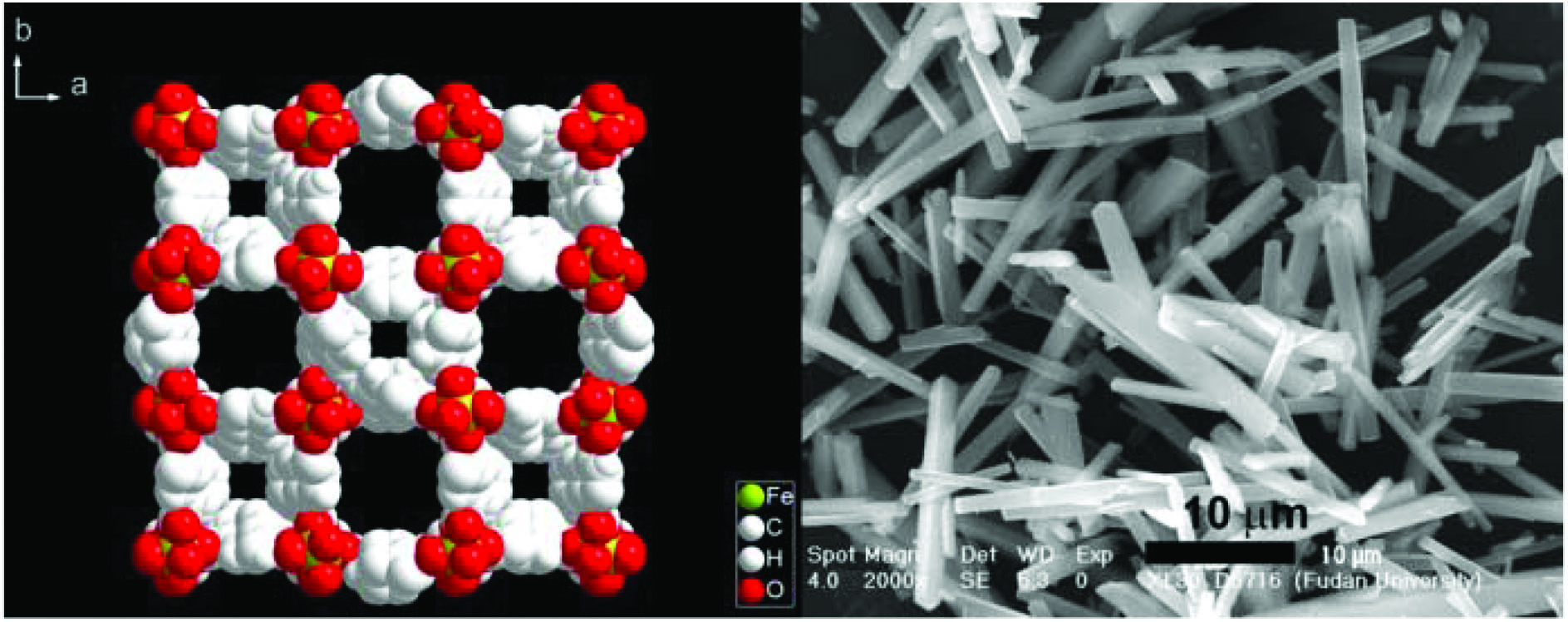
Use of microwave energy leads to the fast and uniform heating of a solution when compared to, say, solvothermal reaction techniques. It also leads to a greater number of potential nucleation points. These differences can lead to a more homogenous and rapidly synthesised product. For the synthesis of Fe(OH)(1,4-NDC)•2H2O (1,4-NDC = 1,4-naphthalenedicarboxylate), “PCP-Fe”, it is found that all these advantages occur.

PCP-Fe is normally synthesised hydrothermally, involving a 3 day heating period. This leads to the formation of cubic crystals (~ 10 μm3) with a broad size distribution. Microwave irradiation can reduce synthesis time to as short as one minute, however 30 minutes is found to produce crystalline, homogenous particles of PCP-Fe. The microwave synthesised particles are smaller and of differing morphology (prisms of ~ 15 μm in length and 3 μm in width) which is expected from a technique which provides many and rapid nucleation opportunities.

A number of other studies were performed in order to optimise the synthesis with mixed results. Modifying the reaction time leads to a number of varying, yet similar morphologies – thirty minutes is found to lead to the most uniform structures. Decreased reaction time leads to an increase in defects and a corresponding lowering of crystallinity. Variance in reagent concentration also has a direct effect on crystallinity – an inverse relationship is described.

The microwaved sample also appears to show improved gas adsorption properties. This is suggested to be directly related to the smaller particle size when compared to the hydrothermal sample. This shows the importance of morphology when assessing material properties and also the understanding of a number of synthetic techniques in order to access different morphologies.

Rapid synthesis of iron 1,4-naphthalenedicarboxylate by microwave irradiation with enhanced gas sorption

Find out more from the paper:
Rapid synthesis of iron 1,4-naphthalenedicarboxylate by microwave irradiation with enhanced gas sorption
Yongbing Lou, Jinxi Chen, Jing Jiang and Qilong Bao
Dalton Trans., 2013, Accepted Manuscript
DOI: 10.1039/C3DT52546E, Paper


Lewis DownieLewis Downie has wide ranging interests in the chemical sciences but has a background in functional materials. His main research focus is the investigation of these materials using crystallographic techniques. He is currently a postdoctoral research assistant at the University of St Andrews, U.K.

Digg This
Reddit This
Stumble Now!
Share on Facebook
Bookmark this on Delicious
Share on LinkedIn
Bookmark this on Technorati
Post on Twitter
Google Buzz (aka. Google Reader)

A Novel Material for the Detection of Explosives

Posted on behalf of Liana Allen, web writer for Dalton Transactions

Picric acid is an organic compound which has an explosive power more powerful than TNT. It is widely used in munitions and explosives, but also appears in the pharmaceuticals and dye industries as a chemical reagent. Picric acid can cause several negative health effects, such as skin irritation and respiratory system damage.1 Therefore, it is an important challenge to develop sensors that can detect picric acid safely and reliably, for both the recognition of explosives and the detection of its presence as an environmental pollutant.2

The most promising method of detecting picric acid is called ‘fluorescence quenching’, as this is a highly sensitive and inexpensive technique. In this paper, the authors report the synthesis of a new material which can detect picric acid in this manner. Taking advantage of the reliable, rigid way the metal platinum forms complexes with other molecules (‘ligands’), the authors make a novel material which naturally contains pores the correct size to accommodate picric acid molecules. Interaction of the ‘ligands’ and the picric acid once it has entered one of these pores induces a ‘fluoresence quenching’ response, allowing picric acid to be detected at very low concentrations, both in a liquid and as a gas.

PtII6 nanoscopic cages with an organometallic backbone as sensors for picric acid

To read more, see:

PtII6 nanoscopic cages with an organometallic backbone as sensors for picric acid
Dipak Samanta and Partha Sarathi Mukherjee
Dalton Trans., 2013, Advance Article
DOI: 10.1039/C3DT52268G, Paper

1 B. Roy, A. K. Bar, B. Gole, P. S. Mukherjee, J. Org. Chem., 2013, 78, 1306.
2
M. E. Germain, M. J. Knapp, Chem. Soc. Rev., 2009, 38, 2543.


Liana AllenDr. C. Liana Allen is currently a post-doctoral research associate in the group of Professor Scott Miller at Yale University, where she works on controlling the enantio- or regioselectivity of reactions using small peptide catalysts. Liana received her Ph.D. in organic chemistry at Bath University with Professor Jonathan Williams, where she worked on developing novel, efficient syntheses of amide bonds.
Digg This
Reddit This
Stumble Now!
Share on Facebook
Bookmark this on Delicious
Share on LinkedIn
Bookmark this on Technorati
Post on Twitter
Google Buzz (aka. Google Reader)

Call for papers: 2014 themed issues

Dalton TransactionsWe are delighted to announce that Dalton Transactions will be publishing a number of themed issues in 2014. We want you to submit your work. If your research fits within the following themed issue topics, read on…

Organometallic and Coordination Derivatives of Nanocarbons –deadline 1st December 2013

Layered Inorganic Solids–deadline 15th January 2014

Synergy between Experiment and Theory–deadline 29th January 2014


Details of the scope of each issue is below.

How to submit?
All types of manuscript—communications, full papers and Perspectives, will be considered for publication. The manuscript should be prepared according to our article guidelines and submitted via our online system.

All manuscripts will be subject to the normal refereeing procedure and inclusion in the themed issue will be at the discretion of the Guest Editors. Please indicate in your submission that you would like the manuscript to be considered for this themed issue.

Issue scopes:

Organometallic and Coordination Derivatives of Nanocarbons
Guest edited by Professors Andrei Khlobystov and Andreas Hirsch, this issue focuses on the nanoscience and nanotechnology of inorganic and organometallic nanomaterials, including synthesis, structural and functional characterisation, and theory.

Layered Inorganic Solids
Guest edited by Professors Russell Morris, Jiri Cejka, Petr Nachtigall and Wieslaw Roth, this issue focuses on the experimental and theoretical aspects of the chemistry of layered materials.

Synergy between Experiment and Theory
Guest edited by Professor Eric Clot, this issue highlights the benefit of using simultaneous experimental and computational approaches to address a particular problem in inorganic or organometallic chemistry.

Digg This
Reddit This
Stumble Now!
Share on Facebook
Bookmark this on Delicious
Share on LinkedIn
Bookmark this on Technorati
Post on Twitter
Google Buzz (aka. Google Reader)