Archive for the ‘News’ Category

Gutsy Chemistry Yields Insight Into Reductive Elimination at Rh

Posted on behalf of Ian Mallov, web writer for Dalton Transactions

Reading the chemical literature as a synthetic chemist, I can often empathize with the story of the practical challenges which underlies the research story in a paper.  This article from Gunnoe and co-workers certainly left me with an appreciation for the gutsy way in which the researchers overcame significant challenges to the usual synthetic and analytical techniques of the inorganic chemist to present some hard-won gains on the reductive elimination chemistry of rhodium.
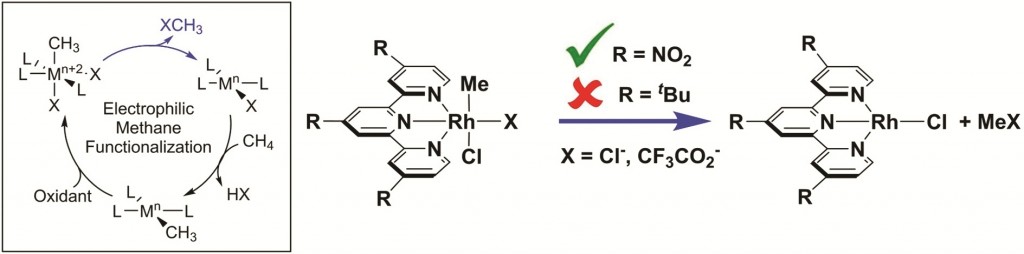
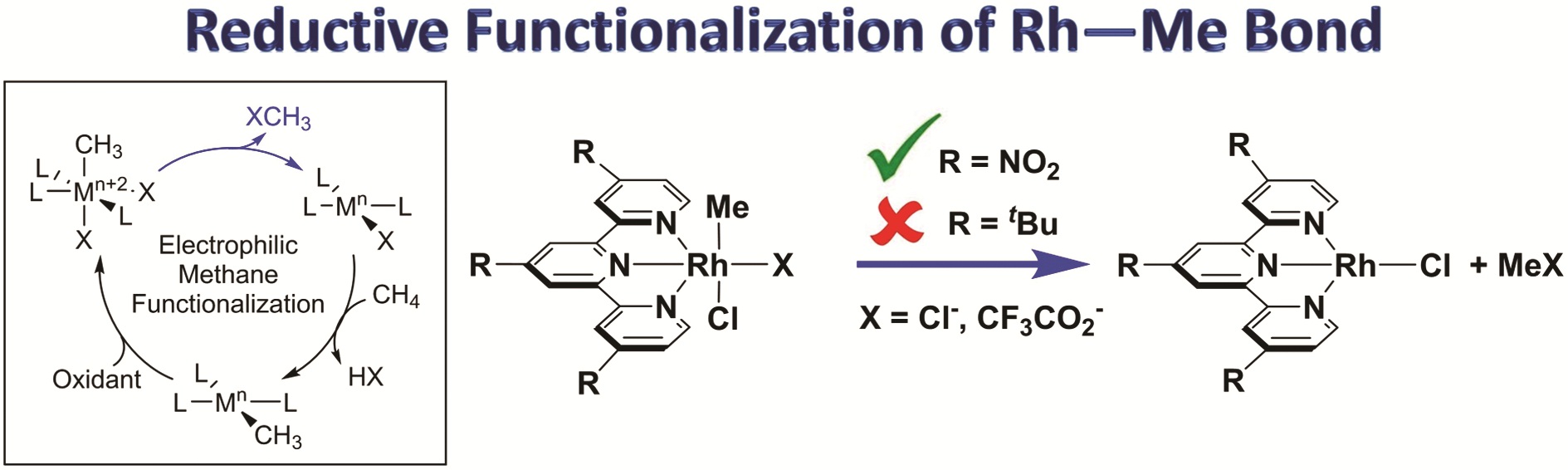
Reductive functionalisation of a Rh-Me bond

The power of reductive elimination – inducing two chemical moieties bonded to a central atom to leave without one of their electrons, resulting in a formal gain of electrons by this central atom – lies in its ability to fuse together the two groups leaving. In this way chemical bonds which are difficult or impossible to form by other means can be created.  When the elimination of one group breaks a metal-carbon bond, the possibility to form a carbon-X bond with the other group reductively-eliminated, and thus functionalize a carbon centre, is particularly attractive.

Such is the technique the Gunnoe group present here.  Much more commonly used in platinum chemistry, they prove this approach to be applicable to rhodium chemistry also, inducing reductive elimination of CH3 and a range of halides or pseudo-halides.  While the CH3-X products formed are useful only as a proof of principle, the proof was a result of overcoming significant challenges. 

The Rh-terpyridine complex ultimately coaxed to undergo reductive CH3-X elimination was so insoluble that they were unable to obtain a NMR spectrum, much less an x-ray crystal structure, and had to trust that a combustion analysis supporting their hypothesized product was evidence enough to proceed.  Then, the hoped-for reductive elimination did not occur until electron-withdrawing NO2 groups were installed on the terpyridine backbone, the reaction was heated, and the solvent changed to CD3NO2 (certainly not the first solvent one would have tried).  Moreover, the CH3-X products formed were gases, making it very difficult to quantify the amount produced.

Nonetheless, their persistent tweaks of the organometallic complex itself, aided by computational thermodynamic data and the use of second-choice analytical techniques when necessary yielded insight into Rh reductive elimination.

Find out more and download the article now:

Reductive functionalization of a rhodium(III)–methyl bond by electronic modification of the supporting ligand
M. E. O’Reilly, D. R. Pahls, J. R. Webb, N. C. Boaz, S. Majumdar, C. D. Hoff, J. T. Groves, T. R. Cundari and T. B. Gunnoe
Dalton Trans., 2014, DOI10.1039/C4DT00234B


Ian Mallov Ian Mallov is currently a Ph.D. student in Professor Doug Stephan’s group at the University of Toronto. His research is focused on synthesizing new Lewis-acidic compounds active in Frustrated Lewis Pair chemistry. He grew up in Truro, Nova Scotia and graduated from Dalhousie University and the University of Ottawa, and worked in chemical analysis in industry for three years before returning to grad school.
Digg This
Reddit This
Stumble Now!
Share on Facebook
Bookmark this on Delicious
Share on LinkedIn
Bookmark this on Technorati
Post on Twitter
Google Buzz (aka. Google Reader)

A new Editor for Dalton Transactions

Posted on behalf of Philip Mountford, Chair, Dalton Transactions Editorial Board

I am writing on behalf of the Editorial Board of Dalton Transactions to let you know that Dr Jamie Humphrey has accepted a new position within the Royal Society of Chemistry as Publisher of Dalton Transactions and as such will no longer be Editor. However, we are delighted to report the appointment of the new Editor for Dalton Transactions, Sarah Ruthven.

Sarah has been a member of Royal Society of Chemistry editorial staff since 2005. Since her time at the organisation, Sarah has overseen the successful development of a number of journals, including Green Chemistry and Food & Function, and in 2011 she launched the Royal Society of Chemistry’s innovative journal, RSC Advances, which in the three years since its launch has grown to be the largest journal that the Royal Society of Chemistry publishes.

As the Journal’s Editor, Sarah brings extensive journal and publishing experience to Dalton Transactions, together with tremendous enthusiasm and a reputation for getting things done. I have every surety that Dalton Transactions will thrive and prosper under her editorship. Sarah will lead the Dalton Transactions editorial team based in Cambridge, UK: Deputy Editor, Fiona McKenzie and Development Editor, Guy Jones, and Editorial Production Manager Andrew Shore and his team of Publishing Editors.

Together with all the authors and readers, and the editorial and advisory board members of Dalton Transactions I am sure you would wish to join me in thanking Jamie for his hugely important role at the Journal during the past 11 years. From 2003 to 2014, the Journal has seen the number of published articles grow substantially from 689 to 1709 per year, with a subsequent increase in issue frequency from 24 to 48 issues per year—making Dalton Transactions the first weekly inorganic journal. Jamie also introduced topic-based themed issues and increased the number of Associate Editors to 7, based in 6 countries worldwide.

During Jamie’s tenure, Dalton Transactions also has seen its impact factor grow from 3.02 to 3.81, maintaining its highly competitive position in comparison to its international counterparts. Jamie has been tireless in promoting and representing the Journal at meetings and conferences throughout the world, and many of us have enjoyed his company in both a professional and personal setting.

We thank you Jamie for all of this and wish you all the best for the future!

Sarah Ruthven

Jamie Humphrey

Philip Mountford

Sarah Ruthven Jamie Humphrey Philip Mountford

Orignally published in Dalton Transactions as an Editorial article

Digg This
Reddit This
Stumble Now!
Share on Facebook
Bookmark this on Delicious
Share on LinkedIn
Bookmark this on Technorati
Post on Twitter
Google Buzz (aka. Google Reader)

Professor Christine Thomas joins the Dalton Transactions Editorial Board

We are delighted to announce the appointment of Professor Christine Thomas to the Dalton Transactions Editorial Board.

Professor Thomas is an Associate Professor of Chemistry at Brandeis University and her research program focuses on synthetic inorganic, organometallic and bioinorganic chemistry. She will join the board as an Associate Editor on 1st May 2014 having been a member of the Advisory Board for Chemical Communications since 2012. In response to her appointment, Professor Thomas said “I’m honoured and excited to join the Dalton Transactions team.” ChristineThomas

A selection Professor Thomas’ latest papers in Dalton Transactions

Heterolytic addition of E-H bonds across Pt-P bonds in Pt N-heterocyclic phosphenium/phosphido complexes
Baofei Pan, Mark W. Bezpalko, Bruce M. Foxman and Christine M. Thomas
Dalton Trans., 2012, 41, 9083-9090

Synthesis and investigation of the metal–metal interactions in early/late heterobimetallic complexes linking group 5 imido fragments to Co(I)
Deirdra A. Evers, Alia H. Bluestein, Bruce M. Foxmana and Christine M. Thomas
Dalton Trans.,  2012, 41, 8111-8115

Effect of ligand modification on the reactivity of phosphinoamide-bridged heterobimetallic Zr/Co complexes
Wen Zhou, Noam I. Saper, Jeremy P. Krogman, Bruce M. Foxman and Christine M. Thomas
Dalton Trans., 2014, 43, 1984-1989

  
Digg This
Reddit This
Stumble Now!
Share on Facebook
Bookmark this on Delicious
Share on LinkedIn
Bookmark this on Technorati
Post on Twitter
Google Buzz (aka. Google Reader)

HOT articles for April

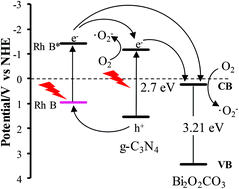
Facile fabrication and enhanced photosensitized degradation performance of the g-C3N4–Bi2O2CO3 composite
Miao Xiong, Lang Chen, Qing Yuan, Jie He, Sheng-Lian Luo, Chak-Tong Aua and Shuang-Feng Yin
Dalton Trans., 2014, Advance Article
DOI: 10.1039/C4DT00486H

Graphical Abstract

Free to access until 23rd May 2014


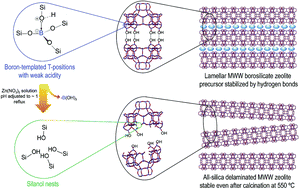
Novel surfactant-free route to delaminated all-silica and titanosilicate zeolites derived from a layered borosilicate MWW precursor
Xiaoying Ouyang, Ying-Jen Wanglee, Son-Jong Hwang, Dan Xie, Thomas Rea, Stacey I. Zones and Alexander Katz
Dalton Trans., 2014, Advance Article
DOI: 10.1039/C4DT00383G

Graphical Abstract

Free to access until 8th May 2014


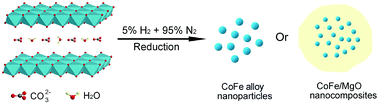
Influence of reduction temperature on composition, particle size, and magnetic properties of CoFe alloy nanomaterials derived from layered double hydroxide precursors
Shuangxia Yang, Lianying Wang, Shuang Yue, Yanluo Lu, Jing He and Dongye Zhao
Dalton Trans., 2014, Advance Article
DOI: 10.1039/C4DT00137K

Graphical Abstract

Free to access until 8th May 2014


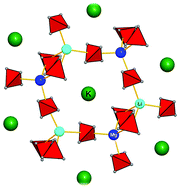
Borohydrides: from sheet to framework topologies
P. Schouwink, M. B. Ley, T. R. Jensen, L’. Smrčokc and R. Černý
Dalton Trans., 2014, Advance Article
DOI: 10.1039/C4DT00160E

Graphical Abstract

Free to access until 8th May 2014

Digg This
Reddit This
Stumble Now!
Share on Facebook
Bookmark this on Delicious
Share on LinkedIn
Bookmark this on Technorati
Post on Twitter
Google Buzz (aka. Google Reader)

On the Hunt for HOCl

Hypochlorous acid (HOCl) is a weak acid, formed from the reaction of chlorine with water. In addition to its use as a reagent in organic chemistry, it has significant biological relevance. HOCl is generated in biological systems in a reaction between chloride ions and hydrogen peroxide, catalysed by the enzyme myeloperoxidase.

This enzyme is secreted by phagocytes (cells which help protect the body by ‘ingesting’ bacteria) when they are activated during an immune response. Hypochlorite (ClO), the conjugate base of HOCl, is extremely toxic to bacteria and plays a vital role in assisting the activated phagocytes with killing a wide range of pathogens.1

Excess production of HOCl in a living system can have a detrimental effect, as HOCl can react with many different biological molecules, including DNA, cholesterol and proteins, leading to changes in their biological properties. An example of this is the reaction of hypochlorous acid with unsaturated bonds in lipids, which produces a species called a chlorohydrin. This disrupts the formation of the essential lipid by-layers which form around cells.

Excess hypochlorous acid has been implicated in conditions such as inflammatory diseases, neurodegeneration and cancers.2 In order to fully understand the role of HOCl in these biological processes, accurate detection methods must be developed to monitor the molecule in living cells.

  Luminescent ruthenium complexes 

Several ‘HOCl-recognising’ molecules have been found to be effective sensors of hypochlorous acid. When conjugated with a fluorophore, these probes can successfully ‘recognise’ HOCl by reacting with it, however their application in vivo is still limited due to their excitation wavelengths being in the ultraviolet region of light.3 Sensors with adsorption (or emission) in the visible light range are more desirable for clinical diagnostic applications. 

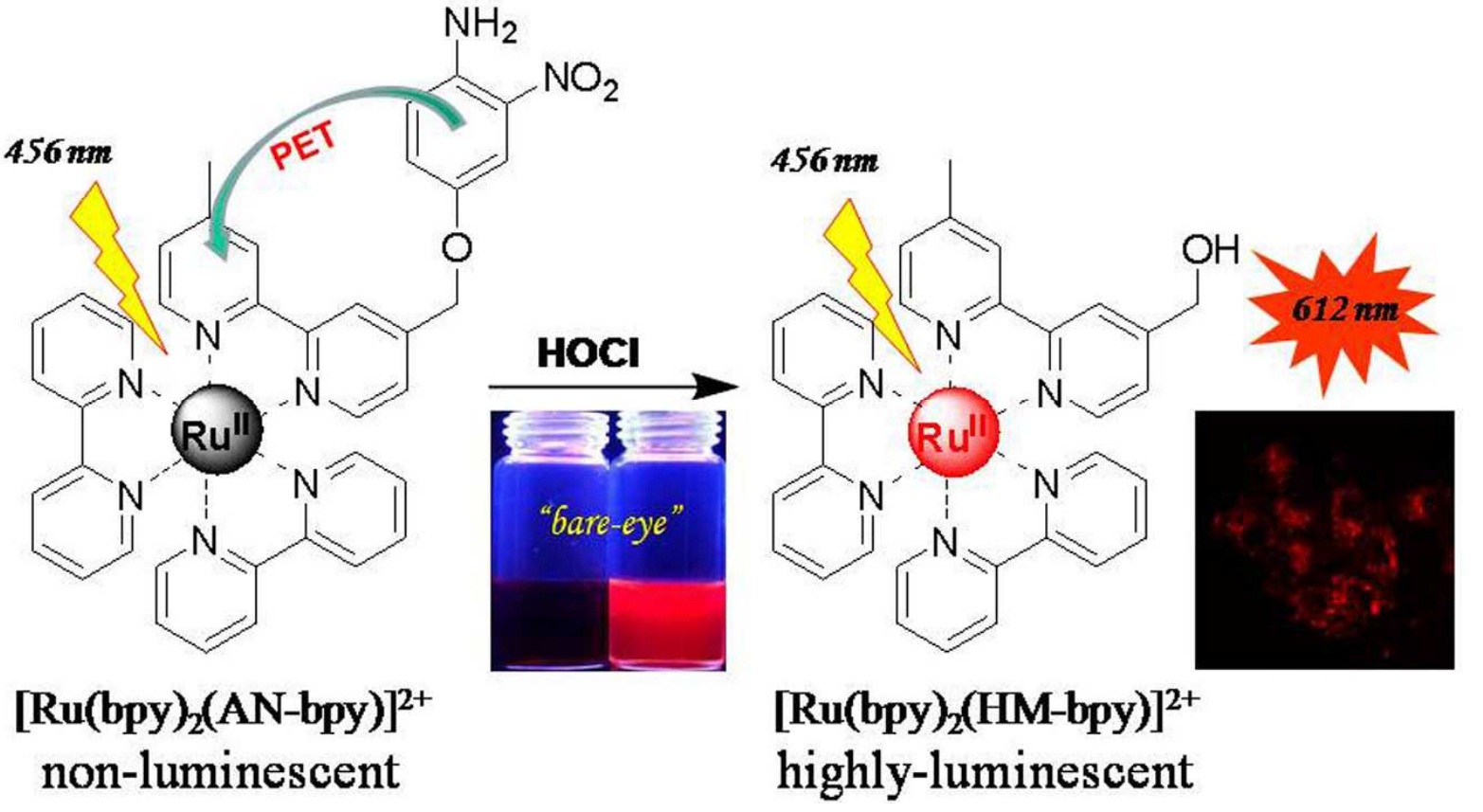
In one recent paper in Dalton Transactions, Yuan and co-workers combine an excellent HOCl-recognising moiety: 4-amino-3-nitrol phenol) and a ruthenium(II)-2,2-bipyridyl complex, which is well known to exhibit visible light adsorption and emission, into one compound to create a luminescent probe for HOCl.

The resulting complex [Ru(bpy)2(AN-bpy)][PF6]2 is very weakly luminescent but, upon reaction with HOCl in aqueous media, converts to [Ru(bpy)2(HM-bpy)][PF6]2, which has a luminescence signal which is 110-fold stronger.

Impressively, the authors show that when HeLa cells are incubated with [Ru(bpy)2(AN-bpy)][PF6]2 for two hours they remain non-luminescent; when the same cells are subsequently treated with HOCl for thirty minutes, a bright red luminescence is observed, clearly demonstrating the potential for using this ruthenium complex as an in vivo, luminescent detector of hypochlorous acid. 

To find out more, read the article using the link below:

Development of a functional ruthenium(II) complex for probing hypochlorous acid in living cells
Dalton Trans. 2014, DOI:10.1039/C4DT00179F


Liana
Dr C. Liana Allen is currently a post-doctoral research associate in the group of Professor Scott Miller at Yale University, where she works on controlling the enantio- or regioselectivity of reactions using small peptide catalysts. Liana received her Ph.D. in organic chemistry at Bath University with Professor Jonathan Williams, where she worked on developing novel, efficient syntheses of amide bonds.


References  

 1 J. M. Albrich, C. A. McCarthy, J. K. Hurst, Prot. Nat. Acad. Sci., 1981, 78, 210.
2  T. I. Kim, S. Park, Y. Choi, Y. Kim, Chem.-Asian J., 2011, 6, 1358
3 Y. Xiao, R. Zhang, Z. Ye, Z. Dai, H. An, J. Yuan, Anal. Chem., 2012, 84, 10785.

Digg This
Reddit This
Stumble Now!
Share on Facebook
Bookmark this on Delicious
Share on LinkedIn
Bookmark this on Technorati
Post on Twitter
Google Buzz (aka. Google Reader)

New MOFs Show Selective Carbon Dioxide Capture Capabilities

Carbon dioxide (CO2) is released into the Earth’s atmosphere in large quantities by fossil fuel and biomass-driven power generation and by natural gas processing plants. While the production of energy via these means is essential, the gaseous CO2 by-product they release into the atmosphere has been implicated in global warming and ocean acidification.1 The capture of waste gaseous CO2 and its subsequent long-term storage is one strategy being used to try to mitigate these geological problems.

Direct capture of CO2 from the air presents significant challenges, one of which is the separation of CO2 from other gases. Currently, a lot of waste carbon dioxide is captured at the emission source – fossil fuel-powered energy plants – by a ‘filter’ that traps the CO2 as it travels up a chimney. This method can prevent up to 90% of a power plant’s carbon emissions from entering the atmosphere, however the process requires a lot of energy and the captured gas still needs to be transported to a suitable storage area. New technologies for selective capture of carbon dioxide from the air are still in their infancy, but could offer more efficient ways to trap CO2 anywhere on the planet, not just at the sources of emission. 
MOF

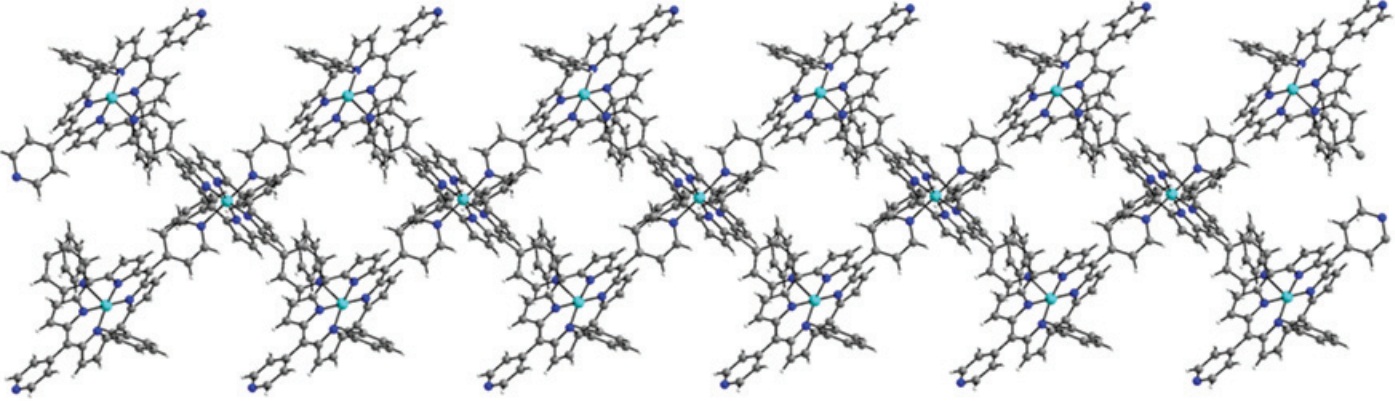
Figure 1: Double chain MOF

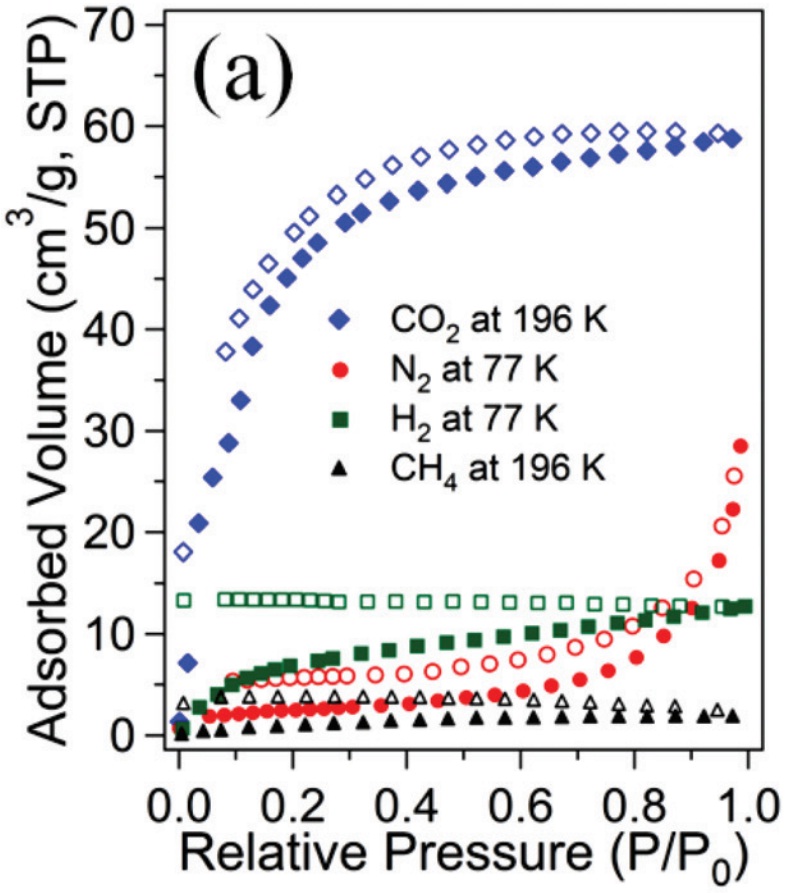
Metal organic frameworks (MOFs), also known as coordination polymers, are compounds containing metal ions which are coordinated to organic molecules to form extensive two- or three-dimensional structures. The uniform and controllable porosity of these materials has already been exploited as potential devices for gas capture and storage.2 In one recent paper in Dalton Transactions, Kim and co-workers synthesise novel MOFs using cobalt and zinc metal ions coordinated to porphyrin-based molecules. The resulting MOFs display an interesting 1D ‘double chain’ arrangement of molecules (Figure 1). These ‘double chains’ pack together tightly, forming hydrogen bonds between the ‘chains’, resulting in a stable solid state structure with defined pores. Gas sorption experiments revealed that these new MOFs both show high uptake of CO2 gas compared with nitrogen (N2), hydrogen (H2) and methane (CH4), (Figure 2), making these types of materials excellent candidates for selective CO2 capture from the air. 

Gas uptake by double chain MOF

Figure 2: Gas uptake by double-chain MOF

Find out more and download the article now:
CO2 selective 1D double chain dipyridyl-porphyrin based porous coordination polymers 
Dalton Trans. 2014, DOI:10.1039/C3DT53287A 

References 

1 IPCC Special Report, ‘Carbon Dioxide Capture and Storage’, IPCC Working Group III, 2005
2 S. L. James, Chem. Soc. Rev., 2003, 32, 276.


Liana Allen Dr C. Liana Allen is currently a post-doctoral research associate in the group of Professor Scott Miller at Yale University, where she works on controlling the enantio- or regioselectivity of reactions using small peptide catalysts. Liana received her Ph.D. in organic chemistry at Bath University with Professor Jonathan Williams, where she worked on developing novel, efficient syntheses of amide bonds.
Digg This
Reddit This
Stumble Now!
Share on Facebook
Bookmark this on Delicious
Share on LinkedIn
Bookmark this on Technorati
Post on Twitter
Google Buzz (aka. Google Reader)

Tag-Team Luminescence Enlightens Biomolecular Analysis

How do you combine rare-earth metals, extremely specific energy transfers, and luminescent properties to investigate changes in enzymes? New methods often arise from unique confluences of existing knowledge. In their recent paper, the Natrajan group from the University of Manchester exploit known properties of easily-obtained chemical products to present a clever new biosensory technique .

UCP emission spectra

The unique aspect is the use of upconverting phosphors (UCPs) in combination with enzymes. UCPs are luminescent particles, often based on rare-earth metals, which can be excited by multiple photons absorbed in the near-infra-red region (750-1400 nm wavelengths). Post excitation, they emit a photon of light in the higher-energy visible spectrum, thus the energetic process is known as up-conversion. While enzymes have high specificities and sensitivities to substrates, UCP’s have the advantage of excitation in the near-infra-red region without autofluorescence. In combination, enzymes and UCPs provide several direct advantages over simple biosensory fluorescence measurements.

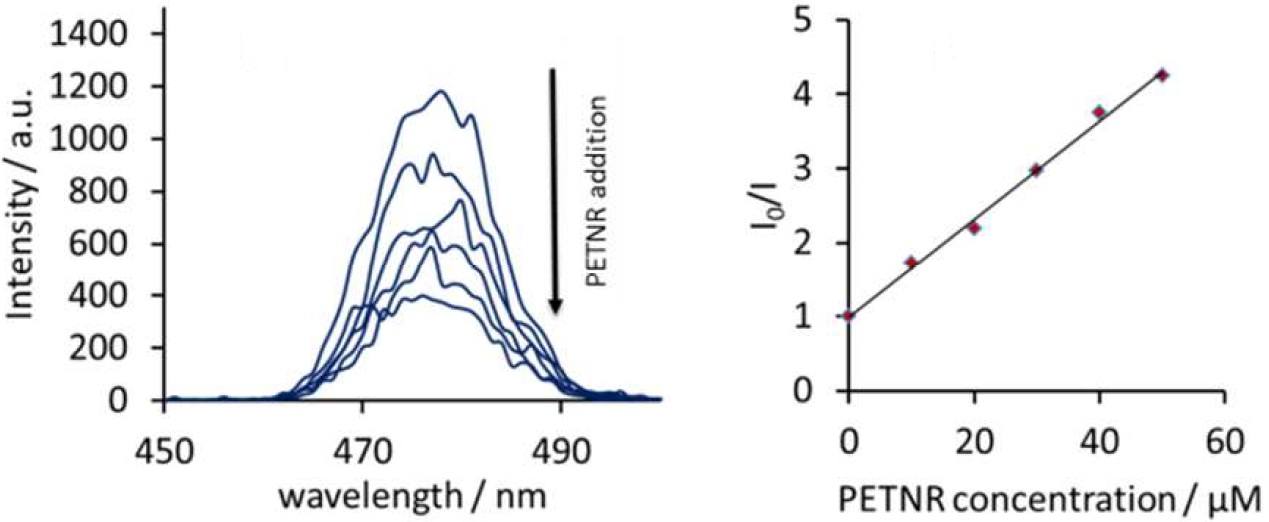
In the current paper, NaYF4:Yb:Tm was the UCP used to probe the redox properties of the enzyme pentaerythritol tetranitrate reductase (PETNR) and Forster Resonance Energy Transfer (FRET), involving energy transfer between two chromophores, was used to excite the UCP. In this case, transfer of energy from the absorbance band of the flavin mononucleotide core of the PETNR enzyme and the emission band of the UCP, which are very close in wavelength, allow FRET to occur. Since a second emission band in the near-IR region originates from this UCP, this was normalized so that the other band, varying with the enzyme concentration, could be measured against it. When the PETNR underwent a two-electron reduction, it negated its ability to undergo FRET, resulting in the loss of the emission band at 460 nm, rendering the solution colourless. The researchers demonstrated that this new technique can be used with either the full PETNR enzyme or the mononucleotide flavin core alone, indicating that this can be applied to a wider range of systems.

Find out more and download the article now:
Ratiometric detection of enzyme turnover and flavin reduction using rare-earth upconverting phosphors
Dalton Trans., 2014, DOI: 10.1039/C4DT00356J


Ian_Mallow Ian Mallov is currently a Ph.D. student in Professor Doug Stephan’s group at the University of Toronto. His research is focused on synthesizing new Lewis-acidic compounds active in Frustrated Lewis Pair chemistry. He grew up in Truro, Nova Scotia and graduated from Dalhousie University and the University of Ottawa, and worked in chemical analysis in industry for three years before returning to grad school.
Digg This
Reddit This
Stumble Now!
Share on Facebook
Bookmark this on Delicious
Share on LinkedIn
Bookmark this on Technorati
Post on Twitter
Google Buzz (aka. Google Reader)

Dalton Transactions Lectures at the University of California, Berkeley 2014

The 2013 Dalton Transactions Lecture awardees delivered their presentations at UC Berkeley last month. Each awardee is provided with an honorarium and a commemorative plaque. 

Trevor Hayton Professor Trevor Hayton (UCSB) gave the annual Dalton Transactions Lecture, which is awarded to an exceptional young inorganic chemist in the Americas each year. Previous recipients are:

2012   Teri Odom (Northwestern University)
2011    Daniel Gamelin (U Washington)
2010    Paul Chirik (Princeton University)
2009    Francois Gabbai (Texas A & M University)
2008    Dan Mindiola (Indiana University)
2007    Geoff Coates (Cornell University)
2006    John Hartwig (University of Illinois at Urbana-Champaign)
2005    Kit Cummins (MIT)

Professor Hayton has rapidly established himself as a leader in synthetic inorganic chemistry, focusing on actinides and bioinorganic systems. His lecture focused on the synthesis and reactivity of actinide complexes with chalcogenide ligands. 

Professor Hayton received his B.Sc. in Chemistry from the University of British Columbia, whereupon he began his Ph.D. research, also at UBC, under the direction of Peter Legzdins. After graduating in 2003, he began a postdoctoral fellowship at Los Alamos National Laboratory before joining the faculty at University of California, Santa Barbara in 2003.

   
Phillip Power The inaugural Dalton Transactions Distinguished Lecture was given on February 7 by Professor Phil Power of UC Davis. Professor Power is a world-renowned expert in main group chemistry. His Dalton Transactions Lecture focused on the preparation and structure of low-coordinate main group compounds and their reactivity towards small molecules such as dihydrogen and ethene. 

Professor Power received his bachelor’s degree in chemistry from the University of Dublin, Ireland, and his doctorate from the University of Sussex; the latter under the supervision of Mike Lappert. He carried out postdoctoral research at Stanford University before joining the faculty at UC Davis in 1980. He was award the Royal Society of Chemistry Mond Medal in 2005 and elected Fellow of the Royal Society in the same year. 

 Congratulations to Professors Hayton and Power for their awards!

Digg This
Reddit This
Stumble Now!
Share on Facebook
Bookmark this on Delicious
Share on LinkedIn
Bookmark this on Technorati
Post on Twitter
Google Buzz (aka. Google Reader)

Could cobalt have a role in renewable energy storage?

Posted on behalf of Ian Mallov, web writer for Dalton Transactions

The water oxidation reaction is one of the most fundamental in chemistry and likely to be one of the first students are introduced to. During the reaction, water and energy are combined to give oxygen gas, protons and electrons, with the latter used to reduce the protons and yield hydrogen gas. The storage of hydrogen gas is one proposed method of storing the energy generated from renewable sources as, by burning the hydrogen and regenerating water in the process, you can release and harness the energy as needed.

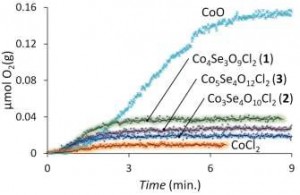
In order for the water oxidation cycle to result in a net energy gain, a catalyst is needed for the oxidation process, with the majority of current systems incorporating rare or expensive metals. In their recent Dalton Transactions article, Johnsson and co-workers used small, cluster compounds made of cobalt, selenium, oxygen and chlorine to catalyze water oxidation. Two of the compounds, Co4(SeO3)3Cl2 and Co3Se4O10Cl2, were previously unreported but are closely related to the third, known compound Co5Se4O12Cl2. To synthesise the molecules, the authors heated mixtures of CoO, SeO2, and CoCl2 to 550 °C in a furnace for a number of days, with different ratios of the starting materials used to produce the different compounds. Adding each compounds to a solution of phosphate buffer and Ru(bpy)3(PF6)3 led to the evolution of oxygen gas, which, by further 18O labelling experiments, was confirmed to occur due to water oxidation. 

Co_catalyst_activities

Catalytic oxygen evolution by cobalt catalysts

Analysis of a catalyst intended to facilitate sustainable energy storage should spur discussion of the environmental impact of making the catalyst.  The large energy input to heat the materials is a drawback.  But, if synthesized in good yield in solid-state (solventless) reactions, as done here, the reactions would score well on the E-factor scale, a metric measuring waste produced per mass of product that gives a more complete indication of material efficiency than the obsolete atom economy principle. 

Though the catalytic activity proved wanting, the simple compounds and syntheses here present an interesting strategy towards useful water oxidation catalysis. 

Find out more and download the article now:
Cobalt selenium oxohalides: Catalysts for Water Oxidation
Dalton Trans., 2013, DOI: 10.1039/C3DT53452A


Ian_MallowIan Mallov is currently a Ph.D. student in Professor Doug Stephan’s group at the University of Toronto. His research is focused on synthesizing new Lewis-acidic compounds active in Frustrated Lewis Pair chemistry. He grew up in Truro, Nova Scotia and graduated from Dalhousie University and the University of Ottawa, and worked in chemical analysis in industry for three years before returning to grad school.

Digg This
Reddit This
Stumble Now!
Share on Facebook
Bookmark this on Delicious
Share on LinkedIn
Bookmark this on Technorati
Post on Twitter
Google Buzz (aka. Google Reader)

Ruthenium fights the resistance

Bacterial resistance to standard types of antibiotics is a growing problem in medical science. The most famous example is MRSA, which stands for Methicillin-resistant Staphylococcus aureus. This name refers to a bacterium which, through the process of natural selection, is now resistant to a class of antibiotics called beta-lactams (which include penicillin and the cephalosporins). MRSA is especially dangerous in environments like hospitals and nursing homes, where patients or residents with weakened immune systems are at greater risk of infection (compared with the general public). The Office for National Statistics reports that between 1993 and 2005, the number of deaths associated with MRSA rose from 51 to 1,652.1

Methods to try and fight this growing threat include increased sanitization of areas where people are most at risk of infection and screening patients for the bacteria upon hospital admission and separating carriers from non-carriers. In the scientific community, development of new compounds which are capable of killing MRSA and other antibiotic resistant bacteria is a highly important, ongoing research area.2

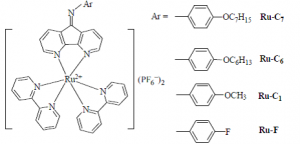
Metal complexes displaying biological activity have been widely reported; in particular complexes containing the metal ruthenium have been shown to display anti-cancer, anti-microbial and DNA binding abilities.3 In this paper, the authors synthesise several new ruthenium complexes and perform tests to assess their anti-microbial activity against MRSA.

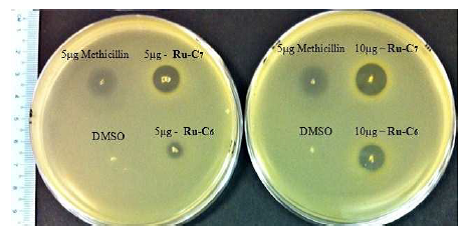
Structure of ruthenium complexes synthesized and ‘zone of clearance’ assay results.

Structure of ruthenium complexes synthesized

A ‘zone of clearance’ study pitted two of the new ruthenium complexes against methicillin in a test of how effectively each compound inhibited bacterial growth (see below). The ruthenium complexes were shown to have superior anti-MRSA activity when compared with methicillin, suggesting they could provide prolonged antibacterial activity when used as topical antibiotics.

Structure of ruthenium complexes synthesized and ‘zone of clearance’ assay results.

‘Zone of clearance’ assay results

To read more, download the article now:
“Development of ruthenium(II) complexes as topical antibiotics against methicillin resistant Staphylococcus aureus
W.-Y. Wong et al., Dalton Trans. 2014, DOI:10.1039/C3DT52879K

References:

1 UK Office for National Statistics, www.ons.gov.uk
2 P. A. Ashford, S. P. Bew, Chem. Soc. Rev., 2012, 41, 957
3 C. S. Allardyce, P. J. Dyson, Platinum Metals Rev., 2001, 45, 62


Liana Allen Dr C. Liana Allen is currently a post-doctoral research associate in the group of Professor Scott Miller at Yale University, where she works on controlling the enantio- or regioselectivity of reactions using small peptide catalysts. Liana received her Ph.D. in organic chemistry at Bath University with Professor Jonathan Williams, where she worked on developing novel, efficient syntheses of amide bonds.
Digg This
Reddit This
Stumble Now!
Share on Facebook
Bookmark this on Delicious
Share on LinkedIn
Bookmark this on Technorati
Post on Twitter
Google Buzz (aka. Google Reader)