Desty Memorial Lecture for Innovation in Separation Science

Brett Paull, Editor-in-Chief of Analytical Methods will be one of the speakers at the 15th Desty Memorial Lecture for Innovation in Separation Science, to be held in the Royal Institution of Great Britain on Wednesday 6th October 2010

I’ll also be attending , so if you’d like to meet either of us to discuss the journal or just to say hello, please do contact us.

Denis Desty was a great innovator and this event is to celebrate his life and innovations.  Key speakers have been invited who are recognised for they innovative work in separation science. Each year the Desty Award is presented to a young scientist who will have been judged to have shown great innovation in separation science.

Find out more and see the full programme online.

Digg This
Reddit This
Stumble Now!
Share on Facebook
Bookmark this on Delicious
Share on LinkedIn
Bookmark this on Technorati
Post on Twitter
Google Buzz (aka. Google Reader)

Top 10 most-read Analytical Methods articles

The latest top ten most downloaded Analytical Methods articles

Read the most-read papers of August 2010 here:

S. Shahnawaz Sajid, M. Saeed Arayne and Najma Sultana, Anal. Methods, 2010, 2, 397-401
DOI:
10.1039/B9AY00278B 
 
Rashmin B. Patel, Mrunali R. Patel, Kashyap K. Bhatt and Bharat G. Patel, Anal. Methods, 2010, 2, 525-531
DOI:
10.1039/B9AY00276F
 
Don Brian Clarke, Anal. Methods, 2010, 2, 310-325
DOI:
10.1039/B9AY00280D
 
Claire E. J. Emanuel, Bill Ellison and Craig E. Banks, Anal. Methods, 2010, 2, 614-616
DOI:
10.1039/C0AY00200C 
 
Michelle M. Martinez, Randall D. Reif and Dimitri Pappas, Anal. Methods, 2010, 2, 996-1004
DOI:
10.1039/C0AY00247J
 
Panagiotis Tavlarakis, Jonine Greyling and Nicholas H. Snow, Anal. Methods, 2010, 2, 722-727
DOI:
10.1039/B9AY00284G
  
Satoshi Migita, Kei Funakoshi, Daiju Tsuya, Tomohiko Yamazaki, Akiyoshi Taniguchi, Yoshimasa Sugimoto, Nobutaka Hanagata and Toshiyuki Ikoma, Anal. Methods, 2010, 2, 657-660
DOI:
10.1039/C0AY00039F
 
Xiaona Xu, Zhonghai Tang and Yizeng Liang, Anal. Methods, 2010, 2, 359-367
DOI:
10.1039/B9AY00213H
 
Pei Chen, Wayne R. Wolf, Isabel Castanheira and Ana Sanches-Silva, Anal. Methods, 2010, 2, 1171-1175
DOI:
10.1039/C0AY00177E
 
Fang Zhao, Zhiming Chen, Fupeng Zhang, Runhua Li and Jianying Zhou, Anal. Methods, 2010, 2, 408-414
DOI:
10.1039/B9AY00160C
Digg This
Reddit This
Stumble Now!
Share on Facebook
Bookmark this on Delicious
Share on LinkedIn
Bookmark this on Technorati
Post on Twitter
Google Buzz (aka. Google Reader)

Nominations for 2011 RSC Prizes and Awards now open

Nominate a colleague...or yourself!

The RSC currently presents around 60 prestigious Prizes and Awards annually allowing the greatest range of scientists to be recognised for their work; individuals, teams and organisations working across the globe.

There are nine categories of awards, including specific categories for Industry and Education, so whether you work in business, industry, research or education recognition is open to everyone.

Our Prizes and Awards represent the dedication and outstanding achievements in the chemicals sciences and are a platform to showcase inspiring science to gain the recognition deserved.

Do you know someone who has made a significant contribution to advancing the chemical sciences?

View our full list of Prizes and Awards and use the online system to nominate yourself or colleagues.

Digg This
Reddit This
Stumble Now!
Share on Facebook
Bookmark this on Delicious
Share on LinkedIn
Bookmark this on Technorati
Post on Twitter
Google Buzz (aka. Google Reader)

Focus on forensics – UKIAFT, Glasgow

The meeting covered a range of topics within the field of forensic toxicology

UK & Ireland Association of Forensic Toxicologists held its second annual meeting from the 6th to 7th of September at the University of Glasgow.

Plenary talks were given by Dr Marilyn Huestis, Chief of Chemistry and Drug Metabolism, NIDA and Dr Leslie King, Advisor on New Psychoactive Substances, DoH & EMCDDA, with other speakers covering themes such as hair analysis, immunoassay screening and drug detection in saliva.

Dr Gail Cooper, Senior Lecturer and Consultant Forensic Toxicologist at Glasgow, described the meeting as “a real success”.

Our congratulations go to Miss Lorna Nisbet, recipient of the Analytical Methods poster prize –  we hope to see your work in the journal soon!

Digg This
Reddit This
Stumble Now!
Share on Facebook
Bookmark this on Delicious
Share on LinkedIn
Bookmark this on Technorati
Post on Twitter
Google Buzz (aka. Google Reader)

Top 10 most-read Analytical Methods articles

The latest top ten most downloaded Analytical Methods articles

Read the most-read papers of August 2010 here:

Jan Vacek, Jitka Ulrichová, Bořivoj Klejdus and Vilím Šimánek, Anal. Methods, 2010, 2, 604-613
DOI:
10.1039/C0AY00042F
 
Don Brian Clarke, Anal. Methods, 2010, 2, 310-325
DOI:
10.1039/B9AY00280D
 
S. Shahnawaz Sajid, M. Saeed Arayne and Najma Sultana, Anal. Methods, 2010, 2, 397-401
DOI:
10.1039/B9AY00278B
 
Rashmin B. Patel, Mrunali R. Patel, Kashyap K. Bhatt and Bharat G. Patel, Anal. Methods, 2010, 2, 525-531
DOI:
10.1039/B9AY00276F
 
Valerio Causin, Anal. Methods, 2010, 2, 792-804
DOI:
10.1039/C0AY00115E
 
Claire E. J. Emanuel, Bill Ellison and Craig E. Banks, Anal. Methods, 2010, 2, 614-616
DOI:
10.1039/C0AY00200C
 
Satoshi Migita, Kei Funakoshi, Daiju Tsuya, Tomohiko Yamazaki, Akiyoshi Taniguchi, Yoshimasa Sugimoto, Nobutaka Hanagata and Toshiyuki Ikoma, Anal. Methods, 2010, 2, 657-660
DOI:
10.1039/C0AY00039F
 
Linda Monaci, Jørgen V. Nørgaard and Arjon J. van Hengel, Anal. Methods, 2010, 2, 967-972
DOI:
10.1039/C0AY00151A
 
Panagiotis Tavlarakis, Jonine Greyling and Nicholas H. Snow, Anal. Methods, 2010, 2, 722-727
DOI:
10.1039/B9AY00284G
 
Douglas C. Kirkpatrick, Christiana Antwi and R. Scott Martin, Anal. Methods, 2010, 2, 811-816
DOI:
10.1039/C0AY00294A
Digg This
Reddit This
Stumble Now!
Share on Facebook
Bookmark this on Delicious
Share on LinkedIn
Bookmark this on Technorati
Post on Twitter
Google Buzz (aka. Google Reader)

Hot Article – microfluidic device for designing cancer treatment: a step away from animal testing?

Abigail Webster, Charlotte E. Dyer, Stephen J. Haswell and John Greenman
Anal. Methods, 2010, 2, 1005-1007
DOI: 10.1039/C0AY00293C
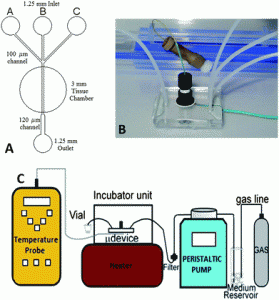
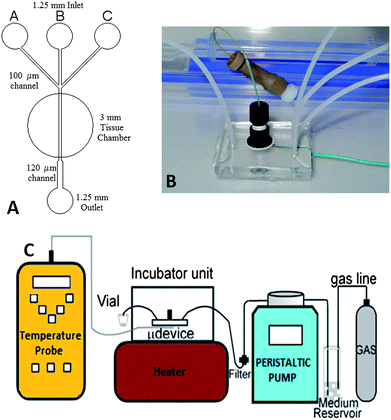
(A) Channel schematic of the device. (B) Photograph showing the glass microdevice with attached nanoport. (C) General schematic of the assembly showing the pumping system, gassing to media reservoir and flow of the system

John Greenman and colleagues from the University of Hull, UK have developed a new microfluidic device capable of maintaining the long-term culture of viable tissue biopsies.

Culturing tissue biopsies in a microfluidic device provides a more holistic model for detecting cellular response to changes, such as drug stimuli, because the device can accurately reproduce many of the key parameters of the in vivo environment.

This new system has so far been tested with human colorectal tissue biopsies, and demonstrates that tissue samples can be cultured for more than 3 days, currently considered as long-term.

The authors proprose that the simplistic and flexible design of the current device allows real time analytical interrogation of various tissue types.  The microfluidic tissue device could then be used for a variety of diverse applications in guiding drug treatment selection in a clinical setting.

This research is timely in driving towards less animal-reliant testing in the pharmaceutical industry and more personalised care in the medical arena.

Read the article for free in the latest issue of Analytical Methods.

Digg This
Reddit This
Stumble Now!
Share on Facebook
Bookmark this on Delicious
Share on LinkedIn
Bookmark this on Technorati
Post on Twitter
Google Buzz (aka. Google Reader)

Brett Paull wins ion chromatography award!

We are delighted to see that Anaytical Methods Editor-in-Chief, Brett Paull will be presented with the 2010 IC Achievement Award, at the upcoming International Ion Chromatography Symposium (IICS 2010) in Cincinnati. Well done Brett!

Brett’s award lecture will be given on Monday 20th September entitled “Polymer Monolithic Phases: The Future or a Fading Novelty”.

Pick up a complimentary copy of Analytical Methods at the Symposium or access the latest issue online for free!

Digg This
Reddit This
Stumble Now!
Share on Facebook
Bookmark this on Delicious
Share on LinkedIn
Bookmark this on Technorati
Post on Twitter
Google Buzz (aka. Google Reader)

Greenhouse gas detection

From next year, the USA’s Environmental Protection Agency will require operators of large carbon-emitting operations to submit annual emissions reports for carbon dioxide, methane, nitrous oxide, and other greenhouse gases.  These firms will require analytical tools to monitor their emissions and to create estimates based on energy consumption.  But they face a dilemma on how they will gather the data.  Read the full article at Chemical & Engineering News.

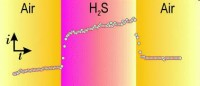
Equally important are the tools to determine levels of harmful gases in the general environment.  Published online in Analytical Methods, Jason Horn and colleagues use Clark-type amperometric gas sensing methodology to investigate hydrogen sulfide in the air:

Amperometric measurement of gaseous hydrogen sulfide via a Clark-type approach
Jason J. Horn, Tom Mccreedy and Jay Wadhawan
Anal. Methods, 2010, Advance Article
DOI: 10.1039/C0AY00338G

Digg This
Reddit This
Stumble Now!
Share on Facebook
Bookmark this on Delicious
Share on LinkedIn
Bookmark this on Technorati
Post on Twitter
Google Buzz (aka. Google Reader)

Organophosphate detection made easy

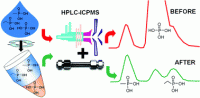
Calcium chloride and ammonium hydroxide precipitation removes the inorganic phosphate

Enhancing determination of organophosphate species in high inorganic phosphate matrices: application to nerve agent degradation products
Yaofang Zhang, Kevin M. Kubachka and Joseph A. Caruso
Analytical Methods, 2010, DOI: 10.1039/c0ay00230e

Joseph Caruso and colleagues at the University of Cincinnati have developed a precipitation method for the removal of inorganic phosphates from samples to allow more effective identification of organophosphates by ICP-MS.

High concentrations of inorganic phosphates were successfully removed from apple juice and cola drink, leaving the organophosphates intact.  In this study, nerve agent degradation products were analysed, as they have the potential to contaminate food and environmental systems after their initial formation.

Caruso’s results indicate that this method could be suitable for more complex matrices containing relatively high levels of inorganic phosphate.

Access the article for free via the Analytical Methods homepage.

Digg This
Reddit This
Stumble Now!
Share on Facebook
Bookmark this on Delicious
Share on LinkedIn
Bookmark this on Technorati
Post on Twitter
Google Buzz (aka. Google Reader)

Analytical Methods Poster Prize

Congratulations to Sangeeta Tanna from De Montfort University, who was awarded an Analytical Methods poster prize at the recent Analytical Research Forum held at Loughborough University.

Sangeeta’s poster described her work on a dried blood spot sampling system which enables the measurement and monitoring of drug levels in newborn babies, to inform future drug doses. This was tested on captopril, a drug used for the treatment of heart failure. Well done Sangeeta!

Why not submit your article to Analytical Methods today!

Digg This
Reddit This
Stumble Now!
Share on Facebook
Bookmark this on Delicious
Share on LinkedIn
Bookmark this on Technorati
Post on Twitter
Google Buzz (aka. Google Reader)