

Editor’s Collection: Meet the authors – Saito and Yagai

In this month’s Editor’s Collection, Associate Editor Christian Hackenberger highlighted ‘Hierarchical self-assembly of an azobenzene dyad with inverted amide connection into toroidal and tubular nanostructures’ by Saito and Yagai as one of his personal favourite recent Organic & Biomolecular Chemistry articles. Here, we catch up with the authors to find out a little bit more about their research

Takuho Saito and Shiki Yagai

Introducing the researchers:

Takuho Saito was born in 1996 in Tochigi, Japan. He graduated Chiba University in 2019, and is currently a master’s student under the guidance of Prof. Shiki Yagai at the same University.

Shiki Yagai was born in 1975 in Japan and received his PhD in 2002 at Ritsumeikan University. Then he directly became an assistant professor at Chiba University, and became an associate professor in 2010. In July 2017, he became a full professor in Chiba University. Find out more on his lab webpage.


What inspired your research in this area?

We are always inspired by natural molecules and macromolecules to organize into intricate nanostructures, wherein non-covalent interaction such as hydrogen bonds play important role to achieve hierarchical assembly of structures.


What do you personally feel is the most interesting outcome of your study?

The answer is definitely the fact that just changing the direction of amide groups remarkably improved the thermal stability of our nano-aggregates, as prof. Hackenberger said.


What directions are you planning to take with your research in future?

We are very much interested in the introduction of more amide groups to further improve thermal stability. At the same time, we are interested in the interplay of photoisomerization of azobenzene units and supramolecular chirality.


Read the full article: Hierarchical self-assembly of an azobenzene dyad with inverted amide connection into toroidal and tubular nanostructures


See the other articles showcased in this month’s Editor’s Collection

Digg This
Reddit This
Stumble Now!
Share on Facebook
Bookmark this on Delicious
Share on LinkedIn
Bookmark this on Technorati
Post on Twitter
Google Buzz (aka. Google Reader)

Editor’s Collection: Meet the authors – Nielsen, Gothelf and Clo

In this month’s Editor’s Collection, Associate Editor Christian Hackenberger highlighted ‘disulphide-mediated site-directed modification of proteins’ by Gothelf et al. as one of his personal favourite recent Organic & Biomolecular Chemistry articles. Here, we catch up with the authors to find out a little bit more about their research

From left to right: Kurt Gothelf , Emiliano Clo and Thorbjørn Nielsen


Introducing the researchers:

Thorbjørn Nielsen: Obtained an MSc. Degree from the Gothelf lab in 2016. He then enrolled in a joint PhD program between Novo Nordisk in Måløv and Aarhus University where he spent half of his time in each place. He graduated in 2020 and is currently a postdoc at the Gothelf lab.

Kurt Gothelf graduated in 1995 from the group of Professor K. A. Jørgensen at Aarhus University. Following a post doctoral stay in Professor M. C. Pirrung’s group at Duke University, USA, he joined the faculty at Aarhus University in 2002 as an Associate Professor. Since 2007 he has been a Full Professor working with bioconjugation, DNA nanotechnology and biosenors. Find out more on his lab webpage.

Emiliano Clo obtained his PhD in Organic Chemistry in 2006 from the Gothelf lab at Aarhus University. He took post doctoral positions from 2007-9 with Prof. Knud Jensen at University of Copenhagen and from 2009-12 in Prof. Henrik Clausen’s Copenhagen Center for Glycomics, spending the last year of which as Research Associate Professor. From 2012, Emiliano works as a Senior Research Scientist at Novo Nordisk’s Research Chemistry Unit.


What inspired your research in this area?

Bioconjugation is challenging and both at Novo Nordisk and in the Gothelf group at Aarhus University we follow closely the development of bioconjugation techniques. Itaru Hamachi’s work on directed conjugation strategies has definitely been a steady influence over the years. But, the present study is really an amalgamation of ideas from many sources.


What do you personally feel is the most interesting outcome of your study?

The most surprising observation was to learn that the conjugation pattern was identical, in spite of the varying the length of the three reagents studied.


How do you feel your research has benefitted from collaborating between industry and academia? 

It has been of key importance to the project. Thorbjørn Nielsen (who got his MSc. with Prof. Gothelf) brought the required skillset to Novo Nordisk. Novo Nordisk then provided the materials and equipment required for this project. Together we could pull all the support the projected needed: MS-MS and SPR expertise at Novo Nordisk; cell assays and FACS from Aarhus Unversity. Last, but not the least, Apigenex, Novo’s long-time CRO partners, synthesized the reagents needed.


What directions are you planning to take with your research in future? 

Concerning bioconjugation, our future aims are twofold. First, to find reactions that can label proteins quantitatively; second, to devise reagents and protocols that can be applied to more complex proteins or in more complex matrices.


Read the full article: disulphide-mediated site-directed modification of proteins


See the other articles showcased in this month’s Editor’s Collection

Digg This
Reddit This
Stumble Now!
Share on Facebook
Bookmark this on Delicious
Share on LinkedIn
Bookmark this on Technorati
Post on Twitter
Google Buzz (aka. Google Reader)

Editor’s Collection: Christian Hackenberger

In this month’s Editor’s collection, Associate Editor Christian Hackenberger shares some of his favourite recent Organic & Biomolecular Chemistry articles

The Organic & Biomolecular Chemistry Editor’s collection is a showcase of some of the best articles published in the journal, hand selected by our Associate Editors and Editorial Board members. For this inaugural selection, Associate Editor Christian Hackenberger has highlighted some of his favourite recent works. Take a look at what he thought of the articles below, and find out more about the research and the researchers behind the papers in our interviews with the authors.

Christian’s Selection:

Hierarchical self-assembly of an azobenzene dyad with inverted amide connection into toroidal and tubular nanostructures

Christian’s comments: “Small things can make a difference! Check out this very interesting paper by Yagai et al on how inverting an amide bond in foldable azobenzene dyads changes the thermal stability of self-assembled toroids and nanotubes! Amazing! This paper is part of our collection Supramolecular chemistry in OBC.


Find out more in our interview with the authors


Rapid sodium periodate cleavage of an unnatural amino acid enables unmasking of a highly reactive α-oxo aldehyde for protein bioconjugation

Christian‘s comments: “Now available site-specifically! This contribution by Fascione and coworkers expands the use of Strain-Promoted Alkyne-Nitrone Cycloaddition (SPANC) ligation to modify internal α-oxo aldhehydes in proteins. Particularly remarkable is that this work describes a rare example of site-specifically incorporated aldehyde into proteins via amber stop codon suppression. Well done folks!


Find out more in our interview with the authors


Site-selective modification of proteins using cucurbit[7]uril as supramolecular protection for N-terminal aromatic amino acids

Christian‘s comments: “A supramolecular protecting group in peptide and protein chemistry! This paper I handled myself and I agree with the reviewers that this is a nice piece of work. Appel and coworkers make clever use of cucurbit[7]uril, which blocks the nucloephilicity of an N-terminal phenylalanine. Quite handy for the selective modification of the N-terminal glycine of the A-chain in insulin!

Find out more in our interview with the authors


Disulphide-mediated site-directed modification of proteins

Christian’s comments: “Gothelf and Clo from Aarhus University and Novo Nordisk report in this paper the modification of lysines in pharmaceutically relevant proteins and antibody fragments. What is special about their work is that only lysines are modified in proximity to solvent-exprosed disulfides by clever design of a bifunctional reagent, which consits of a rebridging moiety, a masked thiol and an amine reactive group. One can only wish that more of such innovative collaborations between industry and academia are reported.

Find out more in our interview with the authors


The Curious Yellow Colouring Matter of the Iceland Poppy

Christian’s comments: “And finally an awesome historical overview on an intruiging yellow colored natural product, the nudicaulin. This flavoalkaloid was named by Sir Robert Robinson in 1939. Devlin and Sperry take the reader through a fascinating journey on the first structural assignment, synthesis strategies, biosynthesis and biological role. A must read not only for the natural product chemists among us!

Find out more in our interview with the authors


Meet the Editor:

Christian P. R. Hackenberger completed his graduate studies in chemistry at the universities of Freiburg and UW Madison and his doctoral studies in 2003 at the RWTH Aachen. After a postdoctoral position at MIT, he started his own group at the Freie Universität Berlin in 2005. In 2012, he was appointed Leibniz-Humboldt Professor for Chemical Biology at the Leibniz-Research Institute for Molecular Pharmacology and the Humboldt Universität zu Berlin.

His group works on the development of new chemoselective and bioorthogonal reactions, the identification and analysis of novel PTMs, the engineering of protein-based pharmaceuticals and novel approaches to functional protein synthesis and delivery, in particular for the labeling and modification of different antibody formats. He is co-founder of the recently founded company ‘Tubulis’, which ventures into engineering better tolerable cancer drugs based on protein- and antibody-drug conjugates.

Christian is an Associate Editor for Organic & Biomolecular Chemistry since 2015 and on the Advisory board of Chemical Science and RSC Chemical Biology. His research group can be followed on Twitter @PhosphorusFive.

Outside his chemistry life he enjoys all forms of sport (Federer!), foodie (Ottolenghi!) and cultural (Theatre! Contemporary Art! Opera!) activities.


Digg This
Reddit This
Stumble Now!
Share on Facebook
Bookmark this on Delicious
Share on LinkedIn
Bookmark this on Technorati
Post on Twitter
Google Buzz (aka. Google Reader)

Outstanding Reviewers for Organic & Biomolecular Chemistry in 2019

We would like to highlight the Outstanding Reviewers for Organic & Biomolecular Chemistry in 2019, as selected by the editorial team, for their significant contribution to the journal. The reviewers have been chosen based on the number, timeliness and quality of the reports completed over the last 12 months.

We would like to say a big thank you to those individuals listed here as well as to all of the reviewers that have supported the journal. Each Outstanding Reviewer will receive a certificate to give recognition for their significant contribution.


Prof. Dr. Jeroen Dickschat, University of Bonn, ORCHID: 0000-0002-0102-0631

Dr Jianlin Han, Nanjing Forestry University, ORCHID: 0000-0002-3817-0764

Professor Erhong Hao, Anhui Normal University, ORCHID: 0000-0001-7234-4994

Dr Mohammed Hasan, Tallinn University of Technology, ORCHID: 0000-0001-5683-6673

Prof. Dr. Hans-Joachim Knölker, Technische Universität Dresden, ORCHID: 0000-0002-9631-5239

Dr Rafal Loska, Polish Academy of Sciences, ORCHID: 0000-0002-0823-4675

Professor Vaibhav P. Mehta, Marwadi University, ORCHID: 0000-0003-4426-3374

Dr Tej Narayan Poudel, University of Minnesota, ORCHID: 0000-0002-0390-107X

Professor Akhilesh K. Verma, University of Delhi, ORCHID: 0000-0001-7626-5003

Dr Chunxiang Wang, Takeda Pharmaceutical Co Ltd, ORCHID: 0000-0002-8669-1767


We would also like to thank the Organic & Biomolecular Chemistry board and the organic chemistry community for their continued support of the journal, as authors, reviewers and readers.


If you would like to become a reviewer for our journal, just email us with details of your research interests and an up-to-date CV or résumé.  You can find more details in our author and reviewer resource centre

Digg This
Reddit This
Stumble Now!
Share on Facebook
Bookmark this on Delicious
Share on LinkedIn
Bookmark this on Technorati
Post on Twitter
Google Buzz (aka. Google Reader)

OBC proudly supports the Chemical Biology and Physiology Conference

Organic & Biomolecular Chemistry and our sister journals, Chemical Science and RSC Advances, are proud to sponsor the upcoming Chemical Biology and Physiology Conference, 12-15 December 2019 at Oregon Health & Science University.

The Chemical Biology and Physiology Conference series is a biennial international conference focused on the growing intersection of Chemical Biology and Physiology, bringing together leading scientists from around the world to promote the inspiration and collaboration to stimulate cutting edge research in this exciting research nexus. The fantastic speaker line up includes Benjamin Cravatt, Laura Kiessling, Tom Muir, Jennifer Heemstra and more. This year’s topics of focus include Chemical Physiology, Imaging, Glyco Chemical Biology, Nucleotide Chemical Biology, Optical Tools and Protein Magic.

To find out more and register before the abstract deadline (October 31) or final deadline (November 15), visit www.ohsu.edu/chembiophys2019.


Digg This
Reddit This
Stumble Now!
Share on Facebook
Bookmark this on Delicious
Share on LinkedIn
Bookmark this on Technorati
Post on Twitter
Google Buzz (aka. Google Reader)

Poster prize winners at Tri-I Chemical Biology Symposium

Congratulations to the poster prize winners at the Tri-I Chemical Biology Symposium!

We are delighted to announce that the Organic & Biomolecular Chemistry poster prizes were awarded to:

Adewola Osunsade (Yael David’s lab at Memorial Sloan Kettering Cancer Center)
Title: Characterization of human linker histone variants

Qian Hou (Samie Jaffrey’s lab at Weill Cornell Medical College)
Title: Evolving EMCV IRES into acyclovir-controlled eukaryotic translational switch using mRNA display

The Tri-I Chemical Biology Symposium was held on 4 September 2019 at The Rockefeller University, New York.

Adewola Osunsade and Qian Hou being awarded their prizes from Derek Tan (Program Director)

Digg This
Reddit This
Stumble Now!
Share on Facebook
Bookmark this on Delicious
Share on LinkedIn
Bookmark this on Technorati
Post on Twitter
Google Buzz (aka. Google Reader)

OBC Highlights: A transition metal-free strategy for the desulfonative borylation of benzyl sulfones

Blog from web writer A. Vamshi Krishna, a Ph.D. student in organic chemistry with Prof. D. B. Ramachary at University of Hyderabad.

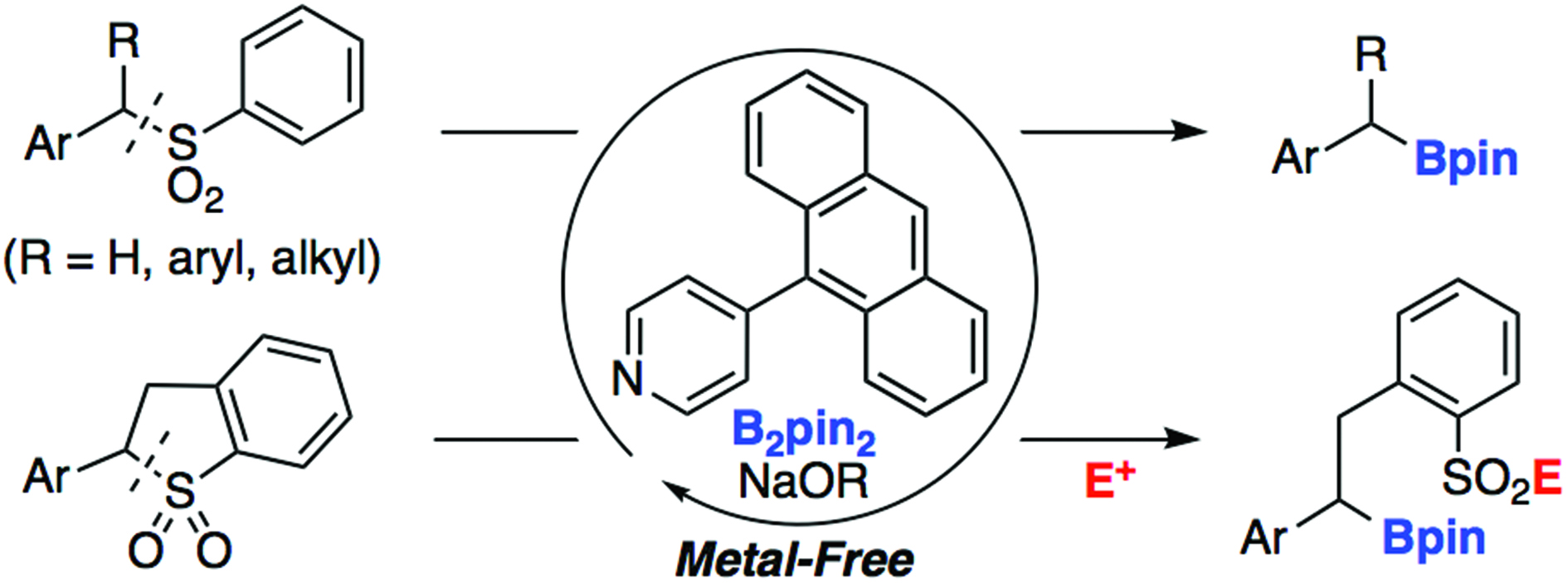
Compounds containing carbon-boron bonds are of high significance because they can be used as the precursors for various reactions such as 1,2-metallate rearrangements, deborylative nucleophilic addition reactions and the formation of carbon-oxygen and carbon-nitrogen bonds through hydrolysis and aminolysis respectively. Sulfones are useful for increasing the functionality of a molecule by alkylation and arylation (scheme 1), however till date there have been very few reports regarding the transformation of carbon-sulfonyl bonds to carbon-boron bonds. The transformation of sulfonyl groups to boryl groups under metal free organocatalysis is still a challenging task.

Scheme 1: Sequential functionalization of benzylic sulfones

In their recent OBC publication, Prof Cathleen M. Crudden et.al. of Queen’s University, Ontario developed a beautiful protocol for the transition metal-free desulfonative borylation of benzyl sulfones using simple pyridine derivatives as catalysts (scheme 2). They reported the borylation of cyclic sulfones to afford functionalized sulfones and sulfonamides through a sulfinate intermediate which could be trapped with electrophiles. As they chose benzhydryl phenyl sulfone (1a) as a model substrate for their optimization, they reported the formation of the desired dibenzylic boronic (2a) ester along with diphenylmethane (3a) as a by-product. By using trifluorotoluene as a solvent instead of ethereal solvents, they optimized their conditions, resulting in an enhanced formation of 2a and supressed formation of 3a.


Scheme 2: Pyridine-promoted desulfonative borylation of benzyl sulfones

The reaction was well tolerated by a range of benzhydryl sulfones bearing both electron-neutral and electron-rich aryl groups with good yields. Even sterically hindered ortho-substituted aryl groups also afforded the desired products with lower yields. Unfortunately, benzhydryl sulfones bearing electron-withdrawing substituents such as trifluoromethyl, esters, cyano, allyl and iodide groups were not tolerated the transformation. Crudden et. al. executed control experiments in order to understand the reaction mechanism, finding that the sulfone bearing terminal olefin did not afford any product and also that TEMPO ((2,2,6,6-Tetramethylpiperidin-1-yl)oxyl) completely inhibited borylation. Based on these observations, they proposed a single electron transfer mechanism for borylation based on the work from Tuttle and Zhang and Jiao.

In conclusion, Crudden et al. succeeded in developing a desulfonylative borylation of alkyl sulfon es through 4-arylpyridine catalysis which yields synthetically useful benzylic boron compounds.

Read their full article now.

About the Blog Writer: A. Vamshi Krishna is currently pursuing a Ph.D. in organic chemistry with Prof. D. B. Ramachary at University of Hyderabad. His research mainly focuses on asymmetric supramolecular-organocatalysis, where he synthesises highly functionalized biologically active novel scaffolds with excellent selectivities and yields. His passion for scientific writing made him become a blog writer.

Digg This
Reddit This
Stumble Now!
Share on Facebook
Bookmark this on Delicious
Share on LinkedIn
Bookmark this on Technorati
Post on Twitter
Google Buzz (aka. Google Reader)

OBC Highlight: Trifluoromethylated proline analogues through highly diastereoselective formal (3+2) cycloadditions

This highlight is a guest blog from web writer Satrajit Indu, a recent PhD graduate from the group of Prof. Krishna P. Kaliappan at the Indian Institute of Technology Bombay.

Amino acids form the fundamental building blocks of proteins and peptides and largely control the biochemical and biophysical properties of a living organism. Incorporation of fluorine in amino acids has been an area of wide interest, because replacement of a hydrogen atom with a fluorine atom leads to a significant change in the electronic properties of a substrate and could potentially lead to a wide variation in its biological activity. The most common functional group introduced in this regard is the trifluoromethyl (-CF3) group, which provides an alternative to the -CH3 group in terms of its electronic properties. One very commonly available source of the -CF3 group is ethyl 3,3,3-trifluoromethyl pyruvate, which was utilized very elegantly by Professor Mario Waser and his group in their recent report published from the Johannes Kepler University, Linz to form α-trifluoromethylated proline derivatives, which are potentially very interesting surrogates for naturally occurring proline.

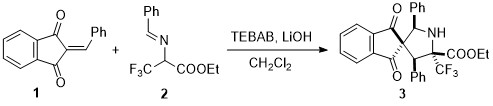
Scheme 1: Diastereoselective formal (3+2) cyclization to form α-CF3 proline derivatives

Benzyl imine derived from ethyl 3,3,3-trifluoromethyl pyruvate was treated with benzylidene indanedione (1) in the presence of LiOH to form the spirocyclic α-trifluoromethyl proline derivative 3 as the sole diastereomer (Scheme 1). It was observed that simple ammonium salts used as phase transfer catalysts could improve the conversion drastically and benzyl triethylammonium bromide (TEBAB) was found to be the best reagent for the same. This transformation exhibits a wide substrate scope with different acceptors and donors alike, while maintaining very good diastereoselectivities.

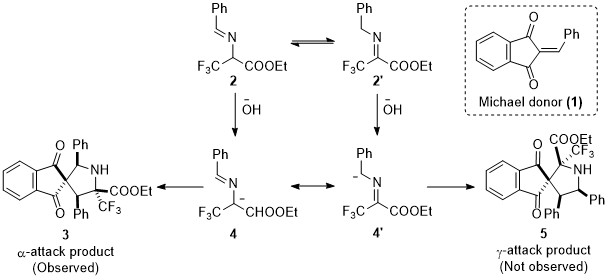
Mechanistically, the transformation is driven by the formation of the stable 2-azaallyl carbanions (4 and 4’), which by virtue of its two resonating forms could form the two different spirocyclic regioisomers 3 and 5 (Scheme 2). It was observed that the α-nucleophilic attack on the Michael acceptor 1 proceeded exclusively and there was no trace of the γ-adduct for any of the substrates. The remarkable levels of diastereoselectivity of the α-adducts adds to the ingenuity of the method.

Scheme 2: Formal (3+2) cyclization modes leading to α-CF3 proline derivatives

This is indeed a very useful and efficient method for the construction of an unprecedented class of α-trifluoromethylated proline derivatives which can easily be incorporated in peptide chains for biological studies. There is however, room for improvement in this methodology, as the efforts towards enantioselective formation of the trifluoromethylated proline derivatives were unfortunately met with failures. The authors used cinchona alkaloid derived chiral phase transfer catalysts, which resulted in unsatisfactory enantioselectivities. A successful enantioselective protocol towards the formation of fluorinated amino acids would drive this field of research even further in future.

About the blog writer: Satrajit Indu is a recent PhD graduate from Indian Institute of Technology Bombay. His doctoral work in the group of Prof. Krishna P. Kaliappan was mainly focused on the total synthesis of complex natural products and development of new catalytic methods aimed for achieving interesting chemical transformations. A keen interest in organic chemistry coupled with an urge to communicate with the scientific community has driven him to take up blog writing.

Digg This
Reddit This
Stumble Now!
Share on Facebook
Bookmark this on Delicious
Share on LinkedIn
Bookmark this on Technorati
Post on Twitter
Google Buzz (aka. Google Reader)

OBC Highlight: Planarized and structurally constrained B,N-phenylated dibenzoazaborine: diversity in electronic properties

This blog comes from Guest Writer A. Vamshi Krishna, a PhD student at the University of Hyderabad

Polycyclic aromatic hydrocarbons (PAHs) containing heteroatoms have recently been grabbing the attention of scientists as they exhibit intriguing photophysical properties and can be widely used as building blocks for π-conjugated materials due to the effect of heteroatoms on the electronic properties of the system.

PAHs are often employed in OLEDs. Over the last few years, these PAHs have been synthesized in several different ways. Kawashima et.al synthesized different acene-like π-extended dibenzoborines such as compound B which show fascinating photophysical properties. More recently, Hatakeyama et.al have reported the synthesis of various PAHs that contain multiple 1,4-azaborine rings, such as compound C, which show excellent thermally activated delayed fluorescence. By investigating these types of molecules in more detail, their electronic properties can be improved to make better OLEDs.

a) Representative examples of previously reported dibenzoazaborine-based pi-conjugated compounds and b) planarized B,N-phenylated dibenzoazaborine 1 together with reference compounds 2-4

a) Representative examples of previously reported dibenzoazaborine-based pi-conjugated compounds and b) planarized B,N-phenylated dibenzoazaborine 1 together with reference compounds 2-4

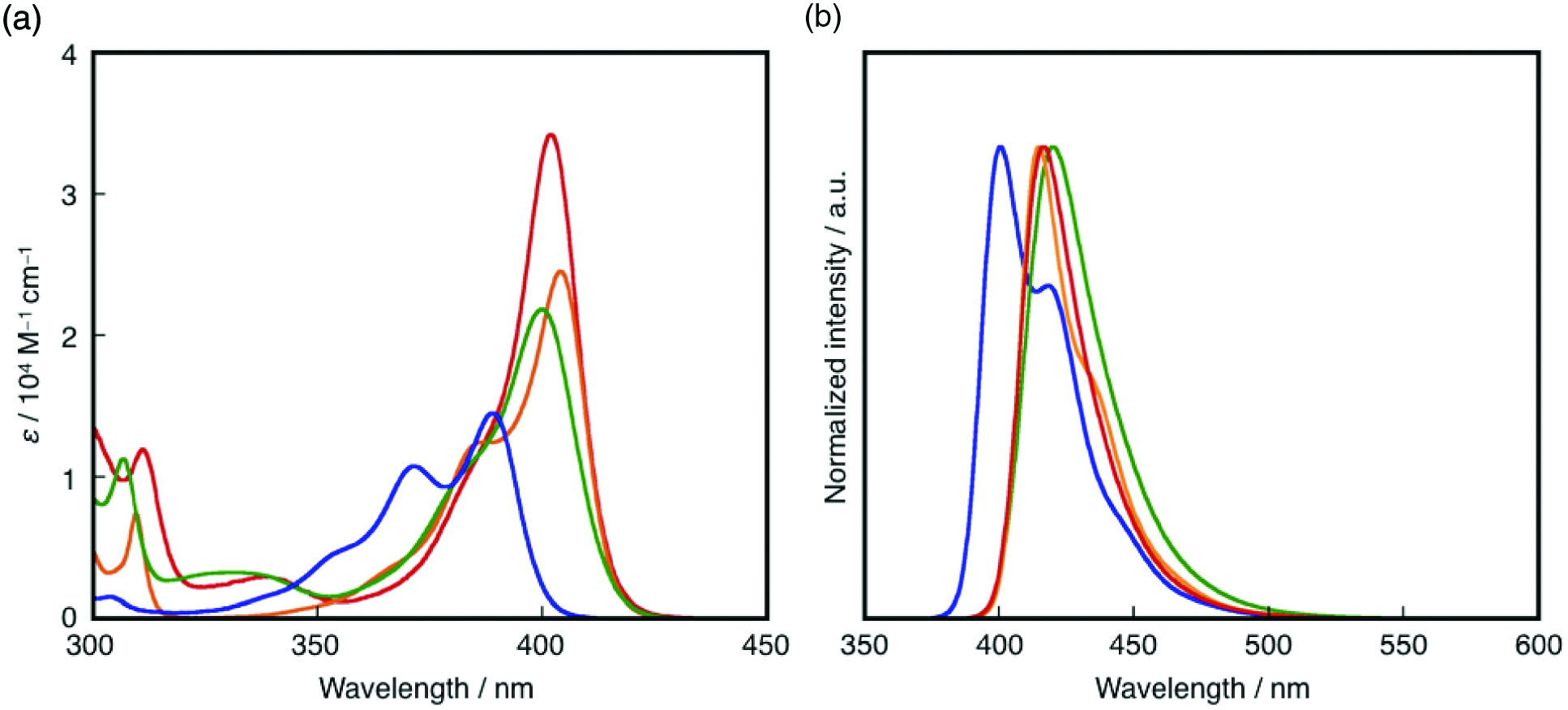
a) UV-vis absorption and b) fluorescence spectra of 1 (red), 2 (blue), 3 (green) and 4 (orange) in THF.

a) UV-vis absorption and b) fluorescence spectra of 1 (red), 2 (blue), 3 (green) and 4 (orange) in THF.

In their recent OBC publication, Professor Shigehiro Yamaguchi of the Institute of Transformative Bio- Molecules, Nagoya University et al. explored in detail the relation between the structure of materials and their electronic structures. They mainly focused on the correlation between the ring-fusion mode, where two cyclic rings fused in a planar manner, and the degree of structural constraint within the dibenzoazaborine skeleton. As constraining molecules into a planar fashion can extend π-conjugation and increase chemical stability, Shigehiro planarized the B-, N- phenyl groups in dibenzoazaborine to synthesize a new family of planarized triarylboranes with a carbazole substructure, confirming this structure by single-crystal X-ray diffraction analysis. They studied the photophysical properties of 1 and compared it with compunds 2-4. Compound 1 showed an intense absorption band at λabs= 402 nm unlike compounds 2-4 which showed λabs at 389 and 371, 400, 404 and 387 nm respectively. The fluorescence spectra of compound 1 showed an intense deep blue emission with a full width at half maximum (FWHM) of 27 nm which is due to its rigid structure. The optimized structure of 1 with respect to DFT calculations matched with the experimentally determined crystal structure. They report the time dependent DFT calculations which prove compound 1 to have the highest oscillator strength (f) amongst compounds 1-4, resulting in the largest molar absorption coefficient (ε). This clearly represents that it absorbs light strongly at the given wavelength. They also studied the electrochemical properties of 1-4 using cyclic voltammetry which resulted in one reversible reduction wave irrespective of the structural constraint showing that there are no electronic effects imposed on the structural constraint.

In conclusion, Shigehiro et al. succeeded in synthesizing structurally constrained, planarized dibenzoazaborines and investigating their photophysical and electronic effects.

Read their full article at https://rsc.li/2Xw8uoA.

Blog writer description: I am A. Vamshi Krishna, pursuing a PhD in organic chemistry with Prof. D. B. Ramachary at the University of Hyderabad. My research mainly focuses on asymmetric supramolecular-organocatalysis where we synthesise highly functionalized biologically active novel scaffolds with excellent selectivity and yields. I am passionate about scientific writing.

Digg This
Reddit This
Stumble Now!
Share on Facebook
Bookmark this on Delicious
Share on LinkedIn
Bookmark this on Technorati
Post on Twitter
Google Buzz (aka. Google Reader)

Organic & Biomolecular Chemistry welcomes new Associate Editor Elizabeth Krenske

New OBC Associate Editor Elizabeth Krenske

We are delighted to welcome Dr Elizabeth Krenske to the OBC team as an Associate Editor. Elizabeth is an Associate Professor at the University of Queensland, Australia, where her research focuses on the computational study of organic reactions and modelling of drug molecules and interactions.

After starting out her career in chemistry as an undergraduate at the University of Queensland, Elizabeth undertook a PhD in the field of synthetic main-group chemistry at The Australian National University’s Research School of Chemistry, under the supervision of Professor S. Bruce Wild. She spent a further two years carrying out postdoctoral research at the Australian National University, before receiving a Fulbright Scholarship and commencing postdoctoral studies at UCLA with Ken Houk. Elizabeth returned to Australia in 2009 as an Australian Research Council (ARC) Australian Postdoctoral Fellow at the University of Melbourne, and moved to The University of Queensland in 2012 as an ARC Future Fellow. She is currently an Associate Professor and Strategic Research Fellow in the University of Queensland School of Chemistry and Molecular Biosciences. To find out more about Elizabeth and her research, visit her webpage or browse some of her recent publications below.


Elizabeth’s recent publications:


The fate of copper catalysts in atom transfer radical chemistry

Polym. Chem., 2019, 10, 1460-1470


Asymmetric synthesis of multiple quaternary stereocentre-containing cyclopentyls by oxazolidinone-promoted Nazarov cyclizations

Chem. Sci., 2018, 9, 4644-4649


Synthesis of spirocyclic orthoesters by ‘anomalous’ rhodium(II)-catalysed intramolecular C–H insertions

Org. Biomol. Chem., 2018, 16, 256-261


Claisen rearrangements of benzyl vinyl ethers: theoretical investigation of mechanism, substituent effects, and regioselectivity

Org. Biomol. Chem., 2017, 15, 7887-7893


An unprecedented stereoselective base-induced trimerization of an α-bromovinylsulfone

Org. Biomol. Chem., 2017, 15, 5529-5534


Submit your research to Elizabeth now!
Digg This
Reddit This
Stumble Now!
Share on Facebook
Bookmark this on Delicious
Share on LinkedIn
Bookmark this on Technorati
Post on Twitter
Google Buzz (aka. Google Reader)