Archive for July, 2022

Editor’s Collection: Meet the authors – Nathalie Busschaert et al.

Meet our researchers:
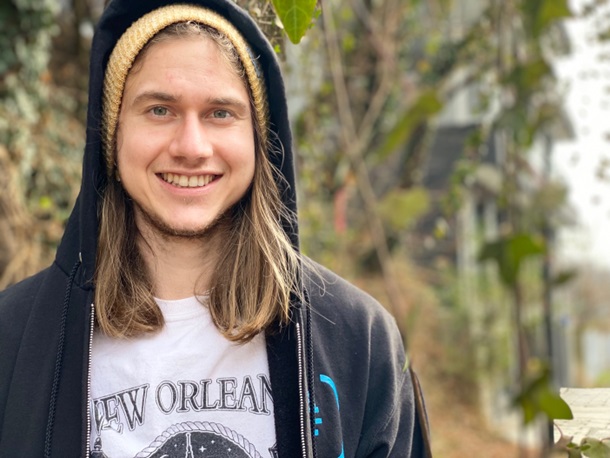
Elliot Williams

Hassan Gneid

Sarah Marshall

Mario González

Jorgi Mandelbaum

Nathalie Busschaert


Elliot Williams
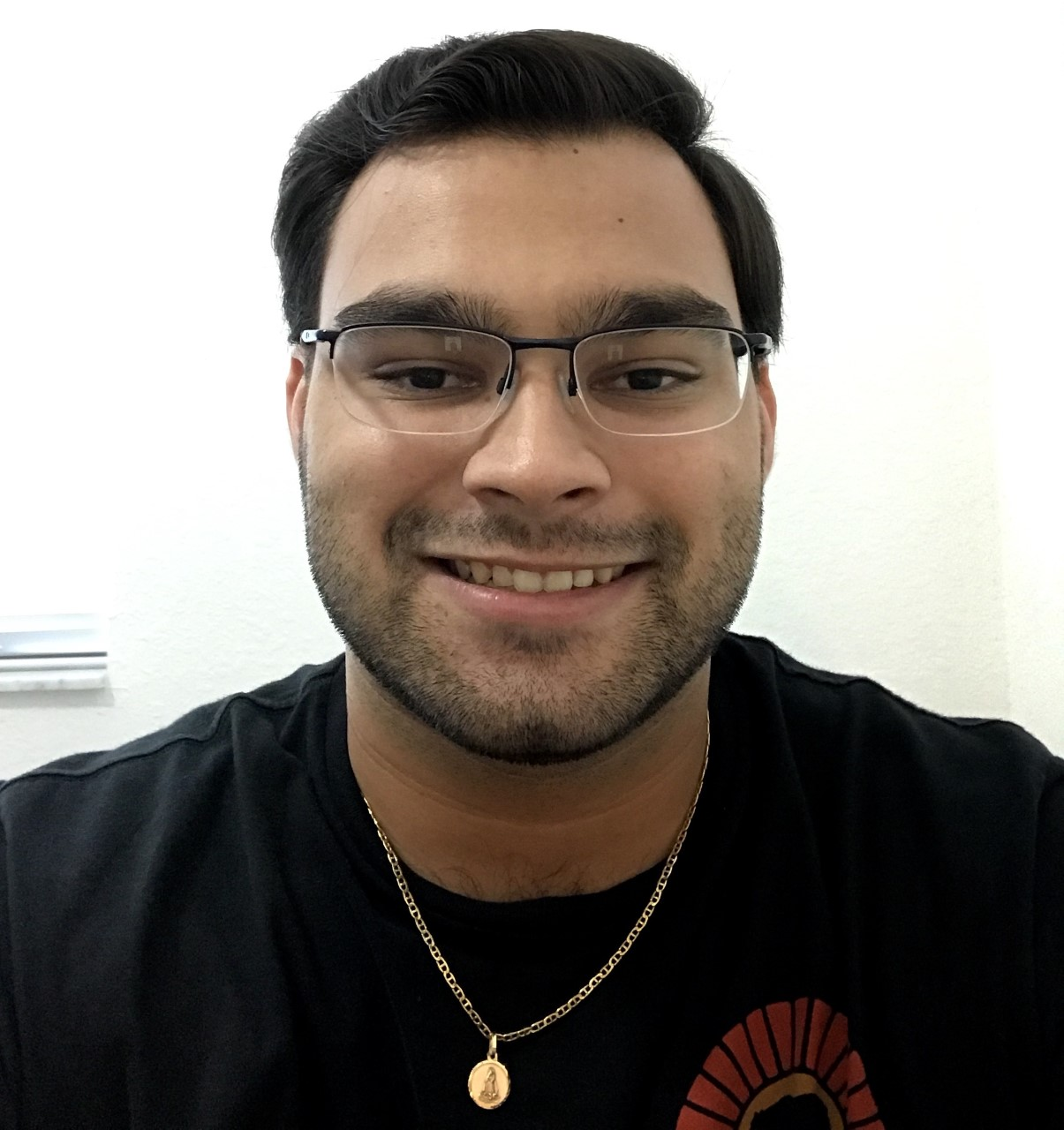
obtained his BSc in biochemistry from the University of Central Florida. He is currently working towards his PhD at Tulane University. His PhD focuses on the development of hosts for bacterial lipids, in particular anionic lipids such as PG. As such, he was the first author of the paper and performed the majority of the experiments. When not in the lab, he likes to dance, engage in his community, and walk his dog.

Hassan Gneid completed a BSc in chemistry at Damascus University (Syria), in the field of applied chemistry. After a number of years working in industry, he returned to education in 2011 to complete an MPhil degree in chemistry at the University of Southampton (UK) under the supervision of Dr. Martin Grossel. In 2014, he joined the group of Dr. Jonathan Watts to pursue a PhD in chemistry at the University of Southampton (UK) and the RNA Therapeutics Institute (USA). His PhD work revolved around the use of antisense oligonucleotides for the development of novel antibiotics. Hassan joined the Busschaert group in 2020 as a post-doctoral researcher responsible for microbiology studies. His research interests are oligonucleotide therapeutics and antibiotic development.

Sarah Marshall received her B.S. in biology from the Honors College at East Carolina University in 2015. She continued at East Carolina University to receive her M.S. in chemistry under the supervision of Dr. William E. Allen. During her M.S., she focused on the development of fluorescent amino acids and peptide synthesis. Currently, Sarah is a PhD candidate in the Busschaert group at Tulane University, working on various medical and non-medical applications of synthetic transmembrane anion transporters.

Mario González was born in San Juan, Puerto Rico. In 2019, he received his B.S. in Chemistry from the University of Miami. That same year, he joined the Busschaert group at Tulane University as a graduate student working towards a PhD. His current research involves turning commercially available, nonselective sensors selective via liquid-liquid extractions.

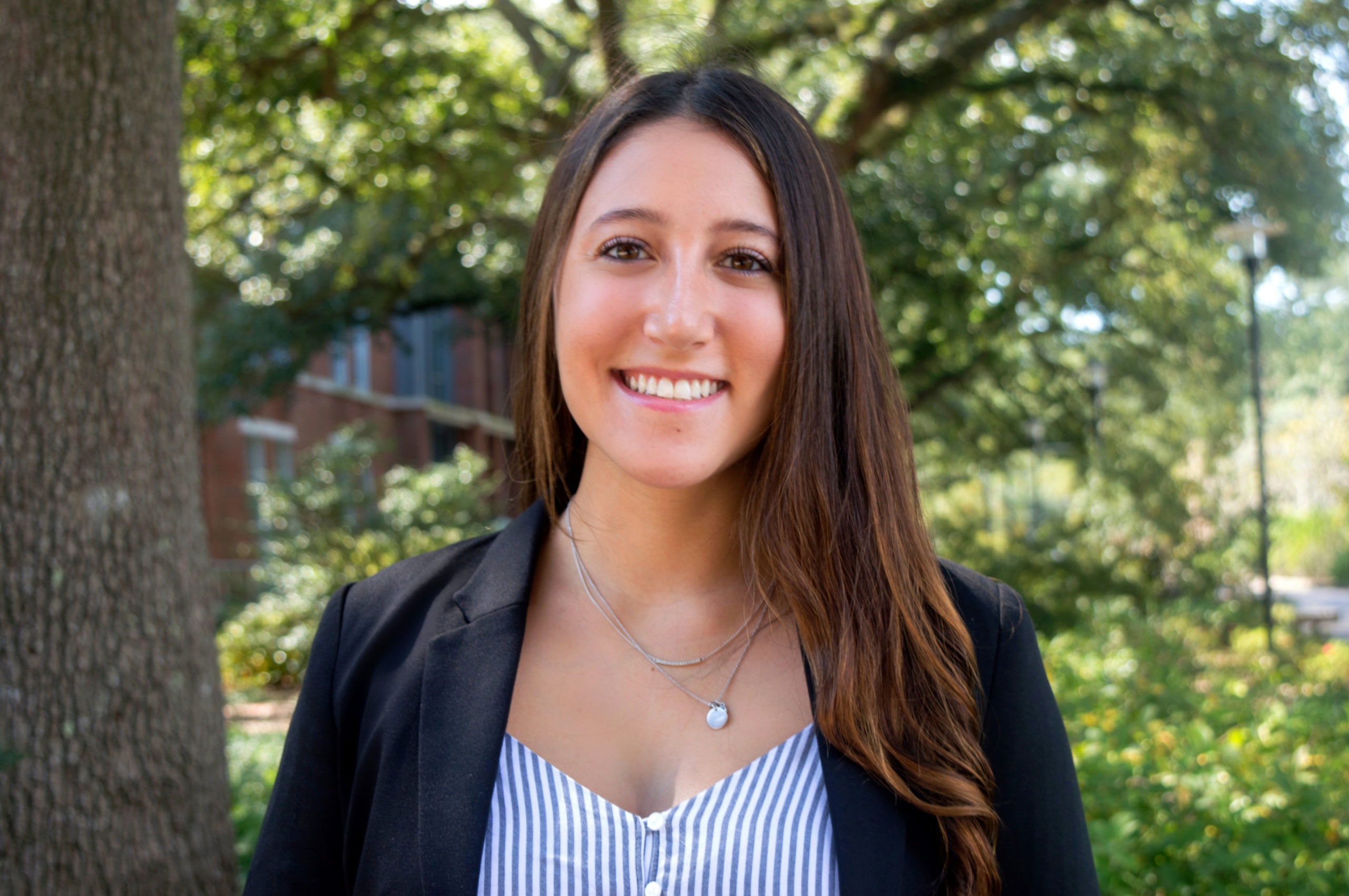
Jorgi Mandelbaum graduated from Tulane University with a B.S. (2021) and M.S. (2022) in neuroscience, with undergraduate minors in chemistry and Spanish. During her studies, she performed undergraduate research in the lab of Dr. Nathalie Busschaert, focusing on PG binding. She currently works as Research Scientist II on the Translational Pharmacology team in the Ophthalmology department at Novartis Institutes for BioMedical Research in Cambridge, MA. With her passion for pharmaceutical development, Jorgi is excited to be continuing her research beyond the academic setting in the healthcare industry.

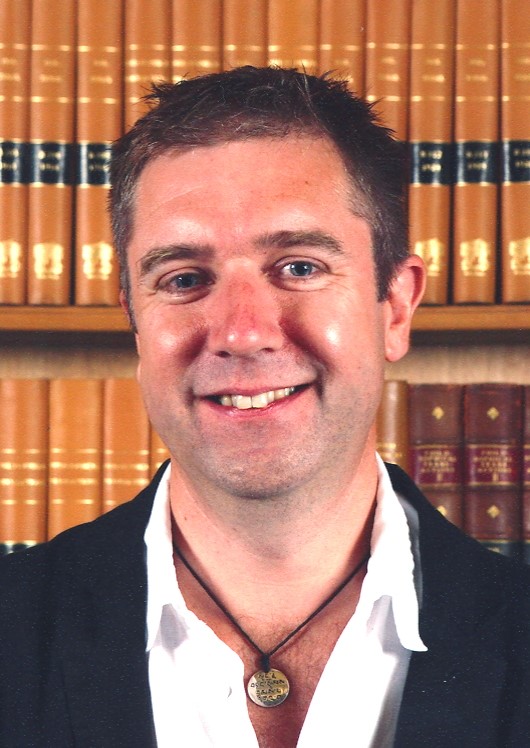
Nathalie Busschaert born in Antwerp, Belgium, completed a BSc in chemistry at the K. U. Leuven, Belgium, and continued studying for an MSc in chemistry at the same university. She then moved to the University to Southampton (UK) in 2010 to undertake a PhD under the supervision of Professor Philip A. Gale, working on the development of synthetic transmembrane anion transporters. In 2015 she joined the group of Andrew Hamilton at the University of Oxford to work as a post-doctoral researcher. In January 2016 she followed prof. Andrew Hamilton to New York University. She is currently working as an assistant professor at Tulane University. Her research interests are ion transport, lipid binding, membrane processes and medicinal applications of supramolecular systems.


What inspired your research in this area?

We are a young research group (established July 2017), and have been looking for a way to carve out our reputation as supramolecular chemists that work towards medical applications. I have been intrigued by the activity of antimicrobial peptides for a long time, due to my interest in biological membranes. Antimicrobial peptides have long been hailed as a solution to the antibiotic resistance crisis, because they target the bacterial membrane and can cause quick bactericidal activity in bacterial cells. However, they have some drawbacks and have not been able to completely live up to their expectation yet. Most antimicrobial peptides are cationic amphiphilic compounds that function by binding to the negatively charged lipids of bacterial membranes, followed by membrane disruption. During my own PhD that focused on the development of small neutral molecules that can transport chloride anions across biological membranes, we often observed binding to the lipid headgroup in molecular dynamics modelling. While binding to the lipid headgroup is detrimental for anion transport, I hypothesized that binding to the headgroup can provide membrane selectivity (e.g., bacterial membranes over human membranes) and can induce membrane perturbations similar to those observed for antimicrobial peptides. From the start of my independent career, my research group therefore started to develop small molecules that can strongly and selectively bind to bacterial lipid headgroups.

What do you personally feel is the most interesting/important outcome of your study?

The most important outcome of our study is that we provided proof-of-principle that small, neutral, structurally simple molecules can selectively bind to lipid headgroups and that this binding event has sufficient impact on membrane permeability to induce antibacterial activity. Even though the reported compounds were our first attempt at binding PG lipids and have not underwent further optimization yet, we have already achieved relatively potent antibiotics with minimum inhibitory concentrations (MIC values) of 12.5 – 25 μM.

What directions are you planning to take with your research in future? What are you going to be working on next?

We are preparing analogs of the PG hosts reported in this paper (https://doi.org/10.1039/D1OB02298A ), as well as the PE hosts that were reported in our previous OBC paper (https://doi.org/10.1039/D1OB00263E). The aim is to improve the antibacterial activity and lipid selectivity, and to elucidate structure-activity relationships that can help other researchers develop hosts for these two important bacterial lipids. In addition, we would like to investigate the effect of physical membrane parameters (such as curvature, and lipid chain length) on the binding of the hosts to the lipid headgroup. Finally, we are working on developing hosts that can bind selectively to other types of biologically relevant lipids.

Read the full article: A supramolecular host for phosphatidylglycerol (PG) lipids with antibacterial activity

See the other articles showcased in this month’s Editor’s Collection

See all the full articles on our publishing platform

Digg This
Reddit This
Stumble Now!
Share on Facebook
Bookmark this on Delicious
Share on LinkedIn
Bookmark this on Technorati
Post on Twitter
Google Buzz (aka. Google Reader)

Editor’s Collection: Meet the authors – Luca Gabrielli et al.

Meet our researchers:

Daniele Rosa-Gastaldo

Vytautas Pečiukėnas

Christopher Hunter

Luca Gabrielli

Daniele Rosa-Gastaldo obtained his PhD in Chemistry at the University of Padova in 2020 under the supervision of Prof. Fabrizio Mancin, studying the use of gold nanoparticles as NMR chemosensors. After a postdoctoral experience at the same university in Dr. Gabrielli’s group, he moved to the University of Geneva and joined as a post-doc Prof. Thomas Bürgi’s group, where his research is focused on the properties and applications of atomically precise gold and silver nanoclusters.

Vytautas Pečiukėnas studied Natural Sciences at the University of Cambridge obtaining MSci diploma in 2018. There he carried out his Masters project on informational oligomers in Prof. Hunter’s group under the direct supervision of Dr. Gabrielli. Currently he is a PhD student in Dr. Josep Cornella’s group at the the Max-Planck-Institut für Kohlenforschung in Germany. His research is focused on developing catalytic cross-coupling protocols by employing Bi(III)/(V) redox platform.

Christopher A. Hunter was born in New Zealand and educated at the University of Cambridge, graduating with a PhD in 1989. He was a lecturer at the University of Otago till 1991, when he moved to the University of Sheffield.  He was promoted to a chair in 1997, and in 2014, he took up the Herchel Smith Professorship of Organic Chemistry at the University of Cambridge. In 2008, he was elected a Fellow of the Royal Society, and he is an Honorary Member of the Royal Irish Academy.

Luca Gabrielli obtained his MSc and PhD in Chemistry at the University of Milano-Bicocca with Laura Cipolla, spending part of his PhD at the Ben G. Davis’ group (University of Oxford). After a post-doc experience with Fabrizio Mancin at the University of Padova, he moved to the group of Chris Hunter (University of Cambridge) as an MSCA-IF fellow. In 2019 he moved back to the University of Padova, where is currently an assistant professor. His research interests span from information molecules to kinetically controlled and out of equilibrium systems.


What inspired your research in this area?

The way living systems store information as a sequence of nucleotides, and how this information is copied, transcribed, and translated into a functional molecule, represents the main inspiration of our research. However, these outstanding properties are currently unique to nucleic acids. Synthetic recognition-encoded oligomers have the potential to display similar properties, which would open the way for the directed evolution of function in synthetic polymers.

What do you personally feel is the most interesting/important outcome of your study?

One of the challenges in the realization of synthetic oligomers capable of sequence-selective duplex formation is the competing intramolecular folding interaction between complementary recognition units. Thanks to the modular approach adopted for designing duplex-forming oligoanilines (Chem. Sci., 2020, 11, 561-566), we investigated how variations in the steric bulk around the H-bond acceptor unit and on the backbone structure would affect folding and duplex formation. We observed that using a long rigid linker as the backbone connecting two monomer units successfully prevents 1,2-folding and leads to the formation of a stable mixed-sequence duplex, while increasing the acceptor bulkiness was not effective in preventing the undesired folding.

What directions are you planning to take with your research in future? What are you going to be working on next?

The observation of imine polymerase activity in one of these single-stranded oligomers (Chem. Sci., 2020, 11, 7408-7414) suggested that more interesting analogies between natural biopolymers and the chemistry of synthetic recognition-encoded oligomers will come to light. Hence, our future research will be focused on developing synthetic duplex-forming oligomers able to perform templated synthesis of the complementary sequence molecule, which is the key property that allows to copy, transcript, and translate nucleic acids.


Read the full article: Duplex vs. folding: tuning the self-assembly of synthetic recognition-encoded aniline oligomers

See the other articles showcased in this month’s Editor’s Collection

See all the full articles on our publishing platform

Digg This
Reddit This
Stumble Now!
Share on Facebook
Bookmark this on Delicious
Share on LinkedIn
Bookmark this on Technorati
Post on Twitter
Google Buzz (aka. Google Reader)

Editor’s Collection: Meet the authors – Francesco Sansone et al.

Meet our researchers:

Alessandro Casnati

Jeffrey Esko

Ilaria Morbioli

Francesco Sansone

Yitzhak Tor

Alessandro Casnati received his PhD in Chemistry in 1992 at the University of Parma under the supervision of Prof. Rocco Ungaro. After a period of study in Prof. Reinhoudt’s laboratories at Twente University (NL), he came back to Parma University as Assistant Professor (1994). In 1998 he became Associate Professor and in 2015 Full Professor of Organic Chemistry. His interests are in Supramolecular Chemistry and in the design and synthesis of calixarene receptors for ions, small molecules and of multivalent ligands for macrobiomolecules.

Jeffrey D. Esko, is a Distinguished Professor of Cellular and Molecular Medicine and was a founding Director of the Glycobiology Research and Training Center at the University of California, San Diego. Dr. Esko received his Ph.D. in Biochemistry at the University of Wisconsin in Madison. After an independent fellowship at the Molecular Biology Institute at the University of California, Los Angeles, he moved to the University of Alabama at Birmingham in 1983 as an Assistant Professor and then as a full Professor to the Department of Cellular and Molecular Medicine at the University of California, San Diego in 1996 to help build a program in glycosciences. Work in his laboratory focuses on the structure, biosynthesis, and function of proteoglycans. Current work includes the application of genome-wide methods to identify novel genes involved in glycosaminoglycan assembly; studies focused on treatments for enzyme replacement therapy; studies of proteoglycans in viral and bacterial infection; and studies of proteoglycan-associated receptors with particular emphasis on the vasculature and infection.

Ilaria Morbioli graduated in Chemistry at University of Padua and received her PhD in 2017 under the supervision of Prof. Francesco Sansone working on multivalent calixarenes for the targeting of cell membrane receptors and intracellular cargo delivery. Since 2017 she has been working as researcher at Aptuit, an Evotec Company, which deals with the synthesis of small molecules having pharmacological activity.

Francesco Sansone received his PhD in 1998 in Organic and Supramolecular Chemistry at the University of Parma (Italy), under the supervision of Prof. Rocco Ungaro. Currently, he is Full Professor of Organic and Bioorganic Chemistry at the Department of Chemistry, Life Sciences and Environmental Sustainability, Parma University. With his activity, he significantly contributed to define for calixarenes the role of versatile scaffolds for the preparation of efficient multivalent ligands for biomacromolecules. His research interests are in the design of supramolecular systems for applications in the field of biology and biotechnologies, but also in technological contexts as additives for lubricants and for treatment of radioactive waste.

Yitzhak Tor carried out his doctorate work at the Weizmann Institute of Science earning his PhD in 1990. After a postdoctoral stay at the California Institute of Technology (1990–1993), he took his first faculty position at the University of Chicago. In 1994, he moved to the University of California, San Diego, where he is currently a Distinguished Professor of Chemistry and Biochemistry. He was the Teddy Traylor Scholar in Organic Chemistry (2006–2011) and the George W. and Carol A. Lattimer Professor (2013–2017). His research interests are diverse and include chemistry and biology of nucleosides, nucleotides and nucleic acids, the discovery of novel RNA-targeting antiviral and antibacterial agents, as well as the development of cellular delivery agents and biomolecular fluorescent probes.


What inspired your research in this area?

For some years we have been working on calixarene derivatives that show remarkable ability in delivering nucleic acids into cells thanks to their functionalization with guanidinium and arginine units. Among the functions put into play during the transfection process, these cationic macrocyclic amphiphiles facilitate the cell membrane penetration. Therefore, we decided to exploit this latter property of these macrocycles to improve the uptake of liposomes by cells, with the aim of overcoming some limitations characterizing the action of these lipidic carriers. Liposomes in fact frequently show poor penetration capability and this can significantly impair the beneficial and expected transport of drugs and biologically relevant species for which they are designed. On the other hand, liposomes can be rather simply adorned to gain new properties and functions. We planned thus to improve the liposomes performance by decorating their outer surface with our cationic calixarene-based carriers.

What do you personally feel is the most interesting/important outcome of your study?

I think it is important to have verified that the calixarene derivatives can significantly affect the activity of liposomes, improving their ability of delivering their cargo into the cells. The parallel use of cells lacking anionic polysaccharides on their surface and of plain liposomes (lacking the calixarenes in the outer layer) as references proved the active role played by the cationic macrocycles to trigger the uptake of the calixarene-modified vesicles. I hope these results can be useful to other researchers active in the field of drug delivery to explore the possible use of other similar clustered multivalent polycationic ligands to facilitate cell penetration.

What directions are you planning to take with your research in future? What are you going to be working on next?

Remaining within the context of this specific paper, we are going to work on supramolecular transporters/vectors able to deliver cargos in a targeted way, combining the already-established cell penetrating properties with additional tools such as, for instance, the recognition of specific cells by using antigens units. These latter units should provide the calixarenes with the ability of selectively interacting with specific receptors located only, or overexpressed, in particular tissues, cells and organs. To this end, the calixarene structure typically allows multiple functionalization generating multivalent or multifunctional systems, or even the combination of both natures. The chemistry to obtain such complex systems becomes step by step more challenging.


Read the full article: Calixarene-decorated liposomes for intracellular cargo delivery

See the other articles showcased in this month’s Editor’s Collection

See all the full articles on our publishing platform

Digg This
Reddit This
Stumble Now!
Share on Facebook
Bookmark this on Delicious
Share on LinkedIn
Bookmark this on Technorati
Post on Twitter
Google Buzz (aka. Google Reader)

Editor’s Collection: Meet the authors – Yun-Bao Jiang et al.

Meet our researchers:

Professor Yun-Bao Jiang

Dr Xiaosheng Yan

Di Shi

Yun-Bao Jiang is a Professor of Chemistry in the College of Chemistry and Chemical Engineering, Xiamen University, China. He received his PhD from Xiamen University in 1990 under the supervision of Professor Guo-Zhen Chen. He was awarded the distinguished young investigator grant by the NSF of China and has led innovation research teams financially supported by the Ministry of Education and the NSF of China. His current research interests include design and applications of chemical sensors and hierarchical self-assembling systems, with a focus on electron/proton transfer photophysics, metallophilic interactions and supramolecular chirality.

Xiaosheng Yan obtained his PhD degree in analytical chemistry from Xiamen University in 2016 under the supervision of Professor Yun-Bao Jiang. He now is an associate professor in the School of Pharmaceutical Sciences, Xiamen University, China. His research interests are centered on folding and assembling of short peptides for drug discovery, halogen/chalcogen-bonding-driven supramolecular helices, and spontaneous chiral resolution.

Di Shi is a PhD student in Prof. Yun-Bao Jiang’s group in Xiamen University, China. She received her Bachelor’s degree in material chemistry in 2018 from Huaqiao University. Her research focuses on the development of chalcogen bonding driven supramolecular helices and synthesis and applications of macrocyclic molecules, both from folded short peptides.


What inspired your research in this area?

Despite its successful applications as an intermolecular interaction in anion recognition, crystal engineering and catalysis, chalcogen bonding has not been employed to build supramolecular helices. We recently created halogen-bonding driven supramolecular helices from folded short azapeptides containing β-turns, so it was natural for us to explore the potential of chalcogen bonding in driving the supramolecular helices.

What do you personally feel is the most interesting/important outcome of your study?

We recently suggested that a folded short peptide could be an amenable helical building block to form supramolecular helices, allowing good propagation. This study thus confirms that chalcogen bonding can function as an intermolecular interaction to propagate the helicity too. The study may eventually establish a new interaction mode for a supramolecular helix to be built, from helical building blocks containing a chalcogen bonding element.

What directions are you planning to take with your research in future? What are you going to be working on next?

We are exploring the possibility of using chalcogen bonding to build supramolecular helices in the solution phase. The functions of chalcogen bonding in the supramolecular assembled systems will be investigated in the future, for example to examine if the chalcogen bonding can be employed to promote spontaneous chiral resolution.


Read the full article: Chalcogen bonding mediates the formation of supramolecular helices of azapeptides in crystals

See the other articles showcased in this month’s Editor’s Collection

See all the full articles on our publishing platform


Digg This
Reddit This
Stumble Now!
Share on Facebook
Bookmark this on Delicious
Share on LinkedIn
Bookmark this on Technorati
Post on Twitter
Google Buzz (aka. Google Reader)

Editor’s Collection: Anthony Davis

The Organic & Biomolecular Chemistry Editor’s collection is a showcase of some of the best articles published in the journal, hand selected by our Associate Editors and Editorial Board members.

For this month’s selection, Chair Anthony Davis has highlighted some of his favourite recent works.

Take a look at what he thought of the articles below, and find out more about the research and the researchers behind the papers in our interviews with the authors.

Tony’s selection:

Chalcogen bonding mediates the formation of supramolecular helices of azapeptides in crystals
Di Shi, Jinlian Cao, Peimin Weng, Xiaosheng Yan, Zhao Lia and Yun-Bao Jiang

Tony’s comment:
Chalcogen bonding is a fascinating addition to the armoury of supramolecular chemists. In this paper by Yan, Jiang and co-workers it is used in a rational fashion to control molecular conformations. The success of their approach bodes well for future efforts to exploit this under-appreciated phenomenon.

Find out more in our interview with the authors


Calixarene-decorated liposomes for intracellular cargo delivery
Ilaria Morbioli, Alessandro Casnati, Jeffrey D. Esko, Yitzhak Tor and Francesco Sansone

Tony’s comment:
Calixarenes are widely used as synthetic scaffolds for the presentation of multiple functional groups. Tor, Sansone and co-workers show here that calixarenes bearing guanidinium groups can be inserted in liposomes and promote the delivery of contents to cells. The paper nicely exemplifies the efforts of today’s supramolecular chemists to create systems with real-world medical applications.

Find out more in our interview with the authors


Duplex vs. folding: tuning the self-assembly of synthetic recognition-encoded aniline oligomers
Daniele Rosa-Gastaldo, Vytautas Pečiukėnas, Christopher A. Hunter and Luca Gabrielli

Tony’s comment:
It is well-understood how nucleic acids and related molecules can store and transmit information, but the extension of this behaviour to other types of molecules is not well-explored. The Hunter group has investigated duplex formation via hydrogen bonding in carefully-designed oligomers. In collaboration with the Gabrielli group, they here show how unwanted folding can be avoided, pointing towards systems with true information-carrying capacity.

Find out more in our interview with the authors


A supramolecular host for phosphatidylglycerol (PG) lipids with antibacterial activity
Elliot S. Williams, Hassan Gneid, Sarah R. Marshall, Mario J. González, Jorgi A. Mandelbaum and Nathalie Busschaert

Tony’s comment:
In another example of supramolecular chemistry with medical potential, molecules designed to bind anionic lipids are used to target bacterial cell membranes. The systems of Busschaert and co-workers exploit well-known motifs combined in quite simple structures to obtain good selectivity and impressive antibacterial activity.

Find out more in our interview with the authors


Meet the Editor:
Anthony Davis, OBC Chair

Anthony Davis gained a B.A. in Chemistry from Oxford University in 1977, then stayed for a D.Phil. under Dr. G. H. Whitham and postdoctoral work with Prof. J. E. Baldwin. In 1981 he moved to the ETH Zürich as a Royal Society European Exchange Fellow working with Prof. A. Eschenmoser, then in 1982 was appointed Lecturer in Organic Chemistry at Trinity College, Dublin. In September 2000 he moved to the University of Bristol, where he is Professor of Supramolecular Chemistry in the School of Chemistry.

His research focuses on the development of supramolecular systems with potential for biological applications, especially carbohydrate receptors and transmembrane anion transporters. He has co-founded two companies to exploit discoveries in carbohydrate recognition and sensing; Ziylo, which was sold in 2018 to Novo Nordisk, and Carbometrics, which continues to work in the area.


Digg This
Reddit This
Stumble Now!
Share on Facebook
Bookmark this on Delicious
Share on LinkedIn
Bookmark this on Technorati
Post on Twitter
Google Buzz (aka. Google Reader)