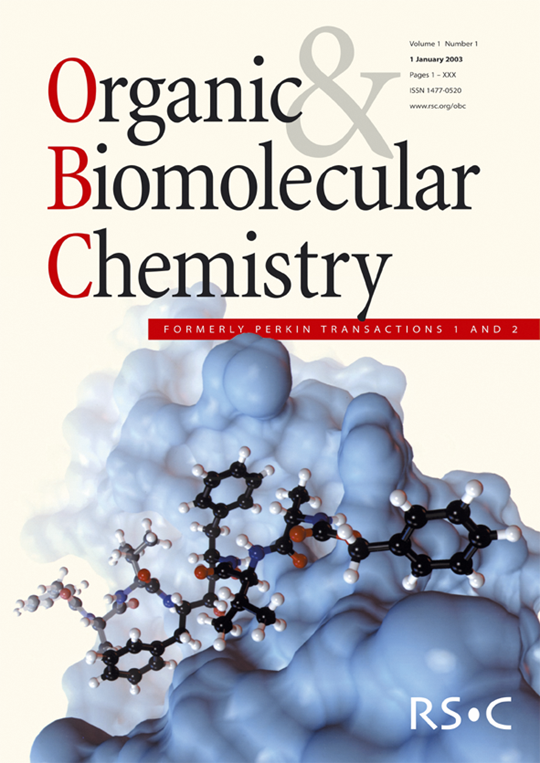
Top ten most accessed article in April

This month sees the following articles in Organic & Biomolecular Chemistry that are in the top ten most accessed:

Synthesis of the anti-influenza agent (-)-oseltamivir free base and (-)-methyl 3-epi-shikimate
Varun Rawat, Soumen Dey and Arumugam Sudalai
Org. Biomol. Chem., 2012, 10, 3988-3990
DOI: 10.1039/C2OB25635E

Thiol–yne coupling: revisiting old concepts as a breakthrough for up-to-date applications
Alessandro Massi and Daniele Nanni
Org. Biomol. Chem., 2012, 10, 3791-3807
DOI: 10.1039/C2OB25217A

Cu(I)-catalyzed annulation for the synthesis of substituted naphthalenes using o-bromobenzaldehydes and ß-ketoesters as substrates
Chandi C. Malakar, Kavitha Sudheendran, Hans-Georg Imrich, Sabine Mika and Uwe Beifuss
Org. Biomol. Chem., 2012, 10, 3899-3905
DOI: 10.1039/C2OB06963F

A convenient and mild chromatography-free method for the purification of the products of Wittig and Appel reactions
Peter A. Byrne, Kamalraj V. Rajendran, Jimmy Muldoon and Declan G. Gilheany
Org. Biomol. Chem., 2012, 10, 3531-3537
DOI: 10.1039/C2OB07074J

Copper(II)-mediated oxidative cyclization of enamides to oxazoles
Alison E. Wendlandt and Shannon S. Stahl
Org. Biomol. Chem., 2012, 10, 3866-3870
DOI: 10.1039/C2OB25310K

Synthesis of carbazolones and 3-acetylindoles via oxidative C–N bond formation through PIFA-mediated annulation of 2-aryl enaminones
Xu Ban, Yan Pan, Yingfu Lin, Songqing Wang, Yunfei Du and Kang Zhao
Org. Biomol. Chem., 2012, 10, 3606-3609
DOI: 10.1039/C2OB25348H

Water soluble extended naphthalene diimides as pH fluorescent sensors and G-quadruplex ligands
Filippo Doria, Matteo Nadai, Giovanna Sattin, Luca Pasotti, Sara N. Richter and Mauro Freccero
Org. Biomol. Chem., 2012, 10, 3830-3840
DOI: 10.1039/C2OB07006E

Tunnelling control of chemical reactions – the organic chemist’s perspective
David Ley, Dennis Gerbig and Peter R. Schreiner
Org. Biomol. Chem., 2012, 10, 3781-3790
DOI: 10.1039/C2OB07170C

Enantioselective synthesis of bio-relevant 3,5-diaryl pyrazolines
Olivier Mahé, Isabelle Dez, Vincent Levacher and Jean-François Brière
Org. Biomol. Chem., 2012, 10, 3946-3954
DOI: 10.1039/C2OB25227A

Development of strong Brønsted base catalysis: catalytic direct-type Mannich reactions of non-activated esters via a product-base mechanism
Yasuhiro Yamashita, Hirotsugu Suzuki and Shū Kobayashi
Org. Biomol. Chem., 2012, Advance Article
DOI: 10.1039/C2OB25522G

Why not take a look at the articles today and blog your thoughts and comments below.

Fancy submitting an article to Organic & Biomolecular Chemistry? Then why not submit to us today or alternatively email us your suggestions.

Digg This
Reddit This
Stumble Now!
Share on Facebook
Bookmark this on Delicious
Share on LinkedIn
Bookmark this on Technorati
Post on Twitter
Google Buzz (aka. Google Reader)

Organic: Self-sorting compound mixtures

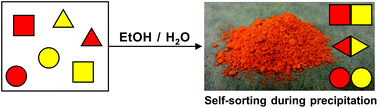
A judicious choice of precipitation conditions can lead to self-sorting of equilibrating mixtures of aromatic aldehydes and substituted anilines into a handful of imine products, say researchers from the US.

You might expect to get quite a few different products but because the least soluble imine precipitates, the mixture re-equilibrates to generate more of that compound. Eventually, all precursors to the least soluble imine are exhausted and the mixture is reduced in complexity. Only the most and the least soluble imines are produced without any of the “in between” species.

A mixture of as many as nine imines could be self-sorted into just three compounds, they say.

Precipitation-driven self-sorting of imines
Rio Carlo Lirag , Karolina Osowska and Ognjen Š. Miljanić
DOI: 10.1039/C2OB25736J

Digg This
Reddit This
Stumble Now!
Share on Facebook
Bookmark this on Delicious
Share on LinkedIn
Bookmark this on Technorati
Post on Twitter
Google Buzz (aka. Google Reader)

10 of the best: catalysis in Organic & Biomolecular Chemistry

In this latest blog celebrating OBC’s 10th anniversary we bring to you a selection of 10 of the most highly cited articles that cover the area of catalysis. Every single one will be free to access for you to enjoy.

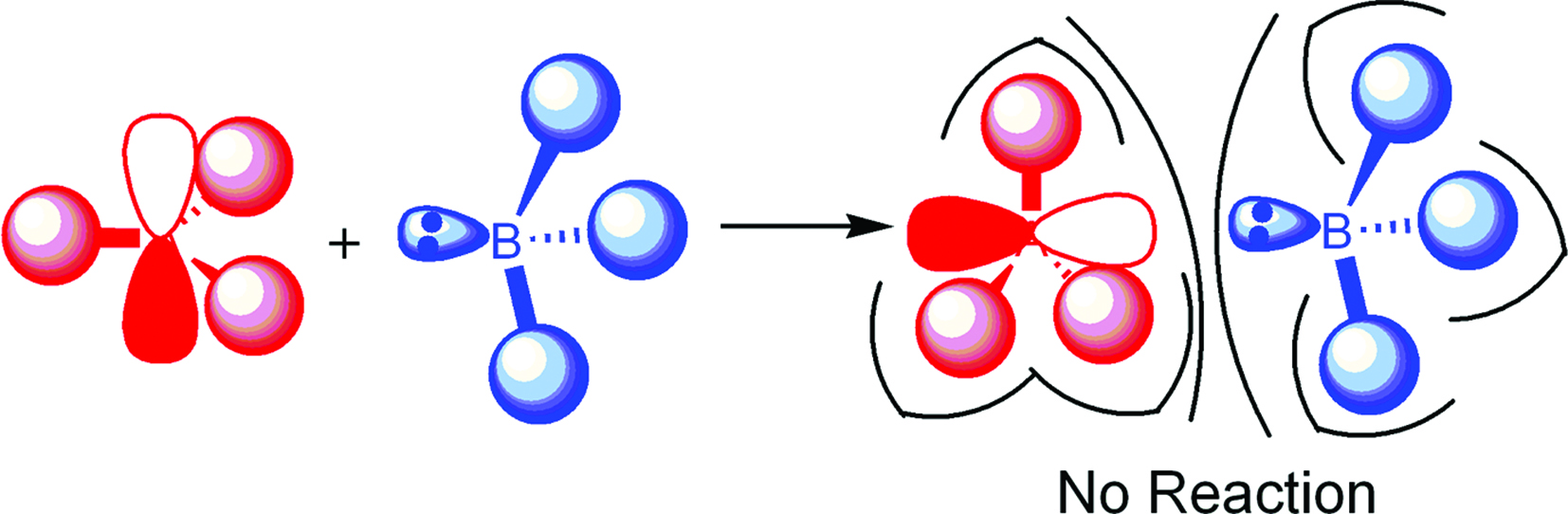
“Frustrated Lewis pairs”: a concept for new reactivity and catalysis
Douglas W. Stephan
DOI: 10.1039/B802575B

Asymmetric organocatalysis
Jayasree Seayad and Benjamin List
DOI: 10.1039/B415217B

The golden gate to catalysis
Anja Hoffmann-Röder and Norbert Krause
DOI: 10.1039/B416516K

Recognition and activation by ureas and thioureas: stereoselective reactions using ureas and thioureas as hydrogen-bonding donors
Yoshiji Takemoto
DOI: 10.1039/B511216H

Organocatalysis with proline derivatives: improved catalysts for the asymmetric Mannich, nitro-Michael and aldol reactions
Alexander J. A. Cobb, David M. Shaw, Deborah A. Longbottom, Johan B. Gold and Steven V. Ley
DOI: 10.1039/B414742A

Mechanistic aspects of transition metal catalysed 1,6-diene and 1,6-enyne cycloisomerisation reactions
Guy C. Lloyd-Jones
DOI: 10.1039/B209175P

Ru complexes bearing bidentate carbenes: from innocent curiosity to uniquely effective catalysts for olefin metathesis
Amir H. Hoveyda, Dennis G. Gillingham, Joshua J. Van Veldhuizen, Osamu Kataoka, Steven B. Garber, Jason S. Kingsbury and Joseph P. A. Harrity
DOI: 10.1039/B311496C

σ-Chelation-directed C–H functionalizations using Pd(II) and Cu(II) catalysts: regioselectivity, stereoselectivity and catalytic turnover
Jin-Quan Yu, Ramesh Giri and Xiao Chen
DOI: 10.1039/B611094K

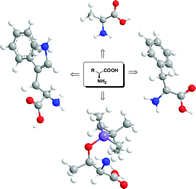
Primary amino acids: privileged catalysts in enantioselective organocatalysis
Li-Wen Xu and Yixin Lu
DOI: 10.1039/B803116A

[2.2]Paracyclophane derivatives in asymmetric catalysis
Susan E. Gibson and Jamie D. Knight
DOI: 10.1039/B300717K

Do you remember these articles? Have they influenced your work? Share your comments below, we would love to read them.

Digg This
Reddit This
Stumble Now!
Share on Facebook
Bookmark this on Delicious
Share on LinkedIn
Bookmark this on Technorati
Post on Twitter
Google Buzz (aka. Google Reader)

Chemical biology and medicine: New anti-cancer mechanism for drug compounds

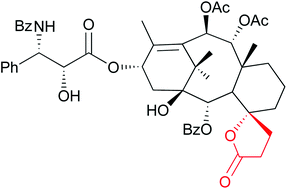
Serbian chemists have synthesised a similar compound to the anti-cancer drug paclitaxel, but while this new compound is also bad news for cancer cells, the mechanism it uses is quite different – autophagy instead of apoptosis. Paclitaxel causes cancer cells to self destruct, but cancer can become wise to this and become resistant. The new analogue uses autophagy to kill the cancer – a method of attack that’s getting increasing attention for anti-cancer drugs.

A novel C,D-spirolactone analogue of paclitaxel: autophagy instead of apoptosis as a previously unknown mechanism of cytotoxic action for taxoids
Milena Trmcic, Radomir Matovic, Gordana Tovilovic, Biljana Ristic, Vladimir Trajkovic, Zorana Ferjancic and Radomir Nikola Saicic
DOI: 10.1039/C2OB25514F

Digg This
Reddit This
Stumble Now!
Share on Facebook
Bookmark this on Delicious
Share on LinkedIn
Bookmark this on Technorati
Post on Twitter
Google Buzz (aka. Google Reader)

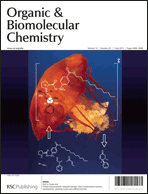
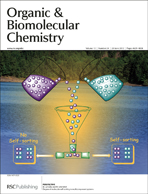
OBC issue 24 now available, featuring oligonucleotides and self-sorting on the covers

This week’s OBC front cover highlights the review of Sabine Müller and colleagues who discuss the methods for the preparation of oligonucleotides. In particular Müller et al. review the work done in the field of synthesis of trinucleotide synthons representing codons for the 20 canonical amino acids and their use for fully controlled partial or total randomization individually at any number of arbitrarily chosen codon positions of a given gene.

Mixed oligonucleotides for random mutagenesis: best way of making them
Tamil Selvi Arunachalam, Claudia Wichert, Bettina Appel and Sabine Müller
DOI: 10.1039/C2OB25328C

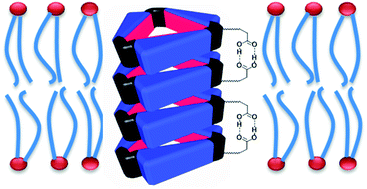
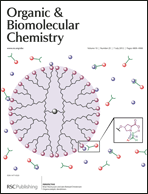
On the inside fron cover Manik Lal Saha and Michael Schmittel present a review on the emerging principles of how to guide several components toward the formation of self-sorted multi-component architectures, and in whcih they focus on developing a systematic classification for the reported self-sorting systems and an evaluation of their degree of self-sorting

Degree of molecular self-sorting in multicomponent systems
Manik Lal Saha and Michael Schmittel
DOI: 10.1039/C2OB25098E

Both of these reviews will be free to access for the next 6 weeks so get reading!

Also in this issue is the HOT communication by Marco Bella et al. regarding a modern take on the Rabe animation utilising organocatalyisis.

The Rabe amination after a century: direct addition of N-heterocycles to carbonyl compounds
Daniele M. Scarpino Schietroma, Mattia R. Monaco, Valerio Bucalossi, Philipp E. Walter, Patrizia Gentili and Marco Bella
DOI: 10.1039/C2OB25595B

View the whole issue here….

Digg This
Reddit This
Stumble Now!
Share on Facebook
Bookmark this on Delicious
Share on LinkedIn
Bookmark this on Technorati
Post on Twitter
Google Buzz (aka. Google Reader)

HOT: The Rabe amination after a century: direct addition of N-heterocycles to carbonyl compounds

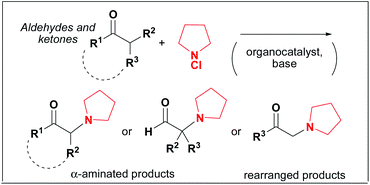
This Communication by Marco Bella et al. is a study of the historically famous Rabe amination, presenting preliminary results for a “modern” organocatalytic version of the reaction whereby direct functionalisation of ketones and aldehydes with N-chloro amines is achieved in mild conditions. Bella et al. also report that when aldehydes bearing a CH2 moiety in the α-position are used, a novel rearrangement is observed leading to α-amino ketones.

Have a look at the Communication for more details on the experimental procedure and possible mechanistic explanation for this interesting reaction, it’s free to access for 4 weeks!

The Rabe amination after a century: direct addition of N-heterocycles to carbonyl compounds

Daniele M. Scarpino Schietroma, Mattia R. Monaco, Valerio Bucalossi, Philipp E. Walte, Patrizia Gentili and Marco Bella
DOI: 10.1039/C2OB25595B

Digg This
Reddit This
Stumble Now!
Share on Facebook
Bookmark this on Delicious
Share on LinkedIn
Bookmark this on Technorati
Post on Twitter
Google Buzz (aka. Google Reader)

The best of bioorganic from Organic & Biomolecular Chemistry

Continuing with our countdown to OBC’s 10th anniversary celebratory issue we’ve collected a selection of our most cited articles from the area of bioorganic chemistry and made them free to access for one week.


DNA-programmed assembly of nanostructures
Kurt V. Gothelf and Thomas H. LaBean
DOI: 10.1039/B510551J

Nucleic acid nanotechnology—towards Ångström-scale engineering
Jesper Wengel
DOI: 10.1039/B313986G

Fluorescent DNA base replacements: reporters and sensors for biological systems
James N. Wilson and Eric T. Kool
DOI: 10.1039/B612284C

Photochemical control of biological processes
Douglas D. Young and Alexander Deiters
DOI: 10.1039/B616410M

DNA meets synthetic polymers—highly versatile hybrid materials
Fikri E. Alemdaroglu and Andreas Herrmann
DOI: 10.1039/B617941J

DNA-based machines
Moritz K. Beissenhirtz and Itamar Willner
DOI: 10.1039/B607033G

Electrontransfer through DNA and metal-containing DNA
Thomas Carell, Christoph Behrens and Johannes Gierlich
DOI: 10.1039/B303754A 

Bioorthogonal organic chemistry in living cells: novel strategies for labeling biomolecules
Paul F. van Swieten, Michiel A. Leeuwenburgh, Benedikt M. Kessler and Herman S. Overkleeft
DOI: 10.1039/B412558D 

Artificial ribonucleases
Teija Niittymäki and Harri Lönnberg
DOI: 10.1039/B509022A 

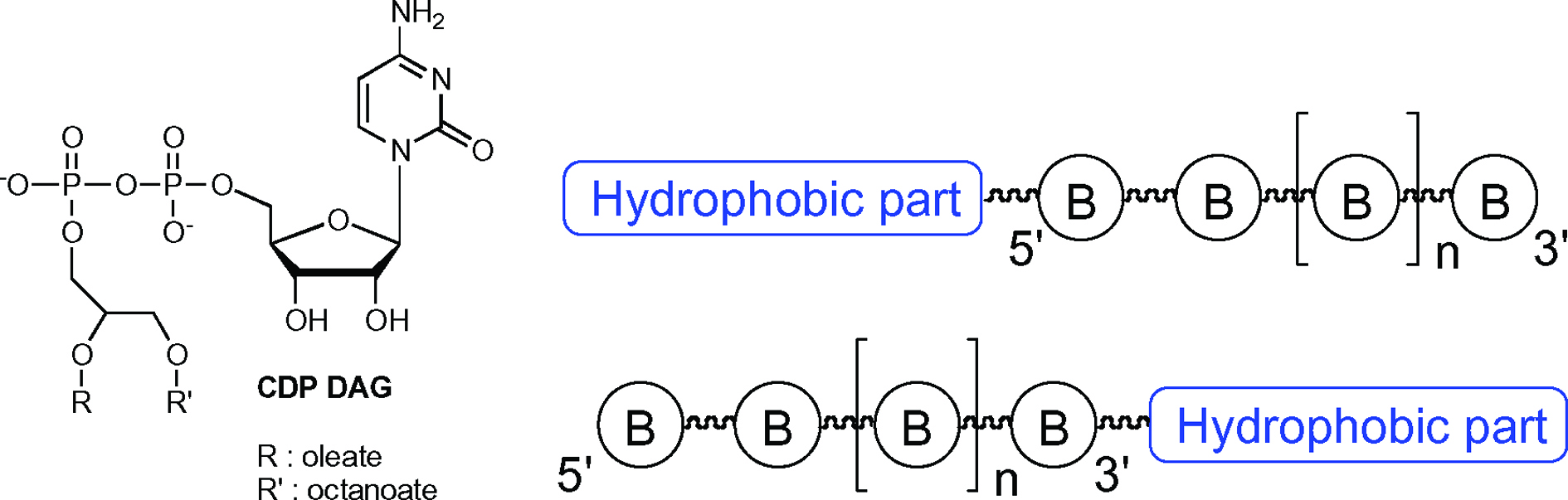
Nucleoside, nucleotide and oligonucleotide based amphiphiles: a successful marriage of nucleic acids with lipids
Arnaud Gissot, Michel Camplo, Mark W. Grinstaff and Philippe Barthélémy
DOI: 10.1039/B719280K 

Missed our other 10th anniversary posts? Take a look here for some of our top cited work.   


Digg This
Reddit This
Stumble Now!
Share on Facebook
Bookmark this on Delicious
Share on LinkedIn
Bookmark this on Technorati
Post on Twitter
Google Buzz (aka. Google Reader)

A Celebration of Organic Chemistry

On Friday 15 June, Professor Keith Smith will host a symposium showcasing the very best in Organic Chemistry.

The symposium features lectures by two Nobel Laureates and an RSC Prize Winner, as well as marking Keith’s retirement from Cardiff University, and celebrating his work within the Organic Chemistry Community.

This event is free to attendbut places are limited, and attendance is only guaranteed by pre-registration – so act now!

Digg This
Reddit This
Stumble Now!
Share on Facebook
Bookmark this on Delicious
Share on LinkedIn
Bookmark this on Technorati
Post on Twitter
Google Buzz (aka. Google Reader)

OBC issue 23 now online, complete with peptidyl-fluoromethyl ketones and nanodiamonds in sugar rings

This front cover highlights the work of Daniel P. Funeriu, Technical University München, and colleagues on a novel, general solid phase synthesis strategy for sequence independent peptidyl-fluoromethyl ketones, utilising standard Fmoc peptide chemistry. Read the finer points of this article here
A general solid phase method for the synthesis of sequence independent peptidyl-fluoromethyl ketones
Gheorghe-Doru Roiban, Mihaela Matache, Niculina D. Hădade and Daniel P. Funeriu
DOI: 10.1039/C2OB25096A

On the inside cover of OBC issue 23 is a paper by Bart Jan Ravoo et al. on the non-covalent interactions of nanodiamond carboxylic acids derived from adamantane, diamantane, and triamantane with β- and γ-cyclodextrins.

Nanodiamonds in sugar rings: an experimental and theoretical investigation of cyclodextrin–nanodiamond inclusion complexes
Jens Voskuhl, Mark Waller,  Sateesh Bandaru, Boryslav A. Tkachenko, Carlo Fregonese, Birgit Wibbeling, Peter R. Schreiner and Bart Jan Ravoo
DOI: 10.1039/C2OB06915F

Also in this issue: A perspective by Philippe Maillard et al.: Tumor targeting in photodynamic therapy. From glycoconjugated photosensitizers to glycodendrimeric one. Concept, design and properties

2 HOT articles:
Biomimetic oxidation of aromatic xenobiotics: synthesis of the phenolic metabolites from the anti-HIV drug efavirenzRiccardo Wanke, David A. Novais, Shrika G. Harjivan, M. Matilde Marques and Alexandra M. M. Antunes
DOI: 10.1039/C2OB25212K

Synthesis of symmetric anhydrides using visible light-mediated photoredox catalysis
Marlena D. Konieczynska ,  Chunhui Dai and Corey R. J. Stephenson
DOI: 10.1039/C2OB25463H

Find the complete issue here….

Digg This
Reddit This
Stumble Now!
Share on Facebook
Bookmark this on Delicious
Share on LinkedIn
Bookmark this on Technorati
Post on Twitter
Google Buzz (aka. Google Reader)

HOT: Biomimetic oxidation of aromatic xenobiotics: synthesis of the phenolic metabolites from the anti-HIV drug efavirenz

Efavirenz (EFV) is a non-nucleoside reverse transcriptase inhibitor (NNRTI) administered as a first-line treatment against HIV. Despite its efficacy, a major shortcoming is its association with toxic events. The reasons for the drug’s adverse effects are not currently clear, but in order to answer this question the availability of considerable amounts of enantiomerically pure EFV metabolites is essential, to allow in vitro and in vivo toxicological studies.

In this Hot paper Alexandra M. M. Antunes and co-workers report the development of a method for the direct aromatic hydroxylation of EFV, and other xenobiotics, using the easily accessible [FeII(bpmen)(OTf)2]–H2O2 oxidant system in the presence of acetic acid. Antunes et al. say that “This cost-efficient one-pot strategy represents a considerable improvement when compared with the already available methods for the C8 hydroxylation of EFV, avoiding a laborious multi-step synthetic approach and the resolution of racemic mixtures.”

In addition to EFV, Antunes et al. successfully oxidise tamoxifen and equilin into their phenolic metabolites which demonstrates the general application of bio-inspired nonheme Fe-complexes for in vitro access to phenolic species typically formed via cytochrome P450 (CYP)-mediated hydroxylation of aromatic compounds. The possibility of applying an oxidation system mirroring the CYP metabolic pathways predicts the usefulness of the approach for molecular toxicology studies of a large variety of toxic aromatic xenobiotics.

This work represents a proof of concept regarding bio-inspired oxidation technologies and opens new opportunities for this chemistry. To find out more read the article in full here.

This paper will be free to access for the next 4 weeks.

Biomimetic oxidation of aromatic xenobiotics: synthesis of the phenolic metabolites from the anti-HIV drug efavirenz
Riccardo Wanke, David A. Novais, Shrika G. Harjivan, M. Matilde Marques and Alexandra M. M. Antunes
Org. Biomol. Chem., 2012,
DOI: 10.1039/C2OB25212K

Digg This
Reddit This
Stumble Now!
Share on Facebook
Bookmark this on Delicious
Share on LinkedIn
Bookmark this on Technorati
Post on Twitter
Google Buzz (aka. Google Reader)