Taking Tips from Nature

“In biomimetic chemistry, we take what we have observed in nature and apply its principles to the invention of novel synthetic compounds that can achieve the same goals….”1

– Ronald Breslow

Biomimetic chemistry is broadly defined as the area of chemistry which aims to imitate the biosynthetic pathways (or parts of the biosynthetic pathways) used by Nature to create chemical bonds.

Just as the fundamental principles of chemistry help us to understand how biological systems work, we can also use biology as an inspiration for developing new chemistry.

Biomimetic chemistry is often used as a method for attempting to prove or disprove proposed biosynthetic pathways; however it can also be used to design laboratory procedures for making synthetic compounds, resulting in reactions which imitate a natural chemical process. For example, elaborate natural products can be more efficiently synthesized in the laboratory by looking at how Nature handles the chemical complexity of such an operation; reaction selectivity can be greatly enhanced by taking tips from how Nature uses enzymes to hold substrates in position while reactions occur.2

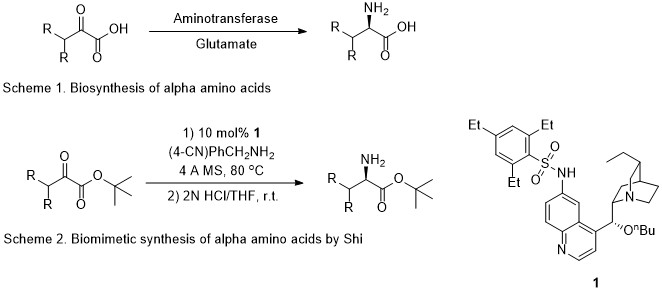
α-Amino acids are a fundamental building block in Nature, as the precursors to many biological molecules. In biological systems, amino acids are synthesized from α-ketoacids in a transamination reaction catalysed by the enzyme aminotransferase, with glutamate as the nitrogen source (Scheme 1).3

In this paper, Shi and co-workers seek to mimic this reaction with an enantioselective transamination of α-ketoesters (which can be readily transformed into amino acids) using a substituted benzylamine as the nitrogen source (Scheme 2). The enantioselectivity is induced using chiral base (1, Scheme 2) derived from quinine, a naturally occurring alkaloid which is isolated from the bark of the cinchona tree. This new, biomimetic methodology is highly complementary to the current literature methods for making enantioenriched α-amino acids.

To read more, see;

Organocatalytic Synthesis of Optically Active β-Branched α-Amino Ester via Asymmetric Biomimetic Transamination

Cunxiang Su, Ying Xie, Hongjie Pan, Mao Liu, Hua Tian, Yian Shi, Org. Biomol. Chem., 2014, DOI:10.1039/c4ob00684d.

References

1 R. Breslow, J. Bio. Chem., 2009, 284, 1337.

2 S. France, D. Guerin, S. Miller, T. Lectka, Chem. Rev., 2003, 103, 2985.

3 E. J. Parker, A. J. Pratt, 2010, “Amino Acid Biosynthesis, in Amino Acids, Peptides and Proteins in Organic Chemistry: Building Blocks, Catalysis and Coupling Chemistry”, Volume 3 (ed A. B. Hughes), Wiley-VCH Verlag GmbH & Co.

Dr C. Liana Allen is currently a post-doctoral research associate in the group of Professor Scott Miller at Yale University, where she works on controlling the enantio- or regioselectivity of reactions using small peptide catalysts. Liana received her Ph.D. in organic chemistry at Bath University with Professor Jonathan Williams, where she worked on developing novel, efficient syntheses of amide bonds.

Digg This
Reddit This
Stumble Now!
Share on Facebook
Bookmark this on Delicious
Share on LinkedIn
Bookmark this on Technorati
Post on Twitter
Google Buzz (aka. Google Reader)

Make your journal work for you

Find out how to get the most from Organic & Biomolecular Chemistry

Want to know about the latest research we publish in OBC? Want to be told about upcoming themed issues, or the most read articles, or other journal news?

Here are a few ways you can stay in touch with us and all that is happening:

RSS Feed for Organic & Biomolecular ChemistryMost recent articles

Be informed about the latest articles published on our website by adding us to your RSS Feed.


Issue alerts

Sign-up to OBC issue alertsGet the table of contents of the latest issue of Organic & Biomolecular Chemistry sent direct to you when we publish the issue.


News alerts

Register for OBC news alertsBy joining our news alerts we can let you know about:

  • Up-coming themed collections (print & electronic)
  • Top Ten most accessed articles
  • Changes to our Editorial Board
  • Important news for the journal


Twitter

We can also be found on Twitter @OrgBiomolChem, add us and say hello. OBC twitter


And of course you can always come back to this blog to find out about our journal news.

Digg This
Reddit This
Stumble Now!
Share on Facebook
Bookmark this on Delicious
Share on LinkedIn
Bookmark this on Technorati
Post on Twitter
Google Buzz (aka. Google Reader)

Q1 Top Ten most accessed Organic & Biomolecular Chemistry articles

During January, February and March this year, the following articles were the Top Ten most accessed:

Rapid synthesis of Abelson tyrosine kinase inhibitors using click chemistry
Karunakaran A. Kalesh, Kai Liu and Shao Q. Yao  
Org. Biomol. Chem., 2009,7, 5129-5136
DOI: 10.1039/b913333j

Bifunctional primary amine-thioureas in asymmetric organocatalysis
Olga V. Serdyuk, Christina M. Heckel and Svetlana B. Tsogoeva  
Org. Biomol. Chem., 2013,11, 7051-7071
DOI: 10.1039/c3ob41403e

Copper-catalyzed highly efficient ester formation from carboxylic acids/esters and formates
Jun Liu, Changdong Shao, Yanghui Zhang, Guangfa Shi and Shulei Pan
Org. Biomol. Chem., 2014,12, 2637-2640
DOI: 10.1039/c4ob00193a

Synthetic applications of photoredox catalysis with visible light
Yumeng Xi, Hong Yi and Aiwen Lei  
Org. Biomol. Chem., 2013,11, 2387-2403
DOI: 10.1039/c3ob40137e

Recent progress towards transition metal-catalyzed synthesis of y-lactams
Long-Wu Ye, Chao Shu and Fabien Gagosz  
Org. Biomol. Chem., 2014,12, 1833-1845
DOI: 10.1039/c3ob42181c

Synthesis of substituted pyrenes by indirect methods
Juan M. Casas-Solvas, Joshua D. Howgego and Anthony P. Davis
Org. Biomol. Chem., 2014,12, 212-232
DOI: 10.1039/c3ob41993b

KI-catalyzed arylation of benzothiazoles from the coupling of aryl aldehydes with benzothiazoles in neat water
Yuyu Gao, Qiuling Song, Guolin Cheng and Xiuling Cui  
Org. Biomol. Chem., 2014,12, 1044-1047
DOI: 10.1039/c3ob42318b

A biocompatible, highly efficient click reaction and its applications
Yue Yuan and Gaolin Liang  
Org. Biomol. Chem., 2014,12, 865-871
DOI: 10.1039/c3ob41241e

“Frustrated Lewis pairs”: a concept for new reactivity and catalysis
Douglas W. Stephan  
Org. Biomol. Chem., 2008,6, 1535-1539
DOI: 10.1039/b802575b

Support of academic synthetic chemistry using separation technologies from the pharmaceutical industry
Erik L. Regalado, Marisa C. Kozlowski, John M. Curto, Tobias Ritter, Michael G. Campbell, Anthony R. Mazzotti, Bruce C. Hamper, Christopher D. Spilling, Michael P. Mannino, Li Wan, Jin-Quan Yu, Jinchu Liu and Christopher J. Welch  
Org. Biomol. Chem., 2014,12, 2161-2166
DOI: 10.1039/c3ob42195c

Please post your comments or thoughts on any of these articles in the comment box below.

Do you fancy submitting an article to OBC? Why not submit to us here today!

Digg This
Reddit This
Stumble Now!
Share on Facebook
Bookmark this on Delicious
Share on LinkedIn
Bookmark this on Technorati
Post on Twitter
Google Buzz (aka. Google Reader)

Recent HOT articles for Organic & Biomolecular Chemistry

Please take a look at the following Organic & Biomolecular Chemistry articles, which are all free to access until 30th May 2014

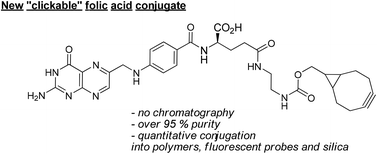
“Click and go”: simple and fast folic acid conjugation
Alexandre F. Trindade, Raquel F. M. Frade, Ermelinda M. S. Maçôas, Cátia Graça, Catarina A. B. Rodrigues, José M. G. Martinho and Carlos A. M. Afonso
Org. Biomol. Chem., 2014,12, 3181-3190
DOI: 10.1039/C4OB00150H 

“Click and go”: simple and fast folic acid conjugation 


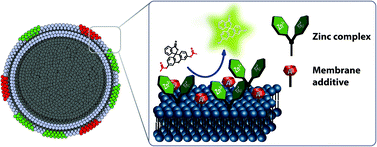
 Cooperative hydrolysis of aryl esters on functionalized membrane surfaces and in micellar solutions
M. Poznik and B. König  
Org. Biomol. Chem., 2014,12, 3175-3180
DOI: 10.1039/C4OB00247D 

Cooperative hydrolysis of aryl esters on functionalized membrane surfaces and in micellar solutions 


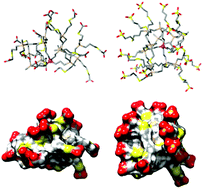
Synthesis of new anionic carbosilane dendrimers via thiol–ene chemistry and their antiviral behaviour
Marta Galán, Javier Sánchez Rodríguez, José Luis Jiménez, Miguel Relloso, Marek Maly, F. Javier de la Mata, M. A. Muñoz-Fernández and Rafael Gómez  
Org. Biomol. Chem., 2014,12, 3222-3237
DOI: 10.1039/C4OB00162A 

Synthesis of new anionic carbosilane dendrimers via thiol–ene chemistry and their antiviral behaviour 


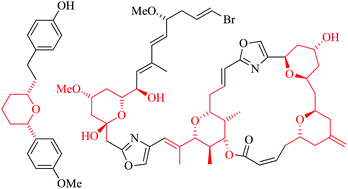
Strategies for the construction of tetrahydropyran rings in the synthesis of natural products
Nadiah Mad Nasir, Kristaps Ermanis and Paul A. Clarke
Org. Biomol. Chem., 2014, Advance Article
DOI: 10.1039/C4OB00423J 

Strategies for the construction of tetrahydropyran rings in the synthesis of natural products


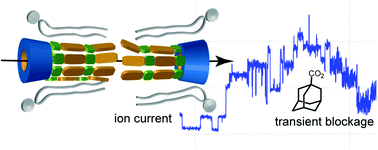
Cyclodextrin ion channels
Jonathan K. W. Chui and T. M. Fyles  
Org. Biomol. Chem., 2014, Advance Article
DOI: 10.1039/C4OB00480A 

Cyclodextrin ion channels


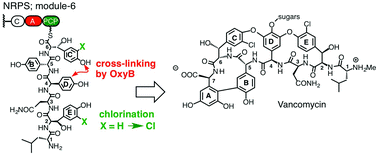
Bis-chlorination of a hexapeptide–PCP conjugate by the halogenase involved in vancomycin biosynthesis
Patrick C. Schmartz, Katja Zerbe, Khaled Abou-Hadeed and John A. Robinson  
Org. Biomol. Chem., 2014, Advance Article
DOI: 10.1039/C4OB00474D 

Bis-chlorination of a hexapeptide–PCP conjugate by the halogenase involved in vancomycin biosynthesis


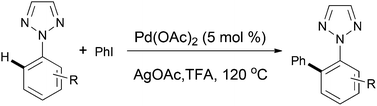
An easy arylation of 2-substituted 1,2,3-triazoles
Suping Shi, Wei Liu, Ping He and Chunxiang Kuang  
Org. Biomol. Chem., 2014, Advance Article
DOI: 10.1039/C4OB00530A

An easy arylation of 2-substituted 1,2,3-triazoles


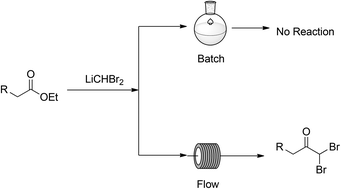
Continuous flow chemistry: a discovery tool for new chemical reactivity patterns
Jan Hartwig, Jan B. Metternich, Nikzad Nikbin, Andreas Kirschning and Steven V. Ley
Org. Biomol. Chem., 2014, Advance Article
DOI: 10.1039/C4OB00662C

Continuous flow chemistry: a discovery tool for new chemical reactivity patterns


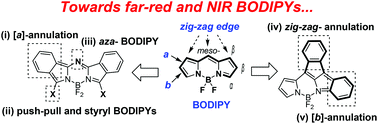
Far-red and near infrared BODIPY dyes: synthesis and applications for fluorescent pH probes and bio-imaging
Yong Ni and Jishan Wu
Org. Biomol. Chem., 2014, Advance Article
DOI: 10.1039/C3OB42554A

Far-red and near infrared BODIPY dyes: synthesis and applications for fluorescent pH probes and bio-imaging


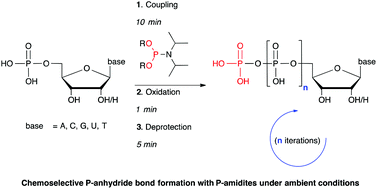
Phosphate esters and anhydrides – recent strategies targeting nature’s favoured modifications
Henning J. Jessen, Nisar Ahmed and Alexandre Hofer
Org. Biomol. Chem., 2014, Advance Article
DOI: 10.1039/C4OB00478G

Phosphate esters and anhydrides – recent strategies targeting nature's favoured modifications


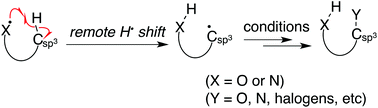
sp3 C–H oxidation by remote H-radical shift with oxygen- and nitrogen-radicals: a recent update
Shunsuke Chiba and Hui Chen
Org. Biomol. Chem., 2014, Advance Article
DOI: 10.1039/C4OB00469H

sp3 C–H oxidation by remote H-radical shift with oxygen- and nitrogen-radicals: a recent update


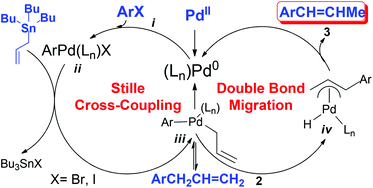
A facile and convenient sequential homobimetallic catalytic approach towards ß-methylstyrenes. A one-pot Stille cross-coupling/isomerization strategy
Sebastián O. Simonetti, Enrique L. Larghi and Teodoro S. Kaufman
Org. Biomol. Chem., 2014, Advance Article
DOI: 10.1039/C4OB00604F

A facile and convenient sequential homobimetallic catalytic approach towards ß-methylstyrenes. A one-pot Stille cross-coupling/isomerization strategy


An intramolecular cascade cyclization of 2-aryl indoles: efficient methods for the construction of 2,3-functionalized indolines and 3-indolinones
Arun K. Ghosh and Zhi-Hua Chen
Org. Biomol. Chem., 2014, Advance Article
DOI: 10.1039/C4OB00511B

An intramolecular cascade cyclization of 2-aryl indoles: efficient methods for the construction of 2,3-functionalized indolines and 3-indolinones


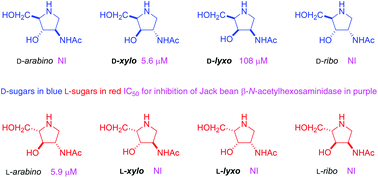
Synthesis of the enantiomers of XYLNAc and LYXNAc: comparison of ß-N-acetylhexosaminidase inhibition by the 8 stereoisomers of 2-N-acetylamino-1,2,4-trideoxy-1,4-iminopentitols
Elizabeth V. Crabtree, R. Fernando Martínez, Shinpei Nakagawa, Isao Adachi, Terry D. Butters, Atsushi Kato, George W. J. Fleet and Andreas F. G. Glawar  
Org. Biomol. Chem., 2014, Advance Article
DOI: 10.1039/C4OB00097H

Synthesis of the enantiomers of XYLNAc and LYXNAc: comparison of ß-N-acetylhexosaminidase inhibition by the 8 stereoisomers of 2-N-acetylamino-1,2,4-trideoxy-1,4-iminopentitols


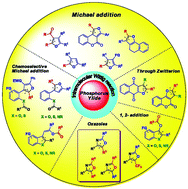
Preparation of functionalized heteroaromatics using an intramolecular Wittig reaction
Utpal Das, Yi-Ling Tsai and Wenwei Lin
Org. Biomol. Chem., 2014, Advance Article
DOI: 10.1039/C4OB00464G

Preparation of functionalized heteroaromatics using an intramolecular Wittig reaction


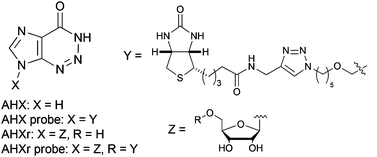
Practical synthesis of natural plant-growth regulator 2-azahypoxanthine, its derivatives, and biotin-labeled probes
Kazutada Ikeuchi, Ryosuke Fujii, Shimpei Sugiyama, Tomohiro Asakawa, Makoto Inai, Yoshitaka Hamashima, Jae-Hoon Choi, Tomohiro Suzuki, Hirokazu Kawagishi and Toshiyuki Kan  
Org. Biomol. Chem., 2014, Advance Article
DOI: 10.1039/C4OB00705K

Practical synthesis of natural plant-growth regulator 2-azahypoxanthine, its derivatives, and biotin-labeled probes

Digg This
Reddit This
Stumble Now!
Share on Facebook
Bookmark this on Delicious
Share on LinkedIn
Bookmark this on Technorati
Post on Twitter
Google Buzz (aka. Google Reader)

How green tea helps lower cholesterol

(–)-epigallocatechin-3-gallate (EGCG) fitting into triangular binding pockets within three different enzymes to inhibit cholesterol biosynthesis

ECG and EGCG (shown) fit into triangular binding pockets within three different enzymes to inhibit cholesterol biosynthesis

Green tea is good for you, but why? Scientists in China are trying to answer one aspect of this huge question by pinpointing which components of green tea help lower cholesterol levels, as well as how they do it.

Green tea has been used in traditional Chinese Medicine for centuries and many studies have demonstrated its numerous health benefits, including its positive action against cardiovascular and neurodegenerative diseases. Polyphenolic compounds constitute most of green tea’s chemical content and have been linked to the disruption of cholesterol biosynthesis in vivo. However, there are so many different compounds in green tea that it has been difficult to work out which ones are active and exactly how these affect biological function.

Jun Xu and colleagues at Sun Yat-Sen University tested the activity of three enzymes that are essential for cholesterol biosynthesis in vitro in the presence of four different polyphenols found in green tea. They found that two polyphenols, (–)-epicatechin-3-gallate (ECG) and (–)-epigallocatechin-3-gallate (EGCG), could inhibit all three enzymes simultaneously, whereas the other two polyphenols had no effect.

Read the full Chemistry World story, including expert comments,

and,

Download the paper for free until 12 June 2014:

Mechanistic studies for tri-targeted inhibition of enzymes involved in cholesterol biosynthesis by green tea polyphenols

Digg This
Reddit This
Stumble Now!
Share on Facebook
Bookmark this on Delicious
Share on LinkedIn
Bookmark this on Technorati
Post on Twitter
Google Buzz (aka. Google Reader)

Celebrating Ian Paterson’s 60th Birthday

To celebrate Ian Paterson’s 60th birthday we have collected together all of his articles published by the Royal Society of Chemistry in one place

In May 2014, Ian Paterson celebrates his sixtieth birthday. Eighty students have completed PhDs under his guidance. To mark this milestone, the RSC are collating the papers he has published in RSC journals and making them available to everybody. Ian was born in Dundee, and studied at St Andrew’s University. Two papers were published in the Journal of the Chemical Society as a result of his undergraduate research. He then moved to the University of Cambridge to work with Ian Fleming and to contribute further to RSC publications. A postdoctoral fellowship at Columbia University followed, working with Gilbert Stork, who had published fewer papers with the RSC than Ian. Ian then returned to the UK, first to UCL and then to Cambridge, where he has been for the last three decades.He has developed new methods for stereoselective transformations, particularly the boron-mediated aldol reaction, and used these in the syntheses of larger and larger molecules with increasing stereochemical complexity. The first report of his approach to discodermolide appeared in Chem Comm (1993) and, in due course, the synthesis was scaled up so that it could be used for clinical development. Studies on spongistatin, spirastrellolide, dictyostatin and other complex natural products have all been reported in RSC journals, as well as investigations of hybrids and semi-synthetic analogues. Ian has been elected to fellowships both of the Royal Society and the Royal Society of Edinburgh, and has won many RSC prizes including the Meldola Prize (1983), Hickinbottom Fellowship (1989), Bader Award (1996), Synthetic Organic Chemistry Award (2001), and the Tilden Prize (2009).Professor Jonathan Goodman
University of Cambridge, UK

All articles are free to access until 13th June 2014

The stereocontrolled total synthesis of spirastrellolide A methyl ester. Fragment coupling studies and completion of the synthesis
Ian Paterson, Edward A. Anderson, Stephen M. Dalby, Jong Ho Lim and Philip Maltas
Org. Biomol. Chem., 2012,10, 5873-5886, DOI: 10.1039/C2OB25101A 
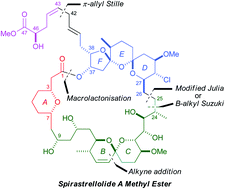
The stereocontrolled total synthesis of spirastrellolide A methyl ester. Fragment coupling studies and completion of the synthesis

The stereocontrolled total synthesis of spirastrellolide A methyl ester. Expedient construction of the key fragments
Ian Paterson, Edward A. Anderson, Stephen M. Dalby, Jong Ho Lim, Philip Maltas, Olivier Loiseleur, Julien Genovino and Christian Moessner  
Org. Biomol. Chem., 2012,10, 5861-5872, DOI: 10.1039/C2OB25100K
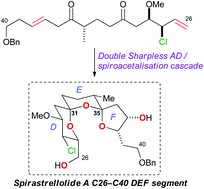
The stereocontrolled total synthesis of spirastrellolide A methyl ester. Expedient construction of the key fragments

Structure–activity studies of the pelorusides: new congeners and semi-synthetic analogues
A. Jonathan Singh, Mina Razzak, Paul Teesdale-Spittle, Thomas N. Gaitanos, Anja Wilmes, Ian Paterson, Jonathan M. Goodman, John H. Miller and Peter T. Northcote  
Org. Biomol. Chem., 2011,9, 4456-4466, DOI: 10.1039/C0OB01127D 
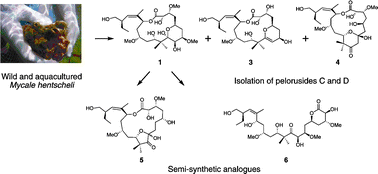
Structure–activity studies of the pelorusides: new congeners and semi-synthetic analogues

Total synthesis of a library of designed hybrids of the microtubule-stabilising anticancer agents taxol, discodermolide and dictyostatin
Ian Paterson, Guy J. Naylor, Takeshi Fujita, Esther Guzmán and Amy E. Wright  
Chem. Commun., 2010,46, 261-263, DOI: 10.1039/B921237J
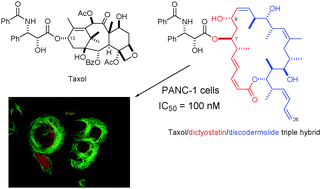
Total synthesis of a library of designed hybrids of the microtubule-stabilising anticancer agents taxol, discodermolide and dictyostatin

Synthesis and stereochemical determination of the spirastrellolides
Ian Paterson and Stephen M. Dalby  
Nat. Prod. Rep., 2009,26, 865-873, DOI: 10.1039/B906991G
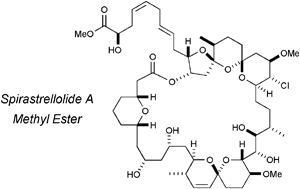
Synthesis and stereochemical determination of the spirastrellolides

Total synthesis of (-)-spirangien A and its methylester
Ian Paterson, Alison D. Findlay and Christian Noti  
Chem. Commun., 2008, 6408-6410, DOI: 10.1039/B816229H

Total synthesis of the marine macrolide (+)-neopeltolide
Ian Paterson and Natalie A. Miller
Chem. Commun., 2008, 4708-4710, DOI: 10.1039/B812914B

Total synthesis of a potent hybrid of the anticancer natural products dictyostatin and discodermolide
Ian Paterson, Guy J. Naylor and Amy E. Wright

Chem. Commun., 2008, 4628-4630, DOI: 10.1039/B811575C

Development of practical syntheses of the marine anticancer agents discodermolide and dictyostatin
Gordon J. Florence, Nicola M. Gardner and Ian Paterson  
Nat. Prod. Rep., 2008,25, 342-375, DOI: 10.1039/B705661N

Synthesis of two diastereomeric C1–C22 fragments of spirastrellolide A
Ian Paterson, Edward A. Anderson, Stephen M. Dalby, Julien Genovino, Jong Ho Lim and Christian Moessner  
Chem. Commun., 2007, 1852-1854, DOI: 10.1039/B700827A

Design, synthesis and biological evaluation of a macrocyclic discodermolide/dictyostatin hybrid
Ian Paterson and Nicola M. Gardner
Chem. Commun., 2007, 49-51, DOI: 10.1039/B615122A

Synthesis of the DEF-bis-spiroacetal of spirastrellolide A exploiting a double asymmetric dihydroxylation/spiroacetalisation strategy
Ian Paterson, Edward A. Anderson, Stephen M. Dalby, Jong Ho Lim, Philip Maltas and Christian Moessner
Chem. Commun., 2006, 4186-4188, DOI: 10.1039/B612697A

Towards the combinatorial synthesis of spongistatin fragment libraries by using asymmetric aldol reactions on solid support
Ian Paterson, Dirk Gottschling and Dirk Menche  
Chem. Commun., 2005, 3568-3570, DOI: 10.1039/B505746A

The stereocontrolled total synthesis of altohyrtin A/spongistatin 1: the CD-spiroacetal segment
Ian Paterson, Mark J. Coster, David Y.-K. Chen, Karl R. Gibson and Debra J. Wallace  
Org. Biomol. Chem., 2005,3, 2410-2419, DOI: 10.1039/B504148A

The stereocontrolled total synthesis of altohyrtin A/spongistatin 1: the AB-spiroacetal segment
Ian Paterson, Mark J. Coster, David Y.-K. Chen, Renata M. Oballa, Debra J. Wallace and Roger D. Norcross  
Org. Biomol. Chem., 2005,3, 2399-2409, DOI: 10.1039/B504146E

The stereocontrolled total synthesis of altohyrtin A/spongistatin 1: fragment couplings, completion of the synthesis, analogue generation and biological evaluation
Ian Paterson, David Y.-K. Chen, Mark J. Coster, José L. Aceña, Jordi Bach and Debra J. Wallace
Org. Biomol. Chem., 2005,3, 2431-2440, DOI: 10.1039/B504151A

The stereocontrolled total synthesis of altohyrtin A/spongistatin 1: the southern hemisphere EF segment
Ian Paterson, Mark J. Coster, David Y.-K. Chen, José L. Aceña, Jordi Bach, Linda E. Keown and Thomas Trieselmann  
Org. Biomol. Chem., 2005,3, 2420-2430, DOI: 10.1039/B504149J

Phorboxazole B synthetic studies: construction of C(1–32) and C(33–46) subtargets
Ian Paterson, Alan Steven and Chris A. Luckhurst  
Org. Biomol. Chem., 2004,2, 3026-3038, DOI: 10.1039/B407240E

Stereochemical determination of dictyostatin, a novel microtubule-stabilising macrolide from the marine sponge Corallistidae sp.
Ian Paterson, Robert Britton, Oscar Delgado and Amy E. Wright  
Chem. Commun., 2004, 632-633, DOI: 10.1039/B316390C

Synthesis and biological evaluation of spongistatin/altohyrtin analogues: E-ring dehydration and C46 side-chain truncation
Ian Paterson, Jose L. Aceña, Jordi Bach, David Y.-K. Chen and Mark J. Coster  
Chem. Commun., 2003, 462-463, DOI: 10.1039/B212651F

Laboratory emulation of polyketide biosynthesis: an iterative, aldol-based, synthetic entry to polyketide libraries using (R)- and (S )-1-(benzyloxy)-2-methylpentan-3-one, and conformational aspects of extended polypropionates
Ian Paterson and Jeremy P. Scott  
J. Chem. Soc., Perkin Trans. 1, 1999, 1003-1014, DOI: 10.1039/A809818B

Recent developments in asymmetric aldol methodology
Alison S. Franklin and Ian Paterson  
Contemp. Org. Synth., 1994,1, 317-338, DOI: 10.1039/CO9940100317

Studies towards the total synthesis of the marine-derived immunosuppressant discodermolide; asymmetric synthesis of a C1–C8d-lactone subunit
Ian Paterson and Stephen P. Wren  
J. Chem. Soc., Chem. Commun., 1993, 1790-1792, DOI: 10.1039/C39930001790

The formation of allyl sulphides by phenylthio-migration: control by silicon
Ian Fleming, Ian Paterson and Andrew Pearce
J. Chem. Soc., Perkin Trans. 1, 1981, 256-262, DOI: 10.1039/P19810000256

Free radical addition to olefins. Part 23. Kinetics of the addition of chloroiodomethane to ethylene and vinyl fluoride
Ian Paterson, John M. Tedder and John C. Walton  
J. Chem. Soc., Perkin Trans. 2, 1978, 884-887, DOI: 10.1039/P29780000884

Homosolvolysis
Hamish Low, Ian Paterson, John M. Tedder and John Walton  
J. Chem. Soc., Chem. Commun., 1977, 171-172, DOI: 10.1039/C39770000171

Digg This
Reddit This
Stumble Now!
Share on Facebook
Bookmark this on Delicious
Share on LinkedIn
Bookmark this on Technorati
Post on Twitter
Google Buzz (aka. Google Reader)

Taking on the Vinigrol Challenge

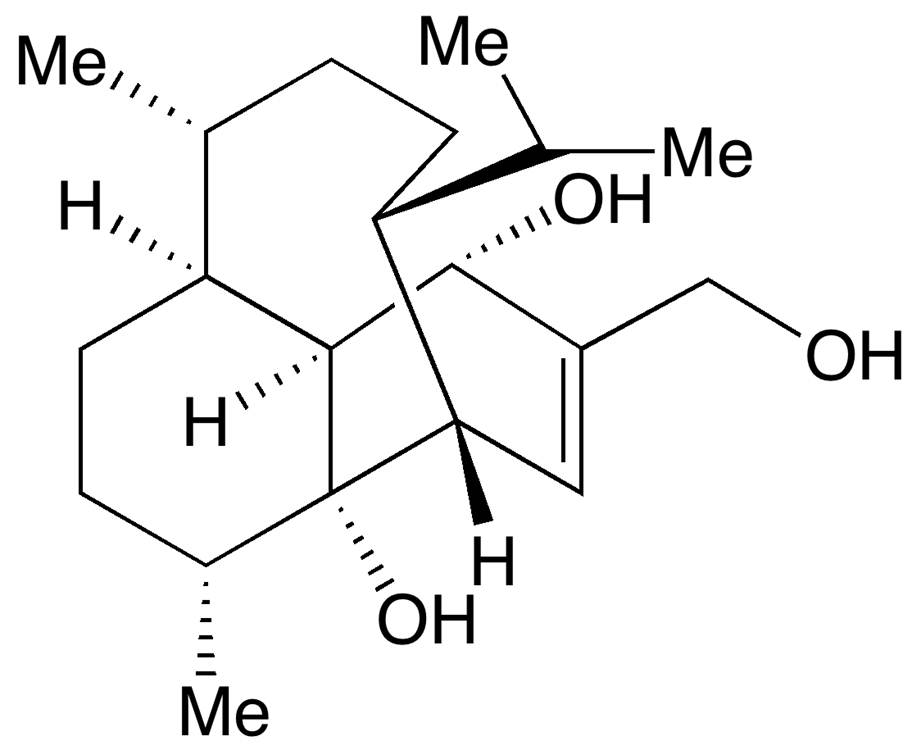
Vinigrol is a diterpenoid natural product, first isolated from the fungal strain Virgaria nigra F-5408 in 1987 by Ando and co-workers. It has been found to display biological activity against hypertension, platelet aggregation, HIV and inflammation. Despite these broad potential medicinal uses of vinigrol prompting great interest in its chemical synthesis, the first total synthesis of this molecule was not achieved until 2009, when Baran and co-workers published their outstanding stereocontrolled and fully scalable twenty three step route.1

Figure 1. Vinigrol

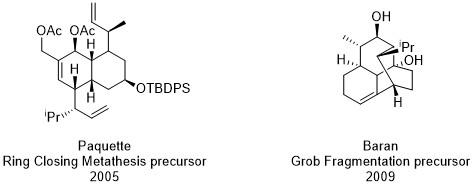
The over two decade gap between isolation and the first published total synthesis can be attributed to the great synthetic challenges posed by the structure of vinigrol. The molecular structure of vinigrol (elucidated by X-ray crystallography) contains an unusual cis-decalin ring system, bridged by an eight membered ring, in addition to eight contiguous stereocentres. Due to this rare molecular structure, retrosynthetic analyses of vinigrol have been highly varied. A total synthesis attempt in 2003 by Paquette involved an anionic oxy-Cope rearrangement to create a decorated decalin ring system, however final closure of the eight membered ring was unsuccessful. In 2005, the same group found a ring closing metathesis strategy using Grubbs catalyst also failed to deliver the eight membered ring (Figure 2).2 Separate attempts at a vinigrol total synthesis by Fallis, Njardarson and Hanna also did not result in complete synthesis of the natural product.3 The 2009 synthesis by Baran utilized two challenging Diels-Alder reactions to create much of the cyclic  core of vinigrol (Figure 2). A subsequent Grob fragmentation was the key step towards furnishing the tricyclic vinigrol core, with minimal further elaboration giving the completed natural product in 3% overall yield.

Figure 2. Precursors for the eight membered ring formation

In this paper, Sun and co-workers take on this long standing challenge from a new perspective. Instead of attempting to install the troublesome eight membered ring in a late-stage transformation, they begin with an eight membered ring as a starting material, and rely on its inherent conformational bias to control the selectivity of further functionalisations. This cleverly circumvents the necessity for the ring-closing step which caused so many problems in earlier synthesis attempts. Their strategy proved successful, with two Michael additions (which indeed proved to be stereoselective, based on the natural conformation of the eight membered ring) providing three of the eight stereocentres in just two steps. Further elaboration of the ring system followed by an intramolecular Tsuji-Trost allylation reaction gave 1 (Figure 3), which, despite bearing the wrong stereochemistry at one of its six stereocentres, can be regarded as a potential late-stage precursor to the natural product vinigrol.

Figure 3. Sun and coworkers approach to the synthesis of vinigrol

To read more, see;

A novel synthetic approach to the bicyclo[5.3.1]-undecan-11-one framework of vinigrol
Xian-Lei Wang, Yun-Yu Lu, Jie Wang, Xuan Wang, He-Quan Yao, Guo-Qiang Lin and Bing-Feng Sun,
Org. Biomol. Chem., 2014, DOI:10.1039/c4ob00046c. Free to access until 26 May

References

1 T. J. Maimone, J. Shi, S. Ashida, P. S. Baran, J. Am. Chem. Soc., 2009, 131, 17066.

2 L. A. Paquette, R. Guevel, S. Sakaoto, I. H. Kim, J. Crawford, J. Org. Chem., 2003, 68, 6096; L. A. Paquette, I. Efremov, Z. Liu, J. Org. Chem., 2005, 70, 505.

3 J. Lu, D. G. Hall, Angew. Chem. Int. Ed., 2010, 49, 2286.

Dr C. Liana Allen is currently a post-doctoral research associate in the group of Professor Scott Miller at Yale University, where she works on controlling the enantio- or regioselectivity of reactions using small peptide catalysts. Liana received her Ph.D. in organic chemistry at Bath University with Professor Jonathan Williams, where she worked on developing novel, efficient syntheses of amide bonds.

Digg This
Reddit This
Stumble Now!
Share on Facebook
Bookmark this on Delicious
Share on LinkedIn
Bookmark this on Technorati
Post on Twitter
Google Buzz (aka. Google Reader)

A molecular library of antibiotics inspired by marine natural products

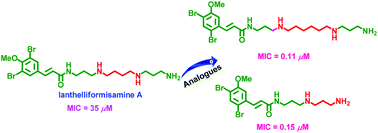
There is a need to develop new antibiotics to combat the emergence of antibiotic resistant bacterial pathogens. In bacteria, polyamine analogues can compete with natural polyamines to affect key cellular processes. Taking inspiration from the antibacterial properties of bromotyrosine-derived alkaloids isolated from the marine sponge (Subarea ianthelliformis), a recent paper reports the synthesis and antibacterial activity of a library of 39 new ianthelliformisamine analogues.
The library was synthesised by combining 3-phenylacrylic acid derivatives with Boc-protected polyamines. The antibacterial activities of the library compounds were tested in vitro using standard techniques. Some synthetic ianthelliformisamine analogues were more potent against gram positive and gram negative bacteria than their parent natural products.

To find out more read:

Syntheses of a library of molecules on marine natural product ianthelliformisamines platform and their biological evaluations
Faiz Ahmed Khan, Saeed Ahmad, Naveena Kodipelli, Gururaj Shivange and Roy Anindya
DOI: 10.1039/C3OB42537A, Paper;

Digg This
Reddit This
Stumble Now!
Share on Facebook
Bookmark this on Delicious
Share on LinkedIn
Bookmark this on Technorati
Post on Twitter
Google Buzz (aka. Google Reader)

Q4 Top Ten most accessed Organic & Biomolecular Chemistry articles

During October, November and December, the following articles were the Top Ten most accessed:

A coumarin-based fluorescent probe for biological thiols and its application for living cell imaging
Lingliang Long, Liping Zhou, Lin Wang, Suci Meng, Aihua Gong, Fengyi Du and Chi Zhang
Org. Biomol. Chem., 2013,11, 8214-8220
DOI: 10.1039/c3ob41741g; Download PDF

Bifunctional primary amine-thioureas in asymmetric organocatalysis
Olga V. Serdyuk, Christina M. Heckel and Svetlana B. Tsogoeva
Org. Biomol. Chem., 2013,11, 7051-7071
DOI: 10.1039/c3ob41403e; Download PDF

To be or not to be metal-free: trends and advances in coupling chemistries
Rick Arneil D. Arancon, Carol Sze Ki Lin, Carolina Vargas and Rafael Luque
Org. Biomol. Chem., 2014,12, 10-35
DOI: 10.1039/c3ob41768a; Download PDF

Synthetic applications of arylboronic acid via an aryl radical transfer pathway
Guobing Yan, Minghua Yang and Xiangmei Wu
Org. Biomol. Chem., 2013,11, 7999-8008
DOI: 10.1039/c3ob41851k; Download PDF

Synthetic applications of photoredox catalysis with visible light
Yumeng Xi, Hong Yi and Aiwen Lei
Org. Biomol. Chem., 2013,11, 2387-2403
DOI: 10.1039/c3ob40137e; Download PDF

Analysis of the reactions used for the preparation of drug candidate molecules
John S. Carey, David Laffan, Colin Thomson and Mike T. Williams
Org. Biomol. Chem., 2006,4, 2337-2347
DOI: 10.1039/b602413k; Download PDF

N-heterocyclic carbene-catalyzed reactions of C–C unsaturated bonds
Xiang-Yu Chen and Song Ye
Org. Biomol. Chem., 2013,11, 7991-7998
DOI: 10.1039/c3ob41469h; Download PDF

Copper-catalyzed redox-neutral C–H amination with amidoximes
Hui Chen and Shunsuke Chiba
Org. Biomol. Chem., 2014,12, 42-46
DOI: 10.1039/c3ob41871e; Download PDF

Recent trends in Pd-catalyzed remote functionalization of carbonyl compounds
Ivan Franzoni and Clément Mazet
Org. Biomol. Chem., 2014,12, 233-241
DOI: 10.1039/c3ob42050g; Download PDF

Maximising multivalency effects in protein–carbohydrate interactions
Roland J. Pieters
Org. Biomol. Chem., 2009,7, 2013-2025
DOI: 10.1039/b901828j; Download PDF

If you have any thoughts or comments on any of these articles, please post them in the comment box below!

Do you have an article that you would like to submit to OBC? Why not submit to us here today?

Digg This
Reddit This
Stumble Now!
Share on Facebook
Bookmark this on Delicious
Share on LinkedIn
Bookmark this on Technorati
Post on Twitter
Google Buzz (aka. Google Reader)

HOT Organic & Biomolecular Chemistry articles for March – updated throughout the month

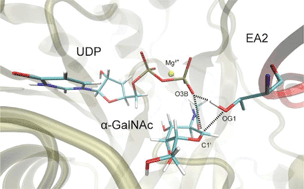
A computational and experimental study of O-glycosylation. Catalysis by human UDP-GalNAc polypeptide:GalNAc transferase-T2
Hansel Gómez, Raúl Rojas, Divya Patel, Lawrence A. Tabak, José M. Lluch and Laura Masgrau
Org. Biomol. Chem., 2014, Advance Article, DOI: 10.1039/C3OB42569J

A computational and experimental study of O-glycosylation. Catalysis by human UDP-GalNAc polypeptide:GalNAc transferase-T2

Free to access until 25th April


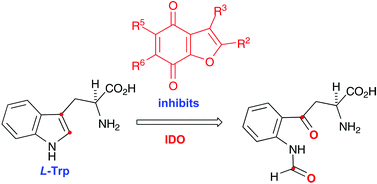
Benzofuranquinones as inhibitors of indoleamine 2,3-dioxygenase (IDO). Synthesis and biological evaluation
Catarina Carvalho, David Siegel, Martyn Inman, Rui Xiong, David Ross and Christopher J. Moody
Org. Biomol. Chem., 2014, Advance Article, DOI: 10.1039/C3OB42258E

Benzofuranquinones as inhibitors of indoleamine 2,3-dioxygenase (IDO). Synthesis and biological evaluation

Free to access until 25th April


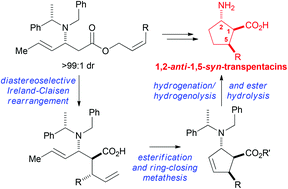
Diastereoselective Ireland–Claisen rearrangements of substituted allyl β-amino esters: applications in the asymmetric synthesis of C(5)-substituted transpentacins
Stephen G. Davies, Ai M. Fletcher, James A. Lee, Paul M. Roberts, Myriam Y. Souleymanou, James E. Thomson and Charlotte M. Zammit  
Org. Biomol. Chem., 2014, Advance Article, DOI: 10.1039/C4OB00274A

Diastereoselective Ireland–Claisen rearrangements of substituted allyl β-amino esters: applications in the asymmetric synthesis of C(5)-substituted transpentacins

Free to access until 25th April


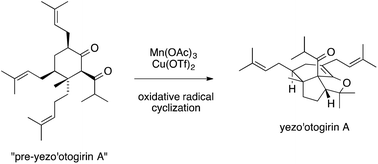
Biomimetic total synthesis of (±)-yezo’otogirin A
Hiu C. Lam, Kevin K. W. Kuan and Jonathan H. George  
Org. Biomol. Chem., 2014,12, 2519-2522, DOI: 10.1039/C4OB00186A

Biomimetic total synthesis of (±)-yezo'otogirin A

Free to access until 25th April


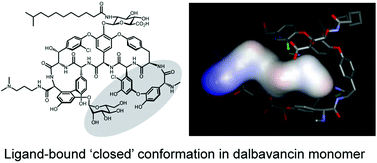
Anti-cooperative ligand binding and dimerisation in the glycopeptide antibiotic dalbavancin
Mu Cheng, Zyta M. Ziora, Karl A. Hansford, Mark A. Blaskovich, Mark S. Butler and Matthew A. Cooper  
Org. Biomol. Chem., 2014,12, 2568-2575, DOI: 10.1039/C3OB42428F

Anti-cooperative ligand binding and dimerisation in the glycopeptide antibiotic dalbavancin

Free to access until 25th April


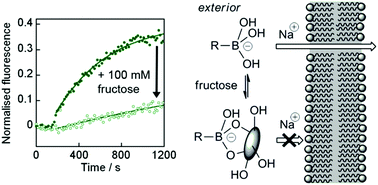
Fructose controlled ionophoric activity of a cholate–boronic acid
James R. D. Brown, Inmaculada C. Pintre and Simon J. Webb  
Org. Biomol. Chem., 2014,12, 2576-2583, DOI: 10.1039/C4OB00165F

Fructose controlled ionophoric activity of a cholate–boronic acid

Free to access until 25th April


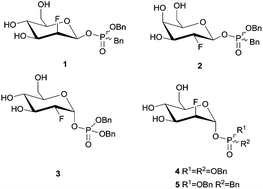
Phosphodiesters serve as potentially tunable aglycones for fluoro sugar inactivators of retaining β-glycosidases
B. P. Rempel and S. G. Withers  
Org. Biomol. Chem., 2014,12, 2592-2595, DOI: 10.1039/C4OB00235K

Phosphodiesters serve as potentially tunable aglycones for fluoro sugar inactivators of retaining β-glycosidases

Free to access until 25th April


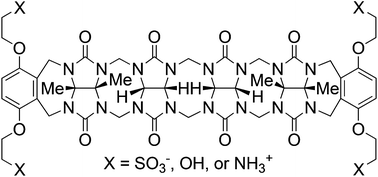
Acyclic CB[n]-type molecular containers: effect of solubilizing group on their function as solubilizing excipients
Ben Zhang, Peter Y. Zavalij and Lyle Isaacs
Org. Biomol. Chem., DOI: 10.1039/C3OB42603C, Paper
Free to access until 21st April


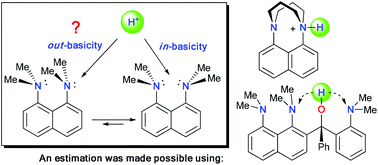
Out-Basicity of 1,8-bis(dimethylamino)naphthalene: the experimental and theoretical challenge
Valery A. Ozeryanskii, Alexander F. Pozharskii, Alexander S. Antonov and Alexander Filarowski
Org. Biomol. Chem., DOI: 10.1039/C3OB41986J, Paper
Free to access until 21st April


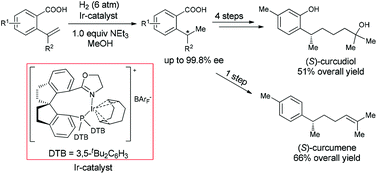
Carboxy-directed asymmetric hydrogenation of α-alkyl-α-aryl terminal olefins: highly enantioselective and chemoselective access to a chiral benzylmethyl center
Shuang Yang, Shou-Fei Zhu, Na Guo, Song Song and Qi-Lin Zhou
Org. Biomol. Chem., DOI: 10.1039/C4OB00018H, Communication
Free to access until 5th April


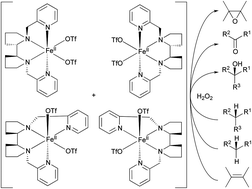
Making Fe(BPBP)-catalyzed C–H and C=C oxidations more affordable
Vital A. Yazerski, Peter Spannring, David Gatineau, Charlotte H. M. Woerde, Sara M. Wieclawska, Martin Lutz, Henk Kleijn and Robertus J. M. Klein Gebbink
Org. Biomol. Chem., DOI: 10.1039/C3OB42249F, Paper
Free to access until 5th April


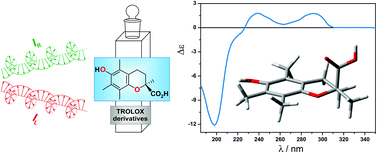
Chromane helicity rule – scope and challenges based on an ECD study of various trolox derivatives
Marcin Górecki, Agata Suszczyńska, Magdalena Woźnica, Aneta Baj, Michał Wolniak, Michał K. Cyrański, Stanisław Witkowski and Jadwiga Frelek
Org. Biomol. Chem., DOI: 10.1039/C3OB42376J, Paper
Free to access until 5th April


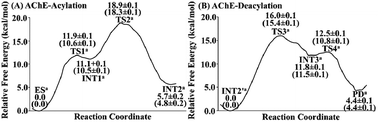
Reaction pathways and free energy profiles for cholinesterase-catalyzed hydrolysis of 6-monoacetylmorphine
Yan Qiao, Keli Han and Chang-Guo Zhan
Org. Biomol. Chem., DOI: 10.1039/C3OB42464B, Paper
Free to access until 10th April

Digg This
Reddit This
Stumble Now!
Share on Facebook
Bookmark this on Delicious
Share on LinkedIn
Bookmark this on Technorati
Post on Twitter
Google Buzz (aka. Google Reader)