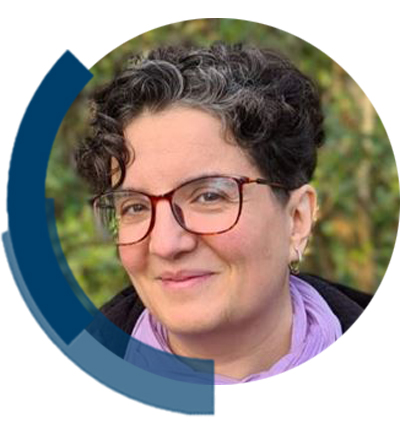
Editor’s Choice collection: Cristina Trujillo

OBC is delighted to introduce our Editor’s Choice collection!

This collection showcases some of the best articles published in the journal, handpicked by our Associate Editors and Editorial Board members. This month we have a selection of recent OBC articles chosen by our Associate Editor Cristina Trujillo.

Meet the Editor


Dr Cristina Trujillo obtained her Ph.D. in Theoretical and Computational Chemistry in 2008 at the Universidad Autónoma de Madrid. Between 2008-2016 she held several Postdoctoral positions at CSIC, Czech Academy of Sciences and Trinity College Dublin (TCD) before becoming a Research Fellow at TCD from 2016-2018 and subsequently working as an Assistant Lecturer at TU-Dublin. She started her own research group at TCD in 2019 before moving to the University of Manchester in 2022 where she is currently a Lecturer in Computational & Theoretical Chemistry.

Her research interests are focused on the asymmetric catalysis field, with particular emphasis on the application of computational techniques in the design of organocatalysts along with prediction and control of catalytic processes, with a direct impact on the development of products with different applications.


Cristina’s favourite articles


Friedel-Crafts reactions for biomolecular chemistry

Jun Ohata

Org. Biomol. Chem., 2024, 22, 3544-3558


“This review delivers a comprehensive perspective on the growing field of Friedel–Crafts reactions in biomolecular chemistry, charting new directions in the selective modification and functionalisation of complex biological molecules. The author highlights the power of Friedel–Crafts processes for creating C–C bonds within challenging biomolecular settings, spotlighting recent advances and experimental strategies that bridge traditional organic methodologies with modern chemical biology. This synthesis of conceptual and practical insights makes the review a compelling read for both organic and bioorganic chemists interested in innovative molecular construction.”


Exploring nickel-catalyzed organochalcogen synthesis via cross-coupling of benzonitrile and alkyl chalcogenols with computational tools

Francisco A. Gómez-Mudarra, Gabriel Aullón & Jesús Jover

Org. Biomol. Chem., 2025, 23, 1673-1682


“This work investigates a distinctive nickel(0)-catalysed cross-coupling between benzonitrile and alkyl chalcogenols to form C–S, C–Se, and C–Te bonds. By outlining a classic oxidative addition–transmetalation–reductive elimination pathway that unusually engages the Ph–CN bond, the study proposes a general mechanistic platform extending beyond thioethers to their heavier chalcogen analogues. Through kinetic analysis and microkinetic simulations, the authors demonstrate that this strategy could expand synthetic access to organochalcogen compounds of biological and materials relevance while maintaining excellent functional group tolerance.”


Effect of strain and π-acidity on the catalytic efficiency of carbones in carbodiimide hydroboration

Max Schernikau & O. Maduka Ogba

Org. Biomol. Chem., 2025, 23, 9896-9907


“Using DFT calculations, this paper explores how structural and electronic factors govern the performance of zerovalent carbon-centred organocatalysts (carbones) in the hydroboration of carbodiimides. The authors reveal that cyclic carbodiphosphoranes outperform their acyclic analogues owing to superior substrate activation and more efficient hydride transfer, as mapped by distortion/interaction–activation strain analysis. The study fills key gaps in understanding catalyst design and reactivity, underscoring the growing promise of carbones as versatile organocatalysts for bond-forming transformations.”


We hope you enjoyed reading these articles. Keep an eye out for more of our Editors’ favourite articles in the future

Digg This
Reddit This
Stumble Now!
Share on Facebook
Bookmark this on Delicious
Share on LinkedIn
Bookmark this on Technorati
Post on Twitter
Google Buzz (aka. Google Reader)

Editor’s Choice collection: Motomu Kanai

OBC is delighted to introduce our Editor’s Choice collection!

This collection showcases some of the best articles published in the journal, handpicked by our Associate Editors and Editorial Board members. This month we have a selection of recent OBC articles chosen by our Associate Editor Motomu Kanai.

Meet the Editor


Motomu Kanai received his bachelor degree from the University of Tokyo in 1989 and his PhD from Osaka University in 1995. He then moved to the University of Wisconsin for postdoctoral studies with Professor Laura Kiessling. In 1997, he returned to the University of Tokyo to join Professor Masakatsu Shibasaki’s group as an assistant professor. After being a lecturer (2000-2003) and associate professor (2003-2010), he is now a professor at the University of Tokyo.

His research interests entail design and synthesis of functional (especially, biologically active) molecules.


Motomu’s favourite articles


When transition-metal catalysis meets electrosynthesis: a recent update

Fei Lian, Jiu-Ling Li & Kun Xu

Org. Biomol. Chem., 2024, 22, 4390-4419


“Electrochemistry-driven transition metal catalysis is a rapidly growing area today. Lian, Li and Xu review recent progress in this active field. This review specifically focuses on the first-row transition metal catalysis coupled with electrosynthesis, which offers benefits in terms of sustainability and foreshadows the future of green catalysis.”


Exploring the catalytic mechanism of the 10–23 DNAzyme: insights from pH–rate profiles

Virginia Parra-Meneses, Victoria Silva-Galleguillos & Marjorie Cepeda-Plaza

Org. Biomol. Chem., 2024, 22, 6833-6840


“A specific group of DNA molecules, known as DNAzymes, can catalyze chemical reactions, such as the hydrolytic cleavage of RNA. However, the detailed reaction mechanism of DNAzymes is not fully understood, which limits progress. In this paper, Parra-Meneses, Silva-Galleguillos and Cepeda-Plaza provide important insights into the catalytic strategies of RNA-cleaving DNAzymes. This discovery will aid in designing new DNAzymes with therapeutic applications, such as gene silencing.”


Total synthesis, stereochemical assignment, and biological evaluation of opantimycin A and analogues thereof

Yoshinosuke Usuki, Ryota Abe, Kazuki Nishiguchi, Tetsuya Satoh, Harumi Aono, Toshihiko Nogawa, Yushi Futamura, Hiroyuki Osada, Izumi Yoshida, Kazuhiro Fujita, Takashi Mishima & Ken-Ichi Fujita

Org. Biomol. Chem., 2024, 22, 8973-8979


“An antimalarial natural product, opantimycin A, features a unique structure that includes γ-butyrolactone and dehydro-2-aminobutyric acid motifs. Using the stereodivergent Mukaiyama aldol reaction and Staudinger ligation as key steps, Usuki and coworkers successfully synthesized opantimycin A and its various analogues, enabling the determination of the natural product’s absolute configuration. Some of these analogues exhibit significant biological activities. This study highlights a critical role of natural product synthesis.”


We hope you enjoyed reading these articles. Keep an eye out for more of our Editors’ favourite articles in the future.

Digg This
Reddit This
Stumble Now!
Share on Facebook
Bookmark this on Delicious
Share on LinkedIn
Bookmark this on Technorati
Post on Twitter
Google Buzz (aka. Google Reader)

Editor’s Choice collection: Kate Jolliffe

OBC is delighted to introduce our Editor’s Choice collection!

This collection showcases some of the best articles published in the journal, handpicked by our Associate Editors and Editorial Board members. This month we have a selection of recent OBC articles chosen by our Associate Editor Kate Jolliffe (University of Sydney). Take a look at which articles she chose and why.

Meet the Editor

Kate Jolliffe received her BSc (Hons) in 1993 and PhD in 1997 from the University of New South Wales. She then held positions at Twente University, University of Nottingham and the Australian National University before taking up an Australian Research Council QEII fellowship at The University of Sydney in 2002. In 2007 she became a Senior lecturer at the same institution and was promoted to Associate Professor in 2008 and to full Professor in 2009. She currently holds the position of Payne-Scott Professor at The University of Sydney.

Her research interests are in the areas of supramolecular, peptide and organic chemistry, with a focus on the design and synthesis of functional molecules, such as molecular sensors capable of detecting anions in biological environments or cyclic peptides for application in biology and medicine.


Kate’s favourite articles

Impact of charges on the hybridization kinetics and thermal stability of PNA duplexes

Miguel López-Tena & Nicolas Winssinger

Org. Biomol. Chem., 2024, 22, 5759-5767


“Peptide nucleic acids have a range of potential biomedical applications because they form duplexes with DNA and RNA that are more stable than DNA or RNA homoduplexes. López-Tena and Winssinger analyse how modifications of PNA structure at the γ-position impact hybridisation stability and kinetics, demonstrating that the higher stability of duplexes involving PNA results from slower dissociation kinetics rather than association kinetics (which are also slower relative to a DNA:DNA duplex). This improves our understanding of how to design molecular structures with specific function.”


Enhanced binding of methyl alkylammonium cations through preorganization of a water-soluble calix[4]pyrrole

Esteban Valencia & Pablo Ballester

Org. Biomol. Chem., 2024, 22, 5827-5834


“Mimicking nature’s molecular receptors and achieving similar selectivity and affinity is one of the key aims of supramolecular chemists. Valencia and Ballester use extended calix[4]pyrroles to bind biologically relevant methyl trialkylammonium cations with high affinity in water, providing a nice example of how synthetic molecules can be designed to mimic nature.”


Substituent effects of fluorinated bambusurils on their anion transport

Matúš Chvojka, Vladimír Šindelář & Hennie Valkenier

Org. Biomol. Chem., 2025, Advance Article


“In another example of supramolecular structure-activity analysis, Chovjka, Šindelář and Valkenier evaluate the anion transport properties of a small library of fluorinated bambusurils. Defining structure-activity relationships of these molecules is key to meeting the multiple criteria for effective ion transport in cells that will be required for application in treating chanellopathies e.g. cystic fibrosis. This paper demonstrates how small structural changes can have a large, and sometimes unanticipated, impact on function.”


We hope you enjoyed reading these articles. Keep an eye out for more of our Editors’ favourite articles in the future.

Digg This
Reddit This
Stumble Now!
Share on Facebook
Bookmark this on Delicious
Share on LinkedIn
Bookmark this on Technorati
Post on Twitter
Google Buzz (aka. Google Reader)

Organic & Biomolecular Chemistry welcomes new Associate Editor Jeroen Dickschat

We are delighted to welcome our new Associate Editor, Professor Jeroen Dickschat to the Organic & Biomolecular Chemistry Editorial Board!


Jeroen S. Dickschat studied Chemistry at TU Braunschweig and obtained his PhD under the supervision of Stefan Schulz in 2004, followed by postdoctoral stays with Rolf Müller at Saarland University and with Peter Leadlay at the University of Cambridge (UK). In 2008 he started his independent career at TU Braunschweig, culminating in his habilitation in 2013. In 2014 he accepted an appointment as a Professor of Organic Chemistry and Biochemistry at the University of Bonn. He also holds a honorary Professorship at the NIOO Wageningen (The Netherlands).

His group is interested in the biosynthesis of microbial natural products, with a special focus on the elucidation of the complex reaction mechanisms in their formation.


Find out more about Jeroen on his website and submit your article to him today!

Digg This
Reddit This
Stumble Now!
Share on Facebook
Bookmark this on Delicious
Share on LinkedIn
Bookmark this on Technorati
Post on Twitter
Google Buzz (aka. Google Reader)

Organic & Biomolecular Chemistry welcomes new Associate Editor Huan Wang

We are delighted to welcome our new Associate Editor, Professor Huan Wang to the Organic & Biomolecular Chemistry Editorial Board!

Professor Wang graduated from Peking University (2005). He obtained his PhD from University of Maryland at College Park (2010), and conducted post-doctoral research work at University of Illinois at Urbana-Champaign (2010-2014). Wang started at Nanjing University in 2014 and works as a Professor in the Chemistry department.

His research group aims to address problems at the interface of chemistry and biochemistry, including the chemical synthesis and biosynthesis of bioactive peptides, peptide/protein functionalisation and biological functions of non-coding RNAs.

Find out more about Huan on his website and submit your article to him today!

Digg This
Reddit This
Stumble Now!
Share on Facebook
Bookmark this on Delicious
Share on LinkedIn
Bookmark this on Technorati
Post on Twitter
Google Buzz (aka. Google Reader)

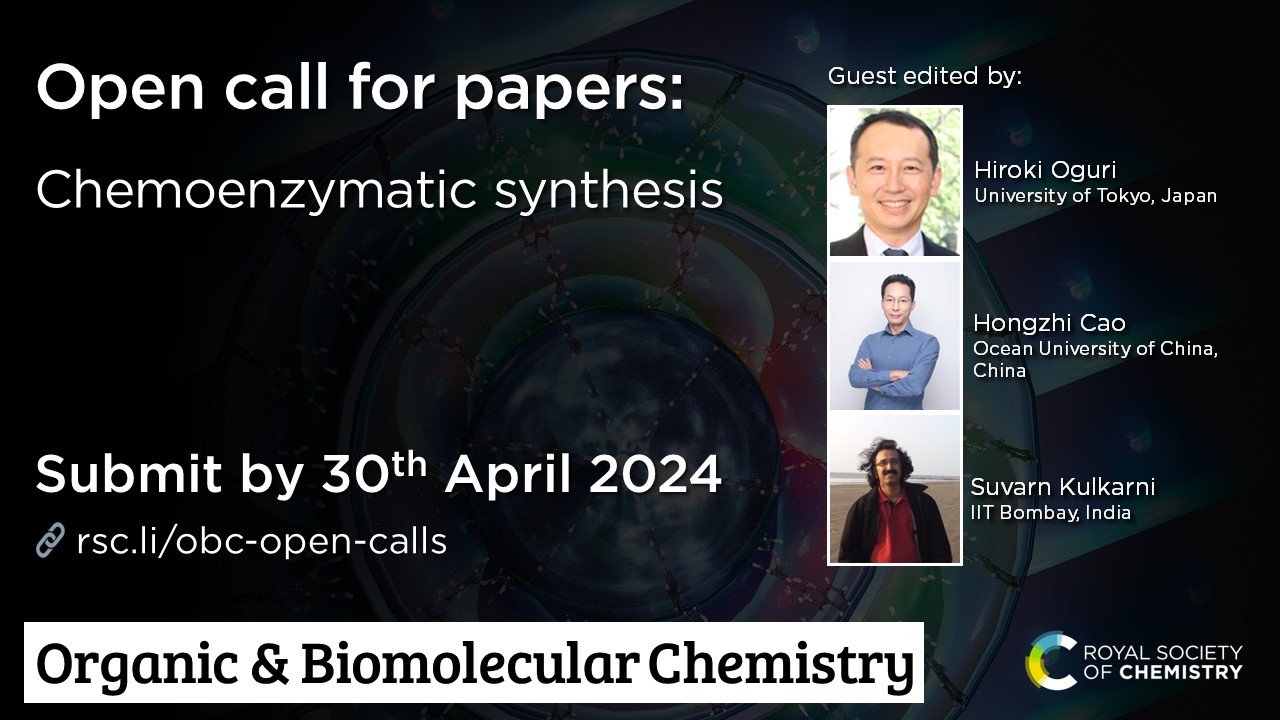
Call For Papers: Chemoenzymatic Synthesis

Call For Papers: Chemoenzymatic Synthesis

Guest edited by Hiroki Oguri, Hongzhi Cao & Suvarn Kulkarni

We are delighted to announce a call for papers for our latest online themed collection in Organic & Biomolecular Chemistry on Chemoenzymatic Synthesis guest edited by Professor Hiroki Oguri (University of Tokyo, Japan), Professor Hongzhi Cao (Ocean University of China, China) and Professor Suvarn Kulkarni (IIT Bombay, India).

This collection in OBC is dedicated to the emerging advancements in Chemoenzymatic Synthesis across a wide array of natural products, including sugars, lipids, terpenes, polyketides, peptide, alkaloids and their hybrids. This integrative synthetic approach not only harnesses the power of enzymes but also leverages the versatility of chemical synthesis regarding substrate design and product diversification.

This call for papers is open to both communication (for urgent work – up to 5 pages) and full papers.


Open for submissions until 30th April 2024


If you would like to contribute to this themed collection, you can submit your article directly through the OBC online submission service. Please mention that this submission is a contribution to the Chemoenzymatic Synthesis collection in the “Themed issues” section of the submission form and add a “Note to the Editor” that this is from the Open Call. The Editorial Office reserves the right to check suitability of submissions in relation to the scope of both the journal and the collection, and inclusion of accepted articles in the final themed issue is not guaranteed.

Please also note that all submissions will be subject to our usual rigorous peer review process, including initial assessment to ensure the high standards of the journal and acceptance is not guaranteed. Accepted manuscripts will be highlighted together in a dedicated virtual collection alongside an editorial, regardless of submission date, and there will be no delay in the publication of all accepted manuscripts into regular issues of OBC.

If you have any questions about the collection, then please contact the Editorial Office at obc-rsc@rsc.org and they will be happy to help.

With best regards,

Hiroki, Hongzhi and Suvarn

Professor Hiroki Oguri (University of Tokyo, Japan)

Professor Hongzhi Cao (Ocean University of China, China)

Professor Suvarn Kulkarni (IIT Bombay, India)

Digg This
Reddit This
Stumble Now!
Share on Facebook
Bookmark this on Delicious
Share on LinkedIn
Bookmark this on Technorati
Post on Twitter
Google Buzz (aka. Google Reader)

20th Anniversary Blog Series: Peter Langer

2023 marks twenty of Organic & Biomolecular Chemistry publications. As part of the celebrations, OBC has invited some of the most prominent authors across our history to give their thoughts on the last twenty years of their career alongside their predictions for the next two decades.

The next entry to the series comes from Professor Peter Langer at the University of Rostock who first published with OBC in 2008 and he has continued to support the journal with 47 articles across the years, most recently earlier this year.

About Peter

Peter was born in Hannover, Germany in 1969. From 1989 till 1994, he studied chemistry at the University of Hannover. His diploma thesis he carried out at the Massachusetts Institute of Technology (Cambridge, USA). Between 1994 and 1997, Peter did his PhD studies at the University of Hannover. Afterwards, he spent one year in Cambridge, UK to work as a postdoc. From 1998 till 2001, he carried out his research towards habilitation of the University of Göttingen, Germany. In 2002, Peter was appointed full professor (C4) at the University of Greifswald and later in 2004, full professor (C4) at the University of Rostock where he is working as the head of the chair of organic chemistry. Peter is also affiliated to the Leibniz-Institute of Catalysis e. V. at the University of Rostock (LIKAT). He has coauthored about 800 research papers and reviews, nearly 50 of them in OBC and supervised about 100 PhD students from various countries, 100 MSc and 50 BSc students. His students come from all over the world. Besides German and English, Peter speaks French, Spanish and Russian.

His research is focused on the development of new reactions and heterocyclic molecules and their application in the field of medicine and materials science. Peter has received several awards and scholarships; he was scholar of the German Academic Scholarship Foundation, of the Chemical Industry Fund, and of the Alexander von-Humboldt foundation. In addition, he obtained a Heisenberg scholarship of the German Research Foundation (DFG). Peter has received 10 honorary doctorates, 3 honorary professorships and several medals and research awards. He is an elected member of the Academy of Sciences of the Republic of Armenia and of the Academy of Sciences of the Islamic Republic of Pakistan. In addition, he was decorated with the civil award ‘Sitara-i-Quaid-i-Azam’ given by the President of Pakistan.

First OBC paper: S. Reim, D. Michalik, K. Weisz, Z. Xiao & P. Langer, Synthesis and Solution Structure of 3,5-Dioxopimelic Acid Diesters – Stable 1,3,5,7-Tetracarbonyl Derivatives, Org. Biomol. Chem., 2008, 6, 3079-3084, DOI: 10.1039/b805808c

Most recent OBC paper: E. Ammon, P. Heine, M. A. A. Cordero, S. Lochbrunner, A. Villinger, P. Ehlers & P. Langer, Dibenzoacridines: Synthesis by Alkyne-Carbonyl-Metathesis and Properties, Org. Biomol. Chem., 2023, 21, 4504-4517, DOI: 10.1039/d3ob00407d

Favourite OBC paper: T. N. Ngo, P. Ehlers, T. T. Dang, A. Villinger & P. Langer, Synthesis of indolo[1,2-f]phenanthridines by Pd-catalyzed domino C–N coupling/hydroamination/C–H arylation reactions, Org. Biomol. Chem., 2015, 13, 3321-3330, DOI: 10.1039/c5ob00013k


How has your research developed over the last 20 years?

During an academic career in Germany, at least for my generation, it was a requirement to change the field of research when you move from dependent (PhD, postdoc) to independent research (habilitation, junior or assistant professorship). In fact, during my career, I worked in various fields of research. My diploma thesis (equivalent to a Master thesis) I did in the group of Dietmar Seyferth at Massachusetts Institute of Technology in the field of organosilicon chemistry. My doctoral degree under the supervision of H. Martin R. Hoffmann at the University of Hannover I obtained in the field of natural products, specifically Cinchona alkaloids and my postdoc with Steven V. Ley at Cambridge University I did in carbohydrate chemistry. In 1998, I started my independent career habilitation under the mentorship of Armin de Meijere at the University of Göttingen. At that time the field of bioorganic chemistry was rather new and modern. But I had no idea of this field, was a bit afraid and decided to stay with organic synthesis for my independent research.

During my habilitation, I developed cyclization reactions of free and masked dianions. The latter are electroneutral equivalents of dianions, for example 1,3-bis(silyloxy)-1,3-butadienes. This work turned out to be fruitful and importantly rather inexpensive and I continued in the area during my tenure as full professor first at the University of Greifswald and since 2004, at the University of Rostock. After having published many, maybe too many, articles in the field, we moved more and more away from it. It soon became clear it was better to start something new and it was more and more difficult to publish in high ranked journals. As a consequence, in 2006, we started to work in the field of transition metal catalysis and developed new regioselective Pd catalysed coupling reactions of a great variety of polyhalogenated heterocyclic substrates such as pentachloropyridine or tetrabromothiophene. Later, starting in 2012, we began to investigate the combination of such coupling reactions with cyclizations by twofold Buchwald-Hartwig reactions, domino C-C coupling / hydroamination reactions, cycloisomerizations and CH-activations. In this context, we became also more and more interested in the synthesis of new heterocyclic core structures and their optical, electrochemical and electronic properties and started to carry out extensive fluorescence and cyclovoltammetric studies and also started to apply computational work to complement our experimental investigations. This nowadays represents about 80% of the research in my group.

A more recent field in my group is the application of alkyne-carbonyl metathesis (ACM) reactions to new heterocyclic substrates. Starting in 2010, we started three new research areas which were recently completed. Firstly, the synthesis of fluorinated purine analogues by cyclization reactions of heterocyclic enamines with dielectrophiles. Secondly, the development of cyclization reactions of enamines with chromones. In fact, this project went back to our earlier experiences with chromones in cyclizations with 1,3-bis(silyloxy)-1,3-butadienes. Thirdly, CH activation reactions of nitro-substituted heterocycles. In addition, during my career, I had several collaborations with medicinal chemists and in the context of this work (cancerostatic and antibacterial compounds and enzyme inhibitors), we carried out various target orientated syntheses of heterocycles which include various types of molecules. In addition, after my postdoc in carbohydrate chemistry, I was convinced that this field would be too difficult for independent research studies because of tedious purification and characterisation of the products. However, never say never. In 2006, we started a project in this field, and we developed the synthesis of N-glycosides of indigo and indirubine derivatives. The latter proved to be active against skin cancer. This field of research continued until recently but only a few students were involved. In conclusion, my research was rather diverse over the years, but when we believed we had found a ‘gold mine’ we stayed and tried to explore it as much as possible. Besides all the research and teaching, it was always an important issue for me to bring people of different cultures, religions and political systems together. Therefore, chemistry can act as a bridge.

How has the encompassing field of chemistry changed over the last 2 decades and where do you see the challenges over the next 20 years?

As I worked in various fields of research, it is difficult to answer this question. Regarding my first independent field of research (development of cyclizations of free and masked dianions), there was not much competition at the time which might be due to the fact that it was somehow quite niche. But I was very happy when the French research group of Charles Mioskovski applied a synthesis of γ-alkylidenebutenolides which I had developed. In the field of regioselective Pd catalysed coupling reactions of polyhalogenated heterocycles the competition was higher. Nowadays, it is more and more difficult to find new substrates. A very high competition I observe is for the synthesis of new, especially highly symmetric, heterocyclic core structures and their applications in the field of electronic devices (e.g. OLED) and I believe that many interesting findings will come up in the area in the coming years.

In the case of ACM reactions, also a lot is known, but I am sure that interesting applications will be published in the future. The same is true for twofold Buchwald-Hartwig reactions, domino C-C coupling / hydroamination reactions and cycloisomerisations. With regard to cyclizations of enamines and chromones it will also be possible to come up with interesting results. This is especially the case for the synthesis of fluorinated purines and other heterocycles, because of their pharmacological relevance. Regarding the anti-cancer activity of indirubines it was surprising to follow the rapid development of this rather special and interesting type of biological target molecule. Therefore, I believe that new and interesting glycosylated indirubine derivatives will be an important topic in the future.


Check out the other entries in our blog series here!

Digg This
Reddit This
Stumble Now!
Share on Facebook
Bookmark this on Delicious
Share on LinkedIn
Bookmark this on Technorati
Post on Twitter
Google Buzz (aka. Google Reader)

20th Anniversary Blog Series: Alexandra Slawin

2023 marks twenty years of Organic & Biomolecular Chemistry publications. As part of the celebrations, OBC has invited some of the most prominent authors across our history to give their thoughts on the last twenty years of their career alongside their predictions for the next two decades.

The next entry to the series comes from Professor Alexandra Slawin, recently retired from the University of St. Andrews who’s first contribution to OBC was in 2003, the journal’s first year. She continued to bring her X-ray crystallography expertise to 43 research papers published in the journal across the years, most recently in 2023.


About Alex

Alex Slawin was born in Taunton in 1961 where she went to Bishop Fox School. She started her academic journey as an undergraduate at Imperial College in 1980, moving to Loughborough University to start an independent career and establish a chemical crystallography lab. In 1999 she moved to St Andrews where she was promoted to Professor in 2002 – the first female Professor of Chemistry in the University of St Andrews. She was there over 20 years, having worked at Imperial and Loughborough before. In 2013 she was recognised as a rare woman with over 50 papers in Angewandte Chemie and in 2014 she published her 1000th paper.

She was a fellow of the RSC and RSE before retiring and stopped paying the subscriptions and is the highest ranked female on the Cambridge Crystallographic Data Centre (the international depository for X-ray structures). She has published over 1500 peer reviewed papers and has an internationally leading research profile. Whilst her children were at school in St Andrews, Alex was on the PTA then the Parent Council for Madras College in a variety of capacities. She was the manager for technicians in the School of Chemistry for a number of years and has been a pastoral advisor there for almost all her time there. Just prior to retirement, she trained (formally) to be mediator with the Mediation partnership, and was a member of the University Mediation service, participating in external and internal mediations. She has 3 children ages 29-33 so had informally mediated for many years. She retired in 2022 intending to go into dog advertising as she felt her son’s dog was endearing enough to make big bucks but decided very quickly that was a bad move.


First OBC paper: C. J. Moody, A. M. Z. Slawin & D. Willows, Dirhodium(ii) tetraacetate catalysed reactions of diazo thioamides: isolation and cycloaddition of anhydro-4-hydroxy-1,3-thiazolium hydroxides (thioisomünchnones), an approach to analogues of dehydrogliotoxin, Org. Biomol. Chem., 2003, 1, 2716-2722, DOI: 10.1039/b305698h

Most recent OBC paper: A. Giannoulis, K. Ackermann, A. Bogdanov, D. B. Cordes, C. Higgins, J. Ward, A. M. Z. Slawin, J. E. Taylor & B. E. Bode, Synthesis of mono-nitroxides and of bis-nitroxides with varying electronic through-bond communication, Org. Biomol. Chem., 2023, 21, 375-385, DOI: 10.1039/d2ob01863b

Favourite OBC paper: F. N. Palmer, F. Lach, C. Poriel, A. G. Pepper, M. C. Bagley, A. M. Z. Slawin & C. J. Moody, The diazo route to diazonamide A: studies on the tyrosine-derived fragment, Org. Biomol. Chem., 2005, 3, 3805-3811, DOI: 10.1039/b510653b


How did your research on organic systems structural determination develop over the last 20 years?

I have been a crystallographer since my final year as an undergraduate, and back then structures were principally the domain of the inorganic chemist – although organic structures were solved, it was mainly inorganic and organometallic chemists that used the results of X-ray crystallography. The advent of cheap computing and many clever algorithms to utilise crystallographic methods meant that the use of X-ray crystallography in – as it were – ‘pure’ organic chemistry to solve light atom structures and to give absolute structure determinations became possible. Since I started with just 1 Cu machine at Imperial college, I always utilised Cu radiation and when I could afford to expand, I added Mo. Back then preferring copper radiation was unusual, and occasionally I would get referees saying I should recollect using Mo, even if the crystal I had available to me were too small to be usefully collected with Mo radiation. Instead of celebrating we had really great results, the focus was on how they thought it could be ‘better’ – as if I wouldn’t want to try publishing the best I had done, rather than just shoving in any old result.


How has X-ray crystallography as a tool in organic chemistry changed over the last 2 decades?

Much of what I said above, applies to this. I suppose the real change is that organic chemists are now used to being able to get results with smaller crystals, get absolute structure determination, marry up the results with other techniques. For instance, for a couple of groups, I would run a crystal that gave an absolute structure determination, save the crystal and transfer it to a vial. Then they would take that crystal and do clever NMR experiments on what could be a very small sample size in order to show that the absolute structure could verify the NMR results of not only that particular structure but perhaps a whole string of results. Although you would have to speak to the chemists about that – in the altered words of Austin Powers “NMR is not my bag”.


Where do you foresee the challenges being in this area over the next 20 years?

Oh, if I could answer that accurately I would be using my powers to live in a tax haven such as Bermuda – where actually one of my sons does live legitimately (he’s an actuary). So maybe my answer would be to quit chemistry and go into finance, which actually might help one finance the ongoing costs of obtaining, running and maintaining high end research equipment in the face of spiralling energy costs, decreasing public interest and fashions in chemistry that bend not according to scientific need but to political initiatives. The challenges in the area I spent my working life in are not that different to all ongoing challenges in science and it needs people with passion and interest to keep going against the system rather than going with it. I am now of an age where I didn’t feel like keeping up the fight so have retired to spend my energy doing things I enjoy, rather than struggle against stuff.


A word on the paper you selected as your favourite in OBC

For my favourite paper I have picked one I collaborated on with Chris Moody on an early structure from the Rigaku Rotating anode/CCD system which was a small pure organic crystal collected using Mo radiation. He was a lecturer at Imperial when I was an undergraduate, I started my independent career at Loughborough when he was Head of School there and we carried on collaborations after he and I both moved to different locations. There are very many people I had long and fruitful collaborations with, but I feel Chris’ contributions are sometimes overlooked.


Check out the other entries in our blog series here!

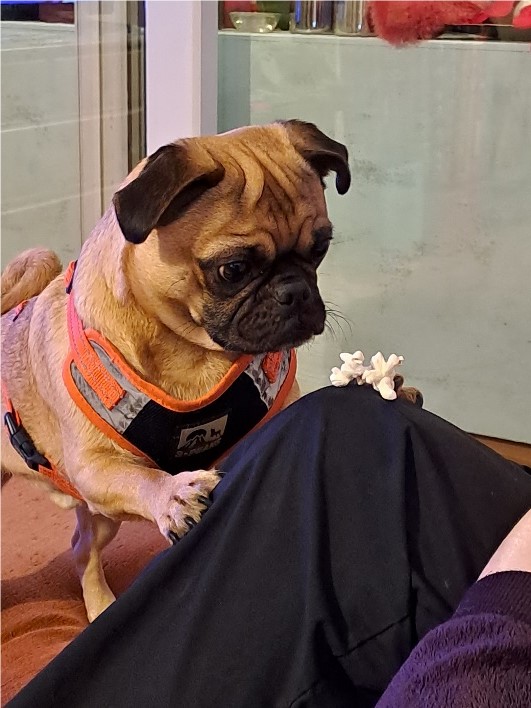
Proof of why Momo, my son’s dog, could make big bucks in advertising

Digg This
Reddit This
Stumble Now!
Share on Facebook
Bookmark this on Delicious
Share on LinkedIn
Bookmark this on Technorati
Post on Twitter
Google Buzz (aka. Google Reader)

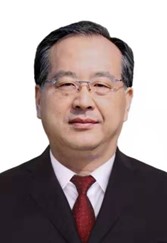
20th Anniversary Blog Series: Lei Wang

2023 marks twenty years of Organic & Biomolecular Chemistry publications. As part of the celebrations, OBC has invited some of the most prominent authors across our history to give their thoughts on the last twenty years of their career alongside their predictions for the next two decades.

The next entry to the series comes from Professor Lei Wang at Taizhou University who first published with OBC in 2009 and he has continued to support the journal with 31 articles across the years, most recently earlier this year.


About Lei
Education and Employment:

2019.9 – Present Distinguished Professor of Chemistry, Taizhou University, P. R. China

2012.4 – 2019.3 Secretary of the Communist Party of China, Huaibei Normal University, P. R. China

2005.2 – 2019.9 Professor of Chemistry, Huaibei Normal University, P. R. China

2005.2 – 2012.4 President of Huaibei Normal University, P. R. China

2004.6 – 2005.2 Visiting Professor of Chemistry, Mississippi State University, USA

2001.8 – 2004.6 Professor of Chemistry, Huaibei Normal University, P. R. China

1999.6 – 2001.8 Postdoctoral Research Associate at University of Tennessee, Knoxville, USA

1996.9 – 1999.6 Ph. D., Department of Chemistry, Zhejiang University, P. R. China

1995.3 – 1996.9 Professor of Chemistry, Huaibei Normal University, P. R. China

1994.2 – 1995.3 Visiting Professor of Chemistry, Western Kentucky University, USA

1982.7 – 1995.3 Assistant, Associate and Full Professor at Huaibei Normal University, China

1978.9 – 1982.7 B.S., Huaibei Normal University, P. R. China, Major in Chemistry

Research Interests:

Organic synthesis; Organometallic chemistry; Green synthetic methodology; Organic photosynthesis; Organic electrosynthesis; Organic photoelectrosynthesis


First OBC paper: K. Ren, M. Wang & L. Wang, Lewis acid InBr3-catalysed arylation of diorganodiselenides and ditellurides with arylboronic acids, Org. Biomol. Chem., 2009, 7, 4858-4861, DOI: 10.1039/b914533h

Most recent OBC paper: X. Hu, H. Guo, H. Jiang, R. Zheng, Y. Zhou & L. Wang, Visible-light-induced C(sp3)-H thiocyanation of pyrazoline-5-ones: a practical synthesis of 4-thiocyanated 5-hydroxy-1H-pyrazoles, Org. Biomol. Chem., 2023, 21, 2232-2235, DOI: 10.1039/d3ob00092c

Favourite OBC paper: X. Xie, P. Li, Q. Shi & L. Wang, Visible-light-induced tandem cyclization of 2-alkynylanilines with disulfides: a convenient method for accessing benzothiophenes under transition-metal-free and photocatalyst-free conditions, Org. Biomol. Chem., 2017, 15, 7678-7684, DOI: 10.1039/c7ob01747b


How has your research developed over the last 20 years?

In 2001, after finishing my postdoctoral research associate at the University of Tennessee, Knoxville, USA, I returned to my home university, Huaibei Coal Industry Teachers College, starting my independent research career. At that time, I began my research from zero, overcoming a variety of unimaginable difficulties in my arduous scientific research journey, including setting up my own laboratory from nothing, with only one or two undergraduate students in my group and limited money and facilities. With the support of the Chinese government, encouragement by my co-workers and the hard work of my colleagues, my research group gradually grew and grew, and my research projects began to go very smoothly in the last two decades. Now there is a big team with more than 30 post-doctorates and graduate students in my group, well equipped with instruments including 600 MHz NMR and HPLC-HRMS with generous research funding. I have now since published more than 300 papers in J. Amer. Chem. Soc., Angew. Chem. Int. Ed., Org. Lett. et al., especially including over 30 papers published in Org. Biomol. Chem. with the first paper in 20091. As a result of this, I was selected as one of the Highly Cited Researchers (Chemistry) from 2020 to 2022 in Elsevier’s list and in the World’s Top 2% of Scientists by Stanford University. In addition, I served as the President of Huaibei Normal University (originally Huaibei Coal Industry Teachers College) from 2005 to 2012, and the Secretary of the Communist Party of China in Huaibei Normal University from 2012 to 2019. During my time in those positions, we have promoted the rapid development of the university in scientific research and the quality of graduate and undergraduate students under the support of our faculties and staffs.


How has the encompassing field of your research changed over the last 2 decades?

Over the last two decades, my research has been focused on the methodology of organic synthesis. However, this was originally classified as analytical chemistry until 1996. Developments in organic chemistry has meant my research field has also adjusted from organometallic chemistry directed towards organic synthesis (OMCOS) to activation/functionalisation of inert chemical bonds including C-H, C-O, and C-halogen bonds, organic photosynthesis, organic electrosynthesis and organic photoelectrosynthesis to meet the need of green chemistry with atom economy, concise synthetic routes, green solvents, non-precious transition-metal catalysis and renewable energy. Our most recent publications in OBC are an example of this, focusing on organic photosynthesis and electrosynthesis2,3. However, my favourite paper that has been published in OBC is on a convenient method for accessing benzothiophenes using visible light induced tandem cyclization of 2-alkynylanilines with disulfides4 which was highlighted by SYNFACTS in 20175.


Where do you see the challenges being for this field over the next 20 years?

The past decade has witnessed an explosive growth in the use of photocatalytic and electrocatalytic techniques in organic synthesis, and organic photocatalysis and electrocatalysis are two powerful strategies for the construction of organic molecules that have received much attention in recent years. Electrophotocatalysis, which at its best combines to most advantageous aspects of these two approaches, has in the last five years begun to offer new avenues for synthetic chemists. Electrophotocatalysis has the ability to perform photoredox reactions without the need for large quantities of stoichiometric or superstoichiometric chemical oxidants or reductants by making use of an electrochemical potential as the electron source under relatively mild conditions. In the next 20 years, electrophotocatalysis will be a rapidly growing research frontier combining with scale-up reactions, continuous flow chemistry for high reproducibility and high-throughput experimentation. It is becoming a powerful tool for both academic and industrial chemists.


Check out the other entries in our blog series here!


1K. Ren, M. Wang & L. Wang, Lewis acid InBr3-catalysed arylation of diorgano diselenides and ditellurides with arylboronic acids, Org. Biomol. Chem., 2009, 7, 4858-4861, DOI: 10.1039/b914533h

2X. Hu, H. Guo, H. Jiang, R. Zheng, Y.-Q. Zhou & L. Wang, Visible-light-induced C(sp3)-H thiocyanation of pyrazoline-5-ones with ammonium thiocyanate to 4-thiocyanated 5-hydroxy-1H-pyrazoles, Org. Biomol. Chem., 2023, 21, 2232-2235, DOI: 10.1039/d3ob00092c

3Y. Lv, Z.-W. Hou, Y. Wang, P. Li & L. Wang, Electrochemical monofluoroalkylation cyclization of N-arylacrylamides to construct monofluorinated 2-oxindoles, Org. Biomol. Chem., 2023, 21, 1014-1020, DOI: 10.1039/d2ob01883g

4X. Xie, P. Li, Q. Shi & L. Wang, Visible-light-induced tandem cyclization of 2-alkynylanilines with disulfides: a convenient method for accessing benzothiophenes under transition-metal-free and photocatalyst-free conditions, Org. Biomol. Chem., 2017, 15, 7678-7684, DOI: 10.1039/c7ob01747b

5V. Snieckus & M. Miranzadeh, Visible-lighted-induced iron-catalyzed synthesis of 3,3-disubstituted oxindoles, Synfacts, 2017, 13, 0802, DOI: 10.1055/s-0036-1590741

Digg This
Reddit This
Stumble Now!
Share on Facebook
Bookmark this on Delicious
Share on LinkedIn
Bookmark this on Technorati
Post on Twitter
Google Buzz (aka. Google Reader)

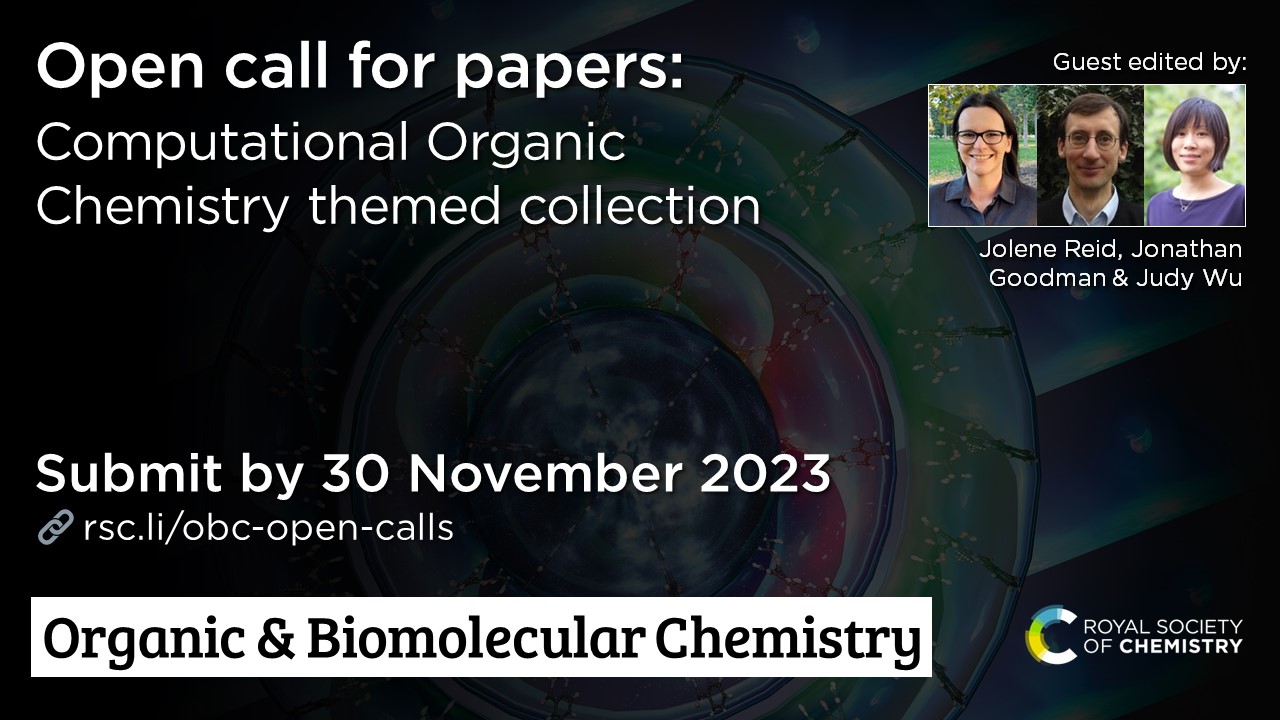
Call For Papers: Computational Organic Chemistry

Call For Papers: Computational Organic Chemistry

Guest edited by Jolene Reid, Jonathan Goodman and Judy Wu

We are delighted to announce a call for papers for our latest online themed collection in Organic & Biomolecular Chemistry on Computational Organic Chemistry guest edited by Professor Jolene Reid (University of British Columbia, Canada), Professor Jonathan Goodman (University of Cambridge, UK) and Professor Judy Wu (University of Houston, USA).

This collection in OBC is dedicated to the latest advances in Computational Organic Chemistry. This includes computational studies that provide explanations, predictions or insights for the reactivity, structure, functions and properties of organic systems. The approaches may include density functional theory, molecular dynamics and machine learning and can be applied to systems ranging from small organic molecules and organometallics to macromolecules and supramolecular constructions.

This call for papers is open to both communications (for urgent work – up to 5 pages) and full papers.


Open for submissions until 30th November 2023


If you would like to contribute to this themed collection, you can submit your article directly through the OBC online submission service. Please mention that this submission is a contribution to the Computational Organic Chemistry collection in the “Themed issues” section of the submission form and add a “Note to the Editor” that this is from the Open Call. The Editorial Office reserves the right to check suitability of submissions in relation to the scope of both the journal and the collection, and inclusion of accepted articles in the final themed issue is not guaranteed.

Please also note that all submissions will be subject to our usual rigorous peer review process, including initial assessment to ensure the high standards of the journal and acceptance is not guaranteed. Accepted manuscripts will be highlighted together in a dedicated virtual collection alongside an editorial, regardless of submission date, and there will be no delay in the publication of all accepted manuscripts into regular issues of OBC.

If you have any questions about the collection, then please contact the Editorial Office at obc-rsc@rsc.org and they will be happy to help.

With best regards,

Professor Jolene Reid (University of British Columbia, Canada)

Professor Jonathan Goodman (University of Cambridge, UK)

Professor Judy Wu (University of Houston, USA)

Digg This
Reddit This
Stumble Now!
Share on Facebook
Bookmark this on Delicious
Share on LinkedIn
Bookmark this on Technorati
Post on Twitter
Google Buzz (aka. Google Reader)