Author Archive

Editor’s Choice collection: Jeroen Dickschat

OBC is delighted to introduce our Editor’s Choice collection!

This collection showcases some of the best articles published in the journal, handpicked by our Associate Editors and Editorial Board members. This month we have a selection of recent OBC articles chosen by our Associate Editor Jeroen Dickschat.

Meet the Editor

Jeroen S. Dickschat studied Chemistry at TU Braunschweig and obtained his PhD under the supervision of Stefan Schulz in 2004, followed by postdoctoral stays with Rolf Müller at Saarland University and with Peter Leadlay at the University of Cambridge (UK). In 2008 he started his independent career at TU Braunschweig, culminating in his habilitation in 2013. In 2014 he accepted an appointment as a Professor of Organic Chemistry and Biochemistry at the University of Bonn. He also holds a honorary Professorship at the NIOO Wageningen (The Netherlands).

His group is interested in the biosynthesis of microbial natural products, with a special focus on the elucidation of the complex reaction mechanisms in their formation.


Jeroen’s favourite articles


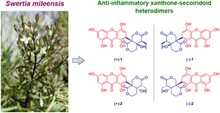
Swermilactones A and B: racemic xanthone–secoiridoid heterodimers from Swertia mileensis
Yao Du, Hao Li, Xiao-Yu Qi, Yuan-Liang Xu, Yan Liu, Xue-Mei Niu, Kai Guo & Sheng-Hong Li
Org. Biomol. Chem., 2025, 23, 3860-3864


“This research article describes the isolation and structural characterisation of swermilactones A and B from Swertia mileensis. Unlike most natural products, the swermilactones were shown not to be enantiomerically pure, but rather scalemic. The strength of this paper lies in the rigour not only to uncover the scalemic nature of the natural products, but also in giving a sound scientific explanation for their possible biosynthesis.”


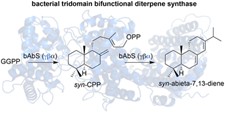
Discovery of a plant-like tridomain bifunctional syn-abieta-7,13-diene synthase in Streptomyces
Caitlin A. McCadden, Diana P. Łomowska-Keehner, Tracy Qu, Jordan Nafie, Tyler A. Alsup & Jeffrey D. Rudolf
Org. Biomol. Chem., 2025, 23, 9845-9850


“Terpene synthases in bacteria usually exhibit a single so-called alpha-domain or a combination of beta and gamma-domains, while plant terpene synthases usually contain three domains (alpha-beta-gamma). The present paper not only reports about the occurrence of alpha-beta-gamma domain terpene synthases from bacteria, but also about the bioinformatic identification of additional interesting gene fusions, suggesting multifunctional bacterial enzymes to be characterised in future work.”


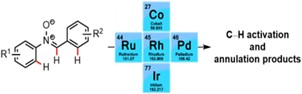
Nitrones as directing groups in transition metal-catalysed C–H activation
Barbara Stańska, Anjali Dahiya & Rafał Loska
Org. Biomol. Chem., 2026, 24, 11-37


“This review highlights the role of nitrones as directing groups in transition metal-catalysed C-H activations. C-H activations continue to be a hot topic, but the non-expert reader may not be aware that nitrones can play important roles in catalytic processes. This review article follows a highly didactic approach and also identifies important open questions such as the development of chiral catalysts for enantioselective reactions.”


We hope you enjoyed reading these articles. Keep an eye out for more of our Editors’ favourite articles in the future.

Digg This
Reddit This
Stumble Now!
Share on Facebook
Bookmark this on Delicious
Share on LinkedIn
Bookmark this on Technorati
Post on Twitter
Google Buzz (aka. Google Reader)

Editor’s Choice collection: Scott Silverman

OBC is delighted to introduce our Editor’s Choice collection!

This collection showcases some of the best articles published in the journal, handpicked by our Associate Editors and Editorial Board members. This month we have a selection of recent OBC articles chosen by our Associate Editor Scott Silverman.

Meet the Editor

Scott K. Silverman was born in 1972 and raised in Los Angeles, California. He received his BS in chemistry from UCLA in 1991, working with Christopher Foote on photooxygenation mechanisms. He obtained his PhD in chemistry from Caltech in 1997, working with Dennis Dougherty to study high-spin organic polyradicals and molecular neurobiology. After postdoctoral research on RNA biochemistry with Thomas Cech at the University of Colorado at Boulder, he joined the University of Illinois in 2000, where he is currently Professor of Chemistry.

Professor Silverman’s research is in the chemistry and biochemistry of nucleic acids, especially investigations of DNA as an enzyme (DNAzyme, deoxyribozyme).


Scott’s favourite articles


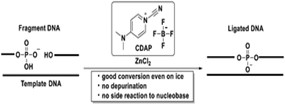
Facile DNA chemical ligation under mild conditions enabled by 1-cyano-4-(dimethylamino)pyridinium tetrafluoroborate (CDAP)

Hiroki Yamada, Yasuaki Kimura, Hiroshi Abe & Junichiro Yamamoto

Org. Biomol. Chem., 2025, 23, 4866-4872


“This paper establishes a new, nonenzymatic approach for DNA ligation. The authors show that CDAP, 1-cyan-4-(dimethylamino)pyridinium tetrafluoroborate, can be used as an alternative to cyanogen bromide (CNBR) to join 3′-OH and 5′-phosphate termini when aligned on a DNA template strand. The CDAP reaction proceeds efficiently, without DNA deglycosylation or other side reactions that are induced by CNBr and can be done on ice. Such findings should have value for joining DNA strands in various contexts.”


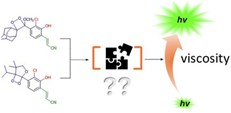
Viscosity effects on the chemiluminescence emission of 1,2-dioxetanes in water

Maidileyvis Castro Cabello, Palanisamy Kandhan, Peng Tao & Alexander R. Lippert

Org. Biomol. Chem., 2025, 23, 5380-5389


“This work explores an interesting physical organic relationship between viscosity and aqueous chemiluminescent emission of 1,2-dioxetanes, noting that chemiluminescence is often the basis for imaging techniques in vivo. The authors used several different models to explain their observations. The findings should be helpful in ongoing design efforts with chemiluminescent compounds.”


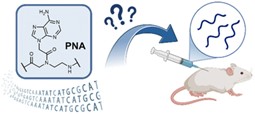
Strategies for the optimisation of troublesome peptide nucleic acid (PNA) sequences

Emma E. Watson

Org. Biomol. Chem., 2025, 23, 9797-9814


“This review describes many practical aspects of peptide nucleic acids (PNA), focusing on the relationship between PNA sequence and considerations ranging from synthesis to biological uptake, including backbone and nucleobase modifications. As one reviewer mentioned, this article is an excellent launching point for those scientists who wish to get started in PNA research.”


We hope you enjoyed reading these articles. Keep an eye out for more of our Editors’ favourite articles in the future.

Digg This
Reddit This
Stumble Now!
Share on Facebook
Bookmark this on Delicious
Share on LinkedIn
Bookmark this on Technorati
Post on Twitter
Google Buzz (aka. Google Reader)

Organic & Biomolecular Chemistry welcomes new Associate Editor Shigeki Matsunaga

We are delighted to welcome our new Associate Editor, Professor Shigeki Matsunaga to the Organic & Biomolecular Chemistry Editorial Board!


Shigeki Matsunaga received his BSc (1998), MS (2000), and PhD (2003) under the supervision of Professor Masakatsu Shibasaki from the University of Tokyo, Japan. He started his academic career in 2001 as an Associate Professor at the University of Tokyo and was promoted to Senior Lecturer (2008) and Associate Professor (2011) at the same university. He was appointed as a full Professor at Hokkaido University in 2015 and then moved to Kyoto University in 2023. He has been awarded the Mukaiyama Award (2020) of the Society of Synthetic Organic Chemistry, Japan among others.

His research interests are in the area of homogenous catalysis with a focus on asymmetric synthesis, C-H functionalisation and the synthesis of biologically active molecules. Find out more about Shigeki on his website and submit your article to him today!

Digg This
Reddit This
Stumble Now!
Share on Facebook
Bookmark this on Delicious
Share on LinkedIn
Bookmark this on Technorati
Post on Twitter
Google Buzz (aka. Google Reader)

Editor’s Choice collection: Huan Wang

OBC is delighted to introduce our Editor’s Choice collection!

This collection showcases some of the best articles published in the journal, handpicked by our Associate Editors and Editorial Board members. This month we have a selection of recent OBC articles chosen by our Associate Editor Huan Wang.

Meet the Editor


Professor Wang graduated from Peking University (2005). He obtained his PhD from University of Maryland at College Park (2010) and conducted post-doctoral research work at University of Illinois at Urbana-Champaign (2010-2014). Huan started at Nanjing University in 2014 and works as a Professor in the Chemistry department.

His research group aims to address problems at the interface of chemistry and biochemistry, including the chemical synthesis and biosynthesis of bioactive peptides, peptide/protein functionalisation and biological functions of non-coding RNAs.


Huan’s favourite articles


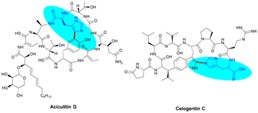
Histidine-bridged cyclic peptide natural products: isolation, biosynthesis and synthetic studies
Pascal M. Engelhardt, Robert Keyzers & Margaret A. Brimble
Org. Biomol. Chem., 2024, 22, 8374-8396


“This timely review synthesises four decades of research on histidine-bridged macrocyclic peptides, highlighting their unusual cross-linking chemistry, diverse biosynthetic origins, and emerging biological activities. By integrating structural, biosynthetic and synthetic perspectives, the article provides a comprehensive resource that will guide future discovery and mechanistic studies of this underexplored class of peptide natural products.”


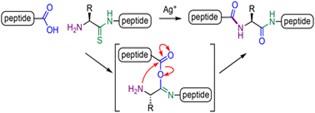
Ag(i)-promoted fragment coupling of peptide thioamides
Varsha J. Thombare, Carlie L. Charron & Craig A. Hutton
Org. Biomol. Chem., 2025, 23, 1995-1999


“This work introduces a conceptually distinct fragment-coupling strategy that leverages Ag(I)-mediated isoimide formation to generate native amide bonds without traditional peptide coupling reagents. The method enables efficient solution- and solid-phase ligations, offering a valuable complement to established NCL-based approaches and showing promise for challenging peptide sequences prone to aspartimide formation.”


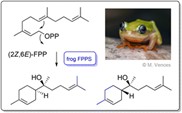
Frog farnesyl pyrophosphate synthases and their role as non-canonical terpene synthases for bisabolane sesquiterpenes
Kexin Yang, Houchao Xu, Miguel Vences, Andolalao Rakotoarison, Stefan Schulz & Jeroen S. Dickschat
Org. Biomol. Chem., 2025, 23, 7940-7945


“This manuscript reveals that frog FPPS homologs catalyse unexpected cyclisations of (2Z,6E)-FPP to bisabolane-type terpenoids, uncovering a potential alternative function conserved across diverse FPPS enzymes. The finding expands our understanding of terpene biosynthesis in higher animals and raises fundamental questions about enzyme evolution, substrate promiscuity, and physiological relevance of volatile signalling molecules.”


We hope you enjoyed reading these articles. Keep an eye out for more of our Editors’ favourite articles in the future.

Digg This
Reddit This
Stumble Now!
Share on Facebook
Bookmark this on Delicious
Share on LinkedIn
Bookmark this on Technorati
Post on Twitter
Google Buzz (aka. Google Reader)

Editor’s Choice collection: Cristina Trujillo

OBC is delighted to introduce our Editor’s Choice collection!

This collection showcases some of the best articles published in the journal, handpicked by our Associate Editors and Editorial Board members. This month we have a selection of recent OBC articles chosen by our Associate Editor Cristina Trujillo.

Meet the Editor


Dr Cristina Trujillo obtained her Ph.D. in Theoretical and Computational Chemistry in 2008 at the Universidad Autónoma de Madrid. Between 2008-2016 she held several Postdoctoral positions at CSIC, Czech Academy of Sciences and Trinity College Dublin (TCD) before becoming a Research Fellow at TCD from 2016-2018 and subsequently working as an Assistant Lecturer at TU-Dublin. She started her own research group at TCD in 2019 before moving to the University of Manchester in 2022 where she is currently a Lecturer in Computational & Theoretical Chemistry.

Her research interests are focused on the asymmetric catalysis field, with particular emphasis on the application of computational techniques in the design of organocatalysts along with prediction and control of catalytic processes, with a direct impact on the development of products with different applications.


Cristina’s favourite articles


Friedel-Crafts reactions for biomolecular chemistry

Jun Ohata

Org. Biomol. Chem., 2024, 22, 3544-3558


“This review delivers a comprehensive perspective on the growing field of Friedel–Crafts reactions in biomolecular chemistry, charting new directions in the selective modification and functionalisation of complex biological molecules. The author highlights the power of Friedel–Crafts processes for creating C–C bonds within challenging biomolecular settings, spotlighting recent advances and experimental strategies that bridge traditional organic methodologies with modern chemical biology. This synthesis of conceptual and practical insights makes the review a compelling read for both organic and bioorganic chemists interested in innovative molecular construction.”


Exploring nickel-catalyzed organochalcogen synthesis via cross-coupling of benzonitrile and alkyl chalcogenols with computational tools

Francisco A. Gómez-Mudarra, Gabriel Aullón & Jesús Jover

Org. Biomol. Chem., 2025, 23, 1673-1682


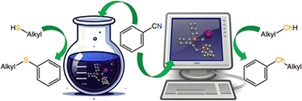
“This work investigates a distinctive nickel(0)-catalysed cross-coupling between benzonitrile and alkyl chalcogenols to form C–S, C–Se, and C–Te bonds. By outlining a classic oxidative addition–transmetalation–reductive elimination pathway that unusually engages the Ph–CN bond, the study proposes a general mechanistic platform extending beyond thioethers to their heavier chalcogen analogues. Through kinetic analysis and microkinetic simulations, the authors demonstrate that this strategy could expand synthetic access to organochalcogen compounds of biological and materials relevance while maintaining excellent functional group tolerance.”


Effect of strain and π-acidity on the catalytic efficiency of carbones in carbodiimide hydroboration

Max Schernikau & O. Maduka Ogba

Org. Biomol. Chem., 2025, 23, 9896-9907


“Using DFT calculations, this paper explores how structural and electronic factors govern the performance of zerovalent carbon-centred organocatalysts (carbones) in the hydroboration of carbodiimides. The authors reveal that cyclic carbodiphosphoranes outperform their acyclic analogues owing to superior substrate activation and more efficient hydride transfer, as mapped by distortion/interaction–activation strain analysis. The study fills key gaps in understanding catalyst design and reactivity, underscoring the growing promise of carbones as versatile organocatalysts for bond-forming transformations.”


We hope you enjoyed reading these articles. Keep an eye out for more of our Editors’ favourite articles in the future

Digg This
Reddit This
Stumble Now!
Share on Facebook
Bookmark this on Delicious
Share on LinkedIn
Bookmark this on Technorati
Post on Twitter
Google Buzz (aka. Google Reader)

Editor’s Choice collection: Motomu Kanai

OBC is delighted to introduce our Editor’s Choice collection!

This collection showcases some of the best articles published in the journal, handpicked by our Associate Editors and Editorial Board members. This month we have a selection of recent OBC articles chosen by our Associate Editor Motomu Kanai.

Meet the Editor


Motomu Kanai received his bachelor degree from the University of Tokyo in 1989 and his PhD from Osaka University in 1995. He then moved to the University of Wisconsin for postdoctoral studies with Professor Laura Kiessling. In 1997, he returned to the University of Tokyo to join Professor Masakatsu Shibasaki’s group as an assistant professor. After being a lecturer (2000-2003) and associate professor (2003-2010), he is now a professor at the University of Tokyo.

His research interests entail design and synthesis of functional (especially, biologically active) molecules.


Motomu’s favourite articles


When transition-metal catalysis meets electrosynthesis: a recent update

Fei Lian, Jiu-Ling Li & Kun Xu

Org. Biomol. Chem., 2024, 22, 4390-4419


“Electrochemistry-driven transition metal catalysis is a rapidly growing area today. Lian, Li and Xu review recent progress in this active field. This review specifically focuses on the first-row transition metal catalysis coupled with electrosynthesis, which offers benefits in terms of sustainability and foreshadows the future of green catalysis.”


Exploring the catalytic mechanism of the 10–23 DNAzyme: insights from pH–rate profiles

Virginia Parra-Meneses, Victoria Silva-Galleguillos & Marjorie Cepeda-Plaza

Org. Biomol. Chem., 2024, 22, 6833-6840


“A specific group of DNA molecules, known as DNAzymes, can catalyze chemical reactions, such as the hydrolytic cleavage of RNA. However, the detailed reaction mechanism of DNAzymes is not fully understood, which limits progress. In this paper, Parra-Meneses, Silva-Galleguillos and Cepeda-Plaza provide important insights into the catalytic strategies of RNA-cleaving DNAzymes. This discovery will aid in designing new DNAzymes with therapeutic applications, such as gene silencing.”


Total synthesis, stereochemical assignment, and biological evaluation of opantimycin A and analogues thereof

Yoshinosuke Usuki, Ryota Abe, Kazuki Nishiguchi, Tetsuya Satoh, Harumi Aono, Toshihiko Nogawa, Yushi Futamura, Hiroyuki Osada, Izumi Yoshida, Kazuhiro Fujita, Takashi Mishima & Ken-Ichi Fujita

Org. Biomol. Chem., 2024, 22, 8973-8979


“An antimalarial natural product, opantimycin A, features a unique structure that includes γ-butyrolactone and dehydro-2-aminobutyric acid motifs. Using the stereodivergent Mukaiyama aldol reaction and Staudinger ligation as key steps, Usuki and coworkers successfully synthesized opantimycin A and its various analogues, enabling the determination of the natural product’s absolute configuration. Some of these analogues exhibit significant biological activities. This study highlights a critical role of natural product synthesis.”


We hope you enjoyed reading these articles. Keep an eye out for more of our Editors’ favourite articles in the future.

Digg This
Reddit This
Stumble Now!
Share on Facebook
Bookmark this on Delicious
Share on LinkedIn
Bookmark this on Technorati
Post on Twitter
Google Buzz (aka. Google Reader)

Editor’s Choice collection: Kate Jolliffe

OBC is delighted to introduce our Editor’s Choice collection!

This collection showcases some of the best articles published in the journal, handpicked by our Associate Editors and Editorial Board members. This month we have a selection of recent OBC articles chosen by our Associate Editor Kate Jolliffe (University of Sydney). Take a look at which articles she chose and why.

Meet the Editor

Kate Jolliffe received her BSc (Hons) in 1993 and PhD in 1997 from the University of New South Wales. She then held positions at Twente University, University of Nottingham and the Australian National University before taking up an Australian Research Council QEII fellowship at The University of Sydney in 2002. In 2007 she became a Senior lecturer at the same institution and was promoted to Associate Professor in 2008 and to full Professor in 2009. She currently holds the position of Payne-Scott Professor at The University of Sydney.

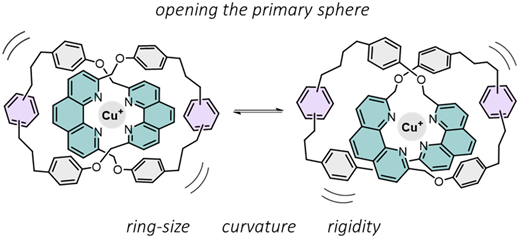
Her research interests are in the areas of supramolecular, peptide and organic chemistry, with a focus on the design and synthesis of functional molecules, such as molecular sensors capable of detecting anions in biological environments or cyclic peptides for application in biology and medicine.


Kate’s favourite articles

Impact of charges on the hybridization kinetics and thermal stability of PNA duplexes

Miguel López-Tena & Nicolas Winssinger

Org. Biomol. Chem., 2024, 22, 5759-5767


“Peptide nucleic acids have a range of potential biomedical applications because they form duplexes with DNA and RNA that are more stable than DNA or RNA homoduplexes. López-Tena and Winssinger analyse how modifications of PNA structure at the γ-position impact hybridisation stability and kinetics, demonstrating that the higher stability of duplexes involving PNA results from slower dissociation kinetics rather than association kinetics (which are also slower relative to a DNA:DNA duplex). This improves our understanding of how to design molecular structures with specific function.”


Enhanced binding of methyl alkylammonium cations through preorganization of a water-soluble calix[4]pyrrole

Esteban Valencia & Pablo Ballester

Org. Biomol. Chem., 2024, 22, 5827-5834


“Mimicking nature’s molecular receptors and achieving similar selectivity and affinity is one of the key aims of supramolecular chemists. Valencia and Ballester use extended calix[4]pyrroles to bind biologically relevant methyl trialkylammonium cations with high affinity in water, providing a nice example of how synthetic molecules can be designed to mimic nature.”


Substituent effects of fluorinated bambusurils on their anion transport

Matúš Chvojka, Vladimír Šindelář & Hennie Valkenier

Org. Biomol. Chem., 2025, Advance Article


“In another example of supramolecular structure-activity analysis, Chovjka, Šindelář and Valkenier evaluate the anion transport properties of a small library of fluorinated bambusurils. Defining structure-activity relationships of these molecules is key to meeting the multiple criteria for effective ion transport in cells that will be required for application in treating chanellopathies e.g. cystic fibrosis. This paper demonstrates how small structural changes can have a large, and sometimes unanticipated, impact on function.”


We hope you enjoyed reading these articles. Keep an eye out for more of our Editors’ favourite articles in the future.

Digg This
Reddit This
Stumble Now!
Share on Facebook
Bookmark this on Delicious
Share on LinkedIn
Bookmark this on Technorati
Post on Twitter
Google Buzz (aka. Google Reader)

Organic & Biomolecular Chemistry welcomes new Associate Editor Jeroen Dickschat

We are delighted to welcome our new Associate Editor, Professor Jeroen Dickschat to the Organic & Biomolecular Chemistry Editorial Board!


Jeroen S. Dickschat studied Chemistry at TU Braunschweig and obtained his PhD under the supervision of Stefan Schulz in 2004, followed by postdoctoral stays with Rolf Müller at Saarland University and with Peter Leadlay at the University of Cambridge (UK). In 2008 he started his independent career at TU Braunschweig, culminating in his habilitation in 2013. In 2014 he accepted an appointment as a Professor of Organic Chemistry and Biochemistry at the University of Bonn. He also holds a honorary Professorship at the NIOO Wageningen (The Netherlands).

His group is interested in the biosynthesis of microbial natural products, with a special focus on the elucidation of the complex reaction mechanisms in their formation.


Find out more about Jeroen on his website and submit your article to him today!

Digg This
Reddit This
Stumble Now!
Share on Facebook
Bookmark this on Delicious
Share on LinkedIn
Bookmark this on Technorati
Post on Twitter
Google Buzz (aka. Google Reader)

Organic & Biomolecular Chemistry welcomes new Associate Editor Huan Wang

We are delighted to welcome our new Associate Editor, Professor Huan Wang to the Organic & Biomolecular Chemistry Editorial Board!

Professor Wang graduated from Peking University (2005). He obtained his PhD from University of Maryland at College Park (2010), and conducted post-doctoral research work at University of Illinois at Urbana-Champaign (2010-2014). Wang started at Nanjing University in 2014 and works as a Professor in the Chemistry department.

His research group aims to address problems at the interface of chemistry and biochemistry, including the chemical synthesis and biosynthesis of bioactive peptides, peptide/protein functionalisation and biological functions of non-coding RNAs.

Find out more about Huan on his website and submit your article to him today!

Digg This
Reddit This
Stumble Now!
Share on Facebook
Bookmark this on Delicious
Share on LinkedIn
Bookmark this on Technorati
Post on Twitter
Google Buzz (aka. Google Reader)

Call For Papers: Chemoenzymatic Synthesis

Call For Papers: Chemoenzymatic Synthesis

Guest edited by Hiroki Oguri, Hongzhi Cao & Suvarn Kulkarni

We are delighted to announce a call for papers for our latest online themed collection in Organic & Biomolecular Chemistry on Chemoenzymatic Synthesis guest edited by Professor Hiroki Oguri (University of Tokyo, Japan), Professor Hongzhi Cao (Ocean University of China, China) and Professor Suvarn Kulkarni (IIT Bombay, India).

This collection in OBC is dedicated to the emerging advancements in Chemoenzymatic Synthesis across a wide array of natural products, including sugars, lipids, terpenes, polyketides, peptide, alkaloids and their hybrids. This integrative synthetic approach not only harnesses the power of enzymes but also leverages the versatility of chemical synthesis regarding substrate design and product diversification.

This call for papers is open to both communication (for urgent work – up to 5 pages) and full papers.


Open for submissions until 30th April 2024


If you would like to contribute to this themed collection, you can submit your article directly through the OBC online submission service. Please mention that this submission is a contribution to the Chemoenzymatic Synthesis collection in the “Themed issues” section of the submission form and add a “Note to the Editor” that this is from the Open Call. The Editorial Office reserves the right to check suitability of submissions in relation to the scope of both the journal and the collection, and inclusion of accepted articles in the final themed issue is not guaranteed.

Please also note that all submissions will be subject to our usual rigorous peer review process, including initial assessment to ensure the high standards of the journal and acceptance is not guaranteed. Accepted manuscripts will be highlighted together in a dedicated virtual collection alongside an editorial, regardless of submission date, and there will be no delay in the publication of all accepted manuscripts into regular issues of OBC.

If you have any questions about the collection, then please contact the Editorial Office at obc-rsc@rsc.org and they will be happy to help.

With best regards,

Hiroki, Hongzhi and Suvarn

Professor Hiroki Oguri (University of Tokyo, Japan)

Professor Hongzhi Cao (Ocean University of China, China)

Professor Suvarn Kulkarni (IIT Bombay, India)

Digg This
Reddit This
Stumble Now!
Share on Facebook
Bookmark this on Delicious
Share on LinkedIn
Bookmark this on Technorati
Post on Twitter
Google Buzz (aka. Google Reader)