
OBC is delighted to introduce our Editor’s Choice collection!
This collection showcases some of the best articles published in the journal, handpicked by our Associate Editors and Editorial Board members. This month we have a selection of recent OBC articles chosen by our Associate Editor Xiaohua Liu.
Meet the Editor
Xiaohua Liu obtained her BSc degree from Hubei Normal University (2000), and obtained her MS (2003) and PhD (2006) from Sichuan University. She joined the faculty of Prof. Feng’s group in 2006, and was appointed as an associate professor. In 2010, she was promoted as a full professor. Her current research interests include asymmetric catalysis and chiral drug synthesis.
Xiaohua’s favourite articles
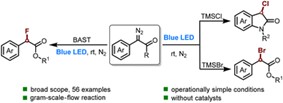
Photo-induced transformation of α-diazocarbonyl compounds into mono-substituted alpha-halogen derivatives
Jinrui Bai, Bin Li, Dan Qi, Zhuoheng Song, Yue Yao & Chao Liu
Org. Biomol. Chem., 2025, 23, 422-426
“A visible-light driven halogenation reaction of diazo compounds under mild reaction condition is reported. Three new halogenating agents were tolerable, benefiting the efficient introduction of F, Cl and Br-atom.”
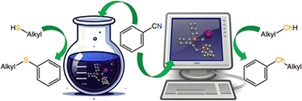
Exploring nickel-catalyzed organochalcogen synthesis via cross-coupling of benzonitrile and alkyl chalcogenols with computational tools
Francisco A. Gómez-Mudarra, Gabriel Aullón & Jesús Jover
Org. Biomol. Chem., 2025, 23, 1673-1682
“Through DFT calculation and microkinetic modeling, the detailed mechanism of a nickel(0) dcype-catalyzed cross-coupling between benzonitrile and propanethiol to produce new C–S bonds was disclosed, showing the potential usage to predict the construct C–Se and C–Te bonds.”
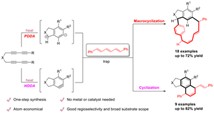
Formation of complex cyclic compounds via a dehydrogenative Diels–Alder reaction
Zhongwei Xu, Yu Lei, Meng Chang, Ruihua Qiang, Qiong Hu & Yimin Hu
Org. Biomol. Chem., 2025, 23, 9330-9335
“An unprecedented annulation strategy by trapping DHT for the construction of macrocyclic compounds is reported. The choice of different basic conditions resulted in the formation of distinct types of annulation products, showing the potential application of pentadehydro-Diels–Alder and hexadehydro-Diels–Alder reactions.”
We hope you enjoyed reading these articles. Keep an eye out for more of our Editors’ favourite articles in the future.