


OBC is delighted to introduce our Editor’s Choice collection!
This collection showcases some of the best articles published in the journal, handpicked by our Associate Editors and Editorial Board members. This month we have a selection of recent OBC articles chosen by our Associate Editor Scott Silverman.
Meet the Editor
Scott K. Silverman was born in 1972 and raised in Los Angeles, California. He received his BS in chemistry from UCLA in 1991, working with Christopher Foote on photooxygenation mechanisms. He obtained his PhD in chemistry from Caltech in 1997, working with Dennis Dougherty to study high-spin organic polyradicals and molecular neurobiology. After postdoctoral research on RNA biochemistry with Thomas Cech at the University of Colorado at Boulder, he joined the University of Illinois in 2000, where he is currently Professor of Chemistry.
Professor Silverman’s research is in the chemistry and biochemistry of nucleic acids, especially investigations of DNA as an enzyme (DNAzyme, deoxyribozyme).
Scott’s favourite articles
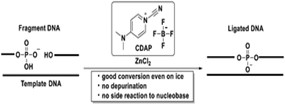
Hiroki Yamada, Yasuaki Kimura, Hiroshi Abe & Junichiro Yamamoto
Org. Biomol. Chem., 2025, 23, 4866-4872
 “This paper establishes a new, nonenzymatic approach for DNA ligation. The authors show that CDAP, 1-cyan-4-(dimethylamino)pyridinium tetrafluoroborate, can be used as an alternative to cyanogen bromide (CNBR) to join 3′-OH and 5′-phosphate termini when aligned on a DNA template strand. The CDAP reaction proceeds efficiently, without DNA deglycosylation or other side reactions that are induced by CNBr and can be done on ice. Such findings should have value for joining DNA strands in various contexts.”
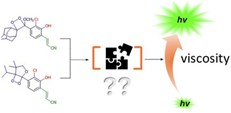
Viscosity effects on the chemiluminescence emission of 1,2-dioxetanes in water
Maidileyvis Castro Cabello, Palanisamy Kandhan, Peng Tao & Alexander R. Lippert
Org. Biomol. Chem., 2025, 23, 5380-5389
“This work explores an interesting physical organic relationship between viscosity and aqueous chemiluminescent emission of 1,2-dioxetanes, noting that chemiluminescence is often the basis for imaging techniques in vivo. The authors used several different models to explain their observations. The findings should be helpful in ongoing design efforts with chemiluminescent compounds.”
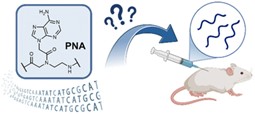
Strategies for the optimisation of troublesome peptide nucleic acid (PNA) sequences
Emma E. Watson
Org. Biomol. Chem., 2025, 23, 9797-9814
“This review describes many practical aspects of peptide nucleic acids (PNA), focusing on the relationship between PNA sequence and considerations ranging from synthesis to biological uptake, including backbone and nucleobase modifications. As one reviewer mentioned, this article is an excellent launching point for those scientists who wish to get started in PNA research.”
We hope you enjoyed reading these articles. Keep an eye out for more of our Editors’ favourite articles in the future.


