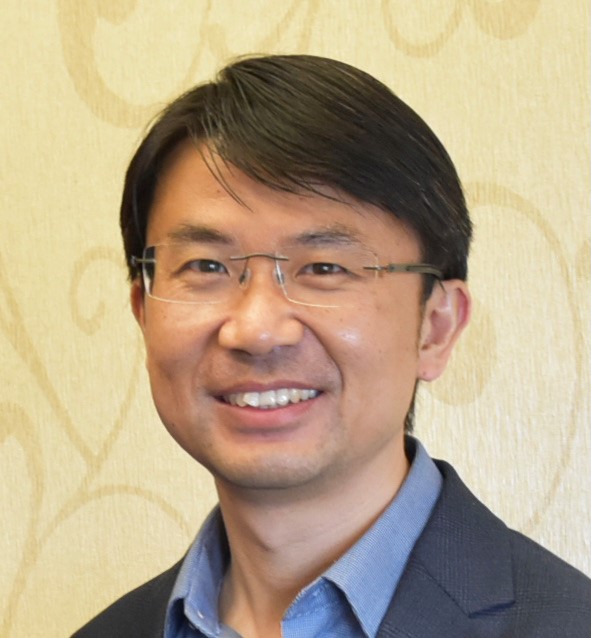

 Natural Product Reports is delighted to announce that Professor Dong-Chan Oh (Seoul National University) has been appointed our new Editorial Board Chair, succeeding Professor Tobias Gulder!
Dong-Chan Oh received his PhD in Marine Natural Products Chemistry under Prof. William Fenical at the University of California, San Diego in 2006. He subsequently conducted postdoctoral research in Prof. Jon Clardy’s laboratory at Harvard Medical School. In 2009, he joined Seoul National University as an Assistant Professor before being promoted to Associate Professor in 2013, Full Professor in 2018 and serving as Director of the Natural Products Research Institute from 2019 to 2025. He was selected as an HHMI International Early Career Scientist (2012–2017) and received the Seoul National University Academy and Education Award in 2024. His research integrates metabologenomics, natural products chemistry, biosynthetic studies, and chemical biology to discover bioactive microbial natural products, elucidate their structures, and explore their potential for drug discovery.
We caught up with Dong-Chan to ask his perspective on NPR and to look ahead to his time as Editorial Board Chair.
What excites you most about taking on the role of Editorial Board Chair of Natural Product Reports?
Taking on this role is particularly meaningful to me because Natural Product Reports has been an important journal throughout my career as a scientist. Since my Ph.D. training, I have regularly read NPR reviews to learn about areas beyond my immediate research and to gain new insights and ideas for my own work. I particularly remember the annual Marine Natural Products reviews written by Professor D. John Faulkner at Scripps, which were an invaluable resource for me during my Ph.D. studies. It is therefore both exciting and deeply rewarding to now have the opportunity to help lead a journal that has contributed so much to my own development as a researcher.
What excites me most about the role is the opportunity to contribute to the future direction of natural products research through NPR. Natural products research is rapidly evolving and increasingly intersects with many other disciplines. I believe NPR has an important role not only in reviewing what has already been achieved, but also in identifying emerging directions and helping to shape where the field is heading. I am very excited to work with the Editorial Board, Advisory Board, Editorial Office, and Royal Society of Chemistry to build on this tradition and further strengthen NPR’s leadership in the global natural products community.
Are there any articles, themed collections, or areas of research in Natural Product Reports that showcase the journal’s strengths and ambitions?
One of NPR’s greatest strengths is its ability to publish authoritative reviews that become long-term references for the natural products community. I particularly value reviews that go beyond summarizing the literature to critically evaluate progress, provide new perspectives, and offer a conceptual framework for future research.
Reviews that integrate the traditional strengths of natural products chemistry with rapidly advancing areas such as biosynthesis, genomics, metabolomics, chemical biology, synthetic biology, methodological development, and drug discovery particularly demonstrate the breadth and ambition of NPR. However, I do not think we should limit ourselves to any predefined list of topics. Natural products research continues to evolve, and new scientific opportunities will undoubtedly emerge. By communicating closely with the Editorial Board and Advisory Board, I hope that we can continue to identify important new directions as the field changes and encourage timely, forward-looking reviews that help shape the future of natural products research.
What would you say sets Natural Product Reports apart for authors considering where to publish their work?
Natural Product Reports is unique in being a journal dedicated to high-quality reviews across the broad field of natural products research. This gives NPR a distinctive role in the community: it provides a forum where researchers can step back from individual discoveries, critically assess the development of a field, and present their own perspectives on where it is heading.
Rather than simply compiling published results, NPR encourages authors to provide critical insights, identify important concepts, and suggest future directions. For authors, publishing in NPR therefore offers an opportunity not only to review what is known, but also to share their intellectual perspective with the broader community and potentially influence how a field develops.
What areas of research or emerging trends would you most like to see featured in Natural Product Reports in the coming years?
Natural products research is becoming increasingly interdisciplinary, and I am particularly interested in areas where new technologies and concepts are changing the way we discover, understand, and use natural products. These include AI-assisted discovery, genome- and metabolome-driven approaches, synthetic biology, advanced analytical and structure elucidation methods, microbiome-derived natural products, and new translational opportunities for natural products in medicine.
At the same time, I would like NPR to continue highlighting fundamental areas of natural products research as they evolve through new concepts and technologies. The strength of our field comes from the close interplay between chemistry and biology, and I believe some of the most exciting future directions will emerge at the interfaces between established areas and newly developing disciplines. I hope NPR can provide a forum where these connections are recognized early and explored from broad and critical perspectives.
What advice would you give to early career researchers in the community?
My advice to early career researchers is to build on what they learned during their Ph.D. and postdoctoral training, but ultimately develop research directions that are truly their own. The training we receive from our mentors provides an essential foundation, but becoming an independent scientist requires us to move beyond the research of our former PIs and establish our own scientific identity.
To do this, I believe it is important to step back and ask fundamental questions: What is an important question that has not yet been answered? Why does it matter? And how can I approach it in a way that has not been tried before? Thinking deeply about such questions can lead us beyond simply extending what we already know how to do.
I would also encourage young researchers to be courageous in their science. I have always believed that, in science, fortune often favors those who are willing to be courageous. There is always uncertainty in exploring an uncharted path, but opportunities often emerge when we are willing to take that risk. Do not be afraid to pursue a road that others have not taken. Some attempts will inevitably fail, but truly original research often begins by having the courage to explore where others have not gone.
What do you like to do outside of work?
Outside of work, I am an avid baseball fan and have been one for more than 40 years. I think what has kept me interested for so long is that I see something of life itself in baseball. Unlike many other sports, even the best baseball teams lose regularly, and much of the competition takes place within the relatively narrow range of .400 to .600 winning percentages. Its mixture of success and failure, unexpected turns, and the need to keep going through a long season somehow reminds me of life itself. I also work out regularly at the gym to stay healthy and energized, and I enjoy occasionally getting together with close friends and colleagues over dinner and drinks, sharing stories and enjoying each other’s company.