Archive for the ‘Hot Article’ Category

Exploring the nanoscale properties of spin crossover materials

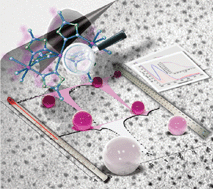
In this collaborative work from the universities of Toulouse and Montpellier (France), Lionel Salmon, Azzedine Bousseksou and co-workers have built on their development of synthetic routes to spin crossover compound (SCO) nanoparticles, to investigate the structure-property relashionships of the various nano-objects morphologies, be it as dispersed colloids, fibrous structures or nanoparticle powders.

Amongst other findings, their work now shows that the cooperativity of spin crossover transition does not require that the complex is in solid state, and that even ultra-small (down to 3 nm) spin crossover nanoparticles can exhibit a cooperative transition, offering interesting perspectives for practical applications of SCO compounds.

Interested in reading further? Why not download the full article now, FREE to access for a period of 4 weeks!

Synthesis of spin crossover nano-objects with different morphologies and properties
Alexey Tokarev, Lionel Salmon, Yannick Guari, Gábor Molnár and Azzedine Bousseksou
New J. Chem., 2011, Advance Article, DOI: 10.1039/C1NJ20218A, Paper

This article will be part of the themed issue of NJC honouring the life and work of Prof. Didier Astruc, on the occasion of his 65th birthday – Coming soon.

Digg This
Reddit This
Stumble Now!
Share on Facebook
Bookmark this on Delicious
Share on LinkedIn
Bookmark this on Technorati
Post on Twitter
Google Buzz (aka. Google Reader)

Dual control of polymer particles

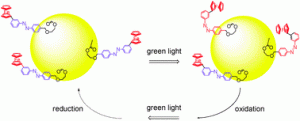
In this NJC ‘Hot Article’, Hiroshi Nishihara and co-workers from the University of Tokyo prepared polymer particles that incorporate 3-Ferrocenylazobenzene motifs. In the solid state, the polymers can be controlled by the green-light-response (photoisomerization) and by the redox reaction of their ferrocene parts. These new entities are possible candidates to act as nano-sized photo-memories or switches.

Synthesis of photo-switchable 3-FcAB-modified polymer particles” Kosuke Namiki, Masaki Murata, Shoko Kume and Hiroshi Nishihara, New J. Chem., 2011, Advance Article. DOI: 10.1039/c1nj20189a.

Why not take a look at it now! Highly rated by the reviewers and the editorial office alike, this ‘Hot Article’ will be FREE to access for a period of 4 weeks.

This article will be part of the themed issue of NJC honouring the life and work of Prof. Didier Astruc, on the occasion of his 65th birthday – Coming soon.

Digg This
Reddit This
Stumble Now!
Share on Facebook
Bookmark this on Delicious
Share on LinkedIn
Bookmark this on Technorati
Post on Twitter
Google Buzz (aka. Google Reader)

Forming the first sugars with formose reactions

While studying the formose reaction under hydrothermal conditions, scientists in Germany may have replicated the formation of the first sugars on prebiotic Earth.

In the formose reaction, formaldehyde undergoes self-condensation to give a mixture of sugars. The precursors are simple compounds so scientists have speculated that the reaction could have played a role in the origin of biomolecules. But, the reaction normally takes place under alkaline conditions in the presence of a catalyst.

Daniel Kopetzki and Markus Antonietti from the Max-Planck-Institute of Colloids and Interfaces in Potsdam carried out the reaction at high temperature and pressure – 200 degrees Celsius and 100 bar – to emulate conditions that would have been present in hydrothermal vents and on prebiotic Earth. They found that the sugars were produced under these conditions, too, without a catalyst or alkaline conditions.

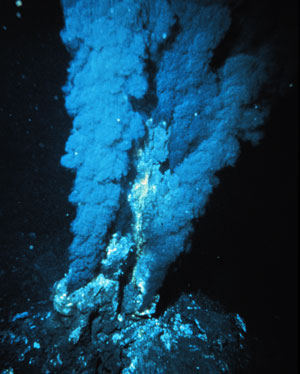
Hydrothermal synthesis could provide greener synthesis methods as well as information about the origin of life © NOAA

‘The origin of life has been studied for well over a century but if we mean to define it as the emergence of a self-reproducing complex chemistry that is capable of evolving and sustaining itself, it is still utterly unknown,’ says Sandra Pizzarello who studies prebiotic catalysis at Arizona State University, US. ‘Darwin was among the first to touch upon the theme and foretold our current working hypothesis – that biological evolution was preceded and may have its roots in abiotic chemical evolution.’

‘We do not claim that this reaction did contribute to the formation of the first biomolecules,’ says Kopetzki, ‘but the research is of interest, as it is unclear how life emerged and therefore important to explore plausible pathways.’

So far, model systems have not shown the selectivity and specificity of life’s molecules. ‘This work reminds us of this again and points out that hydrothermal conditions might not be useful either,’ says Pizzarello.

Kopetzki says that the findings could be applied to green synthesis. ‘Water at high temperature is a beneficial solvent. Our experiments have shown that catalysts can be simplified under such conditions,’ he says. ‘Saving catalysts by employing high temperature and simple salts adds another sustainable feature.’

Amaya Camara-Campos


  • Interested? Why not read the full article now:
  • Hydrothermal formose reaction
    Daniel Kopetzki and Markus Antonietti , New J. Chem., 2011
    DOI: 10.1039/C1NJ20191C, Paper

  • This NJC article is part of this month’s news on Chemistry World. Access the magazine and keep up-to-date with the world of chemistry!
  • Digg This
    Reddit This
    Stumble Now!
    Share on Facebook
    Bookmark this on Delicious
    Share on LinkedIn
    Bookmark this on Technorati
    Post on Twitter
    Google Buzz (aka. Google Reader)

    Zinc complexes as antimicrobial wound dressings

    Scientists in the UK have made metal-containing thin films that can be incorporated into wound dressings or on surfaces to kill microbes and bacteria in hospitals.

    Andrew Johnson, at the University of Bath, and colleagues created the antimicrobial films from zinc and copper Schiff-base complexes incorporating ligands made by reacting aldehydes with primary amines, which they then deposited onto polypropylene fabric commonly used in nappies and bandages.

    The team found that the copper and zinc complexes were good at killing microbes, and when tested against Staphylococcus aureus (which, amongst other things, causes impetigo – a bacterial skin infection – and toxic shock syndrome) and Pseudomonas aeruginosa (causes inflammation and sepsis), they were found to be highly effective, limiting bacterial growth for up to 16 hours. Techniques to reduce the prevalence of these particular bacteria are needed as they are known for their antibiotic resistance.

    The zinc complex was found to be particularly successful, but the reason for this is not yet known. Johnson and his team speculate that it may be due to the toxicity of the Zn2+ ion and at higher levels may be due to transmetallation, in which the complex exchanges zinc for other vital metals in bacterial cells.
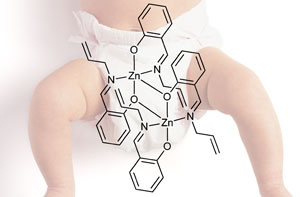
    Antimicrobial zinc-based Schiff complexes could be deposited onto polypropylene fabric commonly used in nappies

    Silver is a commonly used antimicrobial metal, but it is expensive so Johnson has spotted an advantage for his zinc and copper-based materials: ‘As only a small amount of the zinc monomer is required to deposit the films, it should be easy to scale up for industry and, most importantly, it will be cheap.’ Another advantage is that the ‘coatings are a post production treatment, so from a commercial perspective, we are not changing the manufacturing process for commodity bulk items such as bandages,’ he adds.

    Ivan Parkin, an expert in antimicrobial coatings from University College London, UK, comments that: ‘The ability to inhibit bacterial growth on surfaces is very important.’ He adds that the work provides an indication of a new possible route to achieving this goal. However, he says: ‘It should be noted that on the treated sample, bacterial growth to the level of 106 was still seen, so complete kill has not been achieved.’

    Johnson’s team now hopes to improve their films to apply them to medical devices such as catheters, wound dressings and personal care items. In particular, they are working with the paediatrics burns unit for the south-west of England at Frenchay Hospital, Bristol, to further develop their materials into advanced wound dressings for burn victims.

    Holly Sheahan

  • Interested? Why not read the full article now:
  • Plasma deposited metal Schiff-base compounds as antimicrobials
    Neil Poulter, Matthew Donaldson, Geraldine Mulley, Luis Duque, Nicholas Waterfield, Alex G. Shard, Steve Spencer, A. Tobias A. Jenkins and Andrew L. Johnson, New J. Chem., 2011
    DOI: 10.1039/c1nj20091g

  • This NJC article is part of this month’s news on Chemistry World. Access the magazine and keep up-to-date with the world of chemistry!

  • Digg This
    Reddit This
    Stumble Now!
    Share on Facebook
    Bookmark this on Delicious
    Share on LinkedIn
    Bookmark this on Technorati
    Post on Twitter
    Google Buzz (aka. Google Reader)

    Novel rotaxane receptor for selective anion recognition

    Scientists in the UK have designed a novel meta-xylenediamide macrocycle containing rotaxane anion host.

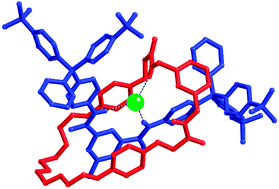
    Following on their pioneering work in the area, the team led by Paul Beer at Oxford University demonstrates a unique guest binding effect in which the interlocked host is able to bind chloride and bromide anions selectively, vs. more basic oxoanions such as dihydrogen phosphate and acetate. Their research highlights how only the monoatomic halides are able to enter the rotaxane cavity, while the larger oxoanions bind to the periphery.

    Researchers in a number of ‘supramolecular fields’, such as host-guest chemistry, anion binding, self-assembly, or molecular machines, will be interested in this high-impact chemistry.

    Why not take a look at it now! Highly rated by the reviewers and the editorial office alike, this ‘Hot Article’ will be FREE to access for a period of 4 weeks.

    A meta-xylenediamide macrocycle containing rotaxane anion host system constructed by a new synthetic clipping methodology, Nicholas H. Evans, Christopher J. Serpell and Paul D. Beer
    New J. Chem., 2011, Advance Article
    DOI: 10.1039/C1NJ20109C

    This article will also be part of the themed issue of NJC honouring the life and work of Prof. Didier Astruc, on the occasion of his 65th birthday – Coming out this Autumn.

  • Don’t miss this high-profile issue – sign up to the journal e-alert now!

    Digg This
    Reddit This
    Stumble Now!
    Share on Facebook
    Bookmark this on Delicious
    Share on LinkedIn
    Bookmark this on Technorati
    Post on Twitter
    Google Buzz (aka. Google Reader)
  • Hot Article: multirotaxanes molecular shuttles

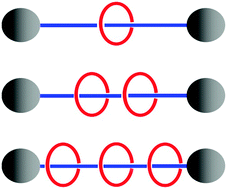
    While a relatively large number of [2]-rotaxanes, in which a ring is threaded by an axle, have been reported in the literature, [3]-rotaxanes (where two macrocyclic rings are able to move along the axis on which they are threaded in a controlled fashion) and [4]-rotaxanes (where 3 macrocycles are threaded on the axle) still prove a real synthetic challenge.

    In this NJC Letter, the group of J.-P. Sauvage (Strasbourg, France) provide insights on the successful preparation of multirotaxanes, and synthesize a [2]-, a [3]- and a [4]-rotaxane in the same reaction.


    …Interested?

  • Find out how, and read on the synthetic route envisioned by this leading group by accessing the full article now!

  • Article FREE to access until 20th June.

    Synthesis of [2]-, [3]-, and [4]rotaxanes whose axis contains two bidentate and two tridentate chelates, Jean-Paul Collin, Stéphanie Durot, Jean-Pierre Sauvage and Yann Trolez
    New J. Chem., 2011, Advance Article
    DOI: 10.1039/C1NJ20213H

    This article will be part of the themed issue of NJC honouring the life and work of Prof. Didier Astruc, on the occasion of his 65th birthday – Coming soon.

    Digg This
    Reddit This
    Stumble Now!
    Share on Facebook
    Bookmark this on Delicious
    Share on LinkedIn
    Bookmark this on Technorati
    Post on Twitter
    Google Buzz (aka. Google Reader)
  • Ureidocytosine modules for bis-functionalised polymeric assemblies

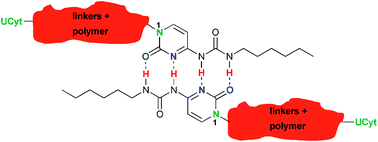
    In this NJC ‘Hot Article’, Prof. Helen Hailes and co-workers at University College London, UK, highlight the synthesis and self-assembly of a novel two donors (D) and two acceptors (A) (DDAA) quadruple-hydrogen bonded dimer. The newly disclosed system uses a ureidocytosine module, the advantage being that it can readily be functionalised at N-1 and N-9, enabling the introduction of alternative moieties such as polymers or fluorescent groups at different positions in the arrays.

  • Researchers in synthetic, supramolecular, materials chemistry … this article will be of interest to you!
    Why not read more and access the full text now, FREE to download until June 20th 2011.


    Quadruple hydrogen bonded cytosine modules: N-1 functionalised arrays, Valerie G. H. Lafitte, Abil E. Aliev, Elisabetta Greco, Kason Bala, Peter Golding and Helen C. Hailes
    New J. Chem., 2011, Advance Article
    DOI: 10.1039/C1NJ20162J

    Digg This
    Reddit This
    Stumble Now!
    Share on Facebook
    Bookmark this on Delicious
    Share on LinkedIn
    Bookmark this on Technorati
    Post on Twitter
    Google Buzz (aka. Google Reader)
  • Hot Article – Anion recognition: a new cleft for ATP sensing

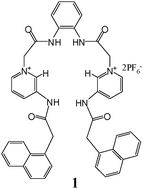
    Selective sensing of phosphates derivatives, including nucleotides and inorganic phosphates, is high on the targets list due to their pivotal role in biological systems. In this NJC paper, Kumaresh Ghosh et al. (University of Kalyani, India) have designed a simple pincer-like receptor that selectively recognises tetra- butylammonium dihydrogenphosphate in CH3CN over a series of other anions by exhibiting characteristic excimer emission in fluorescence. Also the simple receptor 1 fluoro- metrically distinguishes ATP from ADP and AMP in aqueous CH3CN.


    Interested? Why not read this ‘Hot Article’ now!
    It is FREE to access for a period of 4 weeks, upon a simple registration process.

    A new ortho-phenylenediamine-based cleft for selective sensing of H2PO4− and ATP, Kumaresh Ghosh and Indrajit Saha
    New J. Chem., 2011, Advance Article
    DOI: 10.1039/C1NJ20116F

    Digg This
    Reddit This
    Stumble Now!
    Share on Facebook
    Bookmark this on Delicious
    Share on LinkedIn
    Bookmark this on Technorati
    Post on Twitter
    Google Buzz (aka. Google Reader)

    Efficient synthesis of tricarbonyl-manganese complexes for the design of planar chiral ligands

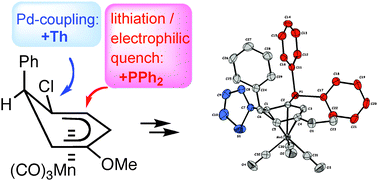
    Continuing on their pioneering studies, the Roses and co-workers show in this NJC Letter how phosphino and thienyl substituents are incorporated to (cyclohexadienyl)Mn(CO)3 systems, ultimately forming arenes or chiral cyclohexenones.
    ‘The new eta-5 complexes are particularly attractive, knowing that planar chiral ligands based on tricarbonyl-metal complexes are beginning to play important roles in enantioselective catalysis, with a “spectator” metal distinct from the catalytically active metal’, says Francoise Rose-Munch

    So far, most of the previous examples relied on a planar chiral (η6-arene)Cr(CO)3 scaffold and more scarcely on (η5-Cp)Mn(CO)3. The latter compounds containing a cyclopentadienyl platform are the only tricarbonylmanganese complexes used as catalysts and up to now, complexes such as (η5-cyclohexadienyl)Mn(CO)3 had never been employed for the design of planar chiral ligands.

    This NJC letter has been selected as a ‘Hot’, and will be of interest to organometallic chemists and the synthetic organic community alike, in the search of new routes to chiral systems.

    • Interested? Why not take a look at this NJC Letter and read the article now, FREE to access for a period of 4 weeks!
    • This article will be included in the NJC special issue in the Honour of Didier Astruc, on the occasion of his 65th birthday – Coming soon.

    Phosphino-substituted (η5-cyclohexadienyl)tricarbonylmanganese complexes: synthesis and structure
    Françoise Rose-Munch, Derya Cetiner, Murielle Chavarot-Kerlidou and Eric Rose
    New J. Chem., 2011, Advance Article
    DOI: 10.1039/C1NJ20152B, Letter

    Digg This
    Reddit This
    Stumble Now!
    Share on Facebook
    Bookmark this on Delicious
    Share on LinkedIn
    Bookmark this on Technorati
    Post on Twitter
    Google Buzz (aka. Google Reader)

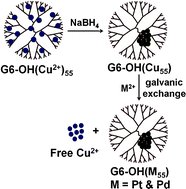
    Pt and Pd dendrimer-encapsulated nanoparticles prepared by galvanic exchange

    Crooks and co-workers (University of Texas, USA) report the synthesis and characterization of Pt and Pd dendrimer-encapsulated nanoparticles (DENs) using the method of galvanic exchange. In the presence of either PtCl42− or PdCl42−, the less noble Cu DENs oxidize to Cu2+ leaving behind an equal-sized DEN of Pt or Pd, respectively. This methodology is shown to be much faster and giving higher yields than using the common synthetic route i.e. direct reduction with BH4.Equally important, the detailed characterization presented demonstrates that the structure and composition of Pt and Pd DENs synthesized by direct BH4 reduction and galvanic exchange are indistinguishable.


    Interested to know more? Why not download and read the article today! It’s recently been published in NJC and will be FREE to access for a period of 4 weeks.

    Synthesis, characterization, and electrocatalysis using Pt and Pd dendrimer-encapsulated nanoparticles prepared by galvanic exchange
    Surojit Pande, Michael G. Weir, Brian A. Zaccheo and Richard M. Crooks
    New J. Chem., 2011, Advance Article DOI: 10.1039/C1NJ20083F, Paper.

    Digg This
    Reddit This
    Stumble Now!
    Share on Facebook
    Bookmark this on Delicious
    Share on LinkedIn
    Bookmark this on Technorati
    Post on Twitter
    Google Buzz (aka. Google Reader)