Archive for the ‘Emerging Investigator Series’ Category

Congratulations to our latest Emerging Investigator Verónica Mora Sanz

Nanoscale Horizons Emerging Investigator Series

Congratulations to our latest Emerging Investigator Dr Verónica Mora Sanz (Basque Research and Technology Alliance (BRTA), Spain)!

Since the launch of Nanoscale Horizons, the journal has had a clear vision to publish exceptionally high-quality work whilst acting as a resource to researchers working at all career levels. We continue to be impressed by the quality of the research published and at the same time are looking for new ways of recognising and promoting the outstanding authors behind articles published in the journal.

We launched our Emerging Investigator Series to showcase the exceptional work published by early-career researchers in the journal and regularly select a recently published Communication article to feature in an interview-style Editorial article with the corresponding author. We hope that the series will also benefit the nanoscience community by highlighting the exciting work being done by its early-career members.

We are excited to share our latest Emerging Investigator, Dr Verónica Mora Sanz (Basque Research and Technology Alliance (BRTA), Spain)!

Read our interview with Verónica here

Dr Verónica Mora Sanz holds a bachelor’s degree in chemistry from the University of Zaragoza (2015) and a master’s degree in nanostructured materials for nanotechnological applications from the same university (2016). Between 2016 and 2017, she worked as a junior researcher at the Institute of Nanoscience of Aragon (INA). In 2017, she began her PhD in applied chemistry and polymeric materials at the University of the Basque Country (UPV/EHU), under the supervision of Dr Valery Pavlov (CIC biomaGUNE) and Dr Nerea Briz (Tecnalia), obtaining the highest distinction, “summa cum laude”. Her doctoral research focused on the preparation of antibody atomic cluster conjugates and their application in bioanalytical assays. From this work, she obtained a patent, titled “Nanoclusters-antibodies conjugates and uses thereof”, as well as two first-author scientific publications. In 2020, she joined the Biomaterials Area of the Health Division at Tecnalia (San Sebastián), where she focused her research on the development of bioanalytical assays, including enzymatic reactions and immunoassays, and on the design of novel nanomaterials to enhance assay sensitivity. She also contributed to the development of lab-on-a-chip devices for in vitro diagnostics. In September 2025, she joined CIRCE (Research Centre for Energy Resources and Consumption) in Zaragoza, a technology centre dedicated to energy, sustainability, and digitalization, to begin a new stage in her professional career within the Funding and Technology Transfer Unit, supporting the development of European project proposals.

Congratulations to Verónica for her excellent work! You can read her featured Emerging Investigator article from Nanoscale Horizons below. 


Dot-blot immunoassay based on antibody-nanocluster biohybrids as tags for naked-eye detection

Verónica Mora-Sanz, Laura Saa, Valeri Pavlov, Aitziber L. Cortajarena, Bergoi Ibarlucea and Nerea Briz 

Nanoscale Horiz., 2025, 10, 1674-1683

DOI: D5NH00045A

We hope you enjoy reading our interview and featured article and are looking forward to sharing our future Emerging Investigators with you!

Do you publish innovative nanoscience and nanotechnology research? Submit your latest work to Nanoscale Horizons now. If you are eligible for the Emerging Investigators series, you could be considered to feature in one of our future interviews! Find out more about the eligibility criteria and the process in this editorial introducing the series.

Digg This
Reddit This
Stumble Now!
Share on Facebook
Bookmark this on Delicious
Share on LinkedIn
Bookmark this on Technorati
Post on Twitter
Google Buzz (aka. Google Reader)

Congratulations to our latest Emerging Investigator Fangfang Cao

Nanoscale Horizons Emerging Investigator Series

Congratulations to our latest Emerging Investigator Dr Fangfang Cao (Beihang University, China)!

Since the launch of Nanoscale Horizons, the journal has had a clear vision to publish exceptionally high-quality work whilst acting as a resource to researchers working at all career levels. We continue to be impressed by the quality of the research published and at the same time are looking for new ways of recognising and promoting the outstanding authors behind articles published in the journal.

We launched our Emerging Investigator Series to showcase the exceptional work published by early-career researchers in the journal and regularly select a recently published Communication article to feature in an interview-style Editorial article with the corresponding author. We hope that the series will also benefit the nanoscience community by highlighting the exciting work being done by its early-career members.

We are excited to share our latest Emerging Investigator, Dr Fangfang Cao (Beihang University, China)!

Read our interview with Fangfang here


Dr Fangfang Cao is a professor at the School of Engineering Medicine, Beihang University. She received her PhD in inorganic chemistry from Changchun Institute of Applied Chemistry, Chinese Academy of Sciences, in 2019 under the supervision of Prof. Jinsong Ren and Prof. Xiaogang Qu, and later conducted postdoctoral research at the National University of Singapore under the mentorship of Prof. Xiaoyuan Chen. Dr Cao’s research centres on cell and microbial therapies for translational medicine, as well as nanocatalytic medicine based on artificial enzymes, bioorthogonal and plasma catalysis, and piezoelectric materials. Her pioneering work on constructing “nanozyme-probiotic hybrids” to improve intestinal disease therapy led to her selection for the 2024 MIT Technology Review Innovators Under 35 China (TR35). She currently serves as a Community Board Member of Nanoscale Horizons.

Congratulations to Fangfang for her excellent work! You can read her featured Emerging Investigator article from Nanoscale Horizons below. 

MOF-derived nanozymes loaded with botanicals as multifunctional nanoantibiotics for synergistic treatment of intracellular antibiotic-resistant bacterial infection

Yaling Liu, Shuwen Sun, Chunyao Shang, Rongji Liu, Chenhao Zhang, Jing Yu, Kai Dong, Chen Xu and Fangfang Cao

Nanoscale Horiz., 2025, 10, 1377-1389

DOI: D5NH00137D

We hope you enjoy reading our interview and featured article and are looking forward to sharing our future Emerging Investigators with you!

Do you publish innovative nanoscience and nanotechnology research? Submit your latest work to Nanoscale Horizons now. If you are eligible for the Emerging Investigators series, you could be considered to feature in one of our future interviews! Find out more about the eligibility criteria and the process in this editorial introducing the series.

Digg This
Reddit This
Stumble Now!
Share on Facebook
Bookmark this on Delicious
Share on LinkedIn
Bookmark this on Technorati
Post on Twitter
Google Buzz (aka. Google Reader)

Congratulations to our latest Emerging Investigator Siwen Zhang

Nanoscale Horizons Emerging Investigator Series

Congratulations to our latest Emerging Investigator Dr Siwen Zhang (Liaoning University, China)!

Since the launch of Nanoscale Horizons, the journal has had a clear vision to publish exceptionally high-quality work whilst acting as a resource to researchers working at all career levels. We continue to be impressed by the quality of the research published and at the same time are looking for new ways of recognising and promoting the outstanding authors behind articles published in the journal.

We launched our Emerging Investigator Series to showcase the exceptional work published by early-career researchers in the journal and regularly select a recently published Communication article to feature in an interview-style Editorial article with the corresponding author. We hope that the series will also benefit the nanoscience community by highlighting the exciting work being done by its early-career members.

We are excited to share our latest Emerging Investigator, Dr Siwen Zhang  (Liaoning University, China)!

Read our interview with Siwen here

Dr Siwen Zhang has been engaged in research on electrochemical energy storage, including supercapacitors and aqueous batteries. To date, he has published over 60 SCI-indexed papers in the field of electrochemical energy storage. Among these, he has authored more than 30 SCI papers as first author or corresponding author in internationally renowned journals such as Advanced MaterialsAngewandte Chemie International EditionEnergy & Environmental ScienceAdvanced Functional MaterialsEnergy Storage MaterialsNano EnergyNano-Micro LettersJournal of Materials Chemistry A, and the Chemical Engineering Journal. His papers have been cited over 3000 times, with an H-index of 29. Additionally, four of his publications have been recognized as ESI Highly Cited Papers (top 1% worldwide), and one paper has been identified as an ESI Hot Paper (top 0.1% worldwide). He holds 5 authorized invention patents and has over 10 patent applications under review. In 2024, he was awarded the Second Prize of the Natural Science Academic Achievement Award of Shenyang City, among other honors. He has served as principal investigator or participant in more than 10 national and provincial-level projects. Additionally, he is a young editorial board member for six journals, including Battery Energy and Carbon Neutralization. He also acts as an independent reviewer for over 20 journals such as Nature CommunicationsAdvanced MaterialsAdvanced Energy MaterialsAdvanced Functional Materials, and InfoMat.

Congratulations to Siwen for his excellent work! You can read his featured Emerging Investigator article from Nanoscale Horizons below. 

PVP pre-intercalation engineering combined with the V4+/V5+ dual-valence modulation strategy for energy storage in aqueous zinc-ion batteries

Wenhui Mi, Bosi Yin, Haixi Gu, Hanyu Wen, Zhibiao Wang, Hui Li, Ziqian Yuan, Siwen Zhang and Tianyi Ma

Nanoscale Horiz., 2025, 10, 1365-1376

DOI: D5NH00236B

We hope you enjoy reading our interview and featured article and are looking forward to sharing our future Emerging Investigators with you!

Do you publish innovative nanoscience and nanotechnology research? Submit your latest work to Nanoscale Horizons now. If you are eligible for the Emerging Investigators series, you could be considered to feature in one of our future interviews! Find out more about the eligibility criteria and the process in this editorial introducing the series.

Digg This
Reddit This
Stumble Now!
Share on Facebook
Bookmark this on Delicious
Share on LinkedIn
Bookmark this on Technorati
Post on Twitter
Google Buzz (aka. Google Reader)

Nanoscale Horizons Emerging Investigators Series

Nanoscale Horizons Emerging Investigators Series

Explore the collection

Since the launch of Nanoscale Horizons, the journal has had a clear vision to publish exceptionally high-quality work whilst acting as a resource to researchers working at all career levels. We continue to be impressed by the quality of the research published and at the same time are looking for new ways of recognising and promoting the outstanding authors behind articles published in the journal.

The Nanoscale Horizons Emerging Investigators Series showcases early-career researchers who have published exceptional work in the journal. The Editorial Office and Editorial Board select outstanding Emerging Investigators who have published high-quality work from a pool of eligible authors, highlighting the researcher and their recently published work in an interview Editorial.

Discover our Emerging Investigators Series


Find a selection of featured Emerging Investigators and read their Nanoscale Horizons research below:

Dr Yuefei Wang, Tianjin University, China

 Read the Editorial Interview

Read the Emerging Investigator Series article:

Full-color peptide-based fluorescent nanomaterials assembled under the control of amino acid doping
Yuhe Shen, Yulin Sun, Yaoyu Liang, Xiaojian Xu, Rongxin Su, Yuefei Wang and Wei Qi
Nanoscale Horiz., 2025,10, 158-164


Dr Jiang Zhou, Central South University, Hunan, China

 Read the Editorial Interview

Read the Emerging Investigator Series article:

An ionically cross-linked composite hydrogel electrolyte based on natural biomacromolecules for sustainable zinc-ion batteries
Haoyang Ge, Liping Qin, Bingyao Zhang, Long Jiang, Yan Tang, Bingan Lu, Siyu Tian and Jiang Zhou
Nanoscale Horiz., 2024,9, 1514-1521


Dr Jovana Milić, University of Fribourg, Switzerland

 Read the Editorial interview

Read the Emerging Investigator Series article:

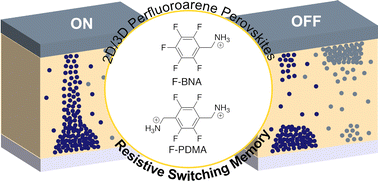
Resistive switching memories with enhanced durability enabled by mixed-dimensional perfluoroarene perovskite heterostructures
Michalis Loizos, Konstantinos Rogdakis, Weifan Luo, Paul Zimmermann, Alexander Hinderhofer, Jovan Lukić, Marinos Tountas, Frank Schreiber, Jovana V. Milić and Emmanuel Kymakis
Nanoscale Horiz., 2024,9, 1146-1154


Dr Leslie Schoop, Princeton University, USA

Read the Editorial interview

Read the Emerging Investigator Series article:

Chemical exfoliation of 1-dimensional antiferromagnetic nanoribbons from a non-van der Waals material
Mulan Yang, Guangming Cheng, Nitish Mathur, Ratnadwip Singha, Fang Yuan, Nan Yaob and Leslie M. Schoop
Nanoscale Horiz., 2024, 9, 479-486


Dr Mohammad Malakooti, University of Washington, USA

 Read the Editorial interview

Read the Emerging Investigators article:

Green synthesis of iron-doped graphene quantum dots: an efficient nanozyme for glucose sensing
Xinqi Li, Guanyou Lin, Lijun Zhou,   Octavia Prosser, Mohammad H. Malakooti and Miqin Zhang
Nanoscale Horiz., 2024,9, 976-989


Dr Kayoko Kobayashi, Kyoto University, Japan

Read the Editorial interview

Read the Emerging Investigators article:

Atomic-scale dents on cellulose nanofibers: the origin of diverse defects in sustainable fibrillar materials
Tomoki Ito, Kazuho Daicho, Shuji Fujisawa, Tsuguyuki Saito and Kayoko Kobayashi
Nanoscale Horiz., 2022,7, 1186-1191


We hope you have enjoyed finding out more about our Emerging Investigators. If you are an independent early-career researcher within 10 years of your PhD or within 5 years of your independent position, submit your best primary research to Nanoscale Horizons to be considered in the Emerging Investigator Series. More information about our eligibility and selection process can be found in this introductory editorial.

Nanoscale Horizons is a leading journal for the publication of exceptionally high-quality, innovative nanoscience and nanotechnology. The journal places an emphasis on work that demonstrates a novel concept or a breakthrough advance in nanoscience. Whatever your career stage, consider submitting your next quality work to Nanoscale Horizons. More information on our platform.


Digg This
Reddit This
Stumble Now!
Share on Facebook
Bookmark this on Delicious
Share on LinkedIn
Bookmark this on Technorati
Post on Twitter
Google Buzz (aka. Google Reader)

Nanoscale Horizons Emerging Investigator Series

Nanoscale Horizons Emerging Investigator Series

Congratulations to our latest Emerging Investigator Dr Jovana Milić, University of Fribourg, Switzerland!

Since the launch of Nanoscale Horizons, the journal has had a clear vision to publish exceptionally high-quality work whilst acting as a resource to researchers working at all career levels. We continue to be impressed by the quality of the research published and at the same time are looking for new ways of recognising and promoting the outstanding authors behind articles published in the journal.

We launched our Emerging Investigator Series to showcase the exceptional work published by early-career researchers in the journal and regularly select a recently published Communication article to feature in an interview-style Editorial article with the corresponding author. We hope that the series will also benefit the nanoscience community by highlighting the exciting work being done by its early-career members.

We are excited to share our latest Emerging Investigator, Dr Jovana Milić, University of Fribourg, Switzerland

photo of jovana milic, recent emerging investigator

Dr Jovana Milić has been an Associate Professor at the University of Turku in Finland since September 2024 (as an ERC Starting Grantee and the Research Council of Finland Fellow) and Group Leader at the Adolphe Merke Institute of the University of Fribourg in Switzerland (Swiss National Science Foundation PRIMA Fellow) since September 2020. Her research is centered around the development of smart and sustainable materials for renewable energy technologies, with a particular focus on photovoltaics. This has involved supramolecular strategies in stimuli-responsive framework materials through a multidisciplinary approach at the interface of chemistry, physics, material science, and engineering. She has been recognized by a number of honors and awards, such as the Journal of Materials Chemistry Lectureship 2024, Zeno Karl Schindler Prize 2021, Green Talent Award 2020, and CAS Future Leader 2019. In addition to research and international collaborations, she is invested in science for policy and diplomacy as a member of Swiss, European, and Global Young Academies, as well as the International Science Council Fellow, dedicated to connecting and supporting scientists globally.

Read our interview with Jovana here

Congratulations to Dr Dr Jovana Milić for her excellent work! You can read her featured Emerging Investigator article from Nanoscale Horizons below, which is free to access.

Resistive switching memories with enhanced durability enabled by mixed-dimensional perfluoroarene perovskite heterostructures


Nanoscale Horiz., 2024,9, 1146-1154; 10.1039/D4NH00104D

We hope you enjoy reading our interview and featured article and are looking forward to sharing our future Emerging Investigators with you!

Do you publish innovative nanoscience and nanotechnology research? Submit your latest work to Nanoscale Horizons now. If you are eligible for the Emerging Investigators series, you could be considered to feature in one of our future interviews! Find out more about the eligibility criteria and the process in this editorial introducing the series.


Digg This
Reddit This
Stumble Now!
Share on Facebook
Bookmark this on Delicious
Share on LinkedIn
Bookmark this on Technorati
Post on Twitter
Google Buzz (aka. Google Reader)

Emerging Investigator Series

Nanoscale Horizons Emerging Investigator Series

Congratulations to our latest Emerging Investigator Dr Mita Dasog, Dalhousie University, Canada!

Since the launch of Nanoscale Horizons, the journal has had a clear vision to publish exceptionally high-quality work whilst acting as a resource to researchers working at all career levels. We continue to be impressed by the quality of the research published and at the same time are looking for new ways of recognising and promoting the outstanding authors behind articles published in the journal.

We launched our Emerging Investigator Series to showcase the exceptional work published by early-career researchers in the journal and regularly select a recently published Communication article to feature in an interview-style Editorial article with the corresponding author. We hope that the series will also benefit the nanoscience community by highlighting the exciting work being done by its early-career members.

We are excited to share our latest Emerging Investigator, Dr Mita Dasog, Dalhousie University, Canada


A photo of Mita Dasog

Dr Mita Dasog (she/her), FRSC, is an Associate Professor and Izaak Walton Killam Memorial Research Chair in the Department of Chemistry at Dalhousie University. She obtained her bachelor’s degree in chemistry from the University of Saskatchewan, and then moved to the University of Alberta to begin her PhD studies with Professor Jonathan Veinot, where she focused on the syntheses, properties, and applications of silicon quantum dots. After a short stay at the Technical University of Munich as a Green Talents visiting scholar, Dr Dasog went on to hold an NSERC postdoctoral position with Professor Nathan Lewis at the California Institute of Technology, where she studied light–material interactions. Currently, her research group focuses on the development of photocatalysts, electrocatalysts, and refractory plasmonic nanostructures for water treatment and clean hydrogen production. She co-leads the Green Hydrogen Research Cluster at Dalhousie University and is an elected member of the Global Young Academy and the Royal Society of Canada College of New Scholars, Artists, and Scientists. Mita and her team’s contributions have been recognized with many awards and honors, including selection as a Fellow of the Royal Society of Chemistry and Negative Emissions Scialog Fellow, and recognition as a top Canadian Water Shero by the Office of the Chief Scientist to the Prime Minister of Canada.

Read our interview with Mita here

Congratulations to Dr Mita Dasog for her excellent work! You can read her featured Emerging Investigator article from Nanoscale Horizons below, which is free to access.

a graphical abstract image for the article

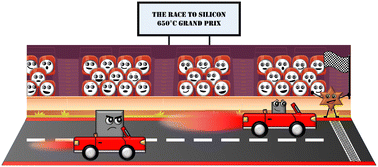
Unlocking the secrets of porous silicon formation: insights into magnesiothermic reduction mechanism using in situ powder X-ray diffraction studies

Sarah A. Martell, Maximilian Yan, Robert H. Coridan, Kevin H. Stone,  Siddharth V. Patwardhan, and Mita Dasog. Nanoscale Horiz., 2024,9, 1833-1842. DOI: 10.1039/D4NH00244J

We hope you enjoy reading our interview and featured article and are looking forward to sharing our future Emerging Investigators with you!

Do you publish innovative nanoscience and nanotechnology research? Submit your latest work to Nanoscale Horizons now. If you are eligible for the Emerging Investigators series, you could be considered to feature in one of our future interviews! Find out more about the eligibility criteria and the process in this editorial introducing the series.

Digg This
Reddit This
Stumble Now!
Share on Facebook
Bookmark this on Delicious
Share on LinkedIn
Bookmark this on Technorati
Post on Twitter
Google Buzz (aka. Google Reader)

Congratulations to our latest Emerging Investigator Mohammad H. Malakooti

Nanoscale Horizons Emerging Investigator Series

Congratulations to our latest Emerging Investigator Mohammad H. Malakooti  (University of Washington , Seattle)!

Since the launch of Nanoscale Horizons, the journal has had a clear vision to publish exceptionally high-quality work whilst acting as a resource to researchers working at all career levels. We continue to be impressed by the quality of the research published and at the same time are looking for new ways of recognising and promoting the outstanding authors behind articles published in the journal.

We launched our Emerging Investigator Series to showcase the exceptional work published by early-career researchers in the journal and regularly select a recently published Communication article to feature in an interview-style Editorial article with the corresponding author. We hope that the series will also benefit the nanoscience community by highlighting the exciting work being done by its early-career members.

We are excited to share our latest Emerging Investigator, Mohammad H. Malakooti  (University of Washington , Seattle) !


Dr. Mohammad H. Malakooti is an Assistant Professor of Mechanical Engineering at the University of Washington – Seattle. He leads the iMatter Lab, a research group dedicated to creating materials that match the extraordinary adaptability, rich multi-functionality, and embodied intelligence of natural material systems. He received his PhD at the University of Florida in 2015, had a Postdoctoral Fellowship at the University of Michigan (2015-2017), and was a Research Scientist at Carnegie Mellon University (2017-2019). 

Read our interview with Mohammad here

Congratulations to Dr. Mohammad H. Malakooti for his excellent work! You can read his featured Emerging Investigator article from Nanoscale Horizons below, which is free to access until the end of May 2024.

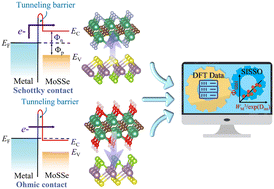
Graphical abstract image for Contact engineering for 2D Janus MoSSe/metal junctions.

Green synthesis of iron-doped graphene quantum dots: an efficient nanozyme for glucose sensing

Xinqi LiGuanyou LinLijun Zhou Octavia Prosser  Mohammad H. Malakooti, and Miqin Zhang
Nanoscale Horiz., 2024, DOI: 10.1039/D4NH00024B


We hope you enjoy reading our interview and featured article and are looking forward to sharing our future Emerging Investigators with you!

Do you publish innovative nanoscience and nanotechnology research? Submit your latest work to Nanoscale Horizons now. If you are eligible for the Emerging Investigators series, you could be considered to feature in one of our future interviews! Find out more about the eligibility criteria and the process in this editorial introducing the series.


Digg This
Reddit This
Stumble Now!
Share on Facebook
Bookmark this on Delicious
Share on LinkedIn
Bookmark this on Technorati
Post on Twitter
Google Buzz (aka. Google Reader)

Congratulations to our latest Emerging Investigator Dr Valentina Castagnola!

Nanoscale Horizons Emerging Investigator Series

Congratulations to our latest Emerging Investigator Dr Valentina Castagnola, Italian Institute of Technology, Italy !

Since the launch of Nanoscale Horizons, the journal has had a clear vision to publish exceptionally high-quality work whilst acting as a resource to researchers working at all career levels. We continue to be impressed by the quality of the research published and at the same time are looking for new ways of recognising and promoting the outstanding authors behind articles published in the journal.

We launched our Emerging Investigator Series to showcase the exceptional work published by early-career researchers in the journal and regularly select a recently published Communication article to feature in an interview-style Editorial article with the corresponding author. We hope that the series will also benefit the nanoscience community by highlighting the exciting work being done by its early-career members.

We are excited to share our latest Emerging Investigator, Dr Valentina Castagnola, Italian Institute of Technology, Italy

A photo of Dr Valentina Castagnola, the EMI winner
Dr Valentina Castagnola graduated with a Masters in Photochemistry and Molecular Materials, obtaining “cum laude” from the University of Bologna. In 2014, she earned a PhD in Micro and Nano Systems working at one of the laboratories of the National Center for Scientific Research (CNRS) in Toulouse, France. Her thesis focused on the development of soft implantable devices for recording neuronal signals and was awarded the best thesis prize by the GEETS (Génie Electrique, Electronique, Télécommunications et Santé) doctoral school. Then, she moved to Dublin to work at the “Center for Bionano Interactions” a Center of Excellence led by Prof. Kenneth Dawson and located at University College Dublin, Ireland. Here, she specialized in the study of interactions between different nanoscale materials and the human biological environment, to foster the development of new therapeutic solutions based on nanomedicine. She is currently a researcher at the Italian Institute of Technology (IIT) and at the IRCCS Ospedale Policlinico San Martino in Genoa, Italy, where she pursues her research based on the study of the blood–brain barrier and the development of biomimetic systems as an innovative therapeutic platform for neurodegenerative diseases. In 2020 she was awarded the prestigious “Roche for Research” award.

Read our interview with Valentina here

Congratulations to Dr Valentina Castagnola for her excellent work! You can read his featured Emerging Investigator article from Nanoscale Horizons below, which is free to access.

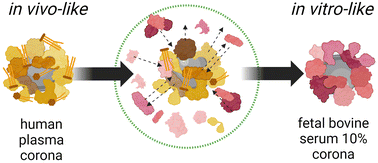
Sources of biases in the in vitro testing of nanomaterials: the role of the biomolecular corona

Valentina Castagnola,  Valeria Tomati,  Luca Boselli,  Clarissa Braccia,e Sergio Decherchi,  Pier Paolo Pompa, Nicoletta Pedemonte,  Fabio Benfenati  and Andrea Armirotti.
Nanoscale Horiz., 2024,9, 799-816; doi.org/10.1039/D3NH00510K

We hope you enjoy reading our interview and featured article and are looking forward to sharing our future Emerging Investigators with you!

Do you publish innovative nanoscience and nanotechnology research? Submit your latest work to Nanoscale Horizons now. If you are eligible for the Emerging Investigators series, you could be considered to feature in one of our future interviews! Find out more about the eligibility criteria and the process in this editorial introducing the series.


Digg This
Reddit This
Stumble Now!
Share on Facebook
Bookmark this on Delicious
Share on LinkedIn
Bookmark this on Technorati
Post on Twitter
Google Buzz (aka. Google Reader)

Congratulations to our Emerging Investigator, Pengzhan Sun

Nanoscale Horizons Emerging Investigator Series

Congratulations to our latest Emerging Investigator Pengzhan Sun, University of Macau, China!

Since the launch of Nanoscale Horizons, the journal has had a clear vision to publish exceptionally high-quality work whilst acting as a resource to researchers working at all career levels. We continue to be impressed by the quality of the research published and at the same time are looking for new ways of recognising and promoting the outstanding authors behind articles published in the journal.

We launched our Emerging Investigator Series to showcase the exceptional work published by early-career researchers in the journal and regularly select a recently published Communication article to feature in an interview-style Editorial article with the corresponding author. We hope that the series will also benefit the nanoscience community by highlighting the exciting work being done by its early-career members.

We are excited to share our latest Emerging Investigator, Pengzhan Sun, University of Macau, China !


Dr Pengzhan Sun is an assistant professor at the Institute of Applied Physics and Materials Engineering, University of Macau. He obtained his Bachelor’s degree in mechanical engineering and automation (2012) and PhD in materials science and engineering (2016), from Tsinghua University. From 2016 to 2022, he was a research associate working at the Department of Physics and Astronomy and National Graphene Institute (NGI) at the University of Manchester. His research interests include the fundamental understanding of molecular transport under confinement, the synthesis and processing of 2D crystals building blocks and their rationally designed assemblies for emerging technologies in the environment, energy, informatics, etc. He has published many papers as first/corresponding author in journals including NaturePNASNature CommunicationsScience AdvancesNanoscale Horizonsetc. Also, he has been awarded important prizes including the MIT Technology Review 35 Innovators Under 35 (China), Materials Research Society (MRS, USA) Graduate Student Award (Silver), NSFC Excellent Young Scientist Fund, etc. 

Read our interview with Pengzhan here

Congratulations to Dr. Pengzhan Sun for his excellent work! You can read his featured Emerging Investigator article from Nanoscale Horizons below, which is free to access.


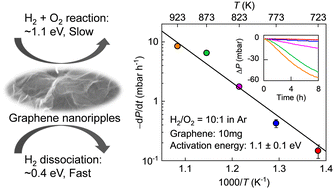
Catalytic selectivity of nanorippled graphene
Yu Liu,  Wenqi Xiong,  Achintya Bera,  Yu Ji,a Miao Yu,a Shi Chen,  Li Lin,  Shengjun Yuan  and Pengzhan Sun
Nanoscale Horiz., 2024, DOI: 10.1039/D3NH00462G

We hope you enjoy reading our interview and featured article and are looking forward to sharing our future Emerging Investigators with you!

Do you publish innovative nanoscience and nanotechnology research? Submit your latest work to Nanoscale Horizons now. If you are eligible for the Emerging Investigators series, you could be considered to feature in one of our future interviews! Find out more about the eligibility criteria and the process in this editorial introducing the series.


Digg This
Reddit This
Stumble Now!
Share on Facebook
Bookmark this on Delicious
Share on LinkedIn
Bookmark this on Technorati
Post on Twitter
Google Buzz (aka. Google Reader)

Nanoscale Horizons Emerging Investigator Series – Leslie Schoop

Nanoscale Horizons Emerging Investigator Series

Congratulations to our latest Emerging Investigator Dr Leslie Schoop (Princeton University, USA)!

Since the launch of Nanoscale Horizons, the journal has had a clear vision to publish exceptionally high-quality work whilst acting as a resource to researchers working at all career levels. We continue to be impressed by the quality of the research published and at the same time are looking for new ways of recognising and promoting the outstanding authors behind articles published in the journal.

We launched our Emerging Investigator Series to showcase the exceptional work published by early-career researchers in the journal and regularly select a recently published Communication article to feature in an interview-style Editorial article with the corresponding author. We hope that the series will also benefit the nanoscience community by highlighting the exciting work being done by its early-career members.

We are excited to share our latest Emerging Investigator, Dr Leslie Schoop (Princeton University, USA)!

Photo of Leslie Schoop.


Dr Leslie Schoop received her Diploma in Chemistry from Johannes Gutenberg University and PhD in Chemistry from Princeton University.  She then went on to work as a Minerva fast-track fellow under Professor Bettina Lotsch at the Max Planck Institute for Solid State Research. Leslie joined the Princeton University Department of Chemistry Faculty in 2017 and was tenured in 2022. The Schoop Lab is working at the interface of chemistry and physics, using chemical principles to find new materials with exotic physical properties.

Read our interview with Leslie here

Congratulations to Dr Leslie Schoop for her excellent work! You can read her featured Emerging Investigator article from Nanoscale Horizons below, which is fully open access and free to read.

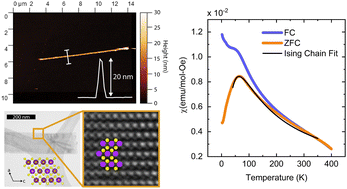
ALT text: Graphical abstract image for Chemical exfoliation of 1-dimensional antiferromagnetic nanoribbons from a non-van der Waals material.

Chemical exfoliation of 1-dimensional antiferromagnetic nanoribbons from a non-van der Waals material
Mulan Yang, Guangming Cheng, Nitish Mathur, Ratnadwip Singha, Fang Yuan, Nan Yao and Leslie M. Schoop
Nanoscale Horiz., 2024, DOI: 10.1039/D3NH00408B


We hope you enjoy reading our interview and featured article and are looking forward to sharing our future Emerging Investigators with you!

Do you publish innovative nanoscience and nanotechnology research? Submit your latest work to Nanoscale Horizons now. If you are eligible for the Emerging Investigators series, you could be considered to feature in one of our future interviews! Find out more about the eligibility criteria and the process in this editorial introducing the series.

Digg This
Reddit This
Stumble Now!
Share on Facebook
Bookmark this on Delicious
Share on LinkedIn
Bookmark this on Technorati
Post on Twitter
Google Buzz (aka. Google Reader)