


Mechanochemistry is one of the top emerging technologies in chemistry, and there is a lot of exciting research taking place in this field in China. Therefore, we are placing the spotlight on some leading researchers and recent publications in mechanochemistry in China.
 |
Guan-Wu Wang, University of Science and Technology of ChinaGuan-Wu Wang is a Chair Professor at the University of Science and Technology of China. He earned his B.S., M.S. and Ph.D. degrees from Lanzhou University in 1987, 1990, and 1993, respectively. He then did his postdoctoral work at Fudan University, Kyoto University, University of Kentucky, University of Chicago and Yale University. His research interests include mechanochemical organic synthesis and fullerene chemistry. He is an Editorial Board member for RSC Mechanochemistry. Discover some of his recent publications: |
| Unexpected and divergent mechanosynthesis of furanoid-bridged fullerene dimers C120O and C120O2 Gang Shao, Yuan-Yuan Liu, Chuang Niu, Zheng-Chun Yin, Shi-Qi Ye, Yang-Rong Yao, Miqing Chen, Jun-Shen Chen, Xu-Ling Xia, Shangfeng Yang and Guan-Wu Wang Chem. Sci. 2024, Advance ArticleMechanosynthesis of Fullerotetrahydroquinolines by Copper-Mediated sp3 C–H Functionalization of N,N-Dimethylanilines with [60]Fullerene Huan Yang, Shi-Qi Ye, Gang Shao, Jun-Shen Chen and Guan-Wu Wang Synlett 2023, 34, 2047-2051 |
|
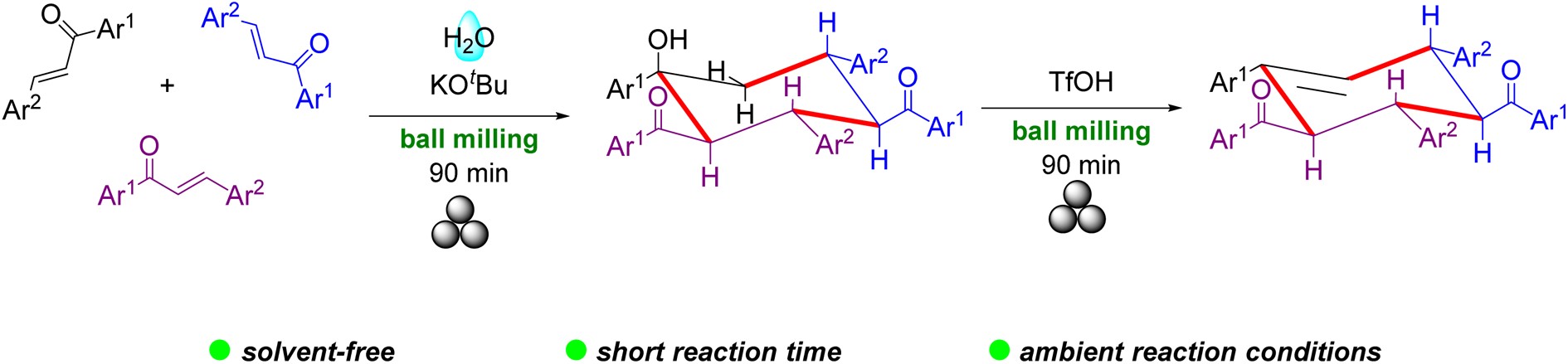
Base-mediated trimerization of enones under solvent-free and ball-milling conditionsGang Shao, Pinhua Li, Zheng-Chun Yin, Jun-Shen Chen, Xu-Ling Xia and Guan-Wu Wang RSC Mechanochem. 2024, 1, 162-166, DOI: 10.1039/D3MR00010A |
 |
Tianbao Ma, Tsinghua University, ChinaTianbao Ma is a professor at Tsinghua University, China. His group focuses on both experimental and theoretical studies on superlubricity of nanomaterials (graphene, MoS2, etc), which is of potential value for lubrication in micro-/nano-electromechanical systems. His interests include mechanism and realization of superlubricity of solids, frictional behaviors of nanomaterials, and micro-/nano-manufacturing. He is an Advisory Board member for RSC Mechanochemistry. Discover some of his recent publications. |
 |
| Revealing the low-temperature friction behavior and mechanisms of hydrogenated amorphous carbon films with Al/Cr/Si doping Quansheng Ma, Chengjun Huang, Wei Cai, Jiaxu Zhang, Weiqi Chen, Jie Jin, Yuan Xia, Yi Xu and Tianbao Ma Tribol. Int. 2024, 198, 109911Interfacial tribochemical kinetics: A new perspective on superlubricity of diamond-like carbon films Weiqi Chen and Tianbao Ma Sci. China Technol. Sci. 2024, 67, 2050-2052 |
|
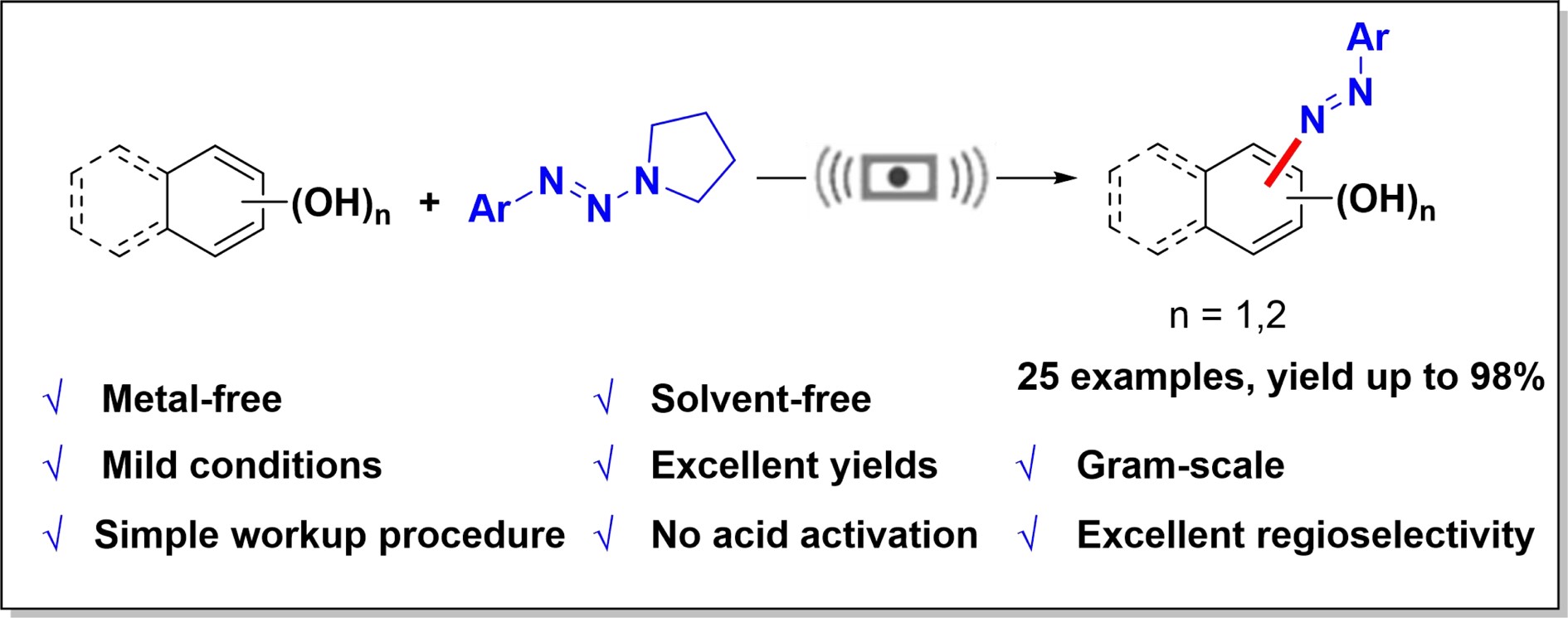 |
Solvent-free mechanochemical synthesis of azo dyesLin Zhang, Qinglang Song, Yanxian Wang, Rui Chen, Yu Xia, Bin Wang, Weiwei Jin, Shaofeng Wu, Ziren Chen, Azhar Iqbal, Chenjiang Liu and Yonghong Zhang RSC Mechanochem. 2024, Advance Article, DOI: 10.1039/D4MR00053F |
 |
Weike Su, Zhejiang University of Technology, ChinaWeike Su is a professor at Zhejiang University of Technology (ZJUT). He is the executive director of Key Laboratory for Green Pharmaceutical Technologies and Related Equipment of Ministry of Education, China. He received the State Technological Invention Award (China, 2007) and holds a distinguished Professorship at ZJUT (since 2018). His research interests are in green pharmaceutical technology, especially in process intensification technology and mechanochemistry. He is an Advisory Board member for RSC Mechanochemistry. Discover some of this recent publications: |
| Mechanochemical C−H Arylation and Alkylation of Indoles Using 3 d Transition Metal and Zero-Valent Magnesium Chongyang Wu, Jin Lv, Hangqian Fan, Weike Su, Xinjun Cai and Jingbo Yu Chem. Eur. J. 2024, 30, e202304231Mechanochemical aerobic oxidative Heck coupling by polymer-assisted grinding: cyclodextrin additive facilitating regioselectivity control Keyu Xiang, Haowen Shou, Chenhui Hu, Weike Su and Jingbo Yu Green Chem. 2024, 26, 5890-5899 |
|
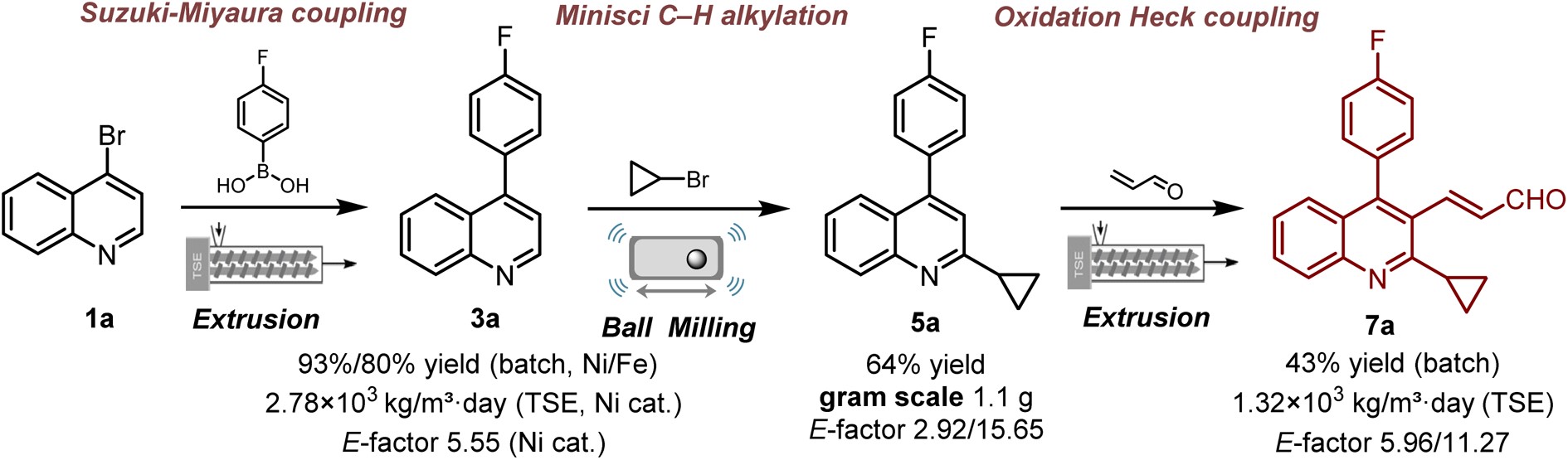
Total mechano-synthesis of 2-cyclopropyl-4-(4-fluorophenyl)quinoline-3-acrylaldehyde—a pivotal intermediate of pitavastatinJingbo Yu, Yanhua Zhang, Zehao Zheng and Weike Su RSC Mechanochem. 2024, Advance Article, DOI: 10.1039/D4MR00036F |
 |
 |
RSC Mechanochemistry offers you an inclusive and dedicated home for the ideas, scientific language and approaches that cut across the many disciplines mechanochemistry touches. Here we are seeking to build knowledge, as well as foster innovation and discovery at this forefront of chemistry. Whether you are seeking to understand the fundamentals of mechanochemistry, or you are excited by its applications and potential, this journal is for you.
|
 In my field of soft matter mechanochemistry, we have seen some pretty exciting progress thanks to the development of increasing numbers of synthetic molecules that respond to mechanical force in specific ways. Some key examples are mechanochromic, mechanofluorescent and mechanoluminescent reporters, as well as force-triggered release mechanisms through mechanochemical linkers, reactions kick-started by radicals or mechanocatalysts, mechanochemical switches, and, more recently, artificial catch bonds. What is really exciting is that more and more of these mechanoresponsive systems are working in water, which opens up a lot of possibilities for integrating them with biological systems.
 There is considerable evidence that mechanochemistry is often better than other synthetic methods, especially solution-based ones. Mechanochemistry uses mechanical force to drive chemical reactions, and it can be more efficient, resource-saving and environmentally friendly than traditional solutions.
 Mechanochemistry has always been a paradigm-shifting method for conducting chemical reactions. While we often celebrate groundbreaking ideas in hindsight, they are not always embraced immediately. Consider Galileo Galilei, who faced life imprisonment for endorsing Copernicus’ theory that the Earth orbits the sun. Similarly, Alfred Wegener encountered not just skepticism, but outright hostility for proposing the concept of continental drift, suggesting that continents were once connected and moved across the Earth. One of Wegener’s detractors stated “It is certain the Wegener’s theory was established with a superficial use of scientific methods, ignoring the various fields of geology.” He continued to state “We can only try to keep our distance and beg him not to deal with geology any longer…” Even Einstein’s view of quantum physics was not all that favorable, famously stating “God does not play dice with the Universe” and describing what we now call quantum entanglement as “spooky action at a distance”. These examples highlight not just a mere clash of ideas, but also the hostility directed towards the individuals advocating them.
 Mechanochemistry has the potential to revolutionise many industrial applications, such as energy, nanomaterials, and environmental remediation. By using mechanochemistry, our industry can potentially reduce their costs, waste, and environmental impact, while increasing their efficiency, quality, and innovation. Mechanochemistry can also enable the discovery of new compounds and mechanisms that are inaccessible by conventional methods.