

Mechanochemistry is an emerging area of chemistry that still presents many open questions. Although the use of mechanical force—such as grinding—to transform matter has been known since ancient times, its scientific foundations remain surprisingly underdeveloped. Despite a growing number of successful examples, enabling more sustainable syntheses or reactions that are not possible in solution, the field still lacks a clear and unified theoretical framework. This coexistence of practical success and conceptual openness suggests that the future development of mechanochemistry will depend not only on new experimental results, but also on fresh perspectives capable of rationalising, describing, and modelling mechanochemical reactivity.
Driven by my deep involvement in this field and by the increasing potential of mechanochemistry, I initiated a Mechanochemistry course at the University of Bologna with the aim of exposing students to this discipline early in their training. However, the absence of well-established fundamentals makes traditional teaching approaches inadequate. To convey both the state of the art and the wide range of applications, students were asked to critically read and discuss several recent research articles, focusing on experimental choices, underlying assumptions, and limitations, and to formulate questions that were then addressed directly to the authors. In doing so, students are introduced not only to mechanochemistry itself, but also to academic publishing as a living process, where scientific knowledge is constructed, debated, and refined through the literature.
This direct interaction with the authors provides students with a more immediate and informal connection to ongoing research, allowing them to grasp the everyday challenges encountered in the laboratory and the reasoning behind experimental decisions. Such an approach helps students navigate a rapidly evolving field while fostering a view of science as an active and collaborative process—one in which today’s students are tomorrow’s contributors.
After being exposed to mechanochemistry across different application areas, students were invited to select research articles from RSC Mechanochemistry based on their own curiosity and scientific interests. The following blog posts present their choices and perspectives, offering a student-driven view of the field. This series aims to build a bridge between education and academic publishing, highlighting how the next generation of researchers engages with mechanochemistry and why their voices are relevant to its future development.
Discover the selected articles in the RSC Mechanochemistry Students’ Choice collection.
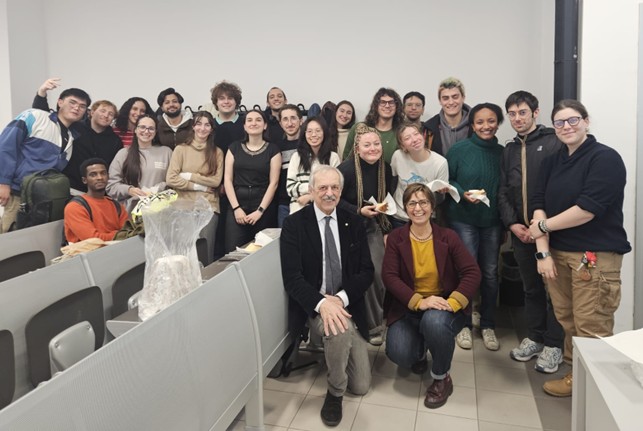
2026 Mechanochemistry course students at the University of Bologna. First row: Prof. Dario Braga and Prof. Lucia Maini.
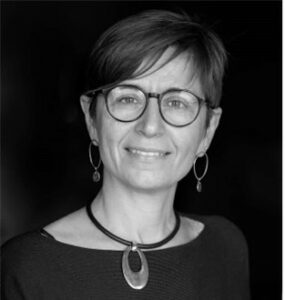 |
Lucia Maini is a Full Professor of Chemistry at the University of Bologna. Her research interests focus on polymorphism, crystal engineering, and molecular materials, with mechanochemistry representing a central methodological and conceptual pillar of her work. Beyond its role as a preferred synthetic approach in her research, mechanochemistry also connects her scientific interests with broader perspectives on the discipline. She has explored its historical roots in the history of chemistry, including contributions such as “What makes every work perfect is cooking and grinding”: the ancient roots of mechanochemistry” published in RSC Mechanochemistry (10.1039/D3MR00035D).
Alongside her research activity, she is deeply involved in teaching, with a strong interest in innovative educational methodologies. She has developed a Master’s-level course on mechanochemistry based on research-based learning, where students engage directly with contemporary literature and researchers. Her work reflects a commitment to integrating research, education, and historical perspective within modern chemical science. |
Submit to RSC Mechanochemistry today! We welcome you to submit your latest research in mechanochemistry to our journal! All content in this journal is gold open access and we are covering all publication costs until mid-2026. Check out our author guidelines for information on our article types or find out more about the advantages of publishing in a Royal Society of Chemistry journal.
Keep up to date with our latest HOT articles, Reviews, Collections & more by joining our group on LinkedIn and BlueSky. You can also keep informed by signing up to our E-Alerts.