
Author Archive

Students’ Choice: Photoluminescence evolution of functional silicon quantum dots assembled via a mechanochemical process

Advisory board member Lucia Maini and her mechanochemistry students at the University of Bologna have selected their favourite articles from RSC Mechanochemistry. The students’ perspectives on the articles and the field of mechanochemistry will be presented in a series of six blog posts. The fifth group of students will discuss:


Photoluminescence evolution of functional silicon quantum dots assembled via a sustainable mechanochemical process

Semiconductor quantum dots (QDs) are nanoscale particles that exhibit unique optical and electrical properties, making them highly valuable for applications in optoelectronics, photonics, and biomedical technologies. Silicon quantum dots (Si QDs) are especially promising because silicon is abundant, non-toxic, and biocompatible. However, producing Si QDs with well-controlled size and optical performance remains a major scientific challenge. Traditional fabrication methods are typically divided into “top-down” approaches, which break bulk materials into nanoparticles, and “bottom-up” approaches, which assemble nanoparticles from atomic building blocks. These conventional methods often involve high temperatures, hazardous chemicals, high energy consumption, and complex procedures, which limit their environmental sustainability and large-scale use.

The article presents a mechanochemical synthesis route as a greener and more sustainable alternative. This method uses mechanical energy to drive chemical reactions, reducing the need for extreme temperatures and toxic solvents. The motivation of the study was to develop a scalable, energy-efficient, and environmentally friendly process that still allows precise control over the optical properties of Si QDs, particularly their photoluminescence (light emission after excitation).

Key experiments focused on producing Si QDs under varying mechanical energy conditions and analyzing how their size and surface chemistry affected light emission. It demonstrates a clear link between quantum dot size, surface chemical structure, and photoluminescence behavior. Smaller Si QDs showed a higher density of surface organic groups, which increased efficient electron-hole recombination and strengthened light emission. Larger Si QDs, by contrast, exhibited more surface oxidation, shifting the dominant emission mechanism toward oxygen-related surface states.

This work addresses a central challenge in nanomaterials research by demonstrating a sustainable pathway to produce high-performance silicon quantum dots. The findings support potential real-life applications in energy-efficient lighting, optical sensing, and biomedical imaging, while promoting greener manufacturing approaches in advanced materials science.


What drew you to study Mechanochemistry initially, and what areas have you found most interesting?
We were initially drawn to the study of mechanochemistry because of its potential to contribute to a more sustainable and environmentally responsible approach to chemical synthesis, a theme that we consider essential as young scientists and researchers. Its ability to perform efficient reactions without high temperatures, large solvent volumes, or hazardous reagents aligns with our vision of greener chemistry. We are especially interested in its applications in developing photoluminescent nanomaterials, such as silicon quantum dots, where mechanical energy enables precise control of material properties for optoelectronics, photonics, and bioimaging. We are also fascinated by its role in pharmaceutical synthesis, as solvent-free methods can reduce environmental impact and support the development of new drug candidates, closely aligning with our interest in health-related research.

Why did you choose this article, did you find anything surprising?
We chose this article because it aligns with our interest in designing light-emitting nanomaterials, particularly silicon quantum dots with tunable photoluminescence for optoelectronic, photonic, and bioimaging applications. The use of mechanochemistry stood out as a sustainable method that enables precise control of particle size and surface chemistry while driving solid-state reactions.

A key finding is that the shift in emission from blue to red is not governed solely by particle size, but increasingly by surface oxidation and ligand coverage. The study also identifies a critical impact energy that triggers solid-state chemical reactions, including Si–H bond cleavage and radical formation, highlighting how mechanical energy directly controls both structure and optical properties.

Why is this article important, what gap in the literature does this research aim to fill?
This article is important because it introduces a green, ambient-condition method to produce photoluminescent silicon quantum dots, avoiding energy-intensive and hazardous traditional approaches. It uniquely links milling collision energy to nanocrystal formation and growth, providing a clear mechanistic framework. By combining experiments with simulations, the study offers a predictive model for controlling quantum dot size and surface chemistry, moving mechanochemistry beyond trial-and-error optimization.

Consider the real-world applications or implications of this article, what are the strengths and/or limitations of this article that may need to be explored further?
This study introduces a greener and simpler approach to synthesizing silicon quantum dots, reducing energy consumption, temperature, reaction time, and chemical use while maintaining efficiency, scalability, tunability, and high material quality. The work demonstrates that wavelength-tunable SiQDs can be produced through a sustainable, room-temperature mechanochemical process that serves as an alternative to conventional high-temperature routes. A key contribution is the clear correlation it establishes between milling energy and chemical transformations, using supra-critical impact analysis to elucidate bond cleavage, radical formation, and nanocrystal growth. It also highlights how particle size and surface chemistry together govern photoluminescence. Remaining challenges include limited control over oxidation and surface passivation, suggesting that more advanced functionalization or oxidation-suppression strategies could further improve performance. Despite these limitations, the potential real-world applications mirror those of SiQDs produced by traditional approaches.


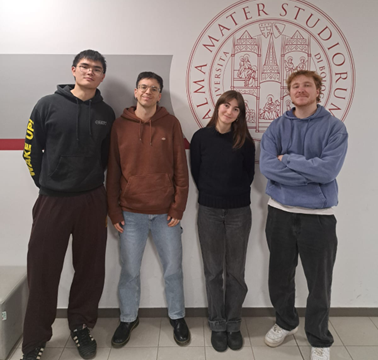
Laura Calderone, Luca Viaggi and Lucia Tornincasa

Laura, Luca, and Lucia are three Photochemistry and Molecular Materials students at the University of Bologna, united by a deep passion for photochemistry and a shared belief that science can improve society and enrich everyday life.

Laura hopes to contribute to scientific progress through impactful research and has a strong interest in innovative fields such as phototherapy. She balances her academic pursuits with cheering for her beloved Napoli football team and perfecting her pastry-making skills. Luca believes that chemistry is one of the most powerful tools we have, with applications that extend across nearly every field. When he’s not in the lab, you can often find him riding his bike or training for a marathon. Lucia has a deep interest in luminescent nanomaterials and nanomedicine. She has always believed that a chemist’s mission is to address human problems by assembling tiny molecular “building blocks” into something far greater-shaping matter to create meaningful impact.


Check out the article, published in RSC Mechanochemistry:

Photoluminescence evolution of functional silicon quantum dots assembled via a sustainable mechanochemical process

Yuping Xu, Yunzi Xin and Takashi Shirai

RSC Mechanochem., 2025, 2, 641-652


Discover all of the selected articles in the RSC Mechanochemistry Students’ Choice collection.

 

Are you ready to contribute to the future of mechanochemistry? RSC Mechanochemistry offers you an inclusive and dedicated home for the ideas, scientific language and approaches that cut across the many disciplines mechanochemistry touches. Here we are seeking to build knowledge, as well as foster innovation and discovery at this forefront of chemistry. Whether you are seeking to understand the fundamentals of mechanochemistry, or you are excited by its applications and potential, this journal is for you. All of the content in this journal is gold open access, which means that you can read every article for free, and we are covering all publication costs until mid-2026.

Students’ Choice: Solvent-free mechanochemical conversion of CO2 into mesoporous SiC

Advisory board member Lucia Maini and her mechanochemistry students at the University of Bologna have selected their favourite articles from RSC Mechanochemistry. The students’ perspectives on the articles and the field of mechanochemistry will be presented in a series of six blog posts. The fourth group of students will discuss:


Solvent-free mechanochemical conversion of CO2 into mesoporous SiC: a green route to high-performance catalysts

This article introduces a new solvent-free mechanochemical synthesis, in line with the principles of green chemistry, to produce mesoporous silicon carbide (SiC), using CO2 as a sustainable carbon feedstock and SiO2/Mg as earth-abundant precursors.

SiC is a fundamental material for catalytic, electronic, and structural applications. It is typically commercially produced by the energy-consuming Acheson process, which involves a long direct carbothermic reaction of quartz sand and petroleum with low commercial yields working at extremely high temperatures (2200–2400 °C). In the approach introduced by the considered work, a mixture of nano-SiO2 particles and Mg (used as a reductant) is initially converted to Mg2Si, a highly reactive intermediate, via ball milling. The strong interaction between Mg2Si and CO2 activates the subsequent transformation of Mg2Si into mesoporous SiC. This new route achieves a high CO2 conversion efficiency of 84% at only 10% of the energy cost of conventional methods.

The obtained mesoporous SiC has been validated as a highly stable and thermally conductive support for Ni catalysts in dry reforming of methane (DRM), able to convert the two most significant greenhouse gases, CH4 and CO2, into industrially valuable syngas H2 and CO, all while maintaining performance over 100 hours with minimal coke formation.

The work explores the process with multiple characterization techniques and approaches via high-resolution transmission electron microscopy (HR-TEM), scanning electron microscopy (SEM), X-ray diffraction (XRD), N2-adsorption and desorption isotherms, thermogravimetric analysis (TGA), Brunauer-Emmett-Teller (BET) analysis and plasma-optical emission spectrometry. On top of this, density functional theory (DFT) calculations were run on the energetics of CO2 binding and dissociation on the surface of Mg2Si nanoparticles, confirming that the activation of CO2 is thermodynamically driven.

In summary, this work introduces a green, scalable route to synthesize, through self-activated solid-gas reaction, high-value SiC. The overall process integrates CO2 utilization and catalyst development while obtaining value-added products, all according to the principles of green chemistry.


What drew you to study Mechanochemistry initially, and what areas have you found most interesting?
What initially drew us to mechanochemistry was its role as a new frontier in inorganic, and more broadly synthetic, chemistry; it offers an innovative way to address long-standing challenges in traditional solution-based methods. Furthermore, its ability to reduce or eliminate solvents, operate at lower temperatures, and decrease both energetic and economic costs, makes it highly aligned with the principles of green chemistry. We are particularly fascinated by how mechanochemical approaches can yield products that are normally unobtainable via conventional routes (as an example, in this work they have been able to obtain β-SiC rather than the α-SiC product of the solution-based method). Since the field is still developing, it offers substantial room for advancing both fundamental understanding and practical applications.

Why did you choose this article, did you find anything surprising?
This article is particularly interesting to us because it brings together sustainability, high efficiency, and real industrial potential. What is noteworthy, in our view, is that the reaction proceeds adiabatically, i.e. without any external energy input; a fundamental consequence is that it leads to a remarkable reduction in energy costs compared to previous methods, while staying fully aligned with green-chemistry principles. We were also largely impressed by the study performed on different forms of reactants, including those derived from biomasses, resulting in a versatile reaction. Moreover, the activation of inert CO2 was another unexpected outcome, showing how powerful and adaptable this mechanochemical approach can be. Finally, the effective performance of the SiC produced by this method as a support for Ni catalysts highlighted not only the study’s innovative nature but also its practical relevance in catalytic applications.

Why is this article important, what gap in the literature does this research aim to fill?
In our perspective, the importance of the considered article lies in the provision of a truly sustainable and potentially scalable alternative to the energy-intensive Acheson process, which exhibits high power consumption, low carbon efficiency, and poor control over SiC morphology. This research fills this gap by introducing an adiabatic mechanochemical route that achieves much higher conversion of CO2 (84%) while using only about 10% of the energy normally required, even with higher control on the product morphology.

The present study also addresses the problem of CO2 overabundance by its conversion into more valuable products: in this context, the presented method has both environmental and practical relevance, since CO2 sequestration is spatially limited in the locations where the process can occur. The work also fills a key need in catalyst development: the mesoporous SiC produced shows excellent stability; furthermore, Ni catalyst supported on SiC displays very low coke deposition, solving one of the major issues in dry methane reforming catalysis.

Consider the real-world applications or implications of this article, what are the strengths and/or limitations of this article that may need to be explored further?
This article demonstrates solid potential for practical applications, but several issues need further study before industrial use. The process is labeled as scalable, yet all tests were done on gram-scale batches in a 500-cc mill: therefore, up to now, a major challenge remains to adapt the method to continuous, ton-scale production and control of fast adiabatic reactions safely. The required acid-base leaching step also raises questions about cost, efficiency, and liquid-waste management at large scale.

Maintaining high conversion over a larger scale will also demand further optimization of solid-gas contact, including CO2 pressure and milling-chamber design. Furthermore, although the Ni/SiC catalyst performs well for 100 hours, true industrial deployment requires much longer stability tests (up to thousands of hours). To conclude, the concept is strong, but large-scale engineering is an essential next step for long-term validation.


Elia Zoffoli, Martina Casalini, Cristina Bagnacavalli and Gian Maria Selleri

Behind this blog post, there are four different “photochemists-to-be”: Cristina, Martina, Gian Maria and Elia. Cristina is a music addicted archer with the dream of pursuing a career in theoretical chemistry. Martina loves to be in the wild doing sports and in her free time she happens to be a brilliant chemist. Gian Maria not only loves physical chemistry but he’s also a student in the conservatoire of our city. Last but not least, Elia is an adventurer that knows how to orientate in every place he goes, and with no doubt in the future will be our boss. We know it may seem like a chaotic biography, but we also know that entropy is actually a state of mind.


Check out the article, published in RSC Mechanochemistry:

Solvent-free mechanochemical conversion of CO2 into mesoporous SiC: a green route to high-performance catalysts

Hae In Lee, Myung Won Seo, Dong Hyun Kim, Hyuk Choi, Ju Hyeok Lee, Mi Yoo, Min-Jae Kim, Yong-Sik Ok, Siddheshwar Dadarao Raut, Dong Hyun Lee, Hyun You Kim, Kyubock Lee and Won-Chul Cho

RSC Mechanochem., 2026, 3, 76-82


Discover all of the selected articles in the RSC Mechanochemistry Students’ Choice collection.


Are you ready to contribute to the future of mechanochemistry? RSC Mechanochemistry offers you an inclusive and dedicated home for the ideas, scientific language and approaches that cut across the many disciplines mechanochemistry touches. Here we are seeking to build knowledge, as well as foster innovation and discovery at this forefront of chemistry. Whether you are seeking to understand the fundamentals of mechanochemistry, or you are excited by its applications and potential, this journal is for you. All of the content in this journal is gold open access, which means that you can read every article for free, and we are covering all publication costs until mid-2026.

Students’ Choice: Catalyst evolution and reusability in the direct mechanocatalytic Sonogashira reaction


Advisory board member Lucia Maini and her mechanochemistry students at the University of Bologna have selected their favourite articles from RSC Mechanochemistry. The students’ perspectives on the articles and the field of mechanochemistry will be presented in a series of six blog posts. The third group of students will discuss:

Scratching beneath the surface: catalyst evolution and reusability in the direct mechanocatalytic Sonogashira reaction


This article describes a solvent-free mechanochemical strategy for performing a Sonogashira cross-coupling, a reaction that is traditionally carried out in solution and widely employed for the formation of C(sp²)–C(sp) bonds. The study focuses on substituting pre-assembled palladium–ligand complexes, whose synthesis requires additional steps, controlled atmospheres, and high cost, with catalytic species generated directly from bulk metals under ball-milling conditions. Because the Sonogashira reaction relies on both palladium and copper, the authors explore if the copper vial itself, when exposed to palladium powder and ligands during milling, can become the catalyst through palladium embedding.

In the experimental setup, the aryl halide and terminal alkyne were milled in a copper vial together with palladium powder and triphenylphosphine, which served to form the active Pd complex in situ. The milling apparatus was equipped with a thermocouple, allowing precise control of the reaction temperature, that is essential for reproducibility under mechanochemical conditions. After several reaction cycles, the authors observed that the coupling proceeded even without adding fresh palladium powder. To assess this evidence, they performed the same reaction in a newly machined copper vial; in this case only unreacted starting materials were recovered, confirming that catalytic activity depended on palladium that had become embedded into the original vial surface.

With this phenomenon established, the authors conducted substrate screening using a variety of terminal alkynes and aryl halides. Good to excellent yields were obtained for many coupling partners, highlighting the versatility of the mechanochemical protocol. Finally, scanning electron microscopy (SEM) and energy dispersive X-ray spectroscopy (EDS) analyses were performed to investigate the modified vial surface. This revealed that palladium was incorporated into the copper, but in discrete and localized regions rather than as a uniform coating. This observation sheds light on catalyst evolution during mechanochemical processing.

Overall, the study demonstrates that catalytic activity can emerge directly from metal surfaces under milling conditions, offering a sustainable and simplified alternative to conventional solution-phase catalysis.


What drew you to study Mechanochemistry initially, and what areas have you found most interesting?
We wanted to study mechanochemistry because it is a fresh and new approach to synthetic strategies that were considered unimprovable. Since now the challenge is not only the efficiency, but also the sustainability; research on mechanochemical approaches has become crucial and something we should be able to dig into.

Why did you choose this article, did you find anything surprising?
We have chosen this article because of our interest in organic chemistry, and our enthusiasm for mechanochemistry, as outlined above. This paper represents an unusual approach to a common reaction that is important in industry (for example in the field of semiconductors) and it is surprising because we are used to considering the Sonogashira reaction only in solution.

Why is this article important, what gap in the literature does this research aim to fill?
This article is important because it takes up the challenge of decreasing the environmental impact of a common organic chemistry reaction, decreasing the amount of catalyst and trying to avoid the use of solvents. It opens up the possibility of also applying this approach to other reactions that require more than one catalyst, so also the scaling up aspect would be favourable.

Consider the real-world applications or implications of this article, what are the strengths and/or limitations of this article that may need to be explored further?
The scaling up is surely a challenge, and the usage of this technique on an industrial scale should be investigated to see if it can be profitable on a higher scale. Also, the protocol and the approach should be optimized for other substrates, since it has been shown that the reaction did not always achieve good yields. Another thing that can be done is to investigate a way to make the coating of the palladium more uniform, avoiding the separation between embedding areas that probably leads to a lowering of the overall yield.


Thomas Jia Hao Hu, Jacopo Suozzi, Marta Innocenzi and Giacomo Marchignoni

Thomas, Jacopo, Marta  and Giacomo are students in the Master’s program in Photochemistry and Molecular Materials. They share a passion for chemistry in all of its different nuances, putting together different branches: computational chemistry, photochemistry and unfortunately even organic chemistry. Jacopo aims to contribute in making chemistry greener and to help other people while doing this. Giacomo, on the other hand, would like to contribute to the world of medicine through chemistry, potentially by developing new drugs and biosensors. Thomas is hoping to develop methodologies and catalytic processes while chasing his passion for chemistry. Marta aims to research the depth of photochemistry to achieve more sustainable and cheaper ways of living, keeping in mind the unicity of each territory.


Check out the article, published in RSC Mechanochemistry:

Scratching beneath the surface: catalyst evolution and reusability in the direct mechanocatalytic Sonogashira reaction

Sheeniza Shah, Mennatullah M. Mokhtar, Thinh Tran, Kathleen Floyd, Lizette Mella, Tim Dao, Alexandria Garza, James Batteas and James Mack

RSC Mechanochem., 2026, 3, 46-55


Discover all of the selected articles in the RSC Mechanochemistry Students’ Choice collection.


Are you ready to contribute to the future of mechanochemistry? RSC Mechanochemistry offers you an inclusive and dedicated home for the ideas, scientific language and approaches that cut across the many disciplines mechanochemistry touches. Here we are seeking to build knowledge, as well as foster innovation and discovery at this forefront of chemistry. Whether you are seeking to understand the fundamentals of mechanochemistry, or you are excited by its applications and potential, this journal is for you. All of the content in this journal is gold open access, which means that you can read every article for free, and we are covering all publication costs until mid-2026.

Students’ Choice: Green mechanochemical fabrication of graphite-lanthanide oxide nanocomposites


Advisory board member Lucia Maini and her mechanochemistry students at the University of Bologna have selected their favourite articles from RSC Mechanochemistry. The students’ perspectives on the articles and the field of mechanochemistry will be presented in a series of six blog posts. The second group of students will discuss:

Green mechanochemical fabrication of graphite-lanthanide oxide nanocomposites


In recent years, research into graphite derivatives such as graphene has seen significant developments, as well as novel applications in everyday life. Among the various derivatives that can be obtained, graphite oxide is one of the least known to the public, unlike compounds such as graphene, but this does not make it any less important. On the contrary, uses have been found for these compounds in the field of electronics (as insulators or conductors), in catalysis, in the biomedical sector, and even in the environmental field.

While graphite oxide (and graphene) has many applications, its intercalated counterpart has even more fields of use, given the very high potential of compounds with metals, which, through a synergistic process, generate new compounds with unprecedented properties not found in the non-intercalated oxide alone. This article focuses mainly on intercalates with lanthanide oxides: these, already analysed and studied by the same research group, have been used over the last decade for the manufacture of nanocomposites for supercapacitors, nano-sensors for targeted tumour imaging, detection of bacterial spores, and as catalysts for hydrogen evolution and oxygen reduction. The group focused on improving the efficiency of the synthesis of these compounds, continuing as in the previous study with a mechanochemical approach (ball milling), which is significantly ‘greener’ than traditional methods in solution that require the use of toxic solvents and reagents or could lead to hazardous waste. The research yielded excellent results in terms of synthesis, as numerous analyses showed that compounds with excellent structural properties and characteristics were obtained, such as excellent dispersion of metal nanoparticles on the surface and limited formation of amorphous structures. Broad characterization was obtained from which various properties of the compounds could be derived, such as surface functionalization (which may allow studies in the catalytic field). Given their low toxicity, they could also be used in the biomedical field, certainly not for their antibacterial properties (given their low bactericidal capacity, except for some compounds and dosages) but as biosensors or for drug delivery.


What drew you to study Mechanochemistry initially, and what areas have you found most interesting?
The discovery of mechanochemistry happened by chance: while researching syntheses that led to luminescent compounds, this type of synthesis was encountered. From there, interest in the subject grew, revealing, among other things, how it was possible to obtain compounds that could not be obtained with a more traditional approach (in solution), such as polymorphs of the same chemical compound.

Why did you choose this article, did you find anything surprising?
There is often a particular fascination with more ‘exotic’ chemistry, such as elements and compounds that are rarely covered in academia. In this case, the article focused on the study of lanthanide intercalates in graphite oxide, a type of compound that is not particularly covered in lectures. This prompted a desire to explore the topic further.

Why is this article important, what gap in the literature does this research aim to fill?
This article is important as it contributes to the ongoing study and synthesis of lanthanide intercalates in graphite oxide, originally initiated by the same research group, by improving synthesis techniques and expanding the characterisation of the compounds obtained. It also establishes the foundations for the study of these compounds in the biomedical field.

Consider the real-world applications or implications of this article, what are the strengths and/or limitations of this article that may need to be explored further?
This study presents a mechanochemical, economic and ecological approach to the synthesis of graphite oxide–lanthanide nanocomposites in which no hazardous solvents are used, and no toxic products are formed. Currently, the limitations of the study relate to the lack of data on the electrical properties of the compound, as well as the need for additional toxicity testing using other cell cultures.


Luca Ragno, Wael M. Ragheb, Jawad Sattar and Alfusainey Jallow

Luca Ragno is a student enrolled in the master’s degree programme in Industrial Chemistry at the University of Bologna. He is dedicated to the study of inorganic and organometallic chemistry, with a particular focus on the properties of the solid state.

Wael M. Ragheb is a master’s student in Photochemistry and Molecular Materials at the University of Bologna. Passionate about scientific research, he strives to contribute to the development of renewable energy and advanced materials.

Jawad Sattar is a master’s student enrolled in Photochemistry and Molecular Materials at the University of Bologna. He is passionate about material innovation and processes. His academic journey is driven by a commitment to advancing sustainable technologies.

Alfusainey Jallow is currently pursuing his master’s degree in Photochemistry, driven by a strong passion for sustainable and eco-friendly scientific innovation. During his bachelor’s studies, he developed a keen interest in Green and Sustainable Chemistry, which inspired him to explore environmentally conscious research pathways. As part of his academic journey, he completed an internship project titled “Study of a new Alternative Binder from Waste of the Steel Industry,” where he focused on converting industrial waste into valuable resources. This experience strengthened his commitment to sustainability and continues to motivate his pursuit of advanced studies in photochemical applications for a greener future.


Check out the article, published in RSC Mechanochemistry:

Green mechanochemical fabrication of graphite-lanthanide oxide nanocomposites

Danilo Marchetti, Enrico Dalcanale, Roberta Pinalli, Mauro Gemmi, Alessandro Pedrini and Chiara Massera

Diego A. Acevedo-Guzmán, Brian Monroy-Torres, Petra Rudolf, Vladimir A. Basiuk and Elena V. Basiuk

RSC Mechanochem., 2025, 2, 443-458


Discover all of the selected articles in the RSC Mechanochemistry Students’ Choice collection.


Are you ready to contribute to the future of mechanochemistry? RSC Mechanochemistry offers you an inclusive and dedicated home for the ideas, scientific language and approaches that cut across the many disciplines mechanochemistry touches. Here we are seeking to build knowledge, as well as foster innovation and discovery at this forefront of chemistry. Whether you are seeking to understand the fundamentals of mechanochemistry, or you are excited by its applications and potential, this journal is for you. All of the content in this journal is gold open access, which means that you can read every article for free, and we are covering all publication costs until mid-2026.

Students’ Choice: Fluorination of mechanochemically synthesized MOFs for PFAS adsorption


Advisory board member Lucia Maini and her mechanochemistry students at the University of Bologna have selected their favourite articles from RSC Mechanochemistry. The students’ perspectives on the articles and the field of mechanochemistry will be presented in a series of six blog posts. The first group of students will discuss:

Fluorination of mechanochemically synthesized metal–organic frameworks for PFAS adsorption in water


The article considers combining the noticeable adsorbing properties of metal–organic frameworks (MOFs) with fluorine functionalization to address environmental remediation concerns. It explores the possibility of employing fluorine-decorated MOFs, and it compares their properties with the non-fluorinated counterpart, as a novel anti-pollution tool to trap per- and polyfluoroalkyl substance (PFAS) polluted waters, since they lead to severe health issues due to their high toxicity and persistence.

TPP-mCPW(Ph) and TPP-mCPW(p-FPh) MOFs were mechanochemically synthesized, obtaining diamond-like structures that showed optimal stability in aqueous media. The structures have been assessed with PXRD measurements while the outcome of PFAS adsorption has been confirmed through 19F-NMR. The fluorinated TPP-mCPW(p-FPh) MOF has been demonstrated to have an open pore structure able to rearrange to a closed pore structure upon exposure to heating, solvents and specific guest molecules, while the non-fluorinated counterpart only partially interconverts between the two structures. This feature has been exploited to trap NaPFO molecules in the void channels of the fluorinated MOF, which engages in halogen bonding and F-F interactions that stabilize adsorption of the guest molecule, showing greater efficiency than its TPP-mCPW(Ph) counterpart.

Continuous research on these versatile and tunable MOFs can lead to innovations in many fields, such as gas storage and catalysis. In particular, this research could pave the way to sustainable, fast and effective decontamination motions, guaranteeing little-to-no waste throughout the production of the MOFs and improving water quality, which is one of the major concerns the scientific community is being called to face to date.


What drew you to study Mechanochemistry initially, and what areas have you found most interesting?
Initially mechanochemistry was just an excuse to spend more time together, but after a few lectures we found out how fascinating it is. We think it is a particularly interesting field of chemistry because it is strikingly changing the approach to materials synthesis, thanks to its sustainable and green nature, which are important aspects for future chemists like us.

Why did you choose this article, did you find anything surprising?
The initial reason that draw us to this article is the fact that it combines hot topics of the most recent scientific research, such as MOFs, which recently won the Nobel Prize for Chemistry in 2025, mechanochemical synthetic pathways, and land pollution issues. The biggest surprise in this article is how this article offers a new perspective on PFAS decontamination with a simple, fast and performative solution.

Why is this article important, what gap in the literature does this research aim to fill?
When the pollution subject is discussed, usually, we hear only about CO2 emissions and greenhouse gas emissions, but the water pollution is a topic that is not as broadly tackled. This article serves to bring more attention to this topic, discussing other aspects, like water pollution, which are as important. The experiments carried out in this research provide a feasible and efficient option for water anti-pollution actions that could restore ecosystems and improve human health, protecting it from this class of contaminants.

Consider the real-world applications or implications of this article, what are the strengths and/or limitations of this article that may need to be explored further?
In the article it is reported that there is a necessity to further investigate the role of fluorine in the sequestration of PFAS in MOFs, and this mechanistic point can be further explored. It could be interesting, in the future, to tailor MOFs that can perform more than one function at the same time, for example providing a combined solution for catalysis and PFAS absorption, or other joint possibilities.


Eya Arfaoui, Mary Goffe and Chiara Pasolini

Discussion of this article was carried out by three students who are currently in the second year of a Master’s Degree in Photochemistry and Molecular Materials at the University of Bologna. Their names are Eya Arfaoui, Mary Goffe and Chiara Pasolini. Not only are they a trio in this work, but also in life, they support each other through their academic and personal lives. Eya was born in Trento, she has Tunisian origins, and she is a big fan of organic and physical chemistry, novels and chit-chats in front of a hot cup of tea. She graduated in October 2024 in Industrial Chemistry. Mary was born in Bologna, she has Ethiopian origins, and she is interested in computational photochemistry, yoga and international relations. She graduated in Industrial Chemistry in July 2024. Chiara was born in Brescia, she has a deep but tormented love for electrochemistry and in day-to-day life she splits herself between chemistry, yoga, books and beers with friends.


Check out the article, published in RSC Mechanochemistry:

Fluorination of mechanochemically synthesized metal–organic frameworks for PFAS adsorption in water 

Danilo Marchetti, Enrico Dalcanale, Roberta Pinalli, Mauro Gemmi, Alessandro Pedrini and Chiara Massera

RSC Mechanochem., 2025, 2, 662-669


Discover all of the selected articles in the RSC Mechanochemistry Students’ Choice collection.


Are you ready to contribute to the future of mechanochemistry? RSC Mechanochemistry offers you an inclusive and dedicated home for the ideas, scientific language and approaches that cut across the many disciplines mechanochemistry touches. Here we are seeking to build knowledge, as well as foster innovation and discovery at this forefront of chemistry. Whether you are seeking to understand the fundamentals of mechanochemistry, or you are excited by its applications and potential, this journal is for you. All of the content in this journal is gold open access, which means that you can read every article for free, and we are covering all publication costs until mid-2026.

Lucia Maini introduces the Students’ Choice collection


Mechanochemistry is an emerging area of chemistry that still presents many open questions. Although the use of mechanical force—such as grinding—to transform matter has been known since ancient times, its scientific foundations remain surprisingly underdeveloped. Despite a growing number of successful examples, enabling more sustainable syntheses or reactions that are not possible in solution, the field still lacks a clear and unified theoretical framework. This coexistence of practical success and conceptual openness suggests that the future development of mechanochemistry will depend not only on new experimental results, but also on fresh perspectives capable of rationalising, describing, and modelling mechanochemical reactivity.

Driven by my deep involvement in this field and by the increasing potential of mechanochemistry, I initiated a Mechanochemistry course at the University of Bologna with the aim of exposing students to this discipline early in their training. However, the absence of well-established fundamentals makes traditional teaching approaches inadequate. To convey both the state of the art and the wide range of applications, students were asked to critically read and discuss several recent research articles, focusing on experimental choices, underlying assumptions, and limitations, and to formulate questions that were then addressed directly to the authors. In doing so, students are introduced not only to mechanochemistry itself, but also to academic publishing as a living process, where scientific knowledge is constructed, debated, and refined through the literature.

This direct interaction with the authors provides students with a more immediate and informal connection to ongoing research, allowing them to grasp the everyday challenges encountered in the laboratory and the reasoning behind experimental decisions. Such an approach helps students navigate a rapidly evolving field while fostering a view of science as an active and collaborative process—one in which today’s students are tomorrow’s contributors.

After being exposed to mechanochemistry across different application areas, students were invited to select research articles from RSC Mechanochemistry based on their own curiosity and scientific interests. The following blog posts present their choices and perspectives, offering a student-driven view of the field. This series aims to build a bridge between education and academic publishing, highlighting how the next generation of researchers engages with mechanochemistry and why their voices are relevant to its future development.


Discover the selected articles in the RSC Mechanochemistry Students’ Choice collection.


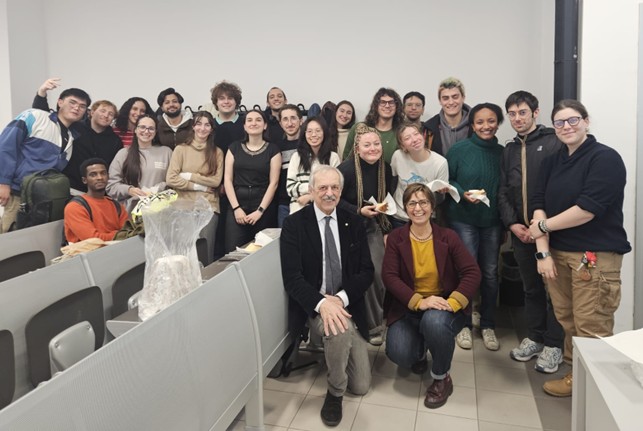
2026 Mechanochemistry course students at the University of Bologna. First row: Prof. Dario Braga and Prof. Lucia Maini.


Lucia Maini is a Full Professor of Chemistry at the University of Bologna. Her research interests focus on polymorphism, crystal engineering, and molecular materials, with mechanochemistry representing a central methodological and conceptual pillar of her work. Beyond its role as a preferred synthetic approach in her research, mechanochemistry also connects her scientific interests with broader perspectives on the discipline. She has explored its historical roots in the history of chemistry, including contributions such as “What makes every work perfect is cooking and grinding”: the ancient roots of mechanochemistry” published in RSC Mechanochemistry (10.1039/D3MR00035D).

Alongside her research activity, she is deeply involved in teaching, with a strong interest in innovative educational methodologies. She has developed a Master’s-level course on mechanochemistry based on research-based learning, where students engage directly with contemporary literature and researchers. Her work reflects a commitment to integrating research, education, and historical perspective within modern chemical science.


Submit to RSC Mechanochemistry today! We welcome you to submit your latest research in mechanochemistry to our journal! All content in this journal is gold open access and we are covering all publication costs until mid-2026. Check out our author guidelines for information on our article types or find out more about the advantages of publishing in a Royal Society of Chemistry journal.

Keep up to date with our latest HOT articles, Reviews, Collections & more by joining our group on LinkedIn and BlueSky. You can also keep informed by signing up to our E-Alerts.