Students’ Choice: Fluorination of mechanochemically synthesized MOFs for PFAS adsorption


Advisory board member Lucia Maini and her mechanochemistry students at the University of Bologna have selected their favourite articles from RSC Mechanochemistry. The students’ perspectives on the articles and the field of mechanochemistry will be presented in a series of six blog posts. The first group of students will discuss:

Fluorination of mechanochemically synthesized metal–organic frameworks for PFAS adsorption in water


The article considers combining the noticeable adsorbing properties of metal–organic frameworks (MOFs) with fluorine functionalization to address environmental remediation concerns. It explores the possibility of employing fluorine-decorated MOFs, and it compares their properties with the non-fluorinated counterpart, as a novel anti-pollution tool to trap per- and polyfluoroalkyl substance (PFAS) polluted waters, since they lead to severe health issues due to their high toxicity and persistence.

TPP-mCPW(Ph) and TPP-mCPW(p-FPh) MOFs were mechanochemically synthesized, obtaining diamond-like structures that showed optimal stability in aqueous media. The structures have been assessed with PXRD measurements while the outcome of PFAS adsorption has been confirmed through 19F-NMR. The fluorinated TPP-mCPW(p-FPh) MOF has been demonstrated to have an open pore structure able to rearrange to a closed pore structure upon exposure to heating, solvents and specific guest molecules, while the non-fluorinated counterpart only partially interconverts between the two structures. This feature has been exploited to trap NaPFO molecules in the void channels of the fluorinated MOF, which engages in halogen bonding and F-F interactions that stabilize adsorption of the guest molecule, showing greater efficiency than its TPP-mCPW(Ph) counterpart.

Continuous research on these versatile and tunable MOFs can lead to innovations in many fields, such as gas storage and catalysis. In particular, this research could pave the way to sustainable, fast and effective decontamination motions, guaranteeing little-to-no waste throughout the production of the MOFs and improving water quality, which is one of the major concerns the scientific community is being called to face to date.


What drew you to study Mechanochemistry initially, and what areas have you found most interesting?
Initially mechanochemistry was just an excuse to spend more time together, but after a few lectures we found out how fascinating it is. We think it is a particularly interesting field of chemistry because it is strikingly changing the approach to materials synthesis, thanks to its sustainable and green nature, which are important aspects for future chemists like us.

Why did you choose this article, did you find anything surprising?
The initial reason that draw us to this article is the fact that it combines hot topics of the most recent scientific research, such as MOFs, which recently won the Nobel Prize for Chemistry in 2025, mechanochemical synthetic pathways, and land pollution issues. The biggest surprise in this article is how this article offers a new perspective on PFAS decontamination with a simple, fast and performative solution.

Why is this article important, what gap in the literature does this research aim to fill?
When the pollution subject is discussed, usually, we hear only about CO2 emissions and greenhouse gas emissions, but the water pollution is a topic that is not as broadly tackled. This article serves to bring more attention to this topic, discussing other aspects, like water pollution, which are as important. The experiments carried out in this research provide a feasible and efficient option for water anti-pollution actions that could restore ecosystems and improve human health, protecting it from this class of contaminants.

Consider the real-world applications or implications of this article, what are the strengths and/or limitations of this article that may need to be explored further?
In the article it is reported that there is a necessity to further investigate the role of fluorine in the sequestration of PFAS in MOFs, and this mechanistic point can be further explored. It could be interesting, in the future, to tailor MOFs that can perform more than one function at the same time, for example providing a combined solution for catalysis and PFAS absorption, or other joint possibilities.


Eya Arfaoui, Mary Goffe and Chiara Pasolini

Discussion of this article was carried out by three students who are currently in the second year of a Master’s Degree in Photochemistry and Molecular Materials at the University of Bologna. Their names are Eya Arfaoui, Mary Goffe and Chiara Pasolini. Not only are they a trio in this work, but also in life, they support each other through their academic and personal lives. Eya was born in Trento, she has Tunisian origins, and she is a big fan of organic and physical chemistry, novels and chit-chats in front of a hot cup of tea. She graduated in October 2024 in Industrial Chemistry. Mary was born in Bologna, she has Ethiopian origins, and she is interested in computational photochemistry, yoga and international relations. She graduated in Industrial Chemistry in July 2024. Chiara was born in Brescia, she has a deep but tormented love for electrochemistry and in day-to-day life she splits herself between chemistry, yoga, books and beers with friends.


Check out the article, published in RSC Mechanochemistry:

Fluorination of mechanochemically synthesized metal–organic frameworks for PFAS adsorption in water 

Danilo Marchetti, Enrico Dalcanale, Roberta Pinalli, Mauro Gemmi, Alessandro Pedrini and Chiara Massera

RSC Mechanochem., 2025, 2, 662-669


Discover all of the selected articles in the RSC Mechanochemistry Students’ Choice collection.
 

Are you ready to contribute to the future of mechanochemistry? RSC Mechanochemistry offers you an inclusive and dedicated home for the ideas, scientific language and approaches that cut across the many disciplines mechanochemistry touches. Here we are seeking to build knowledge, as well as foster innovation and discovery at this forefront of chemistry. Whether you are seeking to understand the fundamentals of mechanochemistry, or you are excited by its applications and potential, this journal is for you. All of the content in this journal is gold open access, which means that you can read every article for free, and we are covering all publication costs until mid-2026.

Lucia Maini introduces the Students’ Choice collection


Mechanochemistry is an emerging area of chemistry that still presents many open questions. Although the use of mechanical force—such as grinding—to transform matter has been known since ancient times, its scientific foundations remain surprisingly underdeveloped. Despite a growing number of successful examples, enabling more sustainable syntheses or reactions that are not possible in solution, the field still lacks a clear and unified theoretical framework. This coexistence of practical success and conceptual openness suggests that the future development of mechanochemistry will depend not only on new experimental results, but also on fresh perspectives capable of rationalising, describing, and modelling mechanochemical reactivity.

Driven by my deep involvement in this field and by the increasing potential of mechanochemistry, I initiated a Mechanochemistry course at the University of Bologna with the aim of exposing students to this discipline early in their training. However, the absence of well-established fundamentals makes traditional teaching approaches inadequate. To convey both the state of the art and the wide range of applications, students were asked to critically read and discuss several recent research articles, focusing on experimental choices, underlying assumptions, and limitations, and to formulate questions that were then addressed directly to the authors. In doing so, students are introduced not only to mechanochemistry itself, but also to academic publishing as a living process, where scientific knowledge is constructed, debated, and refined through the literature.

This direct interaction with the authors provides students with a more immediate and informal connection to ongoing research, allowing them to grasp the everyday challenges encountered in the laboratory and the reasoning behind experimental decisions. Such an approach helps students navigate a rapidly evolving field while fostering a view of science as an active and collaborative process—one in which today’s students are tomorrow’s contributors.

After being exposed to mechanochemistry across different application areas, students were invited to select research articles from RSC Mechanochemistry based on their own curiosity and scientific interests. The following blog posts present their choices and perspectives, offering a student-driven view of the field. This series aims to build a bridge between education and academic publishing, highlighting how the next generation of researchers engages with mechanochemistry and why their voices are relevant to its future development.


Discover the selected articles in the RSC Mechanochemistry Students’ Choice collection.


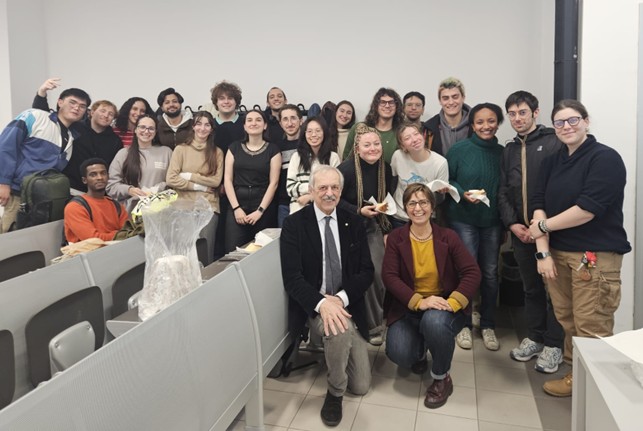
2026 Mechanochemistry course students at the University of Bologna. First row: Prof. Dario Braga and Prof. Lucia Maini.


Lucia Maini is a Full Professor of Chemistry at the University of Bologna. Her research interests focus on polymorphism, crystal engineering, and molecular materials, with mechanochemistry representing a central methodological and conceptual pillar of her work. Beyond its role as a preferred synthetic approach in her research, mechanochemistry also connects her scientific interests with broader perspectives on the discipline. She has explored its historical roots in the history of chemistry, including contributions such as “What makes every work perfect is cooking and grinding”: the ancient roots of mechanochemistry” published in RSC Mechanochemistry (10.1039/D3MR00035D).

Alongside her research activity, she is deeply involved in teaching, with a strong interest in innovative educational methodologies. She has developed a Master’s-level course on mechanochemistry based on research-based learning, where students engage directly with contemporary literature and researchers. Her work reflects a commitment to integrating research, education, and historical perspective within modern chemical science.


Submit to RSC Mechanochemistry today! We welcome you to submit your latest research in mechanochemistry to our journal! All content in this journal is gold open access and we are covering all publication costs until mid-2026. Check out our author guidelines for information on our article types or find out more about the advantages of publishing in a Royal Society of Chemistry journal.

Keep up to date with our latest HOT articles, Reviews, Collections & more by joining our group on LinkedIn and BlueSky. You can also keep informed by signing up to our E-Alerts.

Editor’s pick collection – Evelina Colacino

RSC Mechanochemistry is delighted to share with you this Editor’s pick collection, selected by Associate Editor Evelina Colacino (University of Montpellier). Our Editor’s pick series showcases exciting research published in the journal, handpicked by our Associate Editors and Editorial Board members. This month we have a selection of recent articles chosen by Evelina Colacino.


Evelina’s main research activities concern the development of eco-friendly mechanochemical processes for the preparation of value-added compounds for the industry, with a focus on active pharmaceutical ingredients

‘The selected articles cover a diversity of transformations occurring under mechanical stress, confirming the broad spectrum of its applications in organic/polymer/medicinal chemistry or crystal engineering. This collection demonstrates:
  • Deconstruction of polymers to access oligomeric glycans, as valuable alternative to sugars, diarylacetonitrile radicals were generated for applications in luminescent materials.
  • Preparation of three-component polymorphic systems and a key intermediate of an Active Pharmaceutical ingredient.
  • Implementation of well assessed reactions in solution, such as nucleophilic aromatic substitutions or diazotization, within mechanochemical devices.’

We hope you enjoy reading this collection!


Check out this selection of articles that feature in Evelina’s Editor’s Pick

Graphical abstract: A method to predict binary eutectic mixtures for mechanochemical syntheses and cocrystallizations

A method to predict binary eutectic mixtures for mechanochemical syntheses and cocrystallizations

Michele Prencipe, Paolo P. Mazzeo and Alessia Bacchi

RSC Mechanochem., 2025,2, 61-71

DOI: 10.1039/D4MR00080C

Graphical abstract: Mechanochemical kilogram-scale synthesis of rac-ibuprofen:nicotinamide co-crystals using a drum mill

Mechanochemical kilogram-scale synthesis of rac-ibuprofen:nicotinamide co-crystals using a drum mill

Jan-Hendrik Schöbel, Frederik Winkelmann, Joel Bicker and Michael Felderhoff
RSC Mechanochem.
, 2025,2, 224-229

DOI: 10.1039/D4MR00096J

Direct arylation of gem-difluorostyrenes using in situ mechanochemically generated calcium-based heavy Grignard reagents

Xihong Wang, Yamato Fukuzawa, Pan Gao, Julong Jiang, Satoshi Maeda, Koji Kubota and  Hajime Ito

RSC Mechanochem., 2025,2, 256-262

DOI: 10.1039/D4MR00135D

Graphical abstract: Solvent-free mechanochemical synthesis of azo dyes

Solvent-free mechanochemical synthesis of azo dyes

Lin Zhang, Qinglang Song, Yanxian Wang,  Rui Chen, Yu Xia, Bin Wang, Weiwei Jin, Shaofeng Wu, Ziren Chen, Azhar Iqbal, Chenjiang Liu and Yonghong Zhang
RSC Mechanochem.
, 2024,1, 447-451

DOI: 10.1039/D4MR00053F


Discover some of Evelina’s research published in RSC journals:

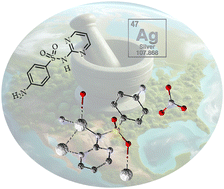
Graphical abstract: Modulating the crystalline forms of silver–sulfadiazine complexes by mechanochemistry

Modulating the crystalline forms of silver–sulfadiazine complexes by mechanochemistry

Daniela R. Ferreira, Anaïs Portet, Paula C. Alves, Patrícia Rijo, Clara S. B. Gomes, M. Teresa Duarte, Ivan Halasz, Evelina Colacino, Franziska Emmerling and Vânia André

CrystEngComm, 2025, Advance Article

DOI: 10.1039/D5CE00572H


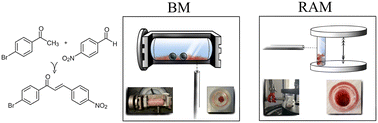
Graphical abstract: In situ Raman spectroscopy for comparing ball milling and resonant acoustic mixing in organic mechanosynthesis

In situ Raman spectroscopy for comparing ball milling and resonant acoustic mixing in organic mechanosynthesis

Leonarda Vugrin, Christos Chatzigiannis, Evelina Colacino and Ivan Halasz

RSC Mechanochem., 2025,2, 482-487

DOI: 10.1039/D5MR00016E


Graphical abstract: Chemoselectivity switch by mechanochemistry in the base-catalysed dione-acylation

Chemoselectivity switch by mechanochemistry in the base-catalysed dione-acylation        

Sally Nijem, Alexander Kaushansky, Svetlana Pucovski, Elisa Ivry, Evelina Colacino, Ivan Halasz and Charles E. Diesendruck

RSC Mechanochem., 2025,2, 419-425

DOI: 10.1039/D4MR00141A


Submit to our journal

We welcome you to submit your latest research in mechanochemistry. Article Processing Charges (APCs) are currently waived for RSC Mechanochemistry, so you can publish your article Gold Open Access without any cost to you as the author.

Submit your manuscript

Read our publications

Follow us on social media


For any questions do not hesitate to contact us at RSCMechanochem-RSC@rsc.org

Keep up to date with the latest journal news, collections and more by following us on LinkedIn and BlueSky, or by signing up to our E-Alerts.


New Advisory Board Member – Dr Matej Baláž

We are thrilled to introduce you to our newest RSC Mechanochemistry Advisory Board Member, Dr Matej Baláž, Institute of Geotechnics, Slovak Academy of Sciences, Slovakia.

Read our interview with Dr Baláž below;

•  What made you want to become involved with the journal?

I am working in the field of mechanochemistry during my whole academic career (since 2011) and it has always been the cornerstone in my work. Therefore, it is of utmost pleasure to be involved with the journal devoted to this topic.

  • What do you envision to be the benefits of publishing in the journal?

Going through the articles published in RSC Mechanochemistry provides an up-to-date information on recent advancements in the field. Publishing our own research here brings about the sense of community-being. Moreover, since the journal is Open Access for now, the details of unique mechanochemical studies are available to anyone.

  • Why should researchers choose to submit to the journal?

If the newcomers to the field manage to publish their work in RSC Mechanochemistry, it will be read by already established readership of experienced mechanochemists and new collaborations can be thus fostered in the future. Thus, the community can further grow in this way.


Read some of Dr Baláž’s recent research:

Lavender-mediated solvent-free biomechanochemical synthesis of antibacterially active Ag/AgCl nanoparticles using a Taguchi design
Zdenka Bedlovičová, Patrik Siksa, Mária Kováčová, Radovan Bureš, Ľudmila Tkáčiková, Róbert Džunda, Imelda Octa Tampubolon, Ľudmila Balážová & Matej Baláž*
Adv. Nat. Sci: Nanosci. Nanotechnol. 16, 015018

Enhanced photocatalytic activity of mechanically synthesized GdFe1−xCrxO3
Kairat Kenges*, Zhandos Orazov, Matej Baláž & Ekaterina Tugova
Inorganic Chemistry Communications, 2025, 173, 113803

Coupling mechanisms of plasmon resonance and Bi3+ emission in YAG: Bi, Ce, Yb epitaxial films at low temperatures
Markiyan Kushlyk, Yaroslav Shpotyuk*, Volodymyr Tsiumra, Yaroslav Zhydachevskyy, Lev-Ivan Bulyk, Volodymyr Haiduchok, Ihor Syvorotka, Dmytro Sugak, Matej Baláž & Andrzej Suchocki
Sci Rep., 2025, 15, 1477

Submit to RSC Mechanochemistry today! We welcome you to submit your latest research in mechanochemistry to our journal! All content in this journal is gold open access and we are covering all publication costs until mid-2026. Check out our author guidelines for information on our article types or find out more about the advantages of publishing in a Royal Society of Chemistry journal.

Keep up to date with our latest HOT articles, Reviews, Collections & more by joining our group on LinkedIn and BlueSky. You can also keep informed by signing up to our E-Alerts.


Meet our new Advisory Board Member – Professor Roman Boulatov


We are thrilled to introduce you to our new RSC Mechanochemistry Advisory Board Member, Professor Roman Boulatov. Professor Boulatov is a Professor the University of Liverpool, UK

We asked Professor Boulatov why researchers should submit to RSC Mechanochemistry, who gave the following response;

‘By setting the highest standards for rigor and innovation, RSC Mechanochemistry is creating a dedicated forum for this exciting and growing field. It provides both an attractive venue to publish foundational research and a means unite the global community of mechanochemists’

Read some of Professor Boulatov’s recent research:

Strain-dependent enantioselectivity in mechanochemically coupled catalytic hydrogenation
Xujun Zheng, Chun-Yu Chiou, Robert T. O’Neill, Chenghao Duan, Yichen Yu, Jack Malek, Nelson A. Rivera Jr, Roman Boulatov*, Stephen L. Craig* & Ross A. Widenhoefer*
Nat. Synth., 2025, 4, 1319–1328

Autonomic Self-Healing of Polymers: Mechanisms, Applications, and Challenges
Chenxu Wang & Roman Boulatov*
Molecules 2025, 30(3), 469

Mechanochemical Approaches to Fundamental Studies in Soft-Matter Physics
Robert T. O’Neill & Roman Boulatov*
Angew. Chem. Int. Ed. 2023, 63, e202402442

Productive chemistry induced by mechanochemically generated macroradicals
Chenxu Wang*, Cai-Li Sun & Roman Boulatov*
Chem. Commun., 2024,60, 10629-10641

Submit to RSC Mechanochemistry today! We welcome you to submit your latest research in mechanochemistry to our journal! All content in this journal is gold open access and we are covering all publication costs until mid-2026. Check out our author guidelines for information on our article types or find out more about the advantages of publishing in a Royal Society of Chemistry journal.

Keep up to date with our latest HOT articles, Reviews, Collections & more by joining our group on LinkedIn and BlueSky. You can also keep informed by signing up to our E-Alerts.


Meet our new Advisory Board Member, Professor Judith A. Harrison


We are delighted to introduce you to our new RSC Mechanochemistry Advisory Board Member, Professor Judith A. Harrison.

Professor Harrison is presently a Professor of Chemistry at the United States Naval Academy, Annapolis MD USA.


Read some of Professor Harrison’s recent research:

Degradable polyacetals and polyacetal/polycyclooctene Co-polymers from a novel dioxepin
Andrew Mazza, Brian H. Morrow, Judith A. Harrison & Julia Pribyl*
Polym. Chem., 2025,16, 4136-4143

Effects of –H and –OH Termination on Adhesion of Si–Si Contacts Examined Using Molecular Dynamics and Density Functional Theory
J. David Schall, Brian H. Morrow, Robert W. Carpick & Judith A. Harrison*
Langmuir, 2024, 40, 9, 4601–4614

Interfacial Properties of Linear Alkane/Nitrogen Binary Mixtures: Molecular Dynamics Vapor–Liquid Equilibrium Simulations
Brian H. Morrow & Judith A. Harrison*
J. Phys. Chem. B, 2022, 126, 23, 4379–4388

Molecular Dynamics Examination of Sliding History-Dependent Adhesion in Si–Si Nanocontacts: Connecting Friction, Wear, Bond Formation, and Interfacial Adhesion
J. David Schall, Zachary B. Milne, Robert W. Carpick & Judith A. Harrison*
Tribol Lett., 2021, 69, 52

Thermophysical Properties of Two-Component Mixtures of n-Nonylbenzene or 1,3,5-Triisopropylbenzene with n-Hexadecane or n-Dodecane at 0.1 MPa: Experimentally Measured Densities, Viscosities, and Speeds of Sound and Molecular Packing Modeled Using Molecular Dynamics Simulations
Dianne J. Luning Prak*, Judith A. Harrison & Brian H. Morrow
J. Chem. Eng. Data, 2021, 66, 3, 1442–1456

Submit to RSC Mechanochemistry today! We welcome you to submit your latest research in mechanochemistry to our journal! All content in this journal is gold open access and we are covering all publication costs until mid-2026. Check out our author guidelines for information on our article types or find out more about the advantages of publishing in a Royal Society of Chemistry journal.

Keep up to date with our latest HOT articles, Reviews, Collections & more by joining our group on LinkedIn and BlueSky. You can also keep informed by signing up to our E-Alerts.


Moving Mechanochemistry Forward – challenges and opportunities for the field

Mechanochemistry is one of the oldest areas of chemistry, but one with significant potential to contribute to a more sustainable future. In 2019 IUPAC named it as one of the ten emerging technologies in chemistry. Like every field, mechanochemistry has its own challenges and opportunities. In our ongoing Editorial series Moving Mechanochemistry Forward, we explore these challenges and opportunities to help inspire researchers and move the field forward.


“It is rare that a journal has the privilege of helping to create a new sub-branch of chemistry but, having done so, it has the obligation of helping to define the field and, optimistically, suggesting how the field might develop.”


The RSC Mechanochemistry Editorial Board


To date we have published six Editorials:


Moving mechanochemistry forward

James Batteas, Kerstin G. Blank, Evelina Colacino, Franziska Emmerling, Tomislav Friščić, James Mack, Jeffrey Moore, Maria Elena Rivas and Wilfred Tysoe

RSC Mechanochem., 2025, 2, 10-19


Shaken not stirred: procedures in mechanochemical syntheses and how to define them

James Batteas and Tomislav Friščić

RSC Mechanochem., 2025, 2, 175-177


Moving Mechanochemistry Forward: Mechanochemistry and the non-covalent bond

Adam A. L. Michalchuk and Tomislav Friščić

RSC Mechanochem., 2025, 2, 333-335


Moving mechanochemistry forward: reimagining inorganic chemistry through mechanochemistry

Felipe García, Mamoru Senna and Vladimir Šepelák

RSC Mechanochem., 2025, 2, 499-502


Moving mechanochemistry forward: programming force-induced responses into macromolecular systems

Kerstin G. Blank and Robert Göstl

RSC Mechanochem., 2025, 2, 627-630


Moving Mechanochemistry Forward: Mechanochemical Polymer Synthesis and Recycling

Jeung Gon Kim

RSC Mechanochem., 2025, Advance Article


Are you ready to contribute to the future of mechanochemistry? RSC Mechanochemistry offers you an inclusive and dedicated home for the ideas, scientific language and approaches that cut across the many disciplines mechanochemistry touches. Here we are seeking to build knowledge, as well as foster innovation and discovery at this forefront of chemistry. Whether you are seeking to understand the fundamentals of mechanochemistry, or you are excited by its applications and potential, this journal is for you. All of the content in this journal is gold open access, which means that you can read every article for free, and we are covering all publication costs until mid-2026.


Celebrating Mechanochemistry in China

RSC Mechanochemistry publishes quality research in the field of mechanical forces in chemistry and the use of mechanochemistry in other disciplines. Since its launch in 2024, our Chinese authors and readers remain a core part of the journal community, and we would like to showcase the impactful research being carried out in the country.

Read our 2024 articles from China here:

Total mechano-synthesis of 2-cyclopropyl-4-(4-fluorophenyl)quinoline-3-acrylaldehyde—a pivotal intermediate of pitavastatin

Jingbo Yu, Yanhua Zhang, Zehao Zheng and Weike Su
RSC Mechanochem., 2024,1, 367-374

Solvent-free mechanochemical synthesis of azo dyes

Lin Zhang, Qinglang Song, Yanxian Wang, Rui Chen, Yu Xia, Bin Wang, Weiwei Jin, Shaofeng Wu, Ziren Chen, Azhar Iqbal, Chenjiang Liu and Yonghong Zhang
RSC Mechanochem., 2024,1, 447-451

A hybrid density functional study on the mechanochemistry of silicon carbide nanotubes

Aabiskar Bhusal, Kapil Adhikari and Qian Sun
RSC Mechanochem.
, 2024,1, 413-421

✨ Featuring work from our Editorial Board Member, Guan-Wu Wang (University of Science and Technology of China) ✨

Base-mediated trimerization of enones under solvent-free and ball-milling conditions

Gang Shao, Pinhua Li, Zheng-Chun Yin, Jun-Shen Chen, Xu-Ling Xia and Guan-Wu Wang
RSC Mechanochem., 2024,1, 162-166


Discover our latest research highlights from China:

Mechanochemical templated synthesis of mesoporous alumina-supported polyoxometalate catalysts toward selective oxidation of sulfides

Kang Xia, Shengtai Hou, Qiang Niu, Kosuke Suzuki and Pengfei Zhang
RSC Mechanochem., 2025,2, 394-398

Access to enzyme@porous organic framework biocomposites based on mechanochemical synthesis

Qing Chen, Zhi-Wei Li, Siming Huang, Guosheng Chen and Gangfeng Ouyang
RSC Mechanochem., 2025,2, 336-350

Mechanochemistry assisted aqueous two-phase extraction: an efficient technique to extract high-purity juglone from the bark of Juglans mandshurica

Shuang Wei, Xinbiao Zhou and Jun Xi
RSC Mechanochem., 2025,2, 680-691


Submit to RSC Mechanochemistry today! We welcome you to submit your latest research in mechanochemistry to our journal! All content in this journal is gold open access and we are covering all publication costs until mid-2026. Check out our author guidelines for information on our article types or find out more about the advantages of publishing in a Royal Society of Chemistry journal.

Keep up to date with our latest HOT articles, Reviews, Collections & more by joining our group on LinkedIn and BlueSky. You can also keep informed by signing up to our E-Alerts.


Discover recent mechanochemistry research from our Advisory Board

Since publishing our first articles in January 2024, RSC Mechanochemistry has continued to publish impactful research in the field of mechanical forces in chemistry and the use of mechanochemistry in other disciplines. Here we are looking back at some of the publications from our Advisory Board.


Grinding and the anisotropic environment: influences on the diastereoselective formation of Group 15 allyl complexes

Lauren E. Wenger, Timothy P. Hanusa

RSC Mechanochem., 2024, 1, 235-243

DOI: 10.1039/D4MR00001C

Mechanochemical synthesis and transformation of the polymorphic double carbonates fairchildite and buetschliite, (K2Ca(CO3)2): an in situ X-ray powder diffraction study

Volker Kahlenberg, Doris E. Braun, Wolfgang Schmidt, Hang Liu, Sebastian Leiting, Claudia Weidenthaler

RSC Mechanochem., 2025, 2, 152-158

DOI: 10.1039/D4MR00093E

Mechanosynthesis of ruthenium trisbipyridyl complexes and application in photoredox catalysis in a ball-mill

Florian Luttringer, Matthieu Lavayssiere, Enita Rastoder, Nikita Salov, Tristan Gravelet, François Quintin, Julien Pinaud, Frédéric Lamaty, Xavier Bantreil

RSC Mechanochem., 2025, 2, 108-115

DOI: 10.139/D4MR00112E

Aza-Michael addition by ball milling

Leonarda Vugrin, Alen Bjelopetrović, Ivan Halasz

RSC Mechanochem., 2025, 2, 184-187

DOI: 10.1039/D4MR00133H

Mechanochemical indium(0)-mediated Barbier allylation of carbonyl compounds: unexpected immiscible water additive effect for hydrophobic reagents

Nuri Kim, Eun Sul Go, Jeung Gon Kim

RSC Mechanochem., 2024, 1, 158-161

DOI: 10.1039/D4MR00005F

Kinetics of primary mechanochemical covalent-bond-forming reactions

Yerzhan S. Zholdassov, Ryan W. Kwok, Milan A. Shlain, Monil Patel, Mateusz Marianki, Adam B. Braunschweig

RSC Mechanochem., 2024, 1, 11-32

DOI: 10.1039/D3MR00018D

Solvent influence on the mechanism of a mechanochemical metal-halide metathesis reaction

Sourabh Kumar, Dillon Button-Jennings, Timothy P. Hanusa, Ashlie Martini

RSC Mechanochem., 2025, Advance Article

DOI: 10.1039/D4MR00136B

Pressure as the driving force for mechanochemical reactions on the example of ion metathesis of alkali halides upon ball milling

Wolfgang Schmidt, Pit Losch, Hilke Petersen, Martin Etter, Florian Baum, Jan Ternieden, Claudia Weidenthaler

RSC Mechanochem., 2025, 2, 273-284

DOI: 10.1039/D4MR00104D

Conquering the impossible: mechanochemistry as a tool for tackling coordination chemistry challenges

Huanxin Zhang, Nathan Davison, Erli Lu

RSC Mechanochem., 2025, 2, 370-388

DOI: 10.1039/D5MR00005J

Ball-milling for efficient synthesis of pyridine-containing iron(II) photosensitizers

Enita Rastoder, Thierry Michel, Frédéric Lamaty, Xavier Bantreil

RSC Mechanochem., 2024, 1, 116-122

DOI: 10.1039/D3MR00033H

Chemoselectivity switch by mechanochemistry in the base-catalysed dione-acylation

Sally Nijem, Alexander Kaushansky, Svetlana Pucovski, Elisa Ivry, Evelina Colacino, Ivan Halsz, Charles Diesendruck

RSC Mechanochem., 2025, 2, 419-425

DOI: 10.1039/D4MR00141A

Synthesis of α-ketothioamides with elemental sulfur under solvent-free conditions in a mixer mill

Chandan Chittapriya Sahu, Sourav Biswas, Renè Hommelsheim, Carsten Bolm

RSC Mechanochem., 2024, 1, 38-42

DOI: 10.1039/D3MR00025G

Total mechano-synthesis of 2-cyclopropyl-4-(4-fluorophenyl)quinoline-3-acrylaldehyde—a pivotal intermediate of pitavastatin

Jingbo Yu, Yanhua Zhang, Zehao Zheng, Weike Su

RSC Mechanochem., 2024, 1, 367-374

DOI: 10.1039/D4MR000396F

“What makes every work perfect is cooking and grinding”: the ancient roots of mechanochemistry

Marianna Marchini, Giacomo Montanari, Lucia Casali, Matteo Martelli, Lucia Raggetti, Matej Baláž, Peter Baláž, Lucia Maini

RSC Mechanochem., 2024, 1, 123-129

DOI: 10.1039/D3MR00035D

Reassessing mechanochemical processes in polyatomic systems for smart fabrication of nanocomposites

Mamoru Senna, Adam. A.L. Michalchuk

RSC Mechanochem., 2025, 2, 351-369

DOI: 10.1039/D4MR00084F


Are you ready to contribute to the future of mechanochemistry? RSC Mechanochemistry offers you an inclusive and dedicated home for the ideas, scientific language and approaches that cut across the many disciplines mechanochemistry touches. Here we are seeking to build knowledge, as well as foster innovation and discovery at this forefront of chemistry. Whether you are seeking to understand the fundamentals of mechanochemistry, or you are excited by its applications and potential, this journal is for you. All of the content in this journal is gold open access, which means that you can read every article for free, and we are covering all publication costs until mid-2026.

RSC Mechanochemistry sponsored Early Career Researchers Mechanochemistry Symposium in Birmingham

RSC Mechanochemistry was delighted to sponsor the recent Early Career Researchers Mechanochemistry Symposium in Birmingham, UK. Organised by our Advisory Board members Debbie Crawford and Adam Michalchuk. The event featured a Dragon’s Den-style competition in which teams got to pitch their ideas to Dragons in the field of mechanochemistry.


The winning Dragon’s Den team


All Early Career Researchers and Dragons from the Dragon’s Den competition


Editor-in-Chief Tomislav Friščić talking about RSC Mechanochemistry