Added sugars in diet could be evaluated by stable carbon isotope

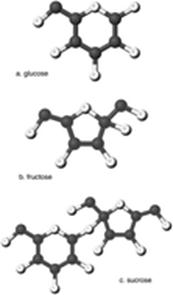
An image of sugars including glucose and fructoseAdded sugars have been associated with negative effects on health, most important of which are cardiovascular diseases, the leading cause of mortality in the US. They supply around 16% of the total calories in the American diet, up from less than 11% in the late 1970s.  Under-reporting and subjectivity in self-assessment studies of sugar intake have so far prevented conclusive evidence for the relationship between added sugar intake and negative health effects.

A. Hope Jahren and colleagues from the University of Hawaii and the Virginia Tech assessed the potential of δ13C measurements of different biological substrates  for the evaluation of added sugar intake. 78% of added sugars come from C4 plants which differ from other plants on their  δ13C values by as much as 20‰, while the uncertainty in measuring these values is usually less than 0.1‰.

Previous studies suggest that the δ13C value of blood is a promising biomarker for added sugars and sugar-sweetened beverages in medium-term time-frame. Fingerstick-based blood sampling is especially convenient because it is non-invasive and requires minimal equipment and training, while the samples are easy to transport and store. Specific compound approaches are also discussed, with the hemoglobin A1c being a potential biomarker not susceptible to short-term changes in diet.

Although continued research is needed, δ13C is shown to be a promising potential biomarker of added sugar intake.

To read the full article, please access the link below. This paper will be free to read until 11 of April 2014.

The potential for a carbon stable isotope biomarker of dietary sugar intake
A. Hope Jahren, Joshua N. Bostic and Brenda M. Davy
J. Anal. At. Spectrom., 2014, Advance Article
DOI: 10.1039/C3JA50339A


Digg This
Reddit This
Stumble Now!
Share on Facebook
Bookmark this on Delicious
Share on LinkedIn
Bookmark this on Technorati
Post on Twitter
Google Buzz (aka. Google Reader)

European Workshop on Laser Ablation (EWLA2014)

The upcoming twelfth European Workshop on Laser Ablation (EWLA2014) will be held at

Royal Holloway, University of London 8-11 July 2014

zircon

The European Workshop on Laser Ablation (EWLA) is a biennial event aimed at exchanging ideas and recent results between scientists and students interested in laser-based methods. EWLA2014 will comprise poster presentations, short talks and selected invited presentations

Key Dates

Abstract submission deadline: 2nd May 2014
Reduced registration fee deadline: 2nd May 2014
Acceptance / selection of contributions: 10th June 2014
Start of EWLA: 8th July 2014

Website: www.ewla.rhul.ac.uk

Contact: Dr Wolfgang Müller at ewla14@es.rhul.ac.uk

Digg This
Reddit This
Stumble Now!
Share on Facebook
Bookmark this on Delicious
Share on LinkedIn
Bookmark this on Technorati
Post on Twitter
Google Buzz (aka. Google Reader)

February’s Bioanalytical Highlights

Welcome to this month’s bioanalytical highlights, keeping you up to date with latest developments in elemental analysis with a biological twist. All articles are free to read until April 15th.

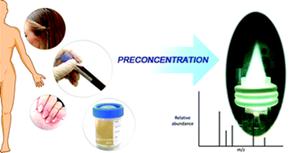
DOTA based metal labels for protein quantification: a reviewSchematic showing current developments in clinical sample preconcentration prior to elemental analysis by atomic spectrometry: a comprehensive literature review
Gunnar Schwarz, Larissa Mueller, Sebastian Beck and Michael W. Linscheid
J. Anal. At. Spectrom., 2014, 29, 221 DOI:10.1039/C3JA50277E

Current developments in clinical sample preconcentration prior to elemental analysis by atomic spectrometry: a comprehensive literature review
Tsz-Shan Lum, Yeuk-Ki Tsoi and Kelvin Sze-Yin Leung
J. Anal. At. Spectrom., 2014, 29, 234 DOI:10.1039/C3JA50316J

Analytical method for total chromium and nickel in urine using an inductively coupled plasma-universal cell technology-mass spectrometer (ICP-UCT-MS) in kinetic energy discrimination (KED) mode
C. Derrick Quarles, Deanna R. Jones, Jeffery M. Jarrett, Gulchekhra Shakirova, Yi Pan, Kathleen L. Caldwell and Robert L. Jones
J. Anal. At. Spectrom., 2014, 29, 297 DOI:10.1039/C3JA50272D

Evaluation of electrothermal vaporization as a sample introduction technique for the determination of trace elements in biological samples by inductively coupled plasma mass spectrometry, following dispersive liquid–liquid microextraction
Juliano Carvalho Ramos and Daniel L. G. Borges
J. Anal. At. Spectrom., 2014, 29, 304 DOI:10.1039/C3JA50295C

Digg This
Reddit This
Stumble Now!
Share on Facebook
Bookmark this on Delicious
Share on LinkedIn
Bookmark this on Technorati
Post on Twitter
Google Buzz (aka. Google Reader)

HOT articles in JAAS

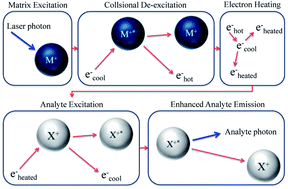
Take a look at these new HOT articles just published in JAAS. These papers will be free to read for the next 4 weeks. Enjoy! Graphical abstract: A novel approach to understanding the effect of matrix composition on analyte emission in an inductively coupled plasma

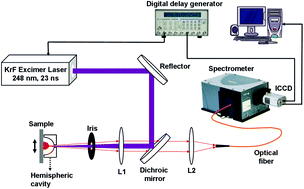
Element dependence of enhancement in optics emission from laser-induced plasma under spatial confinement
Changmao Li, Lianbo Guo, Xiangnan He, Zhongqi Hao, Xiangyou Li, Meng Shen, Xiaoyan Zeng and Yongfeng Lu
J. Anal. At. Spectrom., 2014, Advance Article
DOI: 10.1039/C3JA50368B, Paper

Assessment of sample preparation methods for the analysis of trace elements in airborne particulate matter
D. Salcedo, J. P. Bernal, O. Pérez-Arvizu and E. Lounejeva
J. Anal. At. Spectrom., 2014, Advance Article
DOI: 10.1039/C3JA50375E, Technical Note

Boron speciation in acid digests of metallurgical grade silicon reveals problem for accurate boron quantification by inductively coupled plasma – optical emission spectroscopy
Patrick Galler, Andrea Raab, Sabine Freitag, Kjell Blandhol and Jörg Feldmann
J. Anal. At. Spectrom., 2014, Advance Article
DOI: 10.1039/C3JA50383F, Paper Graphical abstract: Element dependence of enhancement in optics emission from laser-induced plasma under spatial confinement

A novel approach to understanding the effect of matrix composition on analyte emission in an inductively coupled plasma
Nicholas Taylor, Kyli N. McKay-Bishop, Ross L. Spencer and Paul B. Farnsworth
J. Anal. At. Spectrom., 2014, Advance Article
DOI: 10.1039/C3JA50352F, Paper

Relative spectral response calibration of a spectrometer system for laser induced breakdown spectroscopy using the argon branching ratio method
Xiaohui Li, Benjamin W. Smith and Nicoló Omenetto
J. Anal. At. Spectrom., 2014, Advance Article
DOI: 10.1039/C3JA50371B, Paper

Digg This
Reddit This
Stumble Now!
Share on Facebook
Bookmark this on Delicious
Share on LinkedIn
Bookmark this on Technorati
Post on Twitter
Google Buzz (aka. Google Reader)

The Next Generation-An interview with Yeuki Tsoi

Today we interview Yeuki Tsoi, a Post-Doctoral Scientist at the Hong Kong Baptist University (HKBU)
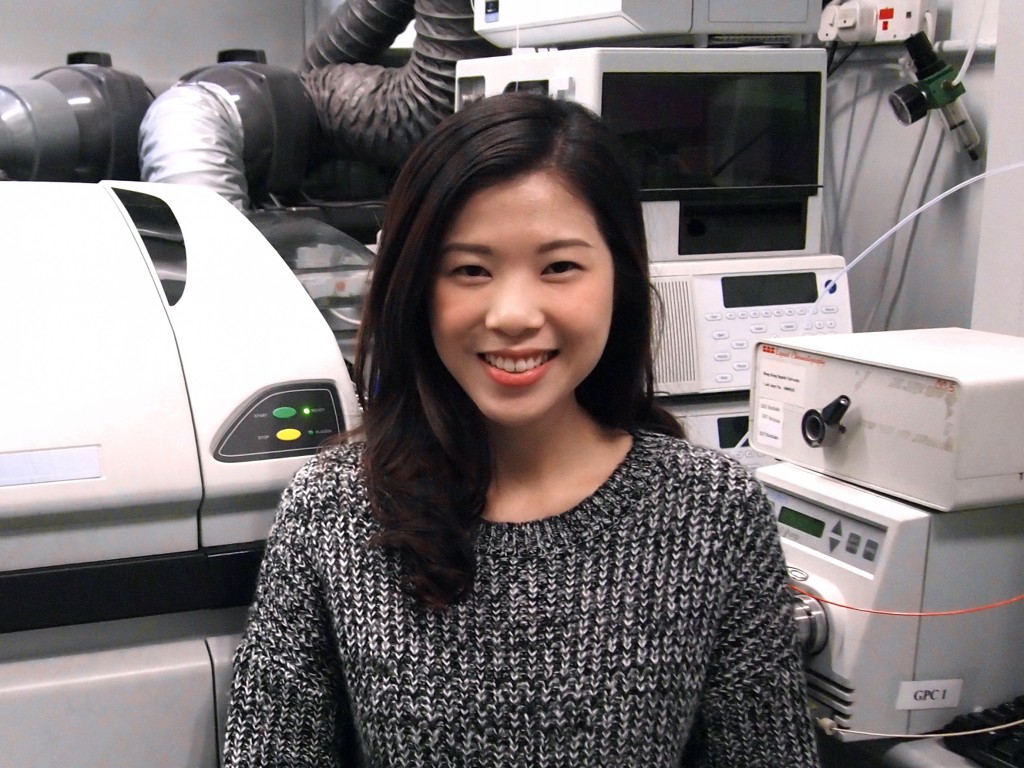
Yeuki in her lab in Hong Kong

Who or what inspired you to become a scientist?

I have always been curious about everything and asking questions since I was little. What truly inspired me (as a pre-teen) was a children’s encyclopedia which my dad got me. I found myself so fascinated by all the fun facts about Nature – Astronomy, Biology, Chemistry, etc.. It was later when I grew an interest in Forensics and started to dig related reference books from libraries. Since then, I have been very enthusiastic about Analytical Science; also Chemistry was always my best grade in school, so it became so natural for me to go after it all the way. In this, I cannot thank enough my parents for being so supportive to my pursuit of interest.

Why did you choose your research group/University and what factors influenced your choice?

While I was in my UG final year working on a synthetic chemistry project, I confirmed that I am more an “AnalChem” type of student. My interest in it is so obvious because I am always happier performing chemical tests and working with machines. I was therefore on the lookout for relevant PhD programs and HKBU, with particular strength in Analytical Chemistry, was clearly the reasonable choice. I feel very fortunate to have joined Dr. Kelvin Leung’s group; besides he is the best mentor I ever met, it is also because I am especially interested in his speciation-themed projects. Elemental speciation was a developing skill in Hong Kong’s testing industry. It is nothing more satisfying and exciting than knowing what you do is so relevant to local applications.

Can you explain a bit the purpose of your current research activities?

My research in Dr. Leung’s group is mostly related to trace analysis and elemental speciation. After my PhD (when I have worked more on material and methodology development), lately our team is moving towards more advanced spectrometric applications, which require collaborations between different scientific disciplines. Together with a group of HKBU physicists, we have recently explored the synergistic application of ICP-MS and PLEAF in forensic analysis of laser printed documents by making use of the elemental signatures in printer toners. Currently, our team is dedicating much effort and instrumental resources to the pharmacokinetic study of metal-based drugs in vivo. Using LA-ICP-MS, we extract elemental maps from biological tissue sections and construct a time-resolved distribution profile. This project is an essential step for drug development in that it delivers a better understanding in the regent’s Absorption, Distribution, Metabolism, and Excretion (ADME) within the system.

Besides these projects, I act also as a project manager behind a couple on-going environmental research projects in this group. I am happy with the range of exposure to different analytical areas, especially those related to emerging contaminants (e.g. artificial sweeteners and UV filters) of which the latent chronic impacts (arising from transformation and degradation) should deserve more attention.

How is a typical day in your lab?

During my earlier days of intensive lab work, I usually start with getting my instruments initialized and warm-up as early as possible, followed by long hours of sample preparation and measurement. Lately, as I become more senior in this group I am assigned to coach newer members and to support and coordinate several current projects. My other duties usually get done at the desk by planning new research projects, writing grant proposals, preparing publication manuscripts, etc. Between hours of independent work, my schedule is packed with discussions with my teammates and meetings with collaboration partners.

What common activities are organized in your research group?

There are regular group meetings where students take turns to present their work progress. Since our group is known for its diversity in research themes, it is always helpful and inspiring to hear constructive comments and thoughts from fellow teammates who are working in entirely different areas of Analytical Science (e.g. environmental, clinical, food, materials, TCM).

Beside these formal meetings, our supervisor would sometimes like to take us out for lunch at restaurants nearby. Those are good times when all members gather to have some fun chats.

On a more irregular schedule, our group members will take a day off from their routine and go out on an environmental sampling trip for a change. Once or twice per year, we rent a boat to cruise around the coastline of Hong Kong and grab marine samples for the environmental projects. All of us, including those not on these projects, will lend some help and get to learn something new in this process. The nature-kissing field trip sounds like a lot of fun; the truth is: it is not always easy, especially when sea-sickness kicks in.

What app/programs do you typically use?

Besides using MS Excels for basic treatments, our trace element team also uses Igor/Iolite, MatLab and ImageJ to reduce massive data and to generate elemental maps. Photoshop is my personal favorite to produce graphic illustrations for publication.

How do you search for scientific information? How do you manage your bibliography?

I like to use Web of Science, Scopus and more rarely PubMed for bibliographic reviews. I am not used to utilize any reference management software. What I usually do is to categorize them into different folders and I can always look them up by searching the keywords.

What are your views on JAAS? Which type of articles do you prefer? Do you miss some content?

JAAS is the most relevant journal to my own element/speciation research and I can usually find answers from JAAS articles to my questions. What I like about JAAS is the range of publication types available to authors/readers and the fact that each type has a clearly defined objective. This allows authors to go easily for the one that suits the style, depth and scale of their work. My own favorites are technical notes and perspectives; both presentations are short but they deliver the most useful tactics and insightful commentary that somehow we usually miss out in full paper, even in reviews.

What do you like and dislike the most about your work?

There is in fact a lot I like about my current work. First, since I am taking up more paperwork and project management duties, I have earned much greater exposure to fields other than my original stream of research. There is a lot to learn from different research philosophies in Environmental and Food Chemistry. Secondly, my work in project planning certainly puts me through a growing process which has given me new perspectives on seeing and analyzing a scientific issue. What I feel not very comfortable about is the lesser time I spent at the working bench. I just miss the indulgent life of pure experimental work.

What do you expect to be doing in 5 years time?

In five years, I see myself continuing my profession in analytical research and development, outside of the academic circle, hopefully in public sector. It would mean a lot to me that my work renders true functional/reference value to local services and contributes a greater benefit to the society. But, I am also open to any possibilities that life brings me.

What do you enjoy doing when you are not in the lab?

I used to like cooking and making desserts but I am kind of exhausted (chemists tend to try too hard to make all procedures and proportions perfect, this obsession can be quite stressful). I prefer enjoying music to relax; my favorites are Jazz, Blues, and original movie soundtracks. I am also an active swimmer and an avid beach-goer.

Thanks a lot, Yeuki! Have a look at Yeuki’s latest article published in JAAS:

Tsz-Shan Lum, Yeuk-Ki Tsoi and Kelvin Sze-Yin Leung
J. Anal. At. Spectrom., 2014,29, 234-241
Digg This
Reddit This
Stumble Now!
Share on Facebook
Bookmark this on Delicious
Share on LinkedIn
Bookmark this on Technorati
Post on Twitter
Google Buzz (aka. Google Reader)

Getting a step ahead of sepsis

Written by Matthew J. Baker, Guest Web-writer for Analyst and Senior Lecturer in Toxicology and Analytical Chemistry at the University of Central Lancashire (UCLan), UK.

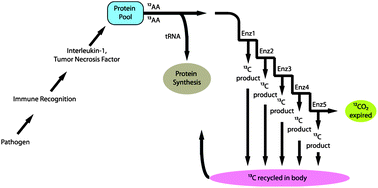
Early detection of sepsis followed by immediate intervention is essential in the fight against sepsis. Researchers from the University of Wisconsin – Madison have recently described a technique for the analysis of exhaled breath carbon isotope delta values as a noninvasive diagnostic test in this fight.

Systemic inflammatory response syndrome (SIRS) is a nonspecific response following events such as infection, trauma or surgery. SIRS is a major problem in the care of intensive care patients and has been reported to occur in 82 % of pediatric intensive care patients including the 23 % of patients admitted with sepsis. Sepsis is SIRS in the presence of an infection and is the most common cause of death in infants and children in the world. The US researchers showed a measurable difference between the exhaled breath carbon isotope delta values (BDVs i.e. 13CO2/12CO2 delta value) and the inflammatory acute phase response (APR) state of a pediatric patient. Whether the patient has no infection, trauma or surgery, the patient has trauma or post-operative status, active sepsis or shock.

Schematic representation of fractionation of carbon during the catabolic inflammatory acute phase response to infection

Prof. Butz, University of Wisconsin-Madison highlights that “it has long been known that Carbon-13 behaves differently due to enzymatic fractionation. With the emergence of new carbon isotope sensing devices, such as cavity-ring down spectroscopy, measurement of the stable isotopes of carbon is much cheaper and more portable than has previously been possible.”

1
In addition to discriminating patients for inflammatory APR state, the authors also suggest that the BDV could be used to monitor the changes in physiology during sepsis and septic shock due to changes in macronutrient oxidation. This opens up a bright future for BDVs in the clinic with “The potential for breath based measurements, such as the breath carbon delta value or BDV, making the intriguing case that noninvasive breath sampling can inform doctors and scientists about changes in the body’s metabolism. New instruments are being developed into medical devices that can be placed in the intensive care unit, emergency department, hospital ward, or clinic, and may be used by doctors to make determination about a patients nutritional, metabolic, or health status” adds Butz.

You can download the full article below, which is free to access until March 11th.

Changes in breath carbon isotope composition as a potential biomarker of inflammatory acute phase response in mechanically ventilated pediatric patients
Juan P. Boriosi, Dennis G. Maki, Rhonda A. Yngsdal-Krenz, Ellen R. Wald, Warren P. Porter, Mark E. Cook and Daniel E. Bütz 
J. Anal. At. Spectrom., 2014, Advance Article
DOI: 10.1039/C3JA50331C

Digg This
Reddit This
Stumble Now!
Share on Facebook
Bookmark this on Delicious
Share on LinkedIn
Bookmark this on Technorati
Post on Twitter
Google Buzz (aka. Google Reader)

Top ten most accessed articles from October-December 2013

During the months October – December the following articles are in the Top ten most accessed:

Atomic spectrometry update. Review of advances in the analysis of metals, chemicals and materials
Simon Carter, Andy S. Fisher, Michael W. Hinds, Steve Lancaster and John Marshall
J. Anal. At. Spectrom., 2013,28, 1814-1869
DOI: 10.1039/C3JA90051G, Atomic Spectrometry Update

2013 Atomic spectrometry update—A review of advances in X-ray fluorescence spectrometry
Margaret West, Andrew T. Ellis, Philip J. Potts, Christina Streli, Christine Vanhoof, Dariusz Wegrzynek and Peter Wobrauschek
J. Anal. At. Spectrom., 2013,28, 1544-1590
DOI: 10.1039/C3JA90046K, Atomic Spectrometry Update

Synchrotron-based chemical imaging reveals plumage patterns in a 150 million year old early bird
Phillip. L. Manning, Nicholas P. Edwards, Roy A. Wogelius, Uwe Bergmann, Holly E. Barden, Peter L. Larson, Daniela Schwarz-Wings, Victoria M. Egerton, Dimosthenis Sokaras, Roberto A. Mori and William I. Sellers
J. Anal. At. Spectrom., 2013,28, 1024-1030
DOI: 10.1039/C3JA50077B, Paper

2013 Atomic spectrometry update—A review of advances in environmental analysis
Owen T. Butler, Warren R. L. Cairns, Jennifer M. Cook and Christine M. Davidson
J. Anal. At. Spectrom., 2014,29, 17-50
DOI: 10.1039/C3JA90068A, Atomic Spectrometry Update

A signal deconvolution method to discriminate smaller nanoparticles in single particle ICP-MS
Geert Cornelis and Martin Hassellöv
J. Anal. At. Spectrom., 2014,29, 134-144
DOI: 10.1039/C3JA50160D, Paper

Atomic spectrometry update. Elemental speciation review
Robert Clough, Chris F. Harrington, Steve J. Hill, Yolanda Madrid and Julian F. Tyson
J. Anal. At. Spectrom., 2013,28, 1153-1195
DOI: 10.1039/C3JA90039H, Atomic Spectrometry Update

Atomic spectrometry update: review of advances in atomic spectrometry and related techniques
E. Hywel Evans, Matthew Horstwood, Jorge Pisonero and Clare M. M. Smith
J. Anal. At. Spectrom., 2013,28, 779-800
DOI: 10.1039/C3JA90029K, Atomic Spectrometry Update

Enhanced sensitivity in laser ablation multi-collector inductively coupled plasma mass spectrometry
John M. Cottle, Andrew J. Burrows, Andrew Kylander-Clark, Philip A. Freedman and Roy S. Cohen
J. Anal. At. Spectrom., 2013,28, 1700-1706
DOI: 10.1039/C3JA50216C, Communication

High-precision copper and iron isotope analysis of igneous rock standards by MC-ICP-MS
Sheng-Ao Liu, Dandan Li, Shuguang Li, Fang-Zhen Teng, Shan Ke, Yongsheng He and Yinghuai Lu
J. Anal. At. Spectrom., 2014,29, 122-133
DOI: 10.1039/C3JA50232E, Paper

Effects of methane addition to nebulizer gas on polyatomic interferents and ion sensitivity in inductively coupled plasma mass spectrometry
Rui Santos
J. Anal. At. Spectrom., 2014,29, 152-161
DOI: 10.1039/C3JA50221J, Paper

Digg This
Reddit This
Stumble Now!
Share on Facebook
Bookmark this on Delicious
Share on LinkedIn
Bookmark this on Technorati
Post on Twitter
Google Buzz (aka. Google Reader)

HOT Articles in JAAS

Take a look at these new HOT articles just published in JAAS. These papers will be free to read for the next 4 weeks. Enjoy!

A novel approach to high pressure flow digestion
Helmar Wiltsche, Paul Tirk, Herbert Motter, Monika Winkler and Günter Knapp
J. Anal. At. Spectrom., 2014,29, 272-279
DOI: 10.1039/C3JA50290B, Paper

Occurrence of gas flow rotational motion inside the ICP torch: a computational and experimental study
Maryam Aghaei, Luca Flamigni, Helmut Lindner, Detlef Günther and Annemie Bogaerts
J. Anal. At. Spectrom., 2014,29, 249-261
DOI: 10.1039/C3JA50302J, Paper

Diffusion- and velocity-driven spatial separation of analytes from single droplets entering an ICP off-axis
Olga Borovinskaya, Maryam Aghaei, Luca Flamigni, Bodo Hattendorf, Martin Tanner, Annemie Bogaerts and Detlef Günther
J. Anal. At. Spectrom., 2014,29, 262-271
DOI: 10.1039/C3JA50307K, Paper

The effect of carrier gas humidity on the vaporization of laser-produced aerosols in inductively coupled plasmas
Luca Flamigni, Joachim Koch and Detlef Günther
J. Anal. At. Spectrom., 2014,29, 280-286
DOI: 10.1039/C3JA50314C, Paper

Optimizing gated detection in high-jitter kilohertz powerchip laser-induced breakdown spectroscopy
J. A. Merten, E. Ewusi-Annan, B. W. Smith and N. Omenetto
J. Anal. At. Spectrom., 2014, Advance Article
DOI: 10.1039/C3JA50348H, Technical Note

The effect of paraformaldehyde fixation and sucrose cryoprotection on metal concentration in murine neurological tissue
Dominic J. Hare, Jessica L. George, Lisa Bray, Irene Volitakis, Angela Vais, Timothy M. Ryan, Robert A. Cherny, Ashley I. Bush, Colin L. Masters, Paul A. Adlard, Philip A. Doble and David I. Finkelstein
J. Anal. At. Spectrom., 2014, Advance Article
DOI: 10.1039/C3JA50281C, Technical Note

The emerging role of carbon isotope ratio determination in health research and medical diagnostics
Daniel E. Bütz, Shanon L. Casperson and Leah D. Whigham
J. Anal. At. Spectrom., 2014, Advance Article
DOI: 10.1039/C3JA50327E, Tutorial Review

Analysis of stable isotope ratios of Ba by double-spike standard-sample bracketing using multiple-collector inductively coupled plasma mass spectrometry
Takashi Miyazaki, Jun-Ichi Kimura and Qing Chang
J. Anal. At. Spectrom., 2014, Advance Article
DOI: 10.1039/C3JA50311A, Paper

Methods for the determination of stable Te isotopes of minerals in the system Au–Ag–Te by MC-ICP-MS
Andrew P. Fornadel, Paul G. Spry, Simon E. Jackson, Ryan D. Mathur, John B. Chapman and Isabelle Girard
J. Anal. At. Spectrom., 2014, Advance Article
DOI: 10.1039/C3JA50237F, Paper

Changes in breath carbon isotope composition as a potential biomarker of inflammatory acute phase response in mechanically ventilated pediatric patients
Juan P. Boriosi, Dennis G. Maki, Rhonda A. Yngsdal-Krenz, Ellen R. Wald, Warren P. Porter, Mark E. Cook and Daniel E. Bütz
J. Anal. At. Spectrom., 2014, Advance Article
DOI: 10.1039/C3JA50331C, Paper

Digg This
Reddit This
Stumble Now!
Share on Facebook
Bookmark this on Delicious
Share on LinkedIn
Bookmark this on Technorati
Post on Twitter
Google Buzz (aka. Google Reader)

Exhaled isotopes give hope to spotting sepsis early

Measuring 13C isotope levels in the breath of paediatric patients could save lives by giving an early indication of sepsis.

More than 30,000 cases of severe sepsis are estimated to occur in the UK every year. But Daniel Bütz and co-workers at the University of Wisconsin-Madison, US, are seeking to fight these figures.

As for many conditions, early identification increases survival rate – however, this is not easy. Existing methods to check for sepsis either lack the sensitivity needed for early detection or are both expensive and invasive.

To read the full article, please go to Chemistry World.

Changes in breath carbon isotope composition as a potential biomarker of inflammatory acute phase response in mechanically ventilated pediatric patients
Juan P. Boriosi, Dennis G. Maki, Rhonda A. Yngsdal-Krenz, Ellen R. Wald, Warren P. Porter, Mark E. Cook and Daniel E. Bütz
J. Anal. At. Spectrom., 2014, Advance Article
DOI: 10.1039/C3JA50331C, Paper

Digg This
Reddit This
Stumble Now!
Share on Facebook
Bookmark this on Delicious
Share on LinkedIn
Bookmark this on Technorati
Post on Twitter
Google Buzz (aka. Google Reader)

2014 Winter Conference on Plasma Spectrochemistry themed issue

We are delighted to say that once again, JAAS will be publishing a themed issue from the 2014 Winter Conference on Plasma Spectrochemistry. 

The submission deadline for the issue will be 17th February 2014, with the option of having your article published online as soon as it is accepted. The issue will be published online and in print in summer 2014. If you need any extra time to complete your manuscript, do let us know and we would be happy to discuss this with you.

We welcome the submission of communications, full papers and technical notes, and all articles will be subject to peer-review. If you are interested in writing a review article for the issue, please do not hesitate to contact me (jaas-rsc@rsc.org) or JAAS Editorial Board Chair, Frank Vanhaecke, to discuss a possible topic.

You can submit your article by uploading your manuscript through the journal website. Don’t forget to mention in your cover letter that you article is intended for the Winter Conference themed issue.

We look forward to reading your next article!

Digg This
Reddit This
Stumble Now!
Share on Facebook
Bookmark this on Delicious
Share on LinkedIn
Bookmark this on Technorati
Post on Twitter
Google Buzz (aka. Google Reader)