Archive for the ‘Uncategorized’ Category

Nanosensing Themed Collection

Guest edited by Professor Zhugen Yang (Cranfield University, UK), Professor Bintian Zhang (Southern University of Science and Technology, China) and Professor Peter Vikesland (Virginia Polytechnic Institute and State University, US), Environmental Science: Nano is pleased to showcase our new themed collection exploring Nanosensing.

This themed collection highlights the development and use of nanomaterials as biochemical sensors within complex biological, environmentally relevant samples in uses such as water quality monitoring, air pollution detection, soil contamination assessment, and biodiversity monitoring, thereby enhancing our understanding of environmental health.

Please enjoy the articles in the collection below.

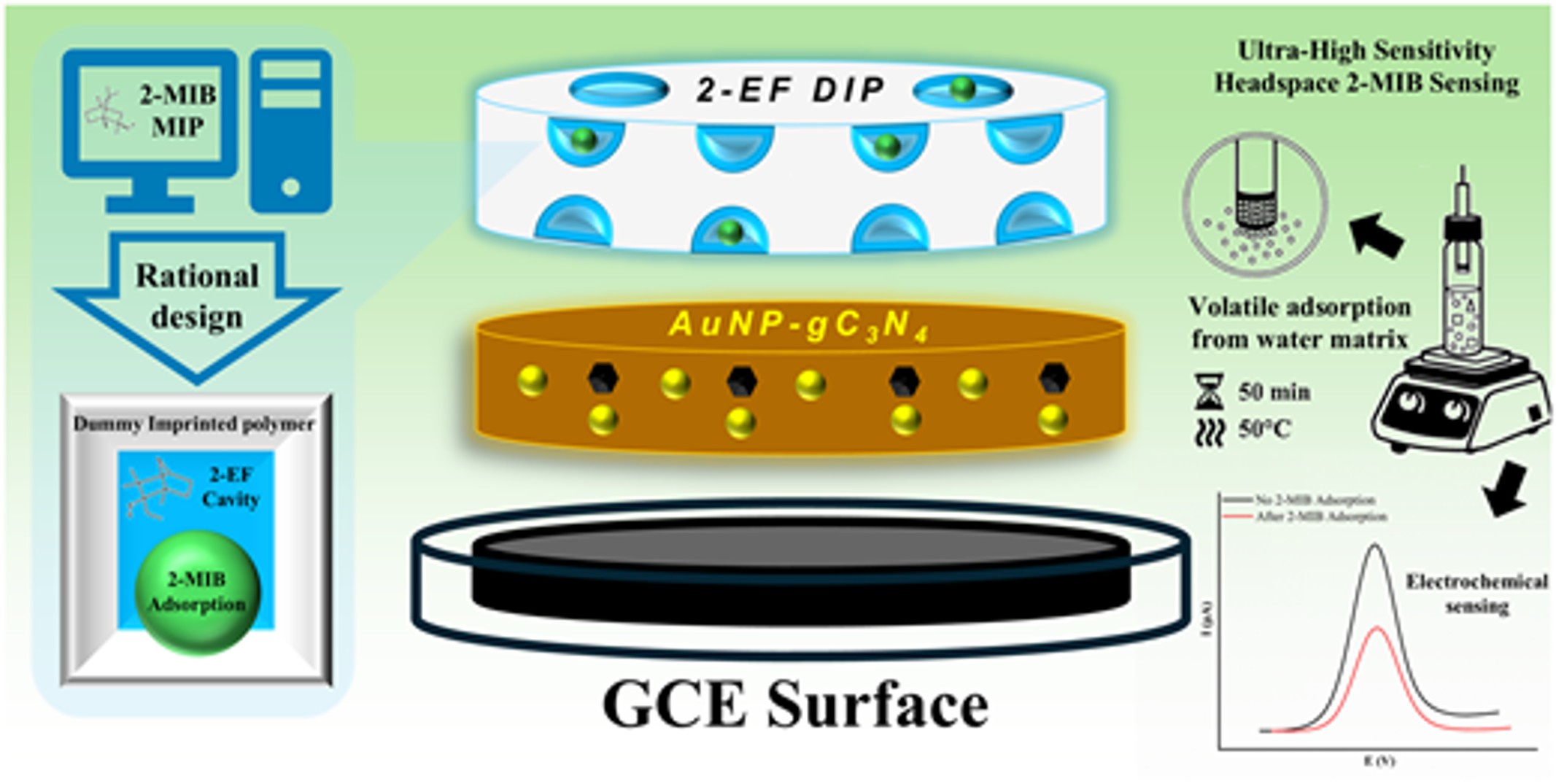
Rational design of a dummy-imprinted nanoplatform for ultrasensitive and leakage-free headspace-electrochemical detection of 2-MIB


Zeyang Li, Anuja Tripathi, Yuan Tian, Jingsi Gao, Jianfeng Zhou and Xing Xie.


Environ. Sci.: Nano (2026) 13 (5): 2350–2363.


DOI: https://doi.org/10.1039/d6en00099a

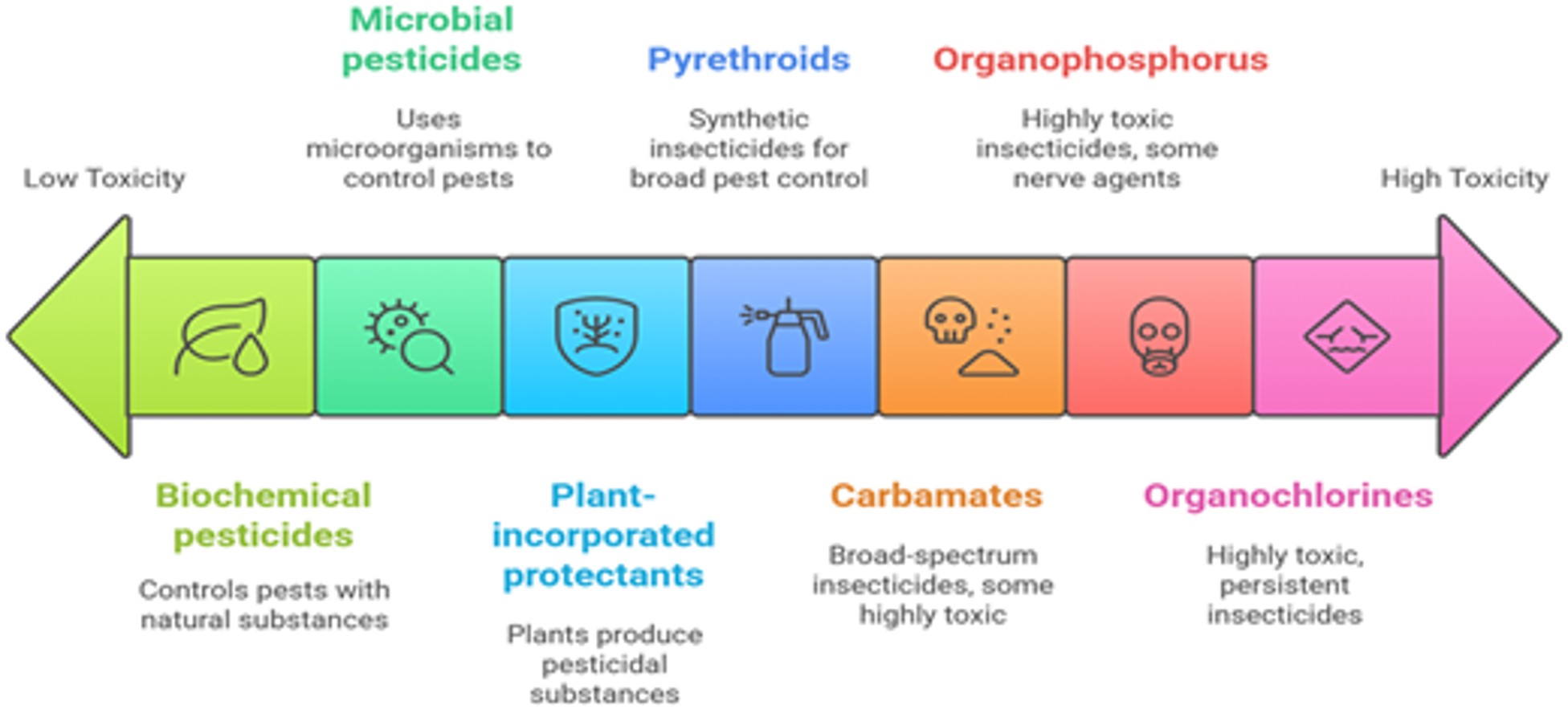
Biomass-derived carbon quantum dots as sustainable nanosensors for pesticides and toxic metabolites


Nikky Sharma, Tejasvi Pandey and Vivek Pandey.


Environ. Sci.: Nano (2026) 13 (1): 14–37.


DOI: https://doi.org/10.1039/d5en00959f

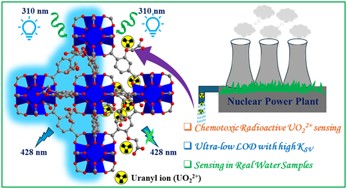
Nanomolar level detection of chemotoxic [UO2]2+ ions by a free carboxylate anchored metal–organic framework


Sk Sakir Hossain and Shyan Biswas.


Environ. Sci.: Nano (2026) 13 (2): 1141–1149.


DOI: https://doi.org/10.1039/d5en01022e

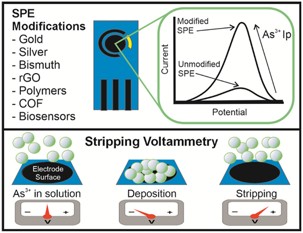
Electroanalytical overview: recent advances in the sensing of arsenic using screen-printed electrochemical platforms


Jessica L. Pimlott, Dale A. C. Brownson, Edward P. Randviir, Eric M. Brack, Craig E. Banks and Samuel J. Rowley-Neale.


Environ. Sci.: Nano (2026) 13 (2): 684–702.


DOI: https://doi.org/10.1039/d5en00708a

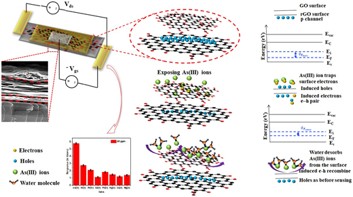
Trace level arsenic (iii) ion detection in water with a liquid-gated rGO/GO field effect transistor based sensor


Arijit Pattra, Bathula Satwik, Himanshu Pramod Padole and Sayan Dey.


Environ. Sci.: Nano (2026) 13 (3): 1499–1508.


DOI: https://doi.org/10.1039/d5en01060h

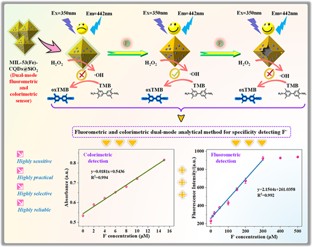
Dual-mode fluorometric and colorimetric sensor based on carbon quantum dots-doped MIL-53(Fe) encapsulated in SiO2 shells for fluoride detection


Yijun Mo, Ziyi Guo, Shenran Yu, Zihan Xu, Zetao Cai, Yudi Wang, Shi-Wen Lv and Yanqing Cong.

Environ. Sci.: Nano (2026) 13 (3): 1630–1640.


DOI: https://doi.org/10.1039/d5en01045d

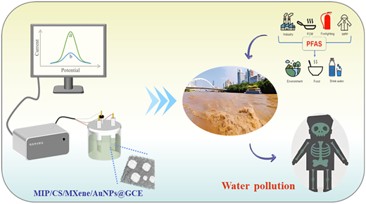
Molecularly imprinted sensor based on CS/MXene/AuNPs synergy for ultra-trace detection of PFOS in water


Xuanxiu Da, Miao Zhou, Bolu Sun, Haoye Zou, Wenya Wang, Zhen Liu, Hongxia Shi, Jia Zhou, Lin Yang and Yonggang Wang.


Environ. Sci.: Nano (2026) 13 (2): 1057–1070.


DOI: https://doi.org/10.1039/d5en00769k

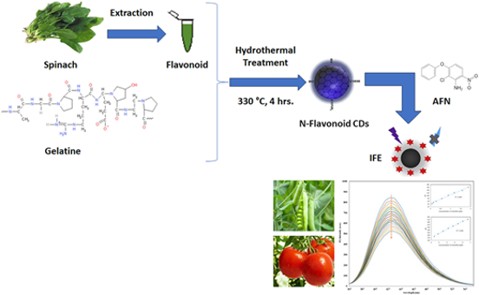
Green photoluminescent carbon dots: sensitive and selective optical detection of aclonifen pesticide


Mehrdad Mirzaei, Ardeshir Shokrollahi, Saeed Yousefinejad and Mehrorang Ghaedi.


Environ. Sci.: Nano (2025) 12 (11): 5023–5035.


DOI: https://doi.org/10.1039/d5en00594a

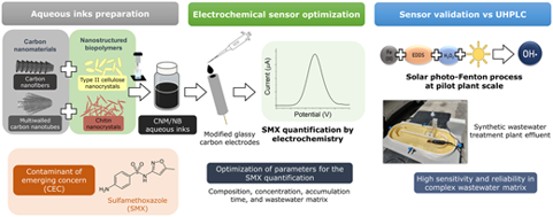
Electrochemical detection of sulfamethoxazole in water matrices using green nanomaterials: pilot-scale validation in a solar photo-Fenton process


Victor Calvo, Constanza J. Venegas, Paulina Sierra-Rosales, Sara Miralles-Cuevas, Alejandro Cabrera-Reina, Wolfgang K. Maser, Ana M. Benito and José Miguel González-Domínguez.


Environ. Sci.: Nano (2026) 13 (4): 1896–1909.


DOI: https://doi.org/10.1039/d6en00086j

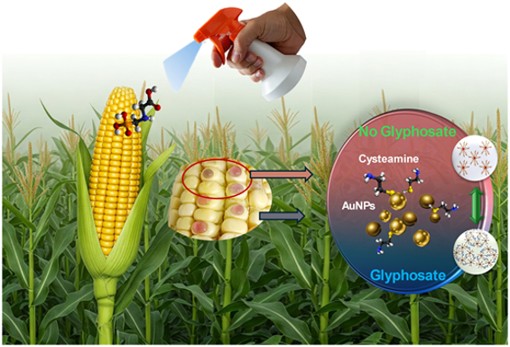
Portable gold nanoparticle-based colorimetric sensor for rapid on-site detection of glyphosate herbicide in plants and soil


Fabian Mares-Briones, Dulce Correa-González, Edson Jiménez-Ameneyro, J. Luis López-Miranda, Alberto Elizalde-Mata, Miriam Estévez and Rodrigo Esparza.


Environ. Sci.: Nano (2026) 13 (1): 654–668.


DOI: https://doi.org/10.1039/d5en00748h

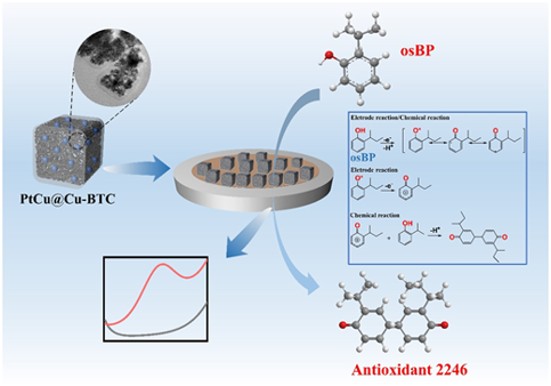
PtCu hydrogel self-supported metal–organic framework for sensitive electrochemical detection of o-sec-butylphenol


Zhehan Yang, Yijie Huang, Mingfang Yang, Ruiqi Wang and Xiaoyan Wu.


Environ. Sci.: Nano (2025) 12 (12): 5505–5516.


DOI: https://doi.org/10.1039/d5en00900f

Digg This
Reddit This
Stumble Now!
Share on Facebook
Bookmark this on Delicious
Share on LinkedIn
Bookmark this on Technorati
Post on Twitter
Google Buzz (aka. Google Reader)

Environmental Science: Nano – Nanosensing

Guest edited by Professor Zhugen Yang (Cranfield University, UK), Professor Bintian Zhang (Southern University of Science and Technology, China) and Professor Peter Vikesland (Virginia Polytechnic Institute and State University, US), Environmental Science: Nano is pleased to highlight our new collection exploring Nanosensing.

This themed collection will highlight the development and use of biochemical sensors within complex biological, environmentally relevant samples in uses such as water quality monitoring, air pollution detection, soil contamination assessment, and biodiversity monitoring, thereby enhancing our understanding of environmental health. This collection will showcase the following:

  • The use of novel nanomaterials such as nanoparticles, nanocomposites and nanostructures in environmental sensing application.
  • The detection of a wide range of environmentally relevant analytes, including heavy metals, organic pollutants, and biological agents.
  • Utilisation of innovative techniques to develop nanosensors that exhibit enhanced sensitivity, specificity, and stability. These methods encompass both top-down and bottom-up approaches, self-assembly techniques, and advanced processes like nanolithography.
  • Refinement of transduction mechanisms to convert analyte-receptor interactions into measurable signals, which can be electrical, optical, electrochemical, or mechanical, to enhance the overall performance of the sensors.
  • Strategies to tailor the surfaces of nanomaterials, improving their capacity to recognize specific analytes and facilitating selective detection in complex environmental contexts.
  • The integration and miniaturization of nanosensors into portable, wearable, or distributed sensing platforms enable real-time monitoring of environmental parameters.

This themed collection will include all manuscript types: original research papers, communications, perspectives and review articles. If authors are interested in submitting a review article, please send an outline proposal to the editors at esnano-rsc@rsc.org for approval and official invitation.

Article publication online and in issues will occur without delay to ensure the timely dissemination of the work. The articles will then be assembled on the RSC Publishing platform and promoted as a web-based thematic collection, to permit readers to consult and download individual contributions from the entire series.

The submission deadline is 31st January 2026.

If you’re interested, we invite you to submit your research today, quoting ‘ENSENS25’ in the ‘Comments to the Editor’ when submitting your manuscript.

Manuscripts should be submitted via the Royal Society of Chemistry’s online submission service and the Editorial Office informed by email. The Editorial Office reserves the right to check suitability of submissions in relation to the scope of the collection and inclusion of accepted articles in the collection is not guaranteed. All manuscripts will be subject to the journal’s usual peer review process.

For more information on the scope of Environmental Science: Nano and our author guidelines, please visit our website at rsc.li/esnano or email us at esnano-rsc@rsc.org.

Digg This
Reddit This
Stumble Now!
Share on Facebook
Bookmark this on Delicious
Share on LinkedIn
Bookmark this on Technorati
Post on Twitter
Google Buzz (aka. Google Reader)

Environmental Science: Nano Advanced Materials themed collection

In case you missed it, in August we launched Environmental Science: Nano’s Advanced Materials themed collection!

Advanced Materials are produced through rational design. Precise control of material composition and internal structure can also be achieved through advanced manufacturing approaches. By intent, Advanced Materials have exceptional mechanical, electrical, optical, or magnetic properties or other functionalities that differentiate them from conventional materials. These properties enable self-repair, produce stimulus responsive changes in shape, transform energy and many other emergent phenomena. While not all Advanced Materials are nano-enabled, many Advanced Materials are reliant upon nanoscale particles and/or nanoscale phenomena to facilitate their desired performance.

Explore this collection highlighting contributions that address the environmental aspects of Advanced Material production, usage, and disposal.

Guest Editors Wendel Wohlleben, Jerome Rose, Mark Wiesner, and Peter Vikesland discuss the importance of advanced materials towards sustainability in their Editorial.


We hope you enjoy our Advanced Materials collection!

Environmental Science: Nano Editorial team

Digg This
Reddit This
Stumble Now!
Share on Facebook
Bookmark this on Delicious
Share on LinkedIn
Bookmark this on Technorati
Post on Twitter
Google Buzz (aka. Google Reader)

Environmental Science: Nano Nanocircular economy themed collection


We are delighted to announce Environmental Science: Nano’s Nanocircular economy themed collection!

The circular economy is a framework put forth to rebalance society’s relationship with materials and their underlying resources. The three principles, (1) eliminate waste, (2) circulate products and materials (at their highest value), and (3) regenerate nature, are straightforward in theory but complex in practice. Achieving a truly circular material is challenged by the many dimensions of the system that supports its generation, use, and reuse. Nonetheless, there is global movement towards adoption of circular resources, materials, and product systems. Given that nanomaterials are fully integrated into the global material ecosystem, they are inherent to this transition away from linear to circular materials. To date, it is yet to be realized how unique properties of the nano-scale can be leveraged to advance and accelerate this transition.

This special collection highlights the range of opportunities for nanomaterials to underline advancements in circular technologies and resource flows. The works included in this collection merely scratch the surface and illuminate the vast future potential to support, and even accelerate, the circular materials transition. We hope that this collection of papers elucidates new avenues for inquiry and inspires new research directions for nanomaterials to shepherd new horizons for circular materials.

We sincerely hope you enjoy reading the broad range of papers featured in this collection.

In addition to the Open Access papers in this collection, all articles will be free to read until the beginning of March 2025.

Guest editors Leanne Gilbertson and Peter Vikesland discuss the Nanocircular economy in their Editorial.

We hope you enjoy our Nanocircular economy collection!

Environmental Science: Nano Editorial team

Digg This
Reddit This
Stumble Now!
Share on Facebook
Bookmark this on Delicious
Share on LinkedIn
Bookmark this on Technorati
Post on Twitter
Google Buzz (aka. Google Reader)

Environmental Science: Nano 10 year anniversary collection


We have been delighted to celebrate Environmental Science: Nano’s 10th anniversary in 2024!

This special collection celebrates members of our community who have supported our journal over the last decade, including those who have served on our Editorial and Advisory boards as well as authors, outstanding reviewers and Emerging Investigators that have helped shape the journal to where it is today. We are honoured that the authors in this collection continue to share their latest discoveries and perspectives with us.

In particular, we are grateful that Changlun Chen and Chunjiang An, who published in our very first issue, have returned to give us their perspectives on nanoscale composites for uranium remediation and oil spill nanotechnology.

We sincerely hope you enjoy reading the broad range of papers featured in this collection.

In addition to the Open Access papers in this collection, all articles will be free to read until February 2025.

Editor in Chief Peter Vikesland discusses the 10th anniversary of the journal in their Editorial.

We hope you enjoy our 10th Anniversary collection!

Environmental Science: Nano Editorial team

Digg This
Reddit This
Stumble Now!
Share on Facebook
Bookmark this on Delicious
Share on LinkedIn
Bookmark this on Technorati
Post on Twitter
Google Buzz (aka. Google Reader)

Join our Nanocircular Economy session at NCEC 2023

We are delighted to announce our RSC Session on the Nanocircular Economy taking place at the 12th National Conference on Environmental Chemistry on Sunday 19th November 2023.

This session is organised by the Royal Society of Chemistry and will feature talks from board members from our Environmental Science journals.

英国皇家化学会论坛: 纳米循环经济
Location: V35 Jiangwu Hall (江悟厅)
Date: Sunday 19th November 2023
Time: 13:30 – 14:50

Peter Vikesland, Virginia Tech
Editor-in-chief, Environmental Science: Nano
Inspiring a nanocircular economy
13:30 – 13:50
Liwu Zhang, Fudan University
Associate Editor, Environmental Science: Advances
Significantly accelerated chemical reaction in microdroplet
13:50 – 14:10
Jingyun Fang, Sun Yat-Sen University
Advisory Board Member, Environmental Science: Water Research & Technology
UV/Chlorine process: an efficient advanced oxidation process with multiple radicals and functions in water treatment
14:10 – 14:30
Graham Gagnon, Dalhousie University
Editor-in-chief, Environmental Science: Water Research & Technology
Understanding the role of colloidal-size metals for effective corrosion control in drinking water
14:30 – 14:50
Before this session, there will be a Lunch and Learn Seminar at the same location from 12:15-13:30, where free lunch will be provided on a first come, first serve basis. This seminar will feature a talk by Emma Eley (Executive Editor, Environmental Science: Advances, Environmental Science: Atmospheres and RSC Sustainability): ‘Publishing with the Environmental Science journals of the Royal Society of Chemistry’.

We warmly invite you to join us at this exciting session if you are attending NCEC 2023, and please feel free to share the news of this event.


Digg This
Reddit This
Stumble Now!
Share on Facebook
Bookmark this on Delicious
Share on LinkedIn
Bookmark this on Technorati
Post on Twitter
Google Buzz (aka. Google Reader)

ES: Nano in the media – Research published by Nirupam Aich

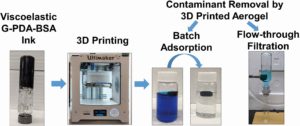
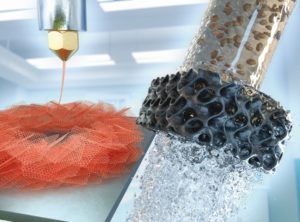
Research published by Nirupam Aich in Environmental Science: Nano, alongside co-authors Arvid Masud and Chi Zhou, has been featured in several news outlets. The researchers based at University at Buffalo, USA report a direct ink writing 3D printing technique and freeze-drying to make graphene-biopolymer aerogels for water treatment.

Read the full paper:

Emerging investigator series: 3D printed graphene-biopolymer aerogels for water contaminant removal: a proof of concept

Arvid Masud, Chi Zhou and Nirupam Aich*
Environ. Sci.: Nano, 2021,8, 399-414

Read more about their work here: 

Finally, 3D-printed graphene aerogels for water treatment

https://phys.org/news/2021-04-3d-printed-graphene-aerogels-treatment.html 

New Graphene 3D Printing Technique Makes Feasible Water Filters

https://www.sciencetimes.com/articles/30683/20210415/new-graphene-3d-printing-technique-makes-feasible-water-filters.htm 

How 3D printed Graphene Aerogels can be used for Water Treatment

https://www.azonano.com/news.aspx?newsID=37901

Digg This
Reddit This
Stumble Now!
Share on Facebook
Bookmark this on Delicious
Share on LinkedIn
Bookmark this on Technorati
Post on Twitter
Google Buzz (aka. Google Reader)

Smog eating paint does more harm than good

Photocatalytic paints for reducing air pollution may actually do the opposite

A study by scientists in France and China has raised questions about the effectiveness of paints formulated to combat air pollution. Whilst the paints decompose some pollutants, the research revealed they also generate and release other toxic compounds.

Urban air pollution is a common problem in many of the world’s cities; vehicles and power stations are the primary culprits. Titanium dioxide nanoparticles, when exposed to UV light, can oxidise organic compounds in the air. When added to paint, they present a quick fix for reducing air pollution. However, the overall improvement to air quality is dubious.

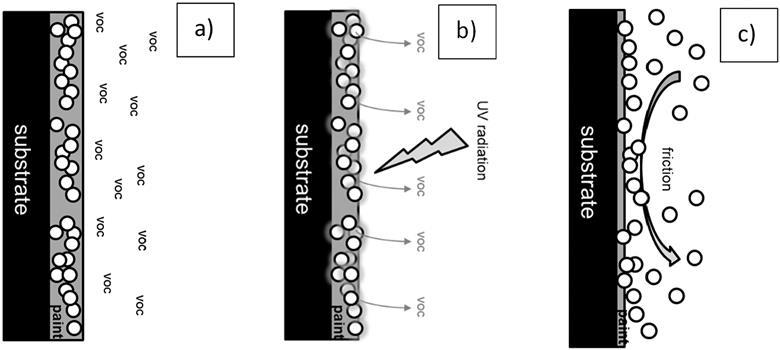
An illustration of the emission of VOCs and nanoparticles from photocatalytic paints

a) Photocatalytic paints contain titanium dioxide nanoparticles. b) Ultraviolet radiation activates the titanium dioxide nanoparticles, which degrade ambient VOCs, as well as the organic matrix of the paint, releasing new VOCs into the air. c) As the paint ages, it releases titanium dioxide nanoparticles too. Source: © Royal Society of Chemistry

So says Sasho Gligorvoski, from the Chinese Academy of Sciences, and his team who have found that photocatalytic paints release significant quantities of nanoparticles and volatile organic compounds (VOCs) over their lifetime. This is especially problematic indoors, where the chemicals accumulate over time.


Read the full article in Chemistry World.


Characterization of photocatalytic paints: a relationship between the photocatalytic properties – release of nanoparticles and volatile organic compounds
D. Truffier-Boutry, B. Fiorentino, V. Bartolomei, R. Soulas, O. Sicardy, A. Benayad, J.-F. Damlencourt, B. Pépin-Donat, C. Lombard, A. Gandolfo, H. Wortham, G. Brochard, A. Audemard, L. Porcar, G. Gebel and S. Gligorovski
Environ. Sci.: Nano, 2017
DOI: 10.1039/C7EN00467B


Digg This
Reddit This
Stumble Now!
Share on Facebook
Bookmark this on Delicious
Share on LinkedIn
Bookmark this on Technorati
Post on Twitter
Google Buzz (aka. Google Reader)

Green-er gold nanoparticles

gold nano synthesis

Working in a university research laboratory, I am made aware, almost on a daily basis, of the amount of energy and chemicals we use and the amounts of—sometimes hazardous—waste we produce. Working in an environmental engineering research lab that has the word “sustainable” as part of its name, I am also well aware of how ironic that may seem.

As scientists, we want to be able to create the best, most precisely controlled, most reproducible nanoparticles and nanoparticle-containing experiments. Sometimes the cost for those conditions is high temperatures and large amounts of (sometimes harsh) chemicals (e.g., excess precursors and stabilizers). So even though the core motivation for our research is to benefit the environment, sometimes the methods we have to use in the lab are not completely environmentally friendly.

Researchers are becoming increasingly conscious that their research should also incorporate sustainability principles. It may not be possible to do research that is completely void of environmental impacts, but it’s very possible to make an effort into minimizing those impacts. This led to the establishment of the Twelve Principles of Green Chemistry, established in 1998 by Paul Anastas and John Warner.

Of these 12 principles, number six refers to energy efficiency. This work done by my colleagues Leng, Pati, and Vikesland addresses that principle by demonstrating the growth of gold nanoparticles at room temperature, resulting in significant energy savings.

By using gold seeds of about 18 nm in diameter as a starting point, they were able to produce gold nanoparticles of different sizes, ranging from 20 – 110 nm, at room temperature. The fact that nanoparticle growth happens slower at room temperature can be viewed simultaneously as a negative point (it takes longer to manufacture them) and a positive point (with a slower reaction rate, it may be possible to better understand the complicated mechanisms behind nanoparticle growth).

This work shows that we need to continue incorporating the principles of green chemistry and engineering into nanomaterial design to improve our current energy-intensive nanomaterial production practices.

To access the full article, download a copy for free by clicking the link below:

Room temperature seed mediated growth of gold nanoparticles: mechanistic investigations and life cycle assessment.
Weinan Leng , Paramjeet Pati and Peter J. Vikesland
Environ. Sci.: Nano, 2015,2, 440-453
DOI: 10.1039/C5EN00026B

—————-

About the webwriter

Marina Vance is a PhD research scientist at Virginia Tech and Associate Director of @VTSuN. She is interested in air quality and environmental nanotechnology. You can find more information about her at mevance.com and you can find more articles by Nina in her author archive.

Digg This
Reddit This
Stumble Now!
Share on Facebook
Bookmark this on Delicious
Share on LinkedIn
Bookmark this on Technorati
Post on Twitter
Google Buzz (aka. Google Reader)