Archive for June, 2014

Phytotoxicity of Cerium Oxide Nanoparticles

Plants: basic components of the ecosystem and vulnerable to nanoparticle exposure. It is important to understand the interactions between nanoparticles and plants, especially when herbivorous consumers introduce these plants into our food chain.

As CeO2 NPs are widely used in many applications, their interactions with the ecosystem are inevitable. It has previously been shown that CeO2 NPs can inhibit root elongation of plants in aqueous suspensions. Dr Zhiyong Zhang et al investigated the toxicity of CeO2 NPs on asparagus lettuce in a plant agar medium, a semisolid, soil-like medium which provides a more realistic environment for plant growth.
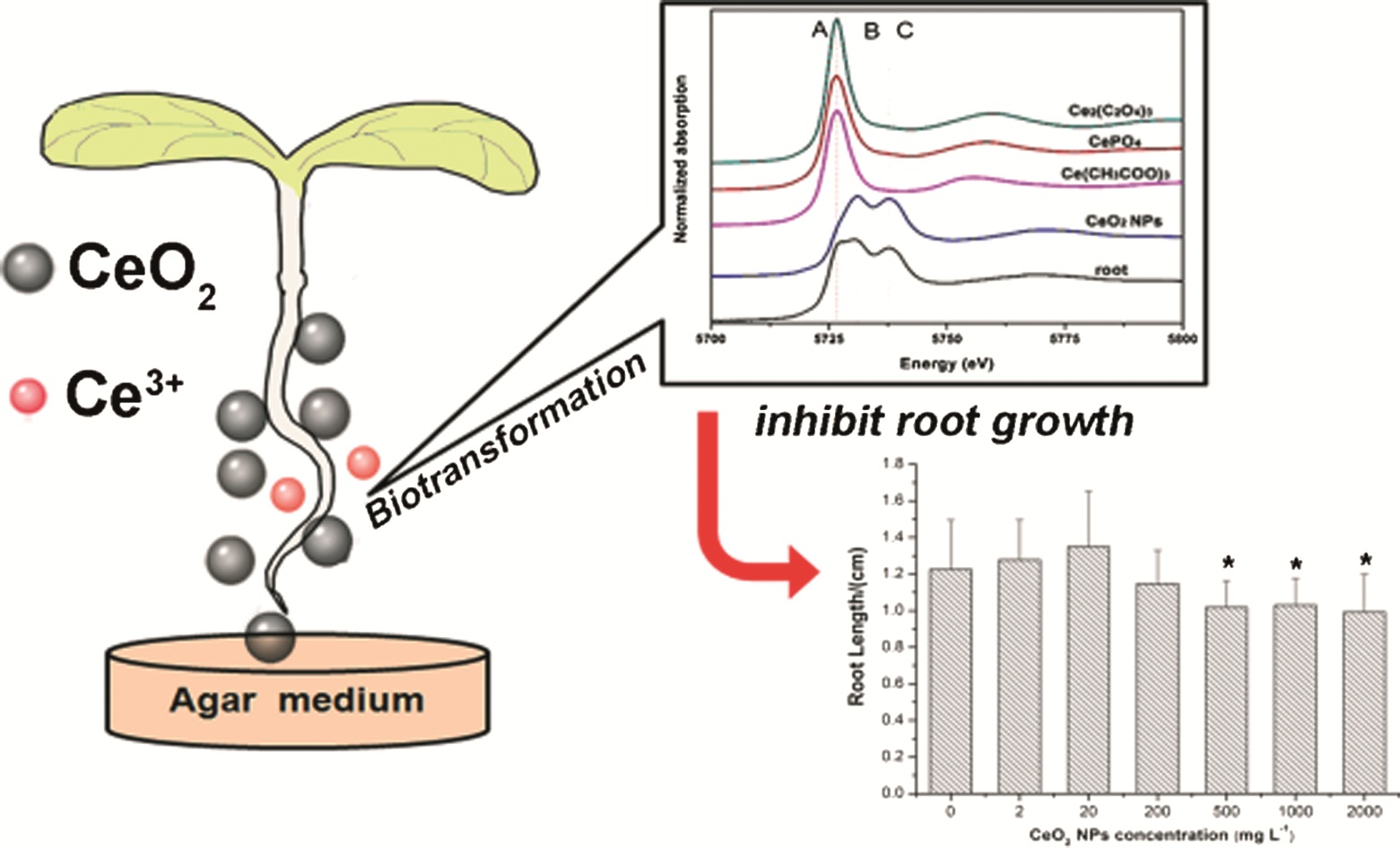
A variety of parameters were investigated to understand the plant’s defence and response to abiotic stress caused by CeO2 NPs. Although the agar medium limited the bioavailability of CeO2 NPs, they were still more toxic to asparagus lettuce in the agar medium than in aqueous solution. This could be caused by the production of excess reactive oxygen species causing oxidative stress to the plants.

The increased phytotoxicity of CeO2 NPs in a soil like medium can also be explained by the biotransformation of CeO2 NPs. It has previously been demonstrated that Ce3+ released from CeO2 NPs can cause species-specific toxicity. This study showed that in an agar medium more than 20% of the Ce in the roots was transformed to Ce3+, whereas in aqueous solution only 6% of CeO2 was reduced to Ce3+. It is therefore reasonable to postulate that the phytotoxicity of CeO2 NPs is also attributed to the release of Ce3+.

To read the full paper, download it for free* today!

Effect of Cerium Oxide Nanoparticles on Asparagus Lettuce Cultured in an Agar Medium
Di Cui,   Peng Zhang,   yuhui Ma,   Xiao He,   Yuanyuan Li,  Jing Zhang,   Yuechun Zhao and   Zhiyong Zhang
DOI: 10.1039/C4EN00025K

* Access is free through a registered RSC account – click here to register

Digg This
Reddit This
Stumble Now!
Share on Facebook
Bookmark this on Delicious
Share on LinkedIn
Bookmark this on Technorati
Post on Twitter
Google Buzz (aka. Google Reader)

Nanoparticle detection in a microsecond

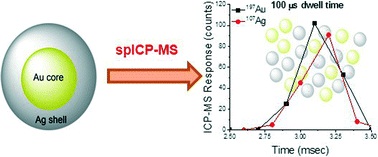
Nanoparticles – they are really small; we can’t see them, hear them or feel them and therefore they are pretty hard to detect! Manuel David Montaño, from Colorado School of Mines, and colleagues have made improvements in the detection and characterization of engineered nanoparticles, simply by reducing the time of detection for each nanoparticle – the dwell time.

In order to determine the toxicity, fate and transport of nanoparticles in the environment, we first need to determine the size and quantity of nanoparticles in the environment. In order to determine the size and quantity of nanoparticles in the environment we need to be able to accurately detect these nanoparticles. Single particle ICP-MS (spICP-MS) is already a promising technique to detect and characterize low concentrations of engineered nanoparticles in biological and environmental matrices. Initially developed for aerosol particle analysis, spICP-MS uses time resolved analysis with dwell times of approximately 10miliseconds. So how does it work? A discrete pulse of intensity, origination from nanoparticle vaporization and ionization, can be detected – the signal generated by the ions can then be correlated to nanoparticle mass.

The problem – this method of detection only works on low concentrations of nanoparticles. In high concentrations of nanoparticles, two or more nanoparticles can be detected during the same dwell time giving invalid results. It appears that particles are larger in size and lower in concentration that they really would be in the environment. To overcome this problem, often samples have to be diluted considerably, making the results less environmentally relevant. In this study, instead of diluting the samples, researchers simply reduced the dwell time from milliseconds to microseconds. This improved the resolution and working range of spICP-MS, allowing a greater breadth of environmental samples to be analysed.

You can read the full paper for free* by clicking the link below

Improvements in the detection and characterization of engineered nanoparticles using spICP-MS with microsecond dwell times
M. D. Montaño, H. R. Badiei, S. Bazargan and J. F. Ranville
DOI: 10.1039/C4EN00058G

* Access is free through a registered RSC account – click here to register

Digg This
Reddit This
Stumble Now!
Share on Facebook
Bookmark this on Delicious
Share on LinkedIn
Bookmark this on Technorati
Post on Twitter
Google Buzz (aka. Google Reader)

Nanoparticle Crystal Structure Affects Alkali and Acid Digestion

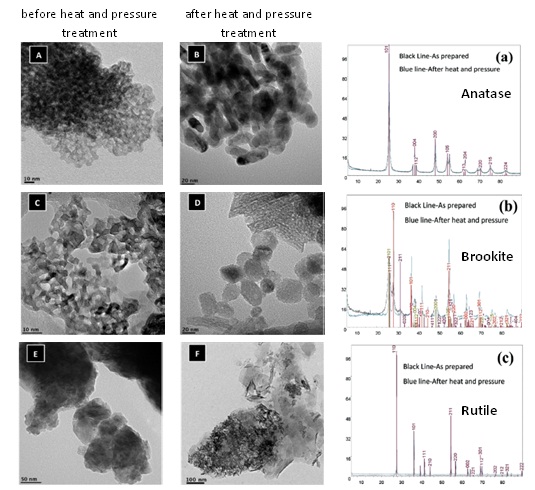
Titanium Oxide nanoparticles (TiO2 NPs) – given their wide applications, exposure scenarios and classification as a class 2B carcinogen (International Agency of Research on Cancer), it is high time for the precise and accurate quantitative analysis of TiO2 NP contamination in environmental samples. Being one of the metal oxides that is extremely hard to solubilize makes accurate and precise measurement of TiO2 a challenge. Recent investigations using mixed acid digestion and alkali potassium hydroxide (KOH) fusion has given improved recoveries of TiO2 when compared to the conventional methods. This is great news for all of us who struggle to quantify TiO2 nanoparticles in complex environmental matrices! However, as with all nanoscale materials there are complications arising from size and polymorph dependent thermodynamic stabilities as well as chemical reactions between Ti and other sample matrices, especially at elevated temperature and pressure. Thus, R. G. Silva and coworkers of United States Environmental Protection Agency (US-EPA) investigate the digestibility of different polymorphs of TiO2 NPs; anatase, rutile and brookite. These samples were used for spiking environmental matrices consisting of river sediment and clay minerals (bentonite and kaolinite). Furthermore, a portion of these were subjected to heat (300OC) and pressure (10.3 bar) treatment to investigate its impact on the Ti recovery from the TiO2 NPs.

Extensive characterization of all three nanoparticle samples with respect to size, shape, crystallinity and surface area before and after the heat and pressure treatments showed significant changes in the physicochemical properties of anatase and brookite. Rutile on the other hand was resistant to changes. In terms of digestion, acid digestion resulted in relatively lower Ti concentration for the pure TiO2 NP samples that underwent heat and pressure treatment. In contrast, alkali fusion resulted in increased levels of Ti. Nevertheless, when the TiO2 NP polymorphs were blended in the environmental matrices, for anatase and brookite the recoveries were similar for both types of digestions. However, for the recovery of rutile the alkali fusion method proved to be superior to that of the mixed acid method. Therefore, this work recommends using the alkali fusion method for the extraction of Ti from TiO2 NP contaminated unknown environmental samples.

To access the full article, download a copy for free* by clicking the link below.

Polymorph-dependent titanium dioxide nanoparticle dissolution in acidic and alkali digestions

R. G. Silva, M. N. Nadagouda, C. L. Patterson, Srinivas Panguluri, T. P. Luxton, E. Sahle-Demessieb and   C. A. Impellitterib
DOI: 10.1039/C3EN00103B

*Access is free through a registered RSC account – click here to register

Digg This
Reddit This
Stumble Now!
Share on Facebook
Bookmark this on Delicious
Share on LinkedIn
Bookmark this on Technorati
Post on Twitter
Google Buzz (aka. Google Reader)

Environmental Effects of Nano International Conference

The 9th International Conference on the Environmental Effects of Nanoparticles and Nanomaterials

September 7-11, 2014


The 9th International Conference on the Environmental Effects of Nanoparticles and Nanomaterials (Nano2014) aims to bring together researchers, regulators, and industry to discuss the potential hazards and risks of current and future applications in the key sector of nanotechnology, along with mechanisms to bring about risk reduction while maintaining economic and social benefits.

Human exposure and hazard will be key aspects of the conference and the program will contain multiple sessions related to:

1) physical and chemical properties of nanoparticles as related to the environment and health,

2) fate, behavior and transformations,

3) toxicology and ecotoxicology,

4) social and regulatory sciences,

5) innovation and applications of nanotechnology to environmental and health issues.

Don’t miss out – submit your abstracts by 15th June 2014!

Registration can be completed online and you must be registered by 30th June 2014 in order to attend this conference

Digg This
Reddit This
Stumble Now!
Share on Facebook
Bookmark this on Delicious
Share on LinkedIn
Bookmark this on Technorati
Post on Twitter
Google Buzz (aka. Google Reader)