Archive for the ‘Themed Issue’ Category

Point-of-care diagnostics open call

Analytical Methods is delighted to announce a call for papers for our latest themed collection on Point-of-care diagnostics, guest edited by Professors Stefano Cinti (University of Naples Federico II, Italy), Sevinc Kurbanoglu (Ankara University, Turkiye), Eden Morales (National Autonomous University of Mexico, Mexico), Camelia Bala (University of Bucharest, Romania), Ningtao Cheng (Zhejiang University, China), and Waleed Alahmad (Chulalongkorn University, Thailand).

This themed issue invites submissions of original research articles and comprehensive, high-quality reviews that present innovative concepts, technologies and methods in point-of-care (POC) diagnostics. The scope specifically encompasses the design, development and application of portable, rapid and user-friendly diagnostic platforms, and is intended for decentralized solutions. We particularly welcome contributions describing novel sensing strategies, including but not limited to:

  • paper-based and felxible devices
  • lab-on-chip and lab-on-a-tip systems
  • wearable and implantable sensors
  • smartphone-integrated diagnostics and self-testing tools

Studies employing advanced functional materials, nanomaterials, smart polymers, hydrogels, biomimetic, to enable optical, electrochemical, mechanical, photonics, and/or multimodal transduction are strongly encouraged. In addition, submissions addressing sample handling and preparation at the point of need, including on-device filtration, separation, preconcentration and signal amplification, will be considered. Contributions may focus on applications spanning clinical diagnostics, precision and personalized medicine, infectious disease monitoring, environmental and food safety testing.

A promotional banner for Analytical Methods featuring the theme “Point-of-care diagnostics” with a submission deadline of 13 July 2026. The background shows an abstract scientific image with soft, colorful light effects. Below the text, six rectangular profile images of different individuals are displayed, each with a name beneath: Stefano Cinti, Ningtao Cheng, Camellia Bala, Sevinc Kurbanoglu, Eden Morales-Narváez, and Waleed Alahmad. At the bottom left, the words “Submit now” appear, and at the bottom right is the Royal Society of Chemistry logo.

We hope that readers find this themed collection informative and useful. Submissions to the journal should fit within the scope of Analytical Methods.  Please see the journal’s website for more information on the journal’s scope, standards, article types and author guidelines.

Open for submissions until 13th July 2026

The Editorial Office reserves the right to check suitability of submissions in relation to the scope of both the journal and the collection, and as such inclusion of accepted articles in the final themed collection is not guaranteed.


How to submit

If you would like to contribute to this themed collection

  1. Log into either the Analytical Methods online submission system.
  2. Submit your article
  3. Select your article type and under the “Themed issues” section in the submission form mention that it is an Open Call contribution to the Point-of-care diagnostics collection
  4. Add a “Note to the Editor” that this is from the Open Call

The Editorial Office reserves the right to check suitability of submissions in relation to the scope of both the journal and the collection, and inclusion of accepted articles in the final themed issue is not guaranteed.

Please note that all submissions will be subject to initial assessment and rigorous peer review to meet the usual high standards of Analytical Methods. All articles featured in the collection must be in scope and as such final inclusion is not guaranteed and will be up to the discretion of the guest editors.

We look forward to receiving your latest work and considering it for this collection. Please do get in touch at methods-rsc@rsc.org if you have any questions at all.

Digg This
Reddit This
Stumble Now!
Share on Facebook
Bookmark this on Delicious
Share on LinkedIn
Bookmark this on Technorati
Post on Twitter
Google Buzz (aka. Google Reader)

Nanomaterials for Sensing (RSC) – Call for papers

Analytical Methods is delighted to announce a call for papers for our latest themed collection on Nanomaterials for sensing, guest edited by Professor Beatriz Jurado Sánchez (Universidad de Alcalá, Spain), Professor Suban Kumar Sahoo, (SV National Institute of Technology, India) and Professor Itthipon Jeerapan (Prince of Songkla University, Thailand).

Open call promotion featuing guest editors Professor Beatriz Jurado Sánchez (Universidad de Alcalá, Spain), Professor Suban Kumar Sahoo, (SV National Institute of Technology, India) Professor Itthipon Jeerapan ( Prince of Songkla University, Thailand).

This themed issue invites submissions of original research and comprehensive, high-quality review articles detailing and illustrating innovative methodologies for the application of nanomaterials in analytical sensing. We specifically target studies involving novel nanomaterials — including carbon nanomaterials, MXenes, metal nanoclusters, 2D nanomaterials, and metal-organic frameworks (MOFs) — in the development of advanced optical or electrochemical sensors. We also welcome contributions focused on sensing applications such as quantum dots, polymeric dots, and upconversion nanoparticles, particularly where these materials enable enhanced sensitivity, selectivity, or novel detection mechanisms. Additionally, studies on the deployment of these nanomaterials for improved sample preparation or as novel stationary/mobile phases in chromatographic techniques are strongly encouraged.

We hope that readers find this themed collection informative and useful. Submissions to the journal should fit within the scope of Analytical Methods.  Please see the journal’s website for more information on the journal’s scope, standards, article types and author guidelines.

Open for submissions until 30th May 2026

The Editorial Office reserves the right to check suitability of submissions in relation to the scope of both the journal and the collection, and as such inclusion of accepted articles in the final themed collection is not guaranteed.


How to submit

If you would like to contribute to this themed collection

  1. Log into either the Analytical Methods online submission system.
  2. Submit your article
  3. Select your article type and under the “Themed issues” section in the submission form mention that it is an Open Call contribution to the Nanomaterials for sensing collection
  4. Add a “Note to the Editor” that this is from the Open Call

The Editorial Office reserves the right to check suitability of submissions in relation to the scope of both the journal and the collection, and inclusion of accepted articles in the final themed issue is not guaranteed.

Please note that all submissions will be subject to initial assessment and rigorous peer review to meet the usual high standards of Analytical Methods. All articles featured in the collection must be in scope and as such final inclusion is not guaranteed and will be up to the discretion of the guest editors.

We look forward to receiving your latest work and considering it for this collection. Please do get in touch at methods-rsc@rsc.org if you have any questions at all.

Digg This
Reddit This
Stumble Now!
Share on Facebook
Bookmark this on Delicious
Share on LinkedIn
Bookmark this on Technorati
Post on Twitter
Google Buzz (aka. Google Reader)

Advanced Separations Themed Collection Published

We are delighted to announce the publication of the themed collection focusing on Advanced Separation in Analytical Methods focusing on Advanced Separations, guest edited by Analytical Methods Associate Editor, Zhen Liu (Nanjing University, China), Wenwan Zhong (University of California, Riverside, USA) and Takuya Kubo (Kyoto University, Japan).

This collection contains papers and reviews on the topics of advanced materials and substances for separation, microseparation, multidimensional separation, 3D printing for separation, electrophoretic cytometry, and advanced separation techniques for challenging applications (such as food safety and -omics studies).

The collection can be accessed here. You can read the Guest Editors’ introduction to the collection here.

These articles will be free to access until 1st April 2022

Digg This
Reddit This
Stumble Now!
Share on Facebook
Bookmark this on Delicious
Share on LinkedIn
Bookmark this on Technorati
Post on Twitter
Google Buzz (aka. Google Reader)

New themed collection in Analytical Methods: Advanced Separations

We are delighted to announce the launch of a new themed collection in Analytical Methods focusing on Advanced Separations, guest edited by Analytical Methods Associate Editor, Zhen Liu (Nanjing University, China), Wenwan Zhong (University of California, Riverside, USA) and Takuya Kubo (Kyoto University, Japan).

This collection will welcome review articles and primary research on the following topics:

  • Advanced materials and substances for separation
  • Microchannel or nanochannel based separation (microseparation)
  • Multidimensional separation
  • 3D printing for separation
  • Electrophoretic cytometry
  • Advanced separation techniques for challenging applications (food safety, -omics studies etc.)

The submission deadline for this collection is November 30th 2020.

However, we are very aware of the challenges faced by researchers as COVID-19 continues to affect the world, and we will be very flexible with this deadline. Please do let us know if you’d like to be involved, even if you suspect the deadline above may be unachievable.


If you are interested in submitting to this collection, please contact the Analytical Methods Editorial Office at methods-rsc@rsc.org.

Please note that all submitted manuscripts will be subject to peer review in accordance with the journal’s normal standards. Articles included in the collection will be published as they are accepted and collected into an online collection.

Digg This
Reddit This
Stumble Now!
Share on Facebook
Bookmark this on Delicious
Share on LinkedIn
Bookmark this on Technorati
Post on Twitter
Google Buzz (aka. Google Reader)

Emerging Contaminants – themed collection open for submissions

We are delighted to announce the launch of a new themed collection on emerging contaminants, guest edited by Analytical Methods Associate Editor Fiona Regan (Dublin City University), Leon Barron (King’s College London) and Sara Castiglioni (Istituto di Ricerche Farmacologiche Mario Negri).

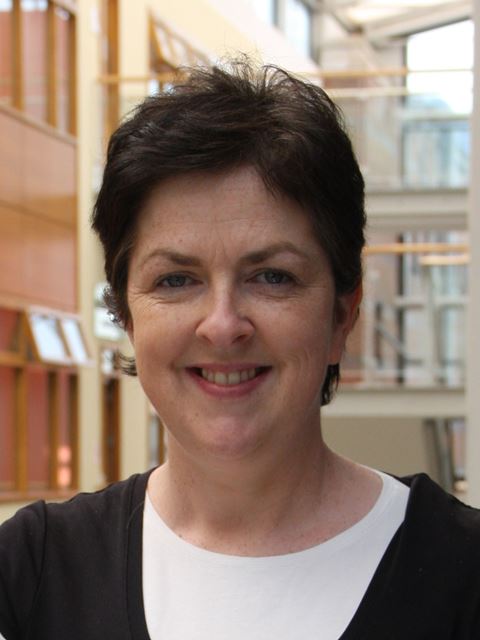
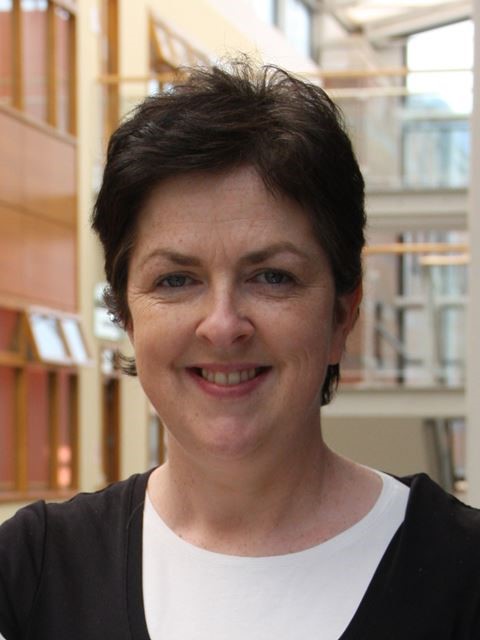
Fiona ReganLeon BarronSara Castiglioni

Emerging contaminants are pollutants of growing concern. They are mainly organic compounds such as: pesticides, pharmaceuticals and personal care products, hormones, plasticizers, food additives, wood preservatives, laundry detergents, surfactants, disinfectants, flame retardants, and other organic compounds that were found recently in natural wastewater stream generated by human and industrial activities.

We invite primary research and review content focusing on analytical methods that can be used for sampling and pre-treatment for chemicals of concern, chromatographic and other separation methods, including high resolution screening, mass spectrometry for unknowns in samples, and also new column applications.

We acknowledge that current monitoring methods are infrequent and therefore new methods for measurement of CECs are being developed. These methods include chemical sensors and biosensors as well as passive sampling methods. This themed issue also invites papers on real applications to environmental (water, air, soil) and other samples (biological, micro plastics) to demonstrate the widespread occurrence of these chemicals and the challenges in addressing sample matrix analytically. A growing drive to develop effect based methods is emerging and the challenge of quantifying and addressing chemical cocktails will provide interest to the Analytical Methods audience also. 

If you are interested in submitting to this collection, please contact the Analytical Methods Editorial Office.

Submission deadline: 30th November 2020

However if you feel you are unable to meet this deadline due to Covid-19 but are still interested in submitting to the collection please do let us know. We’re very happy to be flexible with deadlines during these unprecedented times. 

Articles included in this collection will be published as they are accepted, and collated into an online collection. Please note all submitted manuscripts will be subject to peer review in accordance with the journal’s normal standards.


Read papers in our sister journals Environmental Science: Processes & Impacts and Environmental Science: Water Research & Technology on the topic of PFAS: rsc.li/pfas


Digg This
Reddit This
Stumble Now!
Share on Facebook
Bookmark this on Delicious
Share on LinkedIn
Bookmark this on Technorati
Post on Twitter
Google Buzz (aka. Google Reader)

Bioanalytical sensors for real world applications- themed collection open for submissions


Analytical Methods has launched a themed collection focusing on bioanalytical sensors for real world applications.

This collection aims to publish papers in which sensors have been used to measure analytes in complex matrices, using robust technologies and with high sensitivity and specificity. The scope of this collection is intentionally broad to cover a broad range of applications both biomedical and environmental. Work which describes challenges in sensing of complex analytes or sensing analytes in complex matrices and how these challenges have been overcome is particularly welcome.


Guest Editors 

This collection is co-guest edited by Assistant Professor Charlie Mace (Tufts University, USA), Dr Aoife Morrin (Dublin City University, Ireland) and Associate Professor Rebecca Whelan (University of Notre Dame, USA).

Charlie Mace                                                  Aoife Morrin                                                     Rebecca Whelan


Submission deadline: 31st December 2019


Contribute to this collection

We welcome submissions of original research and review articles. Articles will be added to the collection as they are accepted and the resulting issue will benefit from extensive promotion.

About Analytical Methods

Guided by Editor-in-Chief Scott Martin and an international team of Associate Editors and Editorial Board members, Analytical Methods welcomes early applications of new analytical methods and technology demonstrating potential for societal impact. The journal requires that methods and technology reported in the journal are sufficiently innovative, robust, accurate, and compared to other available methods for the intended application. Developments with interdisciplinary approaches are particularly welcome. Systems should be proven with suitably complex and analytically challenging samples. For more information about the journal or its scope, please visit the journal website.


Interested in contributing?

Email methods-rsc@rsc.org

Digg This
Reddit This
Stumble Now!
Share on Facebook
Bookmark this on Delicious
Share on LinkedIn
Bookmark this on Technorati
Post on Twitter
Google Buzz (aka. Google Reader)

Electrochemistry for health applications: call for papers!

Analytical Methods is developing a themed collection to highlight the exciting area of electrochemistry for health applications. The scope of this themed collection is intentionally broad to cover electrochemical sensing, biosensing and applications in diagnostics and monitoring and neuroelectrochemistry. The criteria that Analytical Methods strives to emphasize, a clear societal impact, must be emphasized in these articles as well.

This online collection will be guest edited by Associate Editors C. Banks and B. Jill Venton and Reviews Editor Tony Killard.

Craig Banks

Manchester Metropolitan University, UK

B. Jill Venton

University of Virginia, USA

Tony Killard

University of West England, UK

To celebrate the retirement of Professor Dermot Diamond, the collection will also feature a special editorial highlighting Professor Diamond’s important contributions to the field of electrochemical sensors.

Analytical Methods welcomes early applications of new analytical methods with clear societal impact. Articles included in the collection will be published as they are accepted and collected into an online collection which will receive extensive promotion. For more information about the journal or its scope, please visit the journal website or the recent editorial by the Editor-in-Chief, Scott Martin.

If you are interested in this opportunity or have any questions, please contact methods-rsc@rsc.org.

Submission window: 1st June 2018 -30th November 2018!

Digg This
Reddit This
Stumble Now!
Share on Facebook
Bookmark this on Delicious
Share on LinkedIn
Bookmark this on Technorati
Post on Twitter
Google Buzz (aka. Google Reader)

Analytical Methods Emerging Investigator Series

Launched in 2018, Analytical Methods is now running an Emerging Investigator Series, featuring the best work in analytical chemistry being carried out by early career researchers. This series is ongoing, with accepted manuscripts being published in the next available issue of the journal and assembled in a high profile online collection.


We are committed to supporting up-and-coming scientists in the early stages of their independent careers and our Emerging Investigator Series provides a platform for early career researchers to showcase their best work to a broad audience. The ongoing series allows flexibility for contributors to participate in the venture without the restriction of submission deadlines, and will benefit the analytical chemistry community through continued exposure to the exciting work being done by its early-career members. Authors benefit from increased visibility, with individual mentions in the journal content alerts and individual feature interviews on the journal blog. Published articles in the series will be made free to access for a limited period.


Series Editors

The series has two international Series Editors with a broad range of expertise, representing the analytical chemistry community.

Fiona Regan
Dublin City University, Ireland

Juan García-Reyes
University of Jaén, Spain


Who can be considered?

Scientists who are within five years of obtaining their first independent position can apply to have their research highlighted in the Emerging Investigators Series. Appropriate consideration will be given to career breaks and alternative career paths. The series will only feature primary research articles, highlighting the author’s research contribution to the field.

Applications in the form of a CV will be reviewed by the Editorial Office and the Emerging Investigator Series Editors. The selection criteria for the Emerging Investigators Series will be based on the following:

  • Fit of research programme to Analytical Methods scope
  • Quality of publications, profile within institute and/or community

Articles submitted to the journal for the Series will undergo the usual peer-review process, and no guarantees of publication can be given to successful applicants.


Interested in applying?

Contact us: methods-rsc@rsc.org


Follow @MethodsRSC on Twitter to keep up to date with the latest papers in the series.


Digg This
Reddit This
Stumble Now!
Share on Facebook
Bookmark this on Delicious
Share on LinkedIn
Bookmark this on Technorati
Post on Twitter
Google Buzz (aka. Google Reader)

Microfluidic systems with societal impact: call for papers!

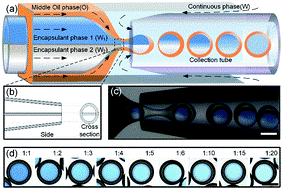
Analytical Methods is developing a themed collection to highlight the exciting area of microfluidic systems. This multi-disciplinary field has seen growth in recent years due to its increasing applicability to a range of areas, from inkjet print heads to DNA chips.

Due to the integration of microfluidic systems throughout science, the scope of this collection is intentionally broad and encompasses applications of these systems to diverse fields including biological, environmental, forensics and diagnostics.

Taken from: Hongyuan Jiang et al. Anal. Methods, 2017,9, 2511-2516

This online collection will be guest edited by Associate Editors Christopher Easley, Fiona Regan and Michael Roper.

To celebrate the 60th birthdays of Sue Lunte and James Landers, the collection will also feature a special editorial highlighting the important contributions of these two scientists to the field of microfluidics. This editorial will be written by the Guest Editors, along with Analytical Methods Editor-in-Chief Scott Martin.

Analytical Methods welcomes early applications of new analytical methods with clear societal impact. Articles included in the collection will be published as they are accepted and collected into an online collection which will receive extensive promotion. For more information about the journal or its scope, please visit the journal website or the recent editorial by the Editor-in-Chief, Scott Martin.

Submission window:  1st August 2017 -30th April 2018!

The deadline has now passed, if you’re still interested in submitting to this collection, please contact methods-rsc@rsc.org asap! 

Digg This
Reddit This
Stumble Now!
Share on Facebook
Bookmark this on Delicious
Share on LinkedIn
Bookmark this on Technorati
Post on Twitter
Google Buzz (aka. Google Reader)

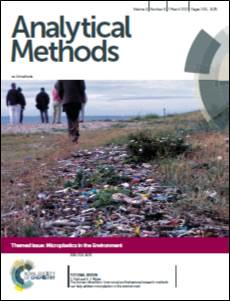
Themed issue on microplastics in the environment now published!

The new themed issue for Analytical Methods titled Microplastics in the environment” is now published.

Guest Edited by Professors Fiona Regan (Dublin City University, UK), Chelsea Rochman (University of California Davis, USA) and Richard Thompson (Plymouth University, UK), this themed issue highlights the outstanding work in microplastics analysis and provides insight into this emerging and important area of research, coinciding with the recent high-profile media coverage on this topic.

All articles in the collection are free* to read until the 17th April 2017 (Access is free through a registered RSC publishing account).

This themed issue is introduced by the Guest Editors in their Editorial:

On the harmonization of methods for measuring the occurrence, fate and effects of microplastics

There are also two additional Editorials from leaders in the field discussing the current challenges facing researchers in microplastics analysis:

Improving microplastics source apportionment: a role for microplastic morphology and taxonomy?

Paul A. Helm

Analytical challenges associated with the determination of microplastics in the environment

Robert C. Hale

We hope you enjoy reading this issue!

Remember you can Sign-up to Analytical Methods table of contents alerts. You can also sign-up to our free journal news alert to receive information about most read articles, themed issues, journal news, as well as calls for papers and invitations: www.rsc.li/alerts

You can also follow Analytical Methods @MethodsRSC on Twitter.

Digg This
Reddit This
Stumble Now!
Share on Facebook
Bookmark this on Delicious
Share on LinkedIn
Bookmark this on Technorati
Post on Twitter
Google Buzz (aka. Google Reader)