Nanomaterials for Sensing (RSC) – Call for papers

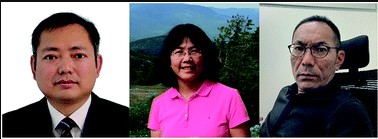
Analytical Methods is delighted to announce a call for papers for our latest themed collection on Nanomaterials for sensing, guest edited by Professor Beatriz Jurado Sánchez (Universidad de Alcalá, Spain), Professor Suban Kumar Sahoo, (SV National Institute of Technology, India) and Professor Itthipon Jeerapan (Prince of Songkla University, Thailand).

Open call promotion featuing guest editors Professor Beatriz Jurado Sánchez (Universidad de Alcalá, Spain), Professor Suban Kumar Sahoo, (SV National Institute of Technology, India) Professor Itthipon Jeerapan ( Prince of Songkla University, Thailand).

This themed issue invites submissions of original research and comprehensive, high-quality review articles detailing and illustrating innovative methodologies for the application of nanomaterials in analytical sensing. We specifically target studies involving novel nanomaterials — including carbon nanomaterials, MXenes, metal nanoclusters, 2D nanomaterials, and metal-organic frameworks (MOFs) — in the development of advanced optical or electrochemical sensors. We also welcome contributions focused on sensing applications such as quantum dots, polymeric dots, and upconversion nanoparticles, particularly where these materials enable enhanced sensitivity, selectivity, or novel detection mechanisms. Additionally, studies on the deployment of these nanomaterials for improved sample preparation or as novel stationary/mobile phases in chromatographic techniques are strongly encouraged.

We hope that readers find this themed collection informative and useful. Submissions to the journal should fit within the scope of Analytical Methods.  Please see the journal’s website for more information on the journal’s scope, standards, article types and author guidelines.

Open for submissions until 30th May 2026

The Editorial Office reserves the right to check suitability of submissions in relation to the scope of both the journal and the collection, and as such inclusion of accepted articles in the final themed collection is not guaranteed.


How to submit

If you would like to contribute to this themed collection

  1. Log into either the Analytical Methods online submission system.
  2. Submit your article
  3. Select your article type and under the “Themed issues” section in the submission form mention that it is an Open Call contribution to the Nanomaterials for sensing collection
  4. Add a “Note to the Editor” that this is from the Open Call

The Editorial Office reserves the right to check suitability of submissions in relation to the scope of both the journal and the collection, and inclusion of accepted articles in the final themed issue is not guaranteed.

Please note that all submissions will be subject to initial assessment and rigorous peer review to meet the usual high standards of Analytical Methods. All articles featured in the collection must be in scope and as such final inclusion is not guaranteed and will be up to the discretion of the guest editors.

We look forward to receiving your latest work and considering it for this collection. Please do get in touch at methods-rsc@rsc.org if you have any questions at all.

Digg This
Reddit This
Stumble Now!
Share on Facebook
Bookmark this on Delicious
Share on LinkedIn
Bookmark this on Technorati
Post on Twitter
Google Buzz (aka. Google Reader)

Top Tips for submitting to Analytical Methods!

Submitting a manuscript can feel overwhelming, but our editorial board is here to help. We asked our associate editors to share their best advice for authors preparing submissions for Analytical Methods. We’re pleased to present their “Top Tips for Authors” – practical insights designed to help you navigate the submission process with confidence.


*Full submission guidelines can be found here: https://www.rsc.org/publishing/publish-with-us/publish-a-journal-article/analytical-methods

If you are interested in submitting to the journal or have any questions please contact the Analytical Methods Editorial Office.


Digg This
Reddit This
Stumble Now!
Share on Facebook
Bookmark this on Delicious
Share on LinkedIn
Bookmark this on Technorati
Post on Twitter
Google Buzz (aka. Google Reader)

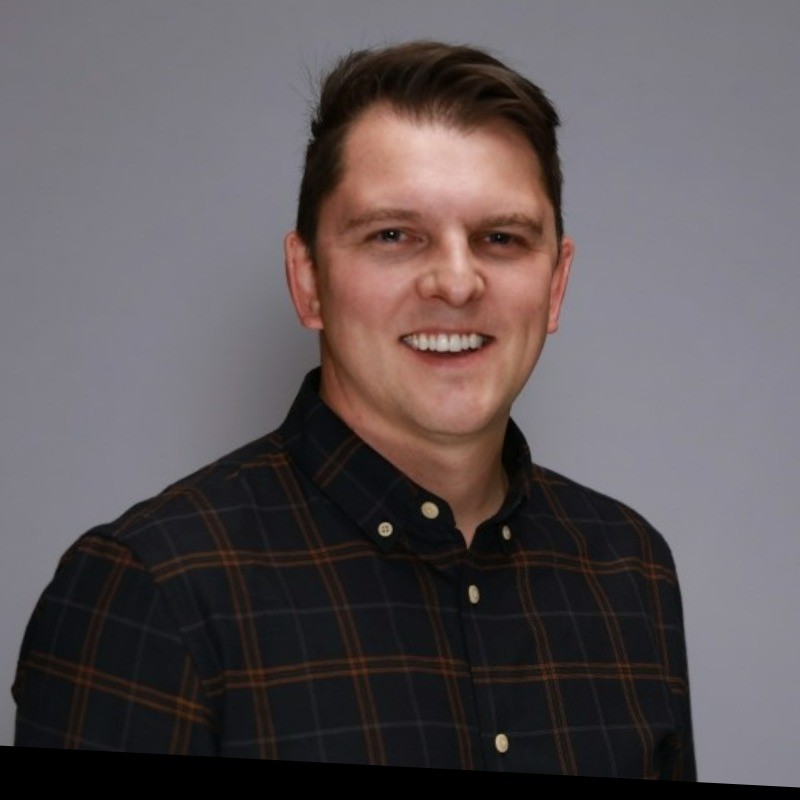
New Analytical Methods Advisory Board Member James Chapman

James Chapman - The University of Queensland | LinkedInAnalytical Methods is delighted to welcome James Chapman (RMIT University, Australia) to the Advisory Board.

James’ research focuses on designing and characterising new materials which can be applied to biological and chemical systems. He integrates chemometrics and analytical chemistry with artificial intelligence to pioneer rapid measurement, diagnostics, and predictive analytics to understand chemical and biological systems, for example how materials interact with bacteria.

Read James’ Review in Analytical Methods: Chemometrics for environmental monitoring: a review

Digg This
Reddit This
Stumble Now!
Share on Facebook
Bookmark this on Delicious
Share on LinkedIn
Bookmark this on Technorati
Post on Twitter
Google Buzz (aka. Google Reader)

L.S. Theobald Award: Celebrating Excellence in Analytical Science

We are delighted to share that nominations for the L.S. Theobald Award are now open.

The L.S. Theobald Award is made in memory of Leslie Stuart Theobald (1898-1979), who was Lecturer/Reader in Analytical Chemistry at Imperial College from 1925 until his retirement in 1963. A brief biography is available on the Royal Society of Chemistry web site. Nominations for the award are invited annually.

The award is made to someone who has demonstrated a significant contribution to the development or application of analytical chemistry/analytical science.

The Analytical Methods Trust (AMT) provides an honorarium of £1000, together with a certificate and covers reasonable expenses incurred in presenting the award lecture.

Read more »

Digg This
Reddit This
Stumble Now!
Share on Facebook
Bookmark this on Delicious
Share on LinkedIn
Bookmark this on Technorati
Post on Twitter
Google Buzz (aka. Google Reader)

Advanced Separations Themed Collection Published

We are delighted to announce the publication of the themed collection focusing on Advanced Separation in Analytical Methods focusing on Advanced Separations, guest edited by Analytical Methods Associate Editor, Zhen Liu (Nanjing University, China), Wenwan Zhong (University of California, Riverside, USA) and Takuya Kubo (Kyoto University, Japan).

This collection contains papers and reviews on the topics of advanced materials and substances for separation, microseparation, multidimensional separation, 3D printing for separation, electrophoretic cytometry, and advanced separation techniques for challenging applications (such as food safety and -omics studies).

The collection can be accessed here. You can read the Guest Editors’ introduction to the collection here.

These articles will be free to access until 1st April 2022

Digg This
Reddit This
Stumble Now!
Share on Facebook
Bookmark this on Delicious
Share on LinkedIn
Bookmark this on Technorati
Post on Twitter
Google Buzz (aka. Google Reader)

We have great news! Analytical Methods is now indexed in MEDLINE®

We’re pleased to announce that Analytical Methods is now indexed in MEDLINE®. This means that all articles published in Analytical Methods will now be discoverable in this key database for biomedical researchers.

MEDLINE® is a bibliographic database owned by the U.S. National Library of Medicine®, and is the primary component of PubMed®.

Analytical Methods continues to publish early applications of new analytical methods and technologies demonstrating potential for societal impact.

Submit your work now! rsc.li/methods

Digg This
Reddit This
Stumble Now!
Share on Facebook
Bookmark this on Delicious
Share on LinkedIn
Bookmark this on Technorati
Post on Twitter
Google Buzz (aka. Google Reader)

New themed collection in Analytical Methods: Advanced Separations

We are delighted to announce the launch of a new themed collection in Analytical Methods focusing on Advanced Separations, guest edited by Analytical Methods Associate Editor, Zhen Liu (Nanjing University, China), Wenwan Zhong (University of California, Riverside, USA) and Takuya Kubo (Kyoto University, Japan).

This collection will welcome review articles and primary research on the following topics:

  • Advanced materials and substances for separation
  • Microchannel or nanochannel based separation (microseparation)
  • Multidimensional separation
  • 3D printing for separation
  • Electrophoretic cytometry
  • Advanced separation techniques for challenging applications (food safety, -omics studies etc.)

The submission deadline for this collection is November 30th 2020.

However, we are very aware of the challenges faced by researchers as COVID-19 continues to affect the world, and we will be very flexible with this deadline. Please do let us know if you’d like to be involved, even if you suspect the deadline above may be unachievable.


If you are interested in submitting to this collection, please contact the Analytical Methods Editorial Office at methods-rsc@rsc.org.

Please note that all submitted manuscripts will be subject to peer review in accordance with the journal’s normal standards. Articles included in the collection will be published as they are accepted and collected into an online collection.

Digg This
Reddit This
Stumble Now!
Share on Facebook
Bookmark this on Delicious
Share on LinkedIn
Bookmark this on Technorati
Post on Twitter
Google Buzz (aka. Google Reader)

New Analytical Methods Associate Editor: Wendell Coltro

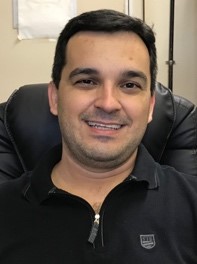
Analytical Methods is very pleased to announce the appointment of our newest Associate Editor, Wendell Coltro.


Wendell K. T. Coltro obtained his BSc in Chemistry from the State University of Maringá (2002). He received his MSc (2004) and Ph.D. (2008) in Analytical Chemistry from the University of São Paulo (in the Institute of Chemistry at São Carlos under the supervision of Professor Emanuel Carrilho. In 2006, he was a visiting scholar at The University of Kansas (USA) under the supervision of Professor Sue Lunte. He is currently Associate Professor and Director of Chemistry at the Federal University of Goiás, Brazil. In the beginning of 2018, he was nominated as affiliate member of the Brazilian Academy of Science as a young researcher. His research interests involve the development of electrophoresis chips, electrochemical sensors, toner- and paper-based devices as well as 3D printed microfluidic chips for applications in bioanalytical and forensic chemistry.


Read some of Wendell’s recent Analytical Methods publications below. Free to read* until August 17th 2020.

Fast determination of cocaine and some common adulterants in seized cocaine samples by capillary electrophoresis with capacitively coupled contactless conductivity detection

DOI: 10.1039/C8AY00795K

Anal. Methods, 2018,10, 2875-2880

Recent advances in toner-based microfluidic devices for bioanalytical applications

DOI: 10.1039/C8AY01095A

Anal. Methods, 2018,10, 2952-2962

Determination of bioavailable lead in atmospheric aerosols using unmodified screen-printed carbon electrodes

DOI: 10.1039/C9AY01301F

Anal. Methods, 2019,11, 4875-4881


Submit your best articles to Wendell now!


*Free to read with an RSC Publishing account

Digg This
Reddit This
Stumble Now!
Share on Facebook
Bookmark this on Delicious
Share on LinkedIn
Bookmark this on Technorati
Post on Twitter
Google Buzz (aka. Google Reader)

Outstanding Reviewers for Analytical Methods in 2019

We would like to highlight the Outstanding Reviewers for Analytical Methods in 2019, as selected by the editorial team, for their significant contribution to the journal. The reviewers have been chosen based on the number, timeliness and quality of the reports completed over the last 12 months.

We would like to say a big thank you to those individuals listed here as well as to all of the reviewers that have supported the journal. Each Outstanding Reviewer will receive a certificate to give recognition for their significant contribution.

Dr Christopher Baker, University of Tennessee, ORCID: 0000-0001-9134-2994

Dr Xiaodong Bi, Hebei University of Chinese Medicine, ORCID: 0000-0002-3795-2131

Professor Qiong Jia, Jilin University, ORCID: 0000-0002-0020-4180

Professor Antonio Molina-Diaz, University of Jaen, ORCID: 0000-0003-2380-192X

Dr Lin-Ru Xu, China Pharmaceutical University, ORCID: 0000-0002-3646-4128

Dr Minghui Yang, Central South University, ORCID: 0000-0002-7612-8137

Dr Zhiyun Zhang, University of Massachusetts, ORCID: 0000-0002-5944-4429

We would also like to thank the Analytical Methods board and the analytical chemistry community for their continued support of the journal, as authors, reviewers and readers.

If you would like to become a reviewer for our journal, just email us with an application form and an up-to-date CV or résumé. You can find more details in our author and reviewer resource centre.

Digg This
Reddit This
Stumble Now!
Share on Facebook
Bookmark this on Delicious
Share on LinkedIn
Bookmark this on Technorati
Post on Twitter
Google Buzz (aka. Google Reader)

Emerging Investigators Series – Ashu Agarwal

We are delighted to introduce our latest Analytical Methods Emerging Investigator, Ashu Agarwal.


Ashu Agarwal is an Assistant Professor of Biomedical Engineering and Associate Director of the Dr. John T Macdonald Foundation Biomedical Nanotechnology Institute at the University of Miami. His undergraduate degree from Indian Institute of Technology, and his PhD from University of Florida are both in Materials Science and Engineering. He then gathered postdoctoral research experience in Biomedical Engineering at Columbia University, and at the Wyss Institute for Biologically Inspired Engineering at Harvard University. The mission of his Physiomimetic Microsystems Laboratory at the University of Miami is to develop human relevant organ mimic platforms for discovery of therapies and drugs, for modeling of disease states, for conducting mechanistic studies, and for differentiation, maturation and evaluation of stem cells. The lab is supported by multiple NIH consortium grants, early stage commercialization grants from Wallace H. Coulter Foundation, and a sponsored research project from Mallinckrodt Pharmaceuticals.

Read Ashu’s Emerging Investigator Series paper ‘Integrated platform for operating and interrogating organs-on-chips‘ and find out more about him in the interview below.

1. Your recent Emerging Investigator Series paper focuses on an integrated platform for the operation and interrogation of organs-on-a-chip. How has your research evolved from your first article to this most recent article?

My graduate work focused on developing nanorobots from biomolecular motors (kinesin) and associated filaments (microtubules). It led to very cool science and good quality papers. I started developing organ on chip applications during my postdoc at Harvard. The first article from my own research lab described a strategy to develop large volume fluidic chips constructed from inert plastic materials (completely PDMS-free) that are reversibly sealed, and ideally suited for organoid and spheroid cultures (Lab on a Chip, 2017, 17, 772 – 781). The article was highlighted as cover and selected as ‘top hot’ article based on peer-review scores. This recent article (Analytical Methods, 2019, 11, 5645 – 5651) describes the development of the hardware ecosystem that a user often needs to operate organ chips. While designing robust organ chips for culturing organoids/spheroids/islets is a major thrust area in my lab, it also important to remove barriers to operate and interrogate those chips using integrated hardware control systems.


2. What aspect of your work are you most excited about at the moment?

Through two recent awards from the NIH, we are embarking on creating human relevant models of two very different diseases: replicating the human islet-immune interactions that lead to type 1 diabetes, and phenotyping the circulating tumor cells and exosomes that lead to metastatic dissemination of breast cancer.

3. In your opinion, what are the key design considerations for developing effective platforms for simple operation of organs-on-a-chip?

Often, hooking up organ chips to pumps, valves and switches at the inflow, and effluent fraction collectors at the outflow, becomes an impediment to the adoption of chip technology by disease biology labs or pharmaceutical industry. An integrated fluid handling platform with associated computer program should help remove those barriers. In addition, an effective fluid platform would also allow integration with imaging platforms, easy connection and detachment of the chip, and reversible access to biological constructs.

4. What do you find most challenging about your research?

Finding the balance between over-designing features (a common engineering trap in academic labs), and not embedding enough functionality for the technology to be useful for the intended end-users.

5. How do you spend your spare time?

I love reading non-fiction, usually biographies, or stories/case-studies of companies and institutions.


6. Which profession would you choose if you were not a scientist?

I never thought I would be a scientist. Either a heavy machinery operator, or an offensive linemen, or an entrepreneur. Hopefully, none of those options are still off the table!

7. Can you share one piece of career-related advice or wisdom with other early career scientists?

Create a microenvironment where innovation is celebrated. Keep telling your troops that they can achieve anything they set their minds to; because they often can.


Digg This
Reddit This
Stumble Now!
Share on Facebook
Bookmark this on Delicious
Share on LinkedIn
Bookmark this on Technorati
Post on Twitter
Google Buzz (aka. Google Reader)