Antigenic sugars identified for Chagas disease

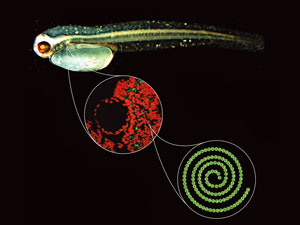
Scientists in the US and Spain have synthesised the combinations of sugars from the surface of the Chagas disease parasite that trigger the human immune response to it. This could help establish better diagnostic tests for the disease, and even a vaccine.

The triatomine beetles that transmit Chagas disease are known as kissing bugs because they tend to feed on people’s faces

The triatomine beetles that transmit Chagas disease are known as kissing bugs because they tend to feed on people’s faces

Chagas disease is caused by the parasite Trypanosoma cruzi. The parasite is transmitted by contaminated food, blood transfusions and blood sucking beetles commonly known as kissing bugs. After a phase of acute local infection, the disease becomes chronic and can eventually lead to life-threatening heart and digestive system disorders. Already endemic in Latin America, Chagas disease is also becoming more of a health issue in Europe and the US with blood banks now screening for it.

Currently, Chagas diagnosis involves spotting the parasite during microscopic investigation of blood samples or checking to see if antibodies in blood samples of infected patients bind to a lysate of Chagas parasites, but these tests are not very sensitive. As treatment is only effective at the acute stage of infection, better diagnostics are highly desirable.

The surface of the parasite is garnished with unusual sugars, but until now it has not been clear which ones elicit antibodies to the parasite. Sugar chemist Katja Michael and glycobiologist Igor Almeida from the University of Texas at El Paso and colleagues have synthesised combinations of α-galactose sugars from the Chagas parasites’ surface to solve the mystery. Sera of blood samples from infected patients were added to fluorescent immunoassays of the different sugar combinations. The assay revealed the disaccharide Galα(1,3)–Galβ as the immunodominant glycotope on the parasite’s cell surface.

Read the full article in Chemistry World

Potential use of synthetic α-galactosyl-containing glycotopes of the parasite Trypanosoma cruzi as diagnostic antigens for Chagas disease
R A Ashmus et al
Org. Biomol. Chem., 2013, Advance Article
DOI: 10.1039/C3OB40887F

Digg This
Reddit This
Stumble Now!
Share on Facebook
Bookmark this on Delicious
Share on LinkedIn
Bookmark this on Technorati
Post on Twitter
Google Buzz (aka. Google Reader)

RSC Organic Division Poster Symposium 2013, sponsored by F. Hoffmann-La Roche, Ltd.

The poster symposium, for final year organic chemistry PhD students, will take place at The Chemistry Centre, Burlington House, London on Monday 2nd December 2013. The symposium offers final year PhD students a chance to showcase their research to their peers, leading academics and industrial chemists, and is open to all branches of organic chemistry.

The symposium has a tradition of being the most competitive and highly regarded organic chemistry symposium for PhD students in the UK, with generous support provided by F. Hoffmann-La Roche, Ltd. There will be a first prize of £500, two runner-up prizes of £250, and a “selected by Industry Prize”. Industrial delegates will be asked to make this selection with a particular emphasis on the potential for application in an industrial context and the winner will also receive a prize of £500.

Closing date for submissions is Wednesday 2nd October. Further information and abstract submission, via the online submission form, can be found on the symposium webpage.

Digg This
Reddit This
Stumble Now!
Share on Facebook
Bookmark this on Delicious
Share on LinkedIn
Bookmark this on Technorati
Post on Twitter
Google Buzz (aka. Google Reader)

A chemical approach to biological antifreeze

Scientists in New Zealand and the US have synthesised a protein that helps inhibit ice crystal growth in Antarctic fish.

Antifreezes are chemical additives used to lower the freezing point of water. While ethylene glycol is widely used in motor vehicles, it is too toxic for use in foodstuffs. Antifreeze proteins are a non-toxic alternative and are currently added to some brands of ice cream to improve the ice cream’s texture by controlling the growth of ice crystals.

A 132 amino acid protein called antifreeze potentiating protein (AFPP) was recently identified in Antarctic fish. AFPP enhances the antifreeze effects of known antifreeze glycoproteins by binding to ice crystals, but is difficult to isolate and purify in quantities sufficient for more widespread use. A chemical synthesis of AFPP would enable the large-scale production of AFPP. It would also give researchers a way to make labelled versions of AFPP for further studies

Margaret Brimble and Clive Evans at the University of Auckland, and their co-workers, have devised a convergent chemical strategy to prepare AFPP. A solubilising tag to improve the handling and purification of intermediate peptides was used in the synthesis as AFPP is not very soluble in aqueous solution and prone to aggregation.

Read the full story on Chemistry World

Chemical synthesis of a masked analogue of the fish antifreeze potentiating protein (AFPP)
Sung-Hyun Yang, Joanna M. Wojnar, Paul W. R. Harris, Arthur L. DeVries, Clive W. Evansd and Margaret A. Brimble
DOI: 10.1039/c3ob41066h

Free to access for 6 weeks!

Digg This
Reddit This
Stumble Now!
Share on Facebook
Bookmark this on Delicious
Share on LinkedIn
Bookmark this on Technorati
Post on Twitter
Google Buzz (aka. Google Reader)

Never shut down another person’s ideas

Vy Dong talks to Marie Cote about catalytic hydroacylation and being a woman in science

Vy Dong is a professor at the University of California at Irvine, US. Her group investigates better tools for organic synthesis, including new reagents, catalysts and strategies.

What inspired you to study science?

During university, I was interested in both the sciences and the humanities, and so I took an advanced English course. After long discussions on different ways to interpret the story, I was frustrated because the instructor would never say whose interpretation was the right one. This frustration solidified that science suited me better, because you can come up with creative proposals and there’s this opportunity to test them and see if they’re valid or not.

What led you to chemistry in particular?

Taking Larry Overman’s sophomore organic chemistry class at the University of California at Irvine was a big turning point for me. Before that I was studying a major between biology and social science, called applied ecology. Larry is an amazing teacher.

A focus of your research is catalysis – could you tell us about a key project you’re running right now in your lab and why you find catalysis so attractive?

One of the major projects in my group right now is focused on catalytic hydroacylation. We want to find ways to selectively activate aldehyde C–H bonds to synthesise ketones, esters and amides. Our goal is to use this C–H activation strategy as a unified approach to all sorts of different heterocycles and polyketides and be able to do this in a way that is regio-, enantio- and chemo-selective. There’s something very attractive about catalysis – you can get things to transform that normally wouldn’t by adding a bit of this magical powder.  

What would you say is the major challenge in catalysis?

For my group, the challenge is: how do we bridge that gap from finding something that is novel in reactivity to something that’s going to be wide in applications? It is a difficult challenge, but inspiring to see how catalytic transformations, like metathesis or hydrogenation or cross-coupling, have changed the way people make molecules.

Where do you look for ideas?

I wish there was a journal we could just flip through. Initially I worried that coming up with ideas was impossible, but new ideas pop up all the time through interactions with my students. My students will suggest something and I’ll suggest something else and this going back and forth is what generates and refines our ideas. It’s important for both sides to never shut down the other person’s ideas, but rather build upon them.

One of my students suggested an experiment and instead of saying ‘that’s known with a different catalyst, let’s not do it,’ I said ‘sure, try it and see what happens.’ The result was not what either of us expected. Instead of saying ‘well, this result is interesting but maybe not that interesting,’ we tried to realise the potential in the result, thinking of all the possible ways that we could take it in different directions. That’s how we got started on the ketone hydroacylation project!

Read the full story on Chemistry World.

Digg This
Reddit This
Stumble Now!
Share on Facebook
Bookmark this on Delicious
Share on LinkedIn
Bookmark this on Technorati
Post on Twitter
Google Buzz (aka. Google Reader)

Thalidomide teams-up with turmeric to kill myeloma cells

Highlighting an OBC article being featured in Chemistry World

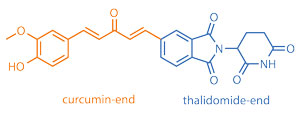
Cancer researchers in the US and China have combined the turmeric spice pigment curcumin and the drug thalidomide to create hybrid compounds that can kill multiple myeloma cells.

curcumin-thalidomide-hybrid-structure_300Multiple myeloma is the second most common type of blood cancer, killing 20% of affected patients each year. The drug thalidomide, banned after causing birth defects when given during pregnancy in the 1950s, was recently rediscovered and approved for the treatment of multiple myeloma. Thalidomide works by disturbing the microenvironment of tumour cells in bone marrow. However, it disintegrates in the body. Curcumin, a yellow pigment from the common spice turmeric, is also active against cancers, including myeloma, but is limited by its poor water solubility.

Shijun Zhang at Virginia Commonwealth University, US, and colleagues, have synthesised compounds combining structural features from both thalidomide and curcumin. ‘The hybrids have enhanced solubility, and higher toxicity against myeloma cells than curcumin, thalidomide, or a mixture of both,’ explains Zhang, ‘so our design rational is going in the right direction.’ Zhang says the hybrids kill myeloma cells through combined mechanisms of action that include the generation of reactive oxygen species and cell cycle inhibition.

Read the full story on Chemistry World.

K Liu et al, Org. Biomol. Chem., 2013, DOI: 10.1039/c3ob40595h

Free to access for 4 weeks!

Digg This
Reddit This
Stumble Now!
Share on Facebook
Bookmark this on Delicious
Share on LinkedIn
Bookmark this on Technorati
Post on Twitter
Google Buzz (aka. Google Reader)

Mukaiyama Aldol Reaction – Join the 40th Anniversary Symposium

We are delighted to announce the Mukaiyama Aldol Reaction – 40th Anniversary Symposium which will take place on Saturday 31st August 2013 in Tokyo, Japan.

Key speakers include:

  • Prof. Ryoji Noyori (RIKEN, and Nagoya University)
  • Prof.  Masakatsu Shibasaki (Institute of Microbial Chemistry)
  • … and many more

For the full list of speakers and topics, please visit the dedicated website.

If you would like to register, please email the conference organisers with with your contact details, using the subject line: ‘Overseas Registration’

Don’t miss out! – Closing date for registrations is 31st July 2013

Digg This
Reddit This
Stumble Now!
Share on Facebook
Bookmark this on Delicious
Share on LinkedIn
Bookmark this on Technorati
Post on Twitter
Google Buzz (aka. Google Reader)

RSC/BMOS Young Investigator Award – Closing date 15 July 2013

15th BMOSThe RSC is delighted to announce a fantastic opportunity for Early Career Researchers to attend the 15th Brazilian Meeting on Organic Synthesis (BMOS) taking place in Campos do Jordão, Brazil, 10-13 November 2013. The conferences combines plenary and invited lectures from distinguished leaders in the field to discuss modern aspects of the art of organic synthesis. The full programme and list of speakers can be viewed via the conference website.

The Organic Division of the RSC will allocate awards to allow four outstanding researchers (two from the UK and two from Latin America) to attend the conference. Applicants must be 40 years old or under on the closing date – 15 July 2013. The winner will be selected by a selection committee which will include members of the RSC Organic Division and BMOS Organising Committee. Winners will receive a free registration, a certificate, an invitation to deliver a flash presentation and a generous contribution towards travel and accommodation. For more information and to apply visit: http://rsc.li/bmos15

Applications should be sent to RSC Science by closing date 15 July 2013  with email subject RSC/BMOS Young Investigator Award

For any queries please contact science@rsc.org

Digg This
Reddit This
Stumble Now!
Share on Facebook
Bookmark this on Delicious
Share on LinkedIn
Bookmark this on Technorati
Post on Twitter
Google Buzz (aka. Google Reader)

Carboxylate-isostere analogs of daptomycin: synthesizing the next generation of antibiotics

This paper is HOT as recommended by the referees, and is free to access for 4 weeks.
Published on behalf of Steve Moore, Organic & Biomolecular Chemistry web science writer.

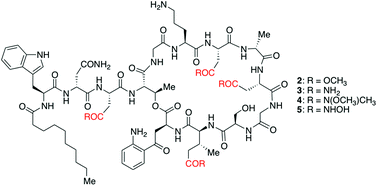
The emergence of multi-drug resistant bacterial infections has created a pressing need for the identification of new drugs. This HOT article describes the chemical modification of daptomycin, an antibiotic used to treat Gram-positive bacterial infections.  Because of its anionic character daptomycin has a high affinity to pulmonary surfactants, but this limits its use in the treatment of pulmonary infections.

Scott Miller and co-workers hypothesized that reducing surfactant interactions may increase the antibiotic activity of daptomycin. Consequently, they set out to convert the daptomycin carboxylic acid moieties to carboxylate isosteres. This paper reports a direct and efficient procedure to produce isostere analogues of daptomycin, suppressing backbone-cyclization side reactions. The use of a high resolution UPLC-MS/MS technique to characterise the synthetic products by fragmentation analysis is also described.

carboxylate-isostere analogs of daptomycin

An efficient chemical synthesis of carboxylate-isostere analogs of daptomycin
Sabesan Yoganathan, Ning Yin, Yong He, Michael F. Mesleh, Yu Gui Gu and Scott J. Miller
DOI:
10.1039/C3OB40924D

Free to access for 4 weeks

Digg This
Reddit This
Stumble Now!
Share on Facebook
Bookmark this on Delicious
Share on LinkedIn
Bookmark this on Technorati
Post on Twitter
Google Buzz (aka. Google Reader)

Latest HOT articles in OBC

These articles are HOT as recommended by the referees. And we’ve made them free to access for 4 weeks!

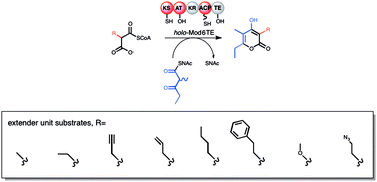
Promiscuity of a modular polyketide synthase towards natural and non-natural extender units
Irina Koryakina, John B. McArthur, Matthew M. Draelos and Gavin J. Williams
DOI: 10.1039/c3ob40633d

Promiscuity of a modular polyketide synthase towards natural and non-natural extender units

Synthesis of bis-α,α′-amino acids through diastereoselective bis-alkylations of chiral Ni(II)-complexes of glycine
Jiang Wang, Hong Liu, José Luis Aceña, Daniel Houck, Ryosuke Takeda, Hiroki Moriwaki, Tatsunori Sato and Vadim A. Soloshonok
DOI: 10.1039/c3ob40594j

Synthesis of bis-α,α′-amino acids through diastereoselective bis-alkylations of chiral Ni(II)-complexes of glycine

Aerobic C–H amination of tetrahydrocarbazole derivatives via photochemically generated hydroperoxides
Naeem Gulzar and Martin Klussmann
DOI: 10.1039/c3ob40919h

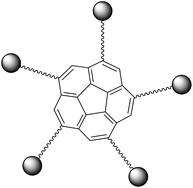
Nanomolar cholera toxin inhibitors based on symmetrical pentavalent ganglioside GM1os-sym corannulenes
Martin Mattarella, Jaime Garcia-Hartjes, Tom Wennekes, Han Zuilhof and Jay S. Siegel
DOI: 10.1039/c3ob40438b

Nanomolar cholera toxin inhibitors based on symmetrical pentavalent ganglioside GM1os-sym corannulenes

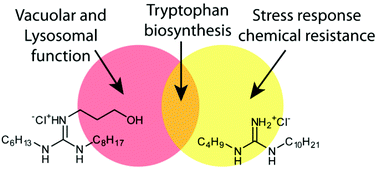
Chemical-genetic identification of the biochemical targets of polyalkyl guanidinium biocides
Drew Bowie, Paria Parvizi, Dustin Duncan, Christopher J. Nelson and Thomas M. Fyles
DOI: 10.1039/c3ob40593a

Chemical-genetic identification of the biochemical targets of polyalkyl guanidinium biocides

All free to access for 4 weeks!

Digg This
Reddit This
Stumble Now!
Share on Facebook
Bookmark this on Delicious
Share on LinkedIn
Bookmark this on Technorati
Post on Twitter
Google Buzz (aka. Google Reader)

Meet the team at ESOC 2013

 I will shortly be attending the 18th European Symposium on Organic Chemistry (ESOC 2013) held in Marseilles, France, 7-12 July, and if you too are in attendance, I’d love to meet you there!

Dr Marie Cote, Oganic & Biomolecular Chemistry Deputy Editor

Please let us know if you will also be in attendance and would like to arrange a meeting – simply email us at the OBC editorial office.

OBC is delighted to be a media partner of the conference, and there’s lots to look forward to again on this 18th edition of the symposium:

  • Prof. Ben Feringa (University of Groningen, The Netherlands) will be presented with the 2013 Lilly European Distinguished Award,
  • Prof. Nazario Martin (Universidad Complutense de Madrid, Spain) is the recipient of the 2012 EuCheMs Lecture Award, and
  • Dr Joel Turconi (Sanofi, France) will present the SANOFI Lecture

Plenary lectures at the symposium will be given by :

  • Prof. Alexandre Alexakis (University of Geneva, Swiss)
  • Prof. Fernando P. Cossio (University of the Basque Country, Spain)
  • Prof. Ben Davis (University of Oxford, UK)
  • Prof. Frank Glorius (University of Muenster, Germany)
  • Prof. David MacMillan (Princeton University, USA)
  • Prof. Eiichi Nakamura (University of Tokyo, Japan)
  • Prof. Michael Orfanopoulos (University of Crete, Greece)
  • Prof. Joost Reek (Van ‘t Hoff Institute for Molecular Sciences, The Netherlands)
  • Prof. Raffaele Riccio (Universita degli studi di Salerno, Italy)
  • Prof. Doug Stephan (University of Toronto, Canada)

Access the full scientific programme

    I look forward to meeting many of you in Marseilles!

Digg This
Reddit This
Stumble Now!
Share on Facebook
Bookmark this on Delicious
Share on LinkedIn
Bookmark this on Technorati
Post on Twitter
Google Buzz (aka. Google Reader)