Take 1…minute for chemistry in health

Can you explain the importance of chemistry to human health in just 1 minute? If you’re an early-career researcher who is up to the challenge, making a 1 minute video could win you £500.

The chemical sciences will be fundamental in helping us meet the healthcare challenges of the future, and we are committed to ensuring that they contribute to their full potential. As part of our work in this area, we are inviting undergraduate and PhD students, post-docs and those starting out their career in industry to produce an original video that demonstrates the importance of chemistry in health.

We are looking for imaginative ways of showcasing how chemistry helps us address healthcare challenges. Your video should be no longer than 1 minute, and you can use any approach you like.

The winner will receive a £500 cash prize, with a £250 prize for second place and £150 prize for third place up for grabs too.

Stuck for inspiration? Last year’s winning video is a good place to start. John Gleeson’s video was selected based on the effective use of language, dynamic style, creativity and its accurate content.

The closing date for entries to be submitted is 30 January 2015. Our judging panel will select the top five videos. We will then publish the shortlisted videos online and open the judging to the public to determine the winner and the runners up.

For more details on how to enter the competition and who is eligible, join us at the Take 1… page.

Good luck!

Digg This
Reddit This
Stumble Now!
Share on Facebook
Bookmark this on Delicious
Share on LinkedIn
Bookmark this on Technorati
Post on Twitter
Google Buzz (aka. Google Reader)

A new reagent for click bioconjugation

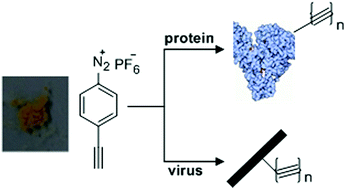
A recent communication in Organic and Biomolecular Chemistry reports the synthesis of a new reagent for the introduction of alkynes into proteins; a key step for click bioconjugation. The new diazonium reagent was prepared in a one-pot synthesis from commercially available 4-ethynylaniline.

Having optimized bioconjugation in a tyrosine containing small molecule, the new diazonium reagent was then used to covalently label proteins. Fluorescence labelling of protein surface tyrosine residues was achieved under mild conditions (pH 8.0) by reaction of the protein with the diazonium reagent and subsequent reaction with an azide-containing fluorescent compound. The new diazonium reagent was also used to achieve protein PEGylation; a strategy that could be employed to improve protein stability and reduce immunogenicity.

The new diazonium reagent can facilitate bioconjugation in a range of proteins and could be a useful addition to the biochemist’s toolbox.

Read the full article:
An efficient reagent for covalent introduction of alkynes into proteins
Jie Zhang, Dejun Ma, Dawei Du, Zhen Xi and Long Yi
Org. Biomol. Chem., 2014, DOI: 10.1039/C4OB01873G

Digg This
Reddit This
Stumble Now!
Share on Facebook
Bookmark this on Delicious
Share on LinkedIn
Bookmark this on Technorati
Post on Twitter
Google Buzz (aka. Google Reader)

HOT Organic & Biomolecular Chemistry articles

The following Organic & Biomolecular Chemistry articles have all been recommened by the reviewers of the articles as being particularly interesting or particularly significant research. These have all been made free to access until 30th November. The order they appear in the list holds no special meaning or ranking.

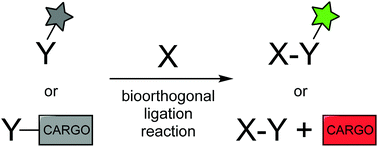
Design strategies for bioorthogonal smart probes
Peyton Shieh and Carolyn R. Bertozzi
DOI: 10.1039/C4OB01632G, Review Article

bioorthogonal smart probes


Stereoselective intermolecular [2 + 2]-photocycloaddition reactions of maleic anhydride: stereocontrolled and regiocontrolled access to 1,2,3-trifunctionalized cyclobutanes
Florian Hernvann, Gloria Rasore, Valérie Declerck and David J. Aitken
DOI: 10.1039/C4OB01383B, Paper

Stereoselective intermolecular [2 + 2]-photocycloaddition reactions of maleic anhydride


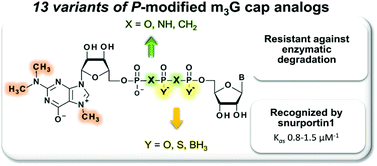
Towards novel efficient and stable nuclear import signals: synthesis and properties of trimethylguanosine cap analogs modified within the 5′,5′-triphosphate bridge
Malgorzata Zytek, Joanna Kowalska, Maciej Lukaszewicz, Blazej A. Wojtczak, Joanna Zuberek, Aleksandra Ferenc-Mrozek, Edward Darzynkiewicz, Anna Niedzwiecka and Jacek Jemielity
DOI: 10.1039/C4OB01579G, Paper

trimethylguanosine cap analogs


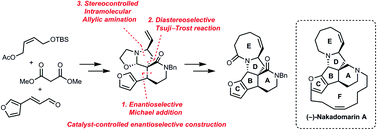
Catalytic asymmetric synthesis of the pentacyclic core of (−)-nakadomarin A via oxazolidine as an iminium cation equivalent
Nobuya Tsuji, Michael Stadler, Naoya Kazumi, Tsubasa Inokuma, Yusuke Kobayashi and Yoshiji Takemoto
DOI: 10.1039/C4OB01678E, Communication

atalytic asymmetric synthesis of the pentacyclic core of (−)-nakadomarin A


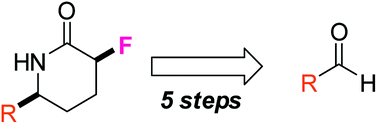
Short and efficient synthesis of fluorinated δ-lactams
Thomas J. Cogswell, Craig S. Donald, De-Liang Long and Rodolfo Marquez
DOI: 10.1039/C4OB01547A, Paper

synthesis of fluorinated δ-lactams


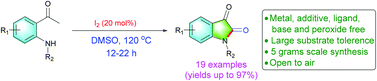
An efficient route to synthesize isatins by metal-free, iodine-catalyzed sequential C(sp3)–H oxidation and intramolecular C–N bond formation of 2′-aminoacetophenones
Venkatachalam Rajeshkumar, Selvaraj Chandrasekar and Govindasamy Sekar
DOI: 10.1039/C4OB01564A, Paper

 I2-catalyzed synthesis of isatins


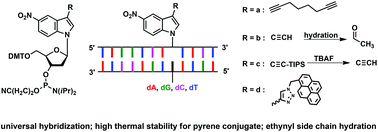
5-Nitroindole oligonucleotides with alkynyl side chains: universal base pairing, triple bond hydration and properties of pyrene “click” adducts
Sachin A. Ingale, Peter Leonard, Haozhe Yang and Frank Seela
DOI: 10.1039/C4OB01478B, Paper

5-Nitroindole oligonucleotides with alkynyl side chains


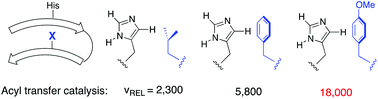
Cross-strand histidine–aromatic interactions enhance acyl-transfer rates in beta-hairpin peptide catalysts
M. Matsumoto, S. J. Lee, M. R. Gagné and M. L. Waters
DOI: 10.1039/C4OB01754D, Paper

 Cross-strand histidine–aromatic interactions enhance acyl-transfer rates in beta-hairpin peptide catalysts


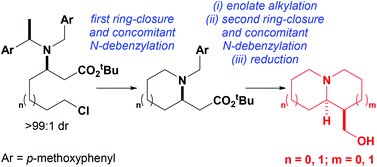
The asymmetric syntheses of pyrrolizidines, indolizidines and quinolizidines via two sequential tandem ring-closure/N-debenzylation processes
Stephen G. Davies, Ai M. Fletcher, Emma M. Foster, Ian T. T. Houlsby, Paul M. Roberts, Thomas M. Schofield and James E. Thomson
DOI: 10.1039/C4OB01737D, Paper

asymmetric syntheses of pyrrolizidines, indolizidines and quinolizidines


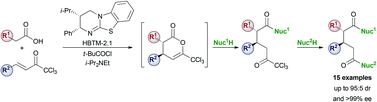
Organocatalytic Michael addition–lactonisation of carboxylic acids using α,β-unsaturated trichloromethyl ketones as α,β-unsaturated ester equivalents
Louis C. Morrill, Daniel G. Stark, James E. Taylor, Siobhan R. Smith, James A. Squires, Agathe C. A. D’Hollander, Carmen Simal, Peter Shapland, Timothy J. C. O’Riordan and Andrew D. Smith
DOI: 10.1039/C4OB01788A, Paper

Organocatalytic Michael addition–lactonisation of carboxylic acids

Digg This
Reddit This
Stumble Now!
Share on Facebook
Bookmark this on Delicious
Share on LinkedIn
Bookmark this on Technorati
Post on Twitter
Google Buzz (aka. Google Reader)

Cyanide test for cassava

Hamish Crawford writes about an Organic & Biomolecular Chemistry article for Chemistry World

A new sensing system that changes colour to indicate if a cassava-based foodstuff is safe to eat by checking for hydrogen cyanide has been devised by researchers in Switzerland and Mozambique.

Cassava, an edible root that grows well in poor conditions, is the third largest source of calories for people in the tropics. However, as a self-defence mechanism against attack from pests and predators, cassava releases hydrogen cyanide upon damage to its cells. Sun-drying, fermentation and other traditional processing techniques can successfully eliminate the hydrogen cyanide but it may remain and cause a variety of illnesses, including tropical ataxic neuropathy and epidemic spastic paraparesis, if pre-consumption treatment is substandard…..

Read the full article in Chemistry World»


Read the original journal article in Organic & Biomolecular Chemistry – it’s free to access until 4 December:
Corrin-based chemosensors for the ASSURED detection of endogenous cyanide
Felix Zelder and Lucas Tivana
DOI: 10.1039/C4OB01889C

Digg This
Reddit This
Stumble Now!
Share on Facebook
Bookmark this on Delicious
Share on LinkedIn
Bookmark this on Technorati
Post on Twitter
Google Buzz (aka. Google Reader)

Diversification of a Multicomponent Reaction

Arun Ankush Tanpure, a graduate student at IISER Pune, India, writes on a recent OBC article

The Ugi reaction was one of the very first multicomponent reactions exploited to develop chemical libraries, which further extended to combinatorial, solid phase and flow synthesis for evolving new lead structures of active agents. Implementing the Ugi reaction in combination with other organic reactions enlarges the chemical diversity of possible products.

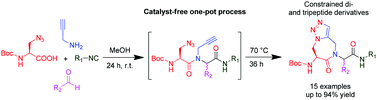
Researchers at Vrije University Brussel, led by Steven Ballet, have made a step forward by executing a one-pot Ugi-Huisgen tandem reaction and found an alternative high atom economy pathway for the synthesis of conformationally constrained, amino-triazoloazepinone-containing di- and tripeptides.

Strategically, they have used an unconventional azide containing acid, and alkyne amine along with traditional aldehydes and isocyanides. By using equimolar reactants with very mild reaction conditions, they were able to observe total conversion to the linear Ugi-compounds equipped with azide and alkyne functionality. Furthermore, they have cyclised the resulting compounds into the respective triazoles, by performing a catalyst-free Huisgen cycloaddition reaction in a sealed tube.

Variation in substitution patterns and tolerance of a large array of aldehydes in this methodology will open a new avenue for the synthesis of various building blocks to be used in peptidomimetics with a wide range of applications.

Find out more in their Communication:

Efficient synthesis of conformationally constrained, amino-triazoloazepinone-containing di- and tripeptides via a one-pot Ugi–Huisgen tandem reaction
T. M. A. Barlow, M. Jida, D. Tourwéa and S. Ballet
DOI: 10.1039/C4OB01381F

Digg This
Reddit This
Stumble Now!
Share on Facebook
Bookmark this on Delicious
Share on LinkedIn
Bookmark this on Technorati
Post on Twitter
Google Buzz (aka. Google Reader)

Q2 Top Ten most accessed articles

The 10 most accessed Organic & Biomolecualr Chemistry articles between April and June 2014 – Free to access until the end of October

During the months April – June 2014, the most downloaded Organic & Biomolecualr Chemistry articles were:

Design, synthesis, and application of tartaric acid derived N-spiro quaternary ammonium salts as chiral phase-transfer catalysts
Mario Waser, Katharina Gratzer, Richard Herchl and Norbert Müller
DOI: 10.1039/C1OB06573D

Far-red and near infrared BODIPY dyes: synthesis and applications for fluorescent pH probes and bio-imaging
Yong Ni and Jishan Wu
DOI: 10.1039/C3OB42554A

Direct acylation of N-benzyltriflamides from the alcohol oxidation level via palladium-catalyzed C–H bond activation
Jihye Park, Aejin Kim, Satyasheel Sharma, Minyoung Kim, Eonjeong Park, Yukyoung Jeon, Youngil Lee, Jong Hwan Kwak, Young Hoon Jung and In Su Kim
DOI: 10.1039/C3OB40140E

sp3 C–H oxidation by remote H-radical shift with oxygen- and nitrogen-radicals: a recent update
Shunsuke Chiba and Hui Chen
DOI: 10.1039/C4OB00469H

Watsonianone A–C, anti-plasmodial β-triketones from the Australian tree, Corymbia watsoniana
Anthony R. Carroll, Vicky M. Avery, Sandra Duffy, Paul I. Forster and Gordon P. Guymer
DOI: 10.1039/C2OB26931G

Recent advances in biocompatible nanocarriers for delivery of chemotherapeutic cargoes towards cancer therapy
Chung Yen Ang, Si Yu Tan and Yanli Zhao
DOI: 10.1039/C4OB00164H

Continuous flow chemistry: a discovery tool for new chemical reactivity patterns
Jan Hartwig, Jan B. Metternich, Nikzad Nikbin, Andreas Kirschning and Steven V. Ley
DOI: 10.1039/C4OB00662C

Bifunctional primary amine-thioureas in asymmetric organocatalysis
Olga V. Serdyuk, Christina M. Heckel and Svetlana B. Tsogoeva
DOI: 10.1039/C3OB41403E

Palladium-catalyzed three-component reaction of N-tosylhydrazone, norbornene and aryl halide
Fangdong Hu, Ying Xia, Zhenxing Liu, Chen Ma, Yan Zhang and Jianbo Wang
DOI: 10.1039/C4OB00590B

A coumarin-quinolinium-based fluorescent probe for ratiometric sensing of sulfite in living cells
Li Tan, Weiying Lin, Sasa Zhu, Lin Yuan and Kaibo Zheng
DOI: 10.1039/C4OB00132J

Digg This
Reddit This
Stumble Now!
Share on Facebook
Bookmark this on Delicious
Share on LinkedIn
Bookmark this on Technorati
Post on Twitter
Google Buzz (aka. Google Reader)

Winners at the 25th Symposium on Physical Organic Chemistry

From left to right: Professor Yoshito Tobe (President) Mr. Tomoya Nakamura (OBC) Mr. Yuta Shiina (RSC Advances) Mr. Hirotaka Mori (Chemical Science) Hiroyuki Isobe (Organizer)

Congratulations to the winners of the poster prizes at the 25th Symposium on Physical Organic Chemistry (Japan), which was held September 7th to September 9th in Sendai.

Organic & Biomolecular Chemistry prize: Mr. Tomoya Nakamura (Supervisor: Professor Eiichi Nakamura), Department of Chemistry, The University of Tokyo
Title: Benzodipyrrole-Based Donor-Acceptor Type Boron Complexes for Near-Infrared Absorption

RSC Advances prize: Mr. Yuta Shiina (Supervisor: Professor Nagao Kobayashi), Department of Chemistry, Tohoku University
Title: Redox-control of Molecular Alignment of TTF-Annulated Silicon Phthalocyanine Oligomers

Chemical Science prize: Mr. Hirotaka Mori (Supervisor: Professor Atsuhiro Osuka), Department of Chemistry, Kyoto University
Title: Synthesis and Properties of 5,20-α-Oligothienyl-substitued [26]Hexaphyrins

The event organised by the Society of Physical Organic Chemistry, Japan,  saw 624 participants attend, with 2 keynote lectures from E. Nakamura & C. Nuckolls.  In addition there were 328 poster presentations, and 96 oral presentations.

Digg This
Reddit This
Stumble Now!
Share on Facebook
Bookmark this on Delicious
Share on LinkedIn
Bookmark this on Technorati
Post on Twitter
Google Buzz (aka. Google Reader)

HOT Organic & Biomolecular Chemistry articles

Check out the following HOT articles, as recommened by the reviewers of the articles. These have all been made free to access until 20th October:

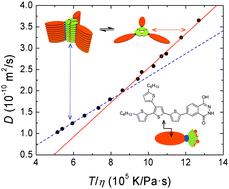
Estimating the shape and size of supramolecular assemblies by variable temperature diffusion ordered spectroscopy
Benjamin M. Schulze, Davita L. Watkins, Jing Zhang, Ion Ghiviriga and Ronald K. Castellano
DOI: 10.1039/C4OB01373E, Communication


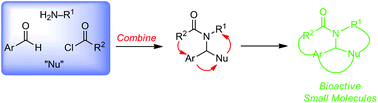
Evolution of a strategy for preparing bioactive small molecules by sequential multicomponent assembly processes, cyclizations, and diversification
James J. Sahn, Brett A. Granger and Stephen F. Martin
DOI: 10.1039/C4OB00835A, Review Article
From themed collection In Celebration of Richard Taylor’s 65th Birthday


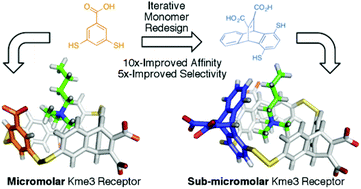
Development and mechanistic studies of an optimized receptor for trimethyllysine using iterative redesign by dynamic combinatorial chemistry
Nicholas K. Pinkin and Marcey L. Waters
DOI: 10.1039/C4OB01249F, Paper


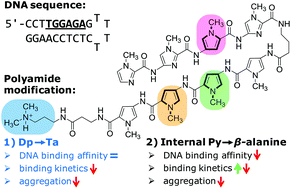
Modulation of DNA–polyamide interaction by β-alanine substitutions: a study of positional effects on binding affinity, kinetics and thermodynamics
Shuo Wang, Karl Aston, Kevin J. Koeller, G. Davis Harris, Nigam P. Rath, James K. Bashkin and W. David Wilson
DOI: 10.1039/C4OB01456A, Paper


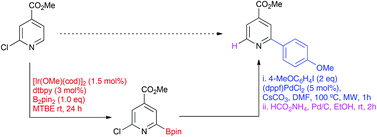
Iridium-catalyzed C–H borylation of pyridines
Scott A. Sadler, Hazmi Tajuddin, Ibraheem A. I. Mkhalid, Andrei S. Batsanov, David Albesa-Jove, Man Sing Cheung, Aoife C. Maxwell, Lena Shukla, Bryan Roberts, David C. Blakemore, Zhenyang Lin, Todd B. Marder and Patrick G. Steel
DOI: 10.1039/C4OB01565G, Paper


Efficient synthesis of conformationally constrained, amino-triazoloazepinone-containing di- and tripeptides via a one-pot Ugi–Huisgen tandem reaction
T. M. A. Barlow, M. Jida, D. Tourwé and S. Ballet
DOI: 10.1039/C4OB01381F, Communication


Influence of B-ring modifications on proton affinity, transmembrane anion transport and anti-cancer properties of synthetic prodigiosenes
Estelle Marchal, Soumya Rastogi, Alison Thompson and Jeffery T. Davis
DOI: 10.1039/C4OB01399A, Paper


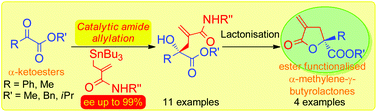
Catalytic amide allylation of α-ketoesters: extremely high enantioselective synthesis of ester functionalised α-methylene-γ-butyrolactones
Masaki Takahashi, Yusuke Murata, Masahiro Ishida, Fumitoshi Yagishita, Masami Sakamoto, Tetsuya Sengoku and Hidemi Yoda
DOI: 10.1039/C4OB01508H, Communication


Recent developments in transition metal-catalysed spiroketalisation
Rachelle Quach, Daniel F. Chorley and Margaret A. Brimble
DOI: 10.1039/C4OB01325E, Perspective


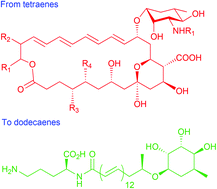
Non-isoprenoid polyene natural products – structures and synthetic strategies
Katrina S. Madden, Fathia A. Mosa and Andrew Whiting
DOI: 10.1039/C4OB01337A, Review Article


A Lewis acid-mediated conformational switch
Peter C. Knipe, Hannah Lingard, Ian M. Jones, Sam Thompson and Andrew D. Hamilton
DOI: 10.1039/C4OB01556H, Paper

Digg This
Reddit This
Stumble Now!
Share on Facebook
Bookmark this on Delicious
Share on LinkedIn
Bookmark this on Technorati
Post on Twitter
Google Buzz (aka. Google Reader)

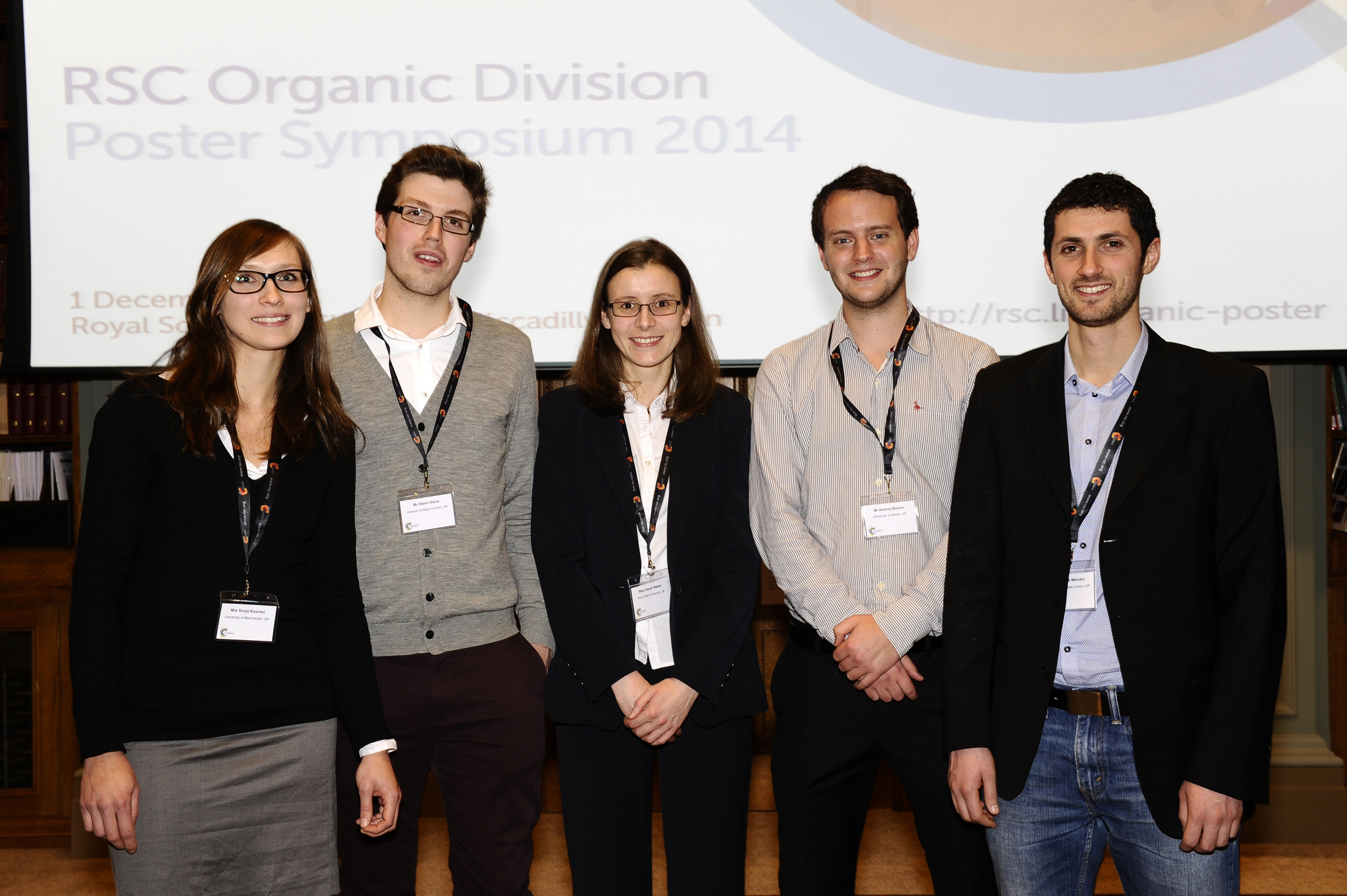
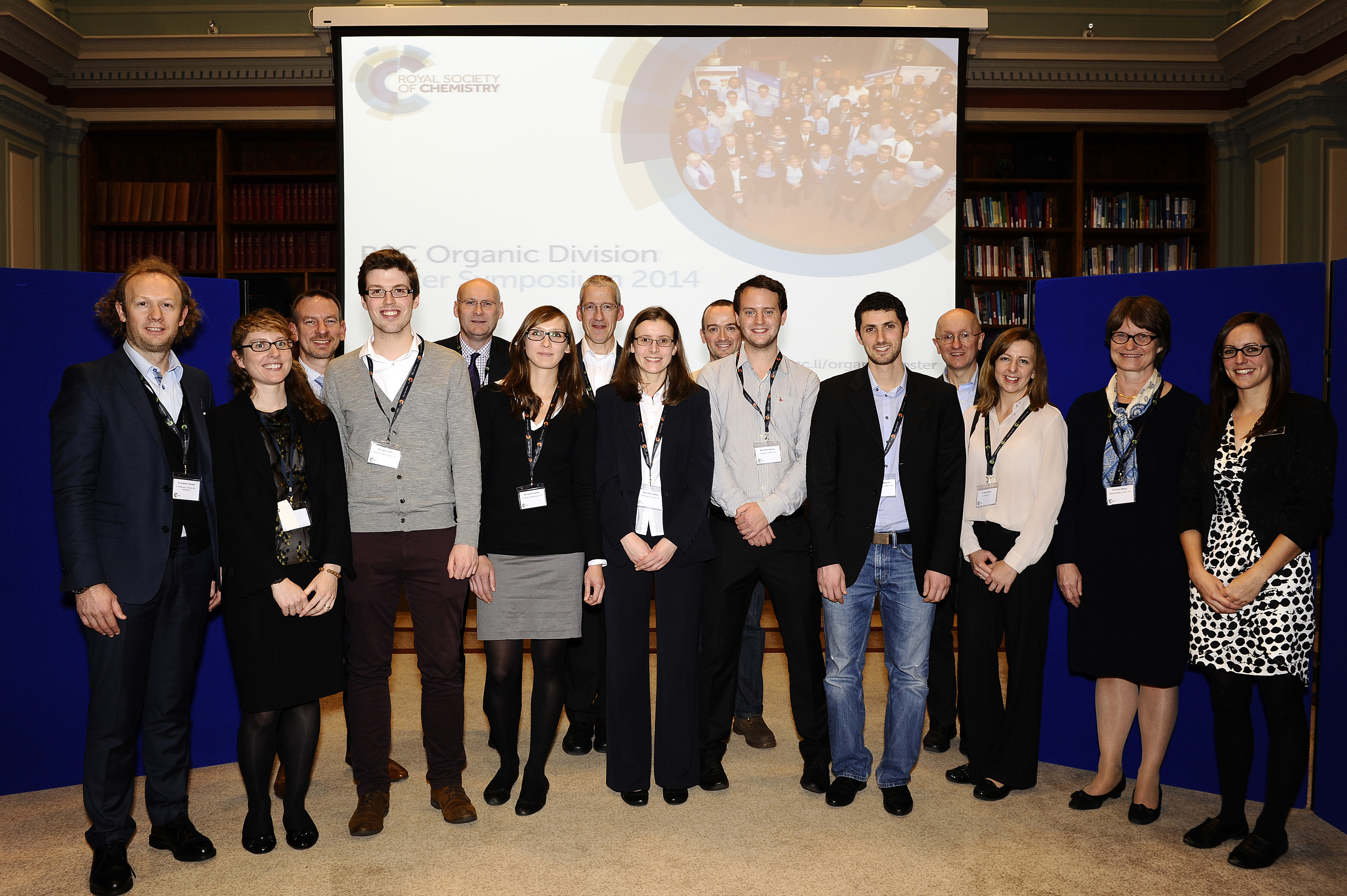
RSC Organic Division Poster Symposium 2014 one month left to submit

Calling all final year organic chemistry PhD students

There is only one month left to submit your abstract for the RSC Organic Division’s poster symposium, headline sponsored by F. Hoffmann-La Roche, Ltd.

When & where?

The symposium will take place at The Royal Society of Chemistry, Burlington House, London on Monday 01 December 2014 and offers you the chance to showcase your research to your peers, leading academics and industrial chemists.

Prizes

There will be a first prize of £500, two runner-up prizes of £250, and a “selected by Industry Prize” also of £500.

Closing date for submissions is Wednesday 01 October 2014.

For more information and to submit your abstract go to http://rsc.li/organic-poster

Digg This
Reddit This
Stumble Now!
Share on Facebook
Bookmark this on Delicious
Share on LinkedIn
Bookmark this on Technorati
Post on Twitter
Google Buzz (aka. Google Reader)

Myriad Multiplicity in Nitroenamine Multicomponent Methodology

Posted on behalf of Jennifer Lee, guest web writer for Organic & Biomolecular Chemistry

Not many molecules can claim to be both a Michael donor and Michael acceptor while containing a good leaving group as is the case with nitroketene-N,S-acetals like N-methyl-S-methyl nitroethylene (NMSM), broadly categorized as nitroenamines.

As a double actor in the pseudo three-component reaction investigated by Rao and Parthiban, moieties of NMSM react three times in two roles:  twice as a nucleophile and once as an electrophile.  The other components in the same pot included the aromatic aldehyde and catalytic 2-aminopyridine.

The methodology generates an alternate route from the classic Hantzsch reaction to the 1,4-dihydropyridine (DHP) platform with a broader scope and purification by recrystallization.  Advantageously, 1,4-DHPs are calcium channel blockers and hydride sources for reduction.

The functionally-rich NMSM component conveniently diversifies DHP which could lead to more potent medicinal applications or pesticides.

The two inherent diversity points on the platform arose from the aldehyde and amine precursors.  Additional diversity from amine substitution of the built-in sulfide leaving group created a total of 29 unique 1,4-DHP possibilities.

Specifically, they synthesized a neonictinoid insecticide analogue to the popular nitenpyram compound to constrain the alkene to the cis-isomer with muted toxicity to mammals.

Overall, leveraging an electronically versatile synthon like NMSM in a multicomponent reaction leads to enhanced diversity for analoging with myriad compounds that could perform better than those currently available.

To find out more see:

One-pot pseudo three-component reaction of nitroketene-N,S-acetals and aldehydes for synthesis of highly functionalized hexa-substituted 1,4-dihydropyridines
H. Surya Prakash Rao and A. Parthiban
DOI: 10.1039/c4ob00628c

Jennifer LeeJennifer Lee is currently a Ph.D. candidate in Dr. George Kraus’ organic chemistry lab at Iowa State University.  Her research focuses on designing methodologies to transform carbohydrate-derived biomass into biorenewable commodity and specialty chemicals.  The creation of a versatile platform technology led to diverse and industrially-relevant aromatic compounds to work toward a more sustainable future.

Digg This
Reddit This
Stumble Now!
Share on Facebook
Bookmark this on Delicious
Share on LinkedIn
Bookmark this on Technorati
Post on Twitter
Google Buzz (aka. Google Reader)