

Archive for the ‘Editor’s Collection’ Category

Editor’s Collection: Meet the authors – Nielsen, Gothelf and Clo

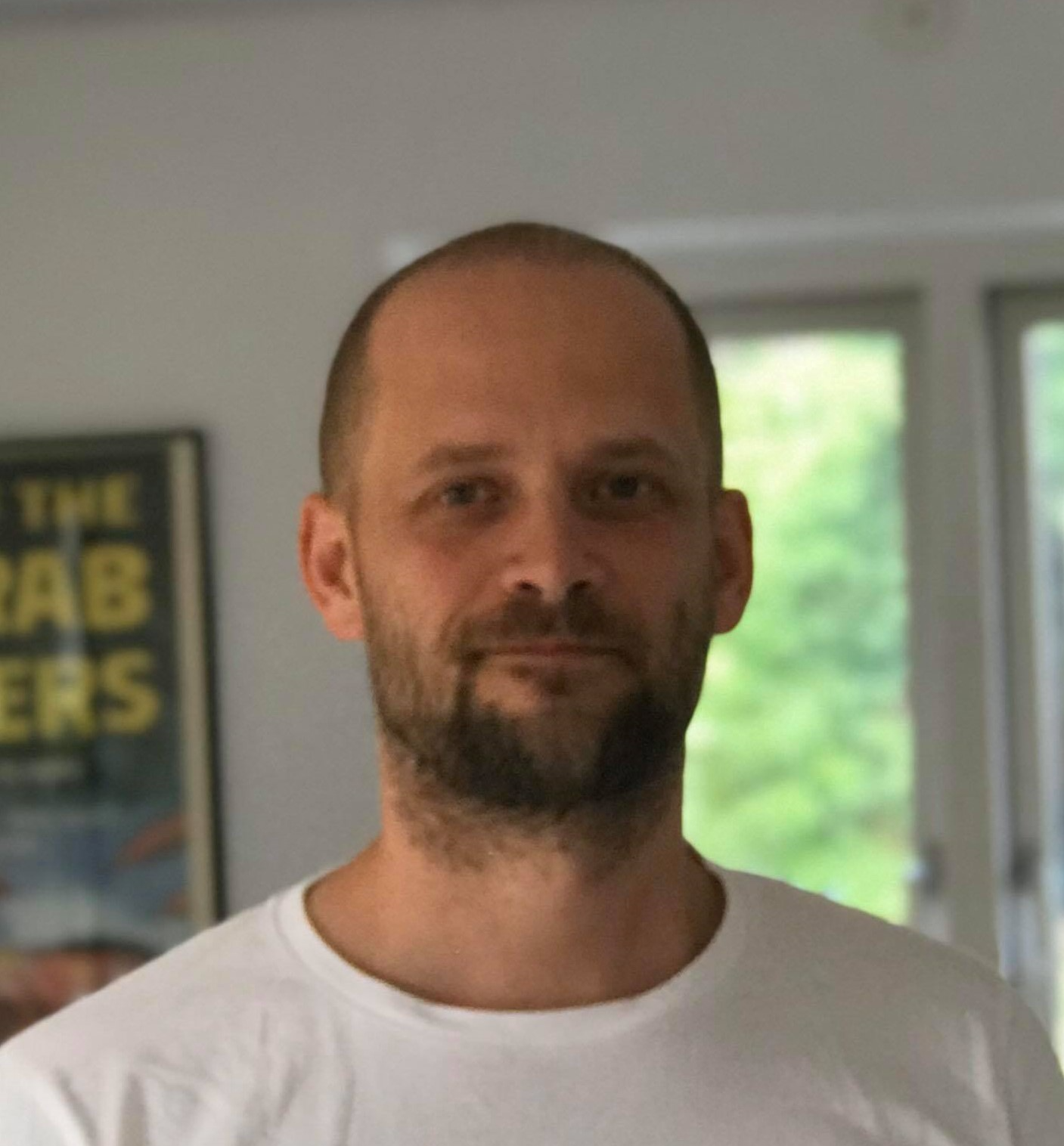
From left to right: Kurt Gothelf , Emiliano Clo and Thorbjørn Nielsen


Introducing the researchers:

Thorbjørn Nielsen: Obtained an MSc. Degree from the Gothelf lab in 2016. He then enrolled in a joint PhD program between Novo Nordisk in Måløv and Aarhus University where he spent half of his time in each place. He graduated in 2020 and is currently a postdoc at the Gothelf lab.

Kurt Gothelf graduated in 1995 from the group of Professor K. A. Jørgensen at Aarhus University. Following a post doctoral stay in Professor M. C. Pirrung’s group at Duke University, USA, he joined the faculty at Aarhus University in 2002 as an Associate Professor. Since 2007 he has been a Full Professor working with bioconjugation, DNA nanotechnology and biosenors. Find out more on his lab webpage.

Emiliano Clo obtained his PhD in Organic Chemistry in 2006 from the Gothelf lab at Aarhus University. He took post doctoral positions from 2007-9 with Prof. Knud Jensen at University of Copenhagen and from 2009-12 in Prof. Henrik Clausen’s Copenhagen Center for Glycomics, spending the last year of which as Research Associate Professor. From 2012, Emiliano works as a Senior Research Scientist at Novo Nordisk’s Research Chemistry Unit.


What inspired your research in this area?

Bioconjugation is challenging and both at Novo Nordisk and in the Gothelf group at Aarhus University we follow closely the development of bioconjugation techniques. Itaru Hamachi’s work on directed conjugation strategies has definitely been a steady influence over the years. But, the present study is really an amalgamation of ideas from many sources.


What do you personally feel is the most interesting outcome of your study?

The most surprising observation was to learn that the conjugation pattern was identical, in spite of the varying the length of the three reagents studied.


How do you feel your research has benefitted from collaborating between industry and academia? 

It has been of key importance to the project. Thorbjørn Nielsen (who got his MSc. with Prof. Gothelf) brought the required skillset to Novo Nordisk. Novo Nordisk then provided the materials and equipment required for this project. Together we could pull all the support the projected needed: MS-MS and SPR expertise at Novo Nordisk; cell assays and FACS from Aarhus Unversity. Last, but not the least, Apigenex, Novo’s long-time CRO partners, synthesized the reagents needed.


What directions are you planning to take with your research in future? 

Concerning bioconjugation, our future aims are twofold. First, to find reactions that can label proteins quantitatively; second, to devise reagents and protocols that can be applied to more complex proteins or in more complex matrices.


Read the full article: disulphide-mediated site-directed modification of proteins


See the other articles showcased in this month’s Editor’s Collection

Digg This
Reddit This
Stumble Now!
Share on Facebook
Bookmark this on Delicious
Share on LinkedIn
Bookmark this on Technorati
Post on Twitter
Google Buzz (aka. Google Reader)

Editor’s Collection: Christian Hackenberger

The Organic & Biomolecular Chemistry Editor’s collection is a showcase of some of the best articles published in the journal, hand selected by our Associate Editors and Editorial Board members. For this inaugural selection, Associate Editor Christian Hackenberger has highlighted some of his favourite recent works. Take a look at what he thought of the articles below, and find out more about the research and the researchers behind the papers in our interviews with the authors.

Christian’s Selection:

Hierarchical self-assembly of an azobenzene dyad with inverted amide connection into toroidal and tubular nanostructures

Christian’s comments: “Small things can make a difference! Check out this very interesting paper by Yagai et al on how inverting an amide bond in foldable azobenzene dyads changes the thermal stability of self-assembled toroids and nanotubes! Amazing! This paper is part of our collection Supramolecular chemistry in OBC.


Find out more in our interview with the authors


Rapid sodium periodate cleavage of an unnatural amino acid enables unmasking of a highly reactive α-oxo aldehyde for protein bioconjugation

Christian‘s comments: “Now available site-specifically! This contribution by Fascione and coworkers expands the use of Strain-Promoted Alkyne-Nitrone Cycloaddition (SPANC) ligation to modify internal α-oxo aldhehydes in proteins. Particularly remarkable is that this work describes a rare example of site-specifically incorporated aldehyde into proteins via amber stop codon suppression. Well done folks!


Find out more in our interview with the authors


Site-selective modification of proteins using cucurbit[7]uril as supramolecular protection for N-terminal aromatic amino acids

Christian‘s comments: “A supramolecular protecting group in peptide and protein chemistry! This paper I handled myself and I agree with the reviewers that this is a nice piece of work. Appel and coworkers make clever use of cucurbit[7]uril, which blocks the nucloephilicity of an N-terminal phenylalanine. Quite handy for the selective modification of the N-terminal glycine of the A-chain in insulin!

Find out more in our interview with the authors


Disulphide-mediated site-directed modification of proteins

Christian’s comments: “Gothelf and Clo from Aarhus University and Novo Nordisk report in this paper the modification of lysines in pharmaceutically relevant proteins and antibody fragments. What is special about their work is that only lysines are modified in proximity to solvent-exprosed disulfides by clever design of a bifunctional reagent, which consits of a rebridging moiety, a masked thiol and an amine reactive group. One can only wish that more of such innovative collaborations between industry and academia are reported.

Find out more in our interview with the authors


The Curious Yellow Colouring Matter of the Iceland Poppy

Christian’s comments: “And finally an awesome historical overview on an intruiging yellow colored natural product, the nudicaulin. This flavoalkaloid was named by Sir Robert Robinson in 1939. Devlin and Sperry take the reader through a fascinating journey on the first structural assignment, synthesis strategies, biosynthesis and biological role. A must read not only for the natural product chemists among us!

Find out more in our interview with the authors


Meet the Editor:

Christian P. R. Hackenberger completed his graduate studies in chemistry at the universities of Freiburg and UW Madison and his doctoral studies in 2003 at the RWTH Aachen. After a postdoctoral position at MIT, he started his own group at the Freie Universität Berlin in 2005. In 2012, he was appointed Leibniz-Humboldt Professor for Chemical Biology at the Leibniz-Research Institute for Molecular Pharmacology and the Humboldt Universität zu Berlin.

His group works on the development of new chemoselective and bioorthogonal reactions, the identification and analysis of novel PTMs, the engineering of protein-based pharmaceuticals and novel approaches to functional protein synthesis and delivery, in particular for the labeling and modification of different antibody formats. He is co-founder of the recently founded company ‘Tubulis’, which ventures into engineering better tolerable cancer drugs based on protein- and antibody-drug conjugates.

Christian is an Associate Editor for Organic & Biomolecular Chemistry since 2015 and on the Advisory board of Chemical Science and RSC Chemical Biology. His research group can be followed on Twitter @PhosphorusFive.

Outside his chemistry life he enjoys all forms of sport (Federer!), foodie (Ottolenghi!) and cultural (Theatre! Contemporary Art! Opera!) activities.


Digg This
Reddit This
Stumble Now!
Share on Facebook
Bookmark this on Delicious
Share on LinkedIn
Bookmark this on Technorati
Post on Twitter
Google Buzz (aka. Google Reader)