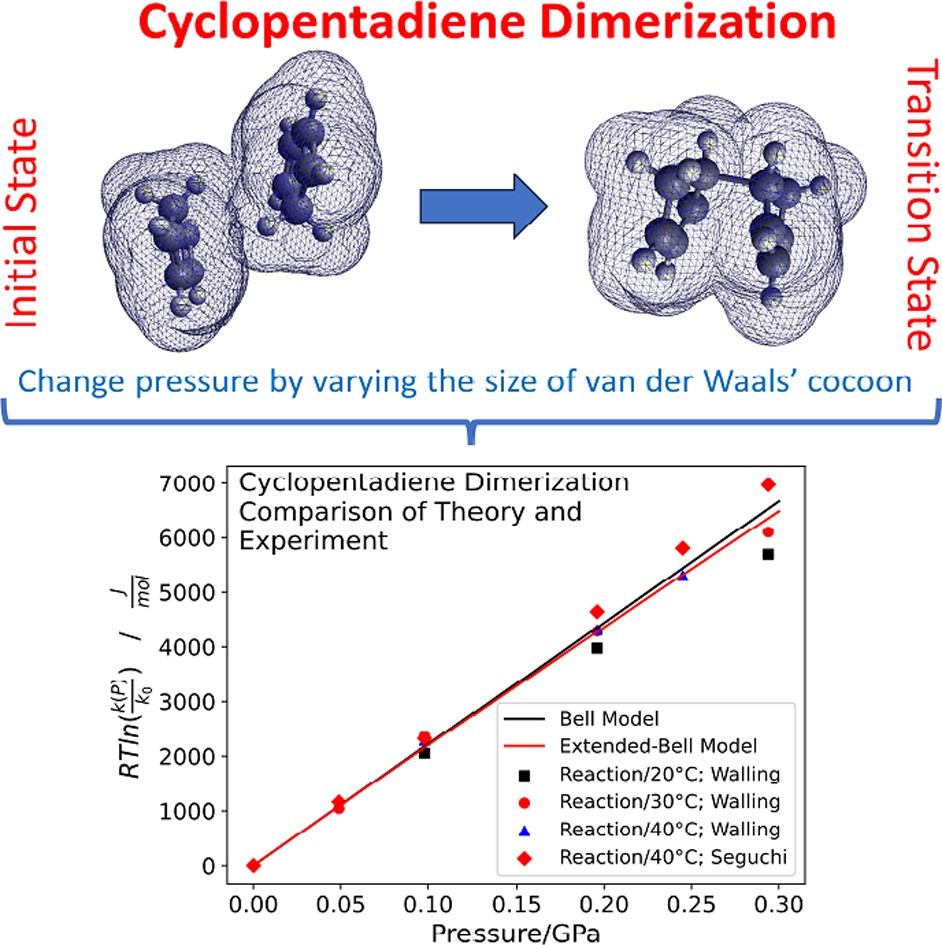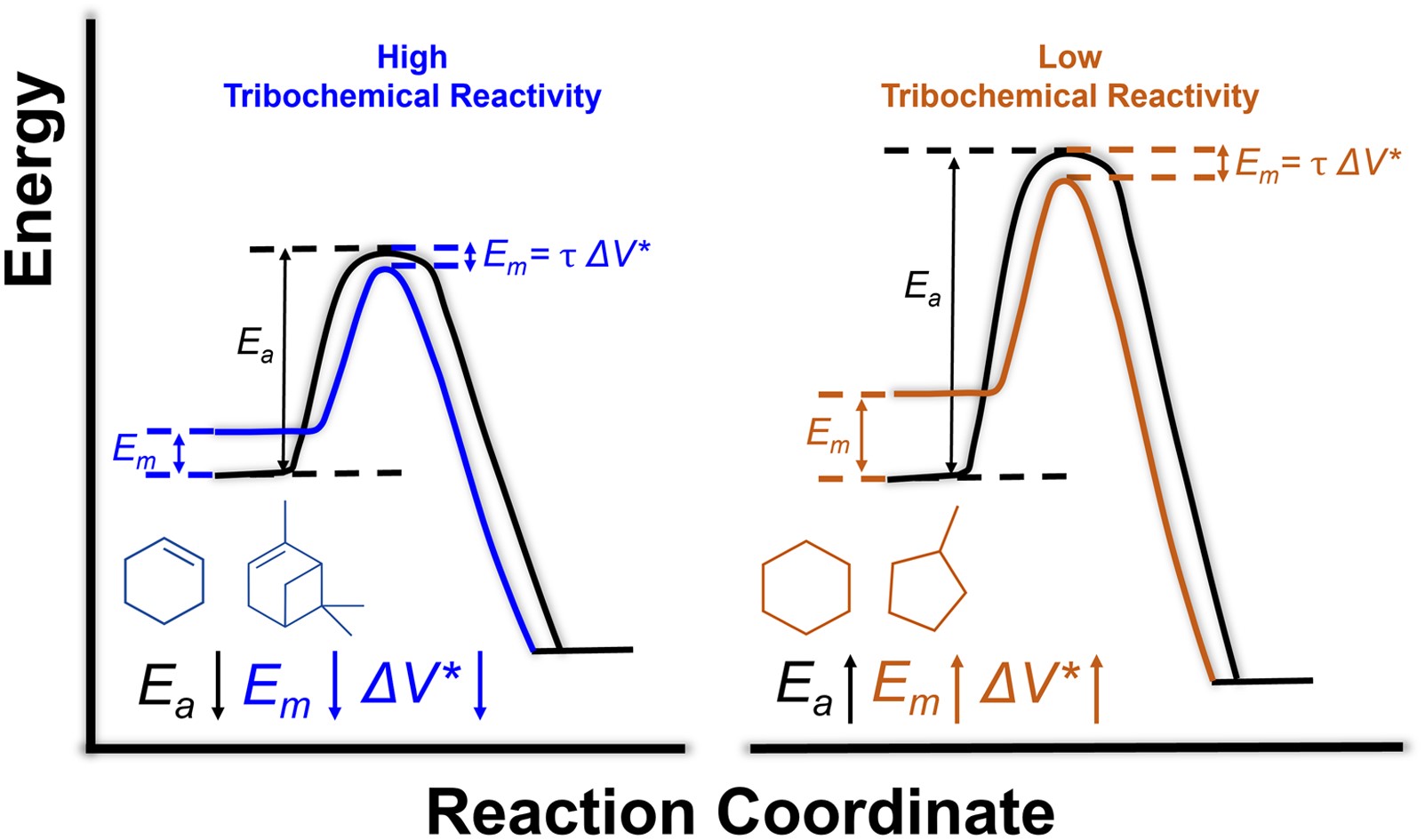


One year ago, RSC Mechanochemistry published its very first issue. In this first year, we’ve seen some stunning cover images on our issues. As we celebrate the one-year anniversary of our first issue, we welcome you to vote for your favourite cover image.
Vote for your favourite cover here
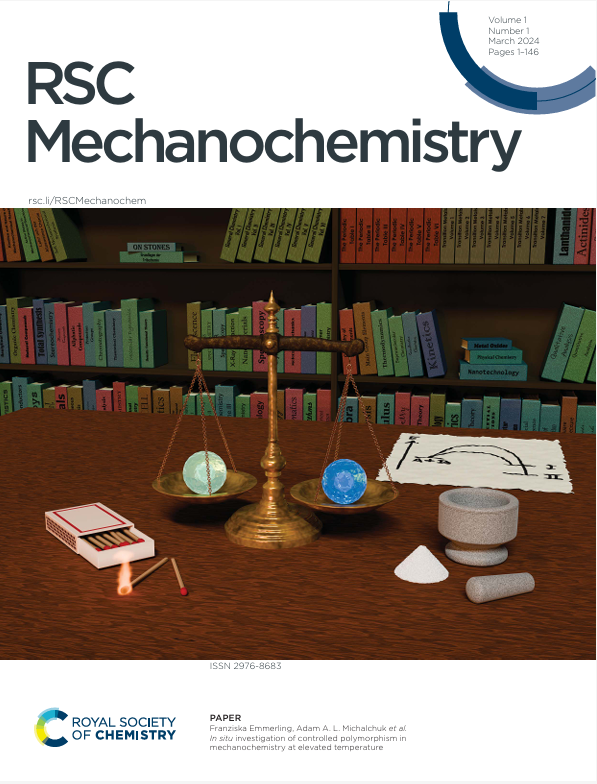 |
 |
 |
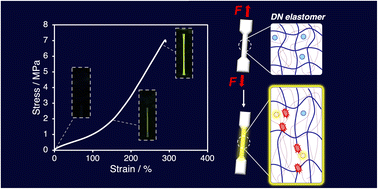
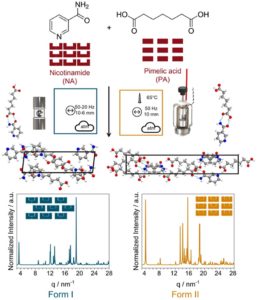
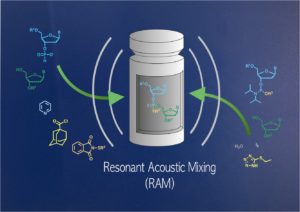
| In situ investigation of controlled polymorphism in mechanochemistry at elevated temperature | Halogen-bonded cocrystals via resonant acoustic mixing | Visualization of mechanochemical polymer-chain scission in double-network elastomers using a radical-transfer-type fluorescent molecular probe |
| Kevin Linberg, Philipp C. Sander, Franziska Emmerling and Adam A. L. Michalchuk | Alireza Nari, Jeffrey S. Ovens and David L. Bryce | Takumi Yamamoto, Akira Takahashi and Hideyuki Otsuka |
| RSC Mechanochem., 2024,1, 43-49 | RSC Mechanochem., 2024,1, 50-62 | RSC Mechanochem., 2024,1, 63-68 |
 |
 |
 |
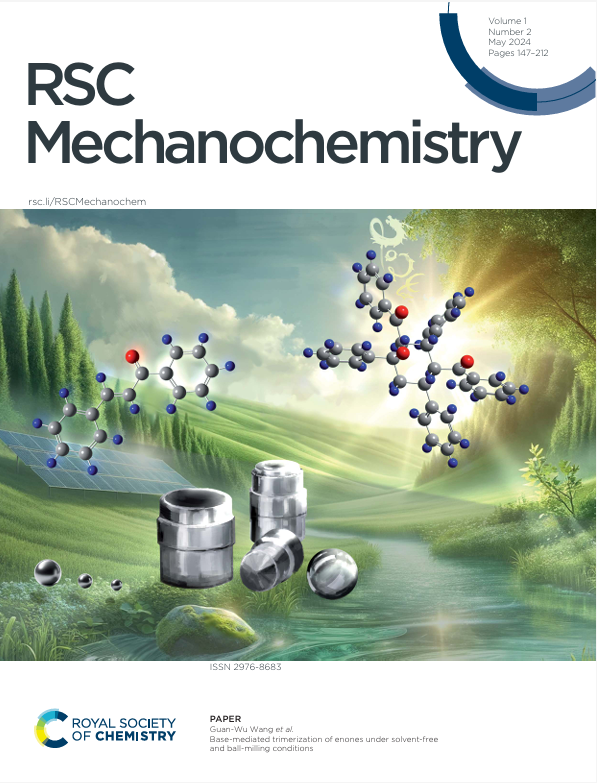
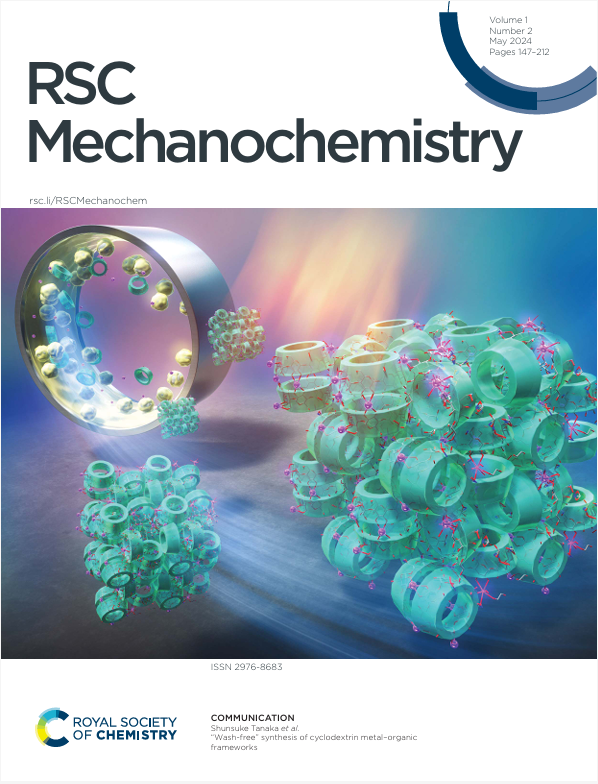
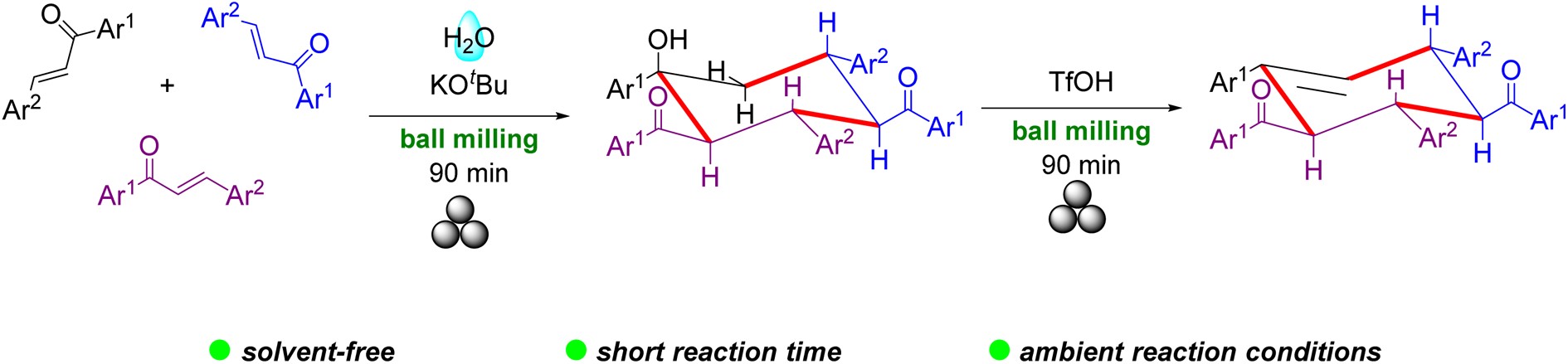
| Base-mediated trimerization of enones under solvent-free and ball-milling conditions | “Wash-free” synthesis of cyclodextrin metal–organic frameworks | Unprecedented linear products by a mechanochemically activated Biginelli reaction using lawsone |
| Gang Shao, Pinhua Li, Zheng-Chun Yin, Jun-Shen Chen, Xu-Ling Xia and Guan-Wu Wang | Shuhei Fujita, Kazunori Kadota, Atsushi Koike, Hiromasa Uchiyama, Yuichi Tozuka and Shunsuke Tanaka | Christina L. Koumpoura, Laure Vendier, Christian Bijani, Anne Robert, Philippe Carbonnière, Jean-Marc Sotiropoulos and Michel Baltas |
| RSC Mechanochem., 2024,1, 162-166 | RSC Mechanochem., 2024,1, 153-157 | RSC Mechanochem., 2024,1, 167-175 |
 |
 |
 |
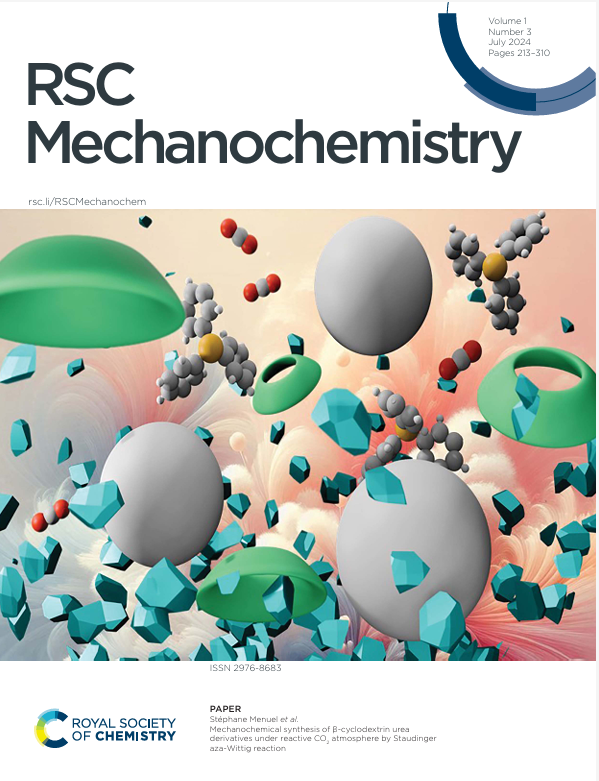
| Mechanochemical synthesis of Zn-bionanohybrids: size effect at the nanoscale to improve their enzyme-like activity | Mechanochemical synthesis of β-cyclodextrin urea derivatives under reactive CO2 atmosphere by Staudinger aza-Wittig reaction | Elucidating tribochemical reaction mechanisms: insights into tribofilm formation from hydrocarbon adsorbates coupled with tribochemical substrate wear |
| Carla Garcia-Sanz, Laura Guijarro, Mirosława Pawlyta and Jose M. Palomo | Sawssen Nasri, Maxime Lestoquoy, Anne Ponchel, Eric Monflier and Stéphane Menuel | Yu-Sheng Li, Fakhrul H. Bhuiyan, Jongcheol Lee, Ashlie Martini and Seong H. Kim |
| RSC Mechanochem., 2024,1, 219-227 | RSC Mechanochem., 2024,1, 228-234 | RSC Mechanochem., 2024,1, 328-341 |
 |
 |
|
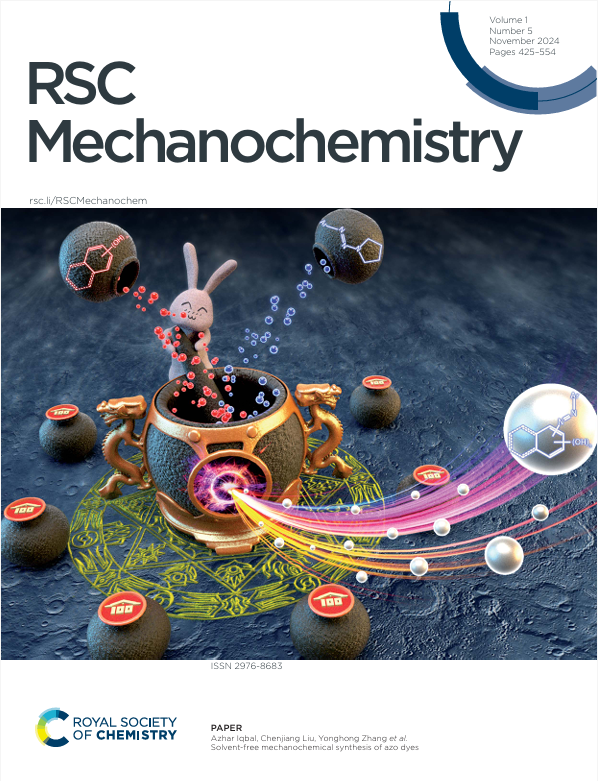
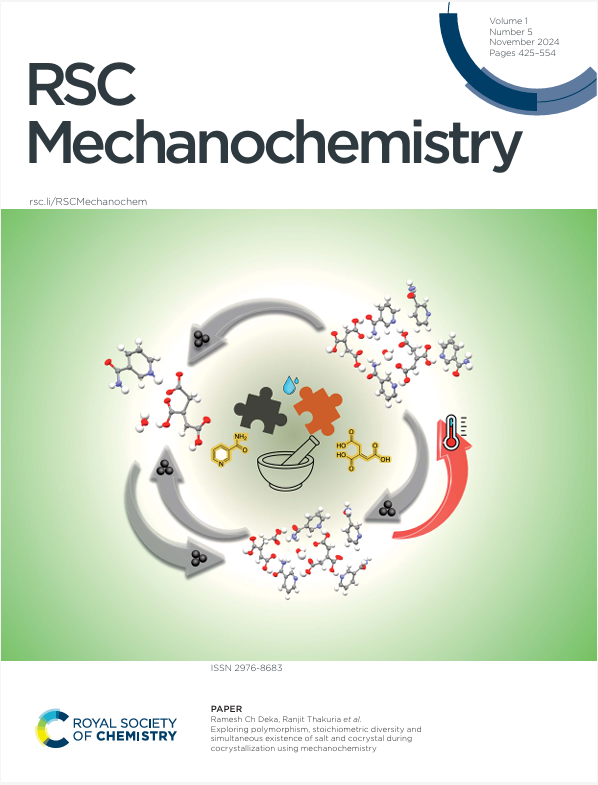
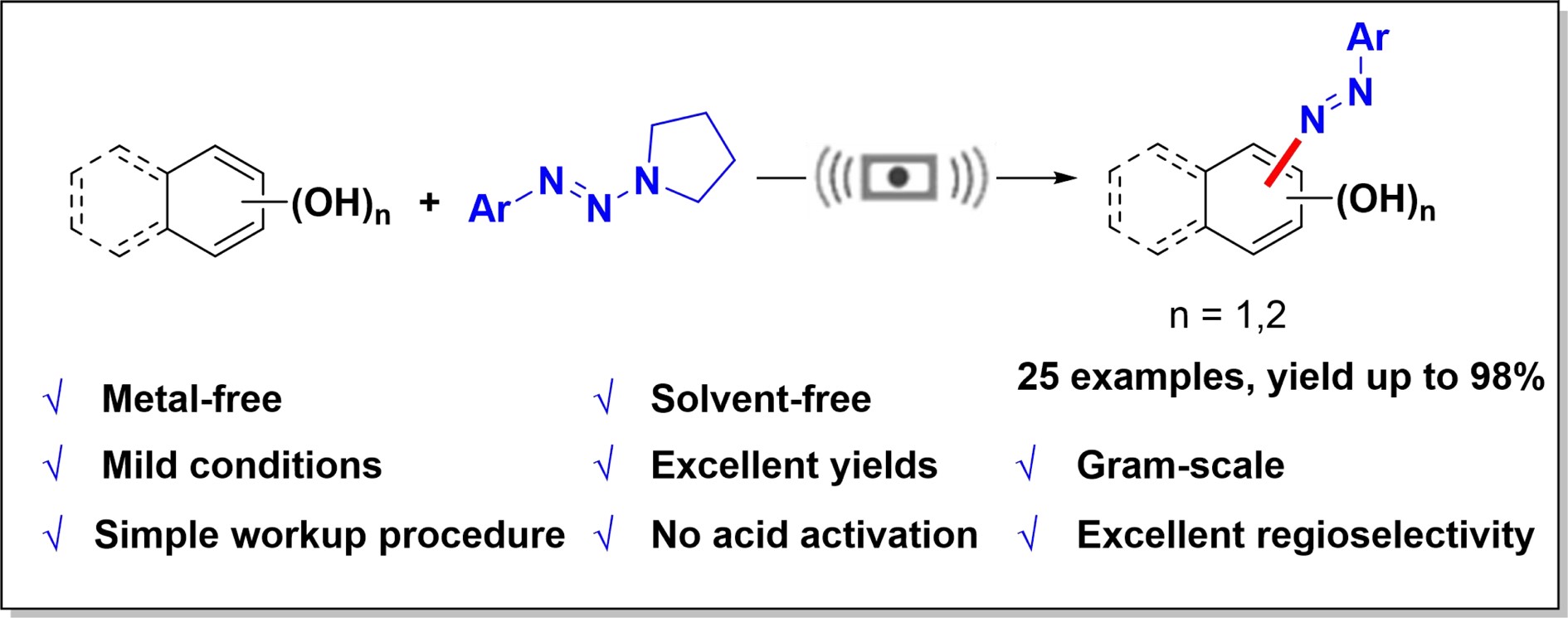
| Solvent-free mechanochemical synthesis of azo dyes | Exploring polymorphism, stoichiometric diversity and simultaneous existence of salt and cocrystal during cocrystallization using mechanochemistry | |
| Lin Zhang, Qinglang Song, Yanxian Wang, Rui Chen, Yu Xia, Bin Wang, Weiwei Jin, Shaofeng Wu, Ziren Chen, Azhar Iqbal, Chenjiang Liu and Yonghong Zhang | Diptajyoti Gogoi, Kalyan J. Kalita, Nishant Biswakarma, Mihails Arhangelskis, Ramesh Ch Deka and Ranjit Thakuria | |
| RSC Mechanochem., 2024,1, 447-451 | RSC Mechanochem., 2024,1, 452-464 |
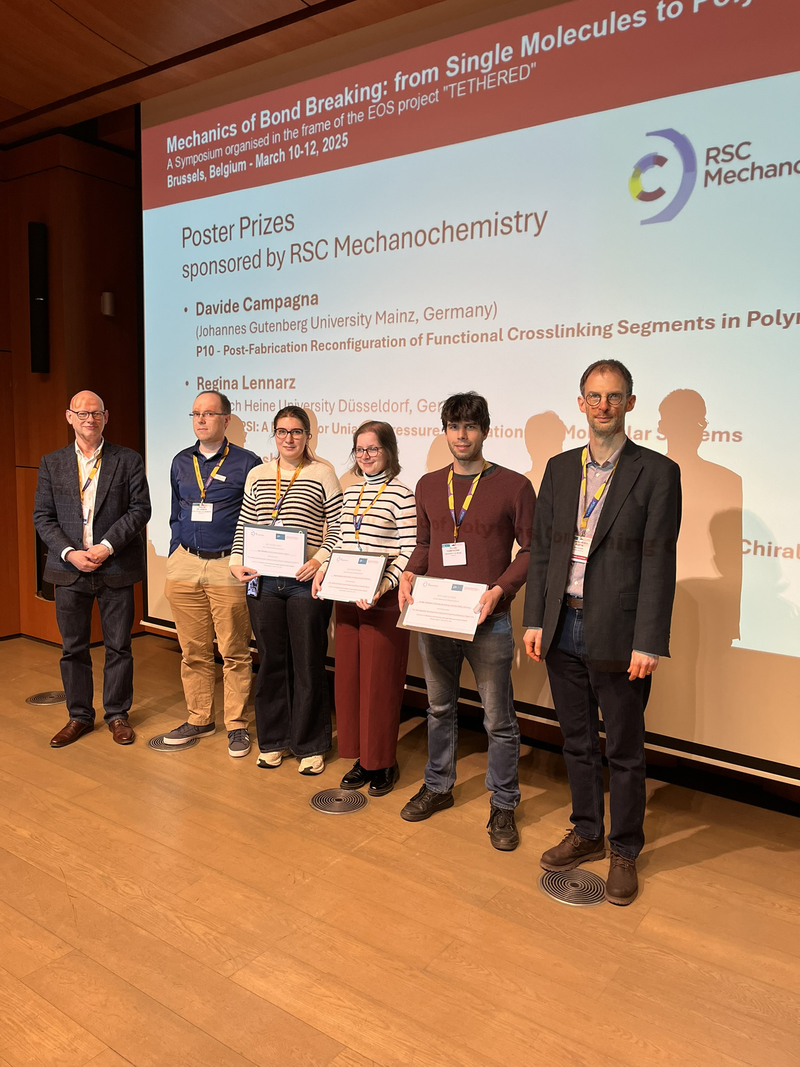












 In my field of soft matter mechanochemistry, we have seen some pretty exciting progress thanks to the development of increasing numbers of synthetic molecules that respond to mechanical force in specific ways. Some key examples are mechanochromic, mechanofluorescent and mechanoluminescent reporters, as well as force-triggered release mechanisms through mechanochemical linkers, reactions kick-started by radicals or mechanocatalysts, mechanochemical switches, and, more recently, artificial catch bonds. What is really exciting is that more and more of these mechanoresponsive systems are working in water, which opens up a lot of possibilities for integrating them with biological systems.
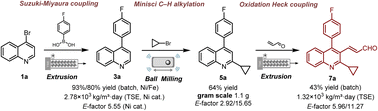
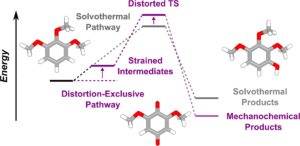
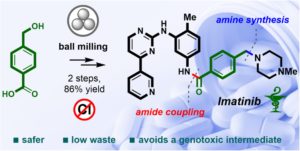
 There is considerable evidence that mechanochemistry is often better than other synthetic methods, especially solution-based ones. Mechanochemistry uses mechanical force to drive chemical reactions, and it can be more efficient, resource-saving and environmentally friendly than traditional solutions.
 Mechanochemistry has always been a paradigm-shifting method for conducting chemical reactions. While we often celebrate groundbreaking ideas in hindsight, they are not always embraced immediately. Consider Galileo Galilei, who faced life imprisonment for endorsing Copernicus’ theory that the Earth orbits the sun. Similarly, Alfred Wegener encountered not just skepticism, but outright hostility for proposing the concept of continental drift, suggesting that continents were once connected and moved across the Earth. One of Wegener’s detractors stated “It is certain the Wegener’s theory was established with a superficial use of scientific methods, ignoring the various fields of geology.” He continued to state “We can only try to keep our distance and beg him not to deal with geology any longer…” Even Einstein’s view of quantum physics was not all that favorable, famously stating “God does not play dice with the Universe” and describing what we now call quantum entanglement as “spooky action at a distance”. These examples highlight not just a mere clash of ideas, but also the hostility directed towards the individuals advocating them.
 Mechanochemistry has the potential to revolutionise many industrial applications, such as energy, nanomaterials, and environmental remediation. By using mechanochemistry, our industry can potentially reduce their costs, waste, and environmental impact, while increasing their efficiency, quality, and innovation. Mechanochemistry can also enable the discovery of new compounds and mechanisms that are inaccessible by conventional methods.