Author Archive

Editor’s Choice Collection: Lyn Jones

RSC Medicinal Chemistry is delighted to present our Editor’s choice collection

This collection showcases some of the best articles published in the journal, handpicked by our Associate Editors and Editorial Board members.

Below we have a selection of recent RSC Medicinal Chemistry articles chosen by Editorial Board member Professor Lyn Jones (Dana-Farber Cancer Institute, USA). Take a look at which articles he chose and why.

Lyn’s favourite articles


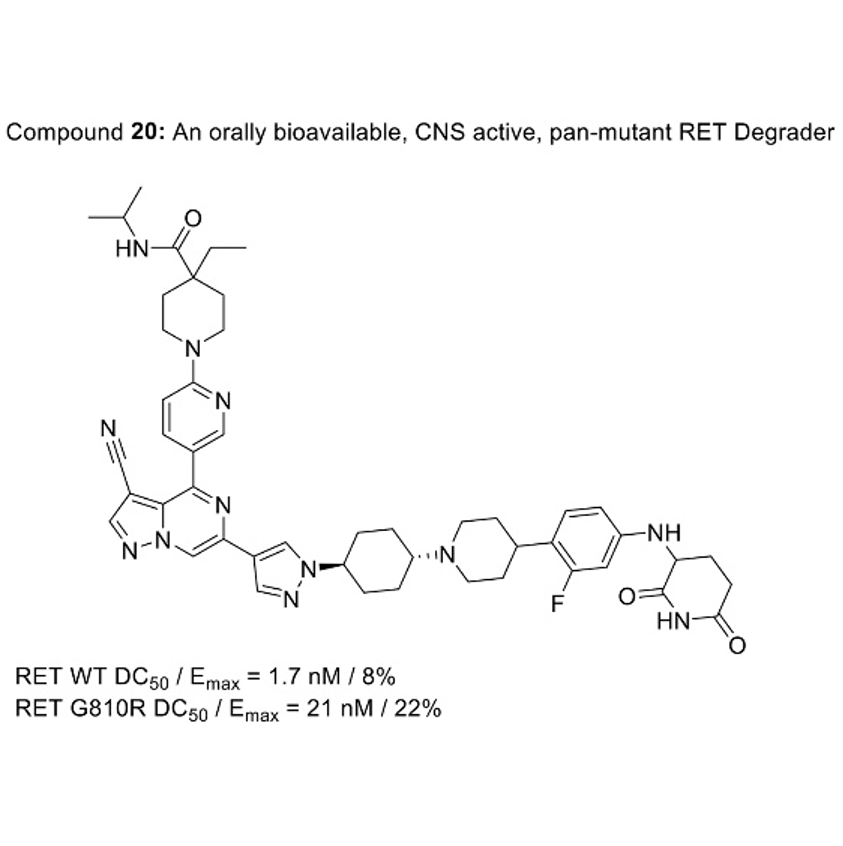
Discovery of an orally bioavailable, CNS active pan-mutant RET kinase heterobifunctional degrader

Douglas L. Orsi, Kiel E. Lazarski, Reina Improgo, R. V. Agafonov, Jae Young Ahn, Joelle Baddour, Katelyn Cassidy, Prasoon Chaturvedi, Kyle S. Cole, Richard W. Deibler, W. Austin Elam, Mark E. Fitzgerald, Victoria J. Garza, Andrew Good, Christopher H. Hulton, Marta Isasa, Katrina L. Jackson, Ping Li, Yanke Liang, Ryan E. Michael, Morgan Welzel O’Shea, Moses Moustakim, Samantha Perino, Fazlur Rahman, Matthew J. Schnaderbeck, Nicholas P. Stone, Bonnie Tillotson, Gesine K. Veits, Abigail Vogelaar, Jeremy L. Yap, Robert T. Yu, Hongwei Huang and James A. Henderson*

RSC Med. Chem., 2025, 16, 4781-4795


Lyn‘s comments:

“This study delivers a first-of-its-kind RET degrader – oral, brain-penetrant, and pan-mutant – designed to outsmart resistance where inhibitors fall short.”


Analysis of the structural diversity of heterocycles amongst European medicines agency approved pharmaceuticals (2014–2023) (Open Access)

Matthew Ward & Niamh M. O’Boyle*

RSC Med. Chem., 2025, 16, 4540-45770


Lyn’s comments:

“A simple yet important analysis of heterocycles found in drugs – essential reading for trainee medicinal chemists.”


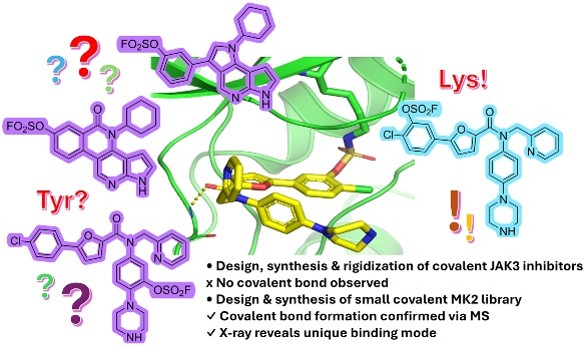
A twist in the tale: shifting from covalent targeting of a tyrosine in JAK3 to a lysine in MK2 (Open Access)

Laura Hillebrand, Guiqun Wang, Alexander Rasch, Benedikt Masberg, Apirat Chaikuad, Thales Kronenberger, Ellen Günther, Michael Forster, Antti Poso, Michael Lämmerhofer, Stefan A. Laufer, Stefan Knapp and Matthias Gehringer*

RSC Med. Chem., 2025, 16, 4906-4919


Lyn’s comments:

“This paper explores tyrosine-targeted covalent inhibition in kinases, revealing unexpected lysine engagement by a fluorosulfate MK2 inhibitor and highlighting the untapped potential of nontraditional electrophiles.”


Meet the Editor

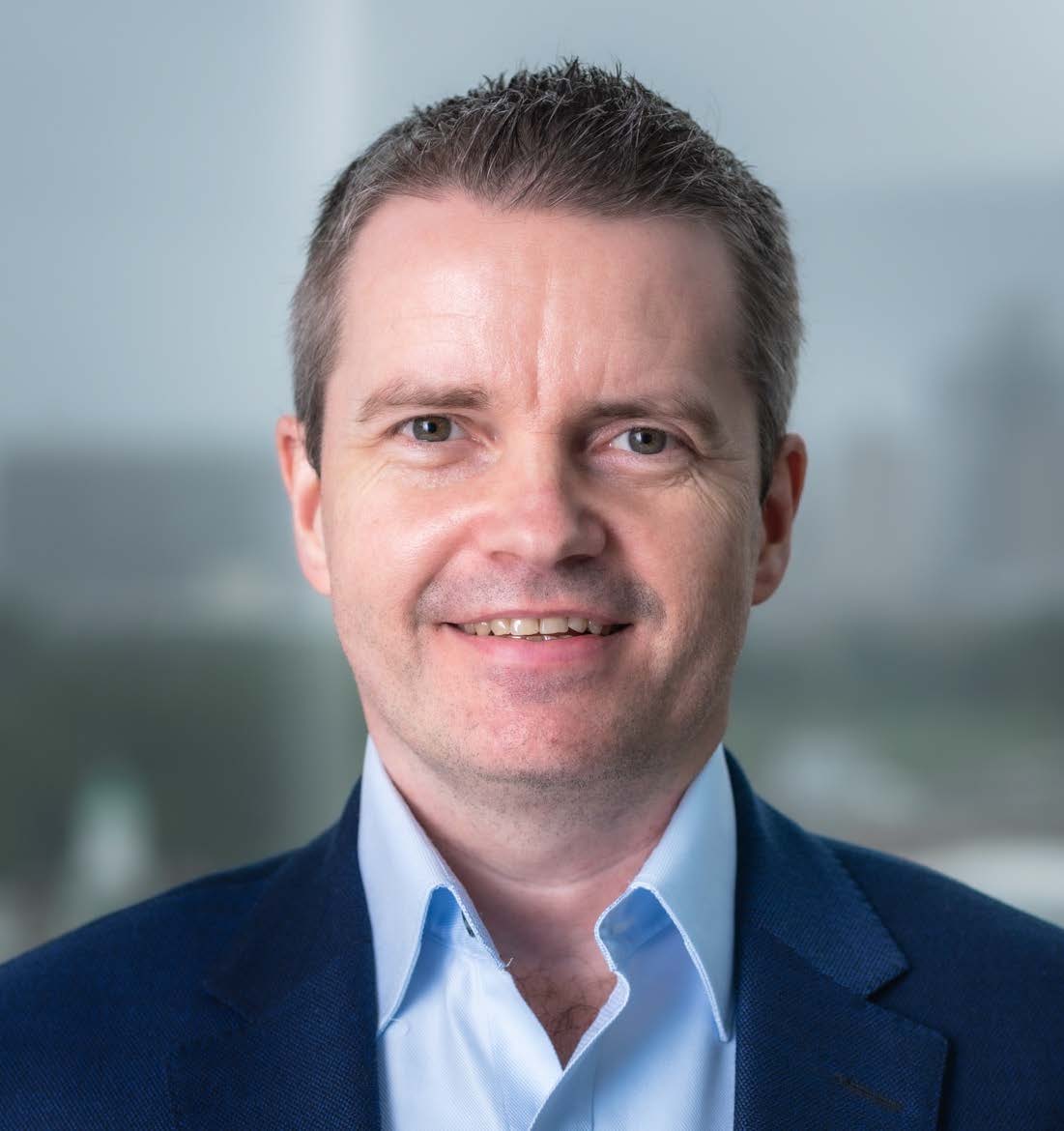
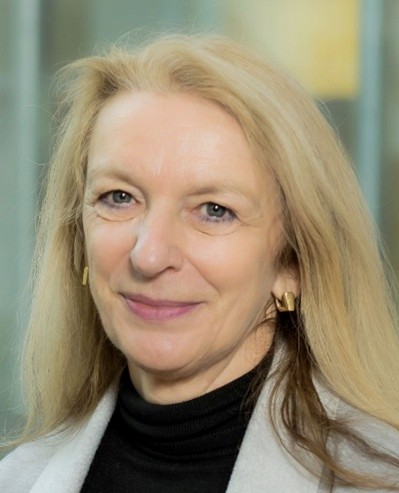
Lyn JonesRSC Medicinal Chemistry Editorial Board member

Lyn Jones completed his PhD studies in synthetic organic chemistry at the University of Nottingham, and his postdoctoral research at The Scripps Research Institute, California in chemical biology. He joined Pfizer Sandwich (UK) as a medicinal chemistry team leader, eventually becoming Head of Chemical Biology and Lead Discovery Technologies. He transferred to Pfizer Cambridge (USA) to become Head of Rare Disease Chemistry, and Head of Chemical Biology. He then helped establish Jnana Therapeutics as Head of Chemistry and Chemical Biology, before moving to Dana-Farber Cancer Institute in Boston as Chief Scientist of the Center for Protein Degradation.

He is currently Principal Investigator and Faculty Member of the Department of Pediatric Oncology and Chemical Biology Program at DFCI, and his lab focusses on the development of next-generation covalent chemical biology with the objective of expanding the druggable proteome. He has been recognized with Royal Society of Chemistry awards for his contributions to HIV, COPD and rare genetic disease research. He has considerable experience working in many other disease areas, including cancer, inflammation, and pain.

He is also an elected Fellow of the Royal Society of Chemistry, the Royal Society of Biology, and the Linnean Society, and was recently recognized as a Fellow of the American Association for the Advancement of Science, and as Fellow of the Learned Society of Wales, for his contributions to the field of medicinal chemistry and chemical biology.


We hope you enjoyed reading these articles. Keep an eye out on our collection webpage for more of our Editors’ favourite articles.

Digg This
Reddit This
Stumble Now!
Share on Facebook
Bookmark this on Delicious
Share on LinkedIn
Bookmark this on Technorati
Post on Twitter
Google Buzz (aka. Google Reader)

Winner of the 2026 RSC Medicinal Chemistry Emerging Investigator Lectureship

Congratulations to Dr Fleur Ferguson, recipient of the 2026 RSC Medicinal Chemistry Emerging Investigator Lectureship! 

The annual RSC Medicinal Chemistry Emerging Investigator Lectureship recognises a researcher who has made a significant contribution to medicinal chemistry and drug discovery in their early independent academic career. The RSC Medicinal Chemistry Editorial Board have selected Dr Fleur Ferguson from the University of California San Diego as the winner this year.


“I am deeply honored to receive the RSC Medicinal Chemistry Emerging Investigator Lectureship. This recognition belongs to my incredible team of students, postdocs, staff, and collaborators at UC San Diego, whose creativity and dedication drive our work forward every day. Our research developing novel induced proximity technology platforms represents the collaborative spirit that makes medicinal chemistry such an exciting field. I hope this award helps spotlight the power of chemical innovation in enabling new therapeutic strategies for patients with neurodegeneration, cancer, and other unmet medical needs.”


About Fleur:

Assistant Professor Fleur Ferguson leads a research group in UC San Diego’s Department of Chemistry and Biochemistry and Department of Pharmaceutical Sciences developing next-generation proximity-pharmacology technology platforms. Her laboratory integrates chemical synthesis, mass spectrometry, and cell biology to create therapeutic strategies for diseases where conventional approaches have failed. Ferguson received her Ph.D. from the University of Cambridge, advised by Professors Chris Abell and Alessio Ciulli, and completed postdoctoral research with Professor Nathanael Gray at Dana-Farber Cancer Institute. Her innovative work in chemical biology has been recognized with major awards including the NIH Director’s New Innovator Award, NSF CAREER, International Chemical Biology Society Young Chemical Biologist Award, Pew Biomedical Research Scholar Award, and early career honors from multiple foundations.

Digg This
Reddit This
Stumble Now!
Share on Facebook
Bookmark this on Delicious
Share on LinkedIn
Bookmark this on Technorati
Post on Twitter
Google Buzz (aka. Google Reader)

Editor’s Choice Collection: Susanne Müller-Knapp

RSC Medicinal Chemistry is delighted to present our Editor’s choice collection

This collection showcases some of the best articles published in the journal, handpicked by our Associate Editors and Editorial Board members.

Below we have a selection of recent RSC Medicinal Chemistry articles chosen by Editorial Board member Dr Susanne Müller-Knapp (Goethe University Frankfurt, Germany). Take a look at which articles she chose and why.

Susanne’s favourite articles


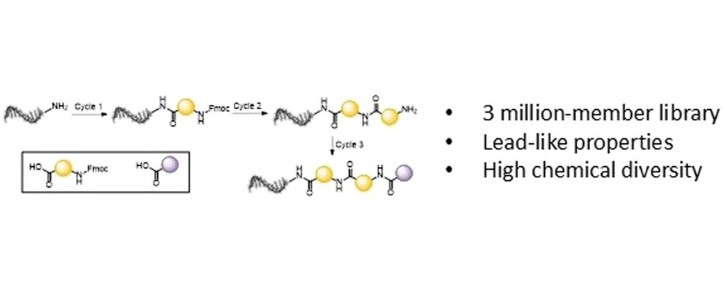
Design and synthesis of a chemically diverse, lead-like DNA-encoded library from sequential amide coupling (Open Access)

Cameron E. Taylor, Grace Roper, Rhianna Young, Fredrik Svensson, Andreas Brunschweiger, Sam Butterworth, Andrew G. Leach and Michael J. Waring*

RSC Med. Chem., 2025, 16, 4774-4780

Susanne‘s comments:

“This article describes the details of the chemistry and enzymatic steps involved in the design and synthesis of a medium-sized DEL library using straightforward amide coupling methods.”


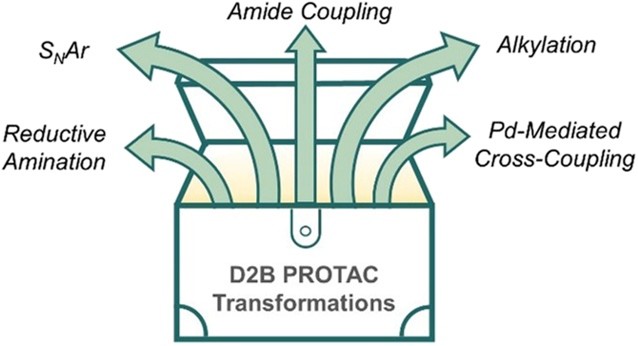
Expanding the reaction toolbox for nanoscale direct-to-biology PROTAC synthesis and biological evaluation

Rebecca Stevens, Harry J. Shrives, Jenni Cryan, Diana Klimaszewska, Peter Stacey, Glenn A. Burley, John D. Harling, David J. Battersby* and Afjal H. Miah*

RSC Med. Chem., 2025, 16, 1141-1150

Susanne‘s comments:

“Direct to biology approaches are an emerging area in the field of targeted protein degradation. In this research article, the approach has been combined with high-throughput chemistry based on key chemical reactions, namely reductive amination, SNAr, Pd-mediated cross-coupling and alkylation to accelerate generation of degrader molecules.”


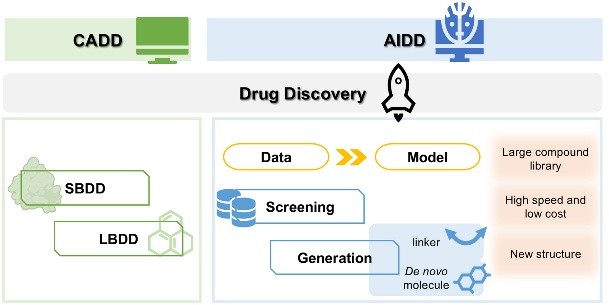
Recent advances from computer-aided drug design to artificial intelligence drug design
Keran Wang, Yanwen Huang, Yan Wang*, Qidong You* and Lei Wang*

RSC Med. Chem., 2024, 15, 3978-4000

Susanne’s comments:

“In this review article, both computer-aided drug design as well as the emerging role of evolving role of artificial intelligence in drug discovery are discussed with a focus on chemical library screening, linker generation, and de novo molecular generation.”


Meet the Editor

  Susanne Müller-Knapp, RSC Medicinal Chemistry Associate Editor

Goethe University Frankfurt, Germany

Susanne Müller-Knapp is Chief Operating Officer at the Structural Genomics Consortium, SGC, Frankfurt and Director of Operations of the Chemical Probes Portal. She obtained a PhD at the Karolinska Institute in Stockholm, Sweden. After spending several years as postdoctoral researcher in the area of inflammation and gene regulation at the Karolinska Institute and at the DIBIT San Raffaele Scientific Institute in Milan, Italy, she joined 2004 the SGC, at Oxford University, where she coordinated the Epigenetic Probe Project and lead a group, focusing on the evaluation of novel chemical probes, cellular target engagement of these tool compounds and their biological roles.

Her research now focuses on using chemical biology to dissect the role of specific targets in biology and disease with a main focus on cancer. In her role as Director of Operations for the Chemical Probes Portal, she focuses on providing data and knowledge on high quality chemical tools and establishing quality standards for chemical probes with diverse modes of action.


We hope you enjoyed reading these articles. Keep an eye out on our collection webpage for more of our Editors’ favourite articles.

Digg This
Reddit This
Stumble Now!
Share on Facebook
Bookmark this on Delicious
Share on LinkedIn
Bookmark this on Technorati
Post on Twitter
Google Buzz (aka. Google Reader)