


RSC Applied Interfaces publishes interdisciplinary work with an applied focus, which can be read for free here. To celebrate the excellent articles that have been published so far in our journal, we asked some of our authors to discuss their work in more detail.
In this post, we hear from Alicja Bachmatiuk, Xiaoqin Yang, Maria Zdończyk, Szymon Abrahamczyk, Gražyna Simha Martynková and Mark H. Rümmeli as they discuss their recently published review entitled ‘No substrate required: electron-beam-enabled, single-atom-thick 2D metals and metal oxides‘.
An introduction from the authors
Two-dimensional materials have transformed nanoscience, yet truly freestanding single-atom-thick metals and metal oxides remain exceptionally rare because most metals naturally favour three-dimensional structures. Our recent review explores how electron beams can both fabricate and characterize these atomically thin systems, enabling materials stabilized solely by interface effects.
A central conclusion is that these materials are fundamentally interface-defined. Graphene pore edges act as atomically precise nanoreactors that trap atoms, guide reconstruction and stabilize low-coordination configurations. In this setting, the transmission electron microscope becomes both an atomic-resolution imaging tool and a fabrication platform.
We organize the field into three experimentally established formation routes: graphene-pore templating, top-down thinning and alloy-enabled dealloying, and subtractive beam chemistry. We also propose practical evidence standards, including quantitative thickness verification, complete electron-dose reporting and time-resolved imaging.
Looking ahead, automation and artificial intelligence are likely to transform electron-beam-enabled interface engineering. Closed-loop electron microscopy, where machine learning analyses atomic structures and adapts beam conditions in real time, could enable reproducible fabrication of atomically thin interfaces and accelerate the discovery of new two-dimensional materials.
Meet the authors
 Alicja Bachmatiuk |
Alicja Bachmatiuk is a materials scientist specializing in 2D nanomaterials, with a strong focus on CVD synthesis, transmission electron microscopy, and electrochemical applications. Her research explores graphene, MXenes, and hybrid nanostructures for advanced energy-storage and sensing technologies. She has held research positions in leading international centers, including a Humboldt Fellowship in Dresden. Currently, she is a professor at Wrocław University of Science and Technology and, since 2025, also a professor at VSB Technical University of Ostrava in the Czech Republic at the EBEAM Centre.
|
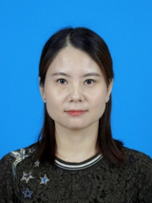 Xiaoqin Yang |
Xiaoqin Yang earned her PhD from Xi’an Jiaotong University and currently works at Suzhou Laboratory. Her research focuses on semiconductor epitaxial growth, artificial synaptic devices, and high-resolution transmission electron microscopy (HRTEM) characterization. She has published over 30 SCI papers in high-impact international journals across materials and energy research fields, and filed 23 Chinese invention patents. She put forward an innovative atomic-scale carbon catalytic route for graphene synthesis and precision patterning. Additionally, she developed GaN-based neuromorphic semiconductor devices that mimic biological synaptic behaviors, advancing their deployment in semiconductor manufacturing, artificial intelligence, industrial automation and related industries.
|
 Maria Zdończyk |
Maria Zdończyk is a researcher at the E-BEAM Centre at VSB – Technical University of Ostrava (Czech Republic), where she works on thin organic films and their transformations under electron-beam irradiation. She obtained her PhD in chemistry, focusing on luminescent sol–gel and ionogel thin films for optical sensing including systems designed for high-temperature stability and time-temperature indicators. In her current research, she investigates how electron beam can be used to drive and control chemical and functional changes in organic and hybrid layers, aiming toward spatially programmable, multi-state material responses.
|
 Szymon Abrahamczyk |
Szymon Abrahamczyk AMRSC, is a postdoctoral researcher and MSCA ERA Fellow at the EBEAM Centre (CNT/CEET) in Ostrava, Czech Republic. His research encompasses focused electron-beam-induced deposition (FEBID), nanoscale fabrication, and materials characterization using scanning electron microscopy, vibrational spectroscopy, and correlative microscopy techniques. Through his MSCA ERA Fellowship project, SENSE (Scanning Electron-beam Nanofabrication for SEnsors), he investigates the use of FEBID to deposit and modify functional materials for gas-sensing applications. He also develops new SEM-based approaches for characterizing FEBID materials and processes. Drawing on a multidisciplinary background in analytical chemistry, electron microscopy, spectroscopy, and nanomaterials characterization, his work connects fundamental materials science with practical advances in sensing, nanofabrication, and analytical methodology.
|
 Gražyna Simha Martynková |
Gražyna Simha Martynková is a senior academic and materials scientist based at VSB Technical University of Ostrava (Czech Republic), where she serves as Director of the Nanotechnology Centre (CNT) and Head of Department. Her educational background lies in process engineering with a focus on analytical chemistry, which she completed at VSB itself (Faculty of Materials Science & Technology). Over the course of her career she has developed expertise in layered and natural materials (such as clay minerals and vermiculite), nanocomposites, carbon-based nano-objects, and their integration into functional systems (for example energy-storage or adsorption applications). She emphasizes bridging fundamental understanding (microstructure, synthesis, analytical characterization) with applied outcomes, particularly in energy and environmental contexts, which aligns with your interests in electron-beam induced transformations and advanced nanomaterials.
|
 Mark H. Rümmeli |
Prof. Mark H. Rümmeli is ERA Chair Professor and Principal Investigator of the EBEAM Centre (Electron Beam Emergent Additive Manufacturing) at VSB – Technical University of Ostrava, Czech Republic. He is also Distinguished Chair Professor at Anhui Normal University, China, and Chair Professor at Soochow University, China. He is a Fellow of the Royal Society of Chemistry (FRSC), the Institute of Physics (FIoP), the Institution of Engineering and Technology (FIET), and the International Engineering and Technology Institute (FIETI). His research focuses on electron-beam-enabled nanomanufacturing, two-dimensional materials, atomically precise fabrication, advanced electron microscopy, and functional materials for sensing and energy applications. His work combines fundamental materials science with interface engineering to develop new routes towards atomically thin materials and autonomous electron-beam fabrication. Prof. Rümmeli has authored more than 475 peer-reviewed publications, which have received over 30,000 citations. He has supervised numerous PhD students and postdoctoral researchers and leads international collaborations spanning Europe and Asia.
|
Learn more about the EBEAM Centre and its research: https://ebeam.vsb.cz
No substrate required: electron-beam-enabled, single-atom-thick 2D metals and metal oxides
Alicja Bachmatiuk; Xiaoqin Yang; Maria Zdończyk; Szymon Abrahamczyk; Gražyna Simha Martynková; Mark H. Rümmeli
RSC Appl. Interfaces (2026). https://doi.org/10.1039/d6lf00009f

 |
RSC Applied Interfaces is a dedicated, interdisciplinary reference journal for cutting-edge research on the applications of surfaces and interfaces. In addition to the applied focus, work considered for publication in RSC Applied Interfaces is expected to be highly original and of top quality. The journal seeks to report major scientific advances beyond the state of the art, at the cutting edge of this interdisciplinary field. |