1st Workshop on Field Flow Fractionation – Mass Spectrometry (FFF-MS)

The University of Vienna and the Federal Institute of Hydrology are pleased to announce the

1st Workshop on Field-Flow Fractionation – Mass Spectrometry (FFF-MS) 

 26-27 September 2013 (vienna, Austria)


The Workshop focuses mainly on Field-Flow Fractionation (FFF) techniques coupled to mass spectrometry applied to engineered nanomaterials in all kind of matrices.

  • Day 1: gives an introductionto the field of FFF
  • Day 2: will contain practical lab work, several FFF and hyphenated detectors (e.g., SLS, DLS, ICP-MS) are available

Deadline for abstract submission: 30 July 2013

Deadline for registration the 30 August 2013


Digg This
Reddit This
Stumble Now!
Share on Facebook
Bookmark this on Delicious
Share on LinkedIn
Bookmark this on Technorati
Post on Twitter
Google Buzz (aka. Google Reader)

The Next Generation-Inteview with Alexander Gundlach-Graham

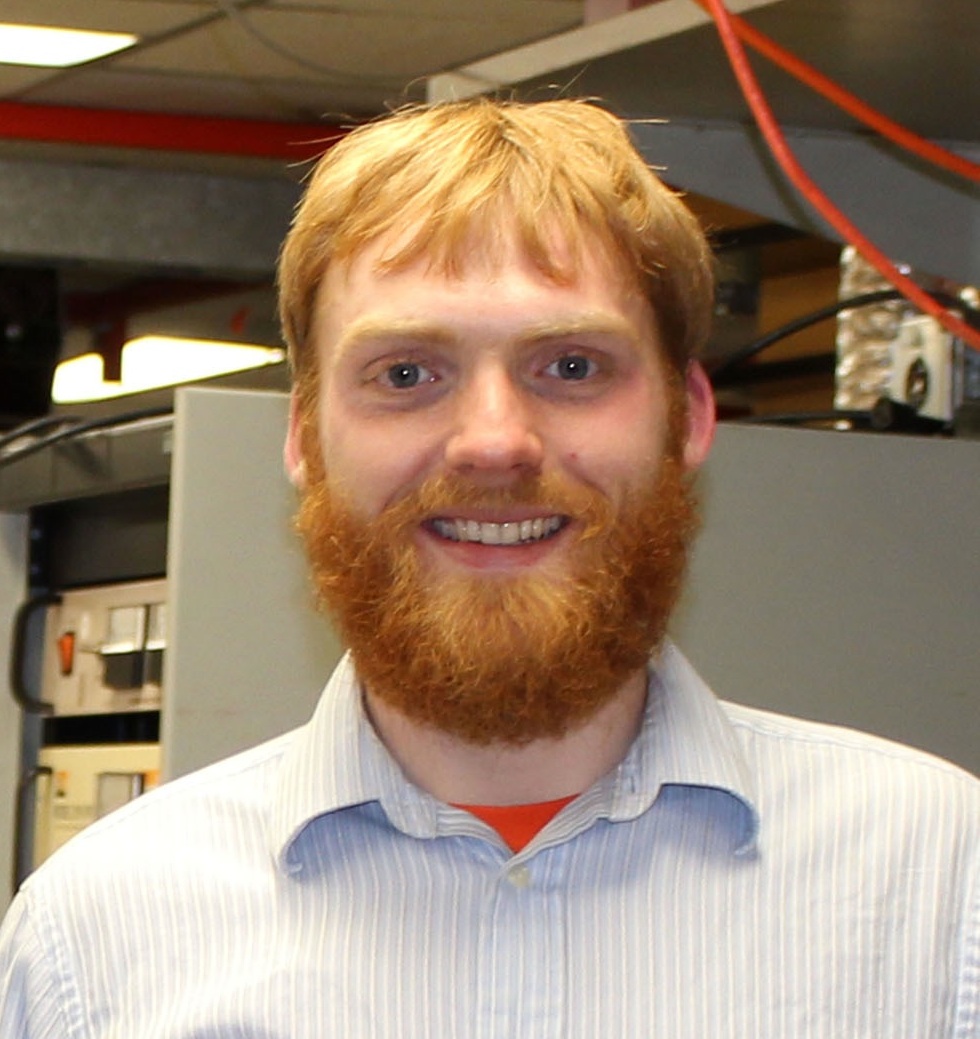
Today we interview Alexander Gundlach-Graham, a graduate student who is finishing his PhD at the Laboratory for Spectrochemistry, in Indiana University, under the supervision of Prof. Dr. Gary M. Hieftje
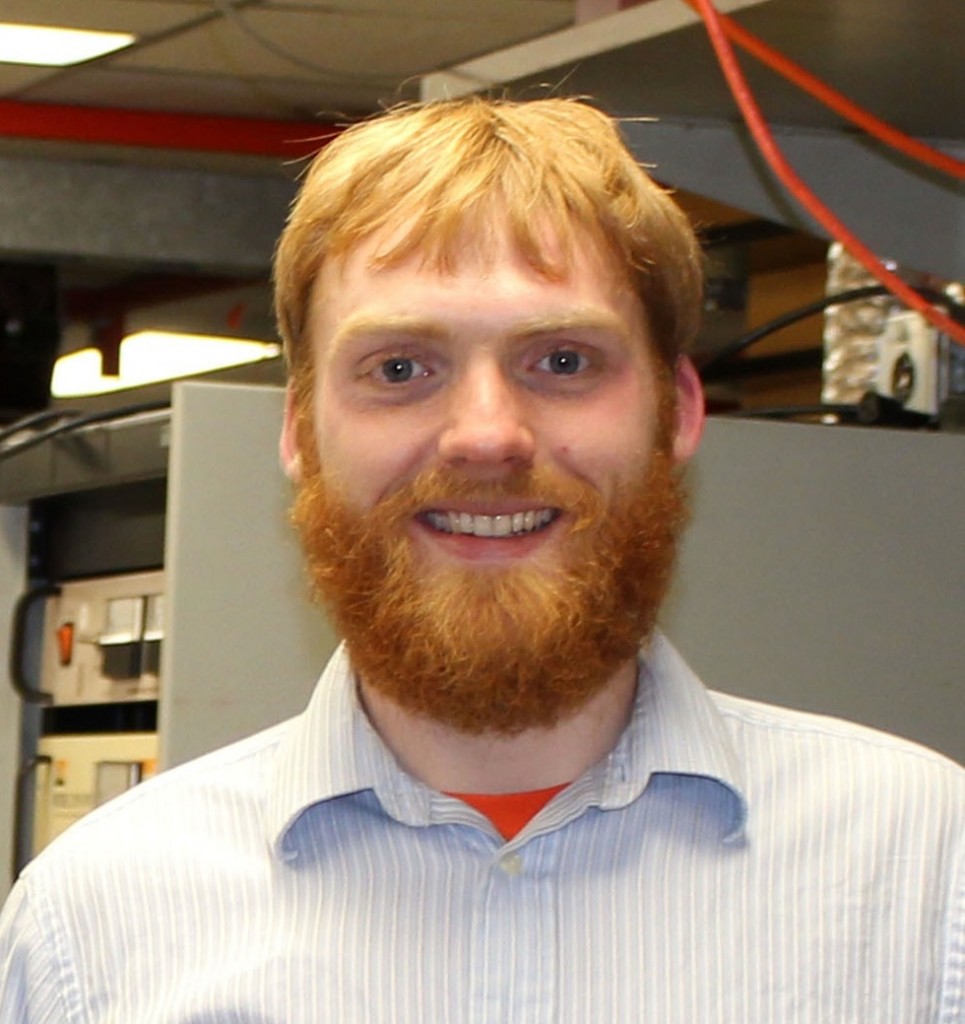
Alexander in his lab in Bloomington, Indiana

Who or what inspired you to become a scientist?

I’ve always been curious about the natural world and about how things work. I trace my curiosity about the outdoors to hiking and camping trips I took growing up with my family and scouts. I never really made a decision to study chemistry; I took general chemistry my freshman year of college and then just kept taking chemistry classes because I enjoyed them so much. The most influential course I took in college was Instrumental Analysis. In this course, we both used instruments and, as a class, built an instrument to study kinetics reactions through a fast-flow mixing tube.

Why did you choose your research group/university and what factors influenced your choice?

I joined the Hieftje group at Indiana University because I wanted to build scientific instruments. The black-box approach to chemistry has never worked for me: I’m too fascinated by “how” measurements are made. I came to IU to learn about everything that goes into building a scientific instrument, from theory, design, and construction to operation and first results. In this regard, IU (and the Hieftje group) has been a fantastic place to learn about instrument development. Also, Bloomington, Indiana is a wonderful place to live.

What do you like about where you live?

My favorite part of Bloomington is definitely the Farmer’s Market. Abi and I go every Saturday during the summer to stock up on fresh vegetables for the week.

Can you explain a bit the purpose of your current research activities?

My PhD research has been to develop and characterize the first Distance-of-Flight Mass Spectrometer (DOFMS). Prof. Chris Enke from the University of New Mexico invented the concept of DOFMS in the late 2000s, and I’ve applied his theory with a real instrument. I think the research we’re doing on DOFMS in the Hieftje lab is beginning to solidify DOFMS as an analytical MS technique. To date, we’ve built two DOFMS instruments and combined DOFMS with glow-discharge and inductively coupled plasma ionization sources. More combinations of DOFMS with alternative ionization sources and applications of DOFMS are certainly on the way!

How is a typical day in your lab?

I don’t really have a “typical day” in the lab. The only real routine I have is that several members of the group and Prof. Hieftje often gather for coffee in the mornings to socialize and talk about our research problems, questions, and ideas. I typically spend the rest of day working mostly independently. Depending on the day, I will be taking measurements; analyzing data; designing, building, or changing components for the DOFMS; or reading and writing.

What common activities are organized in your research group?

Every day we have make freshly-ground French pressed coffee in the morning; for some reason we are quite particular about our coffee. Otherwise, we have two main group events during the year: in the summer we rent a pontoon boat and troll around a local lake for a day, and in December there is a holiday party. We also often have group dinners when visiting scientists prepare to leave the group and have celebration dinners when a group member receives his or her degree.

What apps/programs do you typically use?

I think I use programs typical to analytical chemists. I use Origin to plot data, Endnote to organize my citations, and Microsoft Office programs to make presentations and write manuscripts. I also do a lot of work with LabVIEW to remotely control the instrument and to analyze data. I use SimION for simulating new designs for the DOFMS.

How do you search for scientific information? How do you manage your bibliography?

I follow journals with an RSS reader. My preferred reader is Google Reader—I only get to use that for 1 more month L. When I know what article I’m looking for, I use Google Scholar to find PDFs of the article, and when I want to search by author, I typically use Web of Science. I use Endnote to keep my bibliography organized. My current system is to read and annotate articles using GoodNotes on my iPad, and then save the PDF to my EndNote library, so that the article, my notes, and the citation are all together.

What are your views on JAAS? Which type of articles do you prefer? Do you miss some content?

JAAS is one of the journals that I always look through. I enjoy the research and perspective articles especially. As an author, I like the flexibility of JAAS because there are no figure and page limits. When journals are too strict about figure limits, I think that important pieces of the story can get buried in supplementary material sections.

What do you like and dislike the most about your work?

My favorite part of research is problem solving. I also have a lot of freedom to develop new ideas. At IU, we have a student machine shop that I can use to make my own parts for the instrument: sometimes I can design, construct, install, and test a new component for the DOFMS in a day or two. This flexibility really allows us to be creative. In my graduate career, I’ve also been lucky to get to travel around the world to meet with other scientists and share my own results. Just like everyone else, I don’t like it when my instrument stops working. A day or two spent in search of ions because of a missed electrical connection can be very frustrating.

What have you taught? What have your teaching experiences been like? What have you learned from teaching?

At IU, I’ve taught general chemistry and bio-analytical chemistry labs, as well as several semesters of our graduate-level electronics course. I’ve very much enjoyed teaching at IU; I think the biggest lesson I’ve learned is that a teacher needs to both deliver material clearly and be patient.

What do you expect to be doing in five years’ time?

In fives years, I hope to be an assistant professor at a liberal arts college in the United States. I’d like my career to balance teaching and research, with perhaps more emphasis on teaching.

What do you enjoy doing when you are not in the lab?

I like to spend time with my wife Abi, go on walks around town, go to the gym, and cook. My favorite hobby is bread baking: recently I’ve been experimenting with wild-yeast sourdough breads.

Many thanks for sharing your views with us, Alex, and all the best for your post-doc position!

Digg This
Reddit This
Stumble Now!
Share on Facebook
Bookmark this on Delicious
Share on LinkedIn
Bookmark this on Technorati
Post on Twitter
Google Buzz (aka. Google Reader)

New JAAS Impact Factor: 3.2

We are delighted to announce that our latest Impact Factor* is 3.2!
JAAS remains the leading journal dedicated to publishing research in atomic spectrometry and is the place to publish innovative research on the fundamental theory and application of spectrometric techniques. Readership is cross-disciplinary and includes such varied fields as: atomic spectrometry, mass spectrometry, geochemistry, biomedical and clinical science, environmental science, toxicology, forensics and archaeometry.

The Editorial Office thanks all of our Board members, authors and readers for their continued support.

We invite you to submit your latest piece of high impact work with us here.

*The Impact Factor provides an indication of the average number of citations per paper. Produced annually, Impact Factors are calculated by dividing the number of citations in a year by the number of citeable articles published in the preceding two years. Data based on 2012 Journal Citation Reports®, (Thomson Reuters, 2013).

Digg This
Reddit This
Stumble Now!
Share on Facebook
Bookmark this on Delicious
Share on LinkedIn
Bookmark this on Technorati
Post on Twitter
Google Buzz (aka. Google Reader)

Plumage patterns in a 150 million year old bird revealed

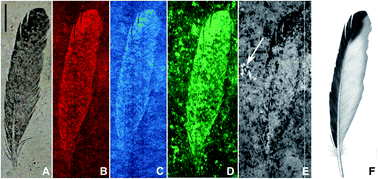
Archaeopteryx lithographica single feather, visible light and SRS-XRF false colour images

Researchers at the University of Manchester discovered that the world’s oldest bird was not black, as previously thought.

Phillip Manning and colleagues used synchrotron rapid scanning X-ray fluorescence (SRS-XRF) combined with sulphur X-ray absorption near edge structure (XANES) to examine the presence of trace elements in the feathers of Archaeopteryx, an iconic fossil widely studied to understand bird evolution.

The importance of colour of in the natural selection of bird plumage was first acknowledged by Charles Darwin. The colour of bird plumage is in fact a function of selection processes, varies depending on age, sex, diet and is crucial for camouflage and marking the territories.

This study suggests a “possible visual role for pigments in the feathers of Archaeopteryx acting as a fitness criterion in the natural selection of this species, and having an impact on evolution of pigmentation in this and other feathered theropod dinosaurs”, write the authors.

The paper, ‘Synchrotron-based chemical imaging reveals plumage patterns in a 150 million year old bird’, was published in the themed issue of JAAS on Elemental Imaging and has featured in an article in the Daily Mail today. This paper will be free to read for 6 weeks.

Synchrotron-based chemical imaging reveals plumage patterns in a 150 million year old early bird
Phillip. L. Manning et al.,
J. Anal. At. Spectrom., 2013, 28, 1024-1030
DOI: 10.1039/C3JA50077B

Digg This
Reddit This
Stumble Now!
Share on Facebook
Bookmark this on Delicious
Share on LinkedIn
Bookmark this on Technorati
Post on Twitter
Google Buzz (aka. Google Reader)

HOT Articles in JAAS!

Take a look at our selected HOT articles just published in JAAS! These papers will be free to read until June 28th. Have a read now!

Trapping and laser cooling of trace Ca+ isotopes injected from an inductively coupled plasma mass spectrometer
Masanori Kitaoka,   Takuma Yoshida, Yuta Yamamoto, Kyunghun Junga and Shuichi Hasegawa  
J. Anal. At. Spectrom., 2013, Advance Article
DOI: 10.1039/C3JA00004D  

Coal property analysis using laser-induced breakdown spectroscopy
Tingbi Yuan, Zhe Wang, Siu-Lung Lui, Yangting Fu,  Zheng Li, Jianming Liu and Weidou Nia  
J. Anal. At. Spectrom., 2013, Advance Article
DOI: 10.1039/C3JA50097G

Aerosol entrainment and a large-capacity gas exchange device (Q-GED) for laser ablation inductively coupled plasma mass spectrometry in atmospheric pressure air
Daniel Tabersky, Kohei Nishiguchi, Keisuke Utani, Masaki Ohata, Rolf Dietiker, Mattias B. Fricker, Ivo M. de Maddalena, Joachim Kocha and Detlef Günther 
J. Anal. At. Spectrom., 2013,28, 831-842
DOI: 10.1039/C3JA50044F

Elemental mapping of microstructures by scanning electron microscopy-energy dispersive X-ray spectrometry (SEM-EDS): extraordinary advances with the silicon drift detector (SDD)
Dale E. Newbury and  Nicholas W. M. Ritchie   
J. Anal. At. Spectrom., 2013, Advance Article
DOI: 10.1039/C3JA50026H 
 
LA-ICPMS elemental imaging of complex discontinuous carbonates: An example using large benthic foraminifera
David Evans and Wolfgang Müller   
J. Anal. At. Spectrom., 2013, Advance Article
DOI: 10.1039/C3JA50053E

Digg This
Reddit This
Stumble Now!
Share on Facebook
Bookmark this on Delicious
Share on LinkedIn
Bookmark this on Technorati
Post on Twitter
Google Buzz (aka. Google Reader)

The Next Generation-Inteview with Morgana B. Dessuy

We continue this section by interviewing Morgana B. Dessuy, a very young, just appointed Professor at Universidade Federal do Rio Grande do Sul (UFRGS), Porto Alegre, BrazilMorgana works at the Laboratory of Trace Analysis, coordinated by Prof. Dr. María G.R. Vale.

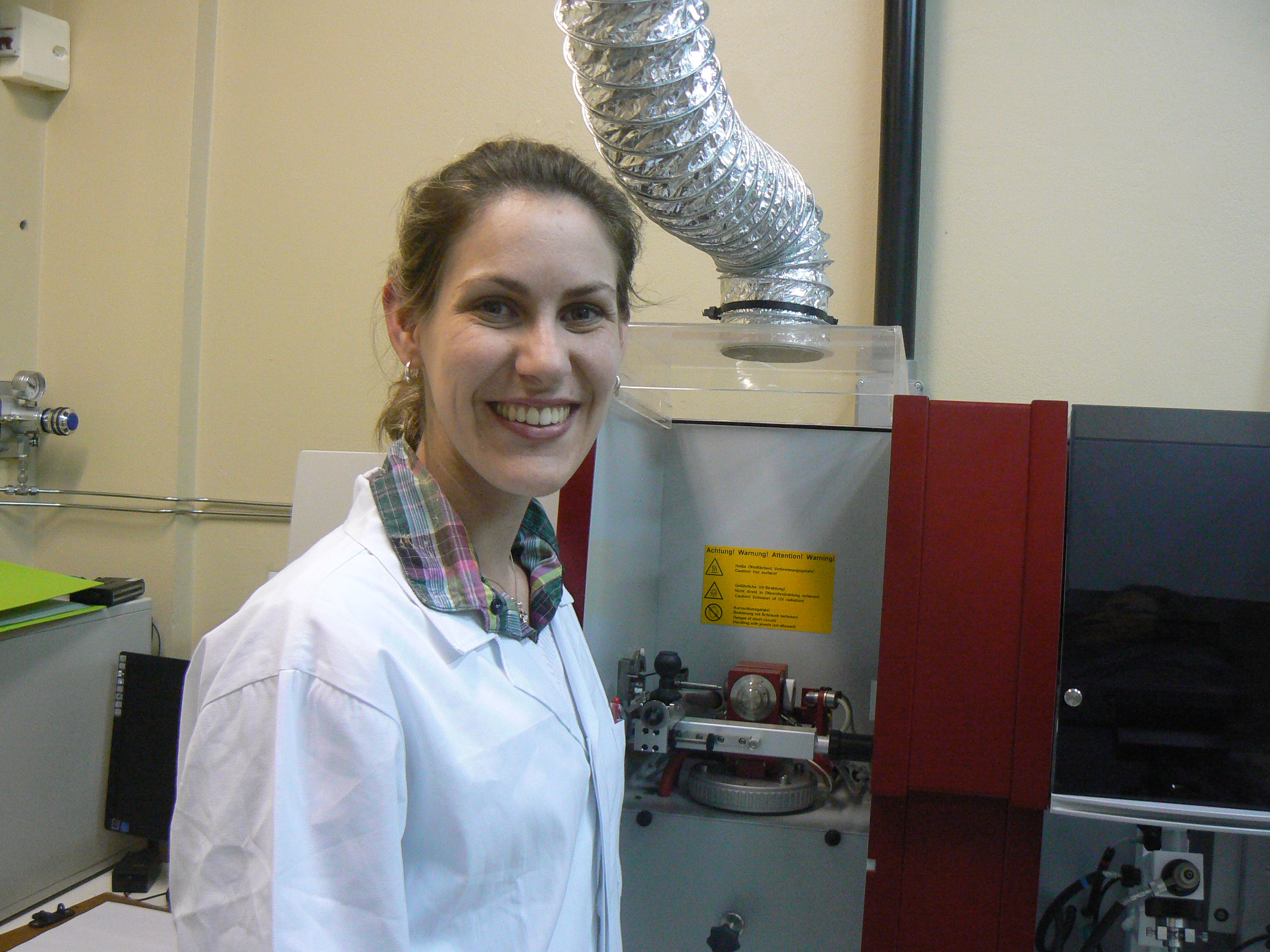
Morgana Dessuy in her lab in Porto Alegre

Who or what inspired you to become a scientist?

At school I was always interested in Sciences. During high school, I decided to study Chemistry, after having read some articles about the role of a chemist in society.

Why did you choose your research group/University and what factors influenced your choice?

During my graduation, at Universidade Federal de Santa Maria, I was given the chance to work with different analytical techniques. At the end of my degree I decided to work with Atomic Absorption Spectrometry (AAS), which led me to do my TCC, which is a first supervised research work to conclude the graduation course, at the Laboratory of Trace Analysis at Universidade Federal do Rio Grande do Sul (UFRGS), coordinated by Prof. Maria Goreti R. Vale. This TCC work increased my interest in this technique even more; consequently I decided to take my Master and Doctorate in this area. Considering the fact that the Laboratory of Trace Analysis offers an adequate infrastructure for the development of my research, and that UFRGS is one of the best universities of Brazil, I chose to follow my studies there under the supervision and orientation Prof. Maria Goreti. During my PhD work I also had the opportunity to spend one year at the Institute of Analytical Chemistry of the Academy of Science of the Czech Republic in Prague under the supervision of Dr. Jiři Dědina in the frame of a sandwich program. This gave me the opportunity to work with other techniques, to know new people and a different culture, which contributed very much to increase my horizon, scientifically and personally.

Can you explain a bit the purpose of your current research activities?

My current research is based on the application of the AAS technique for the development of analytical methods. I am currently working on the development of analytical methods for the quantification of non-metals using High-resolution Continuum Source Graphite Furnace Molecular Absorption Spectrometry (HR-CS GF MAS). Besides this project, I have been developing another study related to the leaching of metals and metalloids from different food containers, particularly from pewter cups produced in Brazil.

How is a typical day in your lab?

I am not able to stay for a long time in the laboratory to make measurements, due to my recent activities as a Professor. Having to divide my time among giving classes, research and doing the paperwork, what I usually do is to plan the experiments and discuss the results with the students in the lab early in the morning and at the end of the afternoon when I finish my classes.

What common activities are organized in your research group?

Eventually we gather to make a barbecue or a happy hour to celebrate birthdays, presentation of final papers or the approval of a scientific project.

How do you search for scientific information? How do you manage your bibliography?

To make the bibliographic review I make use of the Web of Science. In addition, I usually access the websites of the main Journals in the field, to follow what is being published, and I save in folders, ordered by subject, those articles that I find relevant.

What are your views on JAAS? Which type of articles do you prefer? Do you miss some content?

JAAS is one of the most important Journals in the field of Atomic Spectrometry, being a reference for me since the beginning of my graduation. Nowadays, I wish there were more articles about sample preparation, as well as method development and applications involving AAS techniques, mainly using high-resolution continuum source AAS and high resolution continuum source molecular absorption spectrometry.

What do you like and dislike the most about your work?

I really like my work and I feel honored for being able to provide classes and carry out research activities simultaneously. I am happy with what I do. I do not really like the administrative paperwork, which is automatically inserted in my duties. Having to administrate money for my research and face bureaucracy and delay for the purchase of material/reagents is really annoying.

What do you expect to be doing in 5 years time?

I have recently reached a position, which I have aimed for a long time: the one of being a Professor at UFRGS. In five years time I hope to have acquired the potential to widen the structure of the Laboratory of Trace Analysis and to be satisfied with the research developed during this time. Besides that, I hope to contribute to the formation of graduate and post-graduate students.

What do you enjoy doing when you are not in the lab?

I really like going out with my friends or going to a park on the weekends. I also like reading a lot of books of general literature.

Thanks for sharing your views with us, Morgana, and congratulations on your recent position!

Digg This
Reddit This
Stumble Now!
Share on Facebook
Bookmark this on Delicious
Share on LinkedIn
Bookmark this on Technorati
Post on Twitter
Google Buzz (aka. Google Reader)

1st Workshop on Biomedical Applications of Geochemistry

We are pleased to announce the first Workshop on Biomedical Applications of Geochemistry that will be held at Gargonza, Tuscany (http://www.gargonza.it/index.html) after the Florence Goldschmidt conference from the 30th Aug (evening) to the 1st Sept (afternoon).

Gargonza, Italy, 30th Aug-1st Sept.

You can register for the workshop here.

This workshop will be the opportunity to present new results on the growing field of the use of natural stable isotope fractionation in biomedicine, both for understanding homeostasis in normal and pathological conditions and as potential new biomarkers. This will be also the chance for scientists coming from isotopic mass spectrometry (IRMS and MC-ICPMS) and from biomedicine to meet for setting up an authentic interdisciplinary community devoted to the development of stable isotopes in health sciences.

Committed speakers for this event are Francis Albarède (ENS Lyon), Ariel Anbar (Arizona State University), Anton Eisenhauer (Geomar), Frank Vanhaecke (Ghent University), Thomas Walczyk (National University of Singapore).

For any information about the workshop, please write to Vincent.Balter@ens-lyon.fr.

We are also pleased to announce that the works presented at Gargonza will be invited to submit to Journal of Analytical Atomic Spectrometry and Metallomics for a themed web collection of papers.

Digg This
Reddit This
Stumble Now!
Share on Facebook
Bookmark this on Delicious
Share on LinkedIn
Bookmark this on Technorati
Post on Twitter
Google Buzz (aka. Google Reader)

JAAS Issue 6 is out now!

A great new issue of JAAS is now available online! Take a look at our brilliant covers and enjoy the latest research in the field of atomic spectrometry in cultural heritage and geology analyses.

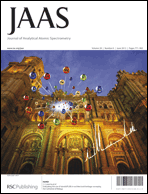
Our beautiful outside front cover shows the front facade of the Cathedral of Malaga, one of the best architectural features of the region of Andalusia in Spain. Researchers at the University of Malaga analysed the materials composing the main facade and the pollutants present on the surface by laser-induced breakdown spectroscopy (LIBS). Using this technique, they were able to thoroughly characterise the sandstones, marbles and metals composing the most highlighted section of the main facade and identified the most relevant pollutants that are damaging the appearance of this historical building.

Evaluating the use of standoff LIBS in architectural heritage: surveying the Cathedral of Málaga
I. Gaona, P. Lucena, J. Moros, F. J. Fortes, S. Guirado, J. Serrano and   J. J. Laserna 
J. Anal. At. Spectrom., 2013,28, 810-820
DOI: 10.1039/C3JA50069A

The inside front cover of this issue introduces the work of Detlef Gunther and colleagues at the Swiss Federal institute of Technology, ETH, Switzerland. In their paper, the researchers used laser ablation inductively coupled plasma mass spectrometry for quantitative analysis of element content in solid material. In particular, they designed and optimised a large-capacity gas exchange device (Q-GED) and demonstrated its efficiency on large stalagmite samples.

Aerosol entrainment and a large-capacity gas exchange device (Q-GED) for laser ablation inductively coupled plasma mass spectrometry in atmospheric pressure air
Daniel Tabersky, Kohei Nishiguchi, Keisuke Utani, Masaki Ohata, Rolf Dietiker, Mattias B. Fricker, Ivo M. de Maddalena, Joachim Koch and Detlef Günther
J. Anal. At. Spectrom., 2013,28, 831-842
DOI: 10.1039/C3JA50044F

Along with the new covers of the issue, here are some selected HOT articles free for you to enjoy until June 10th. Click on the links below:

Trace element analysis of human urine collected after administration of Gd-based MRI contrast agents: characterizing spectral interferences using inorganic mass spectrometry
Amy J. Steuerwald, Patrick J. Parsons, John G. Arnason, Zhen Chen, C. Matthew Petersond and   Germaine M. Buck Louis  
J. Anal. At. Spectrom., 2013,28, 821-830
DOI: 10.1039/C3JA30331D

Comparative oxidation state specific analysis of arsenic species by high-performance liquid chromatography-inductively coupled plasma-mass spectrometry and hydride generation-cryotrapping-atomic absorption spectrometry
Jenna M. Currier, R. Jesse Saunders, Lan Ding, Wanda Bodnar, Peter Cable, Tomáš Matoušek, John T. Creed and   Miroslav Stýblo
J. Anal. At. Spectrom., 2013,28, 843-852
DOI: 10.1039/C3JA30380B

Platinum stable isotope ratio measurements by double-spike multiple collector ICPMS
John Creech, Joel Baker, Monica Handler, Martin Schiller and   Martin Bizzarro  
J. Anal. At. Spectrom., 2013,28, 853-865
DOI: 10.1039/C3JA50022E

Digg This
Reddit This
Stumble Now!
Share on Facebook
Bookmark this on Delicious
Share on LinkedIn
Bookmark this on Technorati
Post on Twitter
Google Buzz (aka. Google Reader)

Analysing historical artifacts in a non-destructive manner

Isotope determination by portable laser ablation sampling

A portable laser ablation sampling device can help analyse valuable historical artifacts.

The study is shown in a paper just published in JAAS by Advisory Board member Detlef Günther and colleagues at the Swiss Federal Institute of Technology, ETH, Zürich, Switzerland.

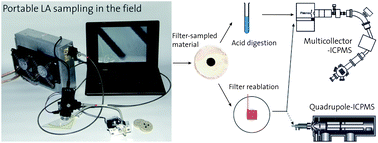
The researchers used laser ablation coupled to a multicollector inductively coupled plasma mass spectrometry (LA-ICPMS) to determine lead isotopes in Chinese ceramics, and applied a portable device to enable remote analysis. Laser generated aerosol samples were collected on membrane filters and consequently analysed in the laboratory by LA-ICPMS. With the new device, sampling of objects is independent of their location, size and shape.

This new method showed an analytical performance similar to a laboratory-based analysis and enabled simultaneous isotopic and elemental analysis without invasive sampling such as scraping or drilling of the objects.

To know more about this study, please access the link below. This paper will be free to read until May 24th.

Isotope ratio determination of objects in the field by portable laser ablation sampling and subsequent multicollector ICPMS
Reto Glaus, Ladina Dorta, Zhiguo Zhang, Qinglin Ma, Heinz Berke and   Detlef Günther
J. Anal. At. Spectrom., 2013, Advance Article
DOI: 10.1039/C3JA30379A

Digg This
Reddit This
Stumble Now!
Share on Facebook
Bookmark this on Delicious
Share on LinkedIn
Bookmark this on Technorati
Post on Twitter
Google Buzz (aka. Google Reader)

Gordon F. Kirkbright Bursary Award, 2014

The Gordon F. Kirkbright bursary award is a prestigious annual award that enables a promising student/non-tenured young scientist of any nation to attend a recognised scientific meeting or visit a place of learning.
The fund for this bursary was established in 1985 as a memorial to Professor Gordon Kirkbright in recognition of his contributions to analytical spectroscopy and to science in general. Although the fund is administered by the Association of British Spectroscopists (ABS) Trust, the award is not restricted to spectroscopists.

Applications are invited for the 2014 Gordon Kirkbright Bursary.

For further information contact John Chalmers at, email: vibspecconsult@aol.com

The closing date for entries is 31 December 2013.

Digg This
Reddit This
Stumble Now!
Share on Facebook
Bookmark this on Delicious
Share on LinkedIn
Bookmark this on Technorati
Post on Twitter
Google Buzz (aka. Google Reader)