

Dalton Transactions published a web collection this week guest-edited by Armando Pombeiro which focusses on the various roles of nitrogen ligands in modern chemistry and pays tribute to the 150th anniversary of the development of the periodic table. This collection of over 40 reports, demonstrates the versatility of nitrogen ligands and their complexes across a range of chemical specialisms. As evidenced by the number and diversity of the contributions to this collection, nitrogen ligand chemistry continues to gather great interest and there is vast and exciting scope for the future use of nitrogen ligands across a wide diversity of fields.
Browse a selection of articles below:
Chelate rings of different sizes with non-innocent ligands
Wolfgang Kaim
Dalton Trans., 2019, 48, 8521-8529
DOI: 10.1039/C9DT01411J, Perspective
Effect of substituents on molybdenum triiodide complexes bearing PNP-type pincer ligands toward catalytic nitrogen fixation
Takayuki Itabashi, Ikki Mori, Kazuya Arashiba, Aya Eizawa, Kazunari Nakajima and Yoshiaki Nishibayashi
Dalton Trans., 2019, 48, 3182-3186
DOI: 10.1039/C8DT04975K, Communication
Structural and magnetic characterization of Ni(II), Co(II), and Fe(II) binuclear complexes on a bis(pyridyl-triazolyl)alkane basis
Alexey Gusev, Ivan Nemec, Radovan Herchel, Irina Riush, Ján Titiš, Roman Boča, Konstantin Lyssenko, Mikhail Kiskin, Igor Eremenkoef and Wolfgang Linert
Dalton Trans., 2019, 48, 10526-10536
DOI: 10.1039/C9DT01391A, Paper
Novel latonduine derived proligands and their copper(II) complexes show cytotoxicity in the nanomolar range in human colon adenocarcinoma cells and in vitro cancer selectivity
Felix Bacher, Christopher Wittmann, Márta Nové, Gabriella Spengler, Małgorzata A. Marć, Eva A. Enyedy, Denisa Darvasiová, Peter Rapta, Thomas Reiner and Vladimir B. Arion
Dalton Trans., 2019, 48, 10464-10478
DOI: 10.1039/C9DT01238A, Paper
Submit your work to Dalton Transactions– Check our website for handy tips and guidelines or find out more about the benefits of publishing with the Royal Society of Chemistry.


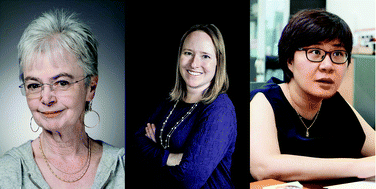
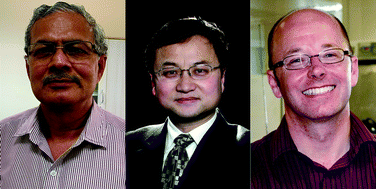
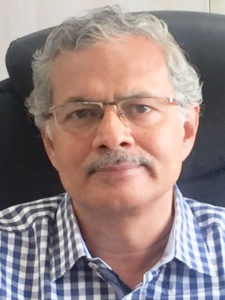 Moving from an Editorial Board member position to an Associate Editor, Professor Chandrasekhar brings a wealth of experience to his new role. He obtained his Ph.D. from the Indian Institute of Science, Bangalore, in 1982. After a post-doctoral stint at the University of Massachusetts, Amherst, he joined the Indian Institute of Technology Kanpur in 1987 and he is currently at the Tata Institute of Fundamental Research Hyderabad as a Distinguished Professor and Centre Director.
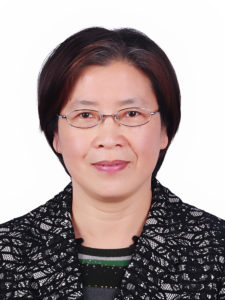 Li-Min joins us as an Associate Editor based at Nanjing University where she received her Ph.D. degree in Chemistry in 1992. She then joined Nanjing University as a faculty member, and became a lecturer (1992-1997), associate professor (1997-2002) and professor (2002-present). She was a postdoctoral researcher at the University of Zurich in Switzerland (1994-1996) and a visiting scholar at the University of Houston in the United States (1999-2000), ETH Zurich in Switzerland (2007) and Kyoto University in Japan (2012). She has published over 230 research papers.