PCCP Issue 32 out now!

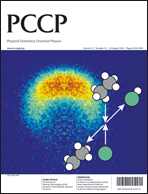
Cover imageThis week’s issue of PCCP is now out – take a look at this great issue!

It includes a Perspective article by Andrew J. Orr-Ewing and colleagues at the University of Bristol on velocity map imaging and a Communication article by Bernie Binks and Anaïs Rocher about the stabilisation of liquid–air surfaces.

Velocity map imaging of the dynamics of bimolecular chemical reactions
Stuart J. Greaves, Rebecca A. Rose and Andrew J. Orr-Ewing, Phys. Chem. Chem. Phys., 2010, 12, 9129

Stabilisation of liquid–air surfaces by particles of low surface energy
Bernard P. Binks and Anaïs Rocher, Phys. Chem. Chem. Phys., 2010, 12, 9169

Sign-up to our table of contents e-alerts to receive PCCP issues direct to your inbox.

Digg This
Reddit This
Stumble Now!
Share on Facebook
Bookmark this on Delicious
Share on LinkedIn
Bookmark this on Technorati
Post on Twitter
Google Buzz (aka. Google Reader)

Hot article: Damage to fuel cell membranes

Read this ‘HOT’ article today by Willem H. Koppenol from ETH Zurich and co-workers:

Damage to fuel cell membranes: Reaction of HO˙ with an oligomer of poly(sodium styrene sulfonate) and subsequent reaction with O2
Sindy M. Dockheer, Lorenz Gubler, Patricia L. Bounds, Anastasia S. Domazou, Günther G. Scherer, Alexander Wokaun and Willem H. Koppenol
Phys. Chem. Chem. Phys., 2010, DOI: 10.1039/C0CP00082E

Digg This
Reddit This
Stumble Now!
Share on Facebook
Bookmark this on Delicious
Share on LinkedIn
Bookmark this on Technorati
Post on Twitter
Google Buzz (aka. Google Reader)

Meet the team at ACS Fall 2010

Philip EarisManaging Editor, Philip Earis, will be at the ACS Fall 2010 National Meeting and Exposition in Boston.

Let us know if you are going to be there and visit Booth 801, where you can find out the latest news from RSC Publishing.

Digg This
Reddit This
Stumble Now!
Share on Facebook
Bookmark this on Delicious
Share on LinkedIn
Bookmark this on Technorati
Post on Twitter
Google Buzz (aka. Google Reader)

“Nano-bio” PCCP themed issue

Announcing a PCCP themed issue on Nano-bio: The interface between bio-systems and nano-devices

Submission Deadline: 06 December 2010

Submit an article here

The aim of this issue is to cover the wide range of exciting research which encompasses the boundaries between biology, biophysics and biophysical chemistry on the nanoscale, topics include:

  • bioconjugated nanoparticles for diagnostic imaging and therapy
  • nanopatterning for biosensing and bioMEMS
  • regenerative medicine and tissue engineering
  • biofunctional and biomimetic materials
  • drug delivery techniques using nanomaterials

The issue is part of the PCCP biophysics and biophysical chemistry series which will serve to foster links between these research communities and highlight the great work we publish in this area. The series is Guest Edited by Seong Keun Kim (Seoul National University, Korea), Jean-Pierre Schermann (Université Paris 13, France), and Taekjip Ha (University of Illinois, Urbana-Champaign, USA).

All submissions will be subject to rigorous peer review to meet the usual high standards of PCCP. Work should be accessible to a general physical and biophysical audience and papers should be written with this in mind.

Digg This
Reddit This
Stumble Now!
Share on Facebook
Bookmark this on Delicious
Share on LinkedIn
Bookmark this on Technorati
Post on Twitter
Google Buzz (aka. Google Reader)

PCCP Biophysics & Biophysical Chemistry Series

PCCP is delighted to announce that this year it is publishing a series of themed issues in the fields of biophysics and biophysical chemistry to highlight some of the great content we publish in this area.

The series contains issues on a variety of topics in this exciting multidisciplinary research area.

biophysicalTake a look today at the issues that are already published:

And sign-up to our contents e-alerts to have the upcoming issues sent direct to your inbox:

  • Water in biological systems
  • Advances in Mass Spectrometry for Biological Science
  • Homochirality and Origin of Life
  • Nano-bio: The interface between bio-systems and nano-devices

This high-profile series is Guest Edited by PCCP Advisory Board member Seong Keun Kim (Seoul National University, Korea), Jean-Pierre Schermann (Université Paris 13, France), and Taekjip Ha (University of Illinois, USA). The series also contains an issue on molecular mechanisms of the photostability of life Guest Edited by Andrzej Sobolewski and Wolfgang Domcke.

We believe that this series of themed issues will serve to foster links between the biophysics and biophysical chemistry research communities and will have a valuable and lasting impact in this research field.

Digg This
Reddit This
Stumble Now!
Share on Facebook
Bookmark this on Delicious
Share on LinkedIn
Bookmark this on Technorati
Post on Twitter
Google Buzz (aka. Google Reader)

Molecular Collision Dynamics – call for papers

PCCP is delighted to announce a high-profile themed issue on Molecular Collision Dynamics, which will be Guest Edited by:

. Piergiorgio Casavecchia (University of Perugia, Italy)
. David Nesbitt (JILA/NIST, USA)
. Mark Brouard (University of Oxford, UK)
. Michel Costes (Universite Bordeaux, France)
. Evan Bieske (University of Melbourne, Australia)
. Scott H. Kable (University of Sydney, Australia)

The themed issue will be published in 2011 and will be displayed at a series of international conferences on “Collision Dynamics” in summer 2011 to maximise the visibility of the work published. It is our pleasure to invite you to submit to this themed issue.

Deadline for Submission: 08 November 2010

The study of gas-phase molecular collision dynamics has long proved to be a central and fruitful field of research, with an impact in many areas of science, for both experimental and theoretical physical chemists/chemical physicists. Over the past few years there have been major breakthroughs on studies of reaction and photodissociation dynamics, in gas-phase and beyond, from both the experimental and theoretical points of view. In particular, exciting experimental progress accompanied by significant synergistic advances in theoretical methodologies and computational capabilities have allowed us to compare very detailed experimental observables with the results of exact quantum scattering calculations.

This themed issue is intended to collect contributions from a large number of top scientists in the field throughout the world, both experimentalists and theoreticians, of collision dynamics in the gas-phase (and beyond). As we move into the second decade of the millennium, the goal is to highlight the state-of-the-art and outline the future prospects for the whole exciting area of research of collision dynamics.

Submissions

Submissions should be high quality manuscripts of original, unpublished research. Both Communications and Full Papers can be submitted for consideration.

All submissions will be subject to rigorous peer review to meet the usual high standards of PCCP.

Manuscripts for this PCCP themed issue can be submitted in any reasonable format using our online submissions service. Please indicate upon submission that your manuscript is intended for this themed issue. Submissions before the 8th November deadline are of course also welcome.

Digg This
Reddit This
Stumble Now!
Share on Facebook
Bookmark this on Delicious
Share on LinkedIn
Bookmark this on Technorati
Post on Twitter
Google Buzz (aka. Google Reader)

Protein anharmonicity – disentangled

‘HOT’ article – hot of the press – read it now!

Molecular origin and hydration dependence of protein anharmonicity: an elastic neutron scattering study
Giorgio Schiró, Chiara Caronna, Francesca Natali and Antonio Cupane
Phys. Chem. Chem. Phys., 2010, DOI: 10.1039/c003482g

This paper studies different homomeric polypeptides by incoherent elastic neutron scattering, thus disentangling the contribution of different molecular groups in proteins.

This article will be part of the PCCP Water in Biological Systems themed issue which will be published in August – sign-up to our contents e-alert to receive this issue direct into your inbox!

Digg This
Reddit This
Stumble Now!
Share on Facebook
Bookmark this on Delicious
Share on LinkedIn
Bookmark this on Technorati
Post on Twitter
Google Buzz (aka. Google Reader)

Materials Innovation through Interfacial Chemistry

PCCP is delighted to announce an exciting themed issue which will be Guest Edited by Editorial Board member Professor Katsuhiko Arigasubmit a paper to the Materials Innovation through Interfacial Physics and Chemistry issue.

Deadline for Submission: 04 October 2010

Nanofabrication (top-down) and self-assembly (bottom-up) are now providing innovative materials with well-designed internal nanostructures. These processes are always accompanied by specific interfacial phenomena. Molecules align to a particular direction, atoms have higher energies, forces and fields bear anisotropies, and these anomalies often happen at the interface. Therefore, innovative and high functional materials have to be designed and synthesized with deep understanding of interfacial physics and chemistry.

Interfaces are not limited to the typical bulk visible interface such as gas-solid and liquid-liquid interfaces. Invisible interfaces including surfaces of molecular assemblies and molecular/molecular interfaces can also play important roles in materials preparation. Through specific interactions, various materials such as mesoporous solids, layered assemblies, and shape-defined nanomaterials can be created. Recent studies in these areas have certainly proven importance of interfacial physics and chemistry on materials innovation. This issue is expected to be of wide general interest to physicists and chemists in nano-related and materials-related fields.

Submissions, either communications or full papers, should be high-quality manuscripts of original, unpublished research, containing important new physical insight. All submissions will be subject to rigorous peer review to meet the usual high standards of PCCP.

Read more about our upcoming ‘Themed Issues’.

Digg This
Reddit This
Stumble Now!
Share on Facebook
Bookmark this on Delicious
Share on LinkedIn
Bookmark this on Technorati
Post on Twitter
Google Buzz (aka. Google Reader)

CO2: a wild solvent, tamed

‘HOT’ PCCP Perspective!

A review on the approaches for modification of the solvent properties of supercritical CO2.

CO2: a wild solvent, tamed
Stephen Cummings, Kieran Trickett, Robert Enick and Julian Eastoe
Phys. Chem. Chem. Phys., 2010, DOI: 10.1039/c003856c

Read it now here.


Digg This
Reddit This
Stumble Now!
Share on Facebook
Bookmark this on Delicious
Share on LinkedIn
Bookmark this on Technorati
Post on Twitter
Google Buzz (aka. Google Reader)

TYC-Workshop on Energy Materials – Early bird registration 31st July

PCCP is delighted to announce its collaboration with the 1st TYC-Workshop on Energy Materials and will be publishing an exciting issue on energy materials following the meeting. Sign up for the PCCP e-alert today for future updates.

**Early bird registration (£25) and poster abstract deadline ends very soon – register before the 31st July!**

Topics covered are:

  • Photo-induced energy conversion
  • Hydrogen storage
  • Electrochemistry, Fuel Cells and Energy Storage

7th-9th September 2010
University College London, UK
Early bird registration and the Abstract deadline is the 31st July 2010.
www.thomasyoungcentre.org/events/279

Digg This
Reddit This
Stumble Now!
Share on Facebook
Bookmark this on Delicious
Share on LinkedIn
Bookmark this on Technorati
Post on Twitter
Google Buzz (aka. Google Reader)