Archive for May, 2021

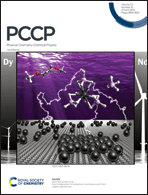
PCCP Bunsentagung 2020: Understanding Dispersion Interactions in Molecular Chemistry themed collection now online!

PCCP Bunsentagung 2020: Understanding Dispersion Interactions in Molecular Chemistry themed collection now online!

We are delighted to announce that the Physical Chemistry Chemical Physics (PCCP) themed collection Bunsentagung 2020: Understanding Dispersion Interactions in Molecular Chemistry is now online and free to access until the end of August 2021.

Bunsentagung 2020 focuses on dispersion interactions and their multifold manifestations in chemistry. Dispersion is the driving force for molecular aggregation that plays a key role in the thermodynamic stability of (meta)stable structures, molecular recognition, chemical selectivity through transition-state stabilization, protein folding, enzyme catalysis, and many more. Despite the pioneering work of London and others in the 1930s, our understanding of dispersion interactions only recently has become much better.

Guest Edited by Professor Jürgen Janek, Professor Peter R. Schreiner and Professor Martin A. Suhm, this collection highlights the progress in a rapidly developing field encompassing both experiment and theory. We hope you enjoy reading the articles. Please get in touch if you have any questions about this themed collection or PCCP.


Read the full issue online
It includes:

Editorial
Understanding dispersion interactions in molecular chemistry
Jürgen Janek, Peter R. Schreiner and Martin A. Suhm
Phys. Chem. Chem. Phys., 2021, 23, 8960-8961. DOI: 10.1039/D0CP90285C

Paper
Understanding benzyl alcohol aggregation by chiral modification: the pairing step
Robert Medel and Martin A. Suhm
Phys. Chem. Chem. Phys., 2020, 22, 25538-25551. DOI: 10.1039/D0CP04825A

Paper
Dissecting intermolecular interactions in the condensed phase of ibuprofen and related compounds: the specific role and quantification of hydrogen bonding and dispersion forces
V. N. Emel’yanenko, P. Stange, J. Feder-Kubis, S. P. Verevkin and R. Ludwig
Phys. Chem. Chem. Phys., 2020, 22, 4896-4904. DOI: 10.1039/C9CP06641A

Paper
The influence of intermolecular coupling on electron and ion transport in differently substituted phthalocyanine thin films as electrochromic materials: a chemistry application of the Goldilocks principle
Thi Hai Quyen Nguyen, Marius Pelmuş, Christopher Colomier, Sergiu M. Gorun and Derck Schlettwein
Phys. Chem. Chem. Phys., 2020, 22, 7699-7709. DOI: 10.1039/C9CP06709D

Paper
Structures and internal dynamics of diphenylether and its aggregates with water
M. Fatima, D. Maué, C. Pérez, D. S. Tikhonov, D. Bernhard, A. Stamm, C. Medcraft, M. Gerhards and M. Schnell
Phys. Chem. Chem. Phys., 2020, 22, 27966-27978. DOI: 10.1039/D0CP04104A

Digg This
Reddit This
Stumble Now!
Share on Facebook
Bookmark this on Delicious
Share on LinkedIn
Bookmark this on Technorati
Post on Twitter
Google Buzz (aka. Google Reader)

PCCP has expanded its scope

Physical Chemistry Chemical Physics is redefining its scope.
 
PCCP has always been a home for work from across the breadth of physical chemistry, chemical physics and biophysical chemistry, in both experimental and theoretical fields. In light of the growth of computational and quantum chemistry over recent years, and with the emergence of machine learning and artificial intelligence (AI), PCCP is redefining its scope to explicitly include the emerging areas of quantum computing, machine learning and the data science field.
 
The updated journal scope statement can be found below:
 
The journal has a broad scope and welcomes contributions spanning experiment, theory, computation and data science. Topical coverage includes spectroscopy, dynamics, kinetics, statistical mechanics, thermodynamics, electrochemistry, catalysis, surface science, quantum mechanics, quantum computing and machine learning. Interdisciplinary research areas such as polymers and soft matter, materials, nanoscience, energy, surfaces/interfaces, and biophysical chemistry are welcomed if they demonstrate significant innovation and/or insight into physical chemistry. Joined experimental/theoretical studies are particularly appreciated when complementary and based on up-to-date approaches.

To facilitate submissions in this rapidly developing area, PCCP is delighted to appoint an additional Associate Editor in the growing fields of machine learning and data science. A separate announcement will be made shortly.
 
By expanding its scope, PCCP will now explicitly provide a home for physical chemistry, chemical physics and biophysical chemistry research spanning all four pillars of modern physical chemistry: experiment, theory, computation and data science.
 
For examples of the type of work PCCP would consider under the expanded scope please see our recent themed collection on quantum computing or the articles below:
 
High-throughput experimentation meets artificial intelligence: a new pathway to catalyst discovery
Katherine McCullough, Travis Williams, Kathleen Mingle, Pooyan Jamshidi and Jochen Lauterbach
Phys. Chem. Chem. Phys., 2020, 22, 11174-11196

Application and assessment of deep learning for the generation of potential NMDA receptor antagonists
Katherine J. Schultz, Sean M. Colby, Yasemin Yesiltepe, Jamie R. Nuñez, Monee Y. McGrady and Ryan S. Renslow
Phys. Chem. Chem. Phys., 2021, 23, 1197-1214

Machine learning approaches to understand and predict rate constants for organic processes in mixtures containing ionic liquids
Tamar L. Greaves, Karin S. Schaffarczyk McHale, Raphael F. Burkart-Radke, Jason B. Harper and Tu C. Le
Phys. Chem. Chem. Phys., 2021, 23, 2742-2752

DRACON: disconnected graph neural network for atom mapping in chemical reactions
Filipp Nikitin, Olexandr Isayev and Vadim Strijov
Phys. Chem. Chem. Phys., 2020, 22, 26478-26486

In conjunction with the scope expansion of PCCP, the RSC are also pleased to announce further developments in our portfolio with the launch of Digital Discovery, a new fully Open Access journal, which will focus on the integration of digital and automation tools with broadly defined science but anchored in chemistry. For more information, please see: www.rsc.li/digitaldiscovery.
 
PCCP looks forward to welcoming your next submission belonging to any of the four pillars of physical chemistry: experiment, theory, computation or data science.
 
Get in touch if you have any questions about our expanded scope.
Dr Anna Simpson
Executive Editor, PCCP
Royal Society of Chemistry
Professor David Rueda
Editorial Board Chair, PCCP
Imperial College London
Professor Wolfgang Ernst
Ownership Board Chair, PCCP
Graz University of Technology
Digg This
Reddit This
Stumble Now!
Share on Facebook
Bookmark this on Delicious
Share on LinkedIn
Bookmark this on Technorati
Post on Twitter
Google Buzz (aka. Google Reader)

Call for papers: Insights into 2D Materials

We are now inviting submissions for this exciting themed collection, Insights into 2D Materials. We encourage all types of PCCP articles – Communications, Full Papers and Perspectives.

2D materials with atomic scale thinness have emerged as a new form of nanomaterial. While graphene was the focus of early studies, since 2010 hundreds of other types of 2D materials have been investigated. This includes elemental 2D materials such as phosphorene, borophene, silicene and antimonene, as well as compound materials such as transition metal chalcogenides and oxides, hexagonal boron nitride, MXenes, and organic-inorganic metal halide layered perovskites. The large number of materials and the many different ways they can be combined to form heterostructures offer a great opportunity to transform materials science and technology, and benefit society.

The goal of this themed collection is to highlight the latest developments in this exciting field. The collection welcomes new insights into 2D materials from theoretical, computational, and experimental communities. This collection will cover topics including, but not limited to, physical and chemical properties of 2D materials, synthesis techniques, structural characterization, 2D and mixed-dimensional heterostructures, functionalization of 2D materials, flexible 2D devices, new novel 2D materials, and applications of 2D materials in biological systems, chemical sensing, and energy technologies.

Following our fair and impartial peer-review, accepted articles will be published online in a citeable form as soon as they are ready. The articles will then be assembled on the RSC Publishing platform and promoted as a web-based thematic collection, to permit readers to consult and download individual contributions from the entire series. We aim to publish and promote the completed collection during 2021. PCCP is a high-impact, international journal publishing cutting-edge original work in physical chemistry, chemical physics and biophysical chemistry. For more information on the journal, please visit the journal homepage.

The deadline for submissions is 16th July 2021

If you have any questions, please contact the Editorial Office at PCCP-RSC@rsc.org

Digg This
Reddit This
Stumble Now!
Share on Facebook
Bookmark this on Delicious
Share on LinkedIn
Bookmark this on Technorati
Post on Twitter
Google Buzz (aka. Google Reader)

Celebrating our first Tutorial Review: an interview with Julie MacPherson

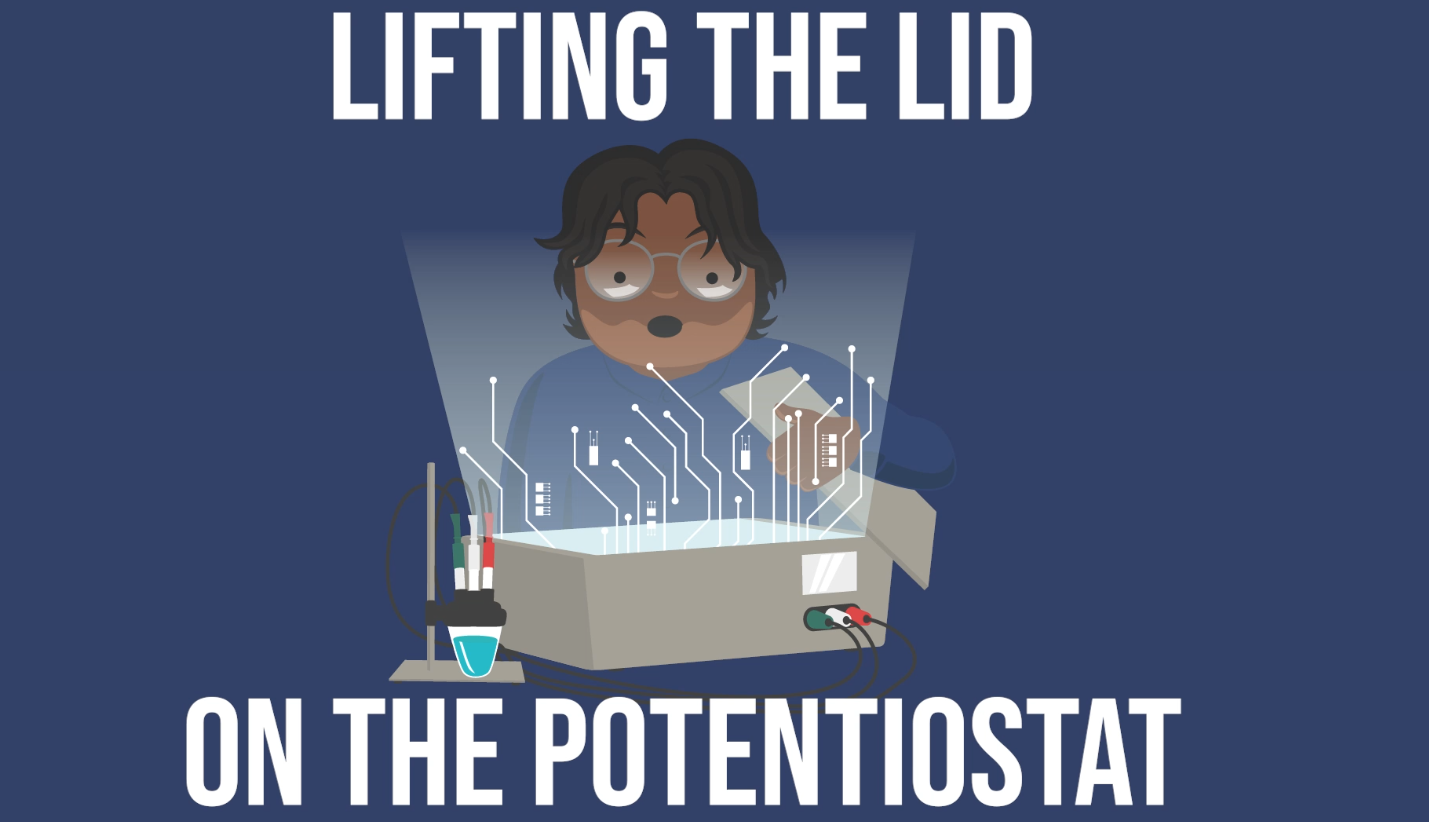
We recently published our first Tutorial Review in PCCP, Lifting the lid on the potentiostat: a beginner’s guide to understanding electrochemical circuitry and practical operation.  We’re excited to introduce this new review format for PCCP, which will appeal to younger researchers and established researchers seeking new fields to explore. Tutorial Reviews provide an essential introduction to a particular area of physical chemistry.

If you would like to write one, please email the PCCP Editorial Office at PCCP-RSC@rsc.org with an outline of your idea.

To celebrate our first Tutorial Review, we interviewed Julie MacPherson, the lead author on the article.

What inspired you to write this article?
Electrochemistry is enjoying a renaissance with the science at the heart of many energy conversion methods, as well as use in electrosynthesis and electroanalysis etc. The upshot is more and more people, from a variety of different disciplines are undertaking practical electrochemical experiments. At the heart of many measurements is the potentiostat. Back in the day it would have been common for PhD students to build their own potentiostat, and by doing this, would have forced the user to really understand how a potentiostat works and how the experiment should be set up to avoid pitfalls in experimental design and data interpretation. These days, unless the electrochemical experiment is more specialist purchasing a commercial potentiostat(s) for the research group is the normal, with instruments designed to be as easy as possible to operate. However this can mean that some of the more fundamental understanding is missing, and can be challenging to get to grips with especially for those that are coming into electrochemistry without a formal electronics training. Whilst in many electrochemistry text books, there is often a chapter near the end of the book outlining the electronic circuits in a potentiostat, the knowledge assumed is often beyond the beginning electrochemist. After many conversations with group members over the years and other academics, I really wanted to write an article which addressed this topic but started from a basic level and worked upwards.

How did you go about the writing process?
I assembled a team comprising Dr. Alex Colburn, an electronics expert in the Chemistry Department at Warwick, who has built many of the very low current instrumentation systems for the high resolution electrochemical imaging measurements Pat Unwin carries out, my colleague Dr. Danny O’Hare from Imperial College London, who himself has built many potentiostats and has also seen first-hand the issues that arise when people don’t understand how they work and my PhD student Katie Levey, who came into doing a PhD with limited electronics experience. Critical to the writing process were the undergraduate and PhD student focus groups (the names of the students involved appear in the acknowledgments) we set up from Warwick and Imperial. We met with them regularly to discuss whether the text was understandable for a beginner’s point of view, to highlight the issues they had experienced working with potentiostats and the questions they would want answering.

Who is it aimed at?
Masters and PhD students undertaking electrochemical research especially those with only basic electronics experience, but in general anyone who just wants to understand how their potentiostat actually works. This includes those working with electrochemical systems in industry. It is (hopefully!) a useful article as well for anyone teaching electrochemistry and is open access. The article also offers lots of practical tips for people who have run into issues with their electrochemical experiment and for those interested in how to reduce noise in the electrochemical experiment. There is also lots of useful practical information, especially on noise troubleshooting, in the supporting information.

What are the main points that you would like readers to take away from your review?
The first and foremost is the reader feels they better understand how a potentiostat works and it has both challenged them to think more about how they set up experimental electrochemistry experiments and how to trouble shoot problems. We also want it to give people more confidence in their understanding.

What is your lab currently working on?
My group is mainly focused on applications of boron doped diamond as an electrode material, this ranges from designing more robust and long-lasting sensors, using electrochemistry as a means of fabrication of useful metallic and metal oxide nanostructures, to working with corrosion free carbon catalyst supports for electrocatalysis. However, I also have a keen interest in chemical education and I am involved with a new series of Chemistry text books (Chemistry Study Guides), which just launched in October 2020 by the RSC aimed at undergraduates but written by academics in partnership with undergraduate students.

Do you have any thoughts about the future direction of the field?
There are more papers coming out now where people are providing methods for DIY potentiostats, which are aimed at low cost, portable, wireless operation via e.g. a smart phone. We hope the paper will encourage experimenters to have a go at building their own instrumentation and equip them with the tools to know where the potential pitfalls might be.

Thanks for an interesting insight into the field, Julie, and congratulations on your publication!

You can read the article, free to access, here.
Digg This
Reddit This
Stumble Now!
Share on Facebook
Bookmark this on Delicious
Share on LinkedIn
Bookmark this on Technorati
Post on Twitter
Google Buzz (aka. Google Reader)