Image Credtit: ACMM |
PCCP is now open for submissions to the themed issue ‘Developments in Density Functional Theory’. This issue aims to highlight state-of-the-art density functional theory (DFT), ranging from mathematical development of the formalism, via software development and development of bonding and reactivity models through applications in physical, (in)organic, and biological/supramolecular chemistry. Contributions that provide insight into the density functional model for the electronic energy itself, as well as those that describe its application to topical problems in chemistry and physics will be welcomed.
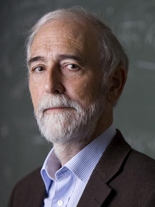
This themed issue has been arranged to coincide with the 70th birthday of Professor Dr Evert Jan Baerends who has made an immense contribution to the field of theoretical chemistry in general and DFT in particular. In honour of this event, the Evert Jan Baerends Symposium is to be held at the Amsterdam Center for Multiscale Modeling (ACMM), in the Netherlands on 25th September 2015. The deadline for submissions to this themed issue is 15th January 2016 and the issue will be published later in the year. If you would like more information on making a submission, please contact the editorial office directly, pccp-rsc@rsc.org. |

Developments in Density Functional Theory – upcoming PCCP Themed Issue
Recent HOT articles in PCCP
The following HOT articles have been highlighted by the reviewers of the articles as being particularly interesting or significant pieces of research. These are all free to access until 30/09/2015. The order they appear in the list has no meaning or ranking.
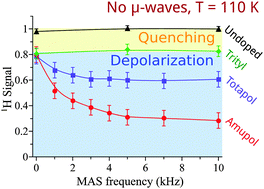
Nuclear depolarization and absolute sensitivity in magic-angle spinning cross effect dynamic nuclear polarization
Frédéric Mentink-Vigier, Subhradip Paul, Daniel Lee, Akiva Feintuch, Sabine Hediger, Shimon Vega and Gaël De Paëpe
Journal Article
DOI: 10.1039/C5CP03457D, Paper
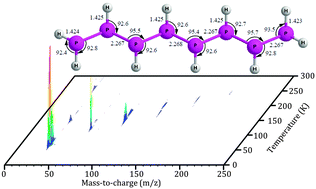
A photoionization mass spectroscopic study on the formation of phosphanes in low temperature phosphine ices
Andrew M. Turner, Matthew J. Abplanalp, Si Y. Chen, Yu T. Chen, Agnes H. H. Chang and Ralf I. Kaiser
Journal Article
DOI: 10.1039/C5CP02835C, Paper
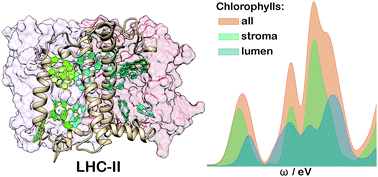
Insights into colour-tuning of chlorophyll optical response in green plants
Joaquim Jornet-Somoza, Joseba Alberdi-Rodriguez, Bruce F. Milne, Xavier Andrade, Miguel A. L. Marques, Fernando Nogueira, Micael J. T. Oliveira, James J. P. Stewart and Angel Rubio
Journal Article
DOI: 10.1039/C5CP03392F, Paper
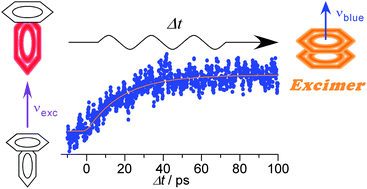
Real time observation of the excimer formation dynamics of a gas phase benzene dimer by picosecond pump–probe spectroscopy
Mitsuhiko Miyazaki and Masaaki Fujii
Journal Article
DOI: 10.1039/C5CP03010B, Paper
From themed collection Optical spectroscopy coupled with mass spectrometry methods
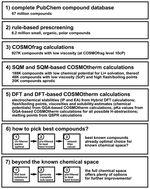
Charting the known chemical space for non-aqueous lithium–air battery electrolyte solvents
Tamara Husch and Martin Korth
Journal Article
DOI: 10.1039/C5CP02937F, Paper
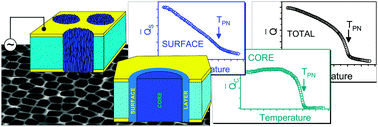
Thermotropic interface and core relaxation dynamics of liquid crystals in silica glass nanochannels: a dielectric spectroscopy study
Sylwia Całus, Lech Borowik, Andriy V. Kityk, Manfred Eich, Mark Busch and Patrick Huber
Journal Article
DOI: 10.1039/C5CP03039K, Paper
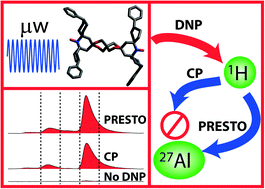
PRESTO polarization transfer to quadrupolar nuclei: implications for dynamic nuclear polarization
Frédéric A. Perras, Takeshi Kobayashi and Marek Pruski
Journal Article
DOI: 10.1039/C5CP04145G, Paper
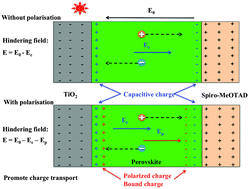
Photovoltaic performance and the energy landscape of CH3NH3PbI3
Yecheng Zhou, Fuzhi Huang, Yi-Bing Cheng and Angus Gray-Weale
Journal Article
DOI: 10.1039/C5CP03352G, Paper
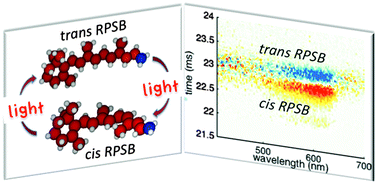
Retinal shows its true colours: photoisomerization action spectra of mobility-selected isomers of the retinal protonated Schiff base
N. J. A. Coughlan, B. D. Adamson, L. Gamon, K. Catani and E. J. Bieske
Journal Article
DOI: 10.1039/C5CP03611A, Paper
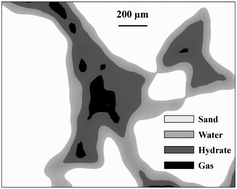
Microstructural characteristics of natural gas hydrates hosted in various sand sediments
Jiafei Zhao, Lei Yang, Yu Liu and Yongchen Song
Journal Article
DOI: 10.1039/C5CP03698D, Paper
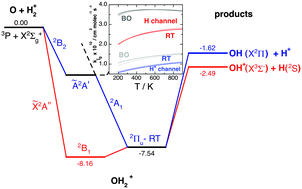
Born–Oppenheimer and Renner–Teller coupled-channel quantum reaction dynamics of O(3P) + H2+(X2Σg+) collisions
Pablo Gamallo, Paolo Defazio, Miguel González, Miguel Paniagua and Carlo Petrongolo
Journal Article
DOI: 10.1039/C5CP03451E, Paper
Surface-enhanced spectroscopies
![]() |
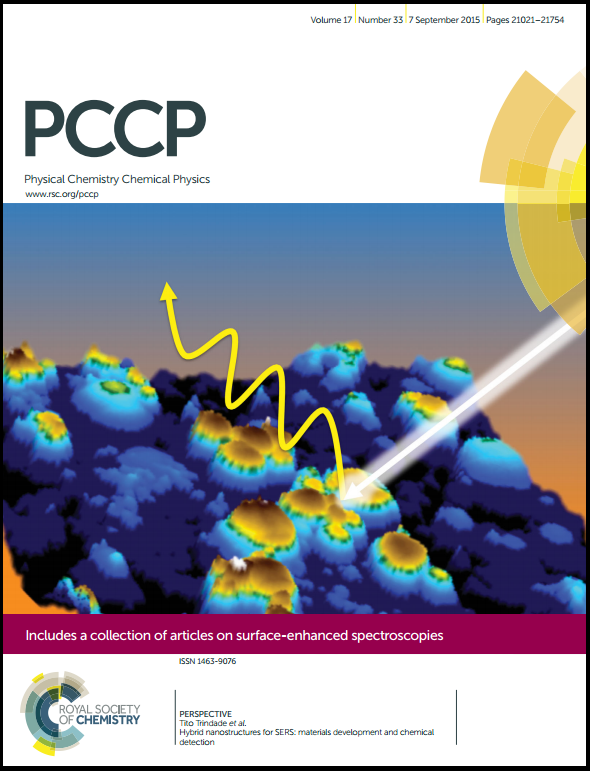
Novel types of spectroscopies with promising technological applications have been developed through the combination of molecular spectroscopies based on infrared absorption, Raman scattering, and fluorescence emission with metal nanostructures generating very high locally increased electric fields upon resonant excitation. This PCCP themed collection, ‘Surface-enhanced spectroscopies‘, brings together contributions from various disciplines (physics, chemistry, materials science, engineering, life sciences) and covers the full range of topics from fundamentals to methods and applications.
The Guest Editors for this themed collection are Rudolf Holze (Chemnitz University of Technology, Germany) and Sebastian Schlücker (University of Duisburg-Essen, Germany). Their Editorial can be viewed for free until 30th September 2015, along with this selection of articles: |
In situ Raman and surface-enhanced Raman spectroscopy on working electrodes: spectroelectrochemical characterization of water oxidation electrocatalysts, Khurram S. Joya and Xavier Sala, Phys. Chem. Chem. Phys., 2015,17, 21094-21103, DOI: 10.1039/C4CP05053C
Plasmonic properties of regiospecific core–satellite assemblies of gold nanostars and nanospheres, A. Swarnapali D. S. Indrasekara, Roney Thomas and Laura Fabris, Phys. Chem. Chem. Phys., 2015,17, 21133-21142, DOI: 10.1039/C4CP04517C
Bio-sensing with butterfly wings: naturally occurring nano-structures for SERS-based malaria parasite detection, Natalie L. Garrett, Ryo Sekine, Matthew W. A. Dixon, Leann Tilley, Keith R. Bambery and Bayden R. Wood, Phys. Chem. Chem. Phys., 2015,17, 21164-21168, DOI: 10.1039/C4CP04930F
Surface- and tip-enhanced resonant Raman scattering from CdSe nanocrystals, E. Sheremet, A. G. Milekhin, R. D. Rodriguez, T. Weiss, M. Nesterov, E. E. Rodyakina, O. D. Gordan, L. L. Sveshnikova, T. A. Duda, V. A. Gridchin, V. M. Dzhagan, M. Hietschold and D. R. T. Zahn, Phys. Chem. Chem. Phys., 2015,17, 21198-21203, DOI: 10.1039/C4CP05087H (Open Access)
International Symposium on Relations between Homogeneous and Heterogeneous Catalysis -ISHHC17
The 17th International Symposium on Relations between Homogeneous and Heterogeneous Catalysis (ISHHC17), was held at Utrecht University between 12th-15th July, 2015. The opening ceremony took place in the Dom church in the city centre, with plenary lectures given by Professor Robert Schlögl (Fritz Haber Institute of the Max Planck Society, Germany) and Professor Jan van Hest (Radboud University, the Netherlands).
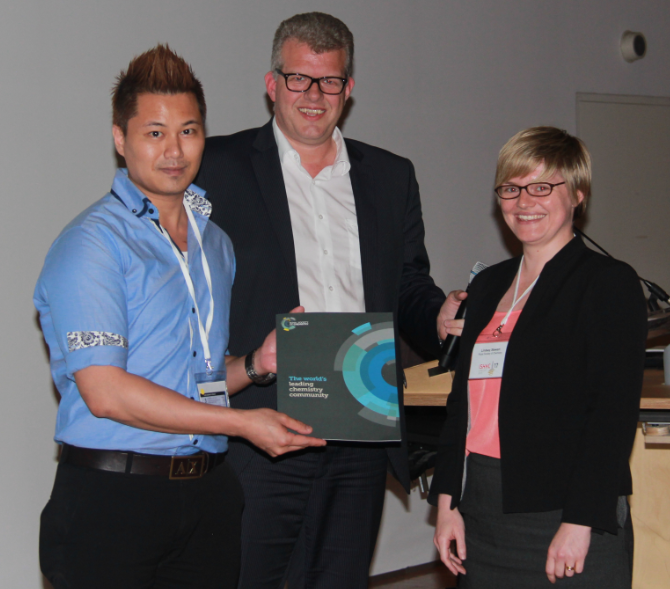
Catalysis Science & Technology and PCCP were proud to sponsor two poster prizes during the event. These were awarded to Amanda E. Anderson (Christopher J. Baddeley and Paul A. Wright) of EaStCHEM School of Chemistry, University of St. Andrews (UK) for her poster, ‘Immobilization of Nanoparticles in Metal Organic Frameworks for Tandem Catalysis’; and to Pim Huat Phua (Boon Ying Tay, Cun Wang, Ludger Paul Stubbs) of Institute of Chemical and Engineering Science (A*STAR) (Singapore), for his poster, ‘Hydrogenation of Levulinic acid to γ-valerolactone: Homogeneous vs Heterogeneous Catalysis’.
![]() |
![]() |
Chemical compartmentalisation by membranes: from biological mechanism to biomimetic applications
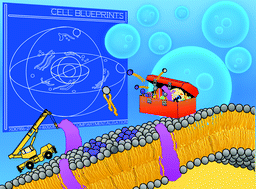
This PCCP themed issue is devoted to research into understanding, mimicking and harnessing the compartmentalisation of biology using in vitro model systems. ‘Chemical compartmentalisation by membranes: from biological mechanism to biomimetic applications‘ explores the methods physical scientists have developed to reconstitute in vitro models of biologically functional interfaces and compartments, whether they may be membranes composed of natural lipids, or biomimetic self-assembled membranes constructed from block copolymers or polyelectrolytes.
The Guest Editors for this themed collection are Barbara Ciani (University of Sheffield, UK) and Paul Beales (University of Leeds, UK) and their Editorial can be views for free until the 31st August 2015, along with this selection of articles:
|
Credit: Barbara Ciani and Paul Beales |
Bioinspired nanoreactors for the biomineralisation of metallic-based nanoparticles for nanomedicine, Jennifer Bain and Sarah S Staniland, Phys. Chem. Chem. Phys.,2015,17, 15508-15521, DOI: 10.1039/C5CP00375J
Protein synthesis in artificial cells: using compartmentalisation for spatial organisation in vesicle bioreactors, Yuval Elani, Robert V. Law and Oscar Ces, Phys. Chem. Chem. Phys.,2015,17, 15534-15537, DOI: 10.1039/C5CP05933F (Open Access) Mechanical and molecular basis for the symmetrical division of the fission yeast nuclear envelope, Stefania Castagnetti, Bojan Božič and Saša Svetina, Phys. Chem. Chem. Phys.,2015,17, 15629-15636, DOI: 10.1039/C5CP01243K Native silica nanoparticles are powerful membrane disruptors, Hend I. Alkhammash, Nan Li, Rémy Berthier and Maurits R. R. de Planque, Phys. Chem. Chem. Phys.,2015,17, 15547-15560, DOI: 10.1039/C5CP05882H |
A single hydrogen bond affects photophysics of chromophores
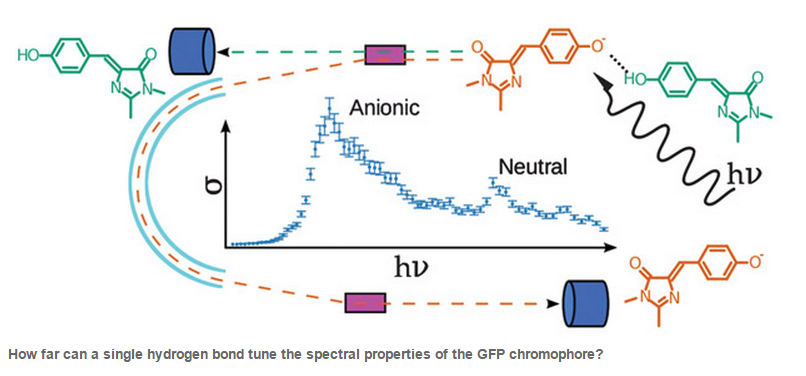
Green fluorescent protein (GFP) is a luminescent protein with a central chromophore and is used in biological imaging. By modifying the chromophore itself or the protein environment, the photophysical properties can be fine-tuned, yet until recently this has not been well understood. However, Lars Andersen (Aarhus University) and his group have developed a laser-action spectroscopy technique to enable the chromophore to be studied in a vacuum. This has revealed that a single hydrogen bond initiated a 0.5eV shift in the absorption spectrum of the GFP chromophore and highlights the importance of understanding the biophysics of chromophores and how this can help in the development of new colour chromophores.
Interested to know more?
Read the full article in Chemistry World by Michaela Muehlberg.
Or, take a look at the original communication which is free to access until 6th August 2015:
How far can a single hydrogen bond tune the spectral properties of the GFP chromophore, H. Y. Kiefer et al., Phys. Chem. Chem. Phys., 2015, DOI: 10.1039/C5CP02764K
PCCP record Impact Factor of 4.49
Bunsentagung 2015 – Poster Prize Winners
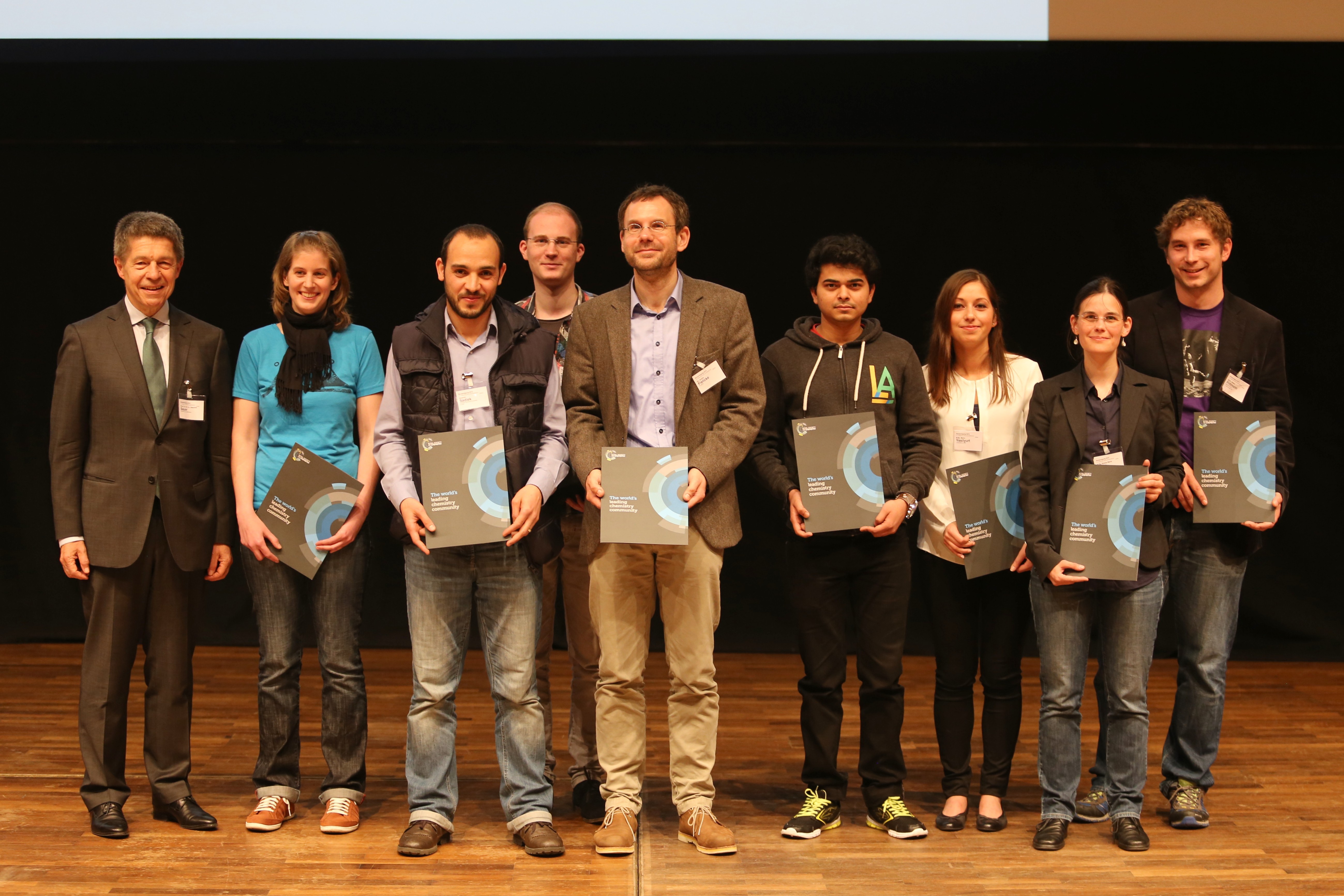
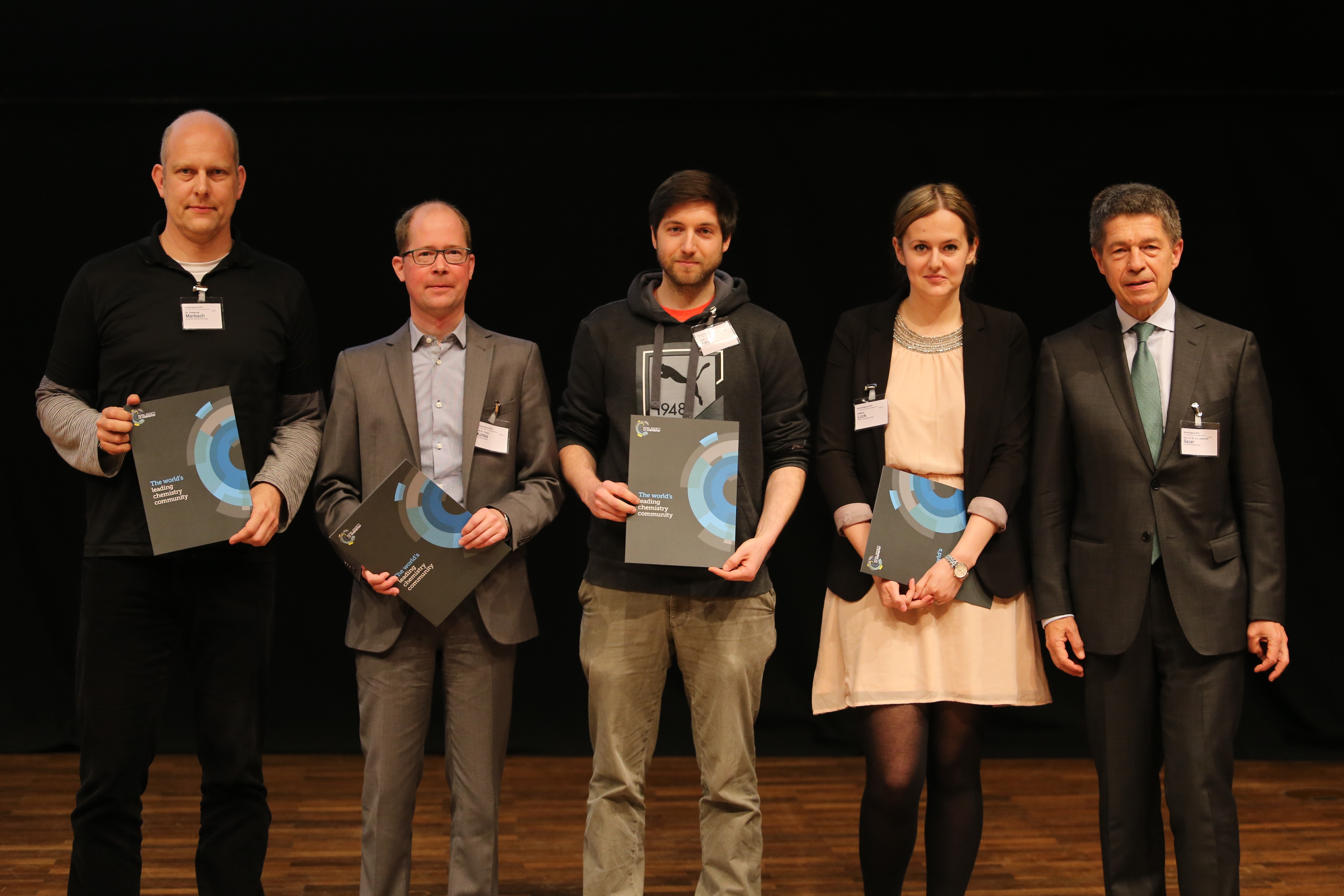
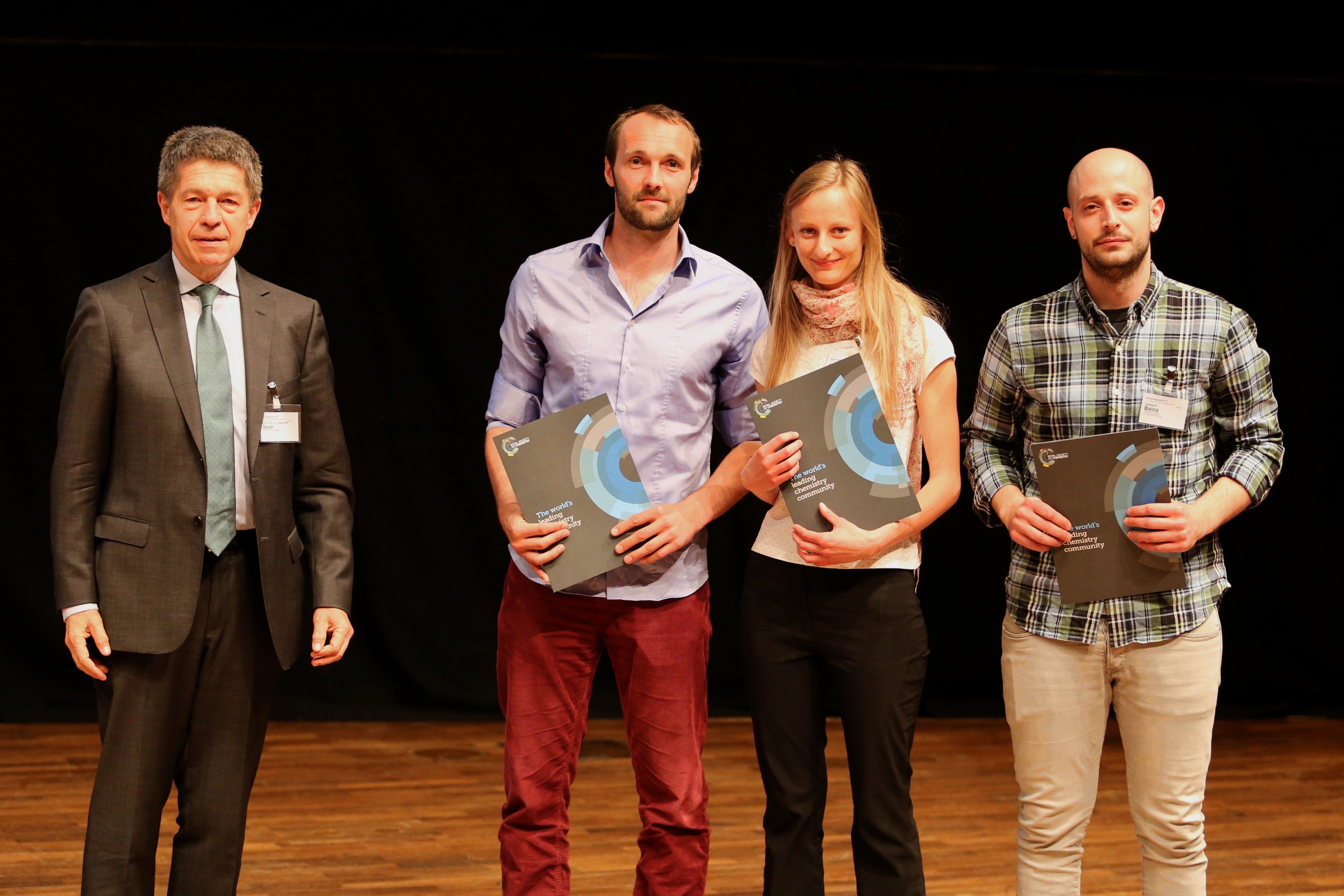
The 114th General Assembly of the German Bunsen Society for Physical Chemistry, Bunsentagung 2015, was held on 14-16th May 2015 in Bochum, Germany. PCCP were proud to award 16 poster prizes that were presented by Professor Joachim Sauer of Humboldt University of Berlin (pictured).
![]() |
![]() |
![]() |
![]() |
Bunsentagung 2015 Poster Prize Winners:
Vasileios Balos, MPI for Polymer Research, Mainz/D
Andre Fielicke, TU Berlin/D
Stefan Frittmann, Karlsruhe Institute of Technology/D
Norah Heinz, Universität zu Köln, Germany
Max Kauer, Ruhr-Universität Bochum/D
Dr Tilman Kottke, Universität Bielefeld/D
Bastian Kruger, Universität Göttingen/D
Svenja Maria Janke, Universität Göttingen/D
Jessica Luck, Helmholtz-Institut Ulm für elektrochemische Energiespeicherung/D
Dr Hubertus Marbach, Universität Erlangen-Nürnberg/D
Dr Konrad Meister, FOM Institute AMOLF, Amsterdam/NL
Suraj Naskar, Universität Hannover/D
Ibrahim Sadiek, Universität Kiel/D
Dominik Spiegel, Universität Düsseldorf/D
Anke Stamm, TU Kaiserslautern/D
Banu Yesilyurt, Universität Köln/D
Theoretical chemistry developments: from electronic structure to simulations
| PCCP would like to introduce this week’s themed issue that explores theoretical chemistry, ranging from electronic structure theory to molecular dynamics simulations. ‘Theoretical chemistry developments: from electronic structure to simulations‘ aims to give an overview of developments in the field and give a voice to the younger researchers who are shaping the future through the development of theoretical tools that will dominate the field of quantum chemistry.
The guest editors of the issue are Barbara Kirchner (University of Bonn) and Frank Neese (Max-Planck Institute for Chemical Energy Conversion) and their editorial can be viewed for free untill 30th July 2015, along with this selection of articles: Simulations of room temperature ionic liquids: from polarizable to coarse-grained force fields, Mathieu Salanne, Phys. Chem. Chem. Phys., 2015,17, 14270-14279, DOI: 10.1039/C4CP05550K Towards an ab initio description of the optical spectra of light-harvesting antennae: application to the CP29 complex of photosystem II, Sandro Jurinovich, Lucas Viani, Ingrid G. Prandi, Thomas Renger and Benedetta Mennucci, Phys. Chem. Chem. Phys., 2015,17, 14405-14416, DOI: 10.1039/C4CP05647G How simple is too simple? Computational perspective on importance of second-shell environment for metal-ion selectivity, Ondrej Gutten and Lubomír Rulíšek, Phys. Chem. Chem. Phys., 2015,17, 14393-14404, DOI: 10.1039/C4CP04876H |
Recent HOT articles in PCCP
Check out the following HOT articles, these have all been made free to access for a limited time:
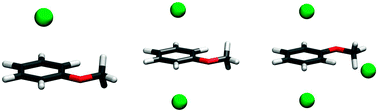
Structure and energetics of the anisole–Arn (n = 1, 2, 3) complexes: high-resolution resonant two-photon and threshold ionization experiments, and quantum chemical calculations
Federico Mazzoni, Maurizio Becucci, Jan Řezáč, Dana Nachtigallová, François Michels, Pavel Hobza and Klaus Müller-Dethlefs
Phys. Chem. Chem. Phys., 2015, 17, 12530-12537
DOI: 10.1039/C5CP01166C
Oxygen diffusion in single crystal barium titanate
Markus Kessel, Roger A. De Souza and Manfred Martin
Phys. Chem. Chem. Phys., 2015, 17, 12587-12597
DOI: 10.1039/C5CP01187F
Vibrational control of electron transfer reactions: A feasibility study for the fast coherent transfer regime
P. Antoniou, Z. Ma, P. Zhang, D. N. Beratan and S. S. Skourtis
Phys. Chem. Chem. Phys., 2015, Advance Article
DOI: 10.1039/C5CP00610D
Three-dimensional sp2-hybridized carbons consisting of orthogonal nanoribbons of graphene and net C
Meng Hu, Xu Dong, Bingchao Yang, Bo Xu, Dongli Yu and Julong He
Phys. Chem. Chem. Phys., 2015, 17, 13028-13033
DOI: 10.1039/C5CP01621E
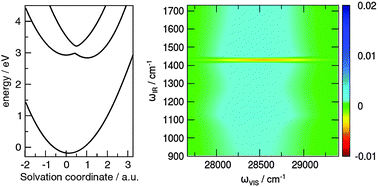
Two-dimensional electronic-vibrational spectra: modeling correlated electronic and nuclear motion
F. Terenziani and A. Painelli
Phys. Chem. Chem. Phys., 2015, 17, 13074-13081
DOI: 10.1039/C5CP01485A
Self-assembly and coverage dependent thermally induced conformational changes of Ni(II)-meso-tetrakis (4-tert-butylphenyl) benzoporphyrin on Cu(111)
Liang Zhang, Michael Lepper, Michael Stark, Dominik Lungerich, Norbert Jux, Wolfgang Hieringer, Hans-Peter Steinrück and Hubertus Marbach
Phys. Chem. Chem. Phys., 2015, 17, 13066-13073
DOI: 10.1039/C5CP01490E
Gas-phase chemistry of technetium carbonyl complexes
Yang Wang, Zhi Qin, Fang-Li Fan, Hiromitsu Haba, Yukiko Komori, Shi-Wei Cao, Xiao-Lei Wu and Cun-Min Tan
Phys. Chem. Chem. Phys., 2015, 17, 13228-13234
DOI: 10.1039/C5CP00979K
Generating hydrated electrons through photoredox catalysis with 9-anthrolate
Christoph Kerzig and Martin Goez
Phys. Chem. Chem. Phys., 2015, 17, 13829-13836
DOI: 10.1039/C5CP01711D
Hybrid nanostructures for SERS: materials development and chemical detection
Sara Fateixa, Helena I. S. Nogueira and Tito Trindade
Phys. Chem. Chem. Phys., 2015, Advance Article
DOI: 10.1039/C5CP01032B
Is seven the minimum number of water molecules per ion pair for assured biological activity in ionic liquid–water mixtures?
Hiroyuki Ohno, Kyoko Fujita and Yuki Kohno
Phys. Chem. Chem. Phys., 2015, Advance Article
DOI: 10.1039/C5CP00768B