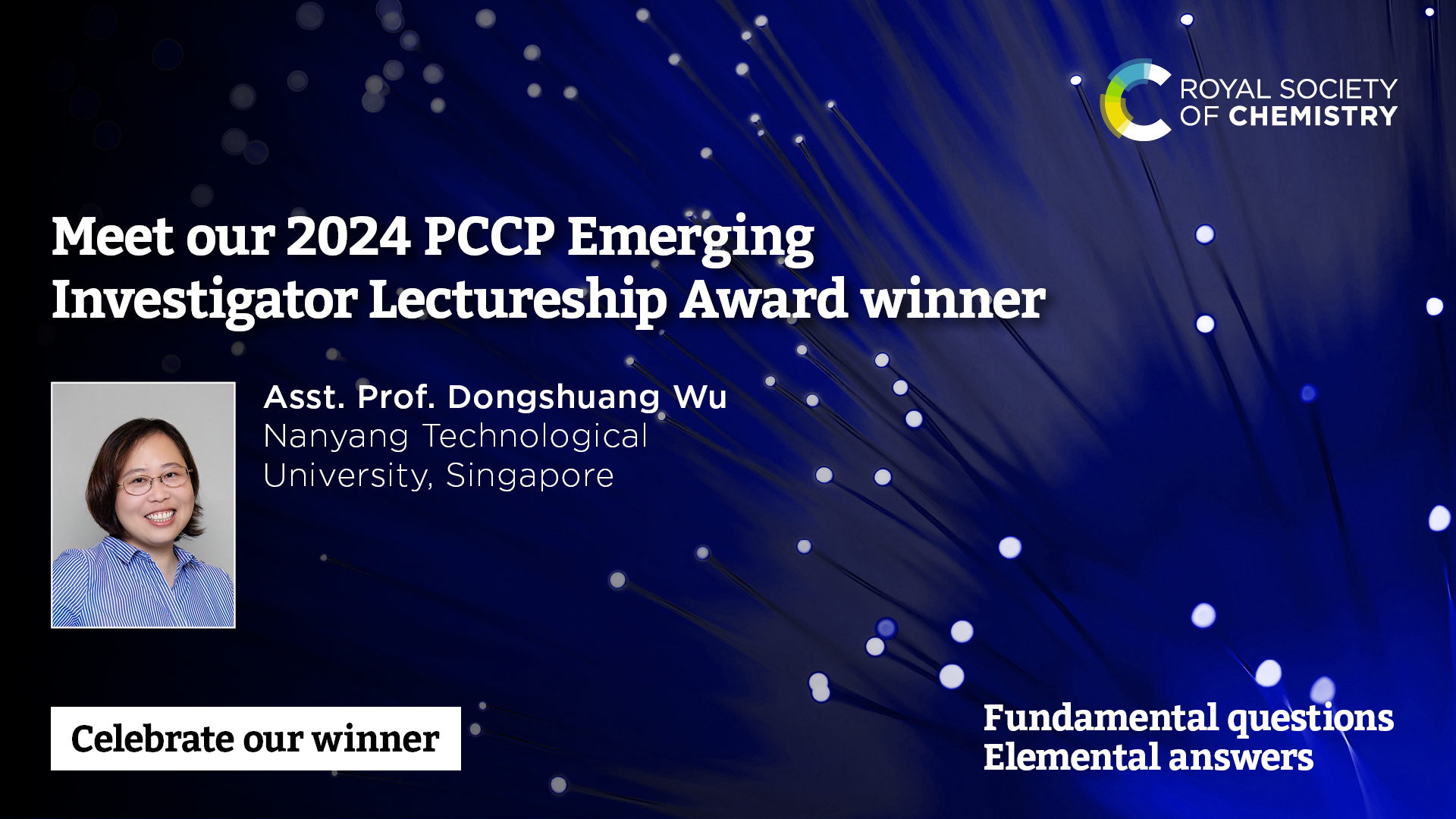
2025’s PCCP Emerging Investigator Lectureship Award Winner announced: Prof. Kai S. Exner

It is our great pleasure to announce that the Editorial Board have selected the 2025 PCCP Emerging Investigator Lectureship Award recipient. This award recognises and supports emerging scientists working in physical chemistry, chemical physics or biophysical chemistry, who are making outstanding contributions to their field, at an early stage of their careers.

The 2025 PCCP Emerging Investigator Lectureship is awarded to Prof. Kai S. Exner!

In 2024, nominations were open to all and were submitted by leading researchers from around the world. After careful deliberation, Prof. Kai S. Exner (University of Duisburg-Essen) was selected as the 2025 recipient by the PCCP Editorial Board. In addition, a number of the outstanding shortlisted nominees were selected and have been invited to contribute to an Emerging Investigators themed collection, which will be published in 2025/26.
About Prof. Kai S. Exner

Kai S. Exner received his Ph.D. in Physical Chemistry from Justus Liebig University Giessen, Germany. He conducted postdoctoral research at the University of Ulm, Germany and Sofia University, Bulgaria before he was appointed Professor for Theoretical Catalysis and Electrochemistry at University of Duisburg-Essen, Germany. He has published more than 100 peer-reviewed research articles, most of them as corresponding author.

Exner’s group is working on the theoretical description of electrified solid/ liquid interfaces with a particular focus on catalytic processes in electrolyzers, fuel cells, or batteries. He is applying density functional theory calculations, molecular dynamics simulations, microkinetic approaches, or descriptor-based analyses to model proton-coupled electron transfer steps with application in energy conversion and storage. His work has advanced the scientific discipline of electrocatalysis by developing new concepts and approaches with a focus on the atomic level.

For more information about the Exner Group, please visit: https://url.uk.m.mimecastprotect.com/s/RuqhC71BXFZZn3oH8fkhoCvRB?domain=exner-group.com.

Many congratulations to Prof. Kai S. Exner on this exciting achievement!

Follow the latest news on the PCCP blog, on BlueSky @pccp.rsc.org and on LinkedIn Physical Chemistry Showcase and browse the latest HOT research in our 2025 PCCP HOT articles collection

Digg This
Reddit This
Stumble Now!
Share on Facebook
Bookmark this on Delicious
Share on LinkedIn
Bookmark this on Technorati
Post on Twitter
Google Buzz (aka. Google Reader)

Call for papers for Festschrift on the structure and dynamics of chemical systems honouring Prof N. Sathyamurthy for his 75th birthday

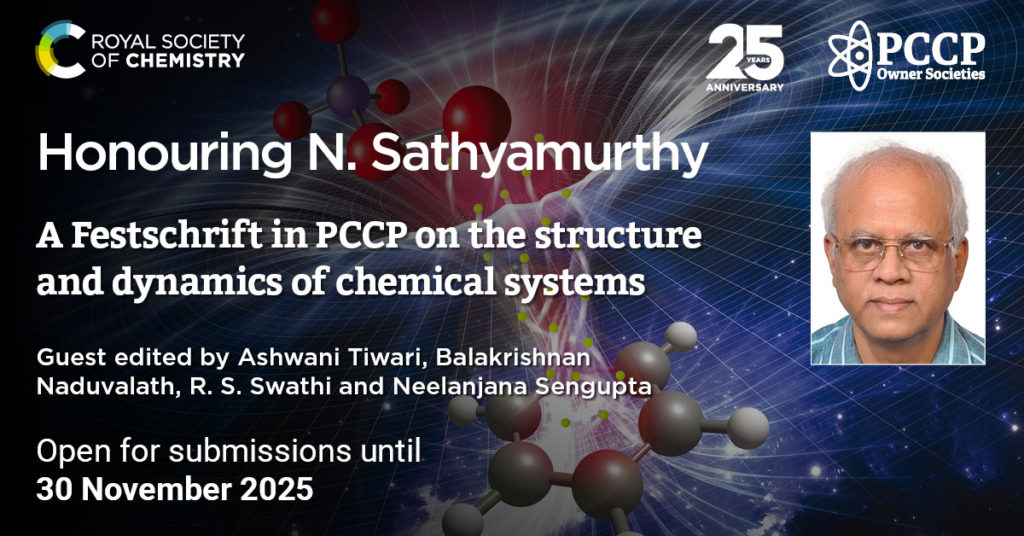
Physical Chemistry Chemical Physics (PCCP) is delighted to announce a call for papers for our latest themed collection on Structure and dynamics of chemical systems: Honouring N. Sathyamurthy’s 75th birthday, with submissions open until 30 November 2025.

Graphic advertising call for papers for a Festschrift honouring N. Sathyamurthy, featuring a photo of Prof Sathyamurthy.

Professor Narayanasami Sathyamurthy’s influence on theoretical chemistry research in India, particularly in chemical reaction dynamics, is profound and far-reaching. When he joined the Indian Institute of Technology (IIT) Kanpur in 1978, he was the sole researcher in this field in the country. Today, numerous research groups, many led by his former group members or their students, are conducting pioneering work on various aspects of chemical dynamics at top institutions across India. His scientific legacy is both deep and lasting, and he has played a pivotal role in shaping the landscape of theoretical and computational chemistry research in India.

This special collection in PCCP celebrates his distinguished career and showcases research in theoretical and computational chemistry focused on the structure and dynamics of chemical systems. Topics of interest include, but are not limited to:

  • Molecular reaction dynamics (experimental, computational and theoretical work)
  • Computational chemical dynamics
  • Statistical mechanics of condensed matter and biomolecular systems
  • Potential energy surfaces and free energy landscapes
  • Electronic structure theory and computation

This call for papers is open for the following article types:

  • Communications
  • Full papers

Open for submissions until 30 November 2025

If you would like to contribute to this themed collection, you can submit your article directly through the PCCP online submission system. Please mention that this submission is an open call contribution to the Structure and dynamics of chemical systems: Honouring N. Sathyamurthy’s 75th birthday collection in the ‘Themed issues’ section of the submission form and add a ‘Note to the Editor’ that this is from the Open Call. The Editorial Office reserves the right to check suitability of submissions in relation to the scope of both the journal and the collection, and inclusion of accepted articles in the final themed collection is not guaranteed.

Submissions to the journal should include significant innovation and/or insight into physical chemistry. Please see the journal’s website for more information on the journal’s scope, standards, article types and author guidelines.

Digg This
Reddit This
Stumble Now!
Share on Facebook
Bookmark this on Delicious
Share on LinkedIn
Bookmark this on Technorati
Post on Twitter
Google Buzz (aka. Google Reader)

Meet the Author: Anouk Rijs – My 100th publication

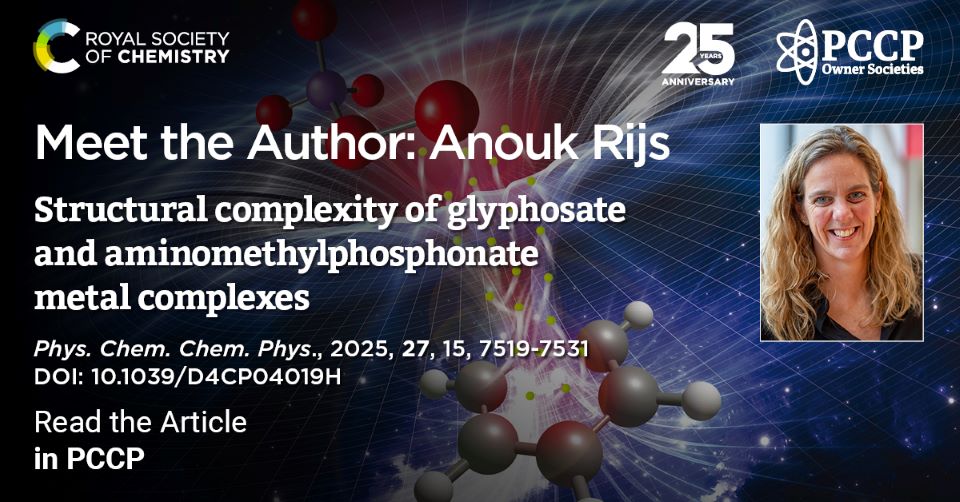
An R-S-C promotional graphic titled "Meet the Author" with a photo of Anouk Rijs on the right and the paper title and reference on the left. Paper title: "Structural complexity of glyphosate and aminomethylphosphonate metal complexes"

PCCP is proud to present the first in our Meet the Author series, showcasing work conducted by members of the PCCP community. This series aims to highlight the excellent research being carried out by researchers from across the breadth of physical chemistry, chemical physics and biophysical chemistry.

The first contribution to this series is a Paper entitled Structural complexity of glyphosate and aminomethylphosphonate metal complexes (Phys. Chem. Chem. Phys., 2025, 27, 15, 7519-7531, DOI: 10.1039/D4CP04019H), which elucidates the structure of glyphosate-metal complexes and its metabolic product aminomethylphosphonic acid (AMPA) using a variety of advanced experimental and computational techniques. It is remarkable in being the 100th publication of PCCP Editorial Board Chair Anouk Rijs, as well as being dubbed “the RijsRijs paper” as it is a collaboration with fellow ion mobility mass spectrometry researcher Nicole Rijs (no relation).

Read our interview with co-author, and PCCP Editorial Board Chair, Anouk Rijs, below.

This article marks your 100th publication – congratulations! Why did you choose to publish in PCCP?

The paper is well-suited for PCCP, employing advanced physical analytical chemistry methods to explore the structure and function of pesticide-metal interactions. It aligns with PCCP’s broad physical chemistry audience.


Could you briefly explain the focus of your article to the non-specialist (in two or three sentences only)?

Glyphosate, a widely used herbicide, forms metal complexes with subtle structural differences that can significantly impact its reactivity and environmental behaviour. Using a combination of advanced methods, such as ion mobility mass spectrometry, computational modelling, and IR Action Spectroscopy, we have elucidated the structure of glyphosate-metal complexes and its metabolic product aminomethylphosphonic acid (AMPA).

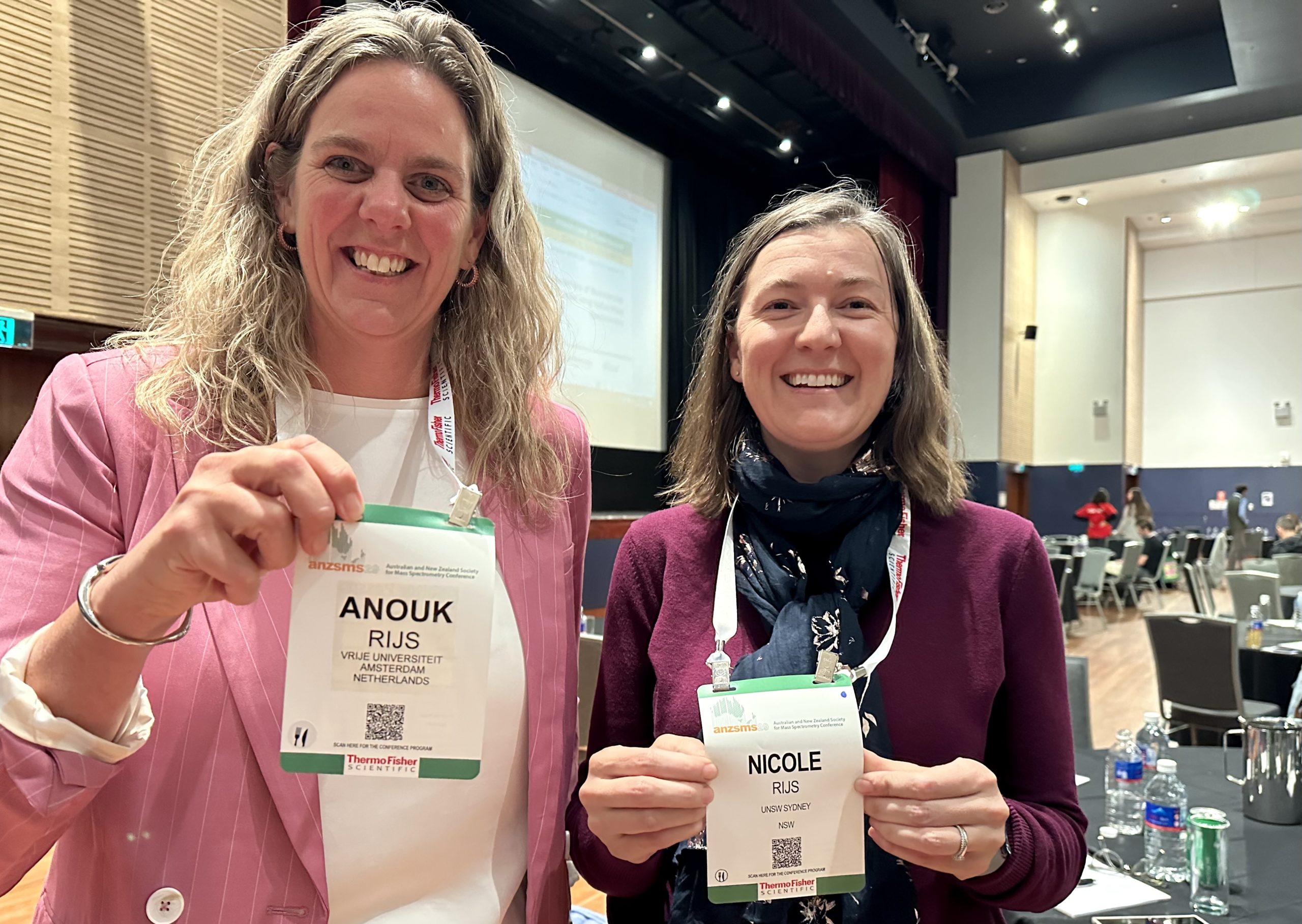
Anouk Rijs (left) and Nicole Rijs (right) at the ANZSMS conference

This article is an interesting collaboration, how did it come about?

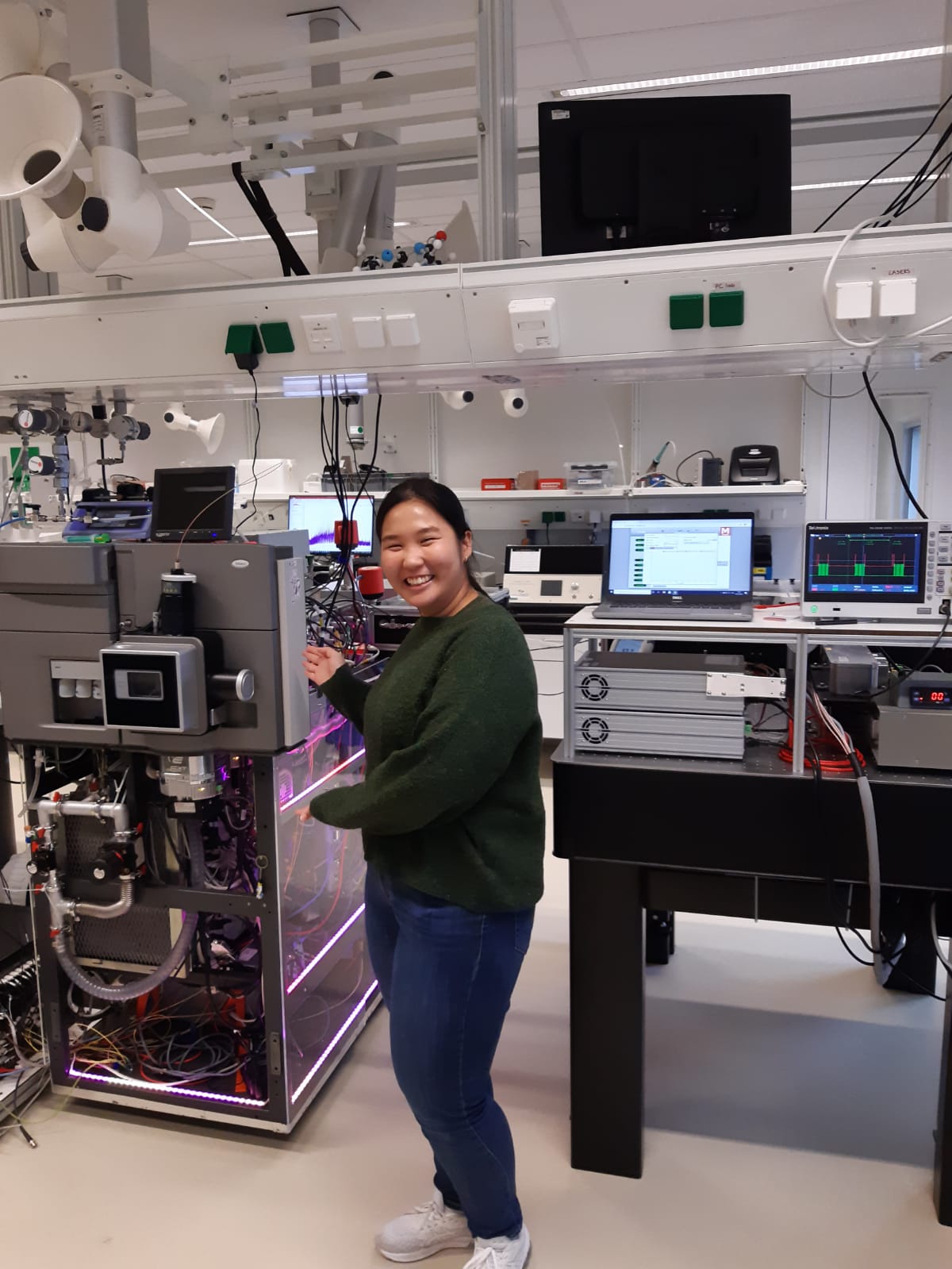
From reference searches and a conference IMSC in 2009, I knew there was another Rijs in my field using ion mobility mass spectrometry on the other side of the world. So when I was invited to give a key note talk at the annual conference of the Australian and New Zealand Society for Mass Spectrometry, I was looking forward to meet my down-under version (see picture). At the conference I met a very active PhD student who very excitingly explained her project at her poster, which was a memorable experience as the poster was like a fold-out picture book. The PhD student (Olivia Rusli) happened to be a PhD student of Nicole Rijs. She had an interesting problem at her poster, namely unravelling the structure of glyphosate-metal complexes, and we came to the conclusion that our new Photo-Synapt allowing to do mass- and mobility-selected IR spectroscopy would be ideal to unravel the structure. So, Olivia joined the lab in Amsterdam for experiments and the Rijs-Rijs labs joined forces.


Olivia Rusli, a visiting PhD student and co-author on the paper, in the lab of Anouk Rijs at VU Amsterdam

What aspects of this work are you most excited about at the moment and what do you find most challenging about it?

I’m most excited that mass- and mobility-resolved (conformer-specific) IRMPD spectroscopy can elucidate the structure of the pesticide-metal complex, demonstrating the versatility of the Photo-Synapt beyond our focus on peptide and protein aggregation. The biggest challenge was sample preparation and handling, so having Olivia, the PhD student on the project, in the lab was invaluable—we learned a lot directly from her expertise.


What are your next steps for this research?

We continued the collaboration, contributing to the structural analysis of metalated glyphosate dimers. The understanding of these complexes is crucial, as metal coordination can influence herbicide inactivation through complexation. In addition to controlling aggregation, the structural elucidation of metalated glyphosate clusters is of fundamental interest due to their interesting structure and capability to form zwitterions.

Read the full paper below:

Structural complexity of glyphosate and aminomethylphosphonate metal complexes


Digg This
Reddit This
Stumble Now!
Share on Facebook
Bookmark this on Delicious
Share on LinkedIn
Bookmark this on Technorati
Post on Twitter
Google Buzz (aka. Google Reader)

The 13th International Conference on Chemical Kinetics (ICCK)

Banner for the The 13th International Conference on Chemical Kinetics (ICCK).

Logo for the 13th International Conference on Chemical Kinetics (ICCK).

The 13th International Conference on Chemical Kinetics (ICCK) is being held this year at Granlibakken Tahoe Resort in Tahoe City, California June 8-13, 2025. The 13th ICCK will concentrate on the multifaceted role of chemical kinetics as an enabling discipline. Chemical kinetics guides our description of chemical transformations in the Earth environment and beyond, enables discovering, characterizing, and controlling reactions from biological systems to combustion to catalytic transformations, and helps develop affordable, reliable, and secure energy technologies.

The International Conference on Chemical Kinetics (ICCK) brings together investigators from universities, research laboratories, and industrial organizations to review progress and problems in modeling, theory and experiment related to chemical kinetics. This cross-disciplinary meeting highlights the importance of fundamental understanding of elementary reactions to a full range of chemical investigations and the central role of chemical kinetics in addressing critical technological and environmental issues. The ICCK meetings provide a unique forum to discuss how the same reactive species and reaction motifs manifest under very different reaction conditions (e.g., atmospheric, aqueous, combustion, plasma, in nonaqueous solvents, and on surfaces).

In recent years, ICCK was held in Hefei (2023), Orléans (2019), Chicago (2017), Ghent (2015), Seville (2013), and Boston (2011). The 13th ICCK in 2025 will concentrate on the multifaceted role of chemical kinetics as an enabling discipline. Chemical kinetics guides our description of chemical transformations in the Earth environment and beyond, enables discovering, characterizing, and controlling reactions from biological systems to combustion to catalytic transformations, and helps develop affordable, reliable, and secure energy technologies.

📅 Dates: June 8 – 13, 2025

📍 Location: Granlibakken Tahoe Resort, Tahoe City, California, USA

Oral abstract deadline: March 26, 2025

Poster abstract deadline: May 5, 2025

Early-bird deadline: April 14, 2025

Registration deadline: May 5, 2025


For any inquiries, feel free to contact the conference organisers at info_icck2025@lbl.gov.

Digg This
Reddit This
Stumble Now!
Share on Facebook
Bookmark this on Delicious
Share on LinkedIn
Bookmark this on Technorati
Post on Twitter
Google Buzz (aka. Google Reader)

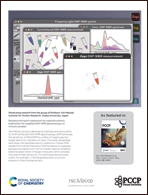
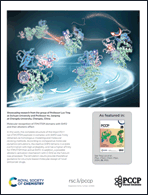
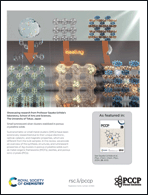
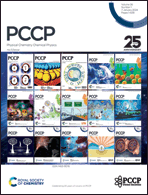
PCCP Cover Gallery 2024


Issue 48

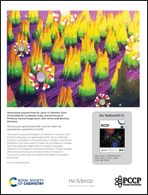
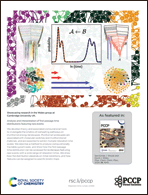
Porous organic cages as inhibitors of Aβ42 peptide aggregation: a simulation study

Daohui Zhao, Yu Zhou, Fen Xing, Hangxing Wang and Jian Zhou

Phys. Chem. Chem. Phys., 2024, 26, 29696 DOI:10.1039/D4CP03549F

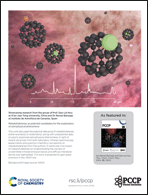
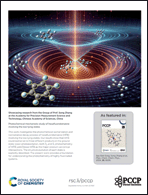
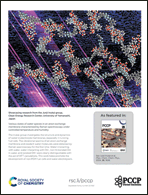
Formation of complex organics by covalent and non-covalent interactions of the sequential reactions of 1–4 acrylonitrile molecules with the benzonitrile radical cation

Paige Sutton, John Saunier, Kyle A. Mason, Adam C. Pearcy, Ka Un Lao and M. Samy El-Shall

Phys. Chem. Chem. Phys., 2024, 26, 29708 DOI:10.1039/D4CP03594A

Issue 47

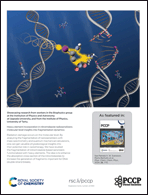
A layered metastructure for privacy protection based on the Brewster angle

Hao-Ran Xu, Bao-Fei Wan and Hai-Feng Zhang

Phys. Chem. Chem. Phys., 2024, 26, 29263 DOI:10.1039/D4CP02842B

Issue 46

Electrofluorochromism based on the valence change of europium complexes in electrochemical devices with Prussian blue as the counter electrode

Ryoto Yabuta, Norihisa Kobayashi and Kazuki Nakamura

Phys. Chem. Chem. Phys., 2024, 26, 28800 DOI:10.1039/D4CP03155E

Translational diffusion, molecular brightness, and energy transfer analysis of mEGFP-linker-mScarlet–I crowding biosensor using fluorescence correlation spectroscopy

Sarah A. Mersch, Clint McCue, Alexandros Aristidou, Erin D. Sheets, Arnold J. Boersma and Ahmed A. Heikal

Phys. Chem. Chem. Phys., 2024, 26, 28808 DOI:10.1039/D4CP03850A

Issue 45

On the ground and excited electronic states of LaCO and AcCO

Isuru R. Ariyarathna

Phys. Chem. Chem. Phys., 2024, 26, 28337 DOI:10.1039/D4CP03132F

Support effects on conical intersections of Jahn–Teller fluxional metal clusters on the sub-nanoscale

Katarzyna M. Krupka and María Pilar de Lara-Castells

Phys. Chem. Chem. Phys., 2024, 26, 28349 DOI:10.1039/D4CP03271C

Issue 44

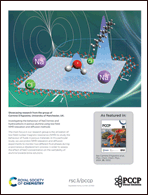
Theoretical terahertz spectroscopy of free radical solutes in solution: an EPR spin probe in water

Bikramjit Sharma, Philipp Schienbein, Harald Forbert and Dominik Marx

Phys. Chem. Chem. Phys., 2024, 26, 27879 DOI:10.1039/D4CP02070G

Impact of magnetic and electric fields on the free energy to form a calcium carbonate ion-pair

Ke Yuan, Nikhil Rampal, Xuewei Du, Fangjun Shu, Yanxing Wang, Huiyao Wang, Andrew G. Stack, Paul Ben Ishai, Lawrence M. Anovitz and Pei Xu

Phys. Chem. Chem. Phys., 2024, 26, 27891 DOI:10.1039/D4CP02041C

Issue 43

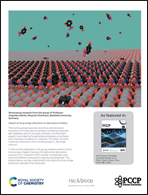
Thickness dependence of wavenumbers and optical-activity selection rule of zone-center phonons in two-dimensional gallium sulfide metal monochalcogenide

R. Longuinhos, Dattatray J. Late, B. C. Viana, R. S. Alencar, M. Terrones, A. G. Souza Filho, A. Jorio and J. Ribeiro-Soares

Phys. Chem. Chem. Phys., 2024, 26, 27260 DOI:10.1039/D4CP02695K

Urocanic acid as a novel scaffold for next-gen nature-inspired sunscreens: I. electronic laser spectroscopy under isolated conditions

Jiayun Fan, Alexander K. Lemmens, Hans Sanders, Michiel Hilbers, Wim Roeterdink and Wybren Jan Buma

Phys. Chem. Chem. Phys., 2024, 26, 27270 DOI:10.1039/D4CP02087A

Issue 42

Quantum chemical studies of the reaction mechanisms of enzymatic CO2 conversion

Baoyan Liu, Beibei Lin, Hao Su and Xiang Sheng

Phys. Chem. Chem. Phys., 2024, 26, 26677 DOI:10.1039/D4CP03049D

Energetic silicones: synthesis and characterization of pentaoxadiazole-PDMS copolymers

Trevor A. Shear, Anthony J. Varni, Mao-Xi Zhang and H. Paul Martinez

Phys. Chem. Chem. Phys., 2024, 26, 26719 DOI:10.1039/D4CP01844C

Issue 41

UV wavelength-dependent photoionization quantum yields for the dark 1nπ* state of aqueous thymidine

Piao Xu, Dongdong Wang, Duoduo Li, Jinyou Long, Song Zhang and Bing Zhang

Phys. Chem. Chem. Phys., 2024, 26, 26251 DOI:10.1039/D4CP02594F

The empty world – a view from the free volume concept and Eyring’s rate process theory

Tian Hao

Phys. Chem. Chem. Phys., 2024, 26, 26156 DOI:10.1039/D3CP04611G

Tuneable stimuli-responsive behaviour, spectroscopic signatures and redox properties of indolo[3,2-b]carbazole-based diradicals

Irene Badía-Domínguez, Deliang Wang, Rosie Nash, Víctor Hernández Jolín, David Collison, Muralidharan Shanmugam, Hongxiang Li, František Hartl and M. Carmen Ruiz Delgado

Phys. Chem. Chem. Phys., 2024, 26, 26238 DOI:10.1039/D4CP02729A

Issue 40

Automated exploration of the conformational degrees of freedom along reaction profiles – driving a FASTCAR

Oscar Gayraud, Bastien Courbière and Frédéric Guégan

Phys. Chem. Chem. Phys., 2024, 26, 25780 DOI:10.1039/D4CP01721H

Issue 39

First principles modeling of composites involving TiO2 clusters supported on M2C MXenes

Masoomeh Keyhanian, Néstor García-Romeral, Ángel Morales-García, Francesc Viñes and Francesc Illas

Phys. Chem. Chem. Phys., 2024, 26, 25319 DOI:10.1039/D4CP01757A

Metal substrate engineering to modulate CO2 hydrogenation to methanol on inverse Zr3O6/CuPd catalysts

Bin Qin, XiaoYing Sun, Jianzhuo Lu, Zhen Zhao and Bo Li

Phys. Chem. Chem. Phys., 2024, 26, 25329 DOI:10.1039/D4CP00927D

Issue 38

Silver microplasma-engineered nanoassemblies on periodic nanostructures for SERS applications

Zhuo-Fu Wang, Kai-Chun Tsai, Wei-Hung Chiang and Ding-Zheng Lin

Phys. Chem. Chem. Phys., 2024, 26, 24791 DOI:10.1039/D4CP02723J

Issue 37

Effects of the chain length of nonaromatic epoxy resins on thermomechanical and optical properties: experiments, and ab initio and molecular dynamics simulations

Yoshiaki Kawagoe, Yuuki Kinugawa, Keigo Matsumoto, Masashi Ohno, Naoki Kishimoto, Takahiko Kawai and Tomonaga Okabe

Phys. Chem. Chem. Phys., 2024, 26, 24250 DOI:10.1039/D4CP02357A

Effect of hydrostatic pressure on the supramolecular assembly of surfactant-cyclodextrin inclusion complexes

Larissa dos Santos Silva Araújo and Leonardo Chiappisi

Phys. Chem. Chem. Phys., 2024, 26, 24246 DOI:10.1039/D4CP02043J

Issue 36

Theoretical analysis of the OH-initiated atmospheric oxidation reactions of imidazole

Thomas Golin Almeida, Carles Martí, Theo Kurtén, Judit Zádor and Sommer L. Johansen

Phys. Chem. Chem. Phys., 2024, 26, 23570 DOI:10.1039/D4CP02103G

Fluorescence and lasing of neutral nitrogen molecules inside femtosecond laser filaments in air: mechanism and applications

Haicheng Mei, Hongbing Jiang, Aurélien Houard, Vladimir Tikhonchuk, Eduardo Oliva, André Mysyrowicz, Qihuang Gong, Chengyin Wu and Yi Liu

Phys. Chem. Chem. Phys., 2024, 26, 23528 DOI:10.1039/D4CP01626B

Issue 35

Wavefunction theory and density functional theory analysis of ground and excited electronic states of TaB and WB

Isuru R. Ariyarathna

Phys. Chem. Chem. Phys., 2024, 26, 22858 DOI:10.1039/D4CP02202E

Proton-coupled electron transfer at a mis-metalated zinc site detected with protein charge ladders

Mayte Gonzalez, Matthew J. Guberman-Pfeffer, Jordan C. Koone, Chad M. Dashnaw, Travis J. Lato and Bryan F. Shaw

Phys. Chem. Chem. Phys., 2024, 26, 22870 DOI:10.1039/D4CP01989J

Issue 34

Tracking the reaction networks of acetaldehyde oxide and glyoxal oxide Criegee intermediates in the ozone-assisted oxidation reaction of crotonaldehyde

Alec C. DeCecco, Alan R. Conrad, Arden M. Floyd, Ahren W. Jasper, Nils Hansen, Philippe Dagaut, Nath-Eddy Moody and Denisia M. Popolan-Vaida

Phys. Chem. Chem. Phys., 2024, 26, 22319 DOI:10.1039/D4CP01942C

Issue 33

Metal–ligand bond in group-11 complexes and nanoclusters

Maryam Sabooni Asre Hazer, Sami Malola and Hannu Häkkinen

Phys. Chem. Chem. Phys., 2024, 26, 21954 DOI:10.1039/D4CP00848K

Coalescence of AuPd nanoalloys in implicit environments

Sofia Zinzani and Francesca Baletto

Phys. Chem. Chem. Phys., 2024, 26, 21965 DOI:10.1039/D4CP00916A

Issue 32

Exploring Cr and molten salt interfacial interactions for molten salt applications

Xiaoyang Liu, Yang Liu, Luke D. Gibson, Mingyuan Ge, Daniel Olds, Denis Leshchev, Jianming Bai, Anna M. Plonka, Phillip Halstenberg, Hui Zhong, Sanjit Ghose, Cheng-Hung Lin, Xiaoyin Zheng, Xianghui Xiao, Wah-Keat Lee, Sheng Dai, German D. Samolyuk, Vyacheslav S. Bryantsev, Anatoly I. Frenkel and Yu-chen Karen Chen-Wiegart

Phys. Chem. Chem. Phys., 2024, 26, 21342 DOI:10.1039/D4CP01122H

Enhanced photoelectric performance of Bi2O2Se/CuInP2S6 heterojunction via ferroelectric polarization in two-dimensional CuInP2S6

Di Wang, Qiong Wu, Kaihan Shan, Mengwei Han, Wenyu Jiang, Weiting Meng, Yanqing Zhang and Weiming Xiong

Phys. Chem. Chem. Phys., 2024, 26, 21357 DOI:10.1039/D4CP02367F

Issue 31

A first-principles alternative to empirical solvent parameters

Kasimir P. Gregory, Erica J. Wanless, Grant B. Webber, Vincent S. J. Craig and Alister J. Page

Phys. Chem. Chem. Phys., 2024, 26, 20750 DOI:10.1039/D4CP01975J

Issue 30

Theoretical search for characteristic atoms in supported gold nanoparticles: a large-scale DFT study

Shengzhou Li, Tsuyoshi Miyazaki and Ayako Nakata

Phys. Chem. Chem. Phys., 2024, 26, 20251 DOI:10.1039/D4CP01094A

Ultrafast dynamics of fluorene initiated by highly intense laser fields

Diksha Garg, Pragya Chopra, Jason W. L. Lee, Denis S. Tikhonov, Sonu Kumar, Oender Akcaalan, Felix Allum, Rebecca Boll, Alexander A. Butler, Benjamin Erk, Eva Gougoula, Sébastien P. Gruet, Lanhai He, David Heathcote, Ellen Jones, Mehdi M. Kazemi, Jan Lahl, Alexander K. Lemmens, Zhihao Liu, Donatella Loru, Sylvain Maclot, Robert Mason, James Merrick, Erland Müller, Terry Mullins, Christina C. Papadopoulou, Christopher Passow, Jasper Peschel, Marius Plach, Daniel Ramm, Patrick Robertson, Dimitrios Rompotis, Alcides Simao, Amanda L. Steber, Ayhan Tajalli, Atia Tul-Noor, Nidin Vadassery, Ivo S. Vinklárek, Simone Techert, Jochen Küpper, Anouk M. Rijs, Daniel Rolles, Mark Brouard, Sadia Bari, Per Eng-Johnsson, Claire Vallance, Michael Burt, Bastian Manschwetus and Melanie Schnell

Phys. Chem. Chem. Phys., 2024, 26, 20261 DOI:10.1039/D3CP05063G

Issue 29

Characterisation of magnetic atomic and molecular beamlines for the extraction of empirical scattering-matrices

Helen Chadwick

Phys. Chem. Chem. Phys., 2024, 26, 19630 DOI:10.1039/D4CP01785D

The electronic structure of diatomic nickel oxide

Nickolas A. Joyner, João Gabriel Farias Romeu, Brian Kent and David A. Dixon

Phys. Chem. Chem. Phys., 2024, 26, 19646 DOI:10.1039/D4CP01796J

Issue 28

Recent advances in organic molecule reactions on metal surfaces

Hong-Ying Gao

Phys. Chem. Chem. Phys., 2024, 26, 19052 DOI:10.1039/D3CP06148E

A systematic theoretical study of CO2 hydrogenation towards methanol on Cu-based bimetallic catalysts: role of the CHO&CH3OH descriptor in thermodynamic analysis

Huang Qin, Hai Zhang, Kunmin Wu, Xingzi Wang and Weidong Fan

Phys. Chem. Chem. Phys., 2024, 26, 19088 DOI:10.1039/D4CP01009D

Issue 27

Characterization of changes in the electronic structure of platinum sub-nanoclusters supported on graphene induced by oxygen adsorption

Hinoki Hirase, Kenji Iida and Jun-ya Hasegawa

Phys. Chem. Chem. Phys., 2024, 26, 18530 DOI:10.1039/D4CP00555D

The secondary structure of diatom silaffin peptide R5 determined by two-dimensional infrared spectroscopy

Asger Berg Thomassen, Thomas L. C. Jansen and Tobias Weidner

Phys. Chem. Chem. Phys., 2024, 26, 18538 DOI:10.1039/D4CP00970C

Laser-induced fragmentation of coronene cations

Sanjana Panchagnula, Jerry Kamer, Alessandra Candian, Helgi R. Hrodmarsson, Harold Linnartz, Jordy Bouwman and Alexander G. G. M. Tielens

Phys. Chem. Chem. Phys., 2024, 26, 18557 DOI:10.1039/D4CP01301H

Mechanisms of acid generation from ionic photoacid generators for extreme ultraviolet and electron beam lithography

Chengbin Fu, Kun Du, Jie Xue, Hanshen Xin, Jianhua Zhang and Haoyuan Li

Phys. Chem. Chem. Phys., 2024, 26, 18547 DOI:10.1039/D4CP01814A

Issue 26

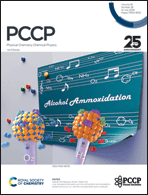
Low-temperature redox activity and alcohol ammoxidation performance on Cu- and Ru-incorporated ceria catalysts

Chaoqi Chen, Satoru Ikemoto, Gen-ichi Yokota, Kimitaka Higuchi, Satoshi Muratsugu and Mizuki Tada

Phys. Chem. Chem. Phys., 2024, 26, 17979 DOI:10.1039/D4CP01432D

Photo-induced structural dynamics of o-nitrophenol by ultrafast electron diffraction

J. P. F. Nunes, M. Williams, J. Yang, T. J. A. Wolf, C. D. Rankine, R. Parrish, B. Moore, K. Wilkin, X. Shen, Ming-Fu Lin, K. Hegazy, R. Li, S. Weathersby, T. J. Martinez, X. J. Wang and M. Centurion

Phys. Chem. Chem. Phys., 2024, 26, 17991 DOI:10.1039/D3CP06253H

Issue 25

Microhydration of small protonated polyaromatic hydrocarbons: a first principles study

Muthuramalingam Prakash, K. Rudharachari Maiyelvaganan, N. Giri Lakshman, C. Gopalakrishnan and Majdi Hochlaf

Phys. Chem. Chem. Phys., 2024, 26, 17489 DOI:10.1039/D3CP06000D

Reduction of CO2 in the presence of light via excited-state hydride transfer reaction in a NADPH-inspired derivative

Bojana D. Ostojić, Branislav Stanković, Dragana S. Đorđević and Peter Schwerdtfeger

Phys. Chem. Chem. Phys., 2024, 26, 17504 DOI:10.1039/D3CP05635J

Issue 24

Designing barrier-free metal/MoS2 contacts through electrene insertion

Mohammad Rafiee Diznab, Adrian F. Rumson, Jesse Maassen and Erin R. Johnson

Phys. Chem. Chem. Phys., 2024, 26, 16947 DOI:10.1039/D3CP06112D

Thermodynamics of resonating-valence-bond states toward the understanding of quantum spin liquid phenomena

Florentino López-Urías, Alberto Rubio-Ponce, Emilio Muñoz-Sandoval and Francisco Sánchez-Ochoa

Phys. Chem. Chem. Phys., 2024, 26, 16955 DOI:10.1039/D4CP01008F

Discovery of superconductivity in technetium borides at moderate pressures

Xiangru Tao, Aiqin Yang, Yundi Quan, Biao Wan, Shuxiang Yang and Peng Zhang

Phys. Chem. Chem. Phys., 2024, 26, 16963 DOI:10.1039/D4CP00191E

Issue 23

The effect of a polymer capping agent on electrodeposited silver nanoparticles in a silver deposition-based electrochromic device

Shun Uji, Kazuki Nakamura and Norihisa Kobayashi

Phys. Chem. Chem. Phys., 2024, 26, 16466 DOI:10.1039/D3CP06281C

Entropy-ruled nonequilibrium charge transport in thiazolothiazole-based molecular crystals: a quantum chemical study

M. Pavalamuthu and K. Navamani

Phys. Chem. Chem. Phys., 2024, 26, 16488 DOI:10.1039/D3CP05739A

A diabatization method based upon integrating the diabatic potential gradient difference

Fengyi Li, Xiaoxi Liu, Haitao Ma and Wensheng Bian

Phys. Chem. Chem. Phys., 2024, 26, 16477 DOI:10.1039/D4CP00375F

Issue 22

First-principles mode-specific reaction dynamics

Gábor Czakó, Balázs Gruber, Dóra Papp, Viktor Tajti, Domonkos A. Tasi and Cangtao Yin

Phys. Chem. Chem. Phys., 2024, 26, 15818 DOI:10.1039/D4CP00417E

An integrated approach towards extracting structural characteristics of chlorosomes from a bchQ mutant of Chlorobaculum tepidum
Lolita Dsouza, Xinmeng Li, Vesna Erić, Annemarie Huijser, Thomas L. C. Jansen, Alfred R. Holzwarth, Francesco Buda, Donald A. Bryant, Salima Bahri, Karthick Babu Sai Sankar Gupta, G. J. Agur Sevink and Huub J. M. de GrootPhys. Chem. Chem. Phys., 2024, 26, 15856 DOI:10.1039/D4CP00221K
Ultrafast control of the LnF+/LnO+ ratio from Ln(hfac)3
Jiangchao Chen, Xi Xing, Roberto Rey-de-Castro and Herschel RabitzPhys. Chem. Chem. Phys., 2024, 26, 15850 DOI:10.1039/D4CP00337C

Issue 21

Deconvolution of the X-ray absorption spectrum of trans-1,3-butadiene with resonant Auger spectroscopy

David M. P. Holland, Jiří Suchan, Jiří Janoš, Camila Bacellar, Ludmila Leroy, Thomas R. Barillot, Luca Longetti, Marcello Coreno, Monica de Simone, Cesare Grazioli, Majed Chergui, Eva Muchová and Rebecca A. Ingle

Phys. Chem. Chem. Phys., 2024, 26, 15130 DOI:10.1039/D4CP00053F

Metal–ring interactions in group 2 ansa-metallocenes: assessed with the local vibrational mode theory

Juliana J. Antonio and Elfi Kraka

Phys. Chem. Chem. Phys., 2024, 26, 15143 DOI:10.1039/D4CP00225C

In situ 3D X-ray imaging of water distribution in each layer of a membrane electrode assembly of a polymer electrolyte fuel cell

Hirosuke Matsui, Tomoro Ohta, Takahiro Nakamura, Tomoya Uruga and Mizuki Tada

Phys. Chem. Chem. Phys., 2024, 26, 15115 DOI:10.1039/D4CP00728J

Issue 20

Photodissociation of deuterated pyrrole–ammonia clusters: H-atom transfer or electron coupled proton transfer?
Stefan Fuchs and Bernhard DickPhys. Chem. Chem. Phys., 2024, 26, 14514 DOI:10.1039/D4CP00566J
Deep learning-enhanced characterization of bubble dynamics in proton exchange membrane water electrolyzers
André Colliard-Granero, Keusra A. Gompou, Christian Rodenbücher, Kourosh Malek, Michael H. Eikerling and Mohammad J. EslamibidgoliPhys. Chem. Chem. Phys., 2024, 26, 14529 DOI:10.1039/D3CP05869G

Issue 19

Molecular-scale understanding of diluent effects on ligand assembly for metal ion separations

Derrick Poe, Soenke Seifert and Michael J. Servis

Phys. Chem. Chem. Phys., 2024, 26, 14108 DOI:10.1039/D3CP05972C

Exploring thermodynamic stability of plutonium oxycarbide using a machine-learning scheme

Ruizhi Qiu, Jun Tang, Jinfan Chen, Pengchuang Liu and Qi Wang

Phys. Chem. Chem. Phys., 2024, 26, 14122 DOI:10.1039/D3CP05249D

Issue 18

Dynamic effects on the nonlinear optical properties of donor acceptor stenhouse adducts: insights from combined MD + QM simulations

Angela Dellai, Carmelo Naim, Javier Cerezo, Giacomo Prampolini and Frédéric Castet

Phys. Chem. Chem. Phys., 2024, 26, 13639 DOI:10.1039/D4CP00310A

Nature of Li2O2 and its relationship to the mechanisms of discharge/charge reactions of lithium–oxygen batteries

Yanan Gao, Hitoshi Asahina, Shoichi Matsuda, Hidenori Noguchi and Kohei Uosaki

Phys. Chem. Chem. Phys., 2024, 26, 13655 DOI:10.1039/D4CP00428K

The structure-giving role of Rb+ ions for water–ice nanoislands supported on Cu(111)

Javier A. Martínez, Inga C. Langguth, David Olivenza-León and Karina Morgenstern

Phys. Chem. Chem. Phys., 2024, 26, 13667 DOI:10.1039/D3CP05968E

Metallofullerenes as potential candidates for the explanation of astrophysical phenomena

Ransel Barzaga and Gao-Lei Hou

Phys. Chem. Chem. Phys., 2024, 26, 13622 DOI:10.1039/D4CP00146J

Issue 17

Searching for stable copper borozene complexes in CuB7− and CuB8−

Wei-Jia Chen, Anton S. Pozdeev, Hyun Wook Choi, Alexander I. Boldyrev, Dao-Fu Yuan, Ivan A. Popov and Lai-Sheng Wang

Phys. Chem. Chem. Phys., 2024, 26, 12928 DOI:10.1039/D4CP00296B

Combining high energy ball milling and liquid crystal templating method to prepare magnetic ordered mesoporous silica. A physico-chemical investigation

Alessandra Scano, Edmond Magner, Martina Pilloni, Luciano Atzori, Marzia Fantauzzi, Sawssen Slimani, Davide Peddis, Gonzalo Garcia Fuentes and Guido Ennas

Phys. Chem. Chem. Phys., 2024, 26, 13020 DOI:10.1039/D3CP04213H

Investigating the behaviour of NaCl brines and hydrocarbons in porous alumina using low-field NMR relaxation and diffusion methods

Aristarchos Mavridis, Mark Sankey, Kuhan Chellappah and Carmine D’Agostino

Phys. Chem. Chem. Phys., 2024, 26, 13012 DOI:10.1039/D4CP00361F

Issue 16

Nano-protrusions in intercalated graphite: understanding the structural and electronic effects through DFT

Hussam Bouaamlat, Ari Paavo Seitsonen, Gianlorenzo Bussetti, Rossella Yivlialin, Stefania De Rosa, Paolo Branchini and Luca Tortora

Phys. Chem. Chem. Phys., 2024, 26, 12269 DOI:10.1039/D3CP05706B

Impact of long-range attraction on desorption kinetics

Florian Schneider, Lukas Höltkemeier, Andrea Floris, Lev Kantorovich, Ralf Bechstein and Angelika Kühnle

Phys. Chem. Chem. Phys., 2024, 26, 12282 DOI:10.1039/D3CP05465A

Issue 15

Anomalous proton transfer of a photoacid HPTS in nonaqueous reverse micelles

Taehyung Jang, Sebok Lee and Yoonsoo Pang

Phys. Chem. Chem. Phys., 2024, 26, 11283 DOI:10.1039/D3CP05710K

Photochemical formation of the elusive Dewar isomers of aromatic systems: why are substituted azaborines different?

Enrique M. Arpa, Sven Stafström and Bo Durbeej

Phys. Chem. Chem. Phys., 2024, 26, 11295 DOI:10.1039/D4CP00777H

Cs+ conductance in graphene membranes with Ångström-scale pores: the role of pore entrance geometry

Enrique Wagemann, Na Young Kim and Sushanta K. Mitra

Phys. Chem. Chem. Phys., 2024, 26, 11311 DOI:10.1039/D4CP00400K

Multiple hydrogen-bonded dimers: are only the frontier atoms relevant?

Celine Nieuwland, David Almacellas, Mac M. Veldhuizen, Lucas de Azevedo Santos, Jordi Poater and Célia Fonseca Guerra

Phys. Chem. Chem. Phys., 2024, 26, 11306 DOI:10.1039/D3CP05244C

Issue 14

Predicting two-dimensional semiconductors using conductivity effective mass

Wenjun Zhang, Zhikun Yao and Lee A. Burton

Phys. Chem. Chem. Phys., 2024, 26, 10520 DOI:10.1039/D4CP00277F

Confinement-induced clustering of H2 and CO2 gas molecules in hydrated nanopores

Aditya Choudhary and Tuan A. Ho

Phys. Chem. Chem. Phys., 2024, 26, 10506 DOI:10.1039/D3CP06024A

Issue 13

Nanoscale insights into graphene oxide reduction by tip-enhanced Raman spectroscopy

Xiao You, Sangita Maharjan, Kizhanipuram Vinodgopal and Joanna M. Atkin

Phys. Chem. Chem. Phys., 2024, 26, 9871 DOI:10.1039/D3CP04711C

Kiwi peel waste as a recyclable adsorbent to remove textile dyes from water: Direct Blue 78 removal and recovery

Jennifer Gubitosa, Vito Rizzi, Paola Fini, Sergio Nuzzo and Pinalysa Cosma

Phys. Chem. Chem. Phys., 2024, 26, 9891 DOI:10.1039/D4CP00174E

Background signal suppression by opposite polarity subtraction for targeted DNP NMR spectroscopy on mixture samples

Zhongliang Zhang, Ken Kato, Hajime Tamaki and Yoh Matsuki

Phys. Chem. Chem. Phys., 2024, 26, 9880 DOI:10.1039/D3CP06280E

Issue 12

Interaction of low-energy electrons with radiosensitizers

Barbora Sedmidubská and Jaroslav Kočišek

Phys. Chem. Chem. Phys., 2024, 26, 9112 DOI:10.1039/D3CP06003A

Molecular recognition of ITIM/ITSM domains with SHP2 and their allosteric effect

Yan Cheng, Weiwei Ouyang, Ling Liu, Lingkai Tang, Zhigang Zhang, Xinru Yue, Li Liang, Jianping Hu and Ting Luo

Phys. Chem. Chem. Phys., 2024, 26, 9155 DOI:10.1039/D3CP03923D

Substrate suppression of oxidation process in pnictogen monolayers

Rafael L. H. Freire, F. Crasto de Lima and A. Fazzio

Phys. Chem. Chem. Phys., 2024, 26, 9149 DOI:10.1039/D3CP03976E

Issue 11

Electron doping as a handle to increase the Curie temperature in ferrimagnetic Mn3Si2X6 (X = Se, Te)

Lei Qiao, Paolo Barone, Baishun Yang, Phil D.C. King, Wei Ren and Silvia Picozzi

Phys. Chem. Chem. Phys., 2024, 26, 8604 DOI:10.1039/D3CP05525F

A density functional theory benchmark on antioxidant-related properties of polyphenols

Rodrigo A. Mendes, Victor A. S. da Mata, Alex Brown and Gabriel L. C. de Souza

Phys. Chem. Chem. Phys., 2024, 26, 8613 DOI:10.1039/D3CP04412B

Issue 10

Electron beam-induced demetallation of Fe, Co, Ni, Cu, Zn, Pd, and Pt metalloporphyrins: insights in e-beam chemistry and metal cluster formations

Jongseong Park, Sol Lee, Orein Francis Jafter, Jinwoo Cheon and Dominik Lungerich

Phys. Chem. Chem. Phys., 2024, 26, 8051 DOI:10.1039/D3CP05848D

Poly(dimethylsiloxane) as a room-temperature solid solvent for photophysics and photochemistry

John A. Clark, Samantha Robinson, Eli M. Espinoza, Duoduo Bao, James B. Derr, Luca Croft, Omar O’Mari, William H. Grover and Valentine I. Vullev

Phys. Chem. Chem. Phys., 2024, 26, 8062 DOI:10.1039/D3CP05413F

Influence of temperature on bend, twist and twist–bend coupling of dsDNA

Zihao Zhang, Xuankang Mou, Yahong Zhang, Linli He and Shiben Li

Phys. Chem. Chem. Phys., 2024, 26, 8077 DOI:10.1039/D3CP04932A

Issue 9

A confinement-regulated (H3C–NH3)+ ion as a smallest dual-wheel rotator showing bisected rotation dynamics

Wang Li, Miao Xie, Shi-Yong Zhang, Cheng-Hui Zeng, Zi-Yi Du and Chun-Ting He

Phys. Chem. Chem. Phys., 2024, 26, 7269 DOI:10.1039/D3CP05406C

Elastic and electronically inelastic scattering of electrons by the pyrazine molecule

Murilo O. Silva, Giseli M. Moreira, Jaime Rosado, Francisco Blanco, Gustavo García, Márcio H. F. Bettega and Romarly F. da Costa

Phys. Chem. Chem. Phys., 2024, 26, 7276 DOI:10.1039/D3CP04619B

Issue 8

Tetracoordinate Co(II) complexes with semi-coordination as stable single-ion magnets for deposition on graphene

Jorge Navarro Giraldo, Jakub Hrubý, Šárka Vavrečková, Ondřej F. Fellner, Lubomír Havlíček, DaVonne Henry, Shehan de Silva, Radovan Herchel, Miroslav Bartoš, Ivan Šalitroš, Vinicius T. Santana, Paola Barbara, Ivan Nemec and Petr Neugebauer

Phys. Chem. Chem. Phys., 2023, 25, 29516 DOI:10.1039/D3CP01426F

Mixed quantum/classical calculations of rotationally inelastic scattering in the CO + CO system: a comparison with fully quantum results

Dulat Bostan, Bikramaditya Mandal, Carolin Joy, Michał Żółtowski, François Lique, Jérôme Loreau, Ernesto Quintas-Sánchez, Adrian Batista-Planas, Richard Dawes and Dmitri Babikov

Phys. Chem. Chem. Phys., 2024, 26, 6627 DOI:10.1039/D3CP05369E

Small luminescent silver clusters stabilized in porous crystalline solids

Naoya Haraguchi, Taisei Kurosaki and Sayaka Uchida

Phys. Chem. Chem. Phys., 2024, 26, 6512 DOI:10.1039/D3CP04589G

Photochemical mechanistic study of hexafluorobenzene involving the low-lying states

Duoduo Li, Xinli Song, Jinming Liu and Song Zhang

Phys. Chem. Chem. Phys., 2024, 26, 6638 DOI:10.1039/D3CP04184K

Issue 7

Dissociative electron attachment to carbon tetrachloride probed by velocity map imaging

Anirban Paul, Dhananjay Nandi, Daniel S. Slaughter, Juraj Fedor and Pamir Nag

Phys. Chem. Chem. Phys., 2024, 26, 5783 DOI:10.1039/D3CP04834A

Dynamics of dissociative electron attachment to aliphatic thiols

Sukanta Das and Vaibhav S. Prabhudesai

Phys. Chem. Chem. Phys., 2024, 26, 5793 DOI:10.1039/D3CP05456J

Comparing brute force to transition path sampling for gas hydrate nucleation with a flat interface: comments on time reversal symmetry

Matthew R. Walsh

Phys. Chem. Chem. Phys., 2024, 26, 5762 DOI:10.1039/D3CP05059A

Issue 6

A thorough mechanistic study of ethanol, acetaldehyde, and ethylene adsorption on Cu-MOR via DFT analysis

Yuli Ma and Junyu Lang

Phys. Chem. Chem. Phys., 2024, 26, 4845 DOI:10.1039/D3CP05314H

Theoretical trends in the dynamics simulations of molecular machines across multiple scales

Weijia Xu, Yuanda Tao, Haoyang Xu and Jin Wen

Phys. Chem. Chem. Phys., 2024, 26, 4828 DOI:10.1039/D3CP05201J

Chiroptical activity of benzannulated N-heterocyclic carbene rhenium(I) tricarbonyl halide complexes: towards efficient circularly polarized luminescence emitters

Valerio Giuso, Christophe Gourlaouen, Mathias Delporte–Pébay, Thomas Groizard, Nicolas Vanthuyne, Jeanne Crassous, Chantal Daniel and Matteo Mauro

Phys. Chem. Chem. Phys., 2024, 26, 4855 DOI:10.1039/D3CP04300B

Issue 5

Effect of polymer addition on the phase behavior of oil–water–surfactant systems of Winsor III type

Ming Lu, Björn Lindman and Krister Holmberg

Phys. Chem. Chem. Phys., 2024, 26, 3699 DOI:10.1039/D3CP04730J

Oligomer-assisted self-assembly of bisurea in organic solvent media

Ching-Hung Wu, Ling-Hua Huang and Chi-Chung Hua

Phys. Chem. Chem. Phys., 2024, 26, 3810 DOI:10.1039/D3CP04464E

Unexpected reduction in thermal conductivity observed in graphene/h-BN heterostructures

Zhang Wu, Rumeng Liu, Ning Wei and Lifeng Wang

Phys. Chem. Chem. Phys., 2024, 26, 3823 DOI:10.1039/D3CP05407A

Ideal two-dimensional quantum spin Hall insulators MgA2Te4 (A = Ga, In) with Rashba spin splitting and tunable properties

Jiaqi Li, Xinlu Cheng and Hong Zhang

Phys. Chem. Chem. Phys., 2024, 26, 3815 DOI:10.1039/D3CP04898E

Issue 4

Solvent effects on extractant conformational energetics in liquid–liquid extraction: a simulation study of molecular solvents and ionic liquids

Xiaoyu Wang, Srikanth Nayak, Richard E. Wilson, L. Soderholm and Michael J. Servis

Phys. Chem. Chem. Phys., 2024, 26, 2877 DOI:10.1039/D3CP04680J

Experimental phase diagram and its temporal evolution for submicron 2-methylglutaric acid and ammonium sulfate aerosol particles

Qishen Huang, Kiran R. Pitta, Kayla Constantini, Emily-Jean E. Ott, Andreas Zuend and Miriam Arak Freedman

Phys. Chem. Chem. Phys., 2024, 26, 2887 DOI:10.1039/D3CP04411D

An OrthoBoXY-method for various alternative box geometries

Johanna Busch and Dietmar Paschek

Phys. Chem. Chem. Phys., 2024, 26, 2907 DOI:10.1039/D3CP04916G

Ion current rectification properties of non-Newtonian fluids in conical nanochannels

Lei Tang, Yu Hao, Li Peng, Runxin Liu, Yi Zhou and Jie Li

Phys. Chem. Chem. Phys., 2024, 26, 2895 DOI:10.1039/D3CP05184F

Issue 3

A model study of ceria–Pt electrocatalysts: stability, redox properties and hydrogen intercalation

Lukáš Fusek, Pankaj Kumar Samal, Jiří Keresteš, Ivan Khalakhan, Viktor Johánek, Yaroslava Lykhach, Jörg Libuda, Olaf Brummel and Josef Mysliveček

Phys. Chem. Chem. Phys., 2024, 26, 1630 DOI:10.1039/D3CP03831A

Addressing electronic and dynamical evolution of molecules and molecular clusters: DFTB simulations of energy relaxation in polycyclic aromatic hydrocarbons

Mathias Rapacioli, Maysa Yusef Buey and Fernand Spiegelman

Phys. Chem. Chem. Phys., 2024, 26, 1499 DOI:10.1039/D3CP02852F

Analysis and interpretation of first passage time distributions featuring rare events

Esmae J. Woods and David J. Wales

Phys. Chem. Chem. Phys., 2024, 26, 1640 DOI:10.1039/D3CP04199A

Various states of water species in an anion exchange membrane characterized by Raman spectroscopy under controlled temperature and humidity

Solomon Wekesa Wakolo, Donald A. Tryk, Hiromichi Nishiyama, Kenji Miyatake, Akihiro Iiyama and Junji Inukai

Phys. Chem. Chem. Phys., 2024, 26, 1658 DOI:10.1039/D3CP03660J

Issue 2

Modeling Henry’s law and phase separations of water–NaCl–organic mixtures with solvation and ion-pairing

Aaron D. Wilson, Zi Hao Foo, Ashini S. Jayasinghe, Caleb Stetson, Hyeonseok Lee, Harry W. Rollins, Akshay Deshmukh and John H. Lienhard

Phys. Chem. Chem. Phys., 2024, 26, 749 DOI:10.1039/D3CP02003G

Heavy element incorporation in nitroimidazole radiosensitizers: molecular-level insights into fragmentation dynamics

Pamela H. W. Svensson, Lucas Schwob, Oscar Grånäs, Isaak Unger, Olle Björneholm, Nicusor Timneanu, Rebecka Lindblad, Anna-Lydia Vieli, Vicente Zamudio-Bayer, Martin Timm, Konstantin Hirsch, Carl Caleman and Marta Berholts

Phys. Chem. Chem. Phys., 2024, 26, 770 DOI:10.1039/D3CP03800A

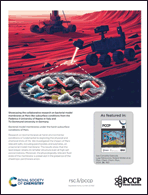
Bacterial model membranes under the harsh subsurface conditions of Mars

Attila Tortorella, Rosario Oliva, Concetta Giancola, Luigi Petraccone and Roland Winter

Phys. Chem. Chem. Phys., 2024, 26, 760 DOI:10.1039/D3CP03911K

Issue 1

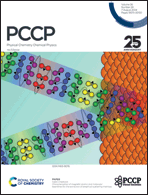
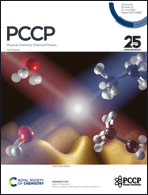
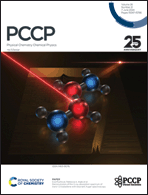
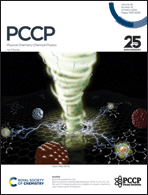
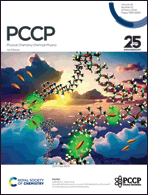
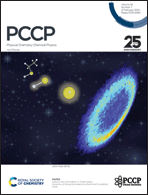
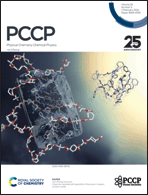
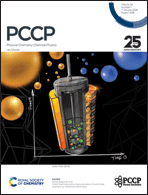
The 25th Anniversary celebratory cover of PCCP


Direct thermodynamic characterization of solid-state reactions by isothermal calorimetry

Marija Cvetnić, Robert Šplajt, Edi Topić, Mirta Rubčić and Nikola Bregović

Phys. Chem. Chem. Phys., 2024, 26, 67 DOI:10.1039/D3CP03933A

Enhancing the upconversion of Er3+ incorporated BaTiO3 by introducing oxygen vacancies

Young Gwon Jung, Hyeongyu Bae and Kang Taek Lee

Phys. Chem. Chem. Phys., 2024, 26, 76 DOI:10.1039/D3CP02133E

Overcoming the barrier: designing novel thermally robust shape memory vitrimers by establishing a new machine learning framework

Cheng Yan, Xiaming Feng, John Konlan, Patrick Mensah and Guoqiang Li

Phys. Chem. Chem. Phys., 2023, 25, 30049 DOI: 10.1039/D3CP03631F

Digg This
Reddit This
Stumble Now!
Share on Facebook
Bookmark this on Delicious
Share on LinkedIn
Bookmark this on Technorati
Post on Twitter
Google Buzz (aka. Google Reader)

Size effects in the chemistry and physics of atomic and molecular clusters, nanoparticles and nanostructures collection in PCCP now online and free to access
We are delighted to announce that the Physical Chemistry Chemical Physics (PCCP) themed issue Size effects in the chemistry and physics of atomic and molecular clusters, nanoparticles and nanostructures is now online and free to access until the end of February 2025.

This themed collection was organised on the occasion of the International Symposium on Small Particles and Inorganic Clusters – ISSPIC XXI that took place from 3rd-8th September 2023 in Berlin, Germany. The ISSPIC conference series is devoted to communicating the progress in experimental and theoretical studies of materials at the nano and sub-nano scale.

Guest Edited by André Fielicke, Sandra Lang, and Thorsten M. Bernhardt this collection focusses on a wide range of areas affecting the chemistry and physics of atomic and molecular clusters, nanoparticles and nanostructures.


Read the full issue online
It includes:

Editorial
Size effects in the chemistry and physics of atomic and molecular clusters, nanoparticles and nanostructures
André Fielicke, Sandra Lang, and Thorsten M. Bernhardt
Phys. Chem. Chem. Phys., 2024,. DOI: 10.1039/d4cp90160fI

Perspective
An experimental perspective on nanoparticle electrochemistry
Esperanza Sedano Varo, Rikke Egeberg Tankard, Julius Lucas Needham, Esteban Gioria, Filippo Romeggio, Chorkendorff, Christian Danvad Damsgaard and Jakob Kibsgaard
Phys. Chem. Chem. Phys., 2024, 26, 17456-17466. DOI: 10.1039/D4CP00889H

Communication
A chiral metal cluster triggers enantiospecific electronic transport
Omar Hernández-Montes, Ignacio L. Garzón and J. Eduardo Barrios-Vargas
Phys. Chem. Chem. Phys., 2024, 26, 11277-11282. DOI: 10.1039/D3CP04581A

Paper
Cluster size dependent coordination of formate to free manganese oxide clusters
Sandra M. Lang, Thorsten M. Bernhardt, Joost M. Bakker, Robert N. Barnettc and Uzi Landman
Phys. Chem. Chem. Phys., 2023, 25, 32166–32172. DOI: 10.1039/D3CP04035F

Paper
Searching for stable copper borozene complexes in CuB7− and CuB8−
Wei-Jia Chen, Anton S. Pozdeev, Hyun Wook Choi, Alexander I. Boldyrev, Dao-Fu Yuan, Ivan A. Popov and Lai-Sheng Wang
Phys. Chem. Chem. Phys., 2024, 26, 12928–12938. DOI: 10.1039/D4CP00296B

Paper
Microhydration of small protonated polyaromatic hydrocarbons: a first principles study
Muthuramalingam Prakash, K. Rudharachari Maiyelvaganan, N. Giri Lakshman, C. Gopalakrishnan and Majdi Hochlaf
Phys. Chem. Chem. Phys., 2024, 26, 17489-17503. DOI: 10.1039/D3CP06000D

We hope you enjoy reading the articles. Please get in touch if you have any questions about this themed collection or PCCP.
Digg This
Reddit This
Stumble Now!
Share on Facebook
Bookmark this on Delicious
Share on LinkedIn
Bookmark this on Technorati
Post on Twitter
Google Buzz (aka. Google Reader)

Fundamental Basis of Mechanochemical Reactivity is now online and free to access until the end of January 2025

We are delighted to announce that the Physical Chemistry Chemical Physics (PCCP) themed issue Fundamental Basis of Mechanochemical Reactivity is now online and free to access until the end of January 2025.

There is a growing need to understand how mechanical energy drives physico-chemical transformations in individual molecules as well as in complex materials, which requires a non-traditional way of thinking about chemical reactivity.

Guest Edited by Adam A.L. Michalchuk (University of Birmingham) and Francesco Delogu (University of Cagliari), this collection aims to highlight original achievements or historical perspectives which provide or discuss developments in understanding fundamental aspects of mechanically driven reactivity of individual molecules and solids.



Read the full issue online
It includes:

Editorial
Fundamental basis of mechanochemical reactivity
Adam A. L. Michalchuk and Francesco Delogu
Phys. Chem. Chem. Phys., 2024, 26, 27245-27247. DOI: 10.1039/D4CP90153C

Review
Wandering through quantum-mechanochemistry: from concepts to reactivity and switches
Mercedes Alonso, Tom Bettens, Jochen Eeckhoudt, Paul Geerlings and Frank De Proft
Phys. Chem. Chem. Phys., 2024, 26, 21-35. DOI: 10.1039/D3CP04907H

Communication
Elucidating mechanochemical reactivity of a ternary halogen-bonded cocrystal system by computational and calorimetric studies
Lavanya Kumar, Sibananda G. Dash, Katarina Leko, Damian Trzybiński, Nikola Bregović, Dominik Cinčić and Mihails Arhangelskis
Phys. Chem. Chem. Phys., 2023, 25, 28576-28580. DOI: 10.1039/D3CP04358D

Paper
Kinetics of the mechanically induced ibuprofen–nicotinamide co-crystal formation by in situ X-ray diffraction
Lucia Casali, Maria Carta, Adam A. L. Michalchuk, Francesco Delogu and Franziska Emmerling
Phys. Chem. Chem. Phys., 2024, 26, 22041-22048. DOI: 10.1039/D4CP01457J

Paper
In situ monitoring of mechanochemical MOF formation by NMR relaxation time correlation
Madeleine E. Leger, Jiangfeng Guo, Bryce MacMillan, Hatem M. Titi, Tomislav Friščić, Bruce Balcom and Barry A. Blight
Phys. Chem. Chem. Phys., 2024, 26, 543-550. DOI: 10.1039/D3CP05555H

Paper
Comparison of mechanochemical methods in the synthesis of binaphthol–benzoquinone based cocrystals
Siddarth Nagapudi and Karthik Nagapudi
Phys. Chem. Chem. Phys., 2024, 26, 12545-12551. DOI: 10.1039/D3CP04713J

Paper
Exploring the role of solvent polarity in mechanochemical Knoevenagel condensation: in situ investigation and isolation of reaction intermediates
Kerstin Scheurrell, Inês C. B. Martins, Claire Murray and Franziska Emmerling
Phys. Chem. Chem. Phys., 2023, 25, 23637-23644. DOI: 10.1039/D3CP02883F

We hope you enjoy reading the articles. Please get in touch if you have any questions about this themed collection or PCCP.

More mechanochemistry

Has this themed collection sparked your interest in mechanochemistry? Discover our companion journal RSC Mechanochemistry, the first to focus entirely on the study of mechanical forces in chemistry and the central role of mechanochemistry in many other disciplines.

 

Digg This
Reddit This
Stumble Now!
Share on Facebook
Bookmark this on Delicious
Share on LinkedIn
Bookmark this on Technorati
Post on Twitter
Google Buzz (aka. Google Reader)

PCCP Themed collection: Molecular Dynamics in the Gas Phase

This themed collection aims to highlight recent experimental and theoretical advances to unravel the connection between the initial energy transfer in interactions between isolated molecules or clusters and photons, electrons, or heavy particles (ions, atoms, molecules), and the related molecular dynamics on timescales spanning more than twenty orders of magnitude – from attoseconds to minutes and beyond. This knowledge is important for fundamental atomic and molecular physics, chemical physics and physical chemistry, and for a broad range of applications in e.g. astrophysics and -chemistry, atmospheric science, and radiation damage on the nanoscale.
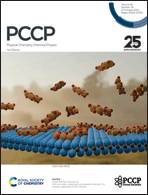
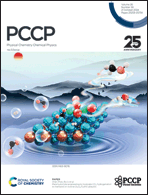
Guest Edited by Professor Henning Zettergren and Dr Alicja Domaracka, this collection reviews the recent experimental and theoretical achievements that aim to understand dynamics of molecules.
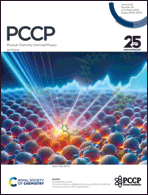
Read the full issue online
It includes:

Editorial
Molecular dynamics in the gas phase
Henning Zettergren and Alicja Domaracka
Phys. Chem. Chem. Phys., 2024, 26, 18529-18529. DOI: 10.1039/D4CP90102A

Paper
Bond breaking and making in mixed clusters of fullerene and coronene molecules induced by keV-ion impact
Naemi Florin, Alicja Domaracka, Patrick Rousseau, Michael Gatchell and Henning Zettergren
Phys. Chem. Chem. Phys., 2024, 26, 20340-20347. DOI: 10.1039/D4CP01147C

Paper
Gas-phase formation of glycolonitrile in the interstellar medium
Luis Guerrero-Méndez, Anxo Lema-Saavedra, Elena Jiménez, Antonio Fernández-Ramos and Emilio Martínez-Núñez
Phys. Chem. Chem. Phys., 2023, 25, 20988-20996. DOI: 10.1039/ D3CP02379F

Paper
Mapping the electronic transitions of protonation sites in peptides using soft X-ray action spectroscopy

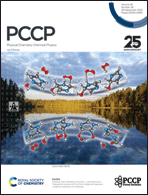
Juliette Leroux and Sadia Bari et al
Phys. Chem. Chem. Phys., 2023, 25, 25603-25618. DOI: 10.1039/ D3CP02524A

Paper
Ultrafast dynamics of fluorene initiated by highly intense laser fields
Melanie Schnell et al
Phys. Chem. Chem. Phys., 2024, 26, 20261-20272. DOI: 10.1039/D3CP05063G

Paper
Benchmarking non-adiabatic quantum dynamics using the molecular Tully models
Sandra Gómez, Eryn Spinlove and Graham Worth
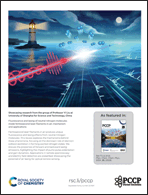
Phys. Chem. Chem. Phys., 2024, 26, 1829-1844. DOI: 10.1039/ D3CP03964A

Paper
Ionic fragmentation products of benzonitrile as important intermediates in the growth of polycyclic aromatic hydrocarbons
Daniël B. Rap, Johanna G. M. Schrauwen, Britta Redlich and Sandra Brünken
Phys. Chem. Chem. Phys., 2024, 26, 7296-7307. DOI: 10.1039/ D3CP05574D

Paper
The impact of non-adiabatic effects on reaction dynamics: a study based on the adiabatic and non-adiabatic potential energy surfaces of CaH2+
Di He, Wentao Li, Quanjiang Li, Shenghui Chen, Li Wang, Yanli Liu and Meishan Wang
Phys. Chem. Chem. Phys., 2023, 25, 22744-22754. DOI: 10.1039/D3CP02416D

Digg This
Reddit This
Stumble Now!
Share on Facebook
Bookmark this on Delicious
Share on LinkedIn
Bookmark this on Technorati
Post on Twitter
Google Buzz (aka. Google Reader)

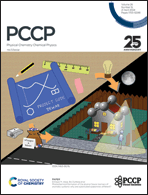
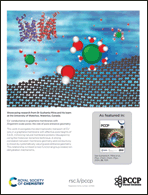
We are delighted to announce that the Physical Chemistry Chemical Physics (PCCP) themed issue Bunsen-Tagung 2023: Physical Chemistry of the Energy Transition is now online and free to access until the end of October 2024

We are delighted to announce that the Physical Chemistry Chemical Physics (PCCP) themed issue Bunsen-Tagung 2023: Physical Chemistry of the Energy Transition is now online and free to access until the end of October 2024.

This themed collection is devoted to the 122nd Bunsen-Tagung meeting which took place on 5th-7th June 2023 in Berlin, Germany, in collaboration with the Deutsche Bunsen-Gesellschaft für Physikalische Chemie (DBG), one of the Owner Societies of PCCP.

Guest Edited by Timo Jacob (Ulm University), Swetlana Schauermann (Kiel University), Robert Schlögl (Fritz Haber Institute of the Max Planck Society), and Alec Wodtke (Georg-August University & Department of Dynamics at Surfaces, Max-Planck-Institute for Multidisciplinary Sciences), this collection contains recent research in physical chemistry on the meeting’s main topic of energy transformations.
Read the full issue online
It includes:

Editorial
Physical chemistry of the energy transition
Robert Schlögl, Alec M. Wodtke, Timo Jacob and Swetlana Schauermann
Phys. Chem. Chem. Phys., 2024, 26, 16929-16930. DOI: 10.1039/D4CP90089H

Perspective
Vibrational Energy Transfer in Collisions of Molecules with Metal Surfaces
Igor Rahinov, Alexander Kandratsenka, Tim Schäfer, Pranav Shirhatti, Kai Golibrzuchb  and Alec M. Wodtke
Phys. Chem. Chem. Phys., 2024, 26, 15090-15114. DOI: 10.1039/D4CP00957F

Paper
A model study of ceria–Pt electrocatalysts: stability, redox properties and hydrogen intercalation
Lukáš Fusek, Pankaj Kumar Samal, Jiří Keresteš, Ivan Khalakhan, Viktor Johánek, Yaroslava Lykhach, Jörg Libuda, Olaf Brummel and Josef Mysliveček
Phys. Chem. Chem. Phys., 2024, 26, 1630-1639. DOI: 10.1039/D3CP03831A

Paper
Machine learning-based correction for spin–orbit coupling effects in NMR chemical shift calculations
Julius B. Kleine Büning, Stefan Grimme and Markus Bursch
Phys. Chem. Chem. Phys., 2024, 26, 4870-4884. DOI: 10.1039/D3CP05556F

Paper
Colloidal 2D Mo1-xWxS2 Nanosheets: An atomic- to ensemble-level spectroscopic study
Markus Fröhlich, Marco Kögel, Jonas Hiller, Leo Kahlmeyer, Alfred J. Meixner, Marcus Scheele, Janik Meyer and Jannika Lauth
Phys. Chem. Chem. Phys., 2024, 26, 13271-13278. DOI: 10.1039/D4CP00530A

Paper
Unravelling the interfacial water structure at the photocatalyst strontium titanate by sum frequency generation spectroscopy
Martin Buessler, Shingo Maruyama, Moritz Zelenka, Hiroshi Onishi and Ellen H.G. Backus
Phys. Chem. Chem. Phys., 2023, 25, 31471-31480. DOI: 10.1039/D3CP03829G

We hope you enjoy reading the articles. Please get in touch if you have any questions about this themed collection or PCCP.
Digg This
Reddit This
Stumble Now!
Share on Facebook
Bookmark this on Delicious
Share on LinkedIn
Bookmark this on Technorati
Post on Twitter
Google Buzz (aka. Google Reader)

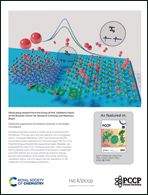
The 2024 PCCP Emerging Investigator Lectureship is awarded to Asst. Prof. Dongshuang Wu!

By    .

An R-S-C promotional graphic announcing the winner of the 2024 PCCP Emerging Investigator Lectureship, Asst. Prof. Dongshuang Wu

The 2024 PCCP Emerging Investigator Lectureship is awarded to Asst. Prof. Dongshuang Wu!

The PCCP Lectureship and themed issue recognise and support emerging scientists working in physical chemistry, chemical physics or biophysical chemistry, who are making outstanding contributions to their field, at an early stage of their careers.


In 2023, nominations were open to all and were made by leading researchers from around the world. After careful deliberation, Asst. Prof. Dongshuang Wu (Nanyang Technological University) was selected as the 2024 recipient by the PCCP Editorial Board. In addition, a number of the outstanding shortlisted nominees were selected and have been invited to contribute to an Emerging Investigators themed collection, which will be published in 2024/25.


Dongshuang Wu received her Ph.D. in Physical Chemistry (including Chemical Physics) from the University of the Chinese Academy of Science, China. Before she moved to Singapore, she was formerly an Assistant professor and a specific research fellow both at Kyoto University (2014-2022). She is currently an assistant professor in the School of Materials Science and Engineering (MSE) in Nanyang Technological University (NTU) (2022 – present). She has published more than 60 peer-reviewed research articles and 5 international patents.

Her group is developing nanomaterials with dedicatedly controlled composition, size, shape, and crystal structure, particularly metals and their alloys for catalysis, energy-related applications and beyond. She is interested in exploring the properties of surface/interface and try to reveal the hidden intrinsic factors/laws that link the structure of nanomaterials with target applications by using advanced characterizations.


For more information about the Wu Group, please visit https://dr.ntu.edu.sg/cris/rp/rp02036.

As part of the Lectureship, Asst. Prof. Dongshuang Wu will be awarded a travel bursary of £1000 to attend and present at a leading international event in 2024/5, where she will be presented his Lectureship award. Asst. Prof. Dongshuang Wu has also been invited to contribute a Perspective article to PCCP.

Many congratulations to Asst. Prof. Dongshuang Wu on behalf of the PCCP Editorial Board, Office and Ownership Societies.
Nominations for the 2025 PCCP Emerging Investigator Lectureship will open later this month, keep up to date with latest journal news on the blog, Twitter, newsletter and e-TOC alerts.



Digg This
Reddit This
Stumble Now!
Share on Facebook
Bookmark this on Delicious
Share on LinkedIn
Bookmark this on Technorati
Post on Twitter
Google Buzz (aka. Google Reader)