Archive for the ‘Uncategorized’ Category

Guidance and details for article submission to PCCP

Journal Information and Overview

PCCP is an international journal for the publication of cutting-edge original work in physical chemistry, chemical physics, and biophysical chemistry. The journal has a broad scope and welcomes contributions spanning experiment, theory, computation and data science. All contributions, including computational ones, should be based on up-to-date approaches. Topical coverage includes spectroscopy, dynamics, kinetics, statistical mechanics, thermodynamics, electrochemistry, catalysis, surface science, quantum mechanics, quantum computing and machine learning. Interdisciplinary research areas such as polymers and soft matter, materials, nanoscience, energy, surfaces/interfaces, and biophysical chemistry are welcomed if they demonstrate significant innovation and/or insight into physical chemistry. Joint experimental/theoretical studies are particularly appreciated when complementary.


Article types accepted by PCCP include:

  • Communications
  • Full papers
  • Reviews
  • Tutorial reviews
  • Perspectives
  • Comments

Details on each article type can be found on our website here.


Review type articles

PCCP currently accepts the follow types of review articles:

  • Reviews
  • Tutorial Reviews
  • Perspectives

Detailed descriptions of what each type of review should include and cover can be found here.

If you would like to submit a review or a research article, please contact the editorial office (pccp-rsc@rsc.org) with an outline of your proposed review for feedback and guidance on submission.


Journal Standards and Submission Criteria

To be suitable for publication in PCCP, articles must include significant innovation and/or insight into physical chemistry, as this is the most important criterion that reviewers and Editors will judge against when evaluating submissions. Authors are encouraged to emphasise this in both the manuscript and the cover letter.

Please note that all submissions will be subject to initial assessment to check that they meet the requirements of the journal and are suitable for full peer review.


APC’s and Publication costs

When you submit your article to PCCP, you may wish to consider the option of publishing your research open access. Publishing open access with RSC can bring increased visibility, wider readership and higher citation potential to your work. More details about open access publishing and pricing can be found here. You can also use our Journal Finder tool to check if your institute currently has an agreement with the RSC that may entitle you to a discount of the article processing charge (APC). The APC for PCCP is £3,100. If you are interested in publishing your work Open Access, then please use your official institutional email address to submit your manuscript and check you are assigned as the corresponding author; this helps us to identify if you are eligible for Read & Publish or other APC discounts. Corresponding authors who are RSC members, or members of any of the PCCP Owner Societies, are eligible for a 15% discount on APCs. More information about charges, discounts, and waivers can be found here. Corresponding authors who are not already members of the Royal Society of Chemistry are entitled to one year’s Affiliate membership as part of their APC. Find out more about our member benefits here.


Themed Collections in PCCP

Discover some of the themed collections in PCCP below, which provide a guide to the scope and standard requirements of the journal.


Digg This
Reddit This
Stumble Now!
Share on Facebook
Bookmark this on Delicious
Share on LinkedIn
Bookmark this on Technorati
Post on Twitter
Google Buzz (aka. Google Reader)

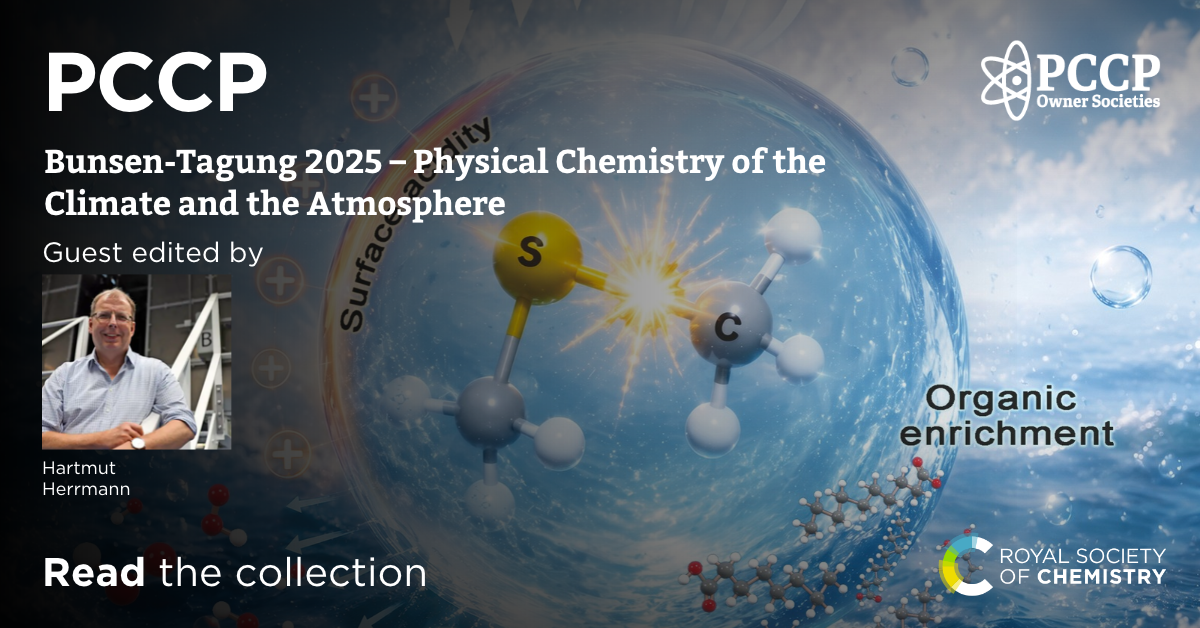
Bunsen-Tagung 2025 – Physical Chemistry of the Climate and the Atmosphere

PCCP is delighted to announce that our latest themed collection, Bunsen-Tagung 2025 – Physical Chemistry of the Climate and the Atmosphere, is now online and free to access until 11th February 2027. Guest Edited by Hartmut Herrmann (TROPOS – Leibniz-Institut für Troposphärenforschung).


About this Collection

This themed collection is devoted to the 124th Bunsen-Tagung meeting on the topic “Physical Chemistry of the Climate and the Atmosphere” which took place from 17 – 19 March 2025 at the University of Leipzig, Germany, in collaboration with the Deutsche Bunsen-Gesellschaft für physikalische Chemie (DBG), one of the Owner Societies of PCCP.

The DBG and the organizing committee of this Bunsen-Tagung meeting are pleased to showcase recent research on either the main topic of physical chemistry of the climate and the atmosphere or to the general topic of physical chemistry, chemical physics and biophysics.


Read the Collection 

Explore a selection of articles from the collection below, or discover the complete collection here.

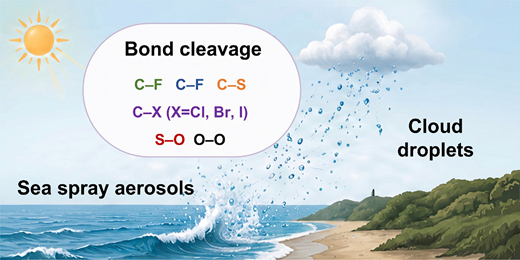
Microdroplets as interfacial reactors: from bond breaking to atmospheric impacts

Y. Song, Z. Xu, N. T. Tchinda and L. Du

Phys. Chem. Chem. Phys. (2026) 28 (31): 18837–18851.

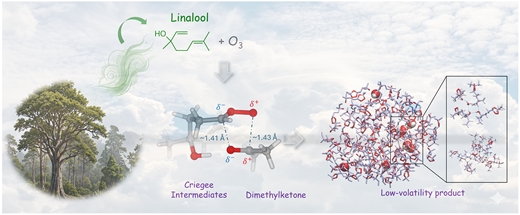
Secondary organic aerosol formation from linalool-derived Criegee intermediates: mechanistic insights into Criegee-carbonyl cycloadditions and atmospheric implications

W-C. Chau, J. Solorza, D. Núñez and C. Barrales-Martínez

Phys. Chem. Chem. Phys. (2026) 28 (19): 11882–11896.


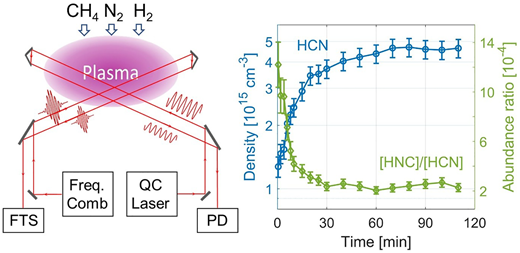
Formation of HNC and HCN isomers in molecular plasmas revealed by frequency comb and quantum cascade laser spectroscopy

 I. Sadiek, S. Di Bernado, U. Macherius and J-P. H. van Helden

Phys. Chem. Chem. Phys. (2026) 28 (6): 3929–3938.


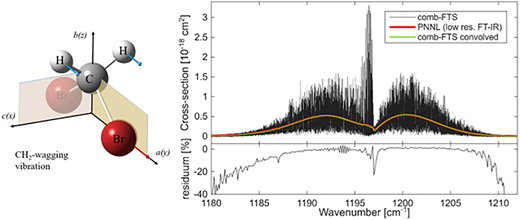
Optical frequency comb Fourier transform spectroscopy of the CH279Br81Br, CH279Br2, and CH281Br2 isotopologues in the 1180–1210 cm−1 region

 I. Sadiek, A. A. Balashov, A. Hjalten, M. Rey, O. Egorov and A. Foltynowicz

 Phys. Chem. Chem. Phys. (2026) 28 (28): 17299–17313.


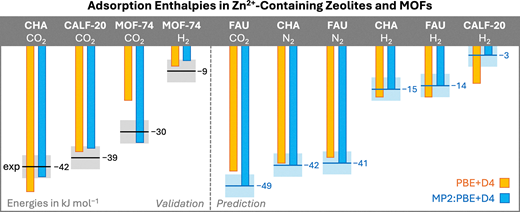
CO2, N2 and H2 adsorption in Zn2+-containing zeolites and metal–organic frameworks 

 P. P. Samal, F. Berger, S. Krishnamurty and J. Sauer

 Phys. Chem. Chem. Phys. (2026) 28 (8): 5161–5174.


We hope you enjoy reading the articles in this collection.


Engage with us and stay tuned for more news

Digg This
Reddit This
Stumble Now!
Share on Facebook
Bookmark this on Delicious
Share on LinkedIn
Bookmark this on Technorati
Post on Twitter
Google Buzz (aka. Google Reader)

Call for Papers: “Nonadiabatic events and conical intersections: in memory of David R. Yarkony”

Physical Chemistry Chemical Physics (PCCP) is delighted to announce a call for papers for its latest themed collection on Nonadiabatic events and conical intersections: in memory of David R. Yarkony, Guest Edited by Paul Dagdigian (Johns Hopkins University), Hua Guo (University of New Mexico), Spiridoula Matsika (Temple University), Henry F. Schaefer (University of Georgia) and Michael Schuurman (National Research Council Canada).

About this Themed Collection: 

Nonadiabatic processes, defined by the breakdown of the Born-Oppenheimer approximation and the strong coupling of nuclear and electronic motion, are ubiquitous in physics and chemistry. They govern ultrafast dynamics in molecules and materials, photochemistry, molecular spectroscopy, electron transfer, and a range of other phenomena in gas and condensed phases. Central to the description of nonadiabatic processes are conical intersections: molecular geometries where two (or more) electronic potential energy surfaces become degenerate. The significance of nonadiabatic processes and conical intersections in various phenomena in physical chemistry has become increasingly apparent in recent decades.

In this themed collection we honor the memory of David R. Yarkony, one of the leaders in this field. David R. Yarkony was instrumental in the initial development of methods to locate conical intersections in polyatomic molecules, highlight their prevalence in electronic excited states, and calculate nonadiabatic couplings using developments in ab initio theory. Taken as a whole, his body of research has resulted in new insights into the effects of conical intersections in spectroscopy and dynamics, including photoelectron spectra and photodissociation. This themed collection will highlight recent theoretical and experimental advancements in nonadiabatic processes, conical intersections, and their effects in all areas of physical chemistry.

Open for Submissions until 1st June 2026

This call for papers is open for the following article types:

  • Communications
  • Full papers
  • Reviews
  • Tutorial Reviews
  • Perspectives

How to Submit:

Articles can be submitted via our website: mc.manuscriptcentral.com/pccp. We would be grateful if upon submission you would mention that your submission is in response to the Open call for the Nonadiabatic events and conical intersections: in memory of David R. Yarkony Themed Collection.

Please note that for publication, manuscripts must meet the usual rigorous and high standards for acceptance in the journal, and all submissions will be subject to initial assessment for suitability for a full peer review before a final decision is made. Accepted articles will be published online in a citeable form, included in the web collection and published in an issue as soon as they are ready. We aim to promote the completed collection in 2026.

When you submit to PCCP you may wish to consider the option of publishing your research open access. Publishing open access with RSC journals can bring increased visibility, wider readership and higher citation potential to your work. More details about open access publishing can be found here. You can also use our journal finder tool to check if your institution currently has an agreement with the RSC that may entitle you to a discount of the article processing charge (APC).

Digg This
Reddit This
Stumble Now!
Share on Facebook
Bookmark this on Delicious
Share on LinkedIn
Bookmark this on Technorati
Post on Twitter
Google Buzz (aka. Google Reader)

2025’s PCCP Emerging Investigator Lectureship Award Winner announced: Prof. Kai S. Exner

It is our great pleasure to announce that the Editorial Board have selected the 2025 PCCP Emerging Investigator Lectureship Award recipient. This award recognises and supports emerging scientists working in physical chemistry, chemical physics or biophysical chemistry, who are making outstanding contributions to their field, at an early stage of their careers.

The 2025 PCCP Emerging Investigator Lectureship is awarded to Prof. Kai S. Exner!

In 2024, nominations were open to all and were submitted by leading researchers from around the world. After careful deliberation, Prof. Kai S. Exner (University of Duisburg-Essen) was selected as the 2025 recipient by the PCCP Editorial Board. In addition, a number of the outstanding shortlisted nominees were selected and have been invited to contribute to an Emerging Investigators themed collection, which will be published in 2025/26.
About Prof. Kai S. Exner

Kai S. Exner received his Ph.D. in Physical Chemistry from Justus Liebig University Giessen, Germany. He conducted postdoctoral research at the University of Ulm, Germany and Sofia University, Bulgaria before he was appointed Professor for Theoretical Catalysis and Electrochemistry at University of Duisburg-Essen, Germany. He has published more than 100 peer-reviewed research articles, most of them as corresponding author.

Exner’s group is working on the theoretical description of electrified solid/ liquid interfaces with a particular focus on catalytic processes in electrolyzers, fuel cells, or batteries. He is applying density functional theory calculations, molecular dynamics simulations, microkinetic approaches, or descriptor-based analyses to model proton-coupled electron transfer steps with application in energy conversion and storage. His work has advanced the scientific discipline of electrocatalysis by developing new concepts and approaches with a focus on the atomic level.

For more information about the Exner Group, please visit: https://url.uk.m.mimecastprotect.com/s/RuqhC71BXFZZn3oH8fkhoCvRB?domain=exner-group.com.

Many congratulations to Prof. Kai S. Exner on this exciting achievement!

Follow the latest news on the PCCP blog, on BlueSky @pccp.rsc.org and on LinkedIn Physical Chemistry Showcase and browse the latest HOT research in our 2025 PCCP HOT articles collection

Digg This
Reddit This
Stumble Now!
Share on Facebook
Bookmark this on Delicious
Share on LinkedIn
Bookmark this on Technorati
Post on Twitter
Google Buzz (aka. Google Reader)

Meet the Author: Anouk Rijs – My 100th publication

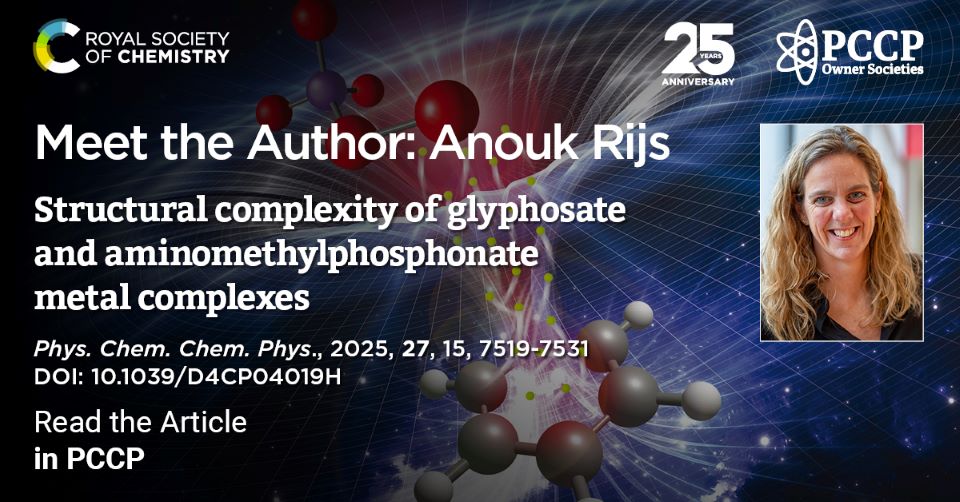
An R-S-C promotional graphic titled "Meet the Author" with a photo of Anouk Rijs on the right and the paper title and reference on the left. Paper title: "Structural complexity of glyphosate and aminomethylphosphonate metal complexes"

PCCP is proud to present the first in our Meet the Author series, showcasing work conducted by members of the PCCP community. This series aims to highlight the excellent research being carried out by researchers from across the breadth of physical chemistry, chemical physics and biophysical chemistry.

The first contribution to this series is a Paper entitled Structural complexity of glyphosate and aminomethylphosphonate metal complexes (Phys. Chem. Chem. Phys., 2025, 27, 15, 7519-7531, DOI: 10.1039/D4CP04019H), which elucidates the structure of glyphosate-metal complexes and its metabolic product aminomethylphosphonic acid (AMPA) using a variety of advanced experimental and computational techniques. It is remarkable in being the 100th publication of PCCP Editorial Board Chair Anouk Rijs, as well as being dubbed “the RijsRijs paper” as it is a collaboration with fellow ion mobility mass spectrometry researcher Nicole Rijs (no relation).

Read our interview with co-author, and PCCP Editorial Board Chair, Anouk Rijs, below.

This article marks your 100th publication – congratulations! Why did you choose to publish in PCCP?

The paper is well-suited for PCCP, employing advanced physical analytical chemistry methods to explore the structure and function of pesticide-metal interactions. It aligns with PCCP’s broad physical chemistry audience.


Could you briefly explain the focus of your article to the non-specialist (in two or three sentences only)?

Glyphosate, a widely used herbicide, forms metal complexes with subtle structural differences that can significantly impact its reactivity and environmental behaviour. Using a combination of advanced methods, such as ion mobility mass spectrometry, computational modelling, and IR Action Spectroscopy, we have elucidated the structure of glyphosate-metal complexes and its metabolic product aminomethylphosphonic acid (AMPA).

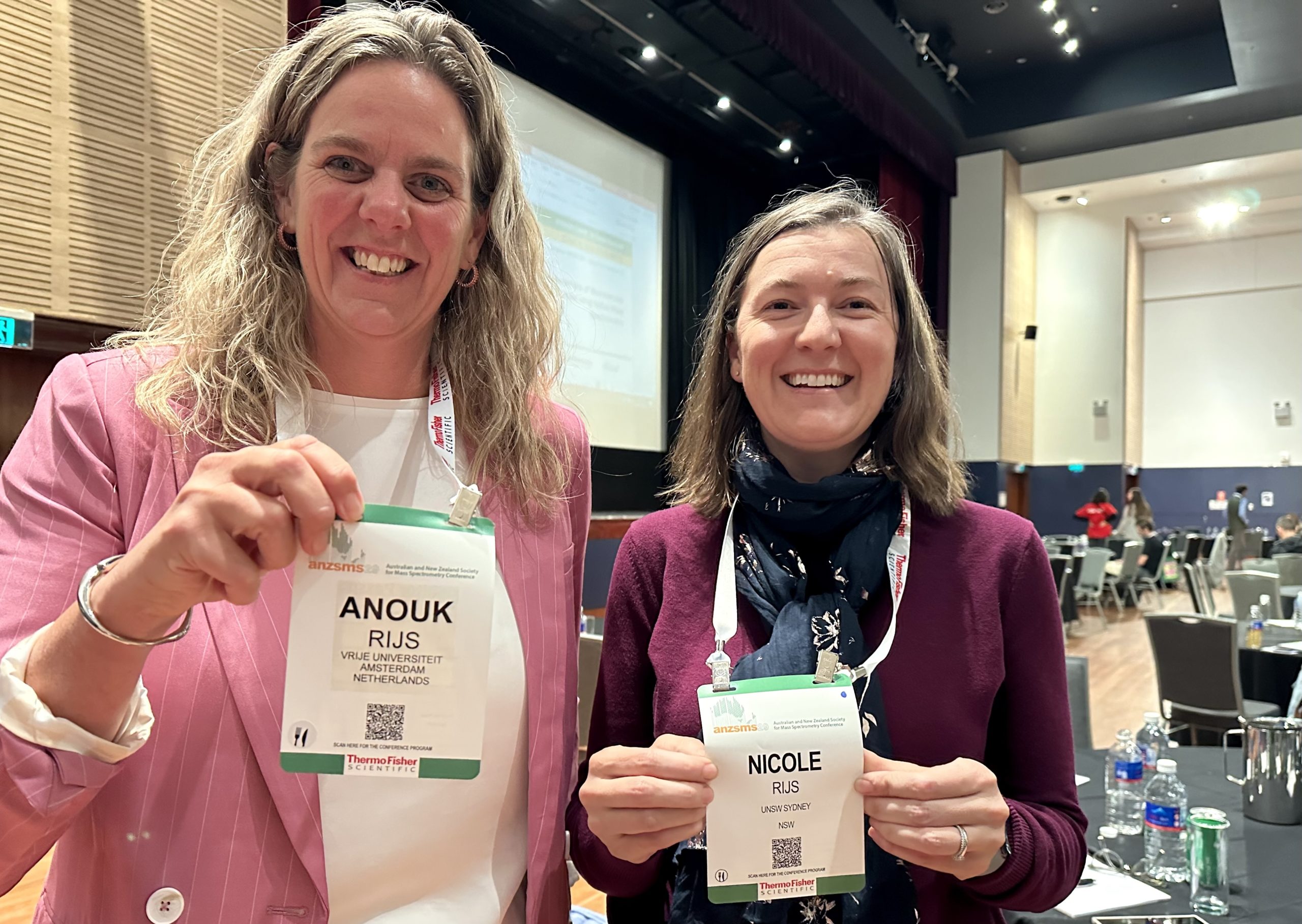
Anouk Rijs (left) and Nicole Rijs (right) at the ANZSMS conference

This article is an interesting collaboration, how did it come about?

From reference searches and a conference IMSC in 2009, I knew there was another Rijs in my field using ion mobility mass spectrometry on the other side of the world. So when I was invited to give a key note talk at the annual conference of the Australian and New Zealand Society for Mass Spectrometry, I was looking forward to meet my down-under version (see picture). At the conference I met a very active PhD student who very excitingly explained her project at her poster, which was a memorable experience as the poster was like a fold-out picture book. The PhD student (Olivia Rusli) happened to be a PhD student of Nicole Rijs. She had an interesting problem at her poster, namely unravelling the structure of glyphosate-metal complexes, and we came to the conclusion that our new Photo-Synapt allowing to do mass- and mobility-selected IR spectroscopy would be ideal to unravel the structure. So, Olivia joined the lab in Amsterdam for experiments and the Rijs-Rijs labs joined forces.


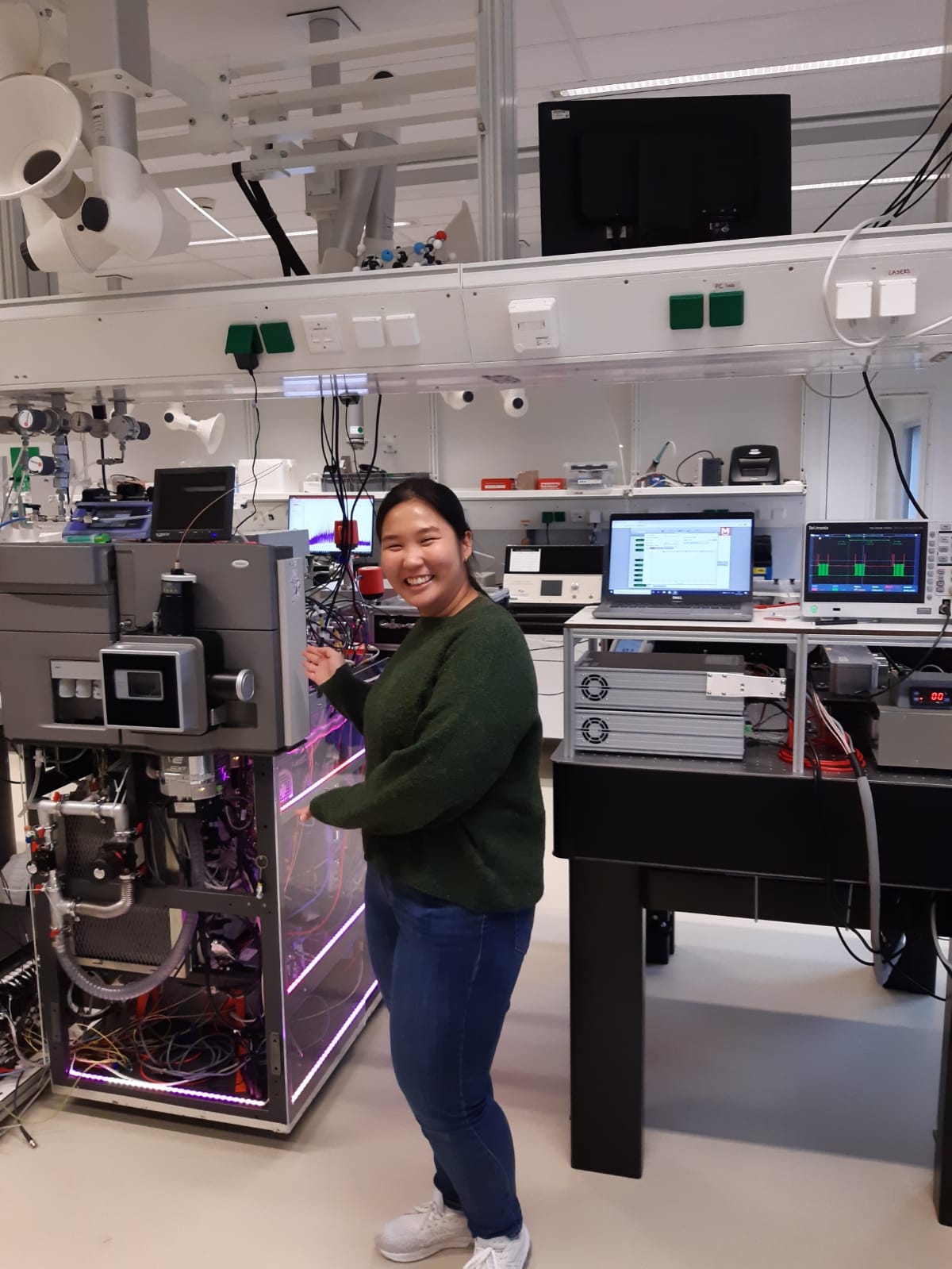
Olivia Rusli, a visiting PhD student and co-author on the paper, in the lab of Anouk Rijs at VU Amsterdam

What aspects of this work are you most excited about at the moment and what do you find most challenging about it?

I’m most excited that mass- and mobility-resolved (conformer-specific) IRMPD spectroscopy can elucidate the structure of the pesticide-metal complex, demonstrating the versatility of the Photo-Synapt beyond our focus on peptide and protein aggregation. The biggest challenge was sample preparation and handling, so having Olivia, the PhD student on the project, in the lab was invaluable—we learned a lot directly from her expertise.


What are your next steps for this research?

We continued the collaboration, contributing to the structural analysis of metalated glyphosate dimers. The understanding of these complexes is crucial, as metal coordination can influence herbicide inactivation through complexation. In addition to controlling aggregation, the structural elucidation of metalated glyphosate clusters is of fundamental interest due to their interesting structure and capability to form zwitterions.

Read the full paper below:

Structural complexity of glyphosate and aminomethylphosphonate metal complexes


Digg This
Reddit This
Stumble Now!
Share on Facebook
Bookmark this on Delicious
Share on LinkedIn
Bookmark this on Technorati
Post on Twitter
Google Buzz (aka. Google Reader)

The 2024 PCCP Emerging Investigator Lectureship is awarded to Asst. Prof. Dongshuang Wu!

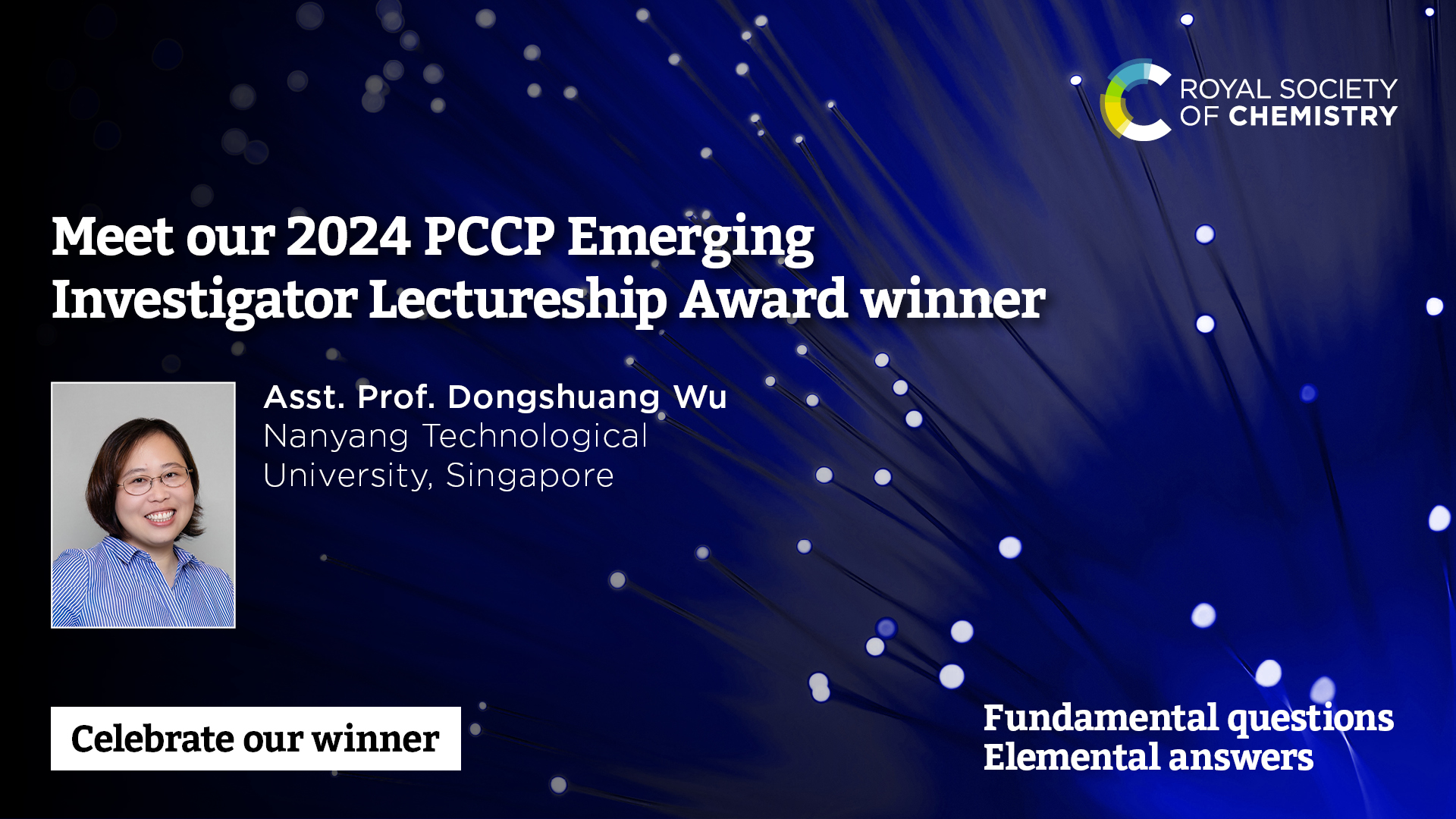
An R-S-C promotional graphic announcing the winner of the 2024 PCCP Emerging Investigator Lectureship, Asst. Prof. Dongshuang Wu

The 2024 PCCP Emerging Investigator Lectureship is awarded to Asst. Prof. Dongshuang Wu!

The PCCP Lectureship and themed issue recognise and support emerging scientists working in physical chemistry, chemical physics or biophysical chemistry, who are making outstanding contributions to their field, at an early stage of their careers.


In 2023, nominations were open to all and were made by leading researchers from around the world. After careful deliberation, Asst. Prof. Dongshuang Wu (Nanyang Technological University) was selected as the 2024 recipient by the PCCP Editorial Board. In addition, a number of the outstanding shortlisted nominees were selected and have been invited to contribute to an Emerging Investigators themed collection, which will be published in 2024/25.
 

Dongshuang Wu received her Ph.D. in Physical Chemistry (including Chemical Physics) from the University of the Chinese Academy of Science, China. Before she moved to Singapore, she was formerly an Assistant professor and a specific research fellow both at Kyoto University (2014-2022). She is currently an assistant professor in the School of Materials Science and Engineering (MSE) in Nanyang Technological University (NTU) (2022 – present). She has published more than 60 peer-reviewed research articles and 5 international patents.

Her group is developing nanomaterials with dedicatedly controlled composition, size, shape, and crystal structure, particularly metals and their alloys for catalysis, energy-related applications and beyond. She is interested in exploring the properties of surface/interface and try to reveal the hidden intrinsic factors/laws that link the structure of nanomaterials with target applications by using advanced characterizations.


For more information about the Wu Group, please visit https://dr.ntu.edu.sg/cris/rp/rp02036.

As part of the Lectureship, Asst. Prof. Dongshuang Wu will be awarded a travel bursary of £1000 to attend and present at a leading international event in 2024/5, where she will be presented his Lectureship award. Asst. Prof. Dongshuang Wu has also been invited to contribute a Perspective article to PCCP.

Many congratulations to Asst. Prof. Dongshuang Wu on behalf of the PCCP Editorial Board, Office and Ownership Societies.

Nominations for the 2025 PCCP Emerging Investigator Lectureship will open later this month, keep up to date with latest journal news on the blog, Twitter, newsletter and e-TOC alerts.


Digg This
Reddit This
Stumble Now!
Share on Facebook
Bookmark this on Delicious
Share on LinkedIn
Bookmark this on Technorati
Post on Twitter
Google Buzz (aka. Google Reader)

Choose open access with PCCP

How can PCCP take your research further?

As a leading title in physical chemistry, PCCP gives you the opportunity to choose open access for your publications and make a greater impact globally. The PCCP Owner Societies – 19 chemistry, physical chemistry and physics societies from around the world – give further credibility to this journal’s open access publishing practices. We make it easier for you to reach and influence a wider readership, including those outside of academia.

PCCP has been recognised by cOAlition S as a Transformative Journal, which recognises our commitment to open access. Over the next few years, we will be transitioning to become a fully open access journal, while ensuring you have an exceptional publishing experience.

In this blog post, we will explain how PCCP and open access can transform the potential of your research and help you gain the recognition you deserve.

The benefits of open access

Open access publishing is the key to building a fairer, more equitable society. One where everyone can explore and benefit from discoveries, including researchers, funders, policymakers and the general public. Simply, it refers to the free, permanent and unrestricted online access to scholarly research for readers.

Open access can unlock your potential to make a bigger impact globally. We encourage you to choose this option for your next PCCP publication as it can significantly increase the discoverability of your work. Research tells us that open access publications in general are downloaded more than subscription-only content.

Other benefits of open access include:

  • better collaboration and career opportunities
  • making your work available outside academia
  • promoting fairness and inclusivity in the scientific community
  • boosting your citation potential

How open access works in PCCP

It’s easy and straightforward to choose open access for your publications in PCCP, and it’s important to remember that it does not compromise on quality. Every publication in PCCP, whether open access or not, undergoes rigorous peer review to uphold high standards. You can expect:

What’s next?

Choose open access for your next publication in PCCP – we are here every step of the way.

Have any questions? Visit our homepage or speak to a member of our editorial team.

Digg This
Reddit This
Stumble Now!
Share on Facebook
Bookmark this on Delicious
Share on LinkedIn
Bookmark this on Technorati
Post on Twitter
Google Buzz (aka. Google Reader)

The 2022 PCCP Emerging Investigator Lectureship is awarded to Dr Basile Curchod!

This lectureship is awarded to recognise and support emerging scientists working in physical chemistry, chemical physics or biophysical chemistry, who are making outstanding contributions to their field at an early stage of their career. In 2021, nominations were open to all and were made by leading researchers from around the world. After careful deliberation, Dr Basile Curchod (University of Bristol)  was selected as the 2022 recipient by the PCCP Editorial Board. In addition, the  shortlisted nominees are invited to contribute to an Emerging Investigators themed collection, which will be published in 2023.
Basile F. E. Curchod was born in Vevey (Switzerland) and has been profoundly intrigued by the interaction between light and molecules since his studies at EPFL (Switzerland). During his PhD, he worked on developing theoretical tools to better understand photochemical reactions, that is, chemical reactions triggered by light. He carried on his research on this topic during two postdoctoral stays, one at Stanford University (USA) and the other at the Max Planck Institute in Halle (Germany). He then moved to Bristol (UK) as a Marie Skłodowska-Curie Fellow to work alongside experimentalists, applying his theoretical methods to understand the mechanistic details of some photochemical processes. In November 2017, he created the In Silico Photochemistry Group at Durham University (UK). In September 2018, he was awarded an ERC Starting Grant. He was promoted to Associate Professor in August 2021.

In March 2022, Basile moved to the Centre for Computational Chemistry at the University of Bristol as an Associate Professor in Theoretical Chemistry. Basile is the 2022 recipient of the Royal Society of Chemistry’s Marlow Award.

“Our group at the University of Bristol pursues a wide range of research interests, all aiming at studying the photochemistry and photophysics of molecules in silico. Its main interest resides in the development of trajectory-based methods for nonadiabatic quantum dynamics, and their extension to the description of light/matter interaction. Employing these developments and cutting-edge strategies to accelerate electronic-structure calculations, our group aims at understanding the importance of non-Born-Oppenheimer effects in atmospheric photochemical reactions (gas and aqueous phase) and the role played by athermal processes in the formation of photoproducts following a nonradiative decay.”
For more information on the In Silico Photochemistry Group, see the website www.in-silico-photochem.com and Twitter @insilphotochem

Dr Basile Curchod is awarded a travel bursary of £1000 to attend and give a lecture at a leading international event in 2023, where he will be presented his Lectureship award.

Many congratulations to Dr Basile Curchod on behalf of the PCCP Editorial Board, Editorial Office and Ownership Societies.

Nominations for the 2023 PCCP Emerging Investigator Lectureship will open this month, keep up to date with latest journal news on the blog, Twitter, newsletter and e-TOC alerts.

Digg This
Reddit This
Stumble Now!
Share on Facebook
Bookmark this on Delicious
Share on LinkedIn
Bookmark this on Technorati
Post on Twitter
Google Buzz (aka. Google Reader)

PCCP congratulates the presentation prize winners of the School of Physical Chemistry 2021 (Italian Chemical Society)

PCCP are delighted to announce the winners of the oral presentation prizes from the virtual School of Physical Chemistry 2021, run by the Physical Chemistry Division of one of our Owner Societies, the Italian Chemical Society (Società Chimica Italiana).

The four winners were:

Ola El Samrout

 for the talk entitled “Evidence for specific arrangements of surface sites of silica that promote peptide formation”

Rita Gelli

 for the talk entitled “Calcium and magnesium phosphate-based materials: interactions with soft matter and biomedical applications”

Andreas Santamaria

for the talk entitled “Endocytosis across scales: from molecular structures to a functional process”

Chiara Pelosi

for the talk entitled “Physico-chemical stability of protein-polymer conjugates in solution”


Congratulations to all! We look forward to seeing where you research will go.


Digg This
Reddit This
Stumble Now!
Share on Facebook
Bookmark this on Delicious
Share on LinkedIn
Bookmark this on Technorati
Post on Twitter
Google Buzz (aka. Google Reader)

Open for Nominations: 2022 PCCP Emerging Investigator Lectureship and Themed Collection

PCCP Emerging Investigator Lectureship

Lectureship and Themed Collection details

Recognising and supporting the significant contribution of early career researchers in physical chemistry, chemical physics and biophysical chemistry, the lectureship is a platform for early career physical chemists to showcase their research to the wider scientific community.

The lectureship recipient will receive £1000 to cover travel and accommodation costs to attend and present at a leading international meeting in 2022. The recipient will also be invited to contribute a Perspective article to PCCP. In addition, selected nominees will be invited to submit to the PCCP Emerging Investigator Themed Collection. You can read the inaugural 2020 Emerging Investigator Themed Issue here.

Eligibility
To be eligible for the lectureship and themed collection, candidates must:
•    Have completed their PhD 
•    Be actively pursuing an independent research career within physical chemistry, chemical physics or biophysical chemistry.
•    Be at an early stage of their independent career (within 10 years of completing their PhD, but appropriate consideration will be given to those who have taken a career break or followed a different study path).

Selection criteria, nomination and judging process
•    Nominations must be made via email to pccp-rsc@rsc.org using the PCCP Emerging Investigator nomination form and a letter of recommendation.
•    Nominators may only nominate one candidate for consideration per year.
•    Individuals cannot nominate themselves for consideration.
•    Selection will be made by the PCCP Editorial Board. The Lectureship winner will be selected in quarter four of 2021 and announced before the end of the year.
•    The Lectureship winner will be selected based on their nomination, with due consideration given to the letter of recommendation, candidate biography, research achievements, previous PCCP publications and overall publication history.
•    Selected shortlisted nominees, as chosen by the PCCP Editorial Board, will be invited to submit to the 2022 PCCP Emerging Investigator Themed Collection following the Lectureship winner selection.

Submit a nomination
To be considered for the 2022 Lectureship and Themed Issue, the following must be sent to the Editorial Office
•    A letter of recommendation
•    A complete nomination form 

Submission deadline: 17 September 2021


Download nomination form 

Submit nomination with letter of recommendation


Find out more about our previous winner’s: 

Dr Stella Stopkowicz, University of Mainz and Dr Stefania Impellizzeri, Ryerson University (2021 winners)
Dr Federico Calle-Vallejo, University of Barcelona (2019 winner)
Professor Debashree Ghosh, Indian Association for the Cultivation of Science (2018 winner)
Professor Ryan P. Steele, University of Utah (2017 winner) 

Read a selection of their work in the PCCP Emerging Investigator Lectureship Winners Collection.

Digg This
Reddit This
Stumble Now!
Share on Facebook
Bookmark this on Delicious
Share on LinkedIn
Bookmark this on Technorati
Post on Twitter
Google Buzz (aka. Google Reader)