



PCCP is proud to present the PCCP Emerging Investigators Series, showcasing work being conducted by Emerging Investigators. This collection aims to highlight the excellent research being carried out by researchers in the early stages of their independent career from across the breadth of physical chemistry and chemical physics.
This blog highlights a contribution from the 2025 PCCP Emerging Investigator Lectureship Winner, Professor Kai Exner.
You can read the full article entitled “Unraveling the impact of the electronic structure of LaFeO3(112) on oxygen evolution reaction” here.
Explore our interview with Professor Exner below.
 |
Could you briefly explain the focus of your article to the non-specialist?
Splitting water into hydrogen and oxygen (water electrolysis) is a promising route to green hydrogen, but the anodic oxygen evolution reaction is the bottleneck in water electrolysis and usually needs catalysts made from rare, expensive metals. We used quantum-mechanical computer simulations to understand how lanthanum ferrite (LaFeO3), a cheap oxide made from abundant elements, catalyzes this reaction and found that oxygen atoms from the catalyst itself likely take part in it. We also show that the way electrons in such materials are modelled strongly affects the predicted activity, and we propose a practical way to obtain reliable trends despite this. |
How would you set this article in a wider context?
Perovskite oxides are among the most promising noble-metal-free catalysts for the oxygen evolution reaction (OER), but they are notoriously difficult to describe with standard density functional theory because of their strongly localized d electrons. The usual remedy, the Hubbard U correction, introduces a parameter that is often taken from the literature or fitted to a single bulk property, and the results are then taken at face value. Our study shows that this choice matters. We outline an approach that allows systematically scanning U for modelling OER on complex metal oxides, and this ansatz is more robust than relying on a single value. Our method is relevant for anyone using descriptor-based approaches to screen oxide catalysts.
What is the motivation behind this work?
The motivation was both experimental and methodological. LaFeO3 is attractive as OER catalyst because it is inexpensive, earth-abundant, and stable under alkaline OER conditions. However, reported overpotentials range from 0.31 to 0.55 V at 10 mA cm-2, likely reflecting differences in surface structure, vacancies and substrates. That calls for an atomic-scale understanding of what actually happens at the surface.
What aspects of this work are you most excited about at the moment and what do you find most challenging about it?
I am most excited about the linear relationship between the activity descriptor Gmax used to comprehend the OER mechanisms and the Hubbard U parameter. It turns what is usually treated as a nuisance parameter into a diagnostic tool: we can narrow down the activity and identify which trends are robust. The indication that lattice oxygen participates in the reaction is also exciting, because it connects to a lively current debate about such mechanisms in perovskites.The biggest challenge is that there is no single, “correct” U value. The value that best reproduces the bulk band gap is not necessarily the one that best describes surface chemistry.
Can you share one piece of career-related advice or wisdom with other early career scientists?
Testing how robust your conclusions are to those choices takes time, but it is often where the most interesting science, and the most credible results, come from. Never give up and pursue your dreams!
Why did you choose to publish in PCCP?
PCCP reaches exactly the community this work speaks to: physical chemists and chemical physicists working on electronic structure, surface science, and electrocatalysis, both computational and experimental. Several studies our work builds on appeared in PCCP, including earlier GGA+U investigations of perovskite surfaces. As the recipient of the 2025 Emerging Investigator Lectureship, publishing this work in PCCP also felt like a natural way to share it with the journal’s readers.
Meet the author
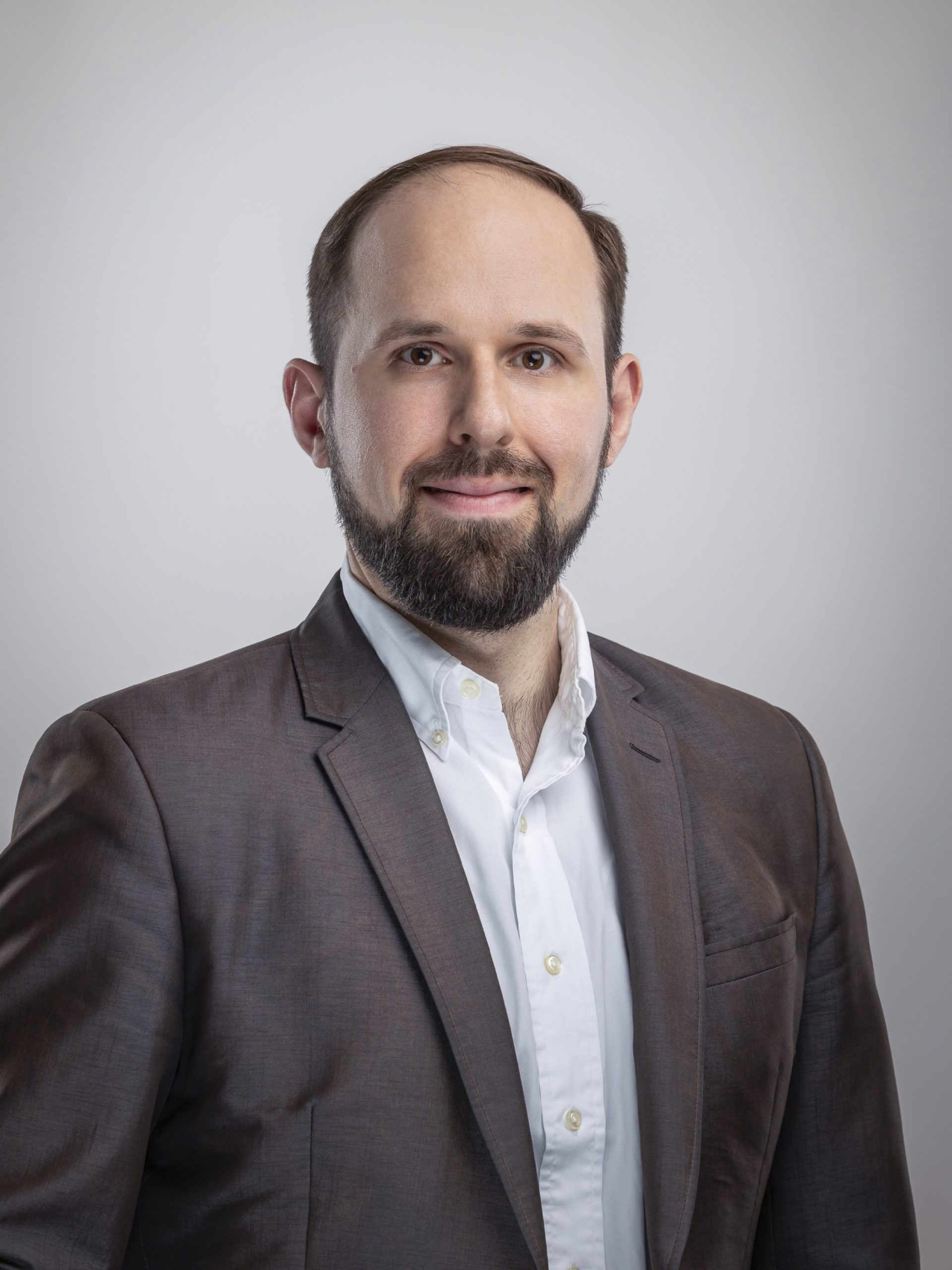 |
Professor Kai Exner
ORCiD: 0000-0003-2934-6075 Biography: I began studying chemistry at Justus Liebig University Giessen in 2008 and stayed there for my PhD, which I completed in 2015 under the supervision of Prof. Dr. Herbert Over. After postdoctoral stays in Ulm, Germany and Sofia, Bulgaria, in 2021, I was appointed Professor for Theoretical Catalysis and Electrochemistry at the University of Duisburg-Essen. My group there combines ab initio methods, method development, descriptor-based materials screening and microkinetic modelling for electrocatalysis and batteries. |
Engage with us and stay tuned for more news
- Sign up for journal email alerts and follow the latest news on Bluesky @pccp.rsc.org and on our LinkedIn #RSCPhys.
- Explore our themed collections here or explore our webpage to find out more about the journal.
- Sign up to be a reviewer for PCCP.


