
ChemSpider hosts regular free, data-themed webinars. These evolve around how data is enabling and embedded in chemical research, educating the community about existing models and tools, as well as addressing challenges and discussing solutions for better chemistry data management. Our sessions encourage chemists across all sectors and career stages to embrace better digital data practices.
Webinar 4: AI & tools in chemistry – watch the recording
Tuesday 22 September 2026, 3 pm (BST)
Speakers
- Ewa Gajewska, Head of Product Management, Merck KGaA, Germany
- Alan Kenwright, Durham University, UK
Click here to find out more about this webinar.
Webinar 5: Empowering data management – register for free
Tuesday 20 October 2026, 3 pm (BST)
Speakers
- Samantha Pearman-Kanza, Senior Enterprise Fellow, University of Southampton, UK
- Monique Roerdink Lander, Systems Engineer, JMP
- Wendy Tseng, Principal Systems Engineer, JMP
Click here to find out more about this webinar.
Webinar 6: Data reuse – register for free
Tuesday 17 November 2026, 3 pm (GMT)
Speakers
- Kathryn Cowtan, Professor of Chemistry, University of York, UK
-
Mitchell Buckley, Head of Partnerships and Technical Marketing, Collaborative Drug Discovery, Inc.
Click here to find out more about this webinar.
Sponsored by
Collaborative Drug Discovery (CDD) provides a secure, intuitive, web-based software suite that helps research scientists organize and analyse their data. Biologists and chemists use CDD Vault to register entities, manage inventory, record experiments, and evaluate structure–activity relationships. CDD Vault also standardizes and structures data, making it easier to leverage the latest advances in AI and machine learning capabilities. CDD recently released the CDD Vault Connector for Claude Desktop, unlocking new possibilities for AI-powered workflows. Founded in 2004, CDD supports thousands of researchers worldwide across academic, biotechnology, and pharmaceutical organizations. Learn more at www.collaborativedrug.com
 SAS created JMP in 1989 to empower scientists and engineers to explore data visually. Since then, JMP has grown from a single product into a family of statistical discovery tools, each one tailored to meet specific needs. All of our software is visual, interactive, comprehensive and extensible.
JMP is the data analysis tool of choice for hundreds of thousands of scientists, engineers and other data explorers worldwide. Users leverage powerful statistical and analytic capabilities in JMP to discover the unexpected.
 Merck KGaA Darmstadt Germany is a leading science and technology company with a broad portfolio across life science, healthcare, and electronics. Through SYNTHIA® Retrosynthesis Software, Merck helps chemists accelerate route design, explore novel synthetic pathways, and make more informed decisions in chemical research. Expert-coded by chemists and engineered by computer scientists, SYNTHIA® supports faster, smarter, and more efficient synthesis planning for both new and published target molecules.
About ChemSpider
Explore more than 138 million structures on the ChemSpider database. Including over 200 data sources, ChemSpider is a valuable source of information for chemical scientists working with data.
Freely accessible and comprehensive, this rich source of structure-based chemistry information is a fundamental resource for chemical scientists working with data everywhere.

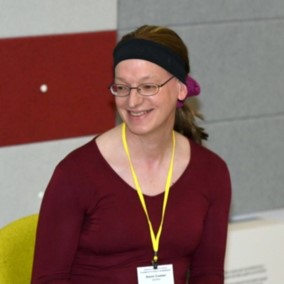 Kathryn is an interdisciplinary data scientist working at York Structural Biology Laboratory. She developed software for key steps in the solution of molecular structures from X-ray crystallography data and cryo-electron microscopy. In the last decade Kathryn has also become interested in data analysis problems in climate science. In addition to working with the UK Met Office and other organizations on historical observations and climate model outputs, she has also worked with psychologists and social scientists on understanding and responding to the motivated rejection of climate science. Recently Kathryn has developed a postgraduate taught programme in data science with major emphasis on reducing barriers to participation, especially in the areas of gender and neurodiversity.
 Mitchell began his career as a medicinal chemist, researching and developing CNS drug candidates for neurodegenerative diseases for four years at the Lab for Drug Discovery in Neurodegeneration at Brigham and Women’s Hospital/ Harvard Medical School. He then served as co-founder and Chief Technology Officer for 2.5 years at Modulate Bio, where he helped develop next-generation GABA-A positive allosteric modulators to treat neurological disorders, including essential tremor, epilepsy, and anxiety. Mitchell subsequently spent 2 years as an Application Scientist at Collaborative Drug Discovery (CDD), and now serves as Head of Partnerships and Technical Marketing.
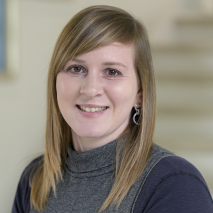 I am a Principal Enterprise Fellow at the University of Southampton. I am the Principal Investigator for the Careers and Skills for Data-driven Research Network, the Pathfinder Lead on Process Recording for the Physical Sciences Data Infrastructure (PSDI) Initiative – www.psdi.ac.uk, and a researcher for the AI in Chemistry Hub (AIChemy – www.aichemy.ac.uk). Within the University of Southampton I am the deputy chair of the faculty ethics committee, and sit on the Steering Committee for our brilliant Chemistry and Chemical Engineering Enterprise Solutions. I also sit on the Advisory Boards for the Future Labs Live, and London Labs Live Conferences, for the academic projects: Machines Learning Chemistry at the University of Nottingham, STEP-UP at Imperial College London, and the KnowLedger Project at the University of North Florida. Alongside my research I also supervise some brilliant PhD and Masters students in the areas of applying data science and computer science techniques to chemistry. My research encompasses all aspects of research data management and process recording across the entire research lifecycle, from the use of digital tools for scientists (including electronic lab notebooks), creating and enabling FAIR data and processes, semantic web technologies, ethical considerations of data and AI, and the role of voice and IoT technologies in the lab of the future.
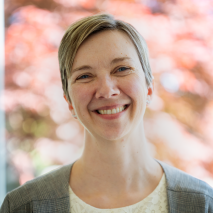 Monique Roerdink Lander is a Systems Engineer for JMP Statistical Discovery, which creates interactive and highly visual statistical discovery software for scientists and engineers. As such, she is the technical contact for users and prospective users, providing training on how to do things in JMP. Roerdink Lander has a doctorate in materials science and technology of polymers from the University of Twente in the Netherlands. Prior to joining JMP, she spent more than a decade in product development in R&D for Ecolab, most recently as a Senior Staff Scientist. A JMP user for a decade, she has more than 20 peer-reviewed papers and patents.
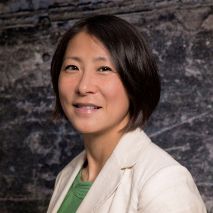 Wendy Tseng is a Principal Systems Engineer at JMP, where she helps engineers, scientists, and business analysts accelerate their impact in their projects, organizations, and careers through data and analytics. As a JMP user and statistician supporting Hair Care R&D at Procter & Gamble, she experienced firsthand the impact of empowering engineers and scientists with statistical tools: deepening scientific understanding, improving adaptability to changing market needs, and accelerating innovation. Prior to joining JMP, Tseng worked as a consultant at Teradata and Mastercard Advisors, helping companies across the retail, restaurant, and financial services industries leverage data and analytics to solve complex business challenges. Tseng earned her bachelor’s degree in biomedical engineering and began her career as an R&D engineer in the medical device industry. After obtaining a master’s degree in applied statistics, she transitioned into analytics-focused roles, building a career that spans engineering, statistics, and business analytics.
 Dr. Ewa Gajewska is the Head of Product Management at Merck KGaA, Darmstadt, Germany, where she leads the development of SYNTHIA® Retrosynthesis Software – a groundbreaking software for computer-assisted synthetic planning. She graduated in biotechnology and chemistry from the Gdansk University of Technology and was a recipient of the Outstanding Achievements Award from Poland’s Minister of Science and Higher Education. In 2020 she received her PhD from the Institute of Organic Chemistry at the Polish Academy of Sciences. Her passion for tackling complex scientific challenges within commercial settings and the unique blend of her interdisciplinary skills drive the realization of innovative features of SYNTHIA® Retrosynthesis Software.
 Alan Kenwright studied Applications of Solid-State NMR to Solids during his PhD with Professor Robin Harris and Professor Ken Packer at UEA before undertaking post-doctoral studies in Paris. He moved from Paris to Durham where he held a variety of positions relating to the application of NMR to chemical problems, including the role of manager of the solution-state NMR service. He is the author of more than one hundred research papers involving NMR. Since his retirement in 2019 he has worked with Eric Hughes, who now works in the Durham University solution-state NMR service, on the development of the “SimpleNMR” suite of software tools, designed to assist synthetic organic chemists in structural isomer verification.
 Revvity Signals Software delivers AI-enhanced solutions to accelerate R&D workflows and enable data-driven innovation. Trusted by pharma and biotech, our portfolio includes ChemDraw®, Signals Notebook, Signals One, Signals Synergy, Signals Clinical, and Spotfire®, empowering scientists with predictive analytics, seamless collaboration, and interactive visualizations for groundbreaking discoveries.


 Dr. Oliver Koepler is head of the Lab Linked Scientific Knowledge at TIB – Leibniz Information Centre for Science and Technology, where he leads research and developments at the intersection of chemistry, data science, and knowledge engineering. Since 2005, he has been instrumental in transforming chemical research through digital innovation, developing e-infrastructures and research data management services that support scientists throughout the entire data lifecycle. He is a spokesperson of NFDI4Chem which has developed innovative tools like the SmartLab environment with Chemotion electronic lab notebook, the federation of Data repositories, the Terminology and Search Service that promote FAIR data principles across the chemistry community.
 Jonathan Hirst is Professor in Computational Chemistry at the University of Nottingham. In 2020, he was awarded a Chair in Emerging Technologies by the Royal Academy of Engineering, focusing on research that will empower the development of next-generation molecules that chemical engineers and chemists make, by using machine learning to augment human decision-making. His tenure as Head of School (2013-2017) saw some significant transformations under his leadership, including the building of the GSK Carbon Neutral Laboratory and a successful bid for an Athena Swan Silver Award.
 Nicolas

 Wendy Patterson is a member of the Board of Management of the Beilstein-Institut where she serves as Scientific Director. She is also a board member of Crossref and the InChI Trust, in addition to other non-profit organizations serving the community. The Beilstein-Institut supports the scientific community in communicating and disseminating high-quality information in chemistry and related sciences through open science practices. In addition, they support the scientific community by funding educational and cultural projects. The Beilstein-Institut recently established the Beilstein ChemInfo Labs, a project area supporting community-led digital infrastructure and standards projects in chemistry.
 Dr. Jacob Al-Saleem, a Data Science Manager at CAS, a division of the American Chemical Society, leads a team working to develop novel bioinformatic solutions using artificial intelligence to extract and connect scientific knowledge. He led the data science efforts for a team that developed a heterogeneous knowledge graph-based approach to identify repositionable therapeutics for COVID-19. His knowledge graph work is the foundation for the Life Sciences Knowledge Graph that is featured in CAS BioFinder. Dr. Al-Saleem earned his B.S. in Molecular Genetics and Ph.D. in Molecular Cellular and Developmental Biology from The Ohio State University, where his work focused on the molecular virology of Human T cell Leukemia Viruses.
 Birgit (Bea) Braun, Ph.D., is an R&D/TS&D Fellow for Digital Innovation in the Packaging, Specialty Plastics & Hydrocarbons R&D organization at Dow. She has held diverse roles across R&D and M&E, and for more than a decade, Bea has focused on applying Artificial Intelligence and Machine Learning to chemical manufacturing and materials research. She has led the development and deployment of numerous data science solutions across Dow, and today her work centers on unlocking value through holistic digital transformation. Bea earned a Dipl.-Ing. in Process Engineering with a specialization in Industrial Environmental Protection from Montanuniversität Leoben in Austria, she holds an M.S. in Environmental Science & Engineering and a Ph.D. in Chemical Engineering from the Colorado School of Mines.
 Garrison W. (Gary) Cottrell is a Professor of Computer Science and Engineering at UC San Diego. He co-founded the Perceptual Expertise Network, and directed the Temporal Dynamics of Learning Center, an NSF-sponsored Science of Learning Center spread across four countries. Gary’s research is strongly interdisciplinary. He is interested in Cognitive Science and Computational Cognitive Neuroscience and in applying AI to problems in other areas of science or engineering. Most recently he has been using deep learning to elucidate the structure of small (natural product) molecules from their NMR spectra in collaboration with Bill Gerwick at the Scripps Institute of Oceanography. He received his PhD in 1985 from the University of Rochester and did a postdoc at the Institute of Cognitive Science at UCSD until 1987, when he joined the CSE Department.