
Archive for March, 2026

Spring 2026 ChemSpider webinars

Our webinars will showcase current and planned initiatives to develop standards and tools, research infrastructures, and developing cultures to support FAIR chemistry data preparation, publication, and reuse, and explore what’s needed to evolve a better future using chemistry data. Our speakers represent the wider chemistry community, with representatives from academia, industry, as well as national and international initiatives.

Webinar 1: Where to begin with AI and ML? – watch the recording

Tuesday April 14th 2026, 3 pm (BST)

Speakers

  • Nessa Carson, Digital Champion, AstraZeneca, UK – SLIDES
  • Raquel López-Ríos de Castro, Postdoctoral Fellow, Freie Universität Berlin, Germany – SLIDES

Click here to find out more about this webinar.


Webinar 2: Data storage and management – register for free

Tuesday May 19th 2026, 3 pm (BST)

Speakers

  • Nongnuch Artrith, Assistant Professor, Utrecht University, Netherlands
  • Nicole Jung, Project Leader, Karlsruhe Institute of Technology, Germany
  • Benjamin Deadman, Program Manager, Open Reaction Database, UK

Click here to find out more about this webinar.


Webinar 3: Chemical standards and representation – register for free

Tuesday June 23rd 2026, 3 pm (BST)

Speakers

Click here to find out more about this webinar.


About ChemSpider

Explore more than 138 million structures on the ChemSpider database. Including over 200 data sources, ChemSpider is a valuable source of information for chemical scientists working with data.

Freely accessible and comprehensive, this rich source of structure-based chemistry information is a fundamental resource for chemical scientists working with data everywhere.


Explore ChemSpider

Webinar 3: Chemical standards & representation

In this free webinar, our panellists will discuss the importance of data standards in chemistry. They will share thoughts on community-endorsed  and commercial standards, and explore their limitations.


Please join us for this free webinar on Tuesday June 23rd, 3 pm BST.

Register here!


Speakers

Come back soon to find out about our speakers!


About ChemSpider

Explore more than 138 million structures on the ChemSpider database. Including over 200 data sources, ChemSpider is a valuable source of information for chemical scientists working with data.

Freely accessible and comprehensive, this rich source of structure-based chemistry information is a fundamental resource for chemical scientists working with data everywhere.

Explore ChemSpider

Webinar 2: Data storage and management

In this free webinar, our panellists will share their thoughts on data storage, discussing repositories and databases, as well as everyday data management using tools such as electronic lab notebooks (ELNs).


Please join us for this free webinar on Tuesday May 19th, 3 pm BST.

Register here!


Speakers

Nongnuch Artrith, Assistant Professor, Utrecht University, Netherlands


Benjamin Deadman, Reaction Data Evangelist and Program Manager, Open Reaction Database, UK

Headshot of Benjamin Deadman

Ben is an independent Consultant Scientist specialising in digital chemistry, and one of his major activities is supporting the Open Reaction Database and its user community. Previously Ben was the founding Facility Manager of the Centre for Rapid Online Analysis of Reactions (ROAR), a shared state-of-the-art facility providing the UK chemical R&D community with the tools and protocols needed to perform data-rich experimentation in chemistry. Ben received an MSc from the University of Waikato (New Zealand) before moving to the University of Cambridge (UK) as a Commonwealth Scholar in 2009. After completing his PhD under the supervision of Prof. Steven Ley in 2013, he had postdoctoral research positions at University College Cork (Ireland) with Prof. Anita Maguire and the Solid State Pharmaceutical Centre (SSPC), and then at Imperial College London (UK) with Prof. Mimi Hii and Prof. Klaus Hellgardt. 

Talk title: Management of Reaction Data with the Open Reaction Database 


Nicole Jung, Project Leader, Karlsruhe Institute of Technology, Germany

Headshot of Nicole JungNicole Jung is a chemist by training and works in the group of Stefan Bräse at the Karlsruhe Institute of Technology (KIT) on topics dealing with the digital transformation of chemical research through advanced data infrastructures and tools. She is an active contributor to research data management (RDM) and data-driven innovation in chemistry, combining domain expertise in organic chemistry with a strong focus on data standardization, accessibility, and reuse. Nicole is deeply engaged in national and international data initiatives. As part of the Helmholtz Program Information she is engaged in different Helmholtz metadata collaboration (HMC) projects and as one of the co-spokespersons of the National Research Data Infrastructure for Chemistry (NFDI4Chem) she contributes to the development of an electronic lab notebook for chemists, the establishment of a repository for research data, and software for research data management in chemistry in general. Since 2023, she is project leader of the Platform for Automated Chemical Synthesis and Analysis (ChemASAP), one of the first self-driving labs established at KIT. 


About ChemSpider

Explore more than 138 million structures on the ChemSpider database. Including over 200 data sources, ChemSpider is a valuable source of information for chemical scientists working with data.

Freely accessible and comprehensive, this rich source of structure-based chemistry information is a fundamental resource for chemical scientists working with data everywhere.

Explore ChemSpider

Webinar 1: Where to begin with AI and ML?

In this free webinar, our panellists will share their thoughts on how to get started with artificial intelligence (AI) and machine learning (ML), covering aspects such as developing AI/ML, reusing data and selecting the right data sources, as well as the ethics involved with this.


This webinar took place on Tuesday April 14th, 3 pm BST.

Watch the recording!


Speakers

Nessa Carson, Digital Champion, AstraZeneca, UK

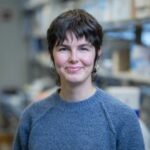
Headshot of Nessa CarsonNessa Carson received Master’s degrees in synthesis and catalysis from Oxford University and the University of Illinois at Urbana-Champaign. She started out as a synthetic chemist for AMRI, then moved within the company to run the high-throughput automation facility for Eli Lilly in Windlesham, working across discovery and process chemistry, then in high-throughput reaction optimization at Pfizer and then Syngenta. Nessa moved to AstraZeneca in 2022 as Digital Champion, focussing on digital transformation and making life easier for scientists, and currently works in the Predictive Science, Digital, and Automation team. She was awarded the Salters’ Institute Centenary Award for early-career chemists with the potential to make an outstanding long-term contribution to industrial chemistry. 
Talk title: Data foundations: Developing AI agents for laboratory science in pharma – SLIDES


Raquel López-Ríos de Castro, Postdoctoral FellowFreie Universität Berlin, Germany 

Raquel López-Ríos de Castro headshot Raquel López-Ríos de Castro is a Marie Skłodowska-Curie Postdoctoral Fellow working between Freie Universität Berlin (with Prof. Cecilia Clementi) and Memorial Sloan Kettering Cancer Center (with Prof. John Chodera). She was previously a postdoctoral researcher in the Volkamer lab, with which she continues to collaborate. Her research sits at the intersection of machine learning and molecular simulation, with a focus on accelerating drug discovery. She develops ML models to enhance protein structure predictions in drug discovery by incorporating key physical details, bridging the gap between AI-driven structure prediction and physics-based simulations. Raquel completed her PhD at King’s College London, where she developed computational platforms for drug delivery and peptide therapeutics using multiscale molecular dynamics and data-driven methods. Her work has been recognized with the Institute of Physics Jocelyn Bell Burnell Medal and an invitation to the Physics Lindau Nobel Laureate Meeting as a young scientist. 

Talk title: Where to begin with AI and ML? (for chemistry) – SLIDES


About ChemSpider

Explore more than 138 million structures on the ChemSpider database. Including over 200 data sources, ChemSpider is a valuable source of information for chemical scientists working with data.

Freely accessible and comprehensive, this rich source of structure-based chemistry information is a fundamental resource for chemical scientists working with data everywhere.

Explore ChemSpider