Author Archive

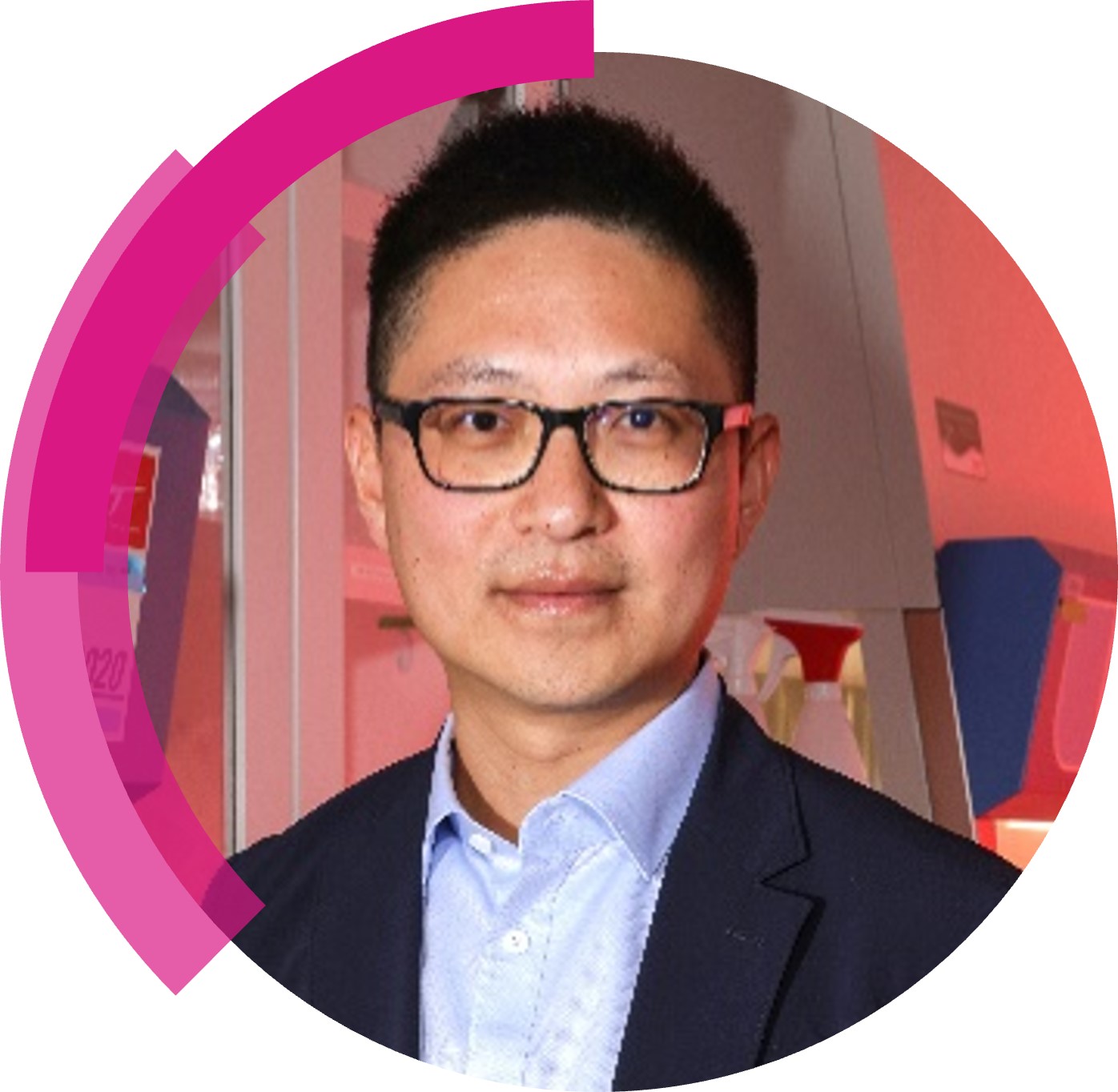
2026 Biomaterials Science Lectureship awarded to Professor Hua Wang

It is with great pleasure that we announce Hua Wang (University of Illinois at Urbana-Champaign, USA) as the recipient of the 2026 Biomaterials Science lectureship.

This award, established in 2014, honours an early-career researcher who has made significant contribution to the biomaterials field. The recipient is selected by the Biomaterials Science Editorial Board from a list of candidates nominated by the community.


Prof. Hua Wang is an Associate Professor in the Department of Materials Science and Engineering at UIUC. He is also affiliated with the Cancer Center at Illinois, Department of Bioengineering, Department of Chemistry, Carle College of Medicine, Beckman Institute, Materials Research Laboratory, and Institute for Genomic Biology. Prof. Wang received his B.S. degree in Polymer Science and Engineering from the University of Science & Technology of China in 2012, completed his PhD in Materials Science and Engineering at UIUC in 2016, and pursued his postdoc in cancer immunotherapy and immunoengineering at Harvard University during 2016-2020.

The Wang lab is conducting interdisciplinary research in the fields of cancer immunotherapy, metabolic glycan labeling, immunoengineering, cell engineering, and biomaterials. Prof. Wang is a recipient of NSF CAREER Award (2021), NCI and NIGMS R01 grants, Scialog Fellow (2023), CMBE Young Innovator Award (2023), Sontag Distinguished Scientist Award (2024), American Cancer Society Research Scholar Award (2024), DoD CDMRP Idea Development Award (2024), Dean’s Award for Excellence in Research (2024), BMES CMBE Rising Star Junior Faculty Award (2025), American Association of Extracellular Vesicles (AAEV) Young Investigator Award (2026), METAvivor Early Career Investigator Award (2026), and attendee of the 2023 Grainger Foundation Frontiers of Engineering Symposium organized by NAE.


Read Hua’s Biomaterials Science publications  for FREE until 31st August. These and articles from our previous lectureship winners can be found in our lectureship winners collection.


Read our interview with Hua below:


How has your research evolved from your first article to this most recent article?


My first 1st-authored research article, back in 2013, was about the development of a core-crosslinked polymeric micelle for anticancer drug delivery. Our most recent article is about polyplex vaccines for treating solid tumors. It has been a memorable research journey for me to receive training in polymer science and chemistry, step into biomaterial and drug delivery field, pick up cancer biology and immunology knowledge, and now run a laboratory of biomaterials for immunoengineering and immunotherapy.


What excites you most about your area of research and what has been the most exciting moment of your career so far?


My lab pursues both fundamental science and the translation of therapies/technologies. There have been many exciting moments for me so far, including the moment of successfully validating the trigger-responsive azido-sugar idea back in my PhD, successfully demonstrating the in vivo dendritic cell labeling and targeting idea, and witnessing my students’ success in validating the effectiveness of our tumor extracellular vesicle vaccine, among others. The moments of receiving intent from clinical collaborators to push forward the clinical translation of our cancer vaccine platforms were also amazing.


In your opinion, what are the most important questions to be asked/answered in your field of research?


In cancer immunotherapy field, the grand challenge is still to find the best treatment option for different patients. For cancer vaccines, it is time to make them the next breakthrough in cancer immunotherapy, following the well-known checkpoint blockade therapies and chimeric antigen receptor (CAR) T cell therapies.


How do you feel about Biomaterials Science as a place to publish research on this topic?


Biomaterials Science has been a great place to publish our exciting results in new biomaterials development and applications. It is getting better and better over the years.


Which of your Biomaterials Science publications are you most proud of and why?


Probably the most recent one titled “Tannin-Bearing Hydrogel Adhesives with Enhanced Mechanical and Adhesion Strength in Response to Protein Leakage”. It is a bit different from our core platforms (e.g., cancer vaccines, immunoengineering, metabolic glycan labeling) and is a nice example that my trainees are encouraged to pursue whatever topics they are interested in.


In which upcoming conferences or events (online or in person) may our readers meet you?


BMES annual conference, Society for Biomaterials conference, BMES-CMBE conference, Gordon research conferences in immunoengineering, biomaterials, drug delivery, etc. I will be at European Society for Biomaterials Conference this September as well.


Can you share one piece of career-related advice or wisdom with early career scientists?


I keep reminding myself to work on something that is impactful/meaningful and what I am truly interested in.


How do you spend your spare time?


I do photography, watch many different sports, among others.


We would like to thank everybody who nominated a candidate for the 2026 Biomaterials Science Lectureship. The Editorial Board had a very difficult task in choosing a winner from the many excellent and worthy candidates.


Please join us in congratulating Hua on winning this award!

Digg This
Reddit This
Stumble Now!
Share on Facebook
Bookmark this on Delicious
Share on LinkedIn
Bookmark this on Technorati
Post on Twitter
Google Buzz (aka. Google Reader)

2026 Biomaterials Science Lectureship – Open for Nominations

Do you know an early-career researcher who deserves recognition for their contribution to the biomaterials field?


Biomaterials Science is pleased to announce that nominations are now being accepted for its 2026 Lectureship and will now close on 31 January 2026. This annual award was established in 2014 to honour an early-stage career scientist who has made a significant contribution to the biomaterials field.


Eligibility

To be eligible for the lectureship, candidates should meet the following criteria:

  • Be an independent researcher; PhD students and postdoctoral research associates are not eligible
  • Be actively pursuing research within the biomaterials field, and have made a significant contribution to the field
  • Be at an early stage of their independent career (this should typically be within 12 years of attaining their doctorate or equivalent degree, but appropriate consideration will be given to those who have taken a career break, work in systems where their time period to independence may vary or who followed an alternative study path) 

How to nominate

Nominations must be made via email to biomaterialsscience-rsc@rsc.org, and include the following:

  • The name, affiliation and contact details of the nominee, nominator and referee
  • An up-to-date CV of the nominee (1 A4 page maximum length)
  • A letter of recommendation from the nominator (500 words maximum length). The relationship between nominator and nominee should be stated in the letter.
  • A supporting letter of recommendation from a referee (500 words maximum length). This could be from the nominee’s academic mentor, colleague, or PhD or postdoctoral research supervisor for instance. The relationship between referee and nominee should be stated in the letter.
  • The nominator must confirm that to the best of their knowledge, their nominee’s professional standing is as such that there is no confirmed or potential impediment to them receiving the Lectureship

Please note:

  • Self-nomination is not permitted
  • The nominee must be aware that he/she/they have been nominated for this lectureship
  • As part of the Royal Society of Chemistry, we have a responsibility to promote inclusivity and accessibility in order to improve diversity. Where possible, we encourage each nominator to consider nominating candidates of all genders, races, and backgrounds.


Selection

  • All eligible nominated candidates will be assessed by a judging panel made up of the Biomaterials Science Editorial Board. Any Editorial Board members with a conflict of interest will be ineligible for the judging panel.
  • The judging panel will consider the following core criteria:
    • Excellence in research, as evidenced in reference to originality and impact
    • Quality of publications, patents or software
    • Innovation
    • Professional standing
    • Independence
    • Collaborations and teamwork
    • Evidence of promising potential
    • Other indicators of esteem indicated by the nominator
  • In any instance where multiple nominees are judged to be equally meritorious in relation to these core criteria, the judging panel will use information provided on the nominee’s broader contribution to the chemistry community as an additional criterion. Examples of this could include: involvement with RSC community activities, teaching or demonstrating, effective mentorship, service on boards, committees or panels, leadership in the scientific community, peer reviewing, promotion of diversity and inclusion, advocacy for chemistry, public engagement and outreach.


Previous winners


Li Tang, 2025 Lectureship winner


2025 – Li Tang, EPFL, Swizterland

2023 – Eric Appel, Stanford University, USA

2022 – Yizhou Dong, Ohio State University, USA

2021 – Nasim Annabi, UCLA, USA

2020 – Kanyi Pu, Nanyang Technological University, Singapore

2019 – April Kloxin, University of Delaware, USA

2018 – Zhen Gu, University of North Carolina at Chapel Hill & North Carolina State University, USA

2017 – Zhuang Liu, Soochow University, China

2016 – Fan Yang, Stanford University, USA

2015 – Joel Collier, Duke University, USA

2014 – Suzie Pun, University of Washington, USA

2011 – Michael J. Solomon, University of Michigan, USA


New nominations deadline: 31 January 2026

Digg This
Reddit This
Stumble Now!
Share on Facebook
Bookmark this on Delicious
Share on LinkedIn
Bookmark this on Technorati
Post on Twitter
Google Buzz (aka. Google Reader)

2025 Biomaterials Science Lectureship awarded to Li Tang

It is with great pleasure that we announce Li Tang (EPFL) as the recipient of the 2025 Biomaterials Science lectureship.

This award, established in 2014, honours an early-career researcher who has made significant contribution to the biomaterials field. The recipient is selected by the Biomaterials Science Editorial Board from a list of candidates nominated by the community.


Li Tang received his B.S. in Chemistry from Peking University, China, in 2007, and Ph.D. in Materials Science and Engineering from University of Illinois at Urbana-Champaign, USA, in 2012, under the supervision of Prof. Jianjun Cheng. He was a CRI Irvington Postdoctoral Fellow in the laboratory of Prof. Darrell Irvine at Massachusetts Institute of Technology during 2013-2016. He joined the faculty of Institute of Bioengineering, and Institute of Materials Science & Engineering, at École polytechnique fédérale de Lausanne (EPFL), Switzerland, as a Tenure-Track Assistant Professor in 2016, and promoted to Associate Professor with tenure in 2022. He is also the Vice Dean for Innovation, and Director of Innovate4Life program at School of Life Sciences, EPFL.

His research focuses on developing multidimensional immunoengineering approaches for enhanced cancer immunotherapies. Dr. Tang is the recipient of Friedrich Miescher Award (2025) from Life Sciences Switzerland (LS2), Leenaards Prize for Translational Medical Research (2025), Biomaterials Science Lectureship (2025), CAB Mid-Career Investigator Award (2024), Biomaterials Award for Young Investigators (2024), Cancer Research Institute CLIP Award (2021), Anna Fuller Award (2021 and 2022), European Research Council (ERC) Starting Grant Award (2018), and named in the MIT Technology Review’s “Top 35 Innovators under Age 35” list of China region (2020).


Read Li’s Biomaterials Science publications  for FREE until 31st August. These and articles from our previous lectureship winners can be found in our lectureship winners collection.


Read our interview with Li below:


How has your research evolved from your first article to this most recent article?


My research has evolved significantly over time. I began with a focus on material synthesis and nanotechnology during my bachelor and PhD studies, where I explored nanomaterial drug delivery systems aiming to improve cancer targeting and therapeutic efficiency. During my postdoc training, I got fascinated by the field of immunoengineering and developed the immune cell therapy with nanoparticles “backpacks”. Upon establishing my independent laboratory at EPFL, my lab’s work has concentrated on cancer immunology and immunotherapy, integrating my previous experience to develop innovative mechanical and metabolic engineering strategies that enhance immune responses against tumors.


What excites you most about your area of research and what has been the most exciting moment of your career so far?


What excites me most about my research area is the potential to make new discoveries that can directly impact patient outcomes. In cancer immunotherapy field, every breakthrough brings us closer to more effective treatments. The possibility of translating scientific findings into real-world therapies that can improve or even save lives is incredibly motivating.
As for the most exciting moment in my career so far, it was when our team observed a strong therapeutic response in cancer patients treated with the immunotherapy we invented. Seeing the direct impact of our work validated our approach and reinforced my passion for this field.


In your opinion, what are the most important questions to be asked/answered in your field of research?


One of the most critical questions in my field is how we can effectively translate biomaterials research into real clinical impact. While we’ve made significant advances in designing sophisticated materials, the key challenge lies in ensuring they are not only effective and safe in experimental models but also practical and scalable for clinical use. I believe bridging the gap between bench and bedside—making sure our innovations reach patients and improve outcomes—is what will define the future of the field.


How do you feel about Biomaterials Science as a place to publish research on this topic?


Biomaterials Science is an excellent journal for publishing research in this area. It has a strong reputation for featuring high-quality, interdisciplinary work that bridges materials science, biology, and medicine. The journal’s focus on translational potential makes it especially suitable for studies aiming to make a clinical impact, such as those involving biomaterials for drug delivery or cancer immunotherapy. Publishing in Biomaterials Science ensures visibility within the biomedical communities, and it encourages critical dialogue across related fields.


Which of your Biomaterials Science publications are you most proud of and why?


Redox-Responsive Interleukin-2 Nanogel Specifically and Safely Promotes the Proliferation and Memory Precursor Differentiation of Tumor-Reactive T-Cells

In this article, we reported a novel nanoparticle “backpack” strategy to enhance adoptive T cell therapy for cancer. Plus, I was invited to contribute this article as an “Emerging Investigator” in this issue.


In which upcoming conferences or events (online or in person) may our readers meet you?


FOCIS 2025

Biomaterials and Tissue Engineering Conference GRC 2025

34th Annual Conference of the European Society for Biomaterials 2025

Cellular and Humoral Immunotherapy in Autoimmunity (CHIA 2025)

17th Annual Protein & Antibody Engineering Summit (PEGS 2025)


Can you share one piece of career-related advice or wisdom with early career scientists?


My advice would be to focus your efforts on high-impact research—work that either addresses fundamental scientific questions or has the potential for real societal benefit. Focusing on advancing core knowledge or solving pressing real-world problems, will not only make your research more meaningful but also help build a fulfilling and lasting career.


How do you spend your spare time?


In my spare time, I enjoy staying active through jogging, hiking, and skiing. I also value spending quality time with my family—whether it’s exploring nature together or simply relaxing at home.


We would like to thank everybody who nominated a candidate for the 2025 Biomaterials Science Lectureship. The Editorial Board had a very difficult task in choosing a winner from the many excellent and worthy candidates.


Please join us in congratulating Li on winning this award!

Digg This
Reddit This
Stumble Now!
Share on Facebook
Bookmark this on Delicious
Share on LinkedIn
Bookmark this on Technorati
Post on Twitter
Google Buzz (aka. Google Reader)