Archive for the ‘News’ Category

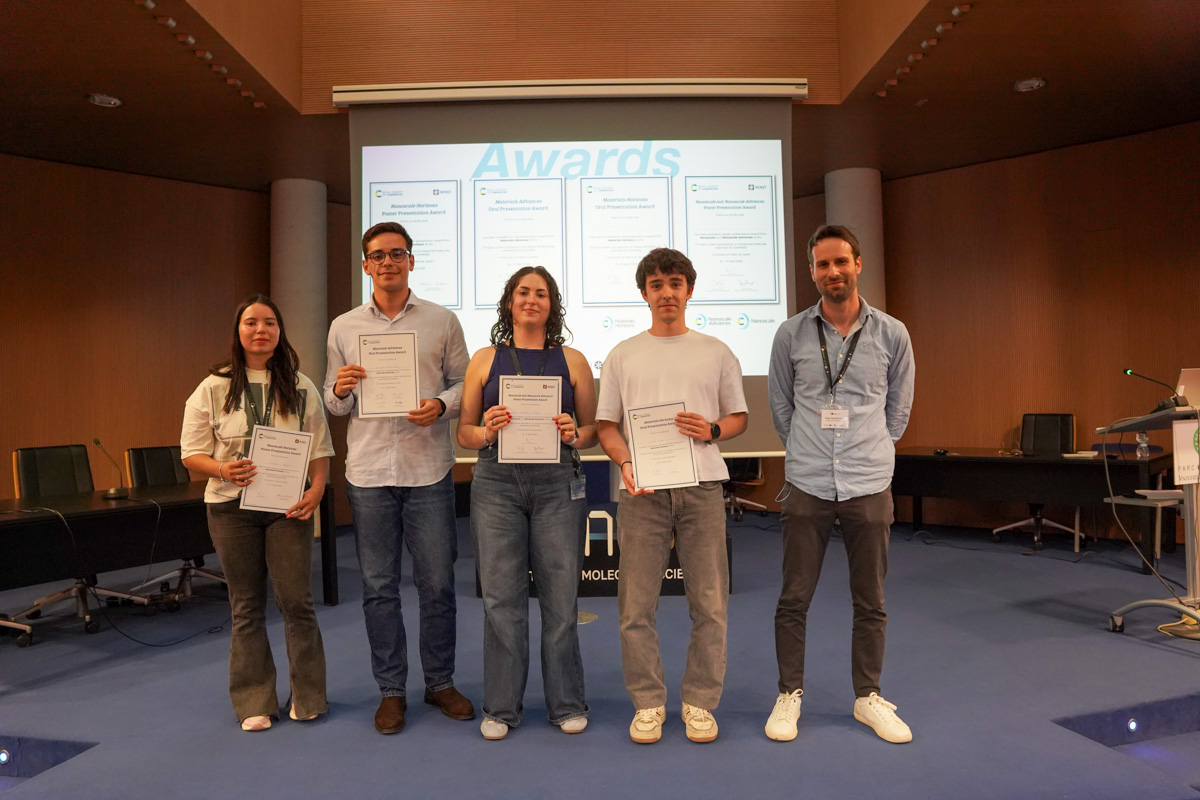
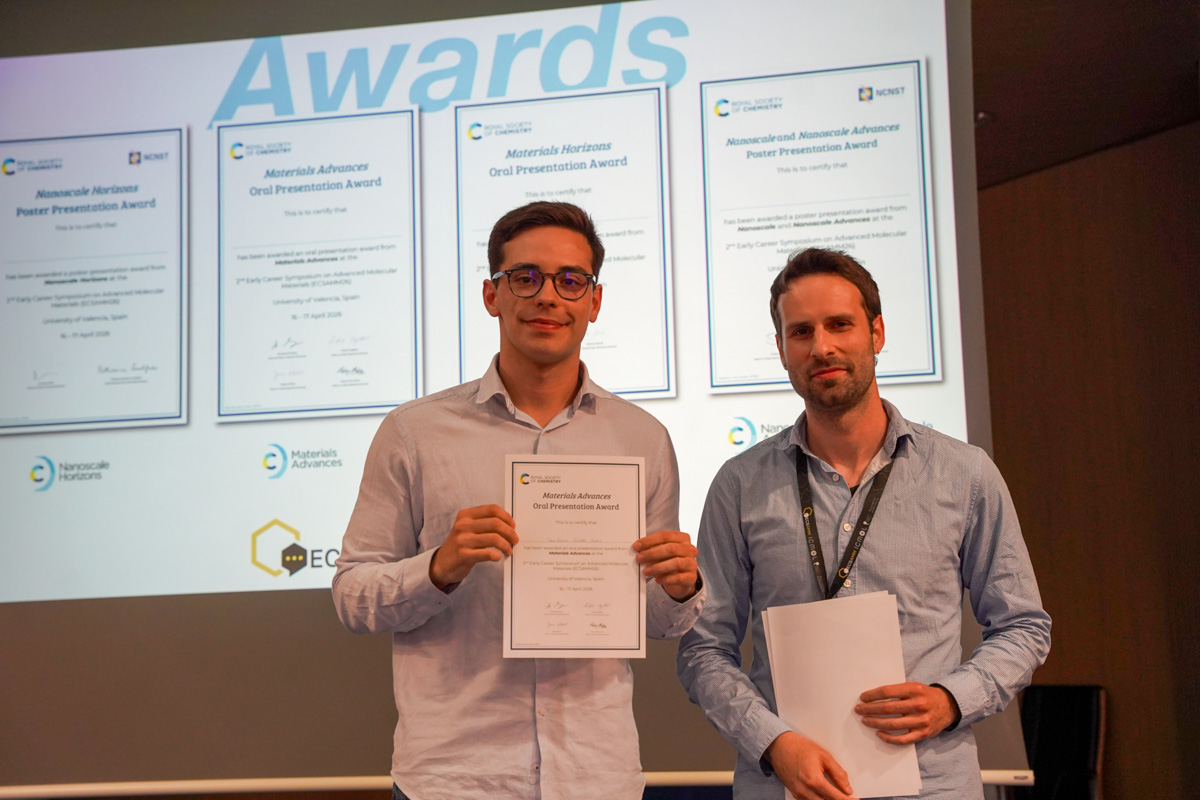
Congrtulations to the post prize winners at the 2nd Early Career Symposium on Advanced Molecular Materials (ECSAMM26)

Nanoscale Horizons, Nanoscale, Nanoscale Advances, Materials Horizons and Materials Advances were delighted to sponsor prizes at the 2nd Early Career Symposium on Advanced Molecular Materials (ECSAMM26) which took place in Valencia, Spain on April 16 and 17, 2026.

Please join us in congratulating  the winners on their awards!

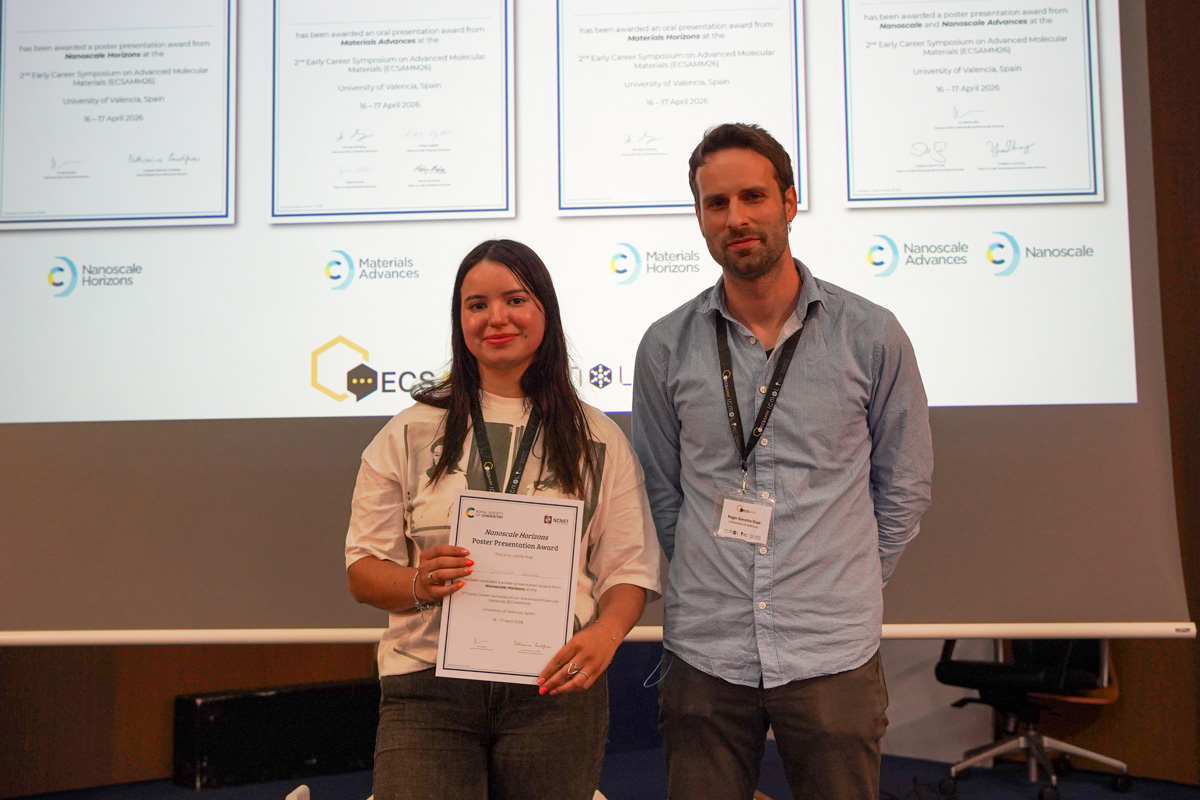
Nanoscale Horizons: Geraldine Sánchez, Instituto de Ciencia Molecular, University of Valencia

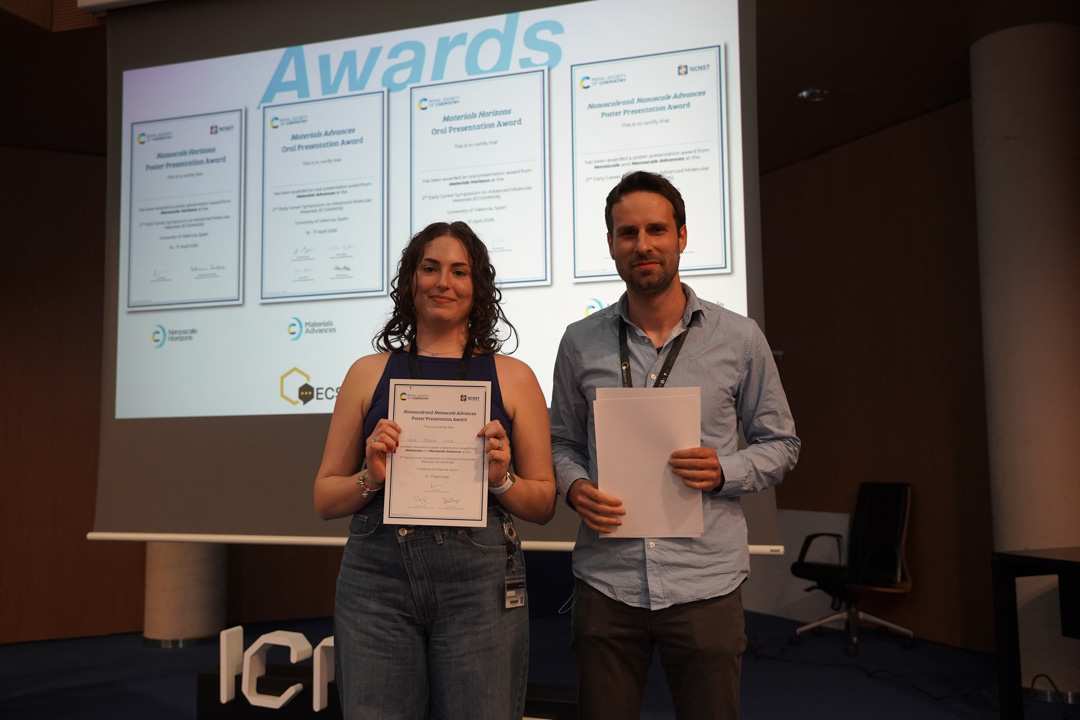
Nanoscale Advances and Nanoscale: Laura González Cervera, Instituto de Ciencia Molecular, University of Valencia

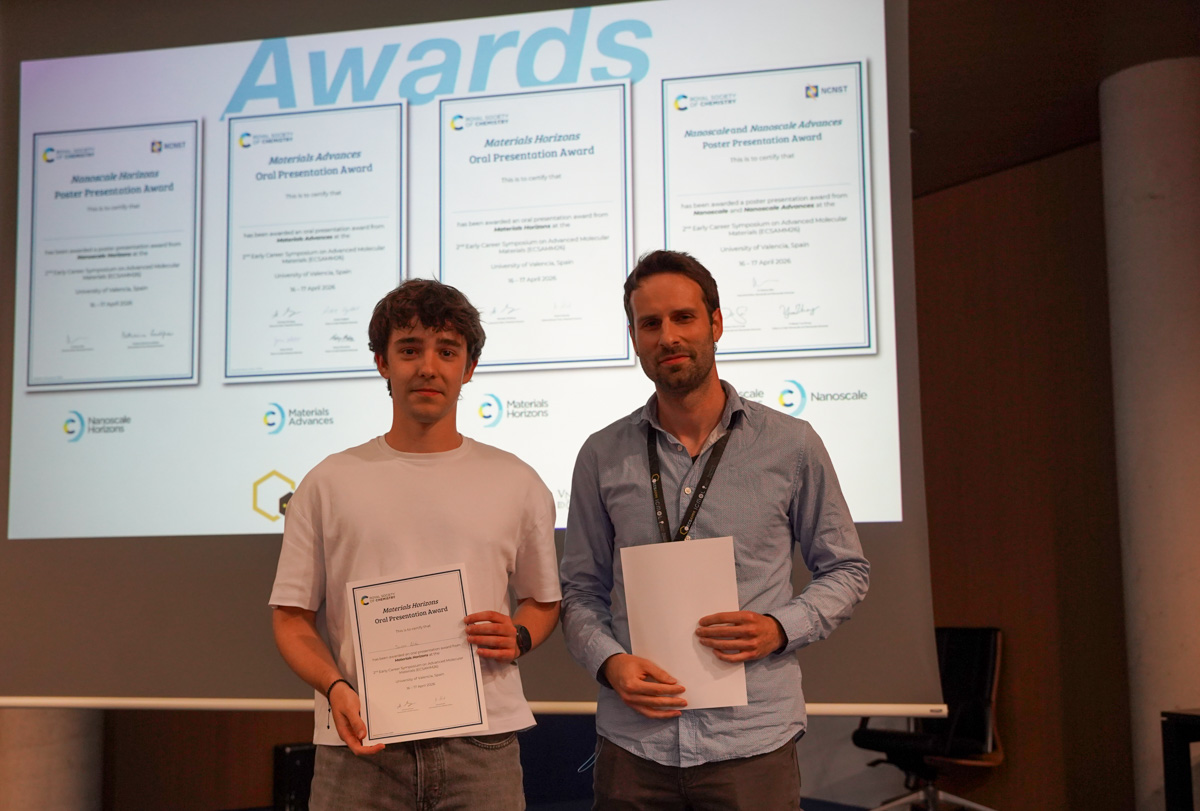
Materials Horizons: Javier Alda Gómez, RTMM, Instituto de Ciencia Molecular, University of Valencia

Materials Advances: Guillermo Gómez Tenés, FUNIMAT, Instituto de Ciencia Molecular, University of Valencia

Digg This
Reddit This
Stumble Now!
Share on Facebook
Bookmark this on Delicious
Share on LinkedIn
Bookmark this on Technorati
Post on Twitter
Google Buzz (aka. Google Reader)

Meet some of the authors of the 2026 Nanoscale Advances Paper Prize runner up paper

We are delighted to celebrate the 2026 Nanoscale Advances Paper Prize, highlighting the most significant articles published in the journal in the previous calendar year! Find out more about Zhengji Wen and Wenchao Zhao, two of the the authors of the 2026 Nanoscale Advances Paper Prize runner up paper Multifunctional terahertz metamaterials device based on a dual-tunable structure incorporating graphene and vanadium oxide.


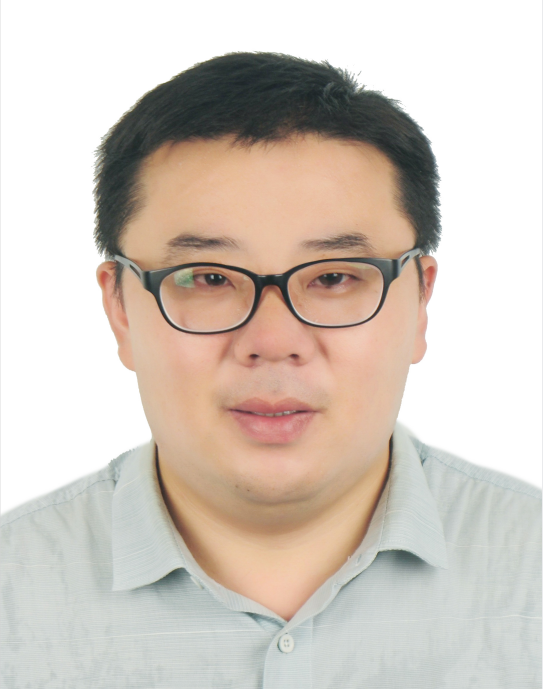
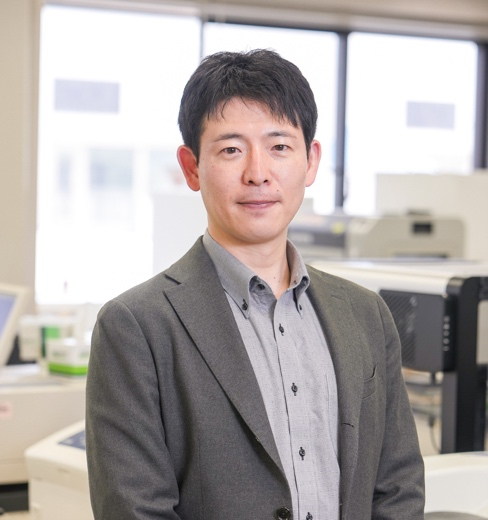
Wenchao Zhao.

Wenchao Zhao is an Associate Professor at Huzhou University. His research interests include artificial electromagnetic structured materials (metamaterials), spectral regulation technology, and semiconductor optoelectronic materials and devices.

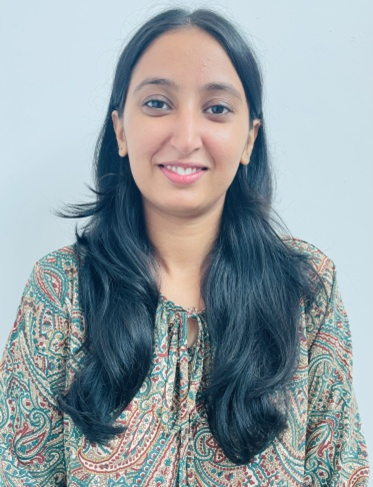
Zhengji Wen.

Zhengji Wen is an Associate Professor at Shanghai Institute of Optics and Fine Mechanics, Chinese Academy of Sciences. His research focuses on the physics and applications of meta‑films for infrared thermal radiation control, including infrared stealth, radiative cooling, narrowband infrared thermal emitters, and infrared anti‑counterfeiting/encryption.


What aspect of your work are you most excited about at the moment?

We are most excited about the dynamic tunability of our device – integrating graphene and vanadium oxide allows us to actively control both amplitude and polarization of terahertz waves, which opens new possibilities for smart, reconfigurable metamaterials.


How do you feel about Nanoscale Advances as a place to publish research on this topic?

We highly appreciate Nanoscale Advances for its rapid and rigorous peer‑review process, high‑quality editorial board, and open‑access policy. The journal provides excellent visibility for interdisciplinary research, and we are proud that our work was recognized as a runner‑up for the Paper Prize.


Can you share one piece of career‑related advice for early career scientists?

“Focus on solving a fundamental problem rather than chasing hot topics. Build a strong foundation in both theory and experiment, and do not hesitate to collaborate across disciplines – the most interesting results often come from the boundaries.”

Digg This
Reddit This
Stumble Now!
Share on Facebook
Bookmark this on Delicious
Share on LinkedIn
Bookmark this on Technorati
Post on Twitter
Google Buzz (aka. Google Reader)

Meet the authors of the 2026 Nanoscale Advances Paper Prize winning paper

We are delighted to celebrate the 2026 Nanoscale Advances Paper Prize, highlighting the most significant articles published in the journal in the previous calendar year! Find out more about Ritu Ladhi, Arshminder Kaur Dhillon and Monika Singh, the authors of the 2026 Nanoscale Advances Paper Prize winning paper A metal–organic framework with chiral nanochannels for enantioselective fluorescence switching of amino alcohols.


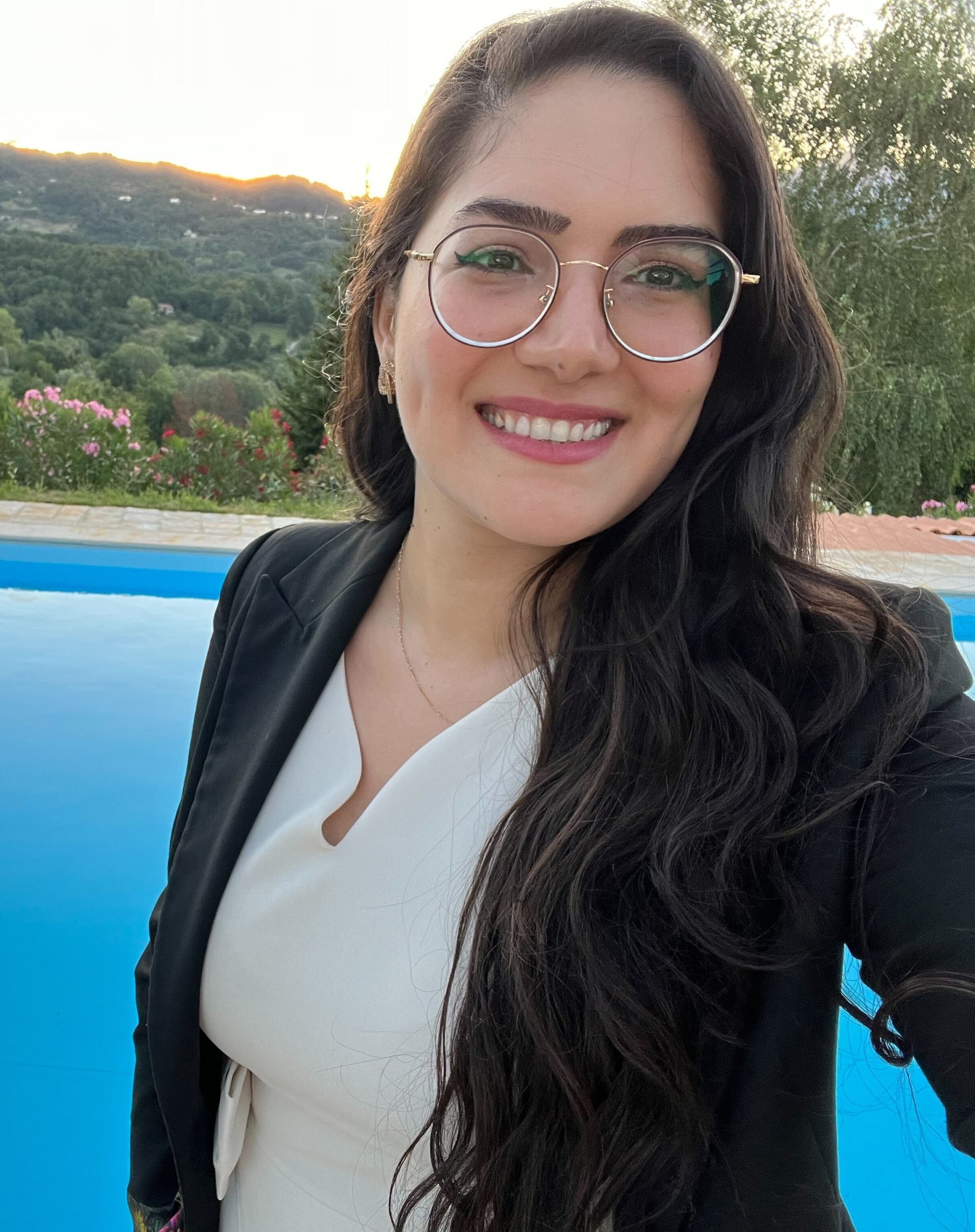
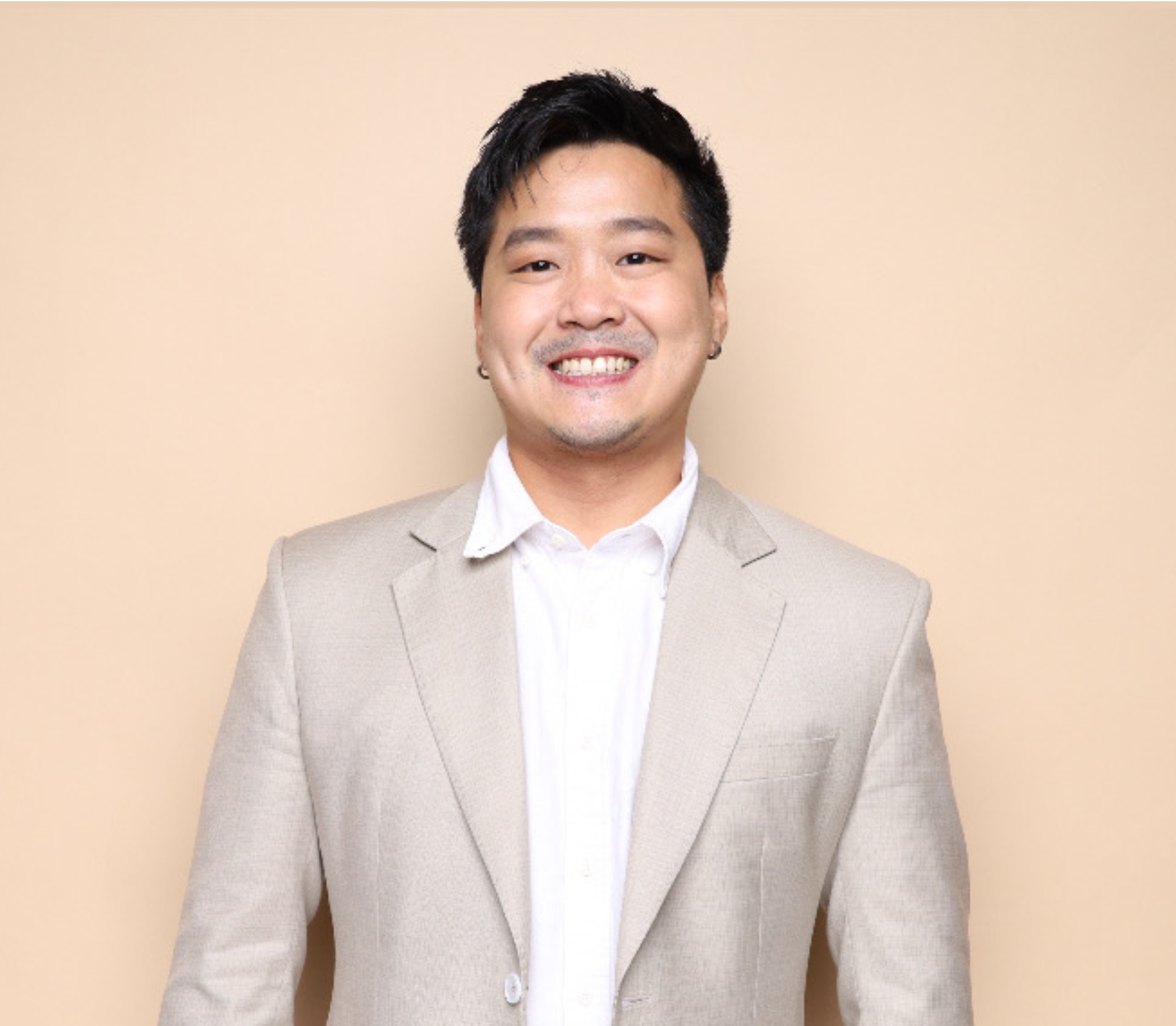
Dr. Monika Singh (corresponding author). 

After her PhD (Materials Chemistry) from IIT Delhi, India, Dr. Monika Singh joined Institute of Nano Science and Technology (INST), Mohali as a Scientist in 2013 where she is continuing till now. Currently she is Scientist E (Associate Professor) at INST Mohali. INST Mohali is an autonomous Institute of Department of Science and Technology (DST), Government of India. Dr. Singh’s research interest lies in Developing nanoporous materials (e.g. MOFs, POMs, POMOFs) for various applications such as carbon dioxide sequestration, sensing, electrocatalysis and anti-cancer

Ritu Ladhi (First author).

Ritu Ladhi obtained her Bachelor’s and Master’s degrees in Chemistry with first-class honors from Panjab University, Chandigarh, in 2016 and 2018, respectively. In 2020, she joined Ph.D. at the Institute of Nano Science and Technology (INST), Mohali, while enrolled at the Indian Institute of Science Education and Research (IISER) Mohali, under the supervision of Dr. Monika Singh. Her doctoral research focuses on designing and engineering Metal-Organic Frameworks (MOFs) for the sensing of environmental pollutants. Her broader scientific interests include porous functional materials design, fluorometric sensing and photocatalytic applications.

Arshminder Kaur Dhillon (Second author)

Arshminder kaur Dhillon obtained her Bachelor’s and Master’s degrees in Chemistry with first-class honors from Panjab University, Chandigarh. She joined Dr. Singh’s laboratory as a research scholar in August 2022 at the Institute of Nano Science and Technology (INST), Mohali, while enrolled at the Indian Institute of Science Education and Research (IISER) Mohali. Her doctoral research focuses on designing Metal-Organic Frameworks (MOFs) for various applications such as sensing of harmful chemicals, catalysis etc.


What aspect of your work are you most excited about at the moment?

Monika Singh: The most exciting part of this work is understanding how a chiral environment can emerge from an achiral linker system and exhibit high enantiomeric selectivity. In our work, observing distinct turn-off and turn-off-on fluorescence responses for different amino alcohol enantiomers was particularly interesting because it gave us insight into how subtle host-guest interactions inside the chiral MOF channels influence sensing performance. This work is a small contribution to the field of chiral porous materials, where the symmetry-breaking process induces chirality in a MOF constructed from achiral linkers. Although this area is still relatively less explored, there is significant scope for further investigation into how such crystallisation processes can be tailored to induce and control chirality in MOFs.


How do you feel about Nanoscale Advances as a place to publish research on this topic?

Monika Singh: I feel that Nanoscale Advances is a very suitable platform for this kind of interdisciplinary research. The journal covers innovative and emerging concepts in materials chemistry and nanoscience, which aligns well with our study. The journal has a broad readership, which makes it a valuable platform for communicating research that connects MOFs, chirality, and sensing applications. I also appreciate the journal’s emphasis on high-quality and impactful studies in rapidly developing research fields.


Can you share one piece of career-related advice for early career scientists?

Monika Singh: I would say that in research, there is rarely completely “right” or “wrong” data, it is our keen observation and understanding that give meaning to the results. Sometimes the most unexpected observations lead to the most interesting discoveries, so young researchers should stay curious and pay attention even to results that initially seem unusual or unsuccessful.

Digg This
Reddit This
Stumble Now!
Share on Facebook
Bookmark this on Delicious
Share on LinkedIn
Bookmark this on Technorati
Post on Twitter
Google Buzz (aka. Google Reader)

Announcing the 2026 Nanoscale Advances Paper Prize winners

We are delighted to announce the 2026 Nanoscale Advances Paper Prize, celebrating the most significant articles published in the journal in the previous calendar year! 

This year we recognise three outstanding papers that were published in 2025. Find the winning and runner-up papers below.


Nanoscale Advances 2026 Paper Prize Winner:

A metal–organic framework with chiral nanochannels for enantioselective fluorescence switching of amino alcohols

Ritu Ladhi,  Arshminder Kaur Dhillon and Monika Singh


Nanoscale Advances 2026 Paper Prize runner up: 

Multifunctional terahertz metamaterials device based on a dual-tunable structure incorporating graphene and vanadium oxide

Wenchao Zhao, Xiaowei Lv, Qianqian Xu, Zhengji Wen, Yuchuan Shao, Changlong Liud and Ning Dai

Digg This
Reddit This
Stumble Now!
Share on Facebook
Bookmark this on Delicious
Share on LinkedIn
Bookmark this on Technorati
Post on Twitter
Google Buzz (aka. Google Reader)

Nanoscale and Nanoscale Advances: Looking back at 2025 

Now that 2025 has come to an end, we look back at some of the exciting events, activities and news from Nanoscale and Nanoscale Advances. We are continually thankful for the nano community’s engagement, which has enabled the journals to continue to support our growing community. We look forward to another great year for the journals in 2026. 

Board updates  

In 2025 we welcomed Baoquan Ding (National Center for Nanoscience and Technology (NCNST), China) and Cecilia Mattevi (Imperial College London, U.K.) to the Editorial Boards of Nanoscale and Nanoscale Advances as Associate Editors 

Teresa Pellegrino (Italiano di Tecnologia (IIT), Genoa, Italy) and Zhiqin Lin (National University of Singapore, Singapore) completed their terms as Associate Editors and became Advisory Board members.   

Emerging Investigators Series 

We were proud to present our Nanoscale 2025 Emerging Investigators collection, recognizing the rising stars of nanoscience and nanotechnology by gathering some of the very best work from researchers in the early stages of their independent careers. Congratulations to all the featured researchers on their important work so far in the field. Meet the featured authors in our Profile article.

HOT and Popular articles  

Read the Nanoscale and Nanoscale Advances collections that collected together work that was well received before or after publication, featuring papers highlighted as HOT by our reviewer or those well received with our readers after publication.  

Nanoscale Most Popular 2025 Articles 

2025 Nanoscale HOT Article Collection 

Nanoscale Advances Popular Advances 2025 

Editor’s Choice Collections 

Nanoscale published an Editor’s Choice collection on Advances and Perspectives in Nanoscale Materials and Optoelectronics by Professor Christian Klinke (University of Rostock). Look out for future Editor’s Choice collections! 

Read the collection 

Celebratory Collections 

In 2025 Nanoscale and Nanoscale Advances publications were featured in a range of collections that celebrate and showcase research and researchers across our nanoscience and nanotechnology community. Explore these amazing collections below! 

Lunar New Year  Chinese New Year 
Celebrating nanoscience in Japan  The Changing Canvas of Nano 
Celebrating International Women’s day 2025: Women in Nanoscience  Celebrating the 65th birthday of Professor Santanu Bhattacharya 
US National Nanotechnology Day  Celebrating the 120th anniversary of the National University of Singapore 


Themed Collections 

This year we have published themed collections covering topics on nanocatalysis, quantum nanomaterials, nanomedicine, and much more! Check out our web pages or blog to see all of this year’s themed collections from Nanoscale and Nanoscale Advances. 

Explore Nanoscale Themed Collections 

Explore Nanoscale Advances Themed Collections 

Read our blog 

Nanoscale Advances Paper Prize Award 

We were delighted to announce the inaugural Nanoscale Advances Paper Prize, celebrating the most significant articles published in the journal in the previous calendar year! Read our editorial to find out how we selected the winning paper from, Fang-Chung Chen and coauthors. 

Please join us in congratulating the winners of the inaugural Nanoscale Advances Paper Prize and we hope that you enjoy reading their outstanding articles as much as we did! 

Outstanding Reviewers  

We once again recognised the significant contributions that our reviewers have made to the journals and highlighted our 2024 Outstanding Reviewers in a Nanoscale Editorial and a Nanoscale Advances Editorial. 


Digg This
Reddit This
Stumble Now!
Share on Facebook
Bookmark this on Delicious
Share on LinkedIn
Bookmark this on Technorati
Post on Twitter
Google Buzz (aka. Google Reader)

Announcing the Nanoscale Advances Paper Prize Award Webinar: Optical Nanomaterials

We are delighted to be hosting a free to attend webinar to celebrate the inaugural Nanoscale Advances Paper Prize Award, with presentations from Dr Gautham Kumar, first author of the winning paper, and Nanoscale Advances Associate Editor Professor Dong Ha Kim.

Join us for this exciting programme on Wednesday 26th November, 07:30 GMT/15:30CST/16:30KST


Dr Gautham Kumar will be presenting “Plasmonics for Brighter Displays: Unlocking Perovskite Quantum Dots for Next-Gen Optoelectronics”     

Professor Dong Ha Kim will be presenting “Nanoscale Chiral Materials for Multidisciplinary Studies: From Energy Conversion·Storage to Theranostics”


Register to attend

Read the event and abstract information

Read the Nanoscale Advances Paper Prize Award winning paper


We hope you can join us for this exciting event

If you’re interested in this seminar but can’t make the date, register your interest and we’ll send you a link to the recording afterwards.


Digg This
Reddit This
Stumble Now!
Share on Facebook
Bookmark this on Delicious
Share on LinkedIn
Bookmark this on Technorati
Post on Twitter
Google Buzz (aka. Google Reader)

RSC Nanoscale Journal Activities at ChinaNANO 2025

A cake cutting ceremony to celebrate the 10th anniversary of Nanoscale Horizons with Professor Chunli Bai (founding Editor-in-Chief) as well as esteemed editors, colleagues, and friends

The RSC Nanoscale journal family aims to provide a home for research across the breadth of nanoscience and nanotechnology, incorporating work that advances the field and also contributes exceptional step-change developments. As part of our ongoing efforts to support the community and facilitate dialogue on emerging technologies, during ChinaNANO 2025 we organised a “Deep Dive Discussion” bringing together over 100 leading scientists alongside a panel of field leaders (many of whom are editors for the journal family) to engage in open and dynamic discourse about what they felt would be the next big thing in nanoscience and what role the journals should play in this future.


Looking back

Nanoscience, as with other fields, has naturally evolved in the last two decades from materials discovery to analysis and ultimately to application. As a relatively young discipline, it has seen a phase of rapid growth over the last decade. The expectation is that this growth will level off but the field will continue to be active and important across many aspects of industry and research.

The evolution of the RSC Nanoscale journals has followed the wider market trends, beginning with the launch of Nanoscale in 2009. As the journal (and the field) developed we quickly became one of the key resources/homes for high quality nanoscience research publications. Over time, the market has grown with the launch of many journals covering both fundamental and applied aspects of nanoscience, but Nanoscale remains a central resource for the community. The launch of Nanoscale Horizons in 2015 and Nanoscale Advances in 2018 highlights the commitment of the RSC to provide coverage across the breadth of nanoscience research publications, in terms of impact, conceptual novelty, and accessibility.

The early publications in nanoscience (and in Nanoscale at the RSC) centred around fundamental synthesis and characterization methodology. The discovery of exciting new materials such as carbon nanotubes and later graphene led to exponential increases in the number of research papers investigating the synthesis, properties, and potential applications of these new technologies. Over time the understanding of these materials grew, leading ultimately to the application of carbon nanotubes in commercial technologies to enhance material properties in sports equipment, vehicles, etc. A new generation of materials are now emerging: MXenes. Article numbers on MXene research show the same year-on-year growth now as those on graphene did ten years ago. The other area exhibiting high growth in publications each year is Artificial Intelligence (AI) and its application to nanoscience technologies.

From miniaturisation to intelligent design

Here at the RSC Nanoscale journal family, we are committed to supporting the evolving landscape of nanoscience through inclusive, high-quality, interdisciplinary publishing. The recent Deep Dive Discussion at ChinaNANO 2025 provided a valuable opportunity to engage with leading researchers on the transformative role of Artificial Intelligence (AI) in nanoscience and the future direction of the field. AI is rapidly reshaping scientific inquiry, and its integration into nanoscience follows the long emerging trend shifting focus away from making things smaller towards making things smarter. Our panellists highlighted AI’s potential to accelerate complex modelling tasks such as how to model protein folding or interactions at biointerfaces, as well as applications in drug design, target screening, clinical translation, optimization, and cost reduction.

However, challenges lie ahead. Our panellists agreed that reliable, high-quality data remains a significant bottleneck for effective AI training, especially in complex biological systems. There was strong consensus on the need for domain-specific AI models tailored to nanoscience, rather than relying solely on general-purpose tools. As with any conceptually new technology, there is significant hype around how AI will transform every field in which it is applied. Transformative ideas in science often come from unexpected places, and there is ongoing debate about whether statistics-driven AI can ever be expected to capture truly novel discoveries. These philosophical limits of AI in scientific discovery should be considered in every application of the tool. It is known that AI excels at pattern recognition and automation, but by using existing data based on known laws it can only review the past. Novel insights require intuitive leaps and these remain a hallmark of human creativity in science. Ultimately the best applications of AI will automate lengthy but trivial tasks, freeing up human time and capabilities to be focussed on new approaches and conceptual advances. AI will act as a catalyst, blurring disciplinary boundaries and fostering synergistic development within nanoscience and other fields.

Following these discussions and the recommendations of our panellists, the Nanoscale family will aim to increase it’s coverage of AI-related content through a number of avenues. Firstly, the panellists are invited to contribute a series of Perspective articles on how AI may impact their particular research fields in the future. Additionally we plan to announce a special issue on the topic in 2026

Looking ahead

Professor Yue Zhang (Editor-in-Chief of Nanoscale and Nanoscale Advances) shared his perspectives and plans for the future of the journal family

We anticipate that there will be other vital aspects to the future development of nanoscience beyond the integration of AI tools. The development of nanoscience and nanotechnology is a dual-engine process, driven by both fundamental discoveries and technological applications. The core of the nanoscience field lies in studying structure–function relationships at the nanoscale, involving new structures, materials, and effects. Advances in the understanding of structure–function relationships rely heavily on the continual development of nanoscale characterization techniques. The foundational role played by microscopy and, more recently, large-scale facilities (X-ray, synchrotrons, attosecond lasers etc.) cannot be underplayed. These technological advancements in measurement will push new understandings of nanoscale properties, bringing further development both for AI modelling, but also across other applications. Additionally, the ability to achieve large-scale production of high-quality, uniform nanomaterials for applications is a fundamental requirement for industry to consider adopting nanomaterials in their processes and products. The importance of this aspect of nanoscience is demonstrated by the 2023 Nobel Prize in Chemistry which rewarded the development of controllable synthesis of quantum dots. The ability to make quantum dots of well-defined and uniform size in a fully reproducible way has allowed industry to develop game-changing LEDs (and later OLEDs), which are now ubiquitous in colour displays and TV screens. The Nanoscale family has continued to feature fundamental synthesis and structure-function investigations in its publications over the past 10 years, in keeping with the essential nature of this work to the nanoscience field. Topical collections lead by leaders in the field have covered magnetic nanoparticles, nanoarchitectonics, chiral nanomaterials and characterisation techniques such as SERS. Looking ahead we will continue to prioritise high quality fundamental research in the journals, alongside the exciting application-focussed advancements that feature strongly in the publishing landscape today.


Acknowledgements

From left to right: Professor Xiaohui Qiu, Professor Chunying Chen, Professor Qingliang Liao, Professor Baoquan Ding, Professor Shiwei Wu, Professor Renzhi Ma, Professor Qing Dai, and Professor Quan Li

Special thanks are given to Professor Zhiyong Tang (Advisory Board of Nanoscale Horizons) for his assistance with the organisation of the discussion, Professor Xiaohui Qiu (Scientific Editor of Nanoscale Horizons) who chaired the panel, as well as the panellists who provided their viewpoints that form this basis of this article: Professor Chunying Chen (NCNST), Professor Qingliang Liao (University of Science and Technology Beijing), Professor Shiwei Wu (Fudan University), Professor Baoquan Ding (NCNST), Professor Renzhi Ma (NIMS), Professor Qing Dai (NCNST), Professor Quan Li (The Chinese University of Hong Kong), and Professor Jin Zhang (Peking University).

 

Digg This
Reddit This
Stumble Now!
Share on Facebook
Bookmark this on Delicious
Share on LinkedIn
Bookmark this on Technorati
Post on Twitter
Google Buzz (aka. Google Reader)

Meet some of the authors of the Nanoscale Advances Paper Prize Award runner-up paper

Helical interfacial modulation for perovskite photovoltaics

Ghewa AlSabeh, Masaud Almalki, Sitthichok Kasemthaveechok, Marco A. Ruiz-Preciado, Hong Zhang, Nicolas Vanthuyne, Paul Zimmermann,  Daphne M. Dekker, Felix Thomas Eickemeyer, Alexander Hinderhofer, Frank Schreiber, Shaik M. Zakeeruddin, Bruno Ehrler, Jeanne Crassous, Jovana V. Milić and Michael Grätzel

Ghewa AlSabeh is a doctoral researcher at the Laboratory of Photonics and Interfaces at EPFL and the Adolphe Merkle Institute of the University of Fribourg in Switzerland since 2021. She obtained her MSc degree at the American University of Beirut in Lebanon in 2020 and joined the Smart Energy Mateirals team under the supervision of Prof. Jovana V. Milić and Prof. Michael Graetzel. Her research is focused on multifunctionality of layered perovskites and their light-induced transformations of in emerging technologies.


Sitthichok (Chok) Kasemthaveechok

Sitthichok (Chok) Kasemthaveechok, born and raised in Thailand. He obtained his PhD in 2021 under supervision of Dr. Jeanne Crassous and Dr. Ludovic Favereau. After his postdoctoral studies in Laboratoire d’électrochimie Moléculaire (LEM, Paris, 2022-23) with Dr. Niklas von Wolff  and Institut of chemical research of Catalonia (ICIQ, Tarragona, 2023-24) with Dr. Mónica Pérez-Temprano. From 2024, he joined the eMOCA team in Institut Parisien de Chimie Moleculaire (IPCM- Sorbonne University) as CNRS researcher. His current research focuses on (asymmetric) electrosynthesis by supramolecular chemistry approach.

Jeanne Crassous Dr. Jeanne Crassous (born Costante) received her Ph.D. in 1996 under the supervision of Prof. André Collet (ENS Lyon, France), on the chirality of bromochlorofluoromethane. After a postdoctoral period in Prof. François Diederich’s group (ETH Zurich, Switzerland) studying the chirality of fullerenes, she received a CNRS researcher position, in Lyon then in Rennes (ISCR, University of Rennes, France), where she is currently a CNRS Research Director. Her group is dealing with chirality: organometallic and heteroatomic helicenes, fundamental aspects of chirality such as parity violation effects, electronic and vibrational circular dichroism, circularly polarized luminescence, magnetochirality and spintronics.
Bruno Ehrler Bruno Ehrler is leading the Hybrid Solar Cells group at AMOLF in Amsterdam since 2014 and is also a honorary professor at the University of Groningen since 2020. Since 2024 he is the head of LMPV-Sustainable Energy Materials Department. His group focuses on perovskite materials science, both on the fundamental level, and for device applications.
Jovana V. Milić has been Assistant Professor at the Adolphe Merkle Institute of the University of Fribourg in Switzerland since 2021, and Associate Professor at the Department of Chemistry of the University of Turku in Finland since 2024. She obtained her PhD in Chemistry at the Department of Chemistry and Applied Biosciences of ETH Zurich in 2017 and worked as a scientist in the Laboratory of Photonics and Interfaces at EPFL in Switzerland. Her research is centred around developing stimuli-responsive (supra)molecular materials for energy conversion, with a particular focus on halide perovskite materials and their application in photovoltaics and smart (nano)technologies.


What aspect of your work are you most excited about at the moment?

Ghewa AlSabeh: I’m currently most excited about exploring ways to integrate smart molecules, specifically those responsive to light, heat, or pressure, into perovskite systems. This opens up promising pathways for creating multifunctional devices with tunable properties, which could be especially impactful in next-generation optoelectronic or sensing applications.

Sitthichok Kasemthaveechok: Right now, I desire to electrify chemical reaction. I want to turn it like we have done for most of things in our life from kitchen to transportation. But why chemical reaction still way difficult to electrify them? But I will try step by step, as electrochemistry is at the edge of homogeneous and heterogeneous system. I will need more experience about it to make the magic happen. 

Jeanne Crassous: The role of chirality in fundamental physics and in optoelectronic/spintronic devices.

Jovana V. Milić: The use of stimuli-responsive molecular machineries in sustainable energy technologies.

How do you feel about Nanoscale Advances as a place to publish research on this topic?

Ghewa AlSabeh: Nanoscale Advances is an ideal platform for our work on perovskites with responsive functionalities. Its focus on innovative nanomaterials and broad visibility makes it a strong fit for sharing this research.

Jeanne Crassous: Appropriate journal to publish new results on devices and the fundamental phenomena at work.

Jovana V. Milić: Nanoscale Advances provides an excellent platform to publish research on emerging materials and their utility in optoelectronics.

Can you share one piece of career-related advice for early career scientists?

Ghewa AlSabeh: Always ask yourself “why” and aim to understand things as simply as possible. If you can explain your work to someone who is not from the field, you truly understand it. And remember: a PhD is a marathon, not a sprint. Pace yourself, stay curious, and don’t lose sight of the bigger picture.

Sitthichok Kasemthaveechok: I would say it is important to find the right group for you when choosing your PhD or postdoc positions.

Jeanne Crassous: Make experimental work and be trained to observe new phenomena. Be well-educated to understand the observed phenomena. 

Jovana V. Milić: Follow your own path, you are best qualified to define the measures of your success.

Digg This
Reddit This
Stumble Now!
Share on Facebook
Bookmark this on Delicious
Share on LinkedIn
Bookmark this on Technorati
Post on Twitter
Google Buzz (aka. Google Reader)

Meet some of the authors of the Nanoscale Advances Paper Prize Award runner-up paper

Understanding the effects of ethanol on the liposome bilayer structure using microfluidic-based time-resolved small-angle X-ray scattering and molecular dynamics simulations

Masatoshi Maeki, Niko Kimura, Yuto Okada, Kazuki Shimizu, Kana Shibata, Yusuke Miyazaki, Akihiko Ishida, Kento Yonezawa, Nobutaka Shimizu, Wataru Shinoda and Manabu Tokeshi

Niko Kimura Dr Niko Kimura:

  • JSPS Research Fellowship for Young Scientists (DC1), (April 1st, 2019–March 31st, 2021)
    Graduate School of Chemical Sciences and Engineering
    Hokkaido University, Japan
  • Doctor of Philosophy in Engineering, (March 25, 2021)
    Graduate School of Chemical Sciences and Engineering
    Hokkaido University, Japan
  • Assistant Professor, (April 1, 2021–August 31, 2023)
    Department of Applied Chemistry, Faculty of Engineering
    Kyushu University, Japan
  • Senior Assistant Professor, (September 1, 2023–)
    Division of Advanced Mechanical Systems Engineering, Institute of Engineering
    Tokyo University of Agriculture and Technology, Japan
Masatoshi Maeki Masatoshi Maeki is an Associate Professor in the Division of Applied Chemistry at the Faculty of Engineering, Hokkaido University. He joined the university as an Assistant Professor in 2015 and was promoted to his current position in 2021. He is a recipient of several prestigious awards, including the MEXT Prize for Young Scientists (2024), the Hokkaido Science and Technology Encouragement Award (2023), the Japan Society for Analytical Chemistry Award for Young Researchers (2016), and the Young Innovator Award on Chemistry and Micro-Nano Systems (CHEMINAS Young Innovator Award) in 2015.
Manabu Tokeshi Manabu Tokeshi is a Professor in the Division of Applied Chemistry at Hokkaido University and a Fellow of the Royal Society of Chemistry (FRSC). He serves as an Associate Editor of Lab on a Chip (RSC) and is a member of the Editorial Advisory Board of Sensors and Actuators B (Elsevier). His achievements have been recognized with numerous awards, including the Outstanding Researcher Award on Chemistry and Micro-Nano Systems from the Society for Chemistry and Micro-Nano Systems (2007), the Pioneers in Miniaturisation Prize from the Lab on a Chip (RSC)/Corning Inc. (2007), the Masao Horiba Award from HORIBA, Ltd. (2011) and The Japan Society for Analytical Chemistry Award (2018).

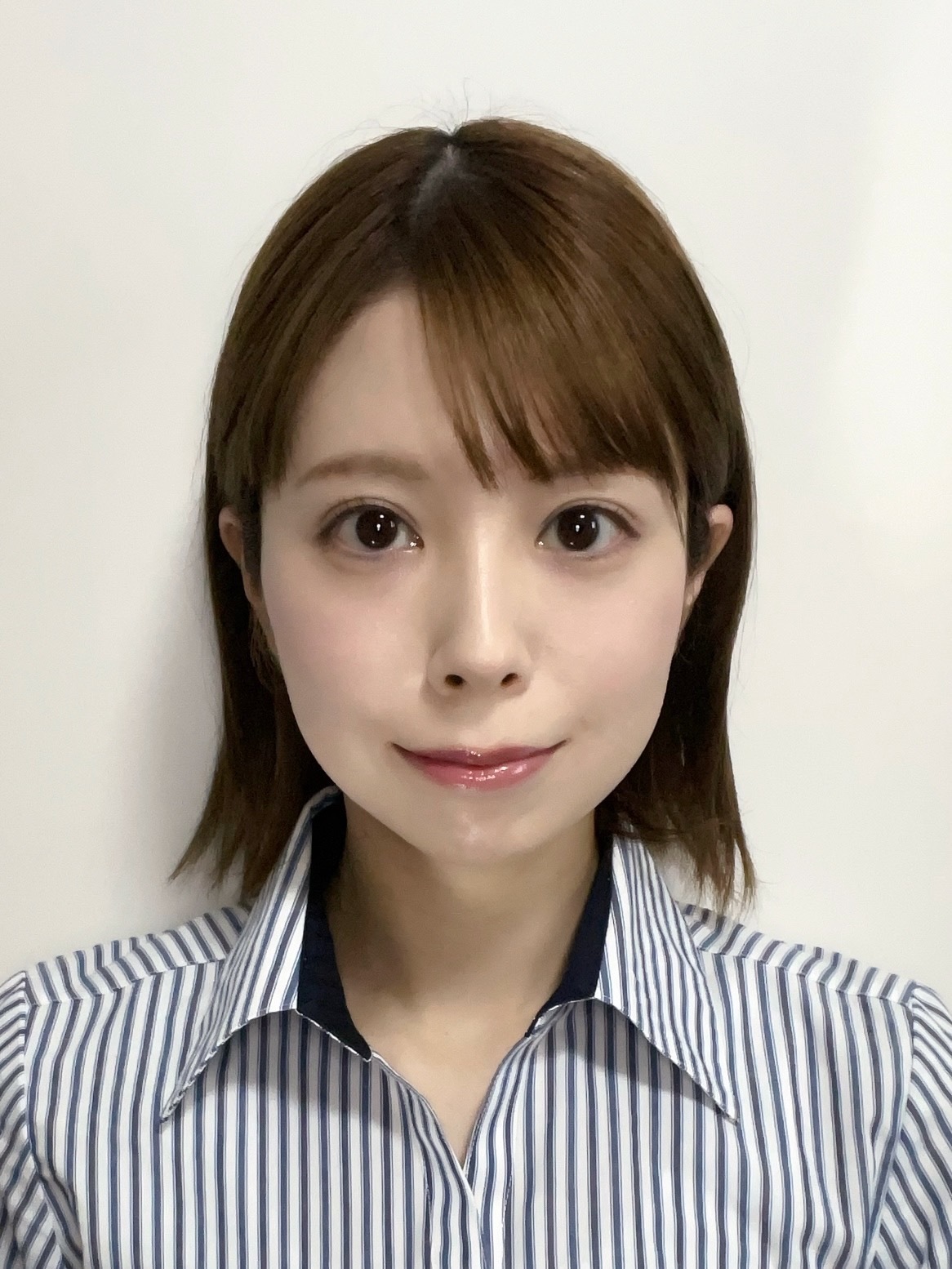
Wataru Shinoda Wataru Shinoda received his Ph.D. in 1998 from the Tokyo Institute of Technology. He began his career at the Yokohama Research Laboratory of Mitsubishi Chemical Corporation in the same year. In 2000, he joined the Industrial Technology Research Institute under the Ministry of International Trade and Industry (MITI), and in 2001, he moved to the National Institute of Advanced Industrial Science and Technology (AIST). In 2014, he was appointed Associate Professor at the Graduate School of Engineering, Nagoya University. Since 2021, he has been serving as a Professor at the Research Institute for Interdisciplinary Science, Okayama University. His research focuses on molecular modeling and molecular simulation of biomolecular assemblies and soft materials.
Kana Shibata Kana Shibata received her Bachelor’s degree from the School of Engineering, Nagoya University, in 2021. She obtained her Master’s degree in 2023 from the Department of Materials Chemistry, Graduate School of Engineering, Nagoya University, where she conducted research on molecular dynamics simulations of biological membranes under the supervision of Professor Shinoda. She is currently employed at ONO PHARMACEUTICAL CO., LTD.


What aspect of your work are you most excited about at the moment?

Niko Kimura: In my opinion, the concept to visualize invisible nanometer-scaled molecular information based on the designed micrometer-scale environments.

Masatoshi Maeki: I am most excited about my work developing novel microfluidic devices, particularly for engineering lipid nanoparticles (LNPs) for drug delivery and for biomolecular analysis.

Manabu Tokeshi: I am excited that our study has helped to shed light on the stability of RNA-loaded lipid nanoparticles (LNPs).

How do you feel about Nanoscale Advances as a place to publish research on this topic?

Masatoshi Maeki: Our paper is an excellent fit for Nanoscale Advances. It is a perfect match for the journal’s scope, and I am confident it will be of great interest to your readership.

Manabu Tokeshi: I believe this study aligns well with the scope and focus of Nanoscale Advances.

Can you share one piece of career-related advice for early career scientists?

Masatoshi Maeki: Always challenge yourself and don’t fear failure. I believe failure is simply a necessary stepping stone to success.

Manabu Tokeshi: Research is full of failures. What matters is to stay positive and keep going.

Digg This
Reddit This
Stumble Now!
Share on Facebook
Bookmark this on Delicious
Share on LinkedIn
Bookmark this on Technorati
Post on Twitter
Google Buzz (aka. Google Reader)

Meet the authors of the Nanoscale Advances Paper Prize Award winning paper

Enhancing photoluminescence performance of perovskite quantum dots with plasmonic nanoparticles: insights into mechanisms and light-emitting applications

Gautham Kumar, Chien-Chung Lin, Hao-Chung Kuo and Fang-Chung Chen

Dr Gautum Kumar Dr. Gauthm Kumar is a researcher in the field of photonics, electronic materials, and semiconductor devices. He earned his PhD from National Yang Ming Chiao Tung University and is currently a postdoctoral researcher at the College of Semiconductor Research at National Tsing Hua University (NTHU). With expertise in quantum dots and semiconductor devices, Dr. Kumar is deeply engaged in advancing optoelectronic and semiconductor technologies. His current research focuses on developing HfO2-based systems and technologies for storage-class memory and in-computing memory applications. Additionally, investigates the fundamental principles governing the positioning of emerging energy technologies, exploring their long-term societal and environmental impacts.
Chien-Chung Lin Chien-Chung Lin received the Ph.D. degree in Electrical Engineering from Stanford University. He joined National Taiwan University in 2021 as the professor in the Graduate Institute of Photonics and Optoelectronics, and he was with National Chiao Tung University (NCTU) from 2009 to 2021. His research efforts are in design and fabrication of novel semiconductor optoelectronic devices. Since 2016, he has been jointly appointed by the Industrial Technology Research Institute (ITRI), where he participates and leads micro-LEDs and silicon photonics projects. Before NCTU, he worked for E2O communications and Santur Inc. in USA. He is a Fellow of the OPTICA.
Hao-Chung Kuo Hao-Chung Kuo received the Ph.D. degree from the Electrical and Computer Engineering Department, University of Illinois at Urbana Champaign, Urbana, in 1999. Since October 2002, he has been a Faculty Member of the Institute of Electro-Optical Engineering, National Chiao Tung University, Hsinchu, Taiwan. His current research interests include semiconductor lasers, vertical-cavity surface-emitting lasers, blue and UV LED lasers, quantum-confined optoelectronic structures, optoelectronic materials, and solar cells. He has authored or coauthored more than 400 journal papers and holds 35 granted and 20 pending patents. He has received OSA (2012), IET (2012), SPIE (2013), IEEE (2015) and IAAM Fellow (2021).
Fang-Chung Chen Fang-Chung Chen is Distinguished Professor in the Department of Photonics (DoP), National Yang Ming Chiao Tung University. He received the B.S. and master’s degrees in chemistry from National Taiwan University, Taiwan, and the Ph.D. degree in Materials Science and Engineering from the University of California, Los Angeles. He has been with DoP since Feb. 2004. He has published more than 160 journal papers and 5 book chapters. Prof. Chen is Optica Fellow and Fellow of the Royal Society of Chemistry. His research interests include organic/perovskite electronics and materials, plasmonic materials, machine learning for materials screening, and low-dimensional nanomaterials.


What aspect of your work are you most excited about at the moment?

We are extremely excited about our achievement in utilizing the localized surface plasmon resonance effects of metal nanoparticles to enhance the photoluminescence quantum yield of perovskite quantum dots to an impressive efficiency of 99%. We believe this result has transformative potential for next-generation optoelectronic devices.

How do you feel about Nanoscale Advances as a place to publish research on this topic?

Nanoscale Advances is a reputable platform for nanoscience research, providing an excellent opportunity for scientists and engineers to learn from each other’s work and gain cross-domain knowledge. Its interdisciplinary audience aligns well with the optoelectronic and materials science communities, enhancing visibility and impact. Additionally, as an open-access publication, it greatly facilitates knowledge sharing.

Can you share one piece of career-related advice for early career scientists?

Open your mind to listening and thinking. Developing multidisciplinary skills and actively pursuing collaborative opportunities will enhance the research impact in the fast-evolving field of nanoscale science.

Digg This
Reddit This
Stumble Now!
Share on Facebook
Bookmark this on Delicious
Share on LinkedIn
Bookmark this on Technorati
Post on Twitter
Google Buzz (aka. Google Reader)