Archive for the ‘Nanoscale’ Category

Controlling termites with nanoparticles: Nanoscale article featured in Chemistry World

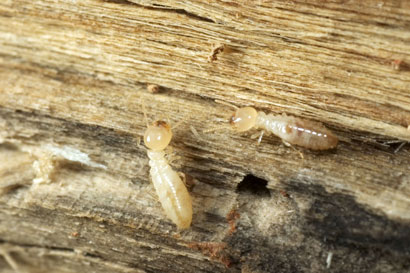
Scientists in Australia have found that mesoporous silica nanoparticles (MSNs) can store and deliver biocides in a controlled fashion over time, which could be beneficial to the timber industry with regards to termites.
C2NR11691J

Termites pose a significant threat to the industry throughout the tropics and subtropics. The conventional solution to this problem is to use agrochemical biocides such as dichloro-diphenyl-trichloroethane (DDT), aldrin, dieldrin, chlordane and heptachlor.

But these compounds cause environmental damage via bioaccumulation, threatening the existence of some species, particularly large predators at the top of the food chain. And attempts to destroy entire terminte colonies using them have been unsucessful. 

Now, Zhang Qiao and colleagues at the University of Queensland, have used the pore structure of mesoporous silica nanoparticles to adsorb biocides. They found that the nanoparticles released the biocide in a controlled manner. This slow release is important as the termintes will feed on and transfer the particles to other termites, eventually leading to colony destruction. 

The team chose four different types of MSN to test, using the agricultural biocide imidacloprid as a model. They found that MCM-48 particles had the highest adsorption capacity. ‘We can effectively load the biocide into MSNs and release it over 48 hours,’ says Qiao. ‘However, it is difficult to control the release because of the biocide’s water solubility and fast mass transport.’ 

Andrea O’Connor, an expert in nano and biomolecular engineering at the University of Melbourne, Australia, agrees that more control over release rates is needed. This would ‘minimise the early burst release and extend biocide delivery over biologically relevant time periods and dose rates’, she says. However, she adds that the system is simple and delivers the nanoparticles in a suspension into the site of an infestation ‘rather than relying on diffusion of released biocide through the environment, where it may be degraded or have undesirable adverse effects.’ 

Qiao adds that to effectively deliver the biocide over a period of about seven days, the MSNs need to be coated with other chemicals. The team is investigating a biodegradable polymer coating. 

Carl Saxton – Chemistry World 

Read the paper from Nanoscale: 

Adsorption and release of biocides with mesoporous silica nanoparticles
Amirali Popat, Jian Liu, Qiuhong Hu, Michael Kennedy, Brenton Peters, Gao Qing (Max) Lu and Shi Zhang Qiao
Nanoscale, 2012, Advance Article
DOI: 10.1039/C2NR11691J 

Fancy submitting an article to Nanoscale? Then why not submit to us today!

Digg This
Reddit This
Stumble Now!
Share on Facebook
Bookmark this on Delicious
Share on LinkedIn
Bookmark this on Technorati
Post on Twitter
Google Buzz (aka. Google Reader)

Nanoscience: Removing cadmium from blood

Researchers at Lanzhou University, China, have designed a nanocomposite to effectively remove cadmium ions from human blood.

Previous materials designed for this purpose have either had good selectivity, high saturation magnetisation or good water dispersibility, but the new material has all three properties. And, the composite is highly supermagnetic, making subsequent removal of the nanoparticles easier.

Removing cadmium (which is produced during industrial processes) from the blood is important because they bind to proteins in the body, affecting their functions.

The nanocomposite consists of four components; The first is magnetic iron oxide nanoparticles, chosen for their low toxicity. They are coated with polyethylenimine to increase the amino groups on the particles’ surface to bind Cd2+, but also to lower nanoparticle uptake by red blood cells, maximising the circulation time of the composites in the blood. Polyethylene glycol is grafted onto this as an anchor for negatively charged 2,2’-phenylazanediyl, which counteracts the hydrophobic and electrostatic interactions between the nanoparticles and plasma proteins or white blood cells.

Read the Nanoscale article now:

2, 2′-(phenylazanediyl) diacetic acid modified Fe3O4@PEI for selective removal of cadmium ions from blood
Jun Jin, Fang Yang, Fengwei Zhang, Wuquan Hu, Shao-bo Sun and Jiantai Ma
Nanoscale, 2012
DOI: 10.1039/c2nr11481j

Digg This
Reddit This
Stumble Now!
Share on Facebook
Bookmark this on Delicious
Share on LinkedIn
Bookmark this on Technorati
Post on Twitter
Google Buzz (aka. Google Reader)

Top Ten most-read Nanoscale articles in November

This month sees the following articles in Nanoscale that are in the top ten most accessed for November:

Multifunctional composite core-shell nanoparticles 
Suying Wei, Qiang Wang, Jiahua Zhu, Luyi Sun, Hongfei Lin and Zhanhu Guo 
Nanoscale, 2011, 3, 4474-4502 
DOI: 10.1039/C1NR11000D 

Gold nanoparticles: preparation, properties, and applications in bionanotechnology
 
Yi-Cheun Yeh, Brian Creran and Vincent M. Rotello 
Nanoscale, 2012, Advance Article 
DOI: 10.1039/C1NR11188D 

Nano active materials for lithium-ion batteries 
Yonggang Wang, Huiqiao Li, Ping He, Eiji Hosono and Haoshen Zhou 
Nanoscale, 2010, 2, 1294-1305 
DOI: 10.1039/C0NR00068J 

Graphene edges: a review of their fabrication and characterization 
Xiaoting Jia, Jessica Campos-Delgado, Mauricio Terrones, Vincent Meunier and Mildred S. Dresselhaus 
Nanoscale, 2011, 3, 86-95 
DOI: 10.1039/C0NR00600A

3D-patterned polymer brush surfaces 
Xuechang Zhou, Xuqing Liu, Zhuang Xie and Zijian Zheng 
Nanoscale, 2011, 3, 4929-4939 
DOI: 10.1039/C1NR11238D 

The role of nanomaterials in redox-based supercapacitors for next generation energy storage devices 
Xin Zhao, Beatriz Mendoza Sánchez, Peter J. Dobson and Patrick S. Grant 
Nanoscale, 2011, 3, 839-855 
DOI: 10.1039/C0NR00594K 

Highly dispersed Fe3O4 nanosheets on one-dimensional carbon nanofibers: Synthesis, formation mechanism, and electrochemical performance as supercapacitor electrode materials 
Jingbo Mu, Bin Chen, Zengcai Guo, Mingyi Zhang, Zhenyi Zhang, Peng Zhang, Changlu Shao and Yichun Liu 
Nanoscale, 2011, 3, 5034-5040 
DOI: 10.1039/C1NR10972C 

Li ion battery materials with core?shell nanostructures 
Liwei Su, Yu Jing and Zhen Zhou 
Nanoscale, 2011, 3, 3967-3983 
DOI: 10.1039/C1NR10550G 

Graphene: nanoscale processing and recent applications
 
László P. Biró, Péter Nemes-Incze and Philippe Lambin 
Nanoscale, 2012, Advance Article 
DOI: 10.1039/C1NR11067E 

2D materials: to graphene and beyond 
Rubén Mas-Ballesté, Cristina Gómez-Navarro, Julio Gómez-Herrero and Félix Zamora 
Nanoscale, 2011, 3, 20-30 
DOI: 10.1039/C0NR00323A 

Why not take a look at the articles today and blog your thoughts and comments below.

Fancy submitting an article to Nanoscale? Then why not submit to us today!

Digg This
Reddit This
Stumble Now!
Share on Facebook
Bookmark this on Delicious
Share on LinkedIn
Bookmark this on Technorati
Post on Twitter
Google Buzz (aka. Google Reader)

Nanoparticles detect food poisoning bug

imageHOT Nanoscale Communication

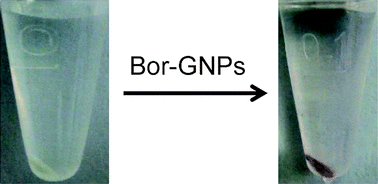
Scientists in China have developed a sensitive method for detecting the bacteria Staphylococcus aureus which is a major cause of food poisoning as well as community- and hospital-acquired infections.

The researchers functionalized gold nanoparticles with phenylboronic acid which could react with the cis-diol groups found on the bacteria’s surface, causing a detectable colour change.

Using this method they could detect the bacteria down to a concentration of 50 cells per mL.

Read the full exciting Nanoscale communication now:

Phenylboronic acid functionalized gold nanoparticles for highly sensitive detection of Staphylococcus aureus
Jine Wang, Jingqing Gao, Dianjun Liu, Dongxue Han and Zhenxin Wang
DOI: 10.1039/C2NR11657J

Digg This
Reddit This
Stumble Now!
Share on Facebook
Bookmark this on Delicious
Share on LinkedIn
Bookmark this on Technorati
Post on Twitter
Google Buzz (aka. Google Reader)

Bionanotechnology conference: register today

NanoscaleBionanotechnology III: from biomolecular assembly to applications
4—6 January 2012
Robinson College, Cambridge, UK

Nanoscale is delighted to be supporting this conference organised by the Biochemical Society.

This meeting, the third in the series, brings together an international set of speakers who will discuss a broad range of topics in bionanotechnology from different perspectives and with different technical approaches.

Topics:

  • Large natural and designed assemblies
  • Single-molecule studies
  • Nanomaterials and devices in vitro
  • Nanomaterials and devices in vivo
  • Biomolecular self-assembly

Registration is now open.

For more information see the Biochemical Society website.

Digg This
Reddit This
Stumble Now!
Share on Facebook
Bookmark this on Delicious
Share on LinkedIn
Bookmark this on Technorati
Post on Twitter
Google Buzz (aka. Google Reader)

Nanoparticles make insecticides safer

Nanoparticles could be used to deliver insecticides, according to researchers in Australia.

The team loaded mesoporous silica nanoparticles with an insecticide called imidacloprid and used it to clear termites from wood. They found that 80% of the termites were cleared by controlled release from the particles over 48 hours. Current insecticides, such as DDT, bioaccumulate and cause environmental damage – encapsulating insecticides in nanoparticles prevents this. 

 Reference:

Adsorption and release of biocides with mesoporous silica nanoparticles
A Popat et al, Nanoscale, 2012
DOI: 10.1039/c2nr11691j

Digg This
Reddit This
Stumble Now!
Share on Facebook
Bookmark this on Delicious
Share on LinkedIn
Bookmark this on Technorati
Post on Twitter
Google Buzz (aka. Google Reader)

Andrea Ferrari joins Nanoscale Editorial Board

Andrea Ferrari photoNanoscale is delighted to announce the appointment of Professor Andrea Ferrari to our Editorial Board. Prof. Ferrari is Professor of Nanotechnology and Royal Society Wolfson Research Merit Award Holder, and is the head of the Nanomaterials and Spectroscopy Group at the University of Cambridge Engineering Department and Nanoscience Centre. He is Professorial Fellow of Pembroke College.

Prof. Ferrari’s wide range of research interests cover graphene electronics, devices, and carbon nanotubes.

Digg This
Reddit This
Stumble Now!
Share on Facebook
Bookmark this on Delicious
Share on LinkedIn
Bookmark this on Technorati
Post on Twitter
Google Buzz (aka. Google Reader)

Professor Hongxing Xu joins Nanoscale Board

Professor Hongxing XuWe are delighted to announce that Professor Hongxing Xu of the Institute of Physics, Chinese Academy of Sciences has joined the Editorial Board of Nanoscale.

Professor Xu completed his BA in Physics at Peking University, China in 1992 and then studied for his MA and PhD at the Chalmers University of Technology in Sweden. He worked as Assistant Professor at Lund University in Sweden before returning to China to take up his current position in 2005.

Professor Xu’s research interests cover surface-enhanced spectroscopy, nanophotonics, plasmonics and devices.

Read Prof. Xu’s recent communication in Nanoscale:

Can information of chemical reaction propagate with plasmonic waveguide and be detected at remote terminal of nanowire?
Mengtao Sun, Yanxue Hou and Hongxing Xu
DOI: 10.1039/C1NR10981B

Digg This
Reddit This
Stumble Now!
Share on Facebook
Bookmark this on Delicious
Share on LinkedIn
Bookmark this on Technorati
Post on Twitter
Google Buzz (aka. Google Reader)

Nanoscale Issue 1 of 2012 out now!

The first issue of Nanoscale for 2012 is now online! You can read the full issue for free here:

Heather Montgomery (Development Editor for Nanoscale) highlights some of the many achievements of the journal in 2011 and look forwards to 2012 in her New Year Editorial.  

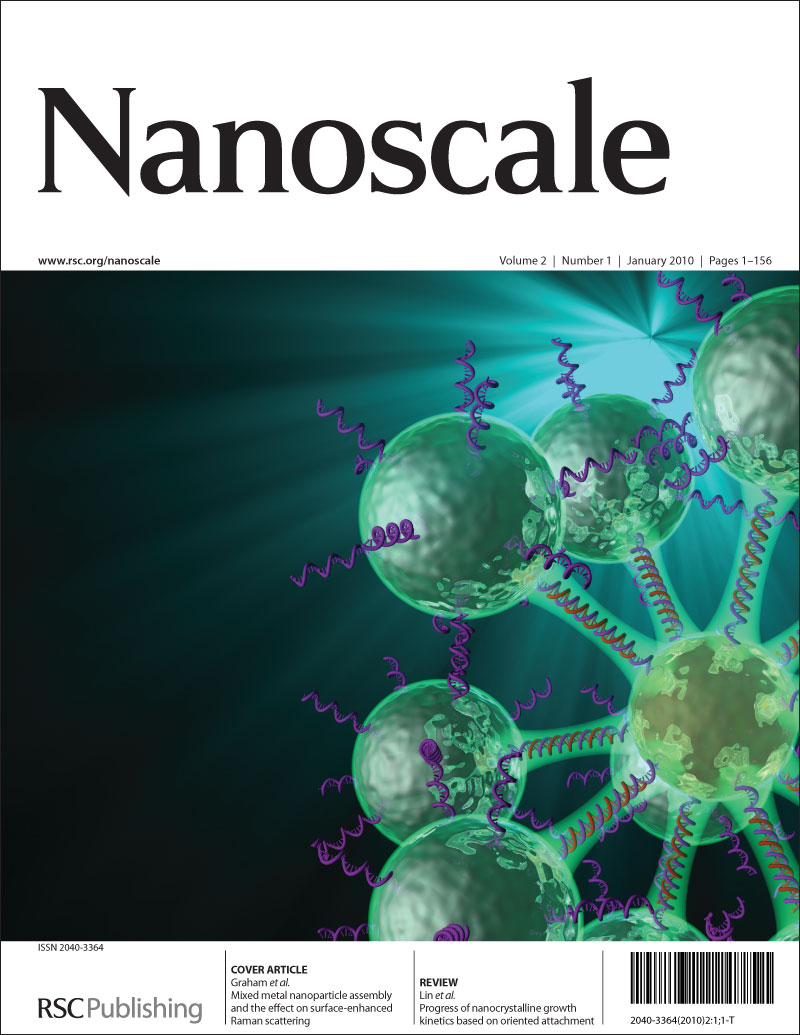
Nanoscale Issue 1 IFC


The outside front cover features a Communication on SERS assisted ultra-fast peptidic screening: a new tool for drug discovery by Rolando Pérez-Pineiro, Miguel A. Correa-Duarte, Veronica Salgueirino and Ramon A. Alvarez-Puebla.


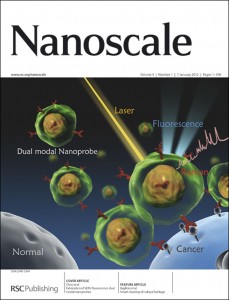
Nanoscale Issue 1 OFC


Fabrication of SERS-fluorescence dual modal nanoprobes and application to multiplex cancer cell imaging
is the article highlighted on the inside front cover by Sangyeop Lee, Hyangah Chon, Soo-Young Yoon, Eun Kyu Lee, Soo-Ik Chang, Dong Woo Lim and Jaebum Choo.


Issue 1 contains the following Review and Feature articles:

Fancy submitting an article to Nanoscale? Then why not submit to us today!

Digg This
Reddit This
Stumble Now!
Share on Facebook
Bookmark this on Delicious
Share on LinkedIn
Bookmark this on Technorati
Post on Twitter
Google Buzz (aka. Google Reader)

Nanoscale welcomes Prof. Xiaogang Liu to the Editorial Board

xiaogang liu photoNanoscale is delighted to announce that Professor Xiaogang Liu of the National University of Singapore has joined our Editorial Board.

His research interests cover a wide range of topics from chemistry to  materials science and bioinorganic chemistry. The work in his group covers the assembly of nanoscale building blocks into complex integrated systems through to the applications of these materials in catalysis and nanotechnology.

You can read some of Professor Liu’s recent articles in Nanoscale:

Self-aligned nanolithography by selective polymer dissolution
Huijuan Zhang, Chee-Leong Wong, Yufeng Hao, Rui Wang, Xiaogang Liu, Francesco Stellacci and John T. L. Thong
DOI: 10.1039/C0NR00398K

Tuning the shape and thermoelectric property of PbTe nanocrystals by bismuth doping
Qian Zhang, Ting Sun, Feng Cao, Ming Li, Minghui Hong, Jikang Yuan, Qingyu Yan, Huey Hoon Hng, Nianqiang Wu and Xiaogang Liu
DOI: 10.1039/C0NR00115E

Nanocontact-induced catalytic activation in palladium nanoparticles
Changlong Jiang, Sadananda Ranjit, Zhongyu Duan, Yu Lin Zhong, Kian Ping Loh, Chun Zhang and Xiaogang Liu
DOI: 10.1039/B9NR00093C

Digg This
Reddit This
Stumble Now!
Share on Facebook
Bookmark this on Delicious
Share on LinkedIn
Bookmark this on Technorati
Post on Twitter
Google Buzz (aka. Google Reader)