Archive for September, 2025

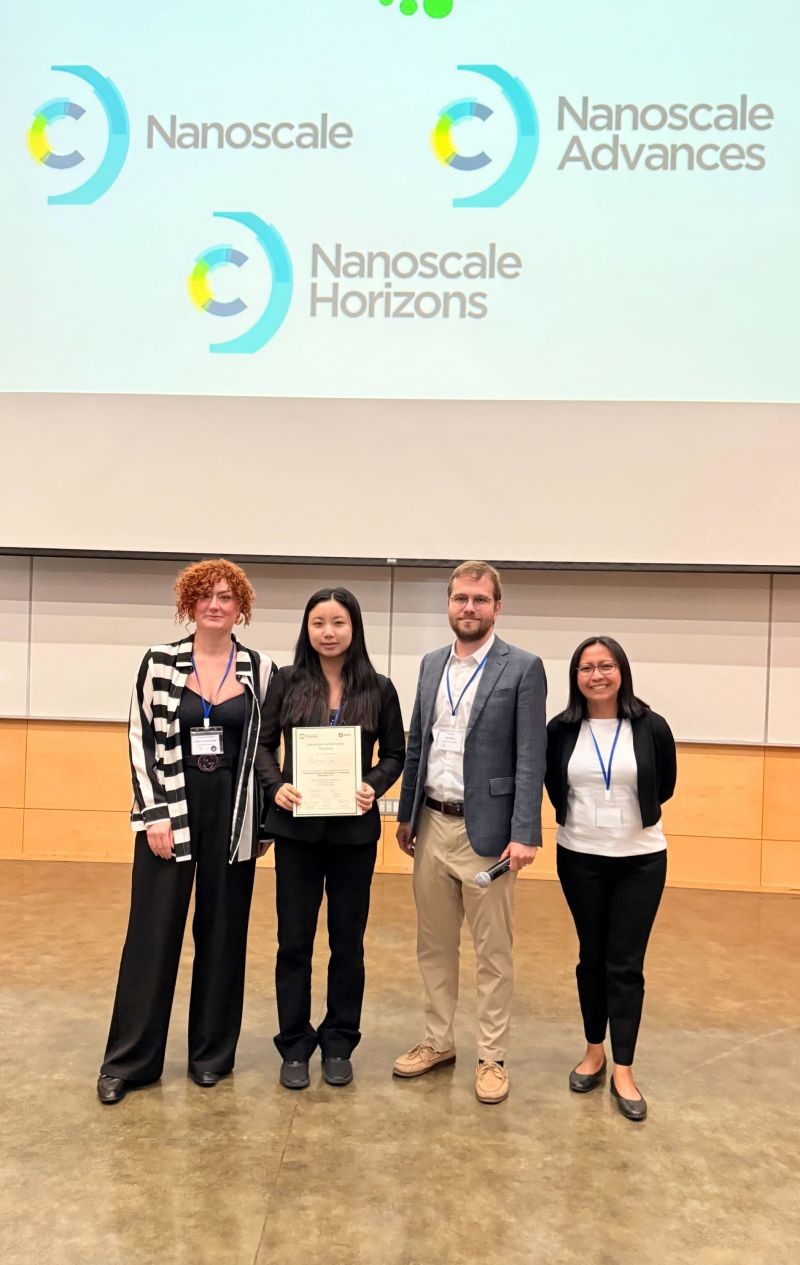
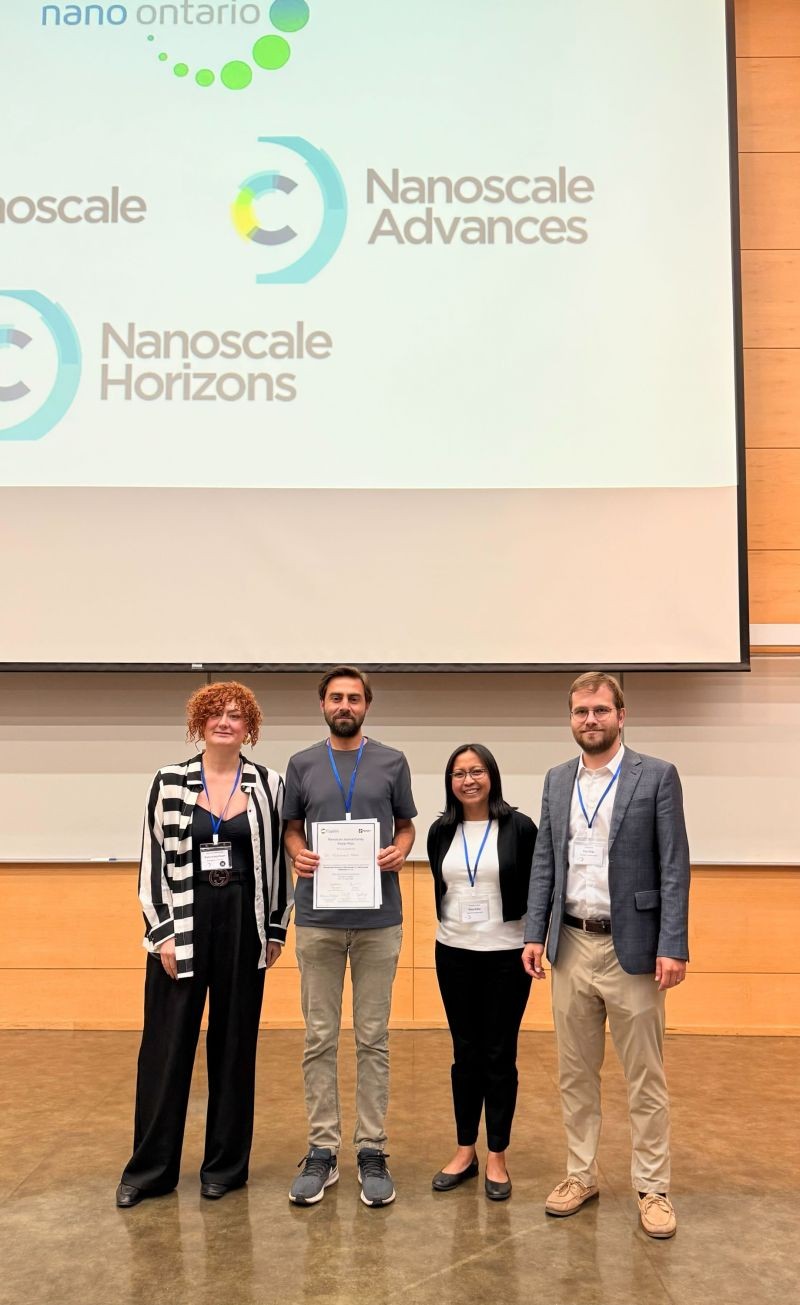
Congratulations to our prize winners at the 14th NanoOntario Conference!

The Nanoscale Journal Family were delighted to sponsor the 14th NanoOntario Conference, held at Toronto Metropolitan University from 30 – 31 July 2025. We were pleased to sponsor two prizes at the event: Outstanding Oral Presentation and Outstanding Poster Presentation.


Outstanding Oral Presentation

Outstanding Poster Presentation

Sherry JiaRui Cao, Western University

Muhammad Munir, McMaster University


Please join us in congratulating the Nanoscale Journal Family prize winners!

Digg This
Reddit This
Stumble Now!
Share on Facebook
Bookmark this on Delicious
Share on LinkedIn
Bookmark this on Technorati
Post on Twitter
Google Buzz (aka. Google Reader)

Open call for papers: Frontiers in Plasmonic Science and Applications

Frontiers in Plasmonic Science and Applications

Submit your work to the collection before 16 February 2026

Nanoscale is delighted to announce on open call for our upcoming special themed collection Frontiers in Plasmonic Science and Applications!

This themed collection is being guest edited by Vipul Bansal (The Royal Melbourne Institute of Technology, Australia), Hiang Kwee Lee (Nanyang Technological University, Singapore), Theobald Lohmueller (Ludwig Maximilian University of Munich, Germany), and Murali Sastry (Monash University, Australia).


Plasmonics has been an active field of research for several decades now, but continues to evolve rapidly, both conceptually and technologically. This progress is reflected in a wide range of applications and in ongoing innovation across fields, including enhanced spectroscopy, subwavelength optics, biomedical sensing, energy harvesting, and plasmon-enhanced catalysis. In parallel, new directions such as quantum plasmonics, ultrafast and nonlinear plasmonic phenomena, and plasmonic metasurfaces are pushing the boundaries of nanoscale light–matter interactions. As plasmonic materials and architectures become increasingly sophisticated, the field continues to expand its impact on both fundamental science and practical technologies

This special issue aims to capture the latest advances in the multidisciplinary field of plasmonics, encompassing both foundational research and emerging applications. We invite contributions that explore the broad scientific and technological implications of plasmonic phenomena across diverse domains. . The issue will focus on, but is not limited to, the following key areas:

  1. Novel synthesis and fabrication methods for plasmonic and hybrid plasmonic-based nanostructures
  2. Plasmonic effects in emerging materials
  3. Fundamental processes in plasmonic materials
  4. Advances in instrumental techniques for probing plasmons at the subparticle level
  5. Theoretical modeling and simulation of plasmonic systems
  6. Application of plasmonic materials in catalysis
  7. Plasmonic materials in sensing, diagnostics and imaging

We hope that readers find this themed collection informative and useful. Submissions to the journal should fit within the scope of Nanoscale.  Please see the journal’s website for more information on the journal’s scope, standards, article types and author guidelines.

Open for submissions until 16 Feb 2026

The Editorial Office reserves the right to check suitability of submissions in relation to the scope of both the journal and the collection, and as such inclusion of accepted articles in the final themed collection is not guaranteed.


How to submit

If you would like to contribute to this themed collection

  1. Log into either the Nanoscale online submission system.
  2. Submit your article
  3. Select your article type and under the “Themed issues” section in the submission form mention that it is an Open Call contribution to the Frontiers in Plasmonic Science and Applications collection
  4. Add a “Note to the Editor” that this is from the Open Call

The Editorial Office reserves the right to check suitability of submissions in relation to the scope of both the journal and the collection, and inclusion of accepted articles in the final themed issue is not guaranteed.

Please note that all submissions will be subject to initial assessment and rigorous peer review to meet the usual high standards of Nanoscale. All articles featured in the collection must be in scope and as such final inclusion is not guaranteed and will be up to the discretion of the guest editors.

We look forward to receiving your latest work and considering it for this collection. Please do get in touch at nanoscale-rsc@rsc.org if you have any questions at all.

Digg This
Reddit This
Stumble Now!
Share on Facebook
Bookmark this on Delicious
Share on LinkedIn
Bookmark this on Technorati
Post on Twitter
Google Buzz (aka. Google Reader)

Poster prize winners at the 3rd International Conference on Nanotechnologies & Bionanoscience

Congratulations to the poster prize winners at the 3rd International Conference on Nanotechnologies & Bionanoscience

The 3rd International conference on Nanotechnologies and BioNanoScience (NanoBio 2025) – aims to capitalize on the rapid growing and interconnected fields of Nanotechnology and Bioscience. The aim is to provide an interdisciplinary forum for scientists and engineers from academia and industry around the world, to discuss on the forefront of research and to address the emerging fields of Nanotechnologies and Nanosciences. The conference focuses on nano(bio)materials synthesis, innovative solar cells, nano(bio)photonics, optoelectronics, nano(bio)electronics tissue engineering, nanomedicine and safety of nanomaterials.

The main objective of the conference is to accommodate a wide range of interests and to facilitate interdisciplinary interaction in both academia and industry. The conference will also provide an ideal environment to develop new collaborations and provide opportunities to meet experts working on various areas of Nanotechnologies and Nanosciences.

This event is organised by the NanoBio and sponsored by RSC Nanoscale family(Nanoscale Horizons, Nanoscale and Nanoscale Advances) journals, Applied Interfaces and Journal of Materials Chemistry B.

A photo of Valentina Dinca
Valentina Dinca (National Institute for Lasers, Plasma, and Radiation Physics (NILPRP)
Poster Prize Winner

Dr. Valentina Dinca  started her career at the National Institute for Lasers, Plasma, and Radiation Physics (NILPRP) in Măgurele, Romania, her work being centered at the intersection of laser physics, materials science, chemistry, biology and biomedical engineering. A core theme of her research is the use of advanced laser techniques, including Pulsed Laser Deposition (PLD), Matrix-Assisted Pulsed Laser Evaporation (MAPLE), and Laser-Induced Forward Transfer (LIFT), to engineer functional platforms  designed as tailored biointerfaces to study and direct mammalian cell behavior, with direct applications in regenerative medicine. Her work provides valuable insights into the design of tailored biointerfaces, aiming to improve the outcomes of medical implants and diagnostic tools.  Her driven research activity is reflected in more than 40 WoS®-indexed articles with impact factors published as  main author, invited presentations,  international awards,  national projects,  highlighting the ability to effectively utilize accumulated know-how gained over years of  research within the framework of national and international inter-institutional collaborations.  Overall, Dr. Dinca’s career is distinguished by her multidisciplinary approach, combining lasers, materials science, chemistry and biology to create practical healthcare solutions.

Andreas Parlanis (University of Crete)
Poster Prize Winner

Andreas is now pursuing a doctoral degree in the Department of Biology at the University of Crete. He obtained a Bachelor’s degree in Physics from the Department of Physics at the University of Crete and a Master’s degree in Biomedical Engineering from the Department of Mechanical Engineering at the University of Western Macedonia. For his Master’s thesis, he conducted research at Dr. Anthi Ranella’s lab (Laboratory for Tissue Engineering—Regenerative Medicine and Immunoengineering) at IESL-FORTH, focusing on the effect of topography on the process of mesenchymal stem cell osteogenic differentiation. In 2023, he became a member of Dr. Maria Farsari’s Nonlinear Lithography Research Group at IESL-FORTH. Currently, he is involved in the fabrication of 3D auxetic scaffolds at the microscale using nonlinear lithography. These scaffolds are intended for tissue engineering applications in the field of neuroregeneration

Interests:

  • Nonlinear lithography

  • 3D auxetic scaffolds at the microscale

  • Tissue engineering

  • Stem cell mechanobiology


Christina Puijk (University College London)
Poster Prize Winner

Christina obtained her Master’s degree in Chemistry from Nottingham Trent University in 2018, where her research focused on the synthesis, characterisation, and application of nanoparticles. She went on to work in industry for several years, specialising in the continuous flow synthesis of nanomaterials for a variety of applications. Christina is now pursuing a PhD at University College London under the supervision of Dr Guido Bolognesi. Her research investigates microfluidic approaches for the characterisation and separation of colloidal particles in continuous flows by utilising the chemical energy stored in electrolyte solutions. The project combines elements of colloid and interface science, physical chemistry, and materials science for use in diagnostic applications.


Argiris Kolokithas Ntoukas (Czech Advanced Technology and Research Institute (CATRIN))
Poster Prize Winner

Argiris obtained his PhD from the Department of Materials Science from the University of Patras, Greece, in September 2021. He is currently working as postdoctoral researcher at the Czech Advanced Technology and Research Institute (CATRIN) (https://www.catrin.com/) at the BioMed group of Regional Centre of Advanced Technologies and Materials (RCPTM) in Olomouc, Czech Republic, under the supervision of Dr. Poláková Kateřina. His main research interests are the synthesis and functionalization of magnetic and plasmonic gold nanostructures (rods, hollow nanospheres), the optimization of their properties and their application as therapeutic nanoplatforms (nano-theranostics) with particular emphasis on drug delivery, imaging, magnetic hyperthermia and photothermia applications. He is currently working for the OPJAC project “Excellence in Regenerative Medicine, (ExRegMed)” which aims to the restoration of damaged tissues that cannot yet be treated, or whose regenerative capacity is limited.

Digg This
Reddit This
Stumble Now!
Share on Facebook
Bookmark this on Delicious
Share on LinkedIn
Bookmark this on Technorati
Post on Twitter
Google Buzz (aka. Google Reader)

Open call: Advanced Nanomaterials for Sustainable Green Hydrogen Production

Advanced Nanomaterials for Sustainable Green Hydrogen Production

Submit your work to the collection before 22nd January 2026

Nanoscale and Journal of Materials Chemistry A are delighted to announce on open call for our upcoming special themed collection Advanced Nanomaterials for Sustainable Green Hydrogen Production

This themed collection is being guest edited by Veronica Sofianos (University College Dublin, Ireland) , Serena Cussen (University College Dublin, Ireland), Vasileios Tzitzios (NCSR ‘Demokritos’, Greece), Paul Westerhoff (Arizona State University, USA), and Helena Wang (The University of Melbourne, Australia)

As the world transitions to a sustainable energy future, green hydrogen stands out as a clean, carbon-free energy carrier. However, traditional green hydrogen production relies heavily on freshwater, a limited and increasingly precious resource. Conventional water splitting competes with agriculture and human consumption for freshwater resources.

Shifting to non-traditional water sources like seawater and wastewater can alleviate this competition, ensuring that green hydrogen production does not compromise essential water needs. This has spurred growing interest in using seawater and wastewater as alternative feedstocks. Their utilization not only conserves freshwater but also offers additional environmental and economic benefits, making them critical to the scalable and sustainable production of green hydrogen.

This themed collection in Nanoscale and Journal of Materials Chemistry A, will discuss:

  • seawater and wastewater splitting by employing selective photocatalysts
  • electrocatalysts or (photo)electrocatalysts
  • principles of assessing catalysts in such complex environments
  • advancements in-situ and operando characterisation techniques either using synchrotron facilities or lab scale equipment
  • strategies for designing new reactor designs
  • upscaling synthesis strategies
  • catalysts assessment in commercial environments

We hope that readers find this themed collection informative and useful. Submissions to the journal should fit within the scope of Nanoscale and Journal of Materials Chemistry A. Please see the journal’s website for more information on the journal’s scope, standards, article types and author guidelines.

Open for submissions until 22nd January 2026

The Editorial Office reserves the right to check suitability of submissions in relation to the scope of both the journal and the collection, and as such inclusion of accepted articles in the final themed collection is not guaranteed.


How to submit

If you would like to contribute to this themed collection

  1. Log into either the Nanoscale or Journal of Materials Chemistry A online submission system.
  2. Submit your article
  3. Select your article type and under the “Themed issues” section in the submission form mention that it is an Open Call contribution to the Advanced Nanomaterials for Sustainable Green Hydrogen Production collection
  4. Add a “Note to the Editor” that this is from the Open Call

The Editorial Office reserves the right to check suitability of submissions in relation to the scope of both the journal and the collection, and inclusion of accepted articles in the final themed issue is not guaranteed.

Please note that all submissions will be subject to initial assessment and rigorous peer review to meet the usual high standards of Nanoscale and Journal of Materials Chemistry A. All articles featured in the collection must be in scope and as such final inclusion is not guaranteed and will be up to the discretion of the guest editors.

We look forward to receiving your latest work and considering it for this collection. Please do get in touch at nanoscale-rsc@rsc.org if you have any questions at all.

Digg This
Reddit This
Stumble Now!
Share on Facebook
Bookmark this on Delicious
Share on LinkedIn
Bookmark this on Technorati
Post on Twitter
Google Buzz (aka. Google Reader)

Synthesis, physical properties and applications of advanced nanocrystalline materials

Explore the new collection in Nanoscale and Nanoscale Advances

We are delighted to promote our new themed collection focusing on Synthesis, physical properties and applications of advanced nanocrystalline materials!

Guest Edited by Aurora Rizzo (University of Salento – CNR NANOTEC, Italy), Ermelinda M. S. Macoas (University of Lisbon, Portugal), Raghvendra Singh Yadav (Tomas Bata University in Zlin, Czech Republic), Renjie Chen (Beijing Institute of Technology, China), and Tayebeh Ameri (University of Kiel, Germany).


This themed collection features work covering wide ranging aspects of nanoparticle-based cancer therapy, including vaccine delivery, tumour-targeting systems, and much more.

A small selection of the papers are featured below. All articles are free to read until October 30th, if not already open access.

Dual-mode detection for the total antioxidant capability of skincare products based on porous CuS@CdS@Au nanoshells

Weimin Yang, Qi Ding, Xinhe Xing, Fang Wang, Hengwei Lin & Si Li*

Nanoscale, 2024,16, 19239-19244

Superparamagnetic nanoparticles as potential drug delivery systems for the treatment of Duchenne muscular dystrophy

Maria L. Schumacher, Tatiane N. Britos, Fernando L. A. Fonseca, Fabio F. Ferreira, David Feder, Paula Fratini, Giuliana Petri & Paula S. Haddad*

Nanoscale, 2025,17, 3752-3767

Advances in core technologies for semiconductor manufacturing: applications and challenges of atomic layer etching, neutral beam etching and atomic layer deposition

Tzu-Yi Lee, Pei-Tien Chen, Chien-Chi Huang, Hsin-Chu Chen, Li-Yin Chen, Po-Tsung Lee, Fang-Chung Chen, Ray-Hua Horng & Hao-Chung Kuo*

Nanoscale Adv., 2025,7, 2796-2817


We hope you enjoy reading this themed collection!


Did you know?

At Nanoscale and Nanoscale Advances, our themed collections are built by collaboration between our Guest Editors and expert Associate Editors. Our Guest Editors guide the scope and curate the contributions in our collections but all submissions are handled through peer review by our team of resident Associate Editors. This means that as an author you receive a consistent experience, and as a reader you can trust the quality of the science being presented.

If you have an idea for a topical collection in your research field, we’d love to hear from you! Get in touch here.

Digg This
Reddit This
Stumble Now!
Share on Facebook
Bookmark this on Delicious
Share on LinkedIn
Bookmark this on Technorati
Post on Twitter
Google Buzz (aka. Google Reader)