Archive for the ‘Nanoscale’ Category

Poster prize winners at the 3rd International Conference on Nanotechnologies & Bionanoscience

Congratulations to the poster prize winners at the 3rd International Conference on Nanotechnologies & Bionanoscience

The 3rd International conference on Nanotechnologies and BioNanoScience (NanoBio 2025) – aims to capitalize on the rapid growing and interconnected fields of Nanotechnology and Bioscience. The aim is to provide an interdisciplinary forum for scientists and engineers from academia and industry around the world, to discuss on the forefront of research and to address the emerging fields of Nanotechnologies and Nanosciences. The conference focuses on nano(bio)materials synthesis, innovative solar cells, nano(bio)photonics, optoelectronics, nano(bio)electronics tissue engineering, nanomedicine and safety of nanomaterials.

The main objective of the conference is to accommodate a wide range of interests and to facilitate interdisciplinary interaction in both academia and industry. The conference will also provide an ideal environment to develop new collaborations and provide opportunities to meet experts working on various areas of Nanotechnologies and Nanosciences.

This event is organised by the NanoBio and sponsored by RSC Nanoscale family(Nanoscale Horizons, Nanoscale and Nanoscale Advances) journals, Applied Interfaces and Journal of Materials Chemistry B.

A photo of Valentina Dinca
Valentina Dinca (National Institute for Lasers, Plasma, and Radiation Physics (NILPRP)
Poster Prize Winner

Dr. Valentina Dinca  started her career at the National Institute for Lasers, Plasma, and Radiation Physics (NILPRP) in Măgurele, Romania, her work being centered at the intersection of laser physics, materials science, chemistry, biology and biomedical engineering. A core theme of her research is the use of advanced laser techniques, including Pulsed Laser Deposition (PLD), Matrix-Assisted Pulsed Laser Evaporation (MAPLE), and Laser-Induced Forward Transfer (LIFT), to engineer functional platforms  designed as tailored biointerfaces to study and direct mammalian cell behavior, with direct applications in regenerative medicine. Her work provides valuable insights into the design of tailored biointerfaces, aiming to improve the outcomes of medical implants and diagnostic tools.  Her driven research activity is reflected in more than 40 WoS®-indexed articles with impact factors published as  main author, invited presentations,  international awards,  national projects,  highlighting the ability to effectively utilize accumulated know-how gained over years of  research within the framework of national and international inter-institutional collaborations.  Overall, Dr. Dinca’s career is distinguished by her multidisciplinary approach, combining lasers, materials science, chemistry and biology to create practical healthcare solutions.

Andreas Parlanis (University of Crete)
Poster Prize Winner

Andreas is now pursuing a doctoral degree in the Department of Biology at the University of Crete. He obtained a Bachelor’s degree in Physics from the Department of Physics at the University of Crete and a Master’s degree in Biomedical Engineering from the Department of Mechanical Engineering at the University of Western Macedonia. For his Master’s thesis, he conducted research at Dr. Anthi Ranella’s lab (Laboratory for Tissue Engineering—Regenerative Medicine and Immunoengineering) at IESL-FORTH, focusing on the effect of topography on the process of mesenchymal stem cell osteogenic differentiation. In 2023, he became a member of Dr. Maria Farsari’s Nonlinear Lithography Research Group at IESL-FORTH. Currently, he is involved in the fabrication of 3D auxetic scaffolds at the microscale using nonlinear lithography. These scaffolds are intended for tissue engineering applications in the field of neuroregeneration

Interests:

  • Nonlinear lithography

  • 3D auxetic scaffolds at the microscale

  • Tissue engineering

  • Stem cell mechanobiology


Christina Puijk (University College London)
Poster Prize Winner

Christina obtained her Master’s degree in Chemistry from Nottingham Trent University in 2018, where her research focused on the synthesis, characterisation, and application of nanoparticles. She went on to work in industry for several years, specialising in the continuous flow synthesis of nanomaterials for a variety of applications. Christina is now pursuing a PhD at University College London under the supervision of Dr Guido Bolognesi. Her research investigates microfluidic approaches for the characterisation and separation of colloidal particles in continuous flows by utilising the chemical energy stored in electrolyte solutions. The project combines elements of colloid and interface science, physical chemistry, and materials science for use in diagnostic applications.


Argiris Kolokithas Ntoukas (Czech Advanced Technology and Research Institute (CATRIN))
Poster Prize Winner

Argiris obtained his PhD from the Department of Materials Science from the University of Patras, Greece, in September 2021. He is currently working as postdoctoral researcher at the Czech Advanced Technology and Research Institute (CATRIN) (https://www.catrin.com/) at the BioMed group of Regional Centre of Advanced Technologies and Materials (RCPTM) in Olomouc, Czech Republic, under the supervision of Dr. Poláková Kateřina. His main research interests are the synthesis and functionalization of magnetic and plasmonic gold nanostructures (rods, hollow nanospheres), the optimization of their properties and their application as therapeutic nanoplatforms (nano-theranostics) with particular emphasis on drug delivery, imaging, magnetic hyperthermia and photothermia applications. He is currently working for the OPJAC project “Excellence in Regenerative Medicine, (ExRegMed)” which aims to the restoration of damaged tissues that cannot yet be treated, or whose regenerative capacity is limited.

Digg This
Reddit This
Stumble Now!
Share on Facebook
Bookmark this on Delicious
Share on LinkedIn
Bookmark this on Technorati
Post on Twitter
Google Buzz (aka. Google Reader)

Open call: Advanced Nanomaterials for Sustainable Green Hydrogen Production

Advanced Nanomaterials for Sustainable Green Hydrogen Production

Submit your work to the collection before 22nd January 2026

Nanoscale and Journal of Materials Chemistry A are delighted to announce on open call for our upcoming special themed collection Advanced Nanomaterials for Sustainable Green Hydrogen Production

This themed collection is being guest edited by Veronica Sofianos (University College Dublin, Ireland) , Serena Cussen (University College Dublin, Ireland), Vasileios Tzitzios (NCSR ‘Demokritos’, Greece), Paul Westerhoff (Arizona State University, USA), and Helena Wang (The University of Melbourne, Australia)

As the world transitions to a sustainable energy future, green hydrogen stands out as a clean, carbon-free energy carrier. However, traditional green hydrogen production relies heavily on freshwater, a limited and increasingly precious resource. Conventional water splitting competes with agriculture and human consumption for freshwater resources.

Shifting to non-traditional water sources like seawater and wastewater can alleviate this competition, ensuring that green hydrogen production does not compromise essential water needs. This has spurred growing interest in using seawater and wastewater as alternative feedstocks. Their utilization not only conserves freshwater but also offers additional environmental and economic benefits, making them critical to the scalable and sustainable production of green hydrogen.

This themed collection in Nanoscale and Journal of Materials Chemistry A, will discuss:

  • seawater and wastewater splitting by employing selective photocatalysts
  • electrocatalysts or (photo)electrocatalysts
  • principles of assessing catalysts in such complex environments
  • advancements in-situ and operando characterisation techniques either using synchrotron facilities or lab scale equipment
  • strategies for designing new reactor designs
  • upscaling synthesis strategies
  • catalysts assessment in commercial environments

We hope that readers find this themed collection informative and useful. Submissions to the journal should fit within the scope of Nanoscale and Journal of Materials Chemistry A. Please see the journal’s website for more information on the journal’s scope, standards, article types and author guidelines.

Open for submissions until 22nd January 2026

The Editorial Office reserves the right to check suitability of submissions in relation to the scope of both the journal and the collection, and as such inclusion of accepted articles in the final themed collection is not guaranteed.


How to submit

If you would like to contribute to this themed collection

  1. Log into either the Nanoscale or Journal of Materials Chemistry A online submission system.
  2. Submit your article
  3. Select your article type and under the “Themed issues” section in the submission form mention that it is an Open Call contribution to the Advanced Nanomaterials for Sustainable Green Hydrogen Production collection
  4. Add a “Note to the Editor” that this is from the Open Call

The Editorial Office reserves the right to check suitability of submissions in relation to the scope of both the journal and the collection, and inclusion of accepted articles in the final themed issue is not guaranteed.

Please note that all submissions will be subject to initial assessment and rigorous peer review to meet the usual high standards of Nanoscale and Journal of Materials Chemistry A. All articles featured in the collection must be in scope and as such final inclusion is not guaranteed and will be up to the discretion of the guest editors.

We look forward to receiving your latest work and considering it for this collection. Please do get in touch at nanoscale-rsc@rsc.org if you have any questions at all.

Digg This
Reddit This
Stumble Now!
Share on Facebook
Bookmark this on Delicious
Share on LinkedIn
Bookmark this on Technorati
Post on Twitter
Google Buzz (aka. Google Reader)

Congratulations to the award winners at the European Materials Research Society (E-MRS) in Strasbourg, France!

Congratulations to the award winners at the European Materials Research Society (E-MRS) in Strasbourg, France!

The 2025 Spring Meeting of the European Materials Research Society (E-MRS) organized with the Foundation Jean-Marie Lehn was held at the Convention & Exhibition Centre of Strasbourg (France), from May 26 to 30, 2025.

The conference consisted of 23 parallel symposia with invited speakers, oral and poster presentations assorted by a plenary session to provide an international forum for discussing recent advances in the field of materials science.

The focus of the scientific program was on fundamental investigations and technological applications, providing an international forum for discussing recent advances related to the different aspects to be considered to promote innovation.

The Nanoscale family is proud to sponsor the below prizes:

Min Cheol Cheon (Pusan National University)
Best Poster Prize

Min Cheol Cheon is a second-year Ph.D student in the Department of Materials Science and Engineering at Pusan National University. He is a member of the Functional & Intelligent Nanomaterials based Devices Lab, supervised by Prof. Seoung-Ki Lee. This research was conducted with the assistance of HeeYoon Jang, a master’s student from the same lab, and Dr. SuKang Bae’s group at the Korea Institute of Science and Technology (KIST). The study focuses on applying mechanical strain to two-dimensional materials via laser processing and evaluating its impact on ReRAM device performance. His broader research interests include laser-based material processing, particularly the synthesis of 2D materials and the recrystallization of wide bandgap semiconductors. His research aims to advance laser processing from material modification to device integration by developing selective fabrication techniques.


Jong-Hyun Jang (Sungkyunkwan University)
Best Poster Prize

Jong-Hyun Jang is a second year integrated Master’s–PhD student at Sungkyunkwan University, South Korea. He conducts his research in the Information Materials and Device Lab (IMDL) under the supervision of Prof. Han-Ki Kim in the Department of Advanced Materials Science and Engineering. His research focuses on synthesizing 2D MoS₂ by sulfurization of atomically thin Mo films and developing damage-free Mo electrode deposition techniques. Both methods utilize the Isolated Plasma Soft Deposition (IPSD) system, a proprietary technology developed by IMDL. His goal is to develop core technologies essential for the future commercialization of 2D semiconductors by sputtering. Prior to entering the integrated course, he received his bachelor’s degree in Physics from Kangwon National University.


Digg This
Reddit This
Stumble Now!
Share on Facebook
Bookmark this on Delicious
Share on LinkedIn
Bookmark this on Technorati
Post on Twitter
Google Buzz (aka. Google Reader)

Open calls for papers – Thermoelectric energy conversion

Thermoelectric energy conversion

Submit your work to the collection before 19 November 2025

Nanoscale and Journal of Materials Chemistry A are delighted to announce on open call for our upcoming special themed collection Thermoelectric energy conversion.

This themed collection is being guest edited by Prof. In Chung (Seoul National University, South Korea), Dr. Emmanuel Guilmeau (CRISMAT, CNRS, France), Dr. Koushik Pal (IIT Kanpur, India), Dr. Subhajit Roychowdhury (IISER Bhopal, India), Dr. Ady Suwardi (The Chinese University of Hong Kong, Hong Kong), Prof. Li-Dong Zhao (Beihang University, China)

A photo of the guest editors from left Subhajit Roychowdhury, Li-Dong Zhao , Koushik Pal, Ady Suwardi, Emmanuel Guilmeau and In Chung

The growing global demand for clean, efficient, and sustainable energy solutions has positioned thermoelectric energy conversion at the forefront of advanced energy research. Thermoelectric materials, capable of directly and reversibly converting heat into electricity without any moving parts, offer a promising pathway for applications in both power generation and cooling technologies.

This themed collection aims to highlight recent advancements in the development and application of high-performance thermoelectric materials. Contributions will explore a broad spectrum of research, including the synthesis of novel compounds, the correlation between chemical bonding and structural features, structure-property relationships, and strategies for enhancing material efficiency.

The scope extends to both fundamental scientific studies and applied technological innovations, including but not limited to:

  • Theoretical and computational modelling of thermoelectric materials and properties
  • Design and synthesis of novel thermoelectric materials (e.g., chalcogenides, oxides, skutterudites, and organic thermoelectrics)
  • Nanostructuring and interface engineering for enhanced thermoelectric performance
  • High-throughput screening and ML/AI approaches for thermoelectric material design, discovery and property prediction
  • Advanced characterization techniques for probing thermoelectric properties
  • Optimization of transport properties (e.g., Seebeck coefficient, electrical conductivity, thermal conductivity)
  • Phonon engineered high-performance thermoelectrics
  • Development of thermoelectric devices and modules for power generation and cooling
  • Flexible and wearable thermoelectric systems
  • Applications in waste heat recovery, renewable energy, and thermal management
  • Sustainability and scalability of thermoelectric materials and technologies

By addressing the multifaceted challenges and opportunities in this rapidly evolving field, this collection seeks to provide a comprehensive platform for fostering innovation and guiding the next generation of thermoelectric technologies.

Open for submissions until 19 November 2025

The Editorial Office reserves the right to check suitability of submissions in relation to the scope of both the journal and the collection, and as such inclusion of accepted articles in the final themed collection is not guaranteed.


How to submit

If you would like to contribute to this themed collection

  1. Log into either the Nanoscale or Journal of Materials A online submission system.
  2. Submit your article
  3. Select your article type and under the “Themed issues” section in the submission form mention that it is an Open Call contribution to the Thermoelectric energy conversion collection
  4. Add a “Note to the Editor” that this is from the Open Call

The Editorial Office reserves the right to check suitability of submissions in relation to the scope of both the journal and the collection, and inclusion of accepted articles in the final themed issue is not guaranteed. Please note that all submissions will be subject to initial assessment and rigorous peer review to meet the usual high standards of Nanoscale and Journal of Materials Chemistry A. All articles featured in the collection must be in scope and as such final inclusion is not guaranteed and will be up to the discretion of the guest editors.

We look forward to receiving your latest work and considering it for this collection. Please do get in touch at materials-rsc@rsc.org if you have any questions at all.

Digg This
Reddit This
Stumble Now!
Share on Facebook
Bookmark this on Delicious
Share on LinkedIn
Bookmark this on Technorati
Post on Twitter
Google Buzz (aka. Google Reader)

Open Call for Papers- Magnetic Nanoparticles: From Massart Method to a Cascade of Innovations 

Open Call for Papers- Magnetic Nanoparticles: From Massart Method to a Cascade of Innovations 

Submissions deadline extended to the 16th January 2026! 

Nanoscale and Nanoscale Advances are delighted to announce on open call for our upcoming special themed collection Magnetic Nanoparticles: From Massart Method to a Cascade of Innovations, to be promoted in Winter 2025.

This themed collection is being guest edited by Professors Ali Abou-Hassan (Sorbonne University, France), Anna Cristina S. Samia (Case Western Reserve University, United States), Lise-Marie Lacroix (Toulouse University, France), Nguyễn T. K. Thanh (University College London, United Kingdom), Olivier Sandre (University of Bordeaux, France) and Teresa Pellegrino (Italian Institute of Technology, Italy).

Magnetic Nanoparticles Promootional slide promoting the deadline of the 16th January 2026

Magnetic nanoparticles are a class of materials that exhibit unique superparamagnetic properties due to their nanoscale size and high surface-to-volume ratio. The synthesis of magnetic nanoparticles is central to their widespread use, with several methods developed over the years to produce them in a controlled, reproducible manner.

One of the most well-known and widely adopted methods is the alkaline co-precipitation method developed by Prof. René Massart in the early 1980s. Originally conducted in water (though it can be adapted to a dispersed state in less polar media), it is a widely used, cost-effective technique for synthesizing magnetic nanoparticles, especially iron oxide (magnetite and maghemite), as well as other spinel-structured metal oxides (e.g., cobalt, manganese, and zinc ferrites). Known for its simplicity, up-scalability, and ability to relatively control particle size and magnetic properties, the Massart process is extensively employed for producing nanomaterials for in biomedical, environmental, and industrial applications due to its efficiency and versatility in producing large quantities of tailored nanoparticles.

This themed collection aims to provide a comprehensive overview of the advances in the field of magnetic nanoparticle research, by covering its different facets ranging from rational design of synthesis processes to improved properties dispersion states, and end applications.

In tribute to René Massart, this collection will cover various aspects of magnetic nanoparticles, including:

  • Synthesis and design of magnetic nanoparticles
  • Characterization of magnetic nanoparticle structure, dynamics, and properties
  • Surface functionalization and dispersion state of magnetic nanoparticles
  • New methodologies of magnetic nanoparticles synthesis in the bulk
  • Flow chemistry synthesis of magnetic nanoparticles
  • Study of nucleation and growth of magnetic nanoparticles
  • Multifunctional magnetic based nanoparticles, including (bio)organic nano-assemblies and nano(bio)hybrids
  • Structure-properties relationships of magnetic nanoparticles and magnetic based nano(bio)hybrids
  • Biomedical applications of magnetic nanoparticles (targeted drug delivery, magnetic resonance imaging (MRI), magnetic particle imaging (MPI), hyperthermia treatment, tissue engineering/biofabrication and in vitro or in vivo biodegradation studies
  • Environmental applications (water treatment and micropollutant detection or removal)
  • Industrial or energy-related applications (magnetic storage media, seals, valves, construction materials, and magnetically boosted catalysis, e.g., for clean hydrogen production)

This call for papers is open for the following article types:

  • Communications
  • Full papers
  • Reviews

Open for submissions until 16th January 2026


How to submit


If you would like to contribute to this themed collection, you can submit your article directly through the Nanoscale  or Nanoscale Advances online submission system. Please mention that this submission is an open call contribution to Magnetic Nanoparticles collection in the “Themed issues” section of the submission form and add a “Note to the Editor” that this is from the Open Call.

Please note that all submissions will be subject to initial assessment and rigorous peer review, if appropriate, to meet the usual high standards of Nanoscale or Nanoscale Advances. In some cases, the Associate Editors may offer authors a transfer to Nanoscale Advances from Nanoscale if more appropriate.

If accepted, your article will be added to a usual issue of the journal where you will receive your page numbers and added to our online collection for extra visibility. The collection will be promoted in Winter 2026.

If you have any questions about the journal or the collection, then please contact the editorial office and they will be happy to answer them.

Digg This
Reddit This
Stumble Now!
Share on Facebook
Bookmark this on Delicious
Share on LinkedIn
Bookmark this on Technorati
Post on Twitter
Google Buzz (aka. Google Reader)

Open Call for Papers – The Changing Canvas of Nano

Open Call for Papers – The Changing Canvas of Nano

Submissions deadline 17 August 2025 

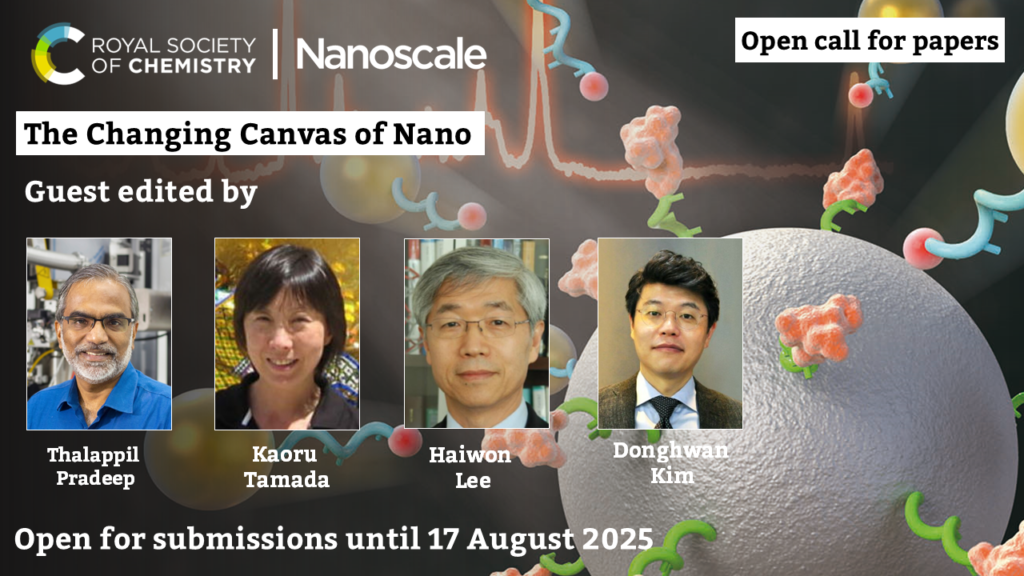
Nanoscale is delighted to announce an open call for our upcoming special themed collection on the “The Changing Canvas of Nano”, which aligns with the AsiaNano 2024 meeting, celebrating nanoscience and nanotechnology in Asia across a broad range of topics. This collection is guest edited by Prof Thalappil Pradeep (Indian Institute of Technology Madras, India) and Prof Haiwon Lee (Jeonju University, Republic of Korea), Donghwan Kim (Sungkyunkwan University, Republic of Korea), and Kaoru Tamada (Kyushu University, Japan).

Promotional graphic for Asia Nano conference 2024 open call

In the AsiaNano 2024 workshop, groundbreaking innovations in nanochemistry, nanomaterials, and nanotechnology were presented, with a special focus on the capturing the excellence of nano research from Asia. The evolution of the AsiaNANO conferences mirrors the changing canvas of nanotechnology itself, showcasing groundbreaking innovations in nanochemistry, nanomaterials, and nanotechnology. These meetings are crucial for developing a cohesive Asian network on nanoscience and nanotechnology, promoting not only scientific advancement but also a cooperative response to global challenges.

In this open call we invite all contributors to AsiaNano2024 as well as those involved in the nanoscience network across Asia to submit their work to Nanoscale.

This collection will covers a broad range of topics including:

  • Nanomaterials
  • Nanophotonics
  • Sustainable nanotechnology
  • Sensors/ Lab-on-chip and microfluidics
  • Advanced tools and applications
  • Nano-biology and nanomedicine

This call for papers is open for the following article types:

  • Communications
  • Full papers
  • Reviews

Open for submissions until 17 August 2025


How to submit


If you would like to contribute to this themed collection, you can submit your article directly through the Nanoscale online submission system. Please mention that this submission is an open call contribution to The Changing Canvas of Nano collection in the “Themed issues” section of the submission form and add a “Note to the Editor” that this is from the Open Call. The Editorial Office reserves the right to check suitability of submissions in relation to the scope of both the journal and the collection, and inclusion of accepted articles in the final themed issue is not guaranteed.

Please also note that all submissions will undergo the normal peer review processes including an initial assessment prior to peer review, and that peer review and acceptance are not guaranteed.

If you have any questions about the journal or the collection, then please contact the editorial office and they will be happy to answer them.


Digg This
Reddit This
Stumble Now!
Share on Facebook
Bookmark this on Delicious
Share on LinkedIn
Bookmark this on Technorati
Post on Twitter
Google Buzz (aka. Google Reader)

Welcoming Professor Baoquan Ding to Nanoscale and Nanoscale Advances as an Associated Editor

We are delighted to welcome Professor Baoquan Ding, National Center for Nanoscience and Technology, China, as a new Associate Editor working across Nanoscale and Nanoscale Advances.

Welcoming Baoquan Ding, National Center for Nanoscience and Technology, China, as a new Associate Editor working across Nanoscale and Nanoscale Advances.

Professor Ding obtained his B.S. in Chemistry from Jilin University in 2000. He received his Ph.D. degree in Chemistry from New York University in 2006. After a postdoctoral experience at Molecular Foundry, Lawrence Berkeley National Lab (2006-2009), he joined the Biodesign Institute, Arizona State University, as a research assistant professor (2009-2010). He became a full professor at NCNST in November 2010.

His research interests include nanostructure and nanodevice fabrication with self-assembled biomolecules and nanoparticles and the development of wide applications in drug delivery, biocatalysis, and nanophotonics

I look forward to strengthening the communication and collaboration between RSC and NCNST and contributing to promote Nanoscale to be one of the best Journals in nanoscience and nanotechnology.” – Professor Baoquan Ding

We welcome you to submit your latest work on nanostructure and nanodevice fabrication with self-assembled biomolecules and nanoparticles with applications in drug delivery, biocatalysis, and nanophotonics to his editorial office for consideration:


Submit your research to Nanoscale

Submit your research to Nanoscale Advances


Please join us in welcoming Professor Ding to Nanoscale and Nanoscale Advances and we hope you will consider Nanoscale and Nanoscale Advances for your future submissions!

Digg This
Reddit This
Stumble Now!
Share on Facebook
Bookmark this on Delicious
Share on LinkedIn
Bookmark this on Technorati
Post on Twitter
Google Buzz (aka. Google Reader)

Open Call for Papers – Reactivity and Self-Assembly in Confined Spaces

Open Call for Papers – Reactivity and Self-Assembly in Confined Spaces

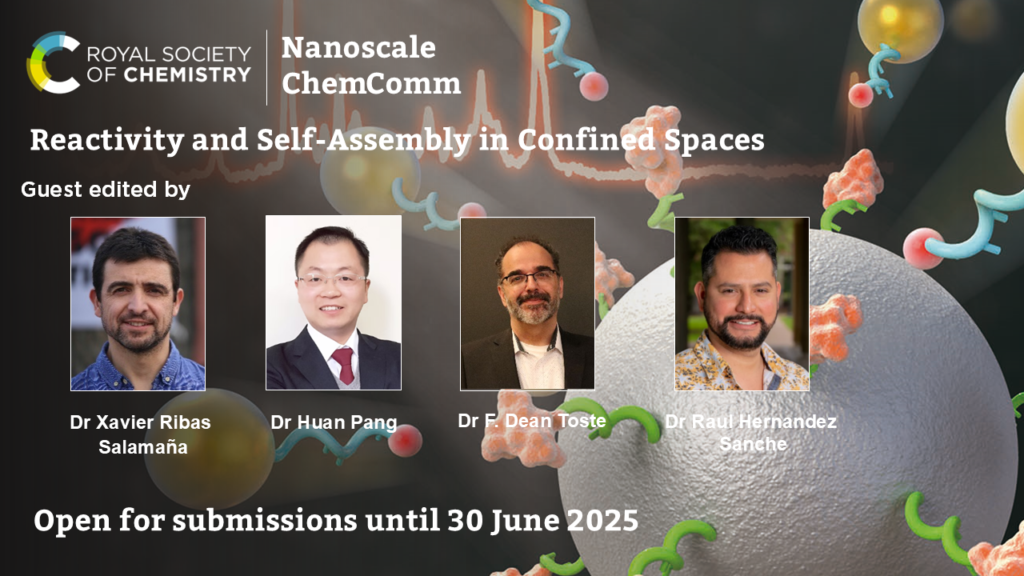
Guest Edited by Xavier Ribas Salamaña, Huan Pang, F. Dean Toste & Raul Hernandez Sanchez.

Nanoscale and Chem Comm are pleased to announce an open call for papers to an upcoming special collection on Reactivity and Self-Assembly in Confined Spaces. This collection is guest edited by Xavier Ribas Salamaña (IQCC, Spain), Huan Pang (Yangzhou University, China), F. Dean Toste (University of California Berkeley, USA) and Raul Hernandez Sanchez (Rice University, USA).

Open call promotional graphic

Reactions at confined sites generally exhibit high rates and exquisite selectivities that differ from those occurring in bulk solution. The confinement spot can be considered as a second coordination sphere of the catalyst, reminiscent of enzymatic active sites.  The orientation of the reagents and substrates is controlled by the special environment around the confined site leading to highly selective transformations. As such, structural constraints and weak interactions conspire to decrease activation barriers of precise reactions to furnish rapid chemo-, regio-, and stereoselective transformations. Therefore, shedding light on reactions taking place at confined spaces is crucial to tame their reactivity and add another level of control to catalyst design.

Reactivity and self-assembly in confined spaces would cover the behavior of chemical species within nanoconfined environments such as colloidal nanoparticle surfaces, polymeric nanosystems, coordination cage cavities, and nanopores within porous materials.


Open for submissions until 30 June 2025


How to submit

If you would like to contribute to this themed collection

  1. Log into either the Nanoscale or Chem Comm online submission system.
  2. Submit your article
  3. Select your article type and under the “Themed issues” section in the submission form mention that it is an Open Call contribution to the Reactivity and Self-Assembly in Confined Spaces collection
  4. Add a “Note to the Editor” that this is from the Open Call

The Editorial Office reserves the right to check suitability of submissions in relation to the scope of both the journal and the collection, and inclusion of accepted articles in the final themed issue is not guaranteed. Please note that all submissions will be subject to initial assessment and rigorous peer review to meet the usual high standards of Nanoscale and ChemComm. All articles featured in the collection must be in scope and as such final inclusion is not guaranteed and will be up to the discretion of the guest editors.

We look forward to receiving your latest work and considering it for this collection. Please do get in touch at nanoscale-rsc@rsc.org if you have any questions at all.

Digg This
Reddit This
Stumble Now!
Share on Facebook
Bookmark this on Delicious
Share on LinkedIn
Bookmark this on Technorati
Post on Twitter
Google Buzz (aka. Google Reader)

Nanocatalysis: A Nanoscale Themed Collection

Nanocatalysis

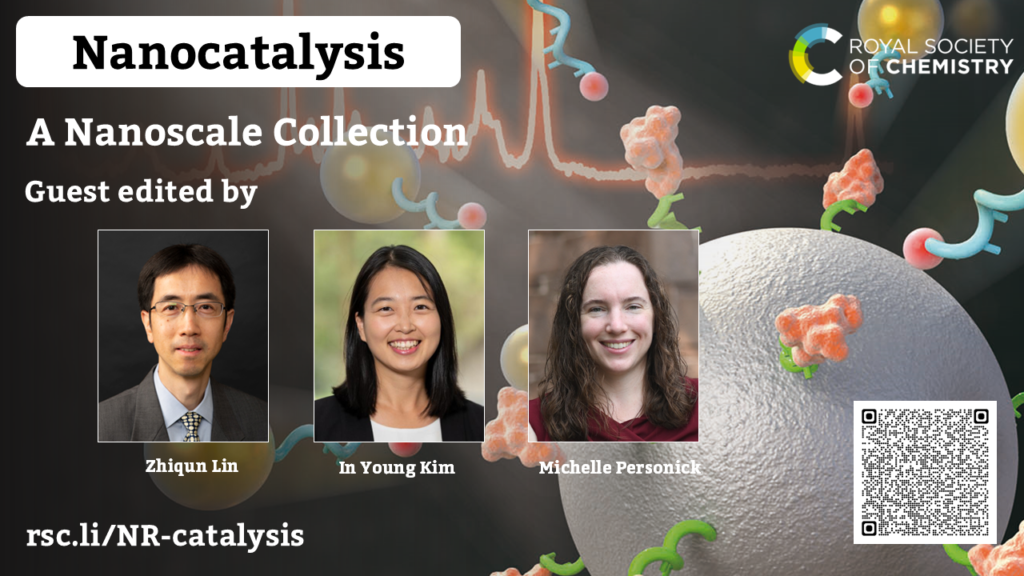
Guest edited by Dr In Young Kim, Dr Michelle Personick, and Dr Zhiqun Lin.

Nanocatalysis represents an exciting subfield in nanoscience and nanotechnology which involves the use of nanomaterials and subnano-sized materials (nanoclusters, diatoms, single atoms) as catalysts for a wide variety of homogeneous and heterogeneous catalytic applications. Along with significant advances in nanomaterial design and synthesis assisted by machine learning, in-situ/ex-situ characterization techniques, and computational chemistry, the past several decades have witnessed a flood of research activities in this rapidly evolving area with most of the studies focusing on the effects of size, shape, chemical composition and morphology on catalytic properties and performance. This has led to the development of highly effective catalysts with enhanced activity, selectivity, and stability.

This special themed collection aims to provide a platform to showcase the recent progress and challenges in the field of nanocatalysis.

All articles in the collection are free to read until April 2025

Read the collection

A promotional graphic for the nanoscatalysis collection

We invite you to discover the latest research from collection and to read the introductory editorial written by guest editors Dr In Young Kim, Dr Michelle Personick, and Dr Zhiqun Lin.

Read the introductory editorial

All of the articles in the collection are free to access until April 2025. Read some of the featured articles below.


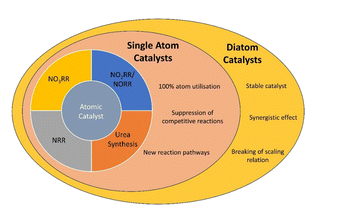
Single and dual-atom catalysts towards electrosynthesis of ammonia and urea: a review.

Wenyu Luo, Jiawei Liu, Yue Huc and Qingyu Yan.

Nanoscale, 2024,16, 20463-20483


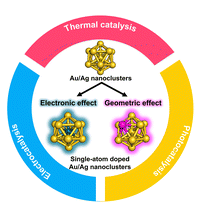
Atomically precise Au and Ag nanoclusters doped with a single atom as model alloy catalysts.
Shinya Masuda, Kosuke Sakamotoa and Tatsuya Tsukuda.

Nanoscale, 2024,16, 4514-4528

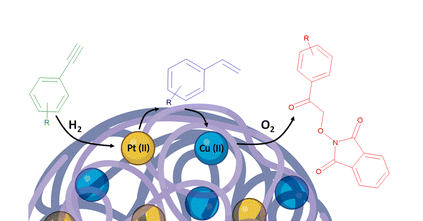
Consecutive one-pot alkyne semihydrogenation/alkene dioxygenation reactions by Pt(ii)/Cu(ii) single-chain nanoparticles in green solvent.
Jokin Pinacho-Olaciregui,  Ester Verde-Sesto,  Daniel Taton and  José A. Pomposo
Nanoscale
,
2024,16, 9742-9747

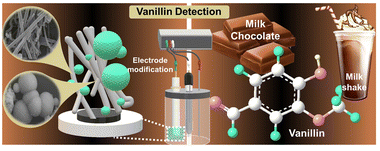
Neodymium niobate nanospheres on functionalized carbon nanofibers: a nanoengineering approach for highly sensitive vanillin detection.
I.Jenisha Daisy Priscillal and Sea-Fue Wang.

Nanoscale, 2024,16, 12459-12473

Nanoscale is a high-impact international journal, publishing high-quality experimental and theoretical work across the breadth of nanoscience and nanotechnology. Our broad scope covers cross-community research that bridges the various disciplines involved with nanoscience and nanotechnology.

We hope you enjoy reading this collection and look forward to showcasing more work on optical nanomaterials in the future. Please continue to submit your exciting work to Nanoscale.

Digg This
Reddit This
Stumble Now!
Share on Facebook
Bookmark this on Delicious
Share on LinkedIn
Bookmark this on Technorati
Post on Twitter
Google Buzz (aka. Google Reader)

Professor Zhuo Kang joins the Associate Editor team

Professor Zhuo Kang joins the Editorial Board!

Welcome to Nanoscale and Nanoscale Advances!


A photo of the new Nanoscale and Nanoscale Advances Associate Editor, Zhuo KangWe are delighted to welcome Professor Zhuo Kang from the University of Science and Technology Beijing (USTB), China, as a new Editorial Board member working across Nanoscale and Nanoscale Advances.

Zhuo Kang received his B.S. (2011) and Ph.D. degree (2016) from the Department of Materials Science and Engineering at University of Science and Technology Beijing (USTB). He carried out his academic visit at Purdue University, USA sponsored by China Scholarship Council in 2012-2013. He accomplished his postdoctoral research at USTB in 2018, and currently is a professor at Academy for Advanced Interdisciplinary Science and Technology (AAIST), USTB. He also serves as the deputy director of State Key Laboratory for Advanced Metals and Materials and deputy dean of AAIST at USTB.

Zhuo is devoted to the applied basic research on low-dimensional clean energy materials. He focuses on controllable growth, interface regulation and service behavior of low-dimensional materials as well as their application in energy conversion and storage including photovoltaics, electrocatalysis and electrochemical batteries. He has published >100 peer-reviewed papers in international academic journals, co-authored 4 monographs, and holds 16 Chinese and 1 US patents.

“To join the Editorial Board is a very honorable and exciting move, and it also endows me with a great opportunity to get more involved in the remarkable development of our journals and learn more from our professional colleagues. I’m totally ready to fulfill my duties and start this fantastic journey with our first-class editorial team towards the bright future of RSC journals.” – Professor Zhuo Kang

We welcome you to submit your latest work on nanomaterials for energy conversion and storage to our Nanoscale and Nanoscale Advances!

Submit your latest research


Digg This
Reddit This
Stumble Now!
Share on Facebook
Bookmark this on Delicious
Share on LinkedIn
Bookmark this on Technorati
Post on Twitter
Google Buzz (aka. Google Reader)