Archive for the ‘Conference’ Category

Congratulations to the winners at the 10th International Nanomed Conference

#oznanomed the 10th International Nanomedicine Conference took place from 24 – 26 June 2019 in Sydney, Australia.


Congratulations to all the student prize winners!


Congratulations to Zerong Ma from the Children’s Cancer Institute, Australia, who was awarded an oral presentation prize sponsored by Journal of Materials Chemistry B.

Congratulations to Yi Ju from the University of Melbourne, Australia, who was awarded an oral presentation prize sponsored by Nanoscale Advances.

Congratulations to Pramod Jagtap from the Indian Institute of Technology, India, who was awarded an oral presentation prize sponsored by Nanoscale Horizons.
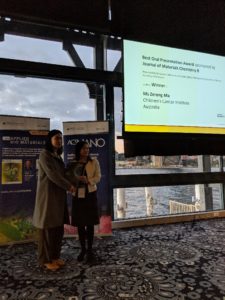
Zerong Ma, Children’s Cancer Institute, Australia, received her award from Professor Chunying Chen, NCNST and Nanoscale Advances Associate Editor.
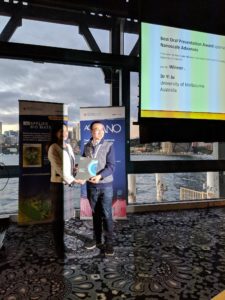
Yi Ju, University of Melbourne, Australia, receives his award from Professor Chunying Chen, NCNST and Nanoscale Advances Associate Editor.
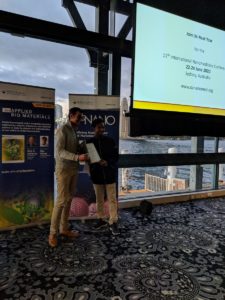
Pramod Jagtap, Indian Institute of Technology, India, recieves his award from Professor Cyrille Boyer, Co-director of the Australian Centre for Nanoscience.


Digg This
Reddit This
Stumble Now!
Share on Facebook
Bookmark this on Delicious
Share on LinkedIn
Bookmark this on Technorati
Post on Twitter
Google Buzz (aka. Google Reader)

Congratulations to the Poster Prize winners at ISPM 2019!

From 26 – 29 May 2019 the International Scanning Probe Microscopy Conference was held in Louvain-la-Neuve, Belgium and the nanoscale journal family was delighted to sponsor student poster prizes at the event – congratulations to the winners!

Dr Andreas Karner (Univ. of Applied Sciences, Linz) won the Nanoscale Horizons prize

Emilie Gachon (King’s College, London) won the Nanoscale prize

Dr Melanie Köhler (UClouvain, Belgium) won the Nanoscale Advances prize

Digg This
Reddit This
Stumble Now!
Share on Facebook
Bookmark this on Delicious
Share on LinkedIn
Bookmark this on Technorati
Post on Twitter
Google Buzz (aka. Google Reader)

Centre for Plastic Electronics Annual Symposium 2019

The Centre for Plastic Electronics is hosting its prestigious annual symposium on 10 and 11 June 2019, which Nanoscale is proud to support. It will take place at Imperial College London and has already attracted several high-profile speakers to discuss their latest advances in the science and technology of organic conducting materials and of organic/flexible electronics and photonics. The program includes a day of short talks and poster presentations by students and early career scientists giving them a platform to highlight their recent work.

More information and details of how to register is available on the website: http://www3.imperial.ac.uk/newsandeventspggrp/imperialcollege/centres/plasticelectronics/eventssummary/event_20-2-2019-14-14-7.

Abstracts submissions for poster presentations are open until the 31 May.  

The organisers are also delighted to host Prof Erwin Reisner of the University of Cambridge who will be giving his RSC Corday-Morgan Prize talk for his work on the development of solar-driven catalysis with molecularly engineered semiconductors and semi-artificial photosynthesis.

The symposium will cover all areas related to organic/plastic electronics and photonics, including chemistry, physics, materials science and device engineering. Confirmed speakers include:

  • Christine Luscombe, University of Washington
  • Andy Cooper, University of Liverpool
  • Iain McCulloch, KAUST and Imperial College London
  • Erwin Reisner, University of Cambridge
  • Kwanghee Lee, GIST, South Korea
  • Henry Yan, Hong Kong University of Science and Technology
  • Ji-Seon Kim, Imperial College London
  • Artem Bakulin, Imperial College London
  • Maria Ibáñez, Institute of Science and Technology, Austria
  • Rachel Evans, University of Cambridge
  • Oliver Dumele, Humboldt University of Berlin, Germany
  • Hyejeong Seong, Imperial College London
  • Rowena Brugge, Imperial College London
  • Ludmilla Steier, Imperial College London
  • Jess Wade, Imperial College London
  • Alex Clark, Imperial College London

With more speakers being confirmed in the coming weeks, this will be an event not to miss!

If you cannot attend the Symposium, you can follow the hashtag #CPESymp19 on Twitter.

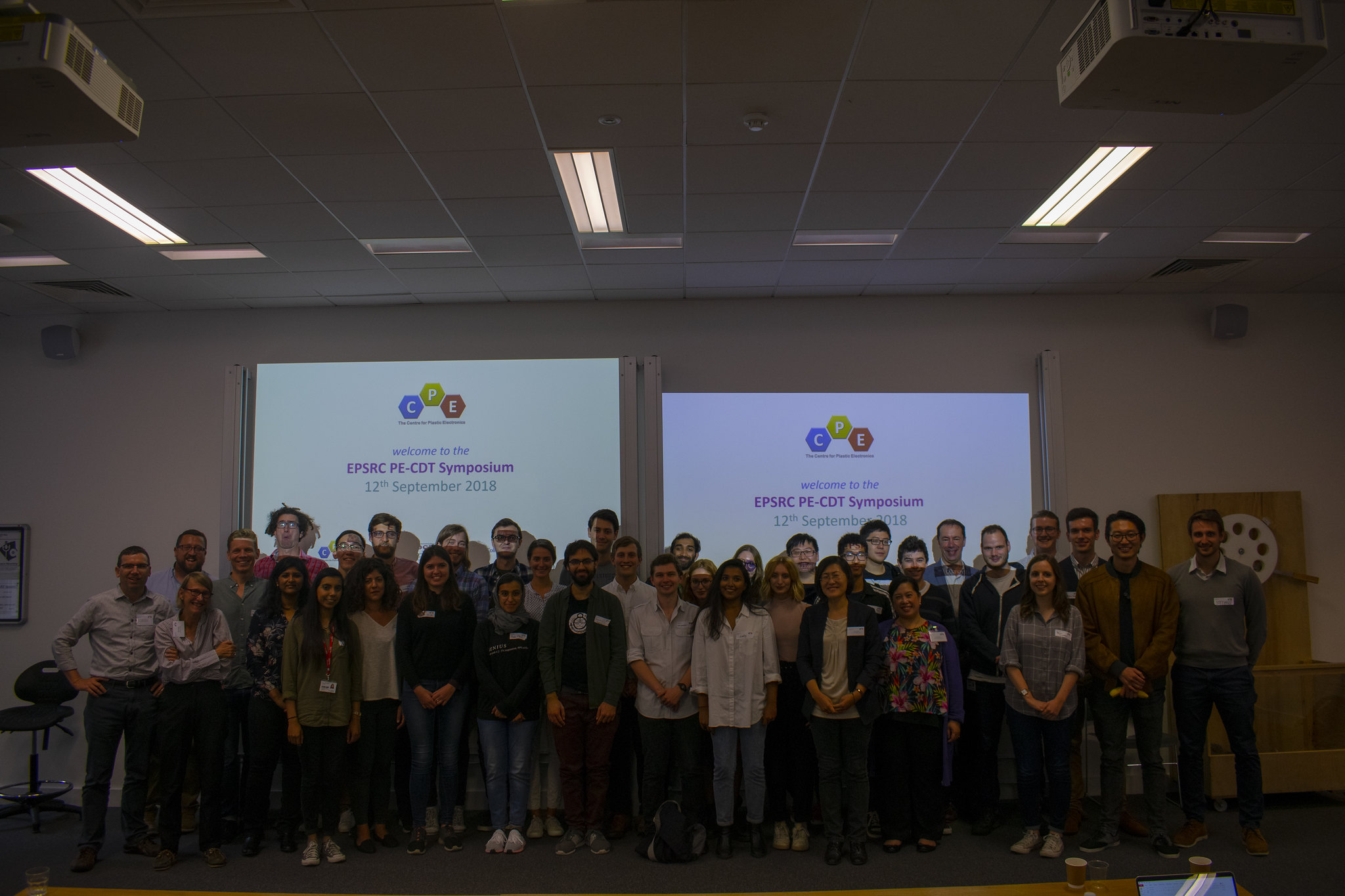
Attendees at the 2018 edition of the event. Credit Dr Jess Wade.

Digg This
Reddit This
Stumble Now!
Share on Facebook
Bookmark this on Delicious
Share on LinkedIn
Bookmark this on Technorati
Post on Twitter
Google Buzz (aka. Google Reader)

Nano Korea 2019

Nanoscale Horizons, Nanoscale and Nanoscale Advances are delighted to support the Nano Korea 2019 symposium which takes place from 2-5 July 2019!

Meet the Editor: Professor Dong Ha Kim, Associate Editor of Nanoscale and Nanoscale Advances, will be attending Nano Korea 2019.

At Korea’s largest nanoscience and nanotechnology conference, internationally known experts, including industry leaders, will join the four day conference to discuss the most critical technological advances and innovations in the field. The first day of the meeting offers a variety of tutorial sessions followed by talks and poster presentations throughout the rest of the meeting.

Topics

The conference programme incorporates symposia covering a broad range of subjects in Nanoscience and Nanotechnology, which creates an excellent platform to academia and industry delegates to build up national and international collaborative networks, exchange experiences and benefit from peer support.

The conference topics will include:

  • Nanoelectronic devices

  • 1D & 2D Nanomaterials

  • Hybrid Nano Structural Materials

  • Nanobiotechnology

  • Nanotechnology for Energy & Environment

  • Computational Nano Science & Technology for Nanomaterials

… and many others. Find an overview here.

Key Dates

Pre-Registration due 31st May 2019

Full Paper Submission due 19th July 2019

More information available on the conference website: http://sympo.nanokorea.or.kr/2019/eng/main/

Digg This
Reddit This
Stumble Now!
Share on Facebook
Bookmark this on Delicious
Share on LinkedIn
Bookmark this on Technorati
Post on Twitter
Google Buzz (aka. Google Reader)

Congratulations to prize winners at Bioinspired Nanomaterials 2019!

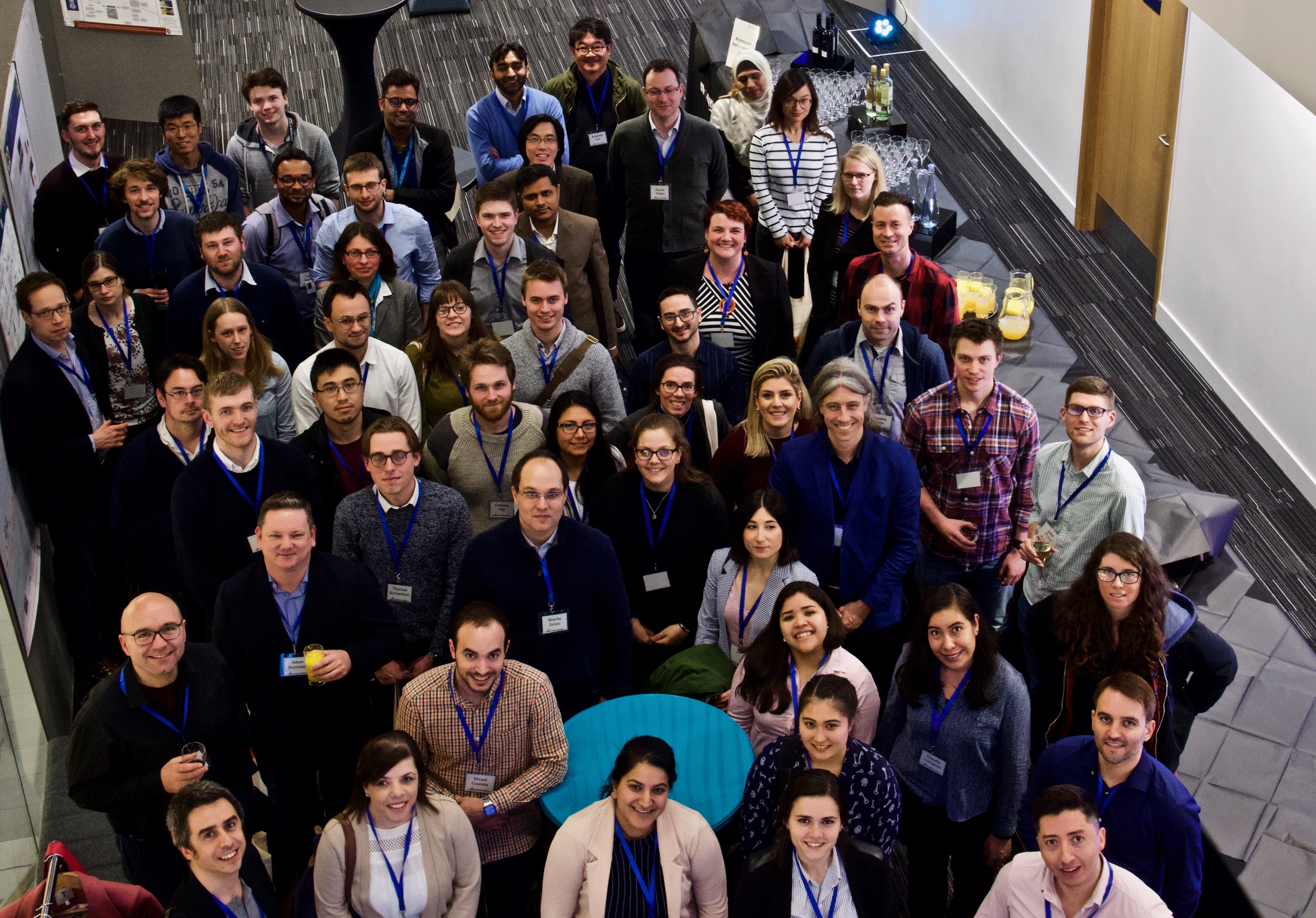
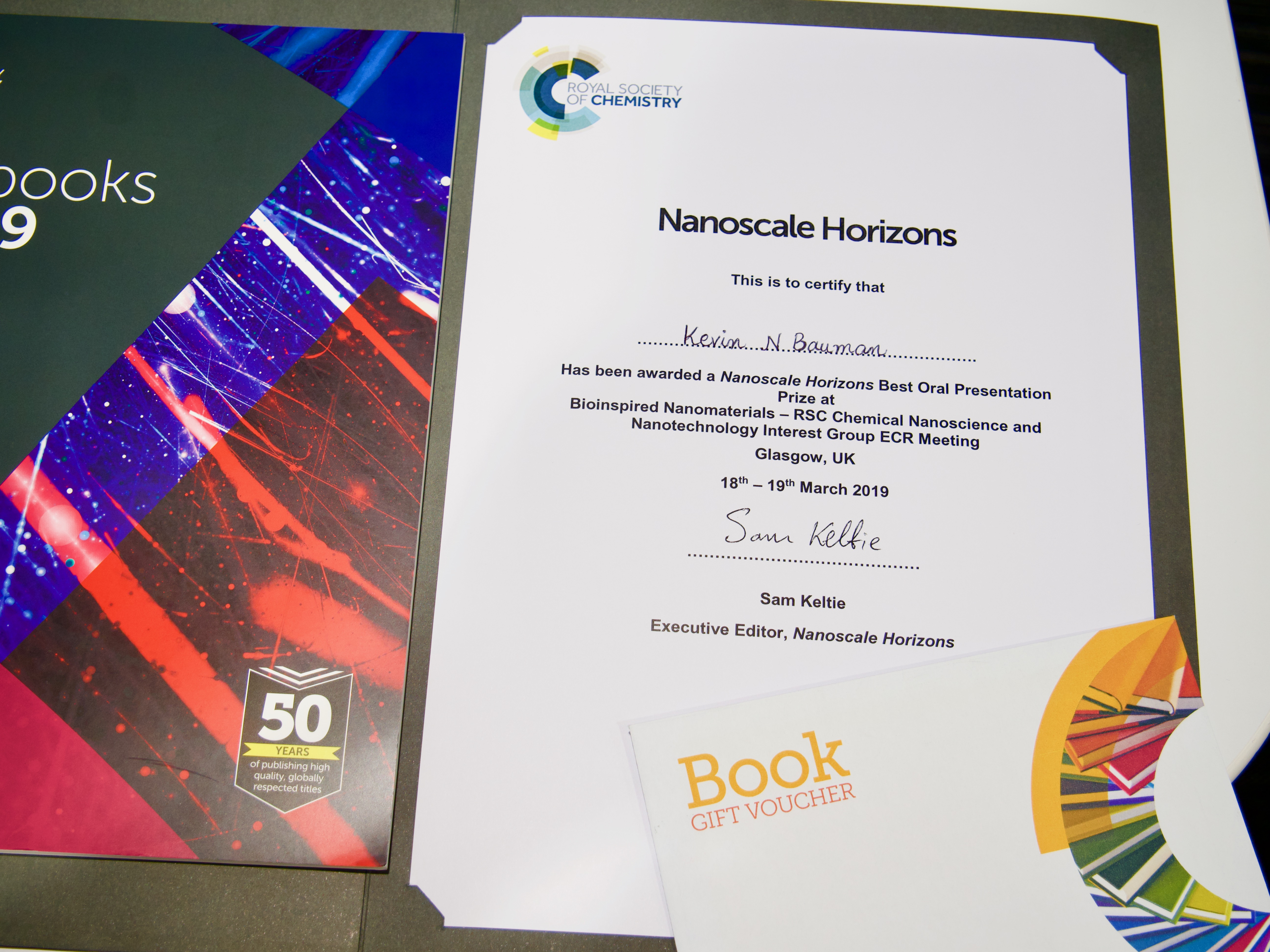
The Nanoscale journal family was delighted to sponsor prizes at the recent Bioinspired Nanomaterials 2019 ECR meeting, at the University of Strathclyde, Scotland.

Organised by Dr King Hang Aaron Lau, University of Strathclyde, Professor Carsten Mim, KTH Stockholm, and Professor Basit Yameen, Lahore University of Management Sciences, this meeting brought together researchers in biological structure characterization as well as bioinspired soft matter and bionanotechnology.

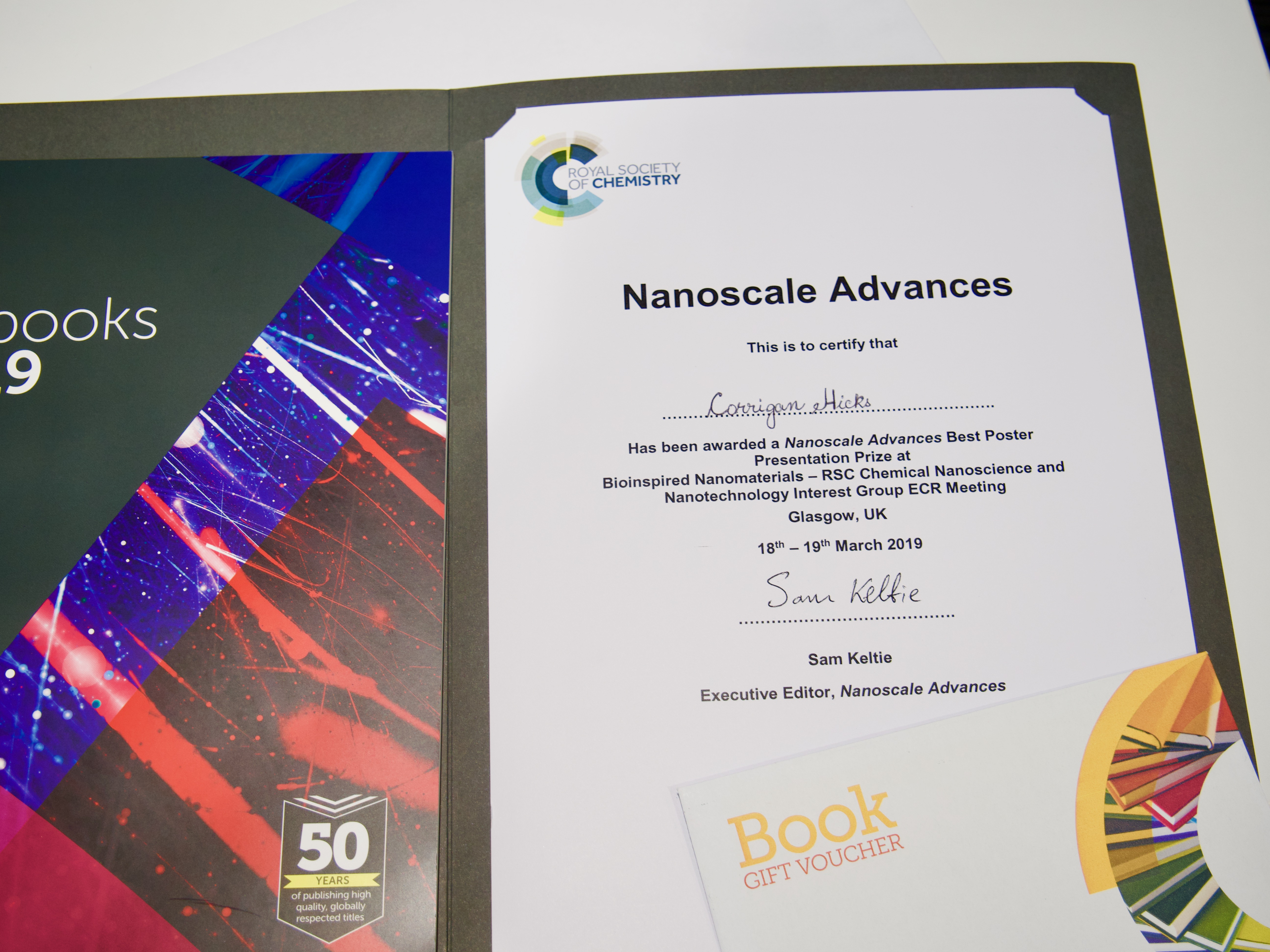
Congratulations to the prize winners:


Poster presentation prizes

1. Corrigan Hicks, University of Bristol

2. (joint) Mohammad Al Qaraghuli, University of Stratchlyde

2. (joint) Tales Rocha DeMoura, KTH Royal Institute of Technology


Oral presentation prizes

1. Kevin Baumann, University of Cambridge

2. Colette Whitfield, Newcastle University


More photos and information are available on the event website: https://bio-nanomaterials-glasgow-2019.org.uk/

Digg This
Reddit This
Stumble Now!
Share on Facebook
Bookmark this on Delicious
Share on LinkedIn
Bookmark this on Technorati
Post on Twitter
Google Buzz (aka. Google Reader)

IEEE NANO 2019

The 19th IEEE Conference on Nanotechnology (IEEE-NANO 2019) will be held from 22-26, July 2019, in the Parisian Macao, Macau, China.

IEEE-NANO is the flagship IEEE conference on nanotechnology, which has been a successful annual conference since 2001. Recent conferences were held in Cork (2018), Pittsburgh (2017), Sendai (2016), Rome (2015), and Toronto (2014). This is only the 3rd time that the conference will be held in Greater China since its inception almost two decades ago (i.e., Hong Kong in 2007 and Beijing in 2013).

Topics

The conference scope spans both nanoscience and nanotechnology, including:

  • Developing new nanomaterials or manipulating matter at nanometre length scale
  • Studying the fundamental physical, chemical or biological properties of these nanomaterials and nanostructures
  • Manipulating and optimizing nanomaterials and nanostructures to create new nanosensors, nanoactuators andnanoelectronic/nanophotonic devices.

Listed below are some of the more specific topics that IEEE-NANO 2019 will focus on:

  • Micro/Nano Electro-Mechanical Systems (M/NEMS)
  • Micro/Nano/Molecular Fabrication
  • Nanomaterials
  • Nanomaterial Based Devices and Systems
  • Nanophotonics and Nanoscale Imaging
  • Nanoscale Robotics, Assembly, and Automation
  • Molecular Sensors, Actuators, and Systems
  • Micro/Nano Fluidics
  • Micro/Nano Mechanics
  • Nanobiology/Nanomedicine

Deadlines

Oral Abstract Submission 15 February 2019

Poster Abstract Submission 15 May 2019

Early Bird Registration 15 June 2019


More information available on the conference website: https://2019.ieeenano.org/

Digg This
Reddit This
Stumble Now!
Share on Facebook
Bookmark this on Delicious
Share on LinkedIn
Bookmark this on Technorati
Post on Twitter
Google Buzz (aka. Google Reader)

POEM 2019 and SPb-POEM 2019: Photonic and OptoElectronic Materials Conferences

Novel Photonic and Optoelectronic Materials for Real World Applications…

Nanoscale and Nanoscale Advances are delighted to support the 2nd Photonic and Optoelectronic Materials (POEM) Conference and the first Saint-Petersburg Academic University POEM conference!

Meet the Editor: Professor Andrea Ferrari, Associate Editor, will be speaking at POEM 2019.

Internationally known experts, including industry leaders, will join these four day conferences to discuss the most critical technological advances and innovations in the field of novel photonic and optoelectronic materials and systems for a wide range of applications in communications, computations, energy harvesting, bio-chemical sensing and artificial intelligence.

Topics

The conference programme incorporates symposia covering a broad range of subjects in Photonic and Optoelectronic Materials (from 2D, chalcogenide and group IV materials, to organic and quantum dot nanomaterials, to liquid crystals and fluid nanocomposites), which creates an excellent platform to academia and industry delegates to build up national and international collaborative networks, exchange experiences and benefit from peer support.

The conference topics will include:

  • 2D materials

  • IV element-based photonic materials and devices

  • Chalcogenide materials

  • Quantum Dots and Nanowires

  • Organic materials

  • Liquid Crystals and Fluid Nanocomposites​

The conference programme will incorporate the following symposia:

  • 2D Material Symposium

  • Liquid Crystal Symposium

  • THz Optoelectronics and Photonics Symposium

  • Nanophotonics Symposium

  • Energy Materials Symposium

  • Metamaterials and Plasmonic Devices Symposium

  • Smart Biosensors and Bioanalytical Systems Symposium

  • Microscopy and Microspectroscopy of Nanomaterials Symposium

Key Dates

Abstract Submission 1st March 2019

Registration 25th March 2019


More information available on the conference websites: https://www.poem2019.com/and https://www.spb-poem.com/

Digg This
Reddit This
Stumble Now!
Share on Facebook
Bookmark this on Delicious
Share on LinkedIn
Bookmark this on Technorati
Post on Twitter
Google Buzz (aka. Google Reader)

Congratulations to the prize winners at SNAIA2018

The 1st SNAIA2018 Conference took place in December 2018 and was a great success, attracting more than 200 delegates from around the world to discuss their work on smart nanomaterials.

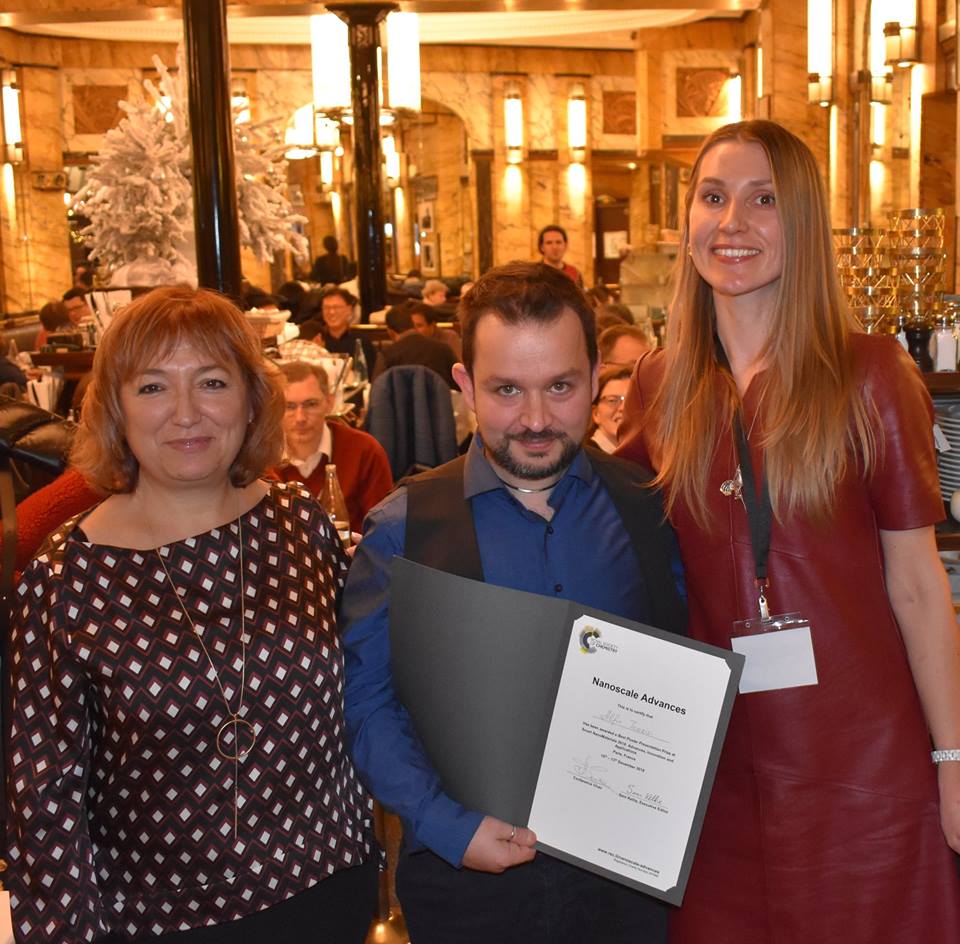
The Royal Society of Chemistry was delighted to support student prizes at SNAIA2018. Congratulations to all  the prize winners!

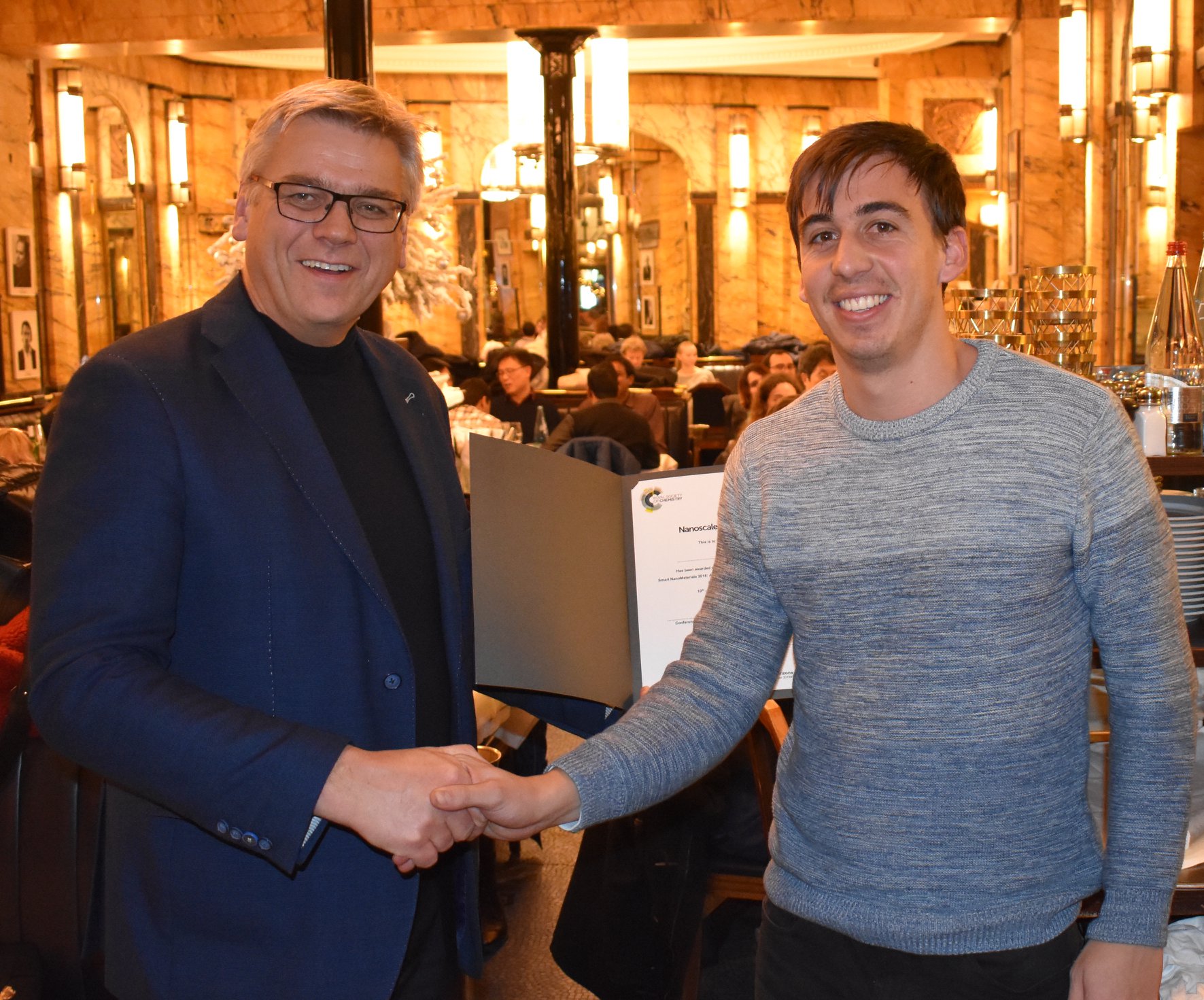
The Best Student Talk Prize, supported by Nanoscale Horizons, was awarded to Joaquin Faneca (University of Exeter, UK) by Prof Jochen Feldmann (Ludwig Maximilian University of Munich, Germany).

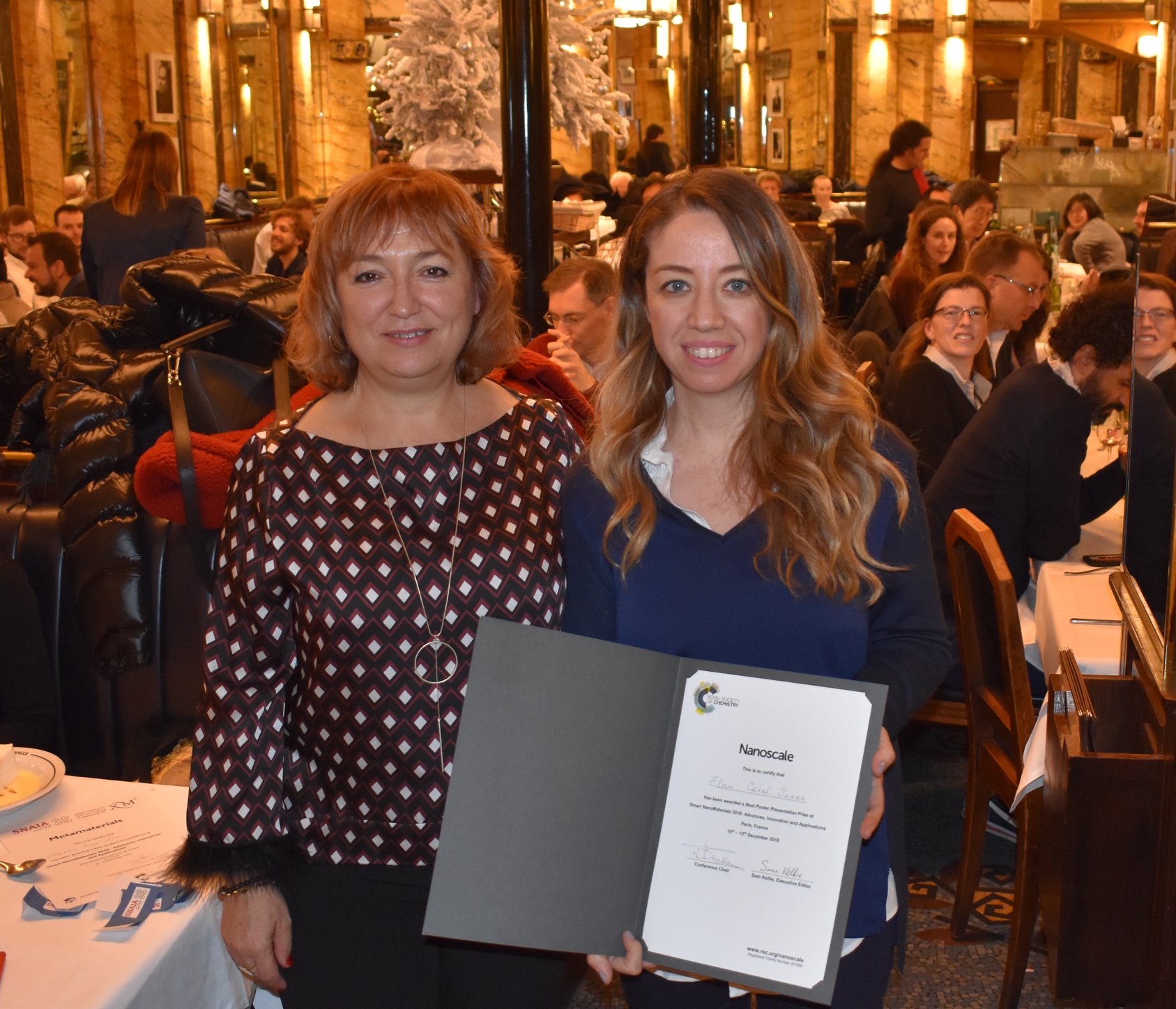
The Best Poster Presentation Prize, supported by Nanoscale, was awarded to Elcin Cakal Sarac (Istanbul University, Turkey) by Prof Laura Lechuga (Catalan Institute of Nanoscience and Nanotechnology, Spain).

The Best Poster Presentation Prize supported by Nanoscale Advances, was awarded to Alfio Torrisi (Nuclear Physics Institute, Czech Republic) by Prof Laura Lechuga (Catalan Institute of Nanoscience and Nanotechnology, Spain).

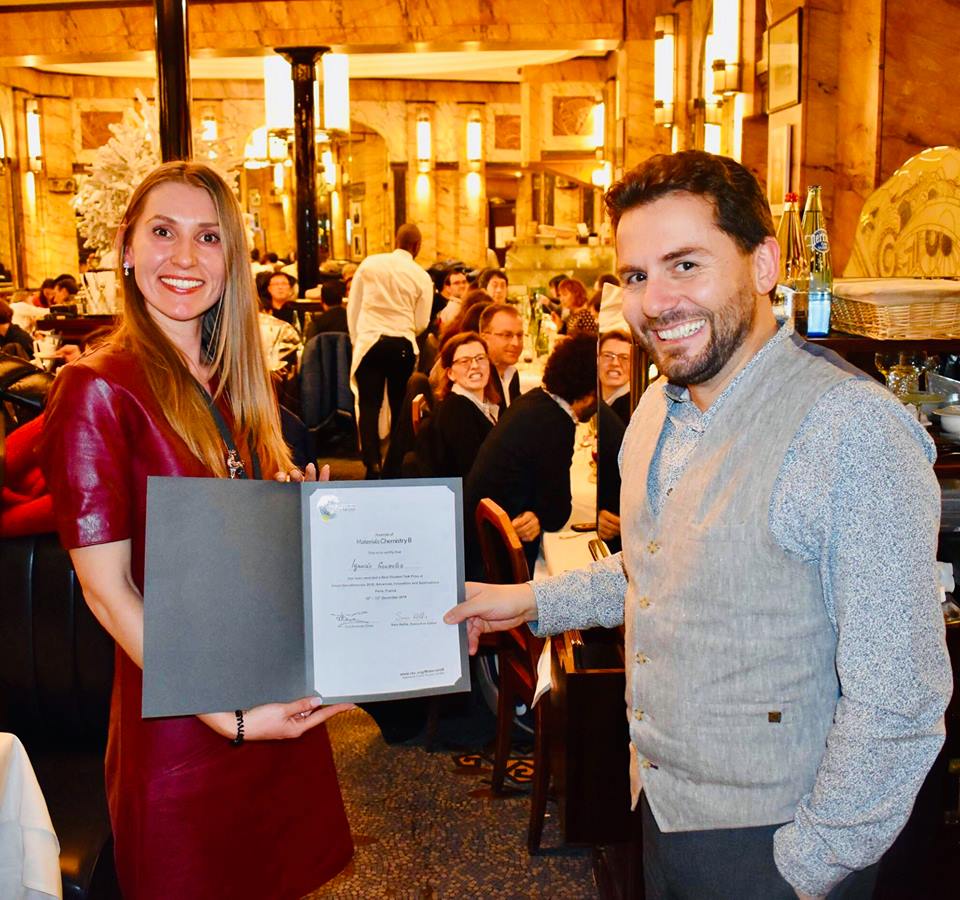
The Best Student Talk Prize, supported by Journal of Materials Chemistry B,  was awarded to Ignacio Gonzalez (IFW Dresden, Germany) by Prof Pavlos Lagoudakis (University of Southampton, UK; Skoltech University, Russia).


Digg This
Reddit This
Stumble Now!
Share on Facebook
Bookmark this on Delicious
Share on LinkedIn
Bookmark this on Technorati
Post on Twitter
Google Buzz (aka. Google Reader)

MRS Spring Meeting 2019 – Excitonic Materials & Quantum Dots for Energy Conversion

Symposium ES19 – Excitonic Materials and Quantum Dots for Energy Conversion

Multi-excitonic processes in conjugated organic molecules and quantum confined semiconductor nanocrystals potentially allow the energy in photons to be directed as desired. Design of the molecular framework or material nanostructure will allow a wide range of optical, electronic and mechanical properties to be engineered for energy conversion. This symposium will emphasize the diverse applications of excitonic materials, including colloidally synthesized quantum dots, pi-conjugated systems, and their hybrid constituents, in applications ranging from photovoltaics to bioimaging. There will also be sessions focusing on fundamental materials properties correlating structure to photophysical properties, nano- and mesoscale order and composition to optoelectronic properties of thin films. The symposium will highlight recent progress and identify new directions in emerging, interdisciplinary areas of nanoscience.

Nanoscale Advances is delighted to sponsor this session.

Topics will include:

  • Computational methods for excitonic materials
  • Exciton-based photon upconversion
  • Multiple exciton generation in QDs
  • Singlet fission in molecules or polymers
  • Exciton-charge dynamics in organic/QD hybrid systems
  • Optoelectronic devices (e.g. transistors, photodetectors) based on exciton or charge transport
  • Role of the interface in energy and charge transport
  • Hierarchical order at the nano- and mesoscale (e.g. organic or QD thin films)
  • Emerging applications incorporating colloidally-synthesized QDs, e.g. Biological: in-vivo and in-vitro; Photocatalysis: solar fuel production; Next-generation photovoltaics with the lead chalcogenides and perovskites


Invited Speakers:

  • Ryu Abe (Kyoto University, Japan)
  • Marc Baldo (Massachusetts Institute of Technology, USA)
  • Bruno Ehrler (AMOLF, Netherlands)
  • Daniel Gamelin (University of Washington, USA)
  • Neil Greenham (Cambridge University, United Kingdom)
  • Dirk Guldi (Friedrich-Alexander-Universitaet Erlangen-Nuernberg, Germany)
  • Kathryn Knowles (University of Rochester, USA)
  • Maksym Kovalenko (Eidgenössische Technische Hochschule Zürich, Switzerland)
  • Maria Antonietta Loi (University of Groningen, Netherlands)
  • Kenji Matsuda (Kyoto University, Japan)
  • Hunter McDaniel (UbiQD, Inc., USA)
  • Ivan Mora-sero (Universitat Jaume I, Spain)
  • Zhijun Ning (Shanghai Tech University, China)
  • Matthew Panthani (Iowa State University, USA)
  • Sean Roberts (University of Texas at Austin, USA)
  • Edward Sargent (University of Toronto, Canada)
  • Alina Schimpf (University of California, San Diego, USA)
  • Pete Sercel (California Institute of Technology)
  • Tomohiro Shiraki (Kyushu University, Japan)
  • Susanna Thon (Johns Hopkins University, USA)
  • Mark Wilson (University of Toronto, Canada)
  • Vanessa Wood (ETH Zürich, Switzerland)
  • Xinhua Zhong (East China University of Science and Technology, China)
  • Joel Yuen Zhou (University of California, San Diego, USA)


Symposium Organizers

MingLee Tang
University of California, Riverside
Joey Luther
National Renewable Energy Laboratory
Wanli Ma
Soochow University
Institute of Functional Nano and Soft Materials
Nobuhiro Yanai
Kyushu University
Department of Chemistry and Biochemistry

Further Information

Register before 5 April 2019 for reduced rates!

More details are available on the event website: https://www.mrs.org/spring2019/registration

Digg This
Reddit This
Stumble Now!
Share on Facebook
Bookmark this on Delicious
Share on LinkedIn
Bookmark this on Technorati
Post on Twitter
Google Buzz (aka. Google Reader)

CECAM Workshop – Challenges in modeling and simulations of nanoparticles in complex environments

May 29, 2019 to May 31, 2019

Location

CECAM-IT_SIMUL, Italian Institute of Technology – Genoa, Italy

Organisers

  • Zoe Cournia (Academy of Athens, Greece)
  • Adam Pecina (Istituto Italiano di Tecnologia, Italy)
  • Marco De Vivo (Istituto Italiano di Technologia, Italy)

Supports

   CECAM

 Nanoscale Horizons

 Nanoscale

 Nanoscale Advances

and more.

Description

Practical information: 

The deadline for registration is April 12th (with final answers given on April 30th)

Our workshop will host ~20 invited talks of 35 min (including Q&A). In addition to planned poster session, a few slots (~5) for short talks of ~25 min are available. If you would like to present your results, please mention your preferred format (contributed talk or poster) with your application.


This workshop will focus on the current challenges in computational simulations of nanoparticles, including their functionalization, from catalysis (nanozymes) to membrane interacting nanoparticles. In addition, the workshop will take advantage of several experimentalists working on nanoparticles interacting with materials and biological environment. Ultimately, we will discuss and debate on how computational methods can further evolve to build novel tools for a deeper understanding of nanostructures and nanomaterials.

Sessions will focus mainly on the methodological improvements for studying nanoparticles and their interaction with complex realistic environments, including protein membranes. We will discuss our models and approaches with experimentalists throughout the workshop’s sessions:

  1. Nanoparticles and membranes
  2. Functionalized Nanoparticles
  3. Experiments meet simulations for nanoscience
  4. Nanoparticles for health and technology


For more information please visit the workshop website: https://www.cecam.org/workshop-0-1823.html 

Digg This
Reddit This
Stumble Now!
Share on Facebook
Bookmark this on Delicious
Share on LinkedIn
Bookmark this on Technorati
Post on Twitter
Google Buzz (aka. Google Reader)