Author Archive

Meet the authors of the Nanoscale Advances Paper Prize Award winning paper

Enhancing photoluminescence performance of perovskite quantum dots with plasmonic nanoparticles: insights into mechanisms and light-emitting applications

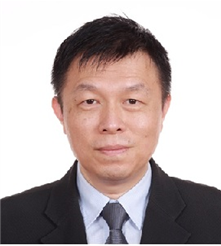
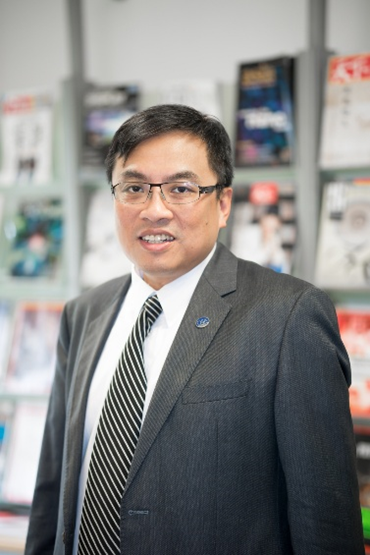
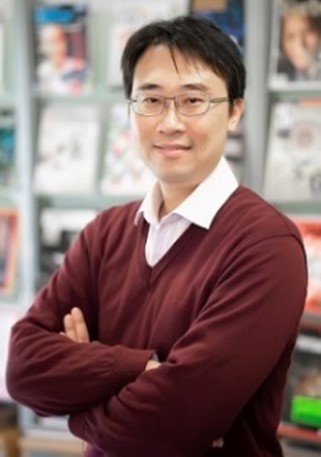
Gautham Kumar, Chien-Chung Lin, Hao-Chung Kuo and Fang-Chung Chen
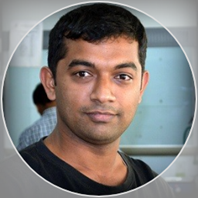
Dr Gautum Kumar Dr. Gauthm Kumar is a researcher in the field of photonics, electronic materials, and semiconductor devices. He earned his PhD from National Yang Ming Chiao Tung University and is currently a postdoctoral researcher at the College of Semiconductor Research at National Tsing Hua University (NTHU). With expertise in quantum dots and semiconductor devices, Dr. Kumar is deeply engaged in advancing optoelectronic and semiconductor technologies. His current research focuses on developing HfO2-based systems and technologies for storage-class memory and in-computing memory applications. Additionally, investigates the fundamental principles governing the positioning of emerging energy technologies, exploring their long-term societal and environmental impacts.
Chien-Chung Lin Chien-Chung Lin received the Ph.D. degree in Electrical Engineering from Stanford University. He joined National Taiwan University in 2021 as the professor in the Graduate Institute of Photonics and Optoelectronics, and he was with National Chiao Tung University (NCTU) from 2009 to 2021. His research efforts are in design and fabrication of novel semiconductor optoelectronic devices. Since 2016, he has been jointly appointed by the Industrial Technology Research Institute (ITRI), where he participates and leads micro-LEDs and silicon photonics projects. Before NCTU, he worked for E2O communications and Santur Inc. in USA. He is a Fellow of the OPTICA.
Hao-Chung Kuo Hao-Chung Kuo received the Ph.D. degree from the Electrical and Computer Engineering Department, University of Illinois at Urbana Champaign, Urbana, in 1999. Since October 2002, he has been a Faculty Member of the Institute of Electro-Optical Engineering, National Chiao Tung University, Hsinchu, Taiwan. His current research interests include semiconductor lasers, vertical-cavity surface-emitting lasers, blue and UV LED lasers, quantum-confined optoelectronic structures, optoelectronic materials, and solar cells. He has authored or coauthored more than 400 journal papers and holds 35 granted and 20 pending patents. He has received OSA (2012), IET (2012), SPIE (2013), IEEE (2015) and IAAM Fellow (2021).
Fang-Chung Chen Fang-Chung Chen is Distinguished Professor in the Department of Photonics (DoP), National Yang Ming Chiao Tung University. He received the B.S. and master’s degrees in chemistry from National Taiwan University, Taiwan, and the Ph.D. degree in Materials Science and Engineering from the University of California, Los Angeles. He has been with DoP since Feb. 2004. He has published more than 160 journal papers and 5 book chapters. Prof. Chen is Optica Fellow and Fellow of the Royal Society of Chemistry. His research interests include organic/perovskite electronics and materials, plasmonic materials, machine learning for materials screening, and low-dimensional nanomaterials.


What aspect of your work are you most excited about at the moment?

We are extremely excited about our achievement in utilizing the localized surface plasmon resonance effects of metal nanoparticles to enhance the photoluminescence quantum yield of perovskite quantum dots to an impressive efficiency of 99%. We believe this result has transformative potential for next-generation optoelectronic devices.

How do you feel about Nanoscale Advances as a place to publish research on this topic?

Nanoscale Advances is a reputable platform for nanoscience research, providing an excellent opportunity for scientists and engineers to learn from each other’s work and gain cross-domain knowledge. Its interdisciplinary audience aligns well with the optoelectronic and materials science communities, enhancing visibility and impact. Additionally, as an open-access publication, it greatly facilitates knowledge sharing.

Can you share one piece of career-related advice for early career scientists?

Open your mind to listening and thinking. Developing multidisciplinary skills and actively pursuing collaborative opportunities will enhance the research impact in the fast-evolving field of nanoscale science.

Digg This
Reddit This
Stumble Now!
Share on Facebook
Bookmark this on Delicious
Share on LinkedIn
Bookmark this on Technorati
Post on Twitter
Google Buzz (aka. Google Reader)

Announcing the inaugural Nanoscale Advances Paper Prize Award winners!

Who are the Nanoscale Advances paper prize winners?

We are delighted to announce the inaugural Nanoscale Advances Paper Prize, celebrating the most significant articles published in the journal in the previous calendar year! 


This year we recognise three outstanding papers that were published in 2024. Find the winner and runner-up papers below.


Nanoscale Advances 2025 Paper Prize Winner: Nanoscale Advances Paper Prize award Winning paper title: Enhancing photoluminescence performance of perovskite quantum dots with plasmonic nanoparticles: insights into mechanisms and light-emitting applications Winning paper authors: Gautham Kumar, Chien-Chung Lin, Hao-Chung Kuo and Fang-Chung Chen

Enhancing photoluminescence performance of perovskite quantum dots with plasmonic nanoparticles: insights into mechanisms and light-emitting applications

Gautham Kumar, Chien-Chung Lin, Hao-Chung Kuo and Fang-Chung Chen


Nanoscale Advances 2025 Paper Prize runner-up:

Nanoscale Advances Paper award Runner up 1 title: Understanding the effects of ethanol on the liposome bilayer structure using microfluidic-based time-resolved small-angle X-ray scattering and molecular dynamics simulations Runner up 1 authors: Masatoshi Maeki, Niko Kimura, Yuto Okada, Kazuki Shimizu, Kana Shibata, Yusuke Miyazaki, Akihiko Ishida, Kento Yonezawa, Nobutaka Shimizu, Wataru Shinoda and Manabu Tokeshi

Understanding the effects of ethanol on the liposome bilayer structure using microfluidic-based time-resolved small-angle X-ray scattering and molecular dynamics simulations

Masatoshi Maeki, Niko Kimura, Yuto Okada, Kazuki Shimizu, Kana Shibata, Yusuke Miyazaki, Akihiko Ishida, Kento Yonezawa, Nobutaka Shimizu, Wataru Shinoda and Manabu Tokeshi


Nanoscale Advances 2025 Paper Prize runner-up:Nanoscale Advances Paper prize award Runner up 2 title: Helical interfacial modulation for perovskite photovoltaics Runner up 2 authors: Ghewa AlSabeh, Masaud Almalki, Sitthichok Kasemthaveechok, Marco A. Ruiz-Preciado, Hong Zhang, Nicolas Vanthuyne, Paul Zimmermann, Daphne M. Dekker, Felix Thomas Eickemeyer, Alexander Hinderhofer, Frank Schreiber, Shaik M. Zakeeruddin, Bruno Ehrler, Jeanne Crassous, Jovana V. Milić and Michael Grätzel  Helical interfacial modulation for perovskite photovoltaics

Ghewa AlSabeh, Masaud Almalki, Sitthichok Kasemthaveechok, Marco A. Ruiz-Preciado,   Hong Zhang, Nicolas Vanthuyne, Paul Zimmermann,  Daphne M. Dekker, Felix Thomas Eickemeyer, Alexander Hinderhofer, Frank Schreiber, Shaik M. Zakeeruddin, Bruno Ehrler, Jeanne Crassous, Jovana V. Milić and Michael Grätzel

Digg This
Reddit This
Stumble Now!
Share on Facebook
Bookmark this on Delicious
Share on LinkedIn
Bookmark this on Technorati
Post on Twitter
Google Buzz (aka. Google Reader)

Welcoming Professor Baoquan Ding to Nanoscale and Nanoscale Advances as an Associated Editor

We are delighted to welcome Professor Baoquan Ding, National Center for Nanoscience and Technology, China, as a new Associate Editor working across Nanoscale and Nanoscale Advances.

Welcoming Baoquan Ding, National Center for Nanoscience and Technology, China, as a new Associate Editor working across Nanoscale and Nanoscale Advances.

Professor Ding obtained his B.S. in Chemistry from Jilin University in 2000. He received his Ph.D. degree in Chemistry from New York University in 2006. After a postdoctoral experience at Molecular Foundry, Lawrence Berkeley National Lab (2006-2009), he joined the Biodesign Institute, Arizona State University, as a research assistant professor (2009-2010). He became a full professor at NCNST in November 2010.

His research interests include nanostructure and nanodevice fabrication with self-assembled biomolecules and nanoparticles and the development of wide applications in drug delivery, biocatalysis, and nanophotonics

“I look forward to strengthening the communication and collaboration between RSC and NCNST and contributing to promote Nanoscale to be one of the best Journals in nanoscience and nanotechnology.” – Professor Baoquan Ding

We welcome you to submit your latest work on nanostructure and nanodevice fabrication with self-assembled biomolecules and nanoparticles with applications in drug delivery, biocatalysis, and nanophotonics to his editorial office for consideration:


Submit your research to Nanoscale

Submit your research to Nanoscale Advances


Please join us in welcoming Professor Ding to Nanoscale and Nanoscale Advances and we hope you will consider Nanoscale and Nanoscale Advances for your future submissions!

Digg This
Reddit This
Stumble Now!
Share on Facebook
Bookmark this on Delicious
Share on LinkedIn
Bookmark this on Technorati
Post on Twitter
Google Buzz (aka. Google Reader)