



To celebrate the growth and development of the RSC Applied Polymers community and to highlight the remarkable authors who continue to contribute their high quality work to the journal we would like to share the opinions and insights of these authors through this introductory blog post. Once dubbed #RSCAppliedfirst50, our blog posts aim to give a voice to the authors behind the research and hope that their insights might shed light upon growing challenges and progress in polymer science and its applications.
In this edition, we hear from Dr Chia-Yang Lin as they discuss their article, ‘Vinylene-bridged naphthalenediimide-based dual-acceptor copolymers for thin-film transistors and solar steam generation’.
An introduction to ‘Vinylene-bridged naphthalenediimide-based dual-acceptor copolymers for thin-film transistors and solar steam generation’
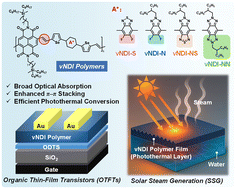
The article reports the design, synthesis, and comprehensive evaluation of four vinylene-bridged naphthalenediimide (vNDI)-based dual-acceptor conjugated polymers, in which the second acceptor unit was systematically varied among benzothiadiazole (S), benzotriazole (N), triazolobenzothiadiazole (NS), and benzobistriazole (NN). The vNDI unit features deep highest occupied molecular orbital (HOMO) and lowest unoccupied molecular orbital (LUMO) energy levels and exhibits high crystallinity when incorporated into the main chain backbone of conjugated polymers. The resulting dual-acceptor conjugated copolymers, characterized by high molecular weights and excellent thermal stability, were synthesized by microwave-assisted cross-coupling polycondensation.
Owing to extended pi-conjugation and strong intramolecular charge-transfer interactions with selenophene donor units, these polymers exhibit narrow bandgaps and therefore investigated as potent semiconductors in organic field-effect transistors (OFETs). The correlation between thin film morphology and charge transport properties was systematically examined using atomic force microscopy (AFM) and grazing-incidence wide-angle X-ray scattering (GIWAXS). In addition, this study also demonstrated the utility of their photothermal performance in solar steam generation (SSG) applications.
A comprehensive structure-property relationship was established, revealing that the polymers with more bathochromically shifted absorption spectra exhibit higher solar-to-vapor conversion efficiencies. Notably, both OFETs and SSG performances are strongly dependent on the molecular structures of conjugated polymers. Specifically, the nature of the second-acceptor unit, in combination with selenophene spacers and silane side chains, modulates backbone planarity, electronic energy levels, and film morphology, thereby leading to distinct charge-transport and SSG properties.
These findings highlight the significance of molecular design and open new avenues for the development of multi-functional conjugated polymers. This study is expected to contribute to the realization of next-generation flexible electronic devices and sustainable clean water technologies.
Meet the authors

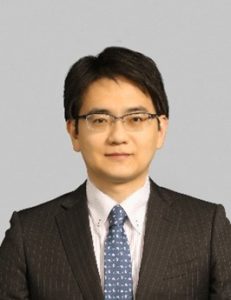
Chia-Yang Lin
Dr. Chia-Yang Lin is a Principal Engineer at TSMC. He received his Ph.D. in Materials Science and Engineering from Institute of Science Tokyo in 2025. His current work focuses on process integration across multiple process modules, including test key design, tape-out support, device analysis, simulation, and robustness evaluation of advanced semiconductor technologies.

Guan-Lin Wu
Mr. Guan-Lin Wu is a Ph.D. student in the Department of Chemical Engineering at National Taiwan University (NTU). He received his B.S. degree from the same department in 2023. His research focuses on the synthesis of polymers in the field of organic materials.

Ting-Yu Wang
Mr. Ting-Yu Wang is a Master student in the Department of Chemical Engineering at National Taiwan University (NTU). He received his B.S. degree from the same department in 2024. His research focuses on the devices of organic field effect transistors.

Waner He
Dr. Waner He is a JSPS Postdoctoral Fellow in the Department of Materials Science and Engineering at the Institute of Science Tokyo. She received her Ph.D. degree in Materials Science and Engineering from Tokyo Institute of Technology in 2023. Her current research focuses on organic electronics, including high-performance organic field-effect transistors (OFETs), organic electrochemical transistors (OECTs), memory devices and artificial synapses.

Shunsuke Imaoka
Mr. Shunsuke Imaoka is a Master student in the Department of Materials Science and Engineering at Institute of Science Tokyo. He received B.E. degree from the same university in 2024. His research focuses on mechanochromic fluorescent materials based on molecular assemblies.

Shohei Shimizu
Mr. Shohei Shimizu is a Ph.D. student in the Department of Materials Science and Engineering at Institute of Science Tokyo. He received B. E. and M. E. degrees from the same university in 2021 and 2023, respectively. His current research target is the development of supramolecular mechanophores.

Wen-Chang Chen
Prof. Wen-Chang Chen is the president of National Taiwan University and Director of the Advanced Research Center of Green Materials Science and Technology. His current research activities encompass electronic and optoelectronic polymers, as well as nanostructured materials. He has co-authored 536 refereed articles and holds 66 issued patents. Prof. Chen has been awarded the National Chair Professorship by the Ministry of Education (Taiwan).
Yoshimitsu Sagara
Prof. Yoshimitsu Sagara is an Associate Professor in the Department of Materials Science and Engineering at Institute of Science Tokyo. He received his Ph.D. from the University of Tokyo in 2009. His research interests include supramolecular mechanophores, low-dimensional mechanochromic luminescence materials, and their practical applications.

Chu-Chen Chueh
Prof. Chu-Chen Chueh is a Professor in the Department of Chemical Engineering at National Taiwan University. His research interests focus on solution-processable semiconductors, including organic small molecules, conjugated polymers, and organic-inorganic hybrid perovskites, and their device applications. He has coauthored over 260 scientific papers in the area of organic/hybrid optoelectronics.

Tsuyoshi Michinobu
Prof. Tsuyoshi Michinobu is a Professor in the Department of Materials Science Engineering at Institute of Science Tokyo. He received B.E., M.E., and Ph.D. degrees in Applied Chemistry from Waseda University in 1999, 2000, and 2003, respectively. He has authored more than 200 peer-reviewed publications in the field of organic materials and polymers.
Vinylene-bridged naphthalenediimide-based dual-acceptor copolymers for thin-film transistors and solar steam generation
Chia-Yang Lin, Guan-Lin Wu, Ting-Yu Wang, Waner He, Ying-Sheng Wu, Shunsuke Imaoka, Shohei Shimizu, Wen-Chang Chen, Yoshimitsu Sagara, Chu-Chen Chueh and Tsuyoshi Michinobu
RSC Appl. Polym., 2025, 3, 1011-1018, DOI: 10.1039/D5LP00136F
 RSC Applied Polymers is a leading international journal for the application of polymers, including experimental and computational studies on both natural and synthetic systems. In this journal, you can discover cross-disciplinary scientific research that leverages polymeric materials in a range of applications. This includes high impact advances made possible with polymers across materials, biology, energy applications and beyond.