RSC Applied Interfaces publishes interdisciplinary work with an applied focus, which can be read for free here. To celebrate the excellent articles that have been published so far in our journal, we asked some of our authors to discuss their work in more detail.
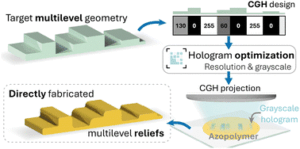
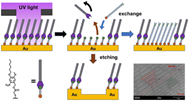
In this post, we hear from Marcella Salvatore, Francesco Reda, Fabio Borbone and Stefano Luigi Oscurato at University of Naples Federico II, as they discuss their recently published communication article entitled ‘Multilevel azopolymer patterning from digital holographic lithography‘.
RSC Applied Interfaces publishes interdisciplinary work with an applied focus, which can be read for free here. To celebrate the excellent articles that have been published so far in our journal, we asked some of our authors to discuss their work in more detail.
I am a PhD researcher in physics at the University of Liège (ULiège), working under the supervision of Prof. Nguyen, head of the SPIN (Solid State Physics, Interfaces and Nanostructrures) research group. Our research focuses on the physics of materials for energy applications. This highlighted work has been performed within the framework of the INSTEAD project. This collaborative effort is funded by the European M.ERA-NET program and brings together with ULiège a consortium of four partners contributing with their expertise to the development of new materials for smart windows : LMGP Grenoble INP, Université de Grenoble Alpes (Prof. D. Bellet); ICMCB, Université de Bordeaux, (Dr. A. Rougier); Middle East Technical University in Turkey, (Prof. H. Emrah Ünalan).
About the INSTEAD Project
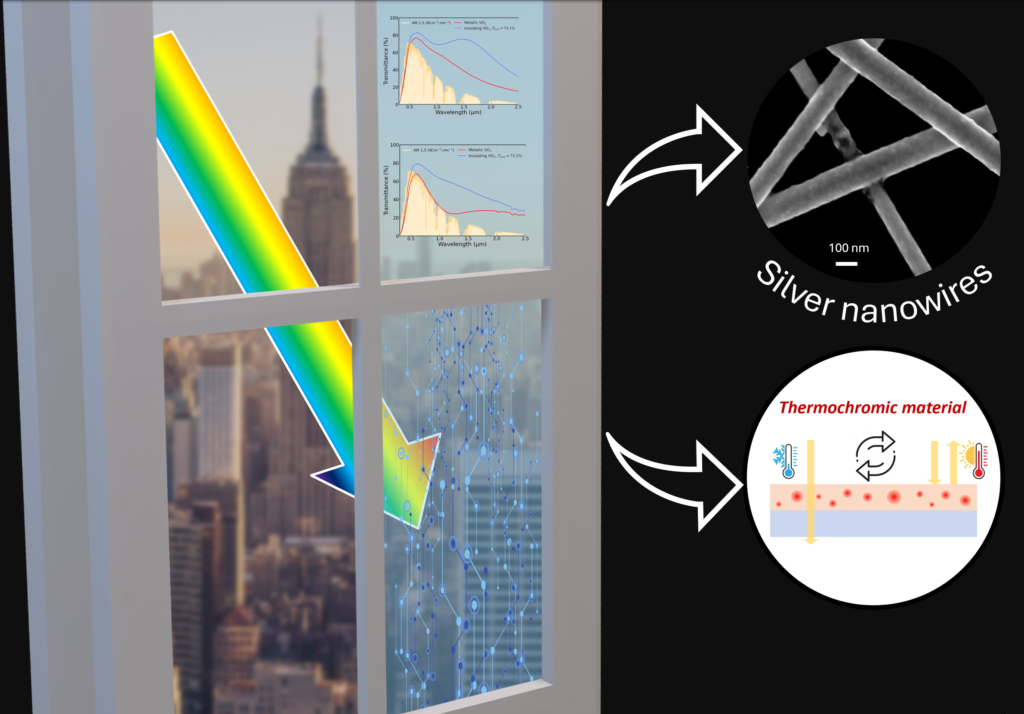
The INSTEAD project aims to develop innovative coatings with advanced functionalities, particularly through the use of heterostructures that combine different materials, including chromogenic compounds. These materials have the potential to dynamically regulate their properties in response to environmental changes, making them highly promising for energy-efficient applications such as smart windows. Additionally, this project explores the incorporation of silver nanowire networks into these complex material stacks, utilizing them as transparent electrodes for electrochromic materials. In the discussed paper, we also investigate their potential as low-emissivity coatings for thermochromic stacks, highlighting their multifunctional role in enhancing the performance of thermochromic stacks for window panes. Our work within this project is part of a broader, coordinated effort to understand and optimize these materials through theoretical and experimental approaches.
What Excites Me About This Research
Working in the field of energy materials is incredibly rewarding, as it allows me to contribute—however modestly—to addressing pressing global challenges. I find great satisfaction in working on abstract physical concepts that have tangible real-world applications. From a scientific perspective, one of the most exciting aspects of this work is the ability to explore complex physical interactions within heterostructure coatings, shaped by both material composition and morphological features. One of the central challenges in our field lies in reconciling two typically opposing properties: electrical conductivity and optical transparency. This trade-off is clearly illustrated by the contrasting behavior of metals, which are excellent conductors but optically opaque, and dielectrics, which are often transparent but insulating. Our research leverages computational modeling to gain deeper insights into these interactions, providing a cost-effective means of understanding their behavior at a fundamental level and paving the way for material-efficient application designs. The coupling of multiple physical phenomena within these materials also opens up fascinating discussions and challenges, making the research both stimulating and impactful.
The Challenges We Face
One of the most challenging aspects of this work lies in interpreting and comparing simulation results with experimental data and existing literature. Ensuring that our models accurately capture the intricate behaviors of these materials requires a careful balance of theoretical insight and empirical validation. Overcoming these challenges is an integral part of the scientist’s work, pushing us to refine our approaches and deepen our understanding of the physical mechanisms at play. Of course, these challenges are not just obstacles but the very essence of scientific research—they fuel our curiosity, drive our passion, and push us to expand, even marginally, the boundaries of human knowledge.
What’s Next?
As part of my ongoing PhD research, I will continue exploring additional physical mechanisms within these materials, with a particular focus on their thermal emissivity properties, a subset of phenomena related to the interaction between matter and electromagnetic radiations. This aligns with the perspectives outlined in our recent publication, where we discuss strategies for optimizing the balance between optical transparency and electrical conductivity. After completing my PhD, I intend to continue conducting research and will therefore be looking for postdoctoral opportunities to further develop my expertise in this area.
Comments Off on Hear from our authors: Amaury Baret
Professor Ryan Richards (Colorado School of Mines & NREL, USA) Associate Editor for RSC Applied Interfaces is delighted to share with you some of his top research highlights published in the journal so far.
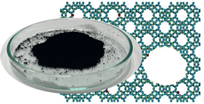
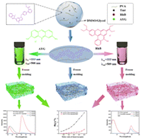
Matthew E. Potter, Evangeline B. McShane, Nienke L. Visser, Johannes D. Meeldijk, Lisa J. Allen, Stephen M. King, Marina Carravetta, Petra E. de Jongh, Bart D. Vandegehuchte and Robert Raja
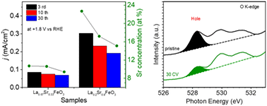
Chuanmu Tian, Clément Maheu, Xiaochun Huang, Freddy E. Oropeza, Márton Major, Joachim Brötz, Marcus Einert, Wolfgang Donner, Kelvin Hongliang Zhang and Jan P. Hofmann
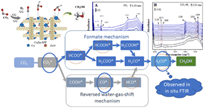
Xiaolong Liu, Guangying Fu, Qiaolin Lang, Ruiqin Ding, Qiangsheng Guo, Ke Liang, Shuman Gao, Xiaobo Yang and Bing Yu
Ryan also shared a video earlier this year discussing a paper by Liyong Ding and Juncheng Hu et al on the construction of a hierarchical heterojunction for photocatalytic hydrogen evolution:
Find out more about Ryan Richards
Ryan M. Richards is a Professor of Chemistry and Materials Science at the Colorado School of Mines (Mines) and holds a joint appointment at the National Renewable Energy Laboratory (NREL) both in Golden, Colorado USA. Additionally, Prof. Richards is the Mines lead for the Mines/NREL Nexus which coordinates, facilitates and promotes all joint activities and appointments. Prof. Richards received his BS from Michigan State University, MS from Central Michigan University and PhD from Kansas State University. During his PhD studies, he was a visiting scientist at the Boreskov Institute of Catalysis in Novosibirsk, Russia. From 2000-2002 he was a Max Planck Fellow at the Max Planck Institute für Kohlenforschung in Mülheim, Germany. In 2002 Ryan joined the International University of Bremen (now Constructor University) then joined Mines in 2007. Prof. Richards has received numerous awards throughout his career including being selected as a Fellow of the American Chemical Society (ACS), Mines Faculty Senate Distinguished Lecturer, ACS Nanoscience Chair and ACS International Affairs Committee (ACS liaison to Nigeria and South Africa). Prof. Richards was accepted as a Fellow of the Royal Society of Chemistry in November 2023.
Research in the Richards group is focused on new synthetic methods to control the size, shape and composition of nanoscale materials and apply them in systems integral to alternative energy technologies, pharmaceuticals, biomass upgrading, batteries, and environmental remediation.
Discover some of Ryan’s research published in RSC journals:
Professor Jianbin Huang (Peking University, China) Associate Editor for RSC Applied Interfaces is delighted to share with you some of his top research highlights published in the journal so far.
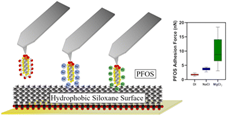
Christian Fischer, Florian Born and Andreas Terfort
Jianbin also shared a video earlier this year discussing a paper by Yaxun Fan and Yilin Wang et al. on surfactant mixed systems:
Find out more about Jianbin Huang
Jianbin Huang is a Professor and Chief of surfactant and colloid research and development at Peking University. He is interested in the physical chemistry of surfactants, especially in mixed surfactant systems. His group mainly focuses on molecular organized assemblies in aqueous solutions, such as vesicles or micelles, and the formation, molecular structures and phase behaviours of amphiphilic systems. Professor Huang has published over 180 articles in international and Chinese academic journals.
Discover some of Jianbin’s research published in RSC journals:
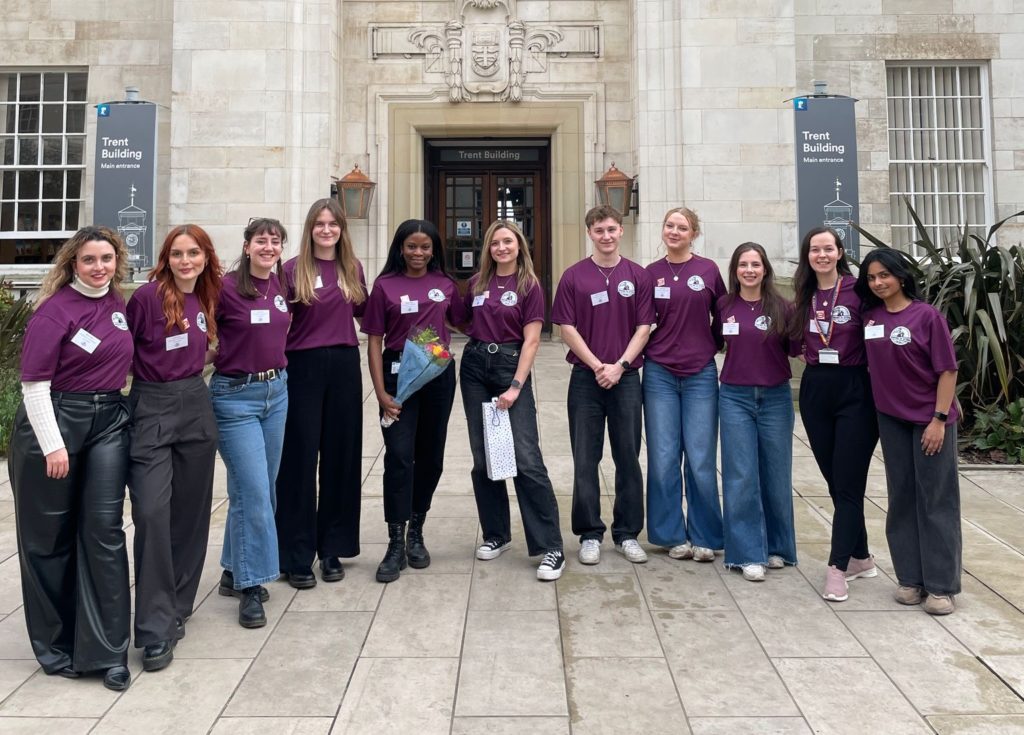
On 7 March, in celebration of International Women’s Day, the 2025 ‘Celebrating Women in Chemistry Conference and Careers Event’ was held at the Trent Building in the University Park Campus of University of Nottingham.
Committee and Event History
Originally founded by three PhD students, the Women in STEM Group at the University of Nottingham now consists of eleven members and its annual event has developed into a large celebration of women in STEM, with over 150 attendees attending its latest instalment.
This year’s event featured a diverse range of activities, including talks on inclusion and diversity, career insights, a discussion panel and multiple opportunities to network with fellow researchers and invited companies.
Talks
Dara O’Brien, one of the event’s co-founders, delivered the welcome remarks, and shared further insight into the event’s purpose: bringing together the scientific community to celebrate women in STEM. The Breaking the Barriers report, published by the Royal Society of Chemistry, served as one of the key motivations for organizing this event.
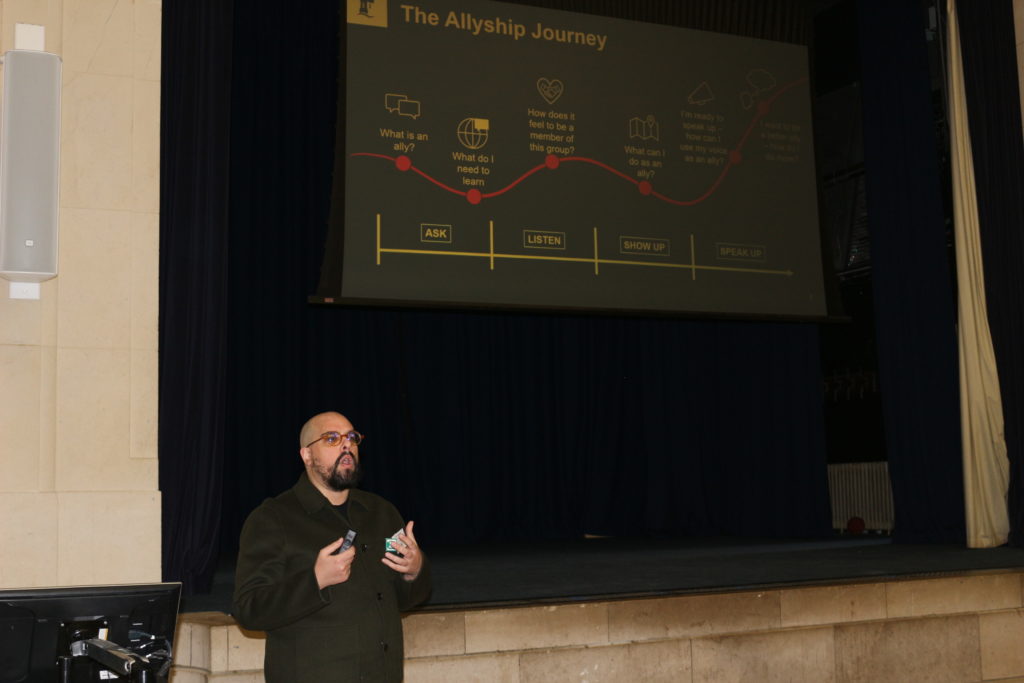
Andy Nortcliffe gave an introduction to allyship, outlining practical ways individuals can become effective and active allies across STEM, helping to foster a diverse and inclusive STEM environment.
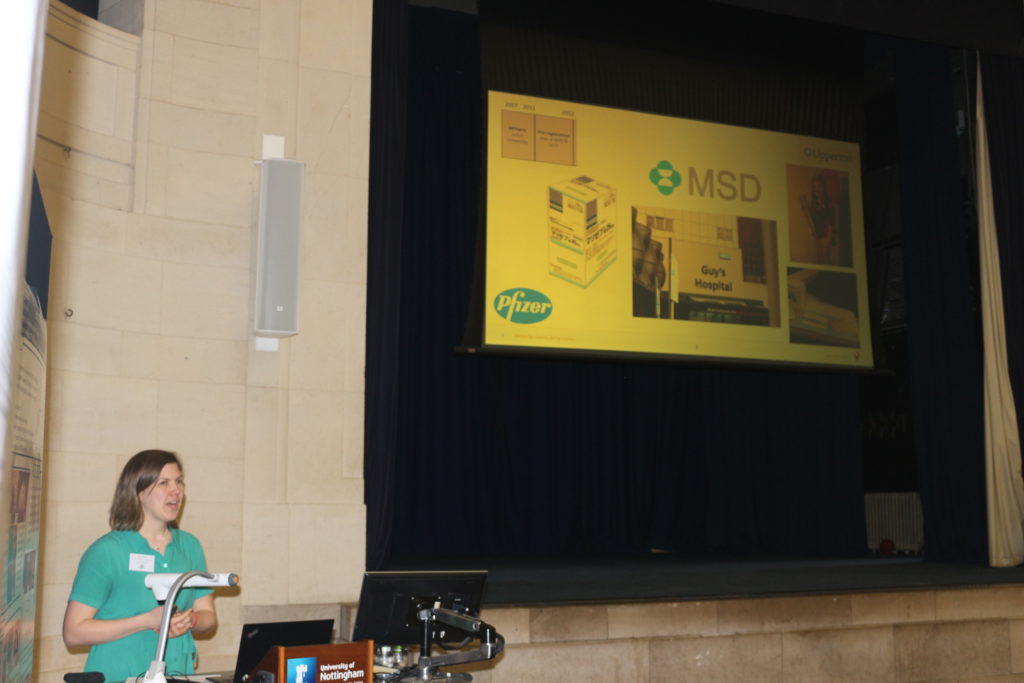
Throughout the event, seven speakers (see full line-up here) shared their career journeys as women in STEM. A diverse range of careers across various industries—including academia, industry, patent law and consumer goods development—were showcased, highlighting the endless possibilities for women in science. Speakers also shared personal experiences, discussing the challenges they faced, particularly as women in STEM, while emphasizing the importance of the allyship and support they’ve received along the way.
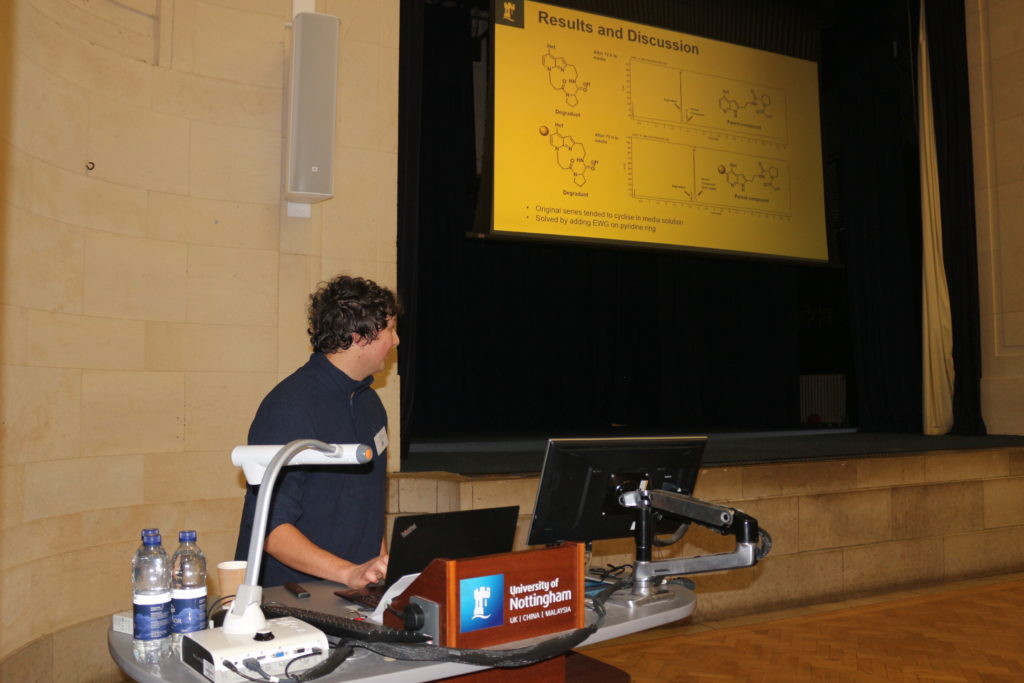
PhD students, regardless of gender, were given the opportunity to present their research at the event in the style of a 3-minute thesis competition. Big congratulations to the prize winners Celia Rocton and Alexandra Brochoire.
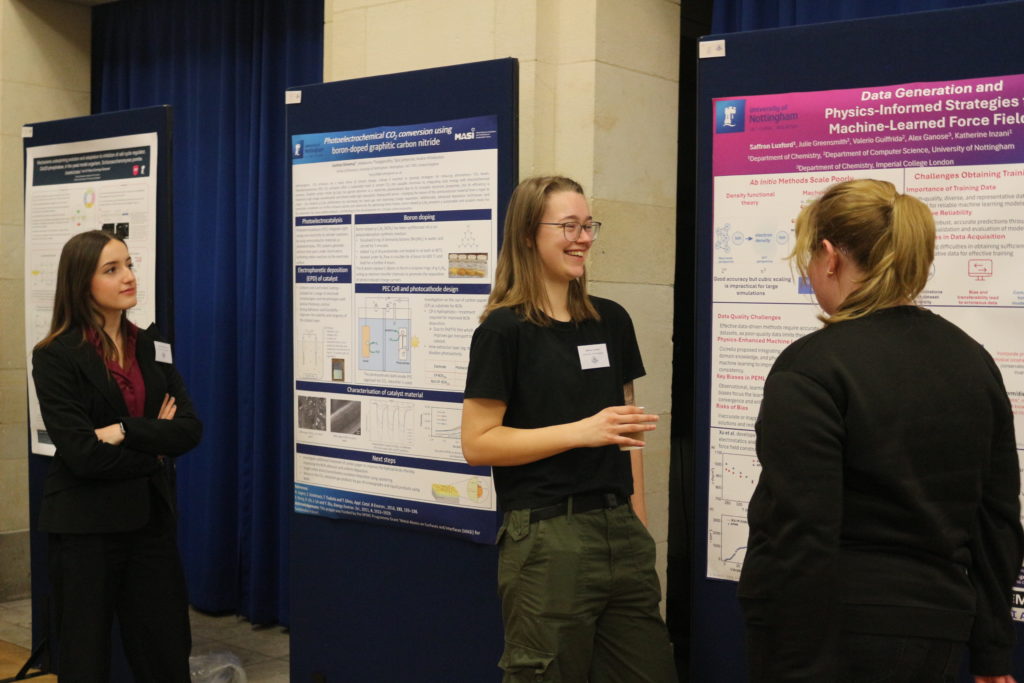
Alongside this, PhDs and postdocs presented posters of their research in a poster competition, with prizes awarded to Jasmina Silmemaj, Neda Jeddi, Isabel Wood.
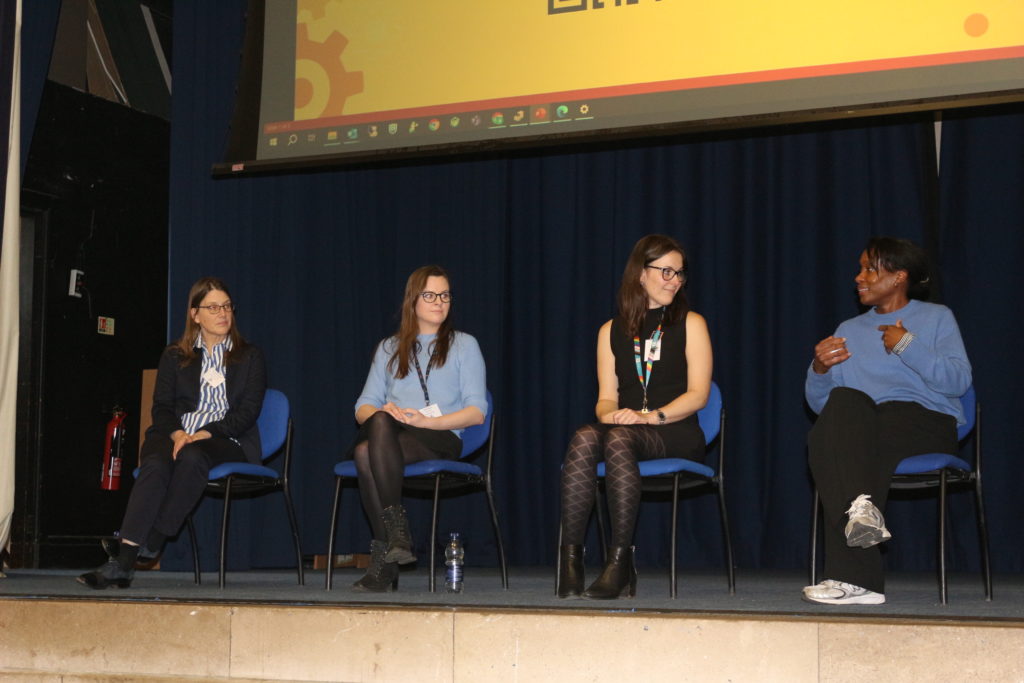
A highlight of the event was a panel discussion featuring four of the speakers (from left to right: Charlotte Crowhurst, Dara O’Brien, Anabel Lanterna, Mickella Dawkins). The audience were invited to submit real-time questions, and panel experts offered their insight and advice on these issues of interest. This led to in-depth discussion about work-life balance, challenges of women in STEM (and career progression), imposter syndrome and more.
Career stalls and networking
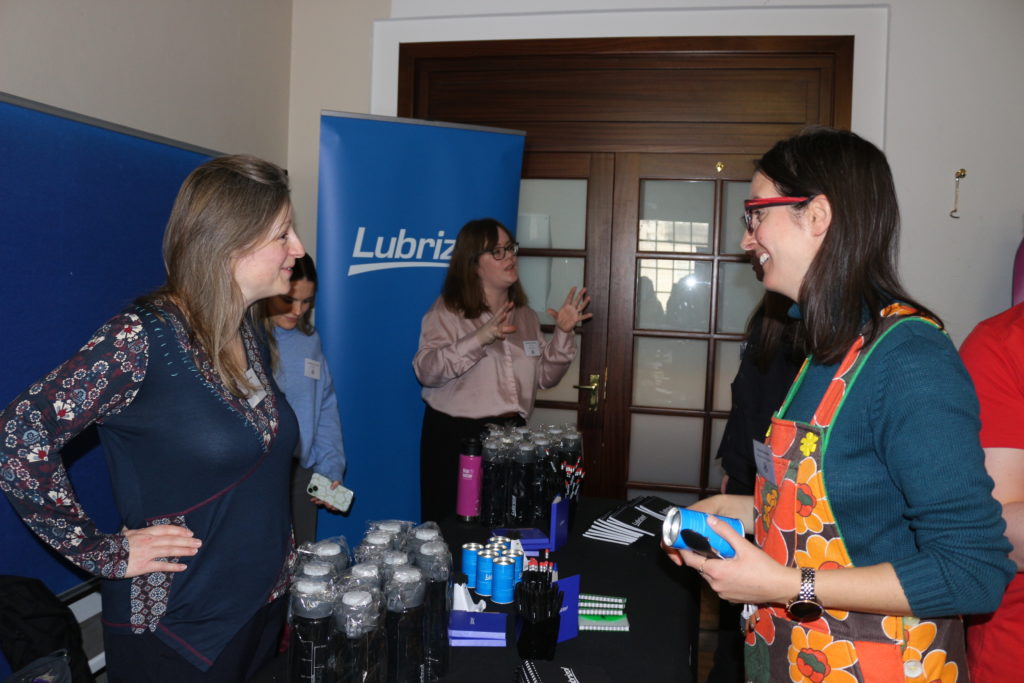
Throughout the event, during lunch and break sessions, delegates were able to network with various companies and find out about career opportunities.
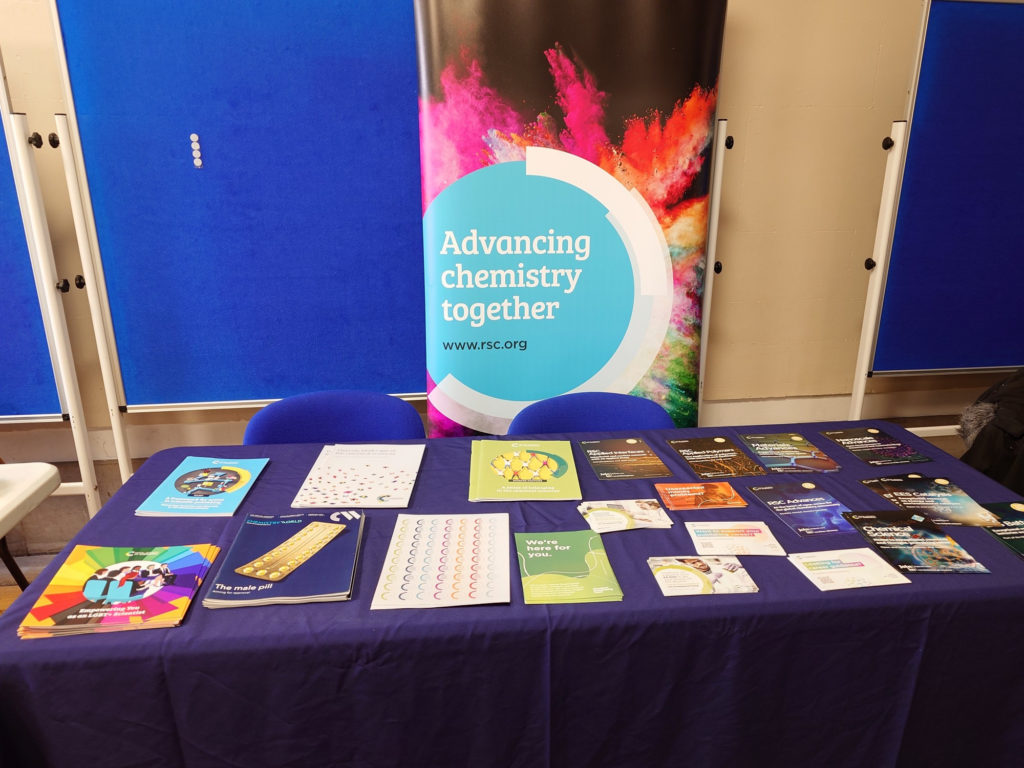
The Royal Society of Chemistry was proudly represented at this event, offering resources on inclusion and diversity. At our stand, attendees had the opportunity to learn more about our efforts to promote access to and inclusion in the chemical sciences. We also provided information on academic journals, publishing career opportunities, and the latest research in chemistry, further supporting the growth and advancement of individuals in STEM.
Outlook
This fully inclusive event provided a supportive environment for young researchers, fostering stimulating debate on gender equality and diversity within the scientific community, while celebrating the outstanding science being conducted at the University of Nottingham, by its alumni, and beyond.
We’d like to extend our thanks to the event organizers for inviting us to this wonderful occasion. Events like these play a crucial role in creating a sense of belonging in the chemical sciences. We hope that you have enjoyed reading about this impactful conference.
Comments Off on Celebrating Women in Chemistry Conference and Careers Event at University of Nottingham
RSC Applied Interfaces publishes interdisciplinary work with an applied focus, which can be read for free here. To celebrate the excellent articles that have been published so far in our journal, we asked some of our authors to discuss their work in more detail.
RSC Applied Interfaces publishes interdisciplinary work with an applied focus, which can be read for free here. To celebrate the excellent articles that have been published so far in our journal, we asked some of our authors to discuss their work in more detail.
RSC Applied Interfaces publishes interdisciplinary work with an applied focus, which can be read for free here. To celebrate the excellent articles that have been published so far in our journal, we asked some of our authors to discuss their work in more detail.
RSC Applied Interfaces publishes interdisciplinary work with an applied focus, which can be read for free here. To celebrate the excellent articles that have been published so far in our journal, we asked some of our authors to discuss their work in more detail.
RSC Applied Interfaces publishes interdisciplinary work with an applied focus, which can be read for free here. To celebrate the excellent articles that have been published so far in our journal, we asked some of our authors to discuss their work in more detail.



 Originally founded by three PhD students, the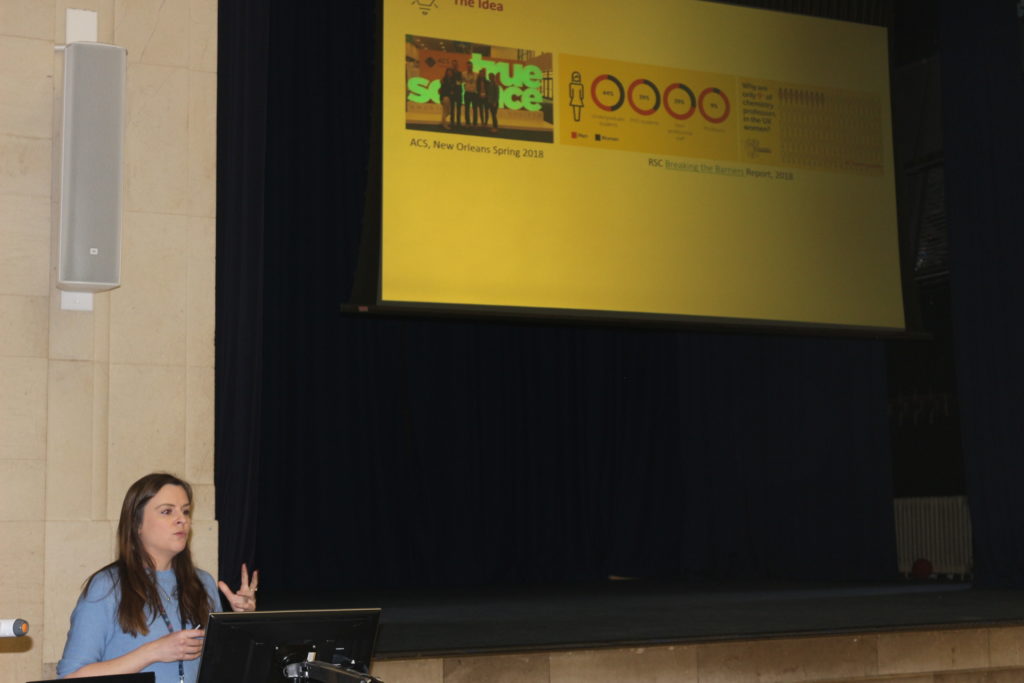
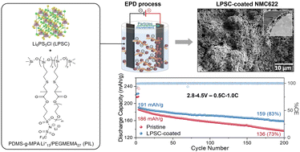 Electrophoretically deposited artificial cathode electrolyte interphase for improved performance of NMC622 at high voltage operation